
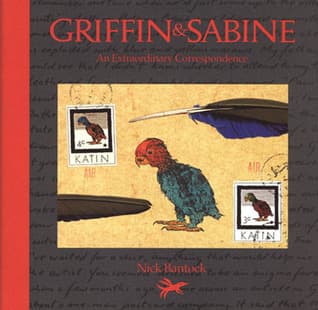
Synopsis
Covers the whole plot, including the ending.
- Difficulty
- Easy
- Pacing
- Moderate
- Mood
- Mysterious, Romantic, Whimsical, Intimate, Evocative
- Read it if
- You enjoy unique, epistolary novels with beautiful artwork and a sense of magical realism and mystery.
- Skip it if
- You prefer traditional narrative structures and clear, definitive resolutions.
Griffin and Sabine Plot Summary
Covers the whole plot, including the ending.
The First Postcard
Griffin Moss, a London artist, receives an unexpected postcard from Sabine Strohem, an artist on a remote tropical island named Sicmon. The postcard features one of Sabine's illustrations and, more unsettlingly, a message stating she knows what Griffin is painting at that very moment. Griffin, initially dismissive, is disturbed by this claim, as he works alone and has no known connection to anyone so distant. He feels compelled to reply, beginning a strange correspondence that will change his solitary life.
Griffin's Skepticism and Sabine's Insistence
Griffin's first letter expresses his disbelief and asks for an explanation from Sabine. He suspects a prank. However, Sabine's next letters and postcards become even more precise, describing not just the subjects but also the specific colors, textures, and even the emotional states of his current paintings — details no one outside his studio could know. She explains that she sees his work in her mind, a connection she calls a 'gift' or a 'curse.' This deeply unsettles Griffin, forcing him to confront the impossibility of her claims.
A Shared Vision
As their correspondence continues, Sabine reveals that her connection to Griffin goes beyond his art. She describes seeing glimpses of his daily life, his surroundings, and even his dreams. She mentions specific details about his London flat and his routine, further eroding Griffin's logical defenses. Griffin, though still doubtful, begins to feel a strange pull towards Sabine. He starts to wonder if this connection is a unique form of clairvoyance, a shared psychic link, or something more, challenging his view of reality.
The Nature of Their Connection
Griffin and Sabine discuss theories about their connection. Sabine believes they are 'twin souls' or part of a larger, mystical network of artists. Griffin, while still looking for a logical explanation, starts to acknowledge Sabine's impact on his life and art. He finds inspiration from her fantastical world, and his own art begins to change, becoming less solitary and more infused with the exotic imagery Sabine describes. Their letters become a joint exploration of a shared, unseen dimension.
The Desire to Meet
As their correspondence deepens, a strong emotional bond forms between Griffin and Sabine. They share personal thoughts, fears, and artistic goals. The initial shock and mystery give way to a deep sense of connection and longing. Both express a desire to meet, to bridge the vast distance and understand the physical form of their psychic link. Griffin, once a recluse, finds himself increasingly open to the idea of meeting the woman who sees into his soul.
Practicalities and Hesitations
The practicalities of a meeting begin to surface. Sabine's island, Sicmon, is remote and hard to reach, adding another layer of mystery to her life. There are subtle hints that her life might not be as straightforward as Griffin's, or that their meeting could have unforeseen results. Despite the growing intimacy, a sense of apprehension remains. Griffin is torn between wanting to meet Sabine and fearing what such a meeting might reveal or, conversely, destroy about their unique, ethereal connection.
Sabine's Growing Unease
Sabine's letters begin to sound more uneasy. She hints that their connection might be more than just a beautiful synchronicity; perhaps it is a spiritual entanglement that could be dangerous if physically realized. She mentions dreams of 'giants' and 'shadows' that seem to be entering her world, suggesting an external force or consequence related to their bond. She warns Griffin, urging him to consider the implications of their link beyond mere romance or curiosity.
Griffin's Determination
Despite Sabine's subtle warnings and growing apprehension, Griffin's determination to meet her solidifies. He is captivated by her, and the mystery surrounding her only fuels his resolve. He begins to plan his trip to Sicmon, researching routes and preparing for the long journey. He believes that only by meeting Sabine in person can they truly understand their bond and perhaps find answers to the questions that trouble them both. His initial skepticism has been replaced by a firm belief in their connection.
The Final Postcard and Griffin's Journey
Griffin sends his last postcard to Sabine before starting his journey to Sicmon. His message mixes excitement, hope, and a hint of worry about what awaits him. He expresses his deep gratitude for how she has changed his life and art. The book ends with Griffin presumably traveling, leaving the reader to consider the outcome of his quest and the truth behind the connection between these two artists. The resolution of their story is left open, inviting continued thought.
Principal Figures
Griffin Moss
Protagonist
A reclusive London artist whose life is upended by a mysterious correspondence.
Griffin is initially presented as a solitary, methodical artist living a quiet life in London. He is rational, skeptical, and somewhat resistant to change, preferring the predictable world of his studio. His art, though skilled, seems to lack a certain spark before Sabine enters his life. He is a man of routine, and the sudden intrusion of the impossible into his reality is deeply unsettling, yet ultimately transformative. He is driven by a need for explanation and, later, a profound curiosity and longing.
Relationships: Sabine Strohem (Mysterious, clairvoyant artistic partner and eventual love interest.)
Sabine Strohem
Protagonist/Mysterious Figure
An exotic artist from a remote island who shares a psychic link with Griffin.
Sabine is a vibrant, enigmatic artist living on the tropical island of Sicmon. Her art is fantastical, colorful, and teeming with bizarre creatures, reflecting a rich inner world. She is intuitive, spiritual, and seemingly comfortable with the inexplicable nature of her connection to Griffin. She possesses a unique clairvoyant ability to 'see' Griffin's paintings and aspects of his life. She is both a catalyst for Griffin's transformation and a source of increasing mystery and subtle warnings about the nature of their bond.
Relationships: Griffin Moss (Psychically linked artistic partner and eventual love interest.)
Themes & Insights
The Nature of Connection
This theme explores how human connection can exist beyond the physical. Griffin and Sabine's bond challenges common understanding, suggesting a spiritual or psychic link that goes beyond distance and logic. Their letters discuss the idea that two souls can be deeply connected, sharing thoughts, creations, and even dreams, without ever having met. This is clear from Sabine's first postcard, where she describes Griffin's painting, and their later letters, where they discuss the profound, unexplainable synchronicity of their minds.
“How can you know what I am painting? There is no one here.”
Art as a Bridge to the Unseen
Art is the main way Griffin and Sabine's connection is first made and then strengthened. Their shared artistic sensibilities and Sabine's ability to 'see' Griffin's creations highlight art's power to reveal hidden truths and create paths between minds. Their individual styles, Griffin's more grounded and Sabine's fantastical, merge and influence each other, suggesting that artistic expression can be a way for spiritual or psychic communication, letting them communicate on a deeper, non-verbal level. Their paintings become literal windows into each other's souls.
“I see your paintings, Griffin. They are beautiful, but you are not alone.”
Reality vs. Illusion
The entire story plays with the reader's, and Griffin's, view of reality. Is Sabine real? Is their connection a genuine psychic event, a shared delusion, or something else? The format of letters and postcards, often with fantastical images, blurs the line between what is real and what is imagined. Griffin's shift from doubt to belief mirrors the reader's own wrestling with the extraordinary claims. The book constantly asks what is 'real' when faced with such profound and unexplainable experiences, leaving the final answer unclear.
“Are you a clairvoyant? A long-lost twin? Or a malevolent angel?”
The Allure of the Unknown
Despite the unsettling nature of Sabine's first messages, Griffin is drawn into the mystery rather than put off by it. The unknown, represented by Sabine's remote island, her psychic abilities, and the sheer impossibility of their connection, becomes a strong magnet. This theme explores human curiosity and the desire to explore the limits of what is understood. Griffin's decision to travel across the world to meet Sabine, despite her subtle warnings, shows how the unknown can inspire deep change and adventure.
“I must come. I must see you. I must know.”
Plot Devices & Literary Techniques
Epistolary Format
The story is told entirely through letters and postcards.
The entire narrative unfolds through the exchange of physical letters and postcards between Griffin and Sabine. This format is crucial for building suspense and intimacy, as the reader directly experiences their evolving relationship. The physical act of opening envelopes and reading their private correspondence creates a unique, voyeuristic engagement, making the reader feel like a privileged participant in their mystery. It also visually reinforces the distance between them and the gradual bridging of that gap through their words and art.
Unreliable Narration (Implied)
The reader must interpret the truth of the events through subjective accounts.
While not a single unreliable narrator, the epistolary format inherently creates a sense of subjective reality. Both Griffin and Sabine's accounts are filtered through their individual perceptions and emotions. The reader never gets an objective third-person view of their connection, forcing them to question whether Sabine's psychic abilities are real, a shared delusion, or a metaphor. This ambiguity enhances the mystery and allows for multiple interpretations of the story's fantastical elements, contributing to the 'fantasy, mystery' genre aspects.
Visual Storytelling / Mixed Media
The narrative is heavily integrated with the characters' artwork.
Each letter and postcard is not just text, but also features the characters' unique illustrations. Griffin's art tends to be more grounded, while Sabine's is vibrant and fantastical, depicting bizarre creatures and lush landscapes. These visuals are integral to the plot, as Sabine's ability to 'see' Griffin's paintings is a central mystery. The artwork also enriches the characterization, provides clues about their inner worlds, and immerses the reader in the fantastical elements of the story, making the book a unique artistic experience in itself.
The Unseen Connection
A psychic or spiritual link that transcends physical distance.
The central plot device is the inexplicable, non-physical connection between Griffin and Sabine. This allows Sabine to 'see' Griffin's art and even aspects of his life from thousands of miles away. It serves as the catalyst for the entire story, driving Griffin's initial disbelief, then his profound curiosity, and ultimately his decision to travel. This device establishes the fantastical element of the story and challenges the characters (and the reader) to consider possibilities beyond conventional understanding of reality and human interaction.
Griffin and Sabine Quotes
“I can see you, Sabine. I can see you from my window.”
“Are you a figment of my imagination? Am I a figment of yours?”
“We are two antennae, picking up the same frequency.”
“The world is a much smaller place than we imagine, and much larger.”
“Perhaps we are merely dreaming each other.”
“It's like finding a secret door in a familiar house.”
“I feel as if I've been waiting for you all my life, without knowing it.”
“Our art is the key, isn't it? The way we see things.”
“The truth is often stranger than fiction, especially when it's personal.”
“Don't ever stop writing. Don't ever stop seeing.”
“We are creating our own map, aren't we? Of a place no one else can see.”
“To be seen, truly seen, is a rare and wonderful thing.”
“Perhaps the greatest mysteries are the ones we live inside.”
Quiz
10 questions on the plot and the characters. Each answer comes with a short explanation.
Question 1
What is Griffin Moss's profession at the beginning of the story?
- A writer
- A cartographer
- An artist designing postcards
- A museum curator
Show answer
C. An artist designing postcards Griffin Moss is an artist who designs postcards, which is how he initially receives a mysterious postcard from Sabine.
Question 2
Where does Sabine live when she first contacts Griffin?
- London, England
- A tropical island
- Paris, France
- New York City, USA
Show answer
B. A tropical island Sabine lives on a tropical island, thousands of miles away from Griffin in London, adding to the mystery of their connection.
Question 3
What unique physical format does the book 'Griffin and Sabine' utilize to tell its story?
- It's a graphic novel with speech bubbles.
- It's a traditional novel with chapters.
- It features actual postcards and letters to be removed from envelopes.
- It's an audiobook with accompanying illustrations.
Show answer
C. It features actual postcards and letters to be removed from envelopes. The book is known for its innovative format, where readers can physically remove and read the letters and postcards exchanged between Griffin and Sabine from their envelopes.
Question 4
What is the primary mystery surrounding Sabine's initial contact with Griffin?
- She knows his exact address without him ever sharing it.
- She can 'see' and describe the specific details of what Griffin is painting in his studio.
- She claims to be a long-lost relative he never knew existed.
- She sends him premonitions of future events.
Show answer
B. She can 'see' and describe the specific details of what Griffin is painting in his studio. Sabine's ability to describe Griffin's current paintings, despite never having met him or being in his studio, is the central mystery that captivates and unsettles him.
Question 5
What type of imagery is frequently found in the illustrations accompanying the correspondence?
- Realistic portraits and landscapes.
- Whimsical designs, bizarre creatures, and darkly imagined landscapes.
- Architectural blueprints and technical drawings.
- Photographs of everyday life.
Show answer
B. Whimsical designs, bizarre creatures, and darkly imagined landscapes. The book is richly illustrated with unique and often surreal artwork, featuring whimsical designs, strange creatures, and dark landscapes, reflecting the fantastical nature of the story.
Question 6
Griffin's initial reaction to Sabine's first postcard is best described as:
- Immediate romantic interest and excitement.
- Confusion and a desire to understand how she knows what she knows.
- Anger and suspicion, believing it to be a prank.
- Indifference, initially ignoring her correspondence.
Show answer
B. Confusion and a desire to understand how she knows what she knows. Griffin is initially very confused and disturbed by Sabine's knowledge of his private work, leading him to question her identity and the nature of their connection.
Question 7
Which of the following is NOT presented as a possible explanation for Sabine's abilities within the book's narrative?
- She is a long-lost twin.
- She is a malevolent angel.
- She is a detective investigating Griffin's work.
- She is clairvoyant.
Show answer
C. She is a detective investigating Griffin's work. The story explores possibilities like clairvoyance, a long-lost twin, or even a 'malevolent angel,' but never suggests she is a detective.
Question 8
The unfolding relationship between Griffin and Sabine primarily explores themes of:
- Political intrigue and espionage.
- The conflict between logic and the inexplicable, and the nature of connection.
- Colonialism and post-colonial identity.
- Environmental activism and conservation.
Show answer
B. The conflict between logic and the inexplicable, and the nature of connection. The core of the story revolves around Griffin's logical world being challenged by Sabine's inexplicable connection, raising questions about reality, sanity, and the possibility of a magical bond.
Question 9
What effect does Sabine's correspondence have on Griffin's previously 'logical, methodical world'?
- It makes him more focused and productive in his art.
- It turns his world 'upside down' and introduces elements of the fantastical and mysterious.
- It leads him to abandon his artistic career for a more conventional job.
- It isolates him further from society and human connection.
Show answer
B. It turns his world 'upside down' and introduces elements of the fantastical and mysterious. The description states that his 'logical, methodical world was suddenly turned upside down' by Sabine, indicating a profound disruption and introduction of the inexplicable.
Question 10
What is the ultimate question the narrative poses regarding Griffin and Sabine's connection?
- Whether they will eventually meet in person.
- Whether it's a 'flowering of a magical relationship or a descent into madness'.
- Whether their artistic styles will merge into a single entity.
- Whether their correspondence will be published for the world to see.
Show answer
B. Whether it's a 'flowering of a magical relationship or a descent into madness'. The summary explicitly asks: 'Are we witnessing the flowering of a magical relationship or a descent into madness?' highlighting the ambiguity and central tension of their connection.
Griffin and Sabine FAQ
What initially sparks the correspondence between Griffin and Sabine?
The correspondence begins when Sabine, an artist living on a tropical island, sends Griffin, a London-based artist, a postcard. She claims to be able to see and describe his paintings as he creates them, even though they have never met and live thousands of miles apart, which deeply unsettles Griffin.
What is Griffin Moss's profession and typical lifestyle before Sabine's intrusion?
Griffin Moss is a commercial artist in London, known for his somewhat mundane and methodical approach to his work. He leads a solitary, ordered life, often depicting fantastical creatures and landscapes, but within the confines of his studio and routine.
Where does Sabine live and what is her artistic focus?
Sabine lives on a tropical island, which she describes as lush and vibrant, contrasting sharply with Griffin's London. Her art, as depicted in her postcards and letters, is often more organic, colorful, and directly inspired by the natural world around her, including mythical creatures and vibrant flora.
How does the format of the book enhance the reader's experience?
The book is presented as a series of actual postcards and letters exchanged between Griffin and Sabine, which the reader can physically remove from envelopes within the pages. This unique format immerses the reader directly into their intimate correspondence, making them feel like an active participant in uncovering the mystery.
What is the primary mystery driving the narrative?
The central mystery revolves around how Sabine can 'see' what Griffin is painting, despite their geographical separation and lack of prior contact. This unexplained connection leads Griffin to question his sanity and the nature of reality, while Sabine seems more accepting of their shared clairvoyance.
Are there any recurring visual motifs or symbols in the artwork that hint at their connection?
The artwork frequently features strange, hybrid creatures and fantastical landscapes that often echo themes or specific elements present in both Griffin's and Sabine's art. This visual synchronicity, even before they acknowledge their shared 'sight,' subtly reinforces their inexplicable link.
Do Griffin and Sabine ever physically meet within the first book?
No, within the first book, Griffin and Sabine do not physically meet. Their entire relationship and the unfolding mystery are confined to their written correspondence, which heightens the sense of longing, distance, and the ethereal nature of their connection.
What is the significance of the creatures depicted in their art?
The fantastical creatures often represent their subconscious desires, fears, or aspects of their shared psychic link. For instance, Griffin's initial creatures are often more isolated or monstrous, while Sabine's are more integrated into vibrant ecosystems, reflecting their differing perspectives on their bond.
How does Griffin's initial skepticism evolve throughout the book?
Griffin initially reacts with extreme skepticism, fear, and even anger, trying to logically explain Sabine's abilities or dismiss them as a hoax. However, as the evidence of their connection mounts, his skepticism gradually gives way to fascination, wonder, and a desperate need to understand.
What psychological impact does Sabine's presence have on Griffin?
Sabine's presence profoundly disrupts Griffin's rigid, solitary world, forcing him to confront the limits of his rational mind. He experiences confusion, anxiety, excitement, and a growing sense of wonder, leading to a significant shift in his perception of reality and himself.
How do Griffin and Sabine's personalities complement or contrast each other?
Griffin is initially reserved, logical, and somewhat fearful of the unknown, while Sabine is more intuitive, adventurous, and open to magical possibilities. She acts as a catalyst, drawing Griffin out of his shell and encouraging him to embrace the extraordinary aspects of their connection.
Is there an element of 'madness' or hallucination suggested in Griffin's experience?
The narrative deliberately blurs the line between reality and hallucination, especially from Griffin's perspective. His initial reactions and internal monologues suggest he fears he might be descending into madness, unable to reconcile Sabine's claims with his understanding of the world.
Is Sabine a real person, or a figment of Griffin's imagination?
The book intentionally leaves this ambiguous, allowing for multiple interpretations. While Sabine's letters and art are tangible within the book, the question of whether she exists independently or is a manifestation of Griffin's subconscious desire for connection and magic remains a central mystery.
Could their connection be interpreted as a metaphor for artistic inspiration or the creative process?
Yes, their shared 'sight' and the way they influence each other's art can be seen as a powerful metaphor for the mysterious wellspring of artistic inspiration. Sabine might represent the muse or the subconscious realm from which creative ideas emerge, guiding Griffin's hand.
Does the story suggest a spiritual or supernatural explanation for their bond?
The narrative strongly leans towards a spiritual or supernatural explanation, particularly through Sabine's more accepting view of their clairvoyance. While never explicitly defined, their connection transcends physical boundaries, hinting at a deeper, mystical link beyond conventional understanding.
What is the significance of the tropical island versus London as their respective settings?
The contrast in settings symbolizes their differing internal worlds and perspectives. London, with its grey skies and urban sprawl, reflects Griffin's initial confinement and rationality. The vibrant, exotic island embodies Sabine's freedom, intuition, and connection to a more magical reality.
What message about connection and communication does the book convey?
The book suggests that true connection can transcend physical barriers, relying on empathy, intuition, and a willingness to believe in the extraordinary. It highlights how communication, even through seemingly outdated methods like letters, can foster deep intimacy and understanding.
Is the ending of the first book conclusive, or does it leave room for continuation?
The first book ends on a note of anticipation and unresolved mystery, with Griffin embarking on a journey towards Sabine. While their initial mystery is deepened, their potential meeting and the full extent of their connection are left open, paving the way for the subsequent books in the series.
Similar books
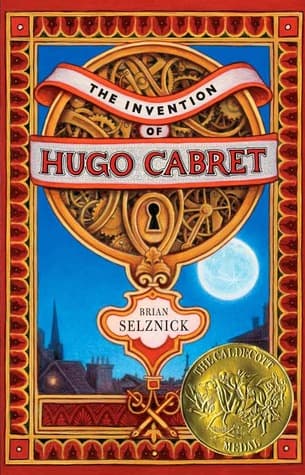
- The Invention of Hugo Cabret
Brian Selznick
4.2 (163k) average on GoodreadsFantasyFeatures a unique blend of text and intricate illustrations to tell a magical story.
- Harry Potter and the Sorcerer's Stone
J.K. Rowling
4.5 (7M) average on GoodreadsFantasyRescued from a miserable life under the stairs, an orphaned boy discovers he's a wizard destined for a magical school, where he uncovers a dangerous secret tied to the dark wizard who murdered his parents.
- The Hunger Games
Suzanne Collins
4.3 (6.4M) average on GoodreadsFantasyIn a future where children fight to the death on live television, Katniss Everdeen volunteers for the arena, turning a death sentence into a fight for survival and a spark of rebellion.
- 1984
George Orwell
4.2 (3.1M) average on GoodreadsPoliticsIn a future where surveillance and thought control are absolute, a man's search for truth clashes with the Party, showing that hope can be a form of rebellion.
- Divergent
Veronica Roth
4.2 (2.9M) average on GoodreadsFantasyIn a society divided by virtues, a sixteen-year-old's difference from the norm starts a rebellion that threatens her world.
- The Hobbit, or There and Back Again
J.R.R. Tolkien
4.3 (2.9M) average on GoodreadsFantasyA comfort-loving hobbit named Bilbo Baggins is whisked away by a mischievous wizard and a band of dwarves on an unexpected journey to reclaim stolen treasure from a fearsome dragon, discovering courage and a magical ring along the way.





Enjoyed the summary?
A summary gives you the shape of the book. The book itself has the detail, the examples and the voice.
Find Griffin and Sabine on AmazonAs an Amazon Associate, BookBrief earns from qualifying purchases. How we're funded