
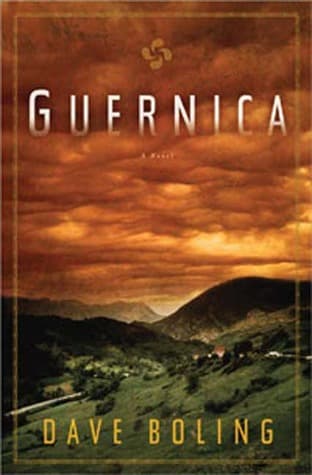
Synopsis
Covers the whole plot, including the ending.
- Difficulty
- Medium
- Pacing
- Moderate
- Mood
- Atmospheric, Emotional, Resilient, Tragic, Hopeful
- Read it if
- You enjoy epic historical fiction focusing on human resilience, love, and community during wartime, especially stories that shed light on lesser-known historical events.
- Skip it if
- You prefer fast-paced thrillers or avoid stories with significant historical tragedy and detailed descriptions of war's impact.
Guernica Plot Summary
Covers the whole plot, including the ending.
A New Beginning in Guernica
In 1935, Miguel Navarro, a young man from the Basque fishing village of Lekeitio, must leave after a clash with the Spanish Civil Guard. He arrives in Guernica, the center of Basque culture, seeking a fresh start. He finds work and begins to join the community. At a local festival, he meets Miren Ansotegui, a dancer. Despite her many admirers, Miren is drawn to Miguel's quiet strength. Their connection is immediate, starting a deep romance as the Spanish Civil War tensions rise.
The Courtship and Growing Love
Miguel and Miren's love grows as Spain becomes more politically unstable. They spend their days exploring Guernica, sharing stories, and dancing. Miren introduces Miguel to her family, including her mother, Amaia, and her younger brother, Joseba. Miguel finds a sense of belonging he never had before. However, the Spanish Civil War casts a longer shadow each day, with news of battles and political divisions reaching even the Basque Country. Their happiness is tied to growing worry about their homeland's future.
The Gathering Storm
As the Spanish Civil War continues, Guernica, an open town, initially believes itself safe. The Basque people, fiercely independent, try to stay neutral, but Franco's Nationalist forces view the region with suspicion. Miguel and Miren marry and start a family. Miren becomes pregnant, bringing hope and joy amid the growing darkness. But the town becomes a refuge for those fleeing fighting, and the sounds of distant bombs and the sight of refugees begin to lessen Guernica's sense of security.
April 26, 1937: Market Day
It is Monday, April 26, 1937, a market day in Guernica. The town is busy with people from nearby villages trading goods and hearing news. Miren, heavily pregnant, is home, while Miguel is out. The mood is a mix of everyday life and tension, as rumors of bombings elsewhere in Spain are common. Many people, including women and children, are outside, making the town vulnerable. This ordinary day is about to be shattered by an act of war.
The Bombing Begins
In the afternoon, the quiet of Guernica breaks with the roar of German Luftwaffe planes. A systematic bombing begins. Incendiary bombs fall, setting buildings on fire and trapping civilians. Miguel, caught outside, sees the horror, trying to find shelter. The attack is prolonged, designed to cause maximum destruction and fear, turning the market town into an inferno of chaos and death.
Miguel's Desperate Search
As the bombing stops, a scene of smoke, fire, and rubble remains. Miguel, disoriented but driven, begins a frantic search for Miren and her family. He walks through burning streets, stepping over debris and bodies, calling their names. The town is unrecognizable. He meets other survivors, some hurt, some in shock, all dealing with sudden loss. His journey is a harrowing trip into the destruction, each step filled with dread and hope to find his loved ones alive.
The Aftermath and Devastation
Immediately after, the full scale of the destruction becomes clear. Guernica is almost completely destroyed, its buildings reduced to smoldering ruins. Survivors, many injured and traumatized, emerge from shelters. Miguel finds Miren, alive but severely injured and in premature labor. The Ansotegui family home is destroyed, and the fate of other family members is unknown. The priority shifts from surviving the bombing to surviving its aftermath: finding medical aid, food, and shelter amidst the desolation, and accepting the immense loss.
Birth and Loss
Amidst the chaos, Miren goes into labor. With Miguel's help, she gives birth to their child in the bombed town. However, the trauma of the bombing, Miren's injuries, and the harsh environment are too much for the newborn. Their baby, a symbol of their future, does not survive. This loss adds more grief to Miguel and Miren's suffering, making the tragedy of Guernica a part of their personal story and strengthening their will to endure.
Exile and Resilience
With Guernica destroyed and Nationalist forces advancing, the surviving Basques must flee. Miguel, Miren, and the remaining Ansotegui family join the exodus, becoming refugees. They carry their few possessions and the scars of the bombing and their child's loss. Their journey is one of hardship and uncertainty, but also of strong determination to keep their Basque identity alive. They refuse to let the bombing end their spirit, holding onto hope and family strength as they seek a new beginning away from the devastation.
Rebuilding and Remembrance
Years pass, and Miguel and Miren, with their surviving family, find a new home, though memories of Guernica never fade. They rebuild their lives, raise their children, and keep Basque traditions alive. The bombing of Guernica becomes a symbol of injustice and strength for them and for the entire Basque people. They commit to remembering what happened, sharing their story, and ensuring the world never forgets the atrocities. Their lasting love and community strength show the human spirit's ability to heal and last.
Principal Figures
Miguel Navarro
Protagonist
A resilient young man seeking a new life and finding love and purpose.
Miguel is a quiet, resourceful, and deeply loyal young man. Forced to flee his home village, he arrives in Guernica seeking anonymity but finds profound connection. He is initially reserved but possesses an inner strength and a strong moral compass. His love for Miren is central to his character, driving his actions and providing him with a sense of belonging he previously lacked. He is a survivor, capable of great endurance and unwavering in his commitment to his family and his adopted home.
Relationships: Miren Ansotegui (Husband, profound love and partnership); Amaia Ansotegui (Son-in-law, respected and welcomed into the family); Joseba Ansotegui (Brother-in-law, protective and supportive)
Miren Ansotegui
Protagonist
A charismatic and spirited dancer, embodying the heart of Basque culture.
Miren is vibrant, graceful, and deeply rooted in her Basque heritage. She is a talented dancer, reflecting her joyful and expressive nature. Despite having many admirers, she is drawn to Miguel's sincerity and depth. She is strong-willed and resilient, fiercely protective of her family and traditions. Her pregnancy and subsequent loss during the bombing inflict deep wounds, yet she maintains an incredible capacity for love and a determination to endure, embodying the spirit of Guernica itself.
Relationships: Miguel Navarro (Wife, profound love and partnership); Amaia Ansotegui (Daughter, close and loving relationship); Joseba Ansotegui (Sister, protective and affectionate)
Amaia Ansotegui
Supporting
Miren's strong and traditional mother, a matriarch of the Basque family.
Amaia is the matriarch of the Ansotegui family, a woman of immense strength, wisdom, and deep traditional values. She is the anchor of her family, providing guidance and maintaining Basque customs. Initially cautious of Miguel, she eventually welcomes him into her family, recognizing his good character. She embodies the resilience and stubborn pride of the Basque people, facing tragedy with an unwavering spirit and working tirelessly to keep her family together and their heritage alive.
Relationships: Miren Ansotegui (Mother, close and guiding relationship); Miguel Navarro (Mother-in-law, accepting and respectful); Joseba Ansotegui (Mother, protective and nurturing)
Joseba Ansotegui
Supporting
Miren's younger brother, a spirited boy whose innocence is shattered by war.
Joseba is Miren's younger brother, initially portrayed as a lively and somewhat mischievous boy, full of the innocence and energy of youth. He looks up to Miguel and shares a close bond with his sister. His experiences during the bombing and its aftermath force him to mature rapidly, witnessing horrors no child should. He represents the generation whose childhood was stolen by the war, yet he also embodies the hope for the future and the continuation of Basque identity.
Relationships: Miren Ansotegui (Brother, close and affectionate); Miguel Navarro (Brother-in-law, initially admiring, later a comrade in survival); Amaia Ansotegui (Son, loving and obedient)
Father Eusebio
Supporting
The local priest, a spiritual guide and moral compass for the community.
Father Eusebio is the respected priest of Guernica, serving as a spiritual and moral guide for the townspeople. He is a figure of comfort and authority, deeply involved in the lives of his parishioners. During the bombing, he provides what solace he can, and in the aftermath, he becomes a voice for the victims and a symbol of enduring faith. His character highlights the strong Catholic traditions within Basque culture and the role of faith in times of extreme suffering.
Relationships: Miguel and Miren (Spiritual advisor, performs their marriage, offers solace); Guernica community (Spiritual leader, confidant, and moral authority)
The Spanish Civil Guard
Antagonist
The oppressive state police force representing central Spanish authority.
The Spanish Civil Guard represents the oppressive authority of the central Spanish government, particularly in its interactions with the fiercely independent Basques. They are the initial cause of Miguel's flight from Lekeitio, symbolizing the conflict between regional autonomy and state control. Their presence instills fear and resentment, highlighting the political tensions that ultimately escalate into the Spanish Civil War. They are a faceless, institutional antagonist rather than individual characters.
Relationships: Miguel Navarro (Adversarial, cause of his initial flight); Basque people (Oppressive authority, source of conflict and resentment)
German Luftwaffe Pilots
Antagonist
The unseen perpetrators of the bombing, agents of modern warfare.
The German Luftwaffe pilots are the direct perpetrators of the Guernica bombing. They are largely unseen and unnamed, representing the impersonal and devastating nature of modern aerial warfare. Their actions are driven by military strategy and a willingness to experiment with total war tactics, rather than personal animosity towards the Basques. They embody the destructive power of technology and the moral implications of targeting civilian populations, making them a crucial, albeit distant, antagonistic force.
Relationships: Guernica community (Perpetrators of destruction and terror)
Themes & Insights
The Resilience of the Human Spirit
Despite immense loss, the characters, especially Miguel and Miren, show a strong ability to endure and rebuild. The bombing aims to break the Basque spirit, but instead, it strengthens their resolve. This is seen in Miguel's search for Miren, Miren's strength during childbirth, and the family's efforts to rebuild their lives and culture. Their refusal to give up, even after losing their child and home, points to a human drive for survival and hope.
“They had tried to bomb the heart out of them, but the heart of the Basque people beat on, stronger than ever.”
The Enduring Power of Love and Family
At the story's heart is the deep love between Miguel and Miren, and the strong bonds of the Ansotegui family. This love provides comfort, strength, and motivation during war and personal tragedy. Miguel's move to Guernica is changed by his love for Miren, giving him purpose. During the bombing, his main goal is to find and protect her. The family's shared grief over their lost child and their commitment to each other help them through exile and rebuilding. Their relationships reflect the larger Basque community's collective strength.
“In the chaos, there was only Miren. She was his anchor, his reason, his world.”
The Preservation of Culture and Identity
The novel shows the Basque people's fierce pride in their language, traditions, and self-rule. Guernica, as the spiritual center of the Basque Country, represents this identity. The bombing is not just a physical attack but an assault on their soul. Characters like Amaia embody adherence to tradition. After the attack, the survivors' efforts to keep their language, customs, and the memory of Guernica alive are acts of resistance against cultural destruction. The story emphasizes that bombs cannot destroy true identity.
“They could burn the buildings, but they could not burn the language, the songs, the very soul of the Euskaldunak.”
The Brutality and Inhumanity of War
The novel clearly shows modern warfare's impact on civilians, through its detailed depiction of the Guernica bombing. It reveals the random nature of air attacks and the psychological harm they cause. Miguel, Miren, and the town's suffering illustrates war's reality beyond the battlefield—the loss of homes, lives, and peace. The bombing is presented as a crime against humanity, a strong statement against conflict's brutality and a preview of World War II's horrors.
“The sky had opened up not with rain, but with fire and iron, turning a Monday market into an inferno.”
Plot Devices & Literary Techniques
Foreshadowing
Hints of impending doom woven into the peaceful early narrative.
Boling subtly introduces elements that hint at the coming tragedy. The rising political tensions in Spain, the increasing number of refugees passing through Guernica, and the distant sounds of war all serve to create a growing sense of unease. These early warnings contrast sharply with the idyllic life Miguel and Miren are building, making the eventual bombing even more shocking and devastating. The peaceful market day itself, bustling with life, foreshadows the horrific irony of its destruction.
Symbolism of Guernica
The town represents the heart of Basque culture and resilience.
Guernica itself is a powerful symbol in the novel. Before the bombing, it represents the vibrant heart of Basque culture, tradition, and democratic values – a peaceful, undefended town. Its destruction by the German Luftwaffe symbolizes the brutal assault on innocence, cultural identity, and the advent of total war. In the aftermath, the ruins and the memory of Guernica become a symbol of Basque resilience, a testament to their enduring spirit despite unimaginable loss, and a global emblem against crimes against humanity.
Juxtaposition
Contrasting scenes of peace and war to amplify emotional impact.
The novel frequently employs juxtaposition to heighten emotional intensity. The serene and picturesque descriptions of Guernica's market day, the blossoming love between Miguel and Miren, and the everyday rhythms of Basque life are starkly contrasted with the sudden, horrific violence of the bombing. This technique emphasizes the fragility of peace and the profound shock of the attack. The personal joys and hopes of the characters are set against the backdrop of an encroaching, impersonal war, making their losses all the more poignant.
Point of View (Limited Third-Person)
Focuses on the internal experiences of Miguel and Miren.
The story is primarily told from a limited third-person perspective, largely following Miguel and Miren. This allows readers deep insight into their thoughts, fears, and emotions, fostering strong empathy. By focusing on their personal experiences, the immense historical event of the Guernica bombing becomes intimately humanized. We witness the horror and aftermath through their eyes, making the tragedy more immediate and impactful, rather than a detached historical account. This POV underscores the personal cost of war.
Guernica Quotes
“The wind was a constant companion, a sculptor of the land and the people.”
“Memory, like the mountains, could be both a comfort and a burden.”
“To be Basque was to carry a story, whispered from one generation to the next, of resilience and survival.”
“Sometimes, the only way to hold onto what you loved was to let it go.”
“The world had a way of shrinking when you were staring at the end of it.”
“Hope was a fragile thing, easily crushed, but even more easily rekindled by a shared glance, a helping hand.”
“The language itself was a fortress, protecting their heritage, their very souls.”
“There was a rhythm to life, even in chaos, if you listened closely enough.”
“The bombs didn't just destroy buildings; they tore holes in the fabric of who they were.”
“Art, like memory, could be a weapon, a testament, a scream against the silence.”
“They were not just survivors; they were the keepers of the flame, the storytellers.”
“Grief was a shadow that lengthened with the setting sun, but even shadows eventually faded.”
“The world might forget, but the stones of Guernica would always remember.”
“It was not courage born of recklessness, but of necessity, of a love for what remained.”
Quiz
10 questions on the plot and the characters. Each answer comes with a short explanation.
Question 1
Why does Miguel Navarro initially flee his fishing village of Lekeitio to go to Guernica?
- He is seeking better economic opportunities.
- He is in conflict with the Spanish Civil Guard.
- He wants to pursue a career in Basque dance.
- He is following Miren Ansotegui.
Show answer
B. He is in conflict with the Spanish Civil Guard. Miguel flees Lekeitio because he is in conflict with the Spanish Civil Guard, seeking a fresh start in Guernica.
Question 2
What is Miren Ansotegui's primary talent or profession mentioned in the description?
- A skilled weaver
- A charismatic and graceful dancer
- A renowned chef
- A political activist
Show answer
B. A charismatic and graceful dancer Miren Ansotegui is described as a charismatic and graceful dancer, making her well-known among Guernica's bachelors.
Question 3
What historical event forms the central tragedy and backdrop for the novel's events?
- The Battle of Madrid
- The bombing of Guernica by the German Luftwaffe
- The Siege of the Alcázar
- The Battle of the Ebro
Show answer
B. The bombing of Guernica by the German Luftwaffe The novel is explicitly set before, during, and after the destruction of Guernica by the German Luftwaffe during the Spanish Civil War.
Question 4
In what year does Miguel Navarro arrive in Guernica, setting the initial scene for the novel?
- 1930
- 1935
- 1937
- 1939
Show answer
B. 1935 The novel's timeline begins in 1935 when Miguel Navarro makes his new start in Guernica.
Question 5
Guernica is described as a 'bastion of democratic values.' What does this imply about its political standing during the Spanish Civil War?
- It was a stronghold for Franco's Nationalist forces.
- It represented the ideals of the Republican side and Basque autonomy.
- It was a neutral territory, avoiding political alignment.
- It was under direct control of the German military.
Show answer
B. It represented the ideals of the Republican side and Basque autonomy. Being a 'bastion of democratic values' within the context of the Spanish Civil War suggests Guernica's alignment with the Republican government and Basque self-determination, contrasting with the Nationalist forces.
Question 6
The bombing of Guernica is characterized as an 'experiment in total warfare.' What does this suggest about its significance in the lead-up to World War II?
- It was a minor skirmish with limited strategic impact.
- It demonstrated the effectiveness of traditional ground combat.
- It was a testing ground for new, destructive aerial tactics against civilian populations.
- It was primarily a naval blockade strategy.
Show answer
C. It was a testing ground for new, destructive aerial tactics against civilian populations. The phrase 'experiment in total warfare by the German Luftwaffe in the run-up to World War II' indicates that the bombing was a trial of new, devastating aerial strategies, particularly against civilian targets, which would become a hallmark of WWII.
Question 7
What specific aspect of Basque identity did the bombing of Guernica attack, according to the description?
- Their economic prosperity
- Their military strength
- The soul of their ancient nation
- Their agricultural output
Show answer
C. The soul of their ancient nation The description states, 'For Basques, it was an attack on the soul of their ancient nation,' highlighting the profound cultural and spiritual impact of the bombing.
Question 8
The novel is compared to 'timeless war-and-love classics' like Corelli's Mandolin and The English Patient. What common thematic element do these comparisons emphasize for 'Guernica'?
- The futility of all warfare.
- The enduring nature of love and human connection amidst conflict.
- The importance of espionage in wartime.
- The psychological trauma of soldiers.
Show answer
B. The enduring nature of love and human connection amidst conflict. The comparison to these classics, explicitly called 'war-and-love classics,' underscores the novel's focus on 'a love that war and tragedy can not destroy' and the resilience of human bonds in the face of conflict.
Question 9
What characteristic is attributed to the people of Guernica that drives them to protect their values and loved ones?
- Their immense wealth
- Their political neutrality
- Their strength, vibrancy, and pride
- Their military training
Show answer
C. Their strength, vibrancy, and pride The description states Boling 'paints his own picture of a people so strong, vibrant, and proud that they are willing to do whatever it takes to protect their values, their country, and their loved ones.'
Question 10
How does the novel 'Guernica' by Dave Boling blend history and fiction?
- It focuses solely on historical facts with no fictional characters.
- It uses historical events as a backdrop for a fictional story and characters.
- It invents historical events to fit a fictional narrative.
- It is a non-fiction historical account presented in a novel format.
Show answer
B. It uses historical events as a backdrop for a fictional story and characters. The description explicitly states, 'History and fiction merge seamlessly in this beautiful novel,' indicating that a fictional story with characters like Miguel and Miren is set against the backdrop of the real historical event of the Guernica bombing.
Guernica FAQ
What is the central historical event around which the novel 'Guernica' is set?
The novel 'Guernica' is primarily set around the devastating bombing of the Basque town of Guernica by the German Luftwaffe on April 26, 1937, during the Spanish Civil War. This event serves as a pivotal point for the characters and the narrative, showcasing the impact of total warfare on a civilian population.
Who are the main protagonists of the story and what is their relationship?
The main protagonists are Miguel Navarro, a fisherman who flees Lekeitio, and Miren Ansotegui, a charismatic dancer in Guernica. They meet and fall deeply in love, their relationship forming the emotional core of the novel and enduring through the immense tragedy of the war.
Why does Miguel Navarro initially come to Guernica?
Miguel Navarro flees his home in the fishing village of Lekeitio after a conflict with the Spanish Civil Guard. He seeks a new start in Guernica, which is portrayed as a center of Basque culture and tradition, offering him a refuge and a chance to rebuild his life.
How does the novel portray the Basque people and their culture?
The novel portrays the Basques as a strong, vibrant, and proud people deeply rooted in their ancient traditions and democratic values. It highlights their resilience and fierce determination to protect their culture, country, and loved ones in the face of immense hardship and existential threat.
What is the significance of the title 'Guernica' beyond just the town's name?
The title 'Guernica' not only refers to the physical town but also symbolizes the soul of the ancient Basque nation and an unprecedented crime against humanity. It encapsulates the profound cultural and historical weight of the event, representing both destruction and the enduring spirit of a people.
Are there any specific historical figures or lesser-known details of the bombing incorporated into the fictional narrative?
While the novel focuses on fictional characters, it seamlessly integrates the historical context of the bombing, including the specific date and the involvement of the German Luftwaffe as an 'experiment in total warfare.' It likely weaves in details of civilian life and resistance that reflect historical accounts of the period.
How does Boling use the setting of Guernica to highlight themes beyond just war and love?
Boling uses Guernica, a bastion of democratic values, to highlight themes of cultural preservation and political autonomy. The attack on Guernica is presented not just as a military strike, but as an assault on the soul of a unique nation, underscoring the broader implications of the Spanish Civil War for regional identities.
Does the novel explore the international reaction or lack thereof to the bombing of Guernica?
The synopsis suggests that for the world, the bombing was an 'unprecedented crime against humanity,' indicating that the novel likely touches upon the broader international awareness and moral outrage, or perhaps the initial lack of full understanding, that followed the event, placing it in a global context.
What role do Basque traditions and language play in the characters' identities and their response to the war?
Basque traditions and language are central to the characters' identities, serving as a source of strength and unity. They embody the values the characters are willing to protect, fostering a collective resilience and resistance against the forces threatening their ancient culture and way of life.
How does the trauma of the bombing psychologically affect characters like Miguel and Miren?
The trauma of the bombing would undoubtedly leave deep psychological scars on Miguel and Miren, forcing them to confront immense loss and suffering. Their love, however, is portrayed as a powerful coping mechanism and a source of resilience, helping them navigate the grief and rebuild amidst the ruins.
What psychological journey does Miguel undergo as he transitions from a fugitive to a man in love and then a survivor of war?
Miguel undergoes a significant psychological journey, initially seeking refuge and a new identity in Guernica. Finding love with Miren provides him with purpose and belonging, but surviving the bombing would force him to confront profound loss and test his inner strength, ultimately shaping him into a resilient survivor.
How does Miren's role as a dancer contribute to her psychological resilience or vulnerability?
Miren's role as a charismatic dancer likely contributes to her psychological resilience by embodying grace, expression, and cultural pride, which can be a source of strength. However, the destruction of her community and the trauma of war could also make her vulnerable to profound emotional distress, challenging her ability to find joy and beauty.
How do secondary characters, such as family members or townspeople, demonstrate collective psychological responses to the tragedy?
Secondary characters likely demonstrate a range of collective psychological responses, including shared grief, mutual support, and communal efforts to rebuild. Their interactions would highlight the strength of community bonds and the collective will to preserve their culture and identity in the face of overwhelming adversity.
In what ways does the novel challenge or reinforce traditional notions of heroism in wartime?
The novel likely challenges traditional notions of heroism by focusing on the resilience of ordinary people and the 'grit and heart' of civilians like Miguel and Miren. Their heroism lies in their ability to endure, protect their loved ones, and maintain their cultural identity amidst devastating destruction, rather than purely military valor.
How does Boling's portrayal of the Guernica bombing differ from or align with other historical accounts or artistic representations (e.g., Picasso's painting)?
Boling's novel aligns with historical accounts by portraying the bombing as a devastating experiment in total warfare and a crime against humanity. It differs from artistic representations like Picasso's painting by offering a deeply personal, human-centered narrative, giving voice to the individual experiences and emotional impact of the event on the Basque people.
What message about the human spirit does the author convey through Miguel and Miren's enduring love?
Through Miguel and Miren's enduring love, the author conveys a powerful message about the human spirit's capacity for resilience, hope, and connection even in the darkest times. Their love symbolizes that even war and tragedy cannot destroy the deepest human bonds and the will to survive and rebuild.
Is the novel primarily a love story set against a war backdrop, or is the war itself the central focus with the love story serving as a lens?
The novel is presented as an 'extraordinary epic of love, family and war,' suggesting a balanced focus. While the bombing is a pivotal event, the enduring love between Miguel and Miren is explicitly stated as something 'war and tragedy can not destroy,' indicating that the love story is a central, driving force, serving as both a lens for the war's impact and a testament to human resilience.
How does the novel's ending, particularly in the 'after' period, reflect the lasting impact of the bombing on the characters and the region?
The novel's exploration of the 'after' period would undoubtedly depict the lasting impact of the bombing, showing the characters' efforts to rebuild their lives and community from the devastation. It would likely reflect both the physical scars on the region and the emotional and psychological resilience required to move forward while remembering the past.
Similar books
- The English Patient
Michael Ondaatje
3.9 (113k) average on GoodreadsLiterary FictionFeatures a powerful love story intertwined with the backdrop and scars of war.
- A Town Like Alice
Nevil Shute
4.1 (49k) average on GoodreadsHistorical FictionDepicts a strong woman's journey through war and her efforts to rebuild life and community.
- The Shadow of the Wind
Carlos Ruiz Zafón
4.3 (462k) average on GoodreadsFantasyWhile both are historical fiction set in Spain, Zafón's novel, though set later, integrates a complex mystery and broader political undertones into its narrative, offering a different kind of historical immersion. Boling's 'Guernica' is more direct in its historical focus and emotional impact, less concerned with intricate plot twists.
- For Whom the Bell Tolls
Ernest Hemingway
4.0 (249k) average on GoodreadsLiterary FictionHemingway's iconic Spanish Civil War novel offers a more direct and often brutal portrayal of the conflict's military and political dimensions, focusing on a specific mission. Boling's 'Guernica' takes a more intimate, civilian-centric approach, emphasizing the pre-war lives and the immediate aftermath of a specific atrocity, rather than the broader combat experience.
- The Old Man and the Sea
Ernest Hemingway
3.8 (831k) average on GoodreadsLiterary FictionA Cuban fisherman's long struggle with a giant marlin becomes a story of endurance and dignity, now retold for young adults with illustrations, phonetic guides, and writing prompts in Traditional Chinese.
- One Hundred Years of Solitude
Gabriel García Márquez
4.1 (753k) average on GoodreadsLiterary FictionThrough the multi-generational story of the Buendía family, a mythical town deals with the repeating patterns of time, love, and solitude, as the extraordinary mixes with the ordinary.




Enjoyed the summary?
A summary gives you the shape of the book. The book itself has the detail, the examples and the voice.
Find Guernica on AmazonAs an Amazon Associate, BookBrief earns from qualifying purchases. How we're funded