

Synopsis
Covers the whole plot, including the ending.
- Difficulty
- Medium
- Pacing
- Moderate
- Mood
- Introspective, Brutal, Romantic, Tragic, Suspenseful
- Read it if
- You want a classic war novel exploring themes of duty, love, and the human spirit amidst conflict, with a focus on deep character introspection.
- Skip it if
- You prefer fast-paced action over philosophical reflection and detailed character dynamics, or are sensitive to graphic descriptions of war violence and sexual assault.
For Whom the Bell Tolls Plot Summary
Covers the whole plot, including the ending.
The Mission Begins
Robert Jordan, an American university instructor and demolition expert fighting for the Republican side in the Spanish Civil War, is sent behind enemy lines into the Gredos mountains of central Spain. General Golz orders him to blow up a vital bridge at a specific time to match a Republican attack. Anselmo, an old, loyal Republican, guides him to a guerrilla group led by Pablo. Jordan finds Pablo to be a tired and often drunk leader, who is suspicious and unwilling to help with Jordan's mission. Jordan immediately sees the difficulty of his task, not just because of the military challenge, but also because he must rely on unpredictable guerrilla fighters.
Meeting Maria and the Camp Dynamics
When Jordan arrives at Pablo's cave, he meets the guerrilla group, including Pilar, Pablo's strong and practical woman; Agustín, a fierce and loyal fighter; and Maria, a young woman who has suffered terrible acts from the Fascists. Jordan is immediately drawn to Maria, and they quickly form a deep bond. Pilar, who understands people well, helps their growing relationship. Jordan sees the conflicts and loyalties within the group, especially the struggle for power between Pablo and Pilar, and the other guerrilleros' growing anger at Pablo's erratic behavior and fear about the mission.
A Night of Confidences and Love
That night, Maria shares the horrific details of her capture and rape by the Fascists, an experience that has left her deeply hurt. Jordan listens with great care, and their shared vulnerability makes their love stronger. He comforts her, promising her a future free from pain. Their love story develops quickly and intensely, becoming a main part of the story. Jordan finds comfort and purpose beyond his military mission in his relationship with Maria, despite the constant danger and the approaching deadline for the bridge's destruction. This close connection contrasts with the harsh realities of war around them.
Pablo's Betrayal and Pilar's Leadership
As the time for the bridge operation nears, Pablo's fear grows. In a desperate act to save himself, he steals Jordan's detonators and some explosives during the night, hoping to stop the mission and avoid Fascist revenge. This betrayal angers the other guerrilleros, who are already tired of Pablo's leadership. Pilar, showing her strength and commitment, takes charge, rallying the group and asserting her authority. She sends Agustín and Primitivo to get the stolen equipment, while Jordan, though frustrated, adapts to the new problem, knowing he must continue the mission.
Reconciliation and Reinforcement
Surprisingly, Pablo returns later, sorry for what he did and with five other guerrilleros he has recruited from a nearby group. He has gotten back the stolen detonators, though some explosives are still missing. His return, partly driven by shame and a wish to regain his standing, provides much-needed extra men for the coming attack. The group, now slightly larger and with the essential equipment, begins final preparations. Jordan carefully plans the demolition, giving roles to each guerrilla, including the new fighters. Tension builds as the hour for the attack gets closer, and the sounds of distant fighting grow louder.
The Attack on the Fascist Outpost
Before the main bridge demolition, the guerrilleros, led by Jordan, launch a surprise attack on a small Fascist outpost guarding the road to the bridge. The attack is quick and brutal, with close combat. Jordan, Anselmo, and Agustín are key in taking out the sentries and other soldiers. The goal is to prevent any warning to the main bridge guards and to clear a path for the demolition team. This violent fight acts as a grim start to the larger mission, showing war's brutality and the guerrilleros' efficiency, while also showing Jordan's strategic thinking and leadership under fire.
The Bridge Demolition
At the planned time, as the Republican attack begins, Jordan and his team destroy the bridge. Despite strong Fascist resistance and their growing awareness, Jordan successfully places and detonates the explosives. The bridge collapses in a huge explosion, completing his main goal. However, the operation costs lives. Anselmo, the old guide, is killed by a piece of shrapnel from the explosion, a sad loss that deeply affects Jordan. The mission's success is overshadowed by the immediate need to escape the quickly gathering enemy forces, who are now fully alert and chasing the guerrilleros.
The Retreat and Casualties
The guerrilleros begin their desperate retreat under heavy fire from the chasing Fascists. The escape is chaotic and dangerous. During the withdrawal, El Sordo's group, who were supposed to create a diversion, are wiped out in a separate, equally brutal fight described earlier in the book. The remaining members of Pablo's group fight fiercely, but they are outnumbered. Several more guerrilleros are killed during the retreat, including Primitivo. Casualties rise, showing the high cost of their victory and the harsh reality of guerrilla warfare. Jordan, Maria, Pilar, and Pablo, with a few others, manage to avoid immediate capture, but their situation remains dangerous.
Jordan's Injury and Final Stand
During the chaotic retreat, Robert Jordan's horse is shot, falling and trapping his leg, breaking his femur. The injury is severe, making him unable to move. Realizing he cannot continue with the group and would only slow them down, he makes the hard choice to stay behind and cover their escape. He urges Maria, Pilar, and the others to flee, promising to join them later, though he knows this is a lie. He prepares for a final stand, positioning himself with his machine gun to ambush the approaching Fascists, buying precious time for Maria and his friends to get to safety. This act shows his self-sacrifice and dedication.
Maria's Departure and Jordan's Last Thoughts
Maria is distraught and refuses to leave Jordan, but Pilar, with firm resolve, physically pulls her away, knowing that staying means certain death for everyone. Jordan uses his will to send a final, comforting thought to Maria, urging her to go and live for both of them. Alone and in great pain, Jordan waits for the Fascist cavalry. His thoughts turn to Maria, to their brief love, and to the meaning of his sacrifice. He thinks about war's complexities, his comrades' loyalty, and life's shortness. He prepares himself mentally and physically to do as much damage as possible to the enemy before he is inevitably killed.
The Inevitable End
As the Fascist cavalry approaches, Jordan positions his submachine gun, ready to fire. He feels his broken leg throbbing but focuses on the task. He thinks of General Golz, his mission, and the importance of holding the line, even in death. He considers the irony of his situation, an intellectual fighting a brutal war, finding love in it, and now facing his end. His last moments are filled with grim resolve, acceptance of his fate, and a desire to make his death count. The novel ends with Jordan aiming his gun, waiting for the first enemy soldier to enter his sights, ready for his final, heroic act.
For Whom the Bell Tolls Characters
Robert Jordan
Protagonist
An American university instructor turned demolition expert fighting for the Republican cause.
Robert Jordan is a pragmatic and highly disciplined American idealist, deeply committed to the anti-Fascist cause in the Spanish Civil War. He is an expert in demolition, analytical and rational, but also possesses a profound capacity for love and empathy. Though he attempts to maintain an objective, detached perspective on the war, his experiences, particularly his love for Maria and his interactions with the guerrilleros, force him to confront the human cost and moral ambiguities of his mission. He is driven by a strong sense of duty and a desire to fight for freedom, even if it means sacrificing his own life.
Relationships: Maria (Intense, profound romantic love); Anselmo (Loyal guide and respected comrade); Pilar (Respectful alliance, recognizes her strength); Pablo (Antagonistic, mistrustful, but ultimately cooperative); General Golz (Commanding officer, respected but distant)
Maria
Supporting
A young, traumatized Spanish woman who finds love and healing with Robert Jordan.
Maria is a beautiful and deeply traumatized young woman who has suffered horrific atrocities at the hands of the Fascists, including the murder of her parents and multiple rapes. Her experiences have left her emotionally fragile and with a visible scar on her head where her hair was shorn. Despite her past, she possesses an innocent spirit and an immense capacity for love and joy. She finds solace and a path to healing through her intense and immediate love affair with Robert Jordan, which becomes a central, life-affirming force in her existence amidst the brutality of war. She represents purity and the hope for a future beyond conflict.
Relationships: Robert Jordan (Intense, profound romantic love); Pilar (Maternal figure, protector, close confidante); Pablo (Fearful, but part of the same guerrilla family)
Pilar
Supporting
Pablo's strong-willed woman, a powerful and pragmatic leader of the guerrilla band.
Pilar is a formidable and charismatic woman, the true leader of the guerrilla band, despite Pablo's official title. She is a gypsy, a fortune-teller, and possesses a profound understanding of human nature, an almost animalistic intuition, and an unwavering will. She is fiercely loyal to the Republican cause and her comrades, often clashing with Pablo over his cowardice and self-interest. Pilar is pragmatic, courageous, and capable of both great brutality and deep compassion. She takes Maria under her wing and recognizes the significance of Robert Jordan's mission, ensuring its execution despite the obstacles presented by Pablo.
Relationships: Pablo (Long-term, tumultuous relationship; she is his dominant partner); Maria (Maternal, protective, supportive); Robert Jordan (Respectful alliance, recognizes his importance); Anselmo (Trusted comrade)
Pablo
Antagonist/Supporting
The original leader of the guerrilla band, now a disillusioned and fearful man.
Pablo is the nominal leader of the guerrilla band, but his spirit has been broken by the war. Once a brave and ruthless fighter, he has become disillusioned, fearful, and often drunken. He prioritizes his own survival and the safety of his horses over the cause, leading to conflict with Pilar and the rest of the band. His initial reluctance to participate in the bridge demolition stems from a fear of Fascist retaliation, and he even betrays the group by stealing Jordan's equipment. Despite his flaws, he retains a cunning intellect and a capacity for remorse, ultimately returning to aid the mission, albeit with mixed motives.
Relationships: Pilar (Long-term, tumultuous relationship; she dominates him); Robert Jordan (Antagonistic, mistrustful, but grudgingly cooperative); Anselmo (Former comrade, now viewed with contempt by Pablo)
Anselmo
Supporting
An old, loyal Republican guide and a trusted member of the guerrilla band.
Anselmo is an elderly, wise, and deeply loyal Republican. He serves as Robert Jordan's initial guide and remains a trusted and reliable member of the guerrilla band. He is a skilled hunter and tracker, deeply connected to the land, and possesses a strong moral compass. Unlike many of the younger fighters, Anselmo struggles with the act of killing, especially killing other men, a moral dilemma that weighs heavily on him. He represents the older generation's dedication to the Republic and the quiet, steadfast courage that underlies the revolutionary spirit. His death is a significant emotional blow to Jordan.
Relationships: Robert Jordan (Loyal guide, trusted comrade, friend); Pilar (Respected comrade); Pablo (Disappointed by Pablo's decline)
Agustín
Supporting
A fierce and loyal member of the guerrilla band, known for his brutality and loyalty.
Agustín is one of the most dedicated and ruthless fighters in Pablo's band. He is fiercely loyal to the Republican cause and possesses a strong, almost animalistic, love for life and fighting. He is quick to anger and prone to violence but is also capable of great courage and loyalty. Agustín despises Pablo's cowardice and is a staunch supporter of Pilar's leadership. He is straightforward and honest, often expressing his opinions bluntly. His character embodies the raw, visceral aspect of guerrilla warfare and the unwavering commitment of some fighters.
Relationships: Robert Jordan (Respectful comrade, follows his orders); Pilar (Loyal follower, respects her leadership); Pablo (Despises Pablo's cowardice)
El Sordo
Supporting
A neighboring guerrilla leader, deaf, wise, and fiercely independent.
El Sordo is the leader of another, smaller guerrilla band operating in the same area. He is deaf, which has sharpened his other senses and made him a cunning and resourceful fighter. He is known for his wisdom, his pragmatism, and his unwavering loyalty to the Republican cause. He is a man of few words, but his actions speak volumes. He agrees to assist Jordan's mission by providing a diversion, demonstrating the interconnectedness of the various guerrilla groups. His ultimate fate, surrounded and wiped out by Fascist forces, underscores the brutal and often hopeless nature of the war.
Relationships: Robert Jordan (Allied leader, respectful acquaintance); Pilar (Respected peer)
General Golz
Mentioned
The Russian general who assigns Robert Jordan his mission.
General Golz is Robert Jordan's superior officer, a Russian general in command of the Republican offensive. He is a pragmatic and experienced military commander who understands the harsh realities of war. Though he never appears directly in the narrative, his orders and his strategic thinking are frequently referenced by Jordan. He represents the higher command structure and the broader strategic context of the war. Jordan holds a deep respect for Golz's professionalism and military acumen, often reflecting on what Golz would expect or understand about his mission's challenges.
Relationships: Robert Jordan (Commanding officer)
For Whom the Bell Tolls Themes
The Brutality and Futility of War
The novel clearly shows the harsh realities of the Spanish Civil War, focusing on the senseless violence, loss, and moral compromises required. From detailed accounts of atrocities by both sides (like Maria's rape and the Fascist executions) to the constant threat of death and the psychological toll on characters like Pablo and Maria, Hemingway highlights war's destructive power. The high number of deaths, the endless cycle of violence, and Robert Jordan's ultimate sacrifice for a possibly doomed attack show the tragic pointlessness of much of the fighting, even for a good cause.
“You'll not be so good a man when you are dead. But you will be dead. And you will be dead forever.”
Love and Human Connection Amidst Conflict
Despite the widespread violence, the novel explores the deep and sudden love that grows between Robert Jordan and Maria. Their intense, three-day romance contrasts with the surrounding brutality, offering moments of beauty, hope, and healing. This theme highlights humanity's need for connection and intimacy, even in the worst situations. Their love gives both characters purpose and a brief break from war's horrors, suggesting that human connection can overcome destructive forces, offering a glimpse of what they are fighting for.
“I have been all my life waiting for you.”
Duty, Loyalty, and Sacrifice
The characters in the novel deal with their duties to the cause, to their friends, and to themselves. Robert Jordan's strong commitment to his mission, even against huge odds and his coming death, shows the theme of duty and sacrifice. Anselmo's quiet loyalty, Pilar's fierce dedication, and even El Sordo's final stand show different aspects of loyalty. The novel explores the moral difficulties in these commitments, especially when personal desires (like Jordan's wish to live with Maria) conflict with war's demands.
“If we win here we will win everywhere. The world is a fine place and worth the fighting for and I hate very much to leave it.”
The Nature of Leadership and Courage
The novel looks at different kinds of leadership, comparing Pablo's slide into fear and self-preservation with Pilar's strong, intuitive, and decisive command. Robert Jordan himself becomes a leader, showing strategic thinking, courage under fire, and the ability to inspire trust. The story suggests that true leadership in a crisis needs not just tactical skill but also moral strength, empathy, and the willingness to make hard, often selfless, decisions. Courage is shown not as a lack of fear, but as the ability to act despite it, as seen in the guerrilleros' actions during the bridge demolition and retreat.
“There are some things you cannot do alone. You must have others. And if you have others you must be loyal to them.”
Death and the Meaning of Life
Death is always present in the novel, seen through the eyes of characters who face it daily. Robert Jordan often thinks about his own death and the meaning of his life and coming end. The novel explores the idea that life's value is greater when one knows it is short, and that one can live a lifetime in a few days. The characters' acceptance, struggle, or fear of death reveals their core values. For Jordan, death becomes a final act of purpose and love, a sacrifice that gives meaning to his life and his commitment to the cause.
“I have lived a long time in these three days.”
Plot Devices & Literary Techniques
Foreshadowing
Hints and clues about future events, particularly death.
Hemingway uses foreshadowing extensively, especially regarding the deaths of characters. For example, Pilar's ability to 'smell death' and her grim predictions about the mission create a pervasive sense of impending doom. Jordan's internal monologues frequently touch upon his own mortality and the likelihood of his death, preparing the reader for his ultimate sacrifice. The descriptions of the Fascist movements and the escalating sounds of battle also foreshadow the difficult retreat and the high casualties the guerrilleros will suffer, building tension and a sense of tragic inevitability.
Stream of Consciousness
Narrative technique that reveals a character's unfiltered thoughts and feelings.
Much of the novel is narrated through Robert Jordan's internal monologues and thoughts, allowing readers direct access to his complex mind. This device provides deep insight into his strategic planning, his moral dilemmas, his philosophical reflections on war and life, and his intense emotional experience of falling in love with Maria. It also reveals his anxieties, his professional discipline, and his attempts to maintain objectivity amidst chaos. This technique immerses the reader in Jordan's subjective experience, making his struggle and eventual sacrifice deeply personal and resonant.
The Three-Day Timeframe
The entire novel unfolds over a compressed, intense period of three days.
The compressed timeframe of three days intensifies the narrative, creating a sense of urgency, immediacy, and heightened emotional stakes. This limited period allows for the rapid development of profound relationships, particularly the love between Robert Jordan and Maria, which feels both epic and fleeting. It forces characters to make swift, life-or-death decisions and confront their deepest fears and desires in a very short span. The brevity of the action underscores the intensity of war and the idea that a lifetime of experience can be condensed into a few crucial days, making every moment significant.
Symbolism of the Bridge
The physical bridge as a representation of connection and destruction.
The bridge itself is a central symbol. Physically, its destruction is a military objective, representing the disruption of enemy supply lines and the Republican offensive. Metaphorically, a bridge often symbolizes connection and passage. Its destruction here signifies the severing of ties, the breaking point in the war, and the irreversible commitment to a violent path. It also symbolizes the 'bridge' between life and death for Robert Jordan, as his mission to destroy it ultimately leads to his own demise. The act of blowing the bridge is both a beginning (of the offensive) and an end (of Jordan's life and the innocence of the land).
Animal Imagery
The use of animals to represent human characteristics or natural elements.
Hemingway frequently employs animal imagery to describe characters and their instincts. For example, Pablo is often associated with a fox or a bear, highlighting his cunning, fear, and sometimes brute strength. Maria is described with bird-like qualities, emphasizing her innocence and vulnerability. The horses are central to the guerrilleros' lives and escape, symbolizing freedom, mobility, and the natural world. This imagery grounds the characters in their primal instincts and the natural environment of the mountains, often reflecting their more savage or innocent aspects and underscoring the raw, untamed nature of war.
For Whom the Bell Tolls Quotes
“No man is an island, entire of itself; every man is a piece of the continent, a part of the main. If a clod be washed away by the sea, Europe is the less, as well as if a promontory were, as well as if a manor of thy friend's or of thine own were. Any man's death diminishes me, because I am involved in mankind, and therefore never send to know for whom the bells tolls; it tolls for thee.”
“You'll be all right. You'll be fine. Don't worry about anything. Just go to sleep. You'll be fine.”
“The world is a fine place and worth fighting for and I hate very much to leave it.”
“I have fought for what I believed in. If I have to die, I will die. But I will die fighting.”
“But if you are going to get it, you get it. And if you are not, you don't. And that is all.”
“And he felt himself, in the rain and the wind and the cold, to be a part of the earth.”
“He knew that he had done what he could and that he had done it well.”
“You do not have to be a man to fight. You just have to be a person.”
“The best way to find out if you can trust somebody is to trust them.”
“He was a good man. And he died well.”
“It is not the time to think. It is the time to act.”
“There is no one thing that is true. It is all true.”
“And he felt the great brotherhood of men that was a part of the war and the struggle.”
“He thought that perhaps it was a good thing to be alone, if you knew how to be alone.”
Quiz
10 questions on the plot and the characters. Each answer comes with a short explanation.
Question 1
What is Robert Jordan's primary mission when he is introduced in the novel?
- To assassinate a high-ranking Fascist general.
- To blow up a bridge vital to a Fascist counter-offensive.
- To gather intelligence on enemy troop movements.
- To recruit new members for the International Brigades.
Show answer
B. To blow up a bridge vital to a Fascist counter-offensive. Robert Jordan, an American dynamiter, is sent to the mountains to blow up a bridge, a critical part of a larger Republican offensive.
Question 2
With which guerilla leader's band does Robert Jordan primarily work?
- El Sordo
- Pablo
- Anselmo
- Kashkin
Show answer
B. Pablo Robert Jordan is assigned to work with Pablo's band, though he later also coordinates with El Sordo.
Question 3
What is the name of the young woman with whom Robert Jordan falls in love?
- Pilar
- Maria
- Katia
- Dolores
Show answer
B. Maria Robert Jordan quickly develops a deep, passionate relationship with Maria, a young woman who was traumatized by Fascist atrocities.
Question 4
What significant event from Maria's past is revealed through her flashbacks and conversations?
- She was forced to join the Fascist army.
- Her family was killed, and she was raped by Fascist soldiers.
- She was a spy for the Republican forces in enemy territory.
- She was imprisoned for desertion from the International Brigades.
Show answer
B. Her family was killed, and she was raped by Fascist soldiers. Maria's traumatic past, including the execution of her parents and her rape by Fascist soldiers, is a central part of her character and her bond with Robert Jordan.
Question 5
Why does Pablo, the initial leader of the guerilla band, initially resist Robert Jordan's plan to blow the bridge?
- He believes the bridge is not strategically important.
- He fears the repercussions and the loss of his horses and lifestyle.
- He thinks Robert Jordan is a spy.
- He has already made a separate plan to destroy the bridge.
Show answer
B. He fears the repercussions and the loss of his horses and lifestyle. Pablo, having grown comfortable and prosperous, is reluctant to engage in dangerous military action that could disrupt his established life and lead to the loss of his prized horses.
Question 6
What significant philosophical theme is explored through Robert Jordan's internal monologues and his interactions with others?
- The futility of all war and the necessity of pacifism.
- The conflict between individual freedom and collective duty, and the meaning of death.
- The inherent goodness of humanity despite circumstances.
- The importance of religious faith in times of crisis.
Show answer
B. The conflict between individual freedom and collective duty, and the meaning of death. Robert Jordan constantly grapples with his personal feelings and the demands of his mission, contemplating loyalty, sacrifice, and the inevitability of death in the context of a larger cause.
Question 7
How does Pilar, Pablo's woman, exert her influence within the guerilla band?
- Through her superior marksmanship and combat skills.
- Through her strong personality, wisdom, and ability to read fortunes.
- Through her knowledge of engineering and explosives.
- Through her diplomatic ties with other guerilla groups.
Show answer
B. Through her strong personality, wisdom, and ability to read fortunes. Pilar is a dominant, respected figure in the band, known for her strong will, practical wisdom, and even her abilities as a fortune-teller, often overshadowing Pablo.
Question 8
What is the ultimate fate of El Sordo and his band?
- They successfully escape and join another Republican unit.
- They are overwhelmed and killed by Fascist forces.
- They are captured and forced to work in labor camps.
- They betray Robert Jordan and aid the Fascists.
Show answer
B. They are overwhelmed and killed by Fascist forces. El Sordo and his men make a heroic last stand on a hilltop but are ultimately surrounded and annihilated by superior Fascist forces, a brutal depiction of war's cost.
Question 9
How does Robert Jordan's perspective on time and his personal life change over the three days of the novel?
- He becomes more detached and focused solely on the mission.
- He realizes the profound value of living intensely in the present and experiencing love, despite the brevity of life.
- He grows disillusioned with the Republican cause and considers desertion.
- He becomes obsessed with surviving at all costs, abandoning his principles.
Show answer
B. He realizes the profound value of living intensely in the present and experiencing love, despite the brevity of life. Despite the short duration, Robert Jordan experiences a lifetime of love and self-discovery with Maria, realizing that such intense moments can make a short life profoundly meaningful.
Question 10
What is Robert Jordan's physical condition at the very end of the novel, and what decision does he make?
- He is unharmed and successfully escapes with Maria.
- He is severely wounded in the leg and decides to stay behind to cover Maria and the others' escape.
- He is captured by Fascist forces but remains defiant.
- He dies instantly during the bridge explosion.
Show answer
B. He is severely wounded in the leg and decides to stay behind to cover Maria and the others' escape. After blowing the bridge, Robert Jordan is severely injured when his horse falls. He insists Maria and the others flee, choosing to stay behind with his rifle to delay the approaching Fascists, facing his death with courage.
For Whom the Bell Tolls FAQ
What is the central mission Robert Jordan is tasked with in the novel?
Robert Jordan, an American dynamiter, is ordered to blow up a bridge crucial for preventing an enemy counter-attack during a Republican offensive. He must coordinate this action with a local band of guerillas led by Pablo, timing it precisely with the main assault to maximize its impact.
Who is Maria and what is her significance to Robert Jordan?
Maria is a young Spanish woman who suffered immense trauma at the hands of the fascists, including rape and witnessing her parents' execution. She becomes Robert Jordan's lover and a profound emotional connection, representing the innocence and beauty he is fighting to protect amidst the brutality of war, giving his sacrifice deeper personal meaning.
Describe the dynamic between Robert Jordan and Pablo, the guerilla leader.
The dynamic between Jordan and Pablo is initially contentious and filled with distrust. Pablo, having grown weary of the war and protective of his horses, is reluctant to participate in the dangerous mission, even threatening to betray Jordan. This tension highlights the internal conflicts within the Republican forces and the toll the war takes on individuals.
What role does Pilar play within the guerilla band?
Pilar is Pablo's strong-willed, pragmatic, and fiercely loyal woman, effectively serving as the true leader of the guerilla band. She possesses a deep understanding of human nature, a powerful presence, and a certain mystical insight, often mediating conflicts and providing crucial support and wisdom to Robert Jordan.
How does the novel address the theme of time and its perception?
The novel compresses its events into roughly three days, yet it feels much longer due to the intensity of the experiences and the characters' deep introspection. Robert Jordan frequently reflects on the brevity of life and love, particularly with Maria, making every moment feel incredibly significant and highlighting the accelerated nature of life and death in wartime.
What is the significance of the 'bell tolls' metaphor from John Donne's meditation?
The 'bell tolls' metaphor, quoted at the beginning of the book, emphasizes the interconnectedness of humanity. It means that the death of any one person diminishes all of mankind, directly linking individual suffering and sacrifice, like Robert Jordan's, to the collective fate of humanity and the larger cause of the war.
Are there any parallels between Robert Jordan's past and his current mission?
Robert Jordan's father committed suicide, a detail that subtly influences Jordan's stoicism and his contemplation of his own death. This personal history adds a layer to his willingness to face a suicidal mission, as he grapples with themes of courage, duty, and the nature of a 'good death' distinct from his father's.
What is the implied fate of El Sordo and his men, and what does it represent?
El Sordo and his men are surrounded and ultimately annihilated by fascist forces after their position is discovered. Their desperate, heroic last stand against overwhelming odds represents the futility and tragic sacrifice inherent in many aspects of the Spanish Civil War, where small victories often led to devastating losses.
How does the novel use the Spanish landscape to reflect the characters' inner states?
The rugged, beautiful, yet unforgiving Spanish mountains often mirror the characters' internal struggles and the harsh realities of the war. The changing weather, the hidden caves, and the exposed ridges reflect their hope, despair, and the constant threat of discovery, making the setting an active participant in the psychological drama.
How does Robert Jordan's stoicism evolve throughout the novel?
Initially, Robert Jordan maintains a professional, almost detached stoicism, focusing solely on his mission. However, his encounter with Maria and the profound connection they forge challenges this detachment, forcing him to confront deeply personal emotions and the meaning of his sacrifice beyond mere duty, though he ultimately reaffirms his commitment to the cause.
Analyze Pablo's psychological transformation over the course of the narrative.
Pablo undergoes a significant psychological arc, moving from a powerful, respected leader to a fearful, demoralized, and almost traitorous figure, then back to a semblance of his former self. His journey reflects the psychological toll of prolonged war, demonstrating how it can erode courage and loyalty, before a flicker of his past honor is rekindled.
How does the novel explore the concept of a 'good death' or 'dignified end'?
The novel frequently examines characters' attitudes towards death, with Robert Jordan and El Sordo contemplating how to die with dignity and purpose for their cause. It contrasts this with the brutal, often meaningless deaths of war, suggesting that a 'good death' is one made in service of a greater ideal, even if it brings pain.
Discuss the psychological impact of trauma, particularly on Maria.
Maria's character is profoundly shaped by the trauma of fascist brutality, manifesting as deep emotional wounds and a fragile innocence. Her relationship with Robert Jordan becomes a crucial part of her healing process, demonstrating how human connection and love can offer solace and a path towards recovery amidst horrific experiences.
Is Robert Jordan's love for Maria a genuine, deep connection or a product of wartime intensity?
This is debatable, but the novel strongly suggests it's a genuine, profound connection, intensified by the compressed timeline and constant threat of death. While war often heightens emotions, their shared vulnerability, spiritual intimacy, and Jordan's deep commitment to her well-being transcend mere infatuation, feeling like a lifetime compressed into days.
How does Hemingway's writing style contribute to the novel's themes of war and existentialism?
Hemingway's sparse, direct prose, characterized by short sentences and minimal adjectives, forces readers to confront the stark realities of war without embellishment. This style reflects the characters' stoicism and fatalism, emphasizing the brutal facts of existence, duty, and death, which are central to existentialist thought.
To what extent does the novel romanticize the Spanish Civil War, or does it offer a realistic portrayal?
While the novel features romantic elements, particularly Jordan's love for Maria and the idealized notion of fighting for freedom, it largely offers a realistic and brutal portrayal of the war. It doesn't shy away from depicting atrocities, internal conflicts, cowardice, and the psychological toll, presenting a complex, often tragic view rather than pure romanticism.
What is the ultimate message or moral of 'For Whom the Bell Tolls'?
The novel's ultimate message is multifaceted, encompassing the interconnectedness of humanity, the enduring power of love and loyalty even in the face of death, and the tragic yet noble nature of sacrificing oneself for an ideal. It suggests that while war brings immense suffering, human connection and moral commitment can imbue life with profound meaning.
Could Robert Jordan have made a different choice regarding his mission?
Given Robert Jordan's unwavering commitment to the Republican cause and his deep-seated sense of duty, it's highly unlikely he would have chosen a different path. His character is defined by his adherence to orders and his belief in the necessity of his actions, making his tragic fate seem predetermined by his principles.
How does the novel address the moral ambiguities of war?
The novel extensively explores moral ambiguities by depicting atrocities committed by both sides, the internal conflicts within the Republican forces, and the shifting loyalties of characters like Pablo. It avoids presenting a clear-cut 'good versus evil' narrative, instead showing how war forces individuals into morally compromising situations and blurs the lines of right and wrong.
About the author
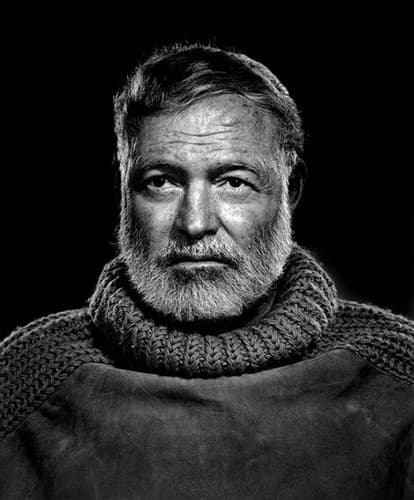
Ernest Miller Hemingway was an American novelist, short-story writer, and journalist. His economical and understated style—which included his iceberg theory—had a strong influence on 20th-century fiction, while his adventurous lifestyle and public image brought him admiration from later generations. Hemingway produced most of his work between the mid-1920s and the mid-1950s, and he was awarded the 1954 Nobel Prize in Literature. He published seven novels, six short-story collections, and two nonfiction works. Three of his novels, four short-story collections, and three nonfiction works were published posthumously. Many of his works are considered classics of American literature.
Similar books
- A Farewell to Arms
Ernest Hemingway
3.8 (263k) average on GoodreadsHistorical FictionExplores love and war with Hemingway's signature sparse prose and focus on a male protagonist's experiences.
- The Old Man and the Sea
Ernest Hemingway
3.8 (831k) average on GoodreadsLiterary FictionShowcases Hemingway's thematic depth and concise style, focusing on an individual's struggle against overwhelming forces.
- All Quiet on the Western Front
Erich Maria Remarque
4.0 (355k) average on GoodreadsHistorical FictionA powerful anti-war novel depicting the brutal realities and psychological toll of conflict from a soldier's perspective.
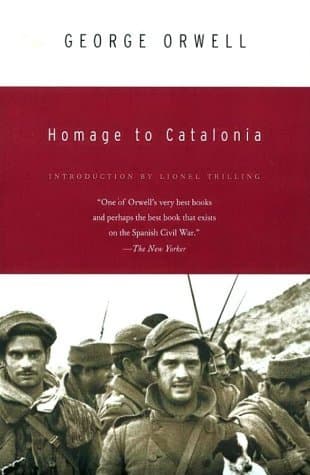
- Homage to Catalonia
George Orwell
4.1 (43k) average on GoodreadsPoliticsOrwell's non-fiction offers a more direct, politically analytical, and disillusioned account of the Spanish Civil War, focusing on internal political betrayals. Hemingway's novel prioritizes the psychological and emotional impact of war on individuals over broad political analysis.
- One Hundred Years of Solitude
Gabriel García Márquez
4.1 (753k) average on GoodreadsLiterary FictionThrough the multi-generational story of the Buendía family, a mythical town deals with the repeating patterns of time, love, and solitude, as the extraordinary mixes with the ordinary.
- The Goldfinch
Donna Tartt
3.9 (720k) average on GoodreadsLiterary FictionHaunted by a tragic explosion and clutching a stolen Dutch masterpiece, a young orphan navigates the opulent drawing rooms of New York and the gritty underbelly of the art world, desperately seeking connection and redemption amidst a life spiraling into crime and obsession.





Enjoyed the summary?
A summary gives you the shape of the book. The book itself has the detail, the examples and the voice.
Find For Whom the Bell Tolls on AmazonAs an Amazon Associate, BookBrief earns from qualifying purchases. How we're funded