
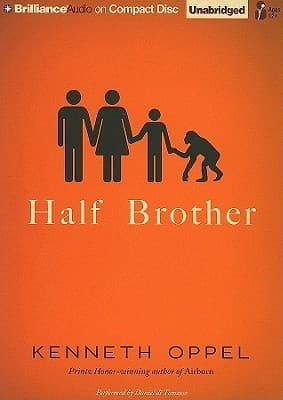
Synopsis
Covers the whole plot, including the ending.
- Difficulty
- Medium
- Pacing
- Moderate
- Mood
- Thought-provoking, Emotional, Heartbreaking, Hopeful
- Read it if
- You enjoy thought-provoking historical fiction exploring animal rights, family dynamics, and ethical scientific experiments, especially stories with strong emotional bonds between humans and animals.
- Skip it if
- You prefer lighthearted stories without moral dilemmas, or find the separation of beloved animal characters too distressing.
Half Brother Plot Summary
Covers the whole plot, including the ending.
A New 'Brother' Arrives
Thirteen-year-old Ben Tomlin lives a normal life in Victoria, British Columbia, until his father, Richard Tomlin, a primatologist, announces a new research project. The family, including Ben's mother, Dr. Eleanor Tomlin, moves to a research facility on a university campus. Richard introduces their new 'family member': Zan, an eight-day-old chimpanzee they will raise as a human child. The goal is to see if Zan can learn American Sign Language (ASL) and communicate, proving chimpanzees have advanced thinking. Ben must treat Zan as a younger brother. He initially dislikes this role, feeling his life and privacy are sacrificed for his father's experiment. He struggles with sharing his home with a chimp.
Early Challenges and Developing Bonds
The first days with Zan are messy. Zan is demanding, untidy, and throws tantrums, making Ben's life hard. Ben's parents, especially his father, keep a scientific distance, carefully recording Zan's actions. Ben, however, feels increasingly connected to Zan. He teaches Zan to play, comforts him, and becomes the chimp's preferred friend. He starts to see Zan not just as a research subject but as a living being capable of affection and understanding. This growing bond creates a split between Ben and his father, who sees Ben's emotional attachment as possibly harming the experiment's objectivity. Ben also learns ASL with Zan, becoming a part of the chimp's language development.
Zan's Progress and Public Scrutiny
As Zan grows, he shows a strong ability for ASL, quickly learning many signs and combining them to make new phrases. His progress draws media attention, turning the Tomlin home into a constant show. Journalists, photographers, and animal rights activists come to the university. Some call Richard Tomlin a visionary; others call the experiment unethical. Ben, now fluent in ASL, helps interpret Zan's signs, often acting as a link between the chimp and the outside world. He is proud of Zan's achievements, strengthening his belief in Zan's intelligence and personhood. This belief increasingly conflicts with his father's more clinical view.
The Arrival of the Graduate Students
Two graduate students, Peter and Sylvia, join the Tomlin team to help with the project's demands and media attention. Peter, a handsome and excited young man, quickly bonds with Zan and shows real affection for him. Sylvia is more quiet and academic, initially focusing on collecting data. Ben develops a crush on Sylvia, who seems to understand his unique situation and the emotional toll of the experiment. Their presence adds new layers to the family dynamic, giving Ben allies who also see Zan as more than just a research subject, though they still follow Richard's scientific rules.
Zan's Teenage Years and Challenging Behavior
As Zan enters adolescence, his physical strength and wild instincts become harder to manage. Even though he was raised in a human home, his chimpanzee nature shows through unpredictable aggression, destructive behavior, and a strong protective instinct, especially towards Ben. An incident where Zan badly injures a neighbor's dog during an escape shows the dangers he poses. These events cause great stress for the Tomlin family and the university, leading to debates about Zan's future. Richard Tomlin, still committed to the experiment, starts to see the challenges of keeping a strong, undomesticated animal in a human home. Questions about Zan's long-term ability to stay in their care begin to appear.
The Ethical Dilemma and University Pressure
After several incidents, including Zan's aggressive behavior towards a human visitor and property damage, the university administration worries. The initial excitement for the project lessens, replaced by fear and a demand for a solution. Richard Tomlin faces pressure to either control Zan or remove him from campus. Animal rights groups, once supportive, now ask for Zan to be released into a more natural environment, while others argue for euthanasia. Ben is scared of losing Zan and argues strongly with his father, who is torn between his scientific goals and the safety of his family and community. The ethical parts of the experiment become clear.
The Decision to Send Zan Away
After much thought and under university pressure, Richard Tomlin decides to send Zan away. He arranges for Zan to go to the Yerkes Primate Center in Atlanta, Georgia, a facility with other research chimpanzees. This decision breaks Ben, who feels betrayed by his father and believes Zan is unfairly punished for his natural instincts. He tries to convince his parents to change their minds, arguing that Zan is his brother and belongs in their family. Zan's departure leaves a hole in Ben's life and creates a deep sense of loss and anger towards his father, widening the emotional gap between them.
A Visit to Yerkes
Months after Zan left, Ben convinces his parents to take him to visit Zan at the Yerkes Primate Center. The reunion is bittersweet. Ben is sad to see Zan confined in an enclosure, surrounded by other chimps, showing behaviors of institutionalization. Zan recognizes Ben immediately, signing 'brother' and showing joy and confusion. However, Zan also shows a new caution and a deeper connection to his chimpanzee companions, showing the irreversible changes in his life. Ben realizes that while Zan is safe, he is not the same chimp he raised. This visit strengthens Ben's belief that Zan deserves a better, freer life than his current one.
The Rescue Plan
Upset by Zan's conditions at Yerkes, Ben decides to rescue him. He tells Sylvia and Peter, who, despite initial concerns about breaking the law, agree to help. Sylvia, now unhappy with the ethics of primate research, uses her academic contacts to find a more natural, ethical chimpanzee sanctuary in Florida run by Dr. Aris. The plan is a secret operation to 'kidnap' Zan from Yerkes and transport him across state lines. Ben carefully plans the details, driven by his love for Zan and his belief that he is fixing a wrong. The risks are very high, with possible severe legal consequences.
The Escape and Journey
The three carry out their plan at night. Ben, using his knowledge of Zan's habits and the facility's layout, gets Zan from his enclosure. The escape is tense with close calls. With Zan in a prepared crate in their van, they begin their long, dangerous journey to Florida. They face problems, including a flat tire and constant fear of being caught. Zan is disoriented but trusts Ben, relying on his signs and presence. The journey strengthens the bond between Ben, Sylvia, and Peter, as they face the consequences of their actions together, all for Zan's freedom.
Confrontation and Resolution
Richard and Eleanor Tomlin learn of Zan's disappearance and immediately suspect Ben. They chase the trio, eventually catching them. A dramatic confrontation happens. Ben passionately explains why he freed Zan, accusing his father of abandoning his 'son.' Richard, at first angry, must face the moral parts of his experiment and the depth of Ben's love for Zan. Eleanor, always more understanding, supports Ben. After a tense talk, Richard, seeing the deep bond and the ethical mess he created, makes the hard decision to let Zan go to Dr. Aris's sanctuary. This means sacrificing his career and reputation for Zan's well-being and Ben's beliefs.
Zan's New Home
The group, now including Ben's parents, arrives at Dr. Aris's sanctuary in Florida. Dr. Aris, a compassionate and experienced primatologist, welcomes Zan. The sanctuary has a large, natural habitat where Zan can live among other chimpanzees, learn to find food, and develop more natural behaviors. Ben shares a final, emotional goodbye with Zan, signing 'I love you, brother.' He watches Zan join his new family, understanding that while their lives will go separate ways, Zan has found a true home where he can thrive as a chimpanzee. The experience changes Ben, solidifying his moral sense and his understanding of love, responsibility, and the complex relationship between humans and animals.
Principal Figures
Ben Tomlin
Protagonist
Thirteen-year-old boy who forms an unbreakable bond with Zan, the chimpanzee raised as his brother.
Ben is initially a reluctant participant in his father's experiment, resenting the intrusion of Zan into his life. However, as he spends more time with Zan, he develops a deep, familial love for the chimp, seeing him as a brother rather than a research subject. He learns ASL to communicate with Zan and becomes his primary interpreter and protector. Ben is sensitive, morally driven, and increasingly independent, often clashing with his father's scientific detachment. His journey is one of profound empathy and a growing conviction that animals deserve respect and freedom, leading him to defy his parents to save Zan.
Relationships: Zan (half-brother, best friend, subject of protection); Richard Tomlin (father, initially distant and scientifically focused, later understanding); Eleanor Tomlin (mother, supportive, empathetic); Sylvia (love interest, ally in Zan's rescue); Peter (friend, ally in Zan's rescue)
Zan
Central Character
An infant chimpanzee raised as a human child to test his language acquisition abilities.
Zan is an intelligent and emotionally complex chimpanzee. From an early age, he demonstrates a remarkable capacity for learning American Sign Language, communicating desires, feelings, and even abstract concepts. He forms deep attachments, particularly to Ben, whom he considers his 'brother.' As he matures, his natural chimpanzee instincts, including immense strength and occasional aggression, become more pronounced, challenging the human environment he lives in. Zan is a symbol of the blurred lines between human and animal, embodying the ethical dilemmas of scientific research and the profound capacity for interspecies connection.
Relationships: Ben Tomlin (half-brother, primary caregiver and confidant); Richard Tomlin (adoptive father, primary researcher); Eleanor Tomlin (adoptive mother, caregiver); Sylvia (caregiver, friend); Peter (caregiver, friend)
Dr. Richard Tomlin
Antagonist/Supporting
Ben's father, a renowned primatologist leading the controversial language acquisition experiment with Zan.
Richard Tomlin is a driven and ambitious scientist, deeply committed to his research on chimpanzee language. He is initially portrayed as somewhat emotionally detached, prioritizing the scientific objectivity of the experiment over the emotional well-being of his family or even Zan. He struggles to reconcile Zan's growing personhood with his identity as a research subject. While he loves Ben, his focus on the experiment often makes him seem distant and critical. He faces immense pressure from the university and public, eventually forced to confront the ethical implications of his work and the profound bond between Ben and Zan.
Relationships: Ben Tomlin (son, often in conflict over Zan); Eleanor Tomlin (wife, intellectual partner, sometimes moral compass); Zan (research subject, adoptive son)
Dr. Eleanor Tomlin
Supporting
Ben's mother, a compassionate and intelligent woman who supports her husband's research but often acts as an emotional anchor.
Eleanor Tomlin is Ben's mother and Richard's wife, a capable academic in her own right. She is more empathetic than Richard, often mediating between her husband's scientific rigor and Ben's emotional attachment to Zan. She cares deeply for both Ben and Zan, and while she supports the experiment, she is more attuned to the psychological and ethical complexities involved. She provides emotional support for Ben and often helps him understand his father's motivations. Her quiet strength and understanding are crucial in navigating the family's turbulent experience.
Relationships: Ben Tomlin (son, supportive); Richard Tomlin (husband, intellectual partner); Zan (adoptive son, caregiver)
Sylvia
Supporting
A graduate student assisting the Tomlin project, who becomes an ally and love interest for Ben.
Sylvia is a bright and initially reserved graduate student who joins the Tomlin project. She is diligent in her scientific duties but, like Ben, gradually develops a deeper understanding and empathy for Zan. She becomes a confidante and friend to Ben, sharing his concerns about Zan's welfare. As the ethical dilemmas of the experiment become more apparent, Sylvia's commitment to scientific objectivity wanes, and she becomes a crucial ally in Ben's plan to rescue Zan. She also develops a mutual romantic interest in Ben.
Relationships: Ben Tomlin (love interest, fellow activist); Zan (subject of care, fellow activist); Richard Tomlin (professor, project leader)
Peter
Supporting
An enthusiastic graduate student involved in the Zan project, who also becomes an ally to Ben.
Peter is a charismatic and initially very enthusiastic graduate student who joins the Tomlin project. He quickly forms a bond with Zan, showing genuine affection and a playful demeanor that Zan responds to. While he initially adheres to Richard's scientific protocols, he also shares Ben's growing concern for Zan's emotional and physical well-being as the chimp matures. He is loyal and dependable, ultimately agreeing to help Ben with the risky plan to free Zan, proving his commitment to what he believes is right, even if it means breaking the law.
Relationships: Ben Tomlin (friend, fellow activist); Zan (subject of care, fellow activist); Richard Tomlin (professor, project leader)
Dr. Aris
Supporting
The compassionate director of a natural chimpanzee sanctuary in Florida.
Dr. Aris is introduced late in the novel as the director of a humane chimpanzee sanctuary in Florida. She represents an ethical alternative to traditional primate research facilities. She understands the complex needs of chimpanzees raised in human environments and offers them a more natural and enriching life among their own kind. Her sanctuary provides the ultimate safe haven for Zan, allowing him to integrate into a chimpanzee community. She is a figure of hope and ethical responsibility.
Relationships: Zan (future caregiver, sanctuary director); Ben Tomlin (ally in Zan's welfare)
Dr. Aronson
Mentioned
A university dean who pressures Richard Tomlin to control Zan.
Dr. Aronson is the university dean who becomes increasingly concerned about Zan's behavior and the controversy surrounding the project. He represents the institutional pressure and public scrutiny that Richard Tomlin faces. His primary concern is the university's reputation and safety, leading him to demand a solution to the 'Zan problem' and ultimately influencing the decision to send Zan to Yerkes.
Relationships: Richard Tomlin (superior, source of pressure)
Themes & Insights
The Nature of Humanity and Animalhood
The novel explores what it means to be human versus animal, through Zan's development. Zan's ability to learn ASL questions common definitions of intelligence and personhood, blurring species lines. Ben's view often shows Zan's emotional depth and capacity for love, while his father initially focuses on scientific measurements. The story asks if language alone defines humanity and if an animal, by showing human-like traits, deserves human-like rights and consideration, especially when Zan's wild instincts appear.
“He was my brother. He wasn't a science experiment. He wasn't a 'chimp.' He was Zan.”
Family and Belonging
The story is about the unusual family unit of the Tomlins and Zan. Ben struggles with Zan's presence but accepts him as a brother, creating a strong bond that defines his sense of responsibility. The dynamics between Ben, his parents, and Zan show different ideas of 'family' – whether it is defined by blood, shared experience, or love. Zan's need for a home among his own kind at the sanctuary shows that true belonging might mean finding one's place within their natural community, even if it means separation from an adoptive family.
“How could I explain to him that he wasn't really family, that he was just a visitor? He was more family than anyone.”
Ethics of Scientific Research
The novel looks at the ethical parts of animal experimentation, especially with intelligent and social primates. Richard Tomlin's experiment, while new, raises questions about the subject's welfare, possible harm, and the researchers' moral responsibility. The story explores the conflict between scientific progress and animal rights. It makes characters like Ben, Sylvia, and even Richard face the consequences of treating living beings as just data. Zan's situation at Yerkes and Ben's rescue highlight the argument for more humane and natural environments for research animals.
“We'd taken him out of the jungle, dressed him in clothes, taught him to sign, and now we were putting him in a cage. What kind of scientists were we?”
Coming of Age and Moral Courage
Ben's journey is a coming-of-age story. Initially a typical teenager, he is put in an unusual situation that makes him grow up quickly. He develops a strong moral sense, learning to trust his own feelings and beliefs even when they conflict with his parents' authority and social norms. His decision to go against his father and plan Zan's rescue shows courage, loyalty, and a deep understanding of justice. This experience shapes his identity, teaching him about love, sacrifice, and standing up for what he believes is right, no matter the personal cost.
“I had to do it. For Zan. For me. For everyone who had ever said he was just an animal.”
Plot Devices & Literary Techniques
First-Person Narrative (Ben's Perspective)
Allows readers intimate access to Ben's emotional journey and moral development.
The story is told entirely from Ben Tomlin's point of view, immersing the reader in his emotional and moral struggles. This narrative choice is crucial because it allows us to experience the profound bond with Zan firsthand, understand Ben's internal conflicts, and witness his growing empathy. It ensures that Zan is perceived not as a scientific subject but as a beloved brother through Ben's eyes, making the ethical dilemmas more personal and impactful. This perspective also highlights the generational and moral clash between Ben and his father.
American Sign Language (ASL)
A literal and symbolic bridge between human and chimpanzee worlds.
ASL serves as a central plot device, enabling communication between Zan and the human characters. It is the core of Richard Tomlin's experiment, but it quickly becomes a symbol of Zan's intelligence, his capacity for connection, and his 'personhood.' For Ben, learning ASL is not just a research tool but a way to truly understand and bond with his 'brother.' The signs Zan uses, particularly 'brother' and 'love,' are powerful emotional anchors in the narrative, highlighting the chimp's ability to express complex emotions and fostering the reader's empathy.
The Research Facility/Home
A confined, liminal space symbolizing the blurred boundaries of the experiment.
The Tomlin family's home, which doubles as a research facility on a university campus, acts as a significant setting. It represents the artificial environment in which Zan is raised, a space designed to blur the lines between human and animal living. This confinement ultimately highlights the conflict between Zan's innate wildness and the human expectations placed upon him. The security measures and constant surveillance within this 'home' underscore the ethical tensions and the lack of true freedom for Zan, eventually leading to his escape from this restrictive environment.
Zan's Aggressive Incidents
Foreshadowing and catalysts for escalating conflict and ethical concerns.
The episodes of Zan's aggressive behavior (e.g., injuring the dog, interactions with visitors) function as critical plot devices. They serve as stark reminders of Zan's powerful chimpanzee nature, which cannot be entirely suppressed by human upbringing. These incidents escalate the tension, drive the plot forward by creating conflict with the university and the public, and force the characters, especially Richard, to confront the practical and ethical limits of the experiment. They are catalysts for the decisions to send Zan away and ultimately for Ben's rescue plan.
Half Brother Quotes
“He's not a pet. He's a person.”
“Sometimes you have to break the rules to do what's right.”
“We taught him to be human, but we never learned to be chimpanzees.”
“Love isn't something you can measure in an experiment.”
“Just because you can do something, doesn't mean you should.”
“He was my brother, and I was going to save him.”
“Words aren't the only way to communicate.”
“Sometimes the right thing feels wrong, and the wrong thing feels right.”
“We were playing God, and we had no idea what we were doing.”
“Home isn't a place; it's who you're with.”
“You can't unlearn what you've learned.”
“He was more than a project; he was part of our family.”
“Sometimes the hardest thing is to let go.”
“We gave him a voice, but we didn't listen to what he was saying.”
Quiz
10 questions on the plot and the characters. Each answer comes with a short explanation.
Question 1
What is the primary goal of Ben's father's research project with Zan?
- To study chimpanzee social behavior in captivity
- To determine if chimpanzees can acquire advanced language skills
- To train Zan for entertainment purposes
- To compare chimpanzee intelligence to human children
Show answer
B. To determine if chimpanzees can acquire advanced language skills Ben's father is a behavioral scientist conducting a high-profile experiment specifically focused on whether chimpanzees like Zan can learn and use advanced language, which is central to the book's plot.
Question 2
How old was Ben when Zan first came into his life?
- 10 years old
- 13 years old
- 8 years old
- 15 years old
Show answer
B. 13 years old The book states that Ben was an only child for thirteen years before Zan arrived, making him 13 when the chimpanzee was introduced to the family.
Question 3
What does Ben's mother tell him to do regarding Zan?
- Treat Zan like a pet
- Treat Zan like a little brother
- Avoid getting too attached to Zan
- Help train Zan for the experiment
Show answer
B. Treat Zan like a little brother Ben's parents specifically instruct him to treat Zan like a little brother, which sets the stage for Ben's evolving relationship with the chimpanzee.
Question 4
Why does Ben initially agree to participate in his father's experiment with Zan?
- He is excited about having a chimpanzee brother
- He wants to impress his father
- He hopes it will distract his father from scrutinizing him
- He believes strongly in the scientific value of the project
Show answer
C. He hopes it will distract his father from scrutinizing him Ben reluctantly agrees because he thinks that with Zan as the focus, his father will be less likely to scrutinize and pressure him personally.
Question 5
What major conflict does Ben face as his relationship with Zan deepens?
- Choosing between his friends and Zan
- Deciding whether to run away with Zan
- Choosing between obeying his father and protecting Zan
- Balancing schoolwork with caring for Zan
Show answer
C. Choosing between obeying his father and protecting Zan Ben's central conflict involves choosing between following his father's scientific directives and protecting Zan from what he perceives as harm or an 'unimaginable fate.'
Question 6
How does Ben's view of Zan change throughout the story?
- He sees Zan as a brother rather than just an experiment
- He becomes afraid of Zan as Zan grows older
- He starts to see Zan as a burden
- He views Zan more as a scientific subject over time
Show answer
A. He sees Zan as a brother rather than just an experiment Initially reluctant, Ben develops a strong bond with Zan, coming to see him as a true brother rather than merely a research subject, which drives the emotional core of the story.
Question 7
What broader theme does 'Half Brother' explore through Zan's treatment?
- The importance of scientific progress at any cost
- The way humanity judges and treats other species
- The challenges of moving to a new city
- The benefits of animal testing in research
Show answer
B. The way humanity judges and treats other species The book critically examines how humans define and treat other species, particularly through the ethical dilemmas surrounding Zan's role in the experiment.
Question 8
What does the title 'Half Brother' metaphorically represent in the context of Ben and Zan's relationship?
- That Ben and Zan share the same father
- That Zan is only partially accepted as family
- That Ben has another human sibling
- That Zan is half-human, half-chimpanzee
Show answer
B. That Zan is only partially accepted as family The title reflects the complex family dynamics: while Ben comes to see Zan as a brother, others (like his father) view Zan primarily as a research subject, making Zan only partially integrated as family.
Question 9
What is implied by the phrase 'unimaginable fate' that Ben fears for Zan?
- Zan being sent to a zoo
- Zan being euthanized or subjected to harmful procedures
- Zan running away into the wild
- Zan being sold to a circus
Show answer
B. Zan being euthanized or subjected to harmful procedures Ben's fear stems from the potential consequences of the experiment failing or becoming too risky, which could lead to Zan being harmed or killed in the name of science, a common ethical issue in animal research.
Question 10
How does the book address the theme of 'how families are made'?
- By showing that families are only formed through blood relations
- By illustrating that family bonds can develop through care and connection, not just biology
- By emphasizing the importance of traditional family structures
- By suggesting that scientific experiments can create new family units
Show answer
B. By illustrating that family bonds can develop through care and connection, not just biology Through Ben and Zan's relationship, the book explores how familial bonds are built on love, responsibility, and emotional connection, challenging the idea that family is solely defined by biological ties.
Half Brother FAQ
What is 'Half Brother' about?
'Half Brother' follows thirteen-year-old Ben Tomlin whose family moves for his father's scientific experiment: raising a chimpanzee named Zan as a human child to teach him sign language. Ben initially resents Zan but grows to see him as a true brother, leading to conflicts with his father over Zan's treatment and the ethics of the experiment.
Why should I read 'Half Brother'?
This book offers a compelling exploration of family, ethics, and animal rights through the emotional bond between a boy and a chimpanzee. It raises thought-provoking questions about what makes us human while delivering a heartfelt story about loyalty and difficult choices.
What is the background/setting of 'Half Brother'?
The story takes place in the 1970s, during a period when real-world experiments like Project Nim were attempting to teach chimpanzees human language. Ben's family lives in a university setting where his father conducts the research, creating tension between scientific ambition and domestic life.
What are the most memorable quotes?
Key quotes include Ben's realization 'He wasn't just an experiment. He was my brother' and his father's cold declaration 'He's a research subject, not a pet.' These lines capture the central conflict between emotional connection and scientific detachment.
What writing style does Kenneth Oppel use?
Oppel uses first-person narration from Ben's perspective, creating an intimate, emotionally charged story. The prose is accessible yet sophisticated, blending scientific details with personal reflection to engage both young adult and adult readers.
What minor details add significant meaning?
Small moments like Zan choosing to sleep in Ben's bed instead of his crib, or Ben noticing Zan's preference for certain foods, gradually build the chimpanzee's personality beyond being just a research subject. These details make Zan's eventual fate more emotionally impactful.
What are some subtle foreshadowing moments?
Early scenes where Ben's father refers to Zan as 'the subject' rather than by name foreshadow his willingness to treat Zan as disposable data. Similarly, mentions of other failed primate experiments hint at the potential tragedy awaiting Zan.
What unexpected character connections exist?
Ben's mother develops a maternal bond with Zan that mirrors her relationship with Ben, creating unexpected parallels between human and chimpanzee family dynamics. Additionally, Ben's school friend Jennifer becomes an ally in protecting Zan, connecting his social life to the experiment.
What are unspoken character motivations?
Ben's father is driven not just by scientific curiosity but by a deep need for professional recognition that blinds him to ethical concerns. Ben's initial reluctance to bond with Zan stems from fear of his father's disapproval and jealousy over sharing parental attention.
What psychological complexities do characters exhibit?
Ben experiences cognitive dissonance as he's told to treat Zan as a brother while witnessing his father's clinical detachment. Zan himself displays complex emotions through sign language, challenging the human characters' assumptions about animal consciousness.
What are the major emotional turning points?
Key moments include when Zan signs 'hurt' after a medical procedure, making Ben realize his suffering; when Ben discovers plans to send Zan to a research facility; and the final confrontation where Ben must choose between obeying his father or protecting Zan.
How do relationship dynamics evolve?
Ben and Zan's relationship grows from resentment to deep brotherly love, while Ben's relationship with his father deteriorates as ethical conflicts emerge. Ben's mother shifts from supporting her husband's work to questioning it, creating marital tension.
Which parts remain ambiguous or open-ended?
The book doesn't provide a clear resolution about whether Zan ultimately achieves 'personhood' or remains viewed as an animal. Ben's final decision and its consequences are left somewhat open, inviting readers to contemplate what they would do in his situation.
What are controversial scenes or decisions?
Ben's father's decision to subject Zan to invasive procedures for research purposes sparks ethical debate. Ben's eventual act of defiance—whether interpreted as rebellion or moral courage—raises questions about when disobedience becomes necessary.
'Half Brother' ending explained: how it ends & what it means
The ending shows Ben taking drastic action to protect Zan from being sent to a research facility, though the exact outcome is ambiguous. This represents Ben's ultimate choice of empathy over obedience, suggesting that true family bonds transcend biological or species boundaries.
What ethical questions does the book raise?
The novel questions whether animals like Zan should be granted personhood rights, the morality of using intelligent creatures for research, and whether scientific progress justifies emotional harm. It also explores parental authority versus a child's moral judgment.
How does the 1970s setting influence the story?
The historical context allows the experiment to proceed with fewer ethical regulations than today, making the family's situation plausible. It also reflects changing attitudes toward animal rights that were emerging during that decade.
What role does sign language play in the story?
Zan's acquisition of sign language becomes the central evidence of his intelligence and personhood. His signs—particularly emotional ones like 'love' and 'hurt'—directly challenge the scientific view of him as merely a research subject.
About the author

Kenneth Oppel is a Canadian author known for his works of children's and young adult fiction. His notable books include "Airborn," "Silverwing," "Skybreaker," "This Dark Endeavor," "Sunwing," and "Starclimber," which often blend adventure with elements of fantasy and science fiction. Oppel's storytelling has garnered recognition among young readers and educators alike.
Similar books
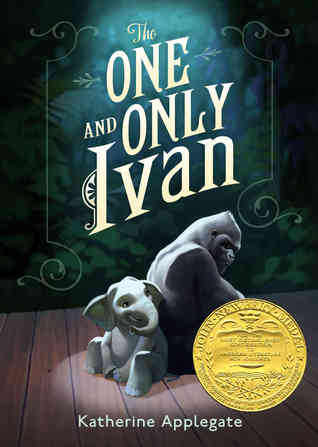
- The One and Only Ivan
Katherine Applegate
4.3 (141k) average on GoodreadsFantasyExplores the life of an ape in captivity and themes of freedom and friendship, from an animal's perspective.
- War Horse
Michael Morpurgo
4.1 (42k) average on GoodreadsChildren'sWhile War Horse focuses on the deep bond between a boy and his horse amidst the backdrop of WWI, highlighting loyalty and the impact of conflict, Half Brother delves into the more complex ethical and psychological implications of raising an animal as a human, directly confronting species boundaries and scientific responsibility rather than just companionship.
- Harry Potter and the Sorcerer's Stone
J.K. Rowling
4.5 (7M) average on GoodreadsFantasyRescued from a miserable life under the stairs, an orphaned boy discovers he's a wizard destined for a magical school, where he uncovers a dangerous secret tied to the dark wizard who murdered his parents.
- The Hobbit, or There and Back Again
J.R.R. Tolkien
4.3 (2.9M) average on GoodreadsFantasyA comfort-loving hobbit named Bilbo Baggins is whisked away by a mischievous wizard and a band of dwarves on an unexpected journey to reclaim stolen treasure from a fearsome dragon, discovering courage and a magical ring along the way.
- Harry Potter and the Goblet of Fire
J.K. Rowling
4.6 (2.6M) average on GoodreadsFantasyA bewildered Harry Potter, underage and thrust into a deadly Triwizard Tournament, must brave dragons, mermaids, and a resurgent dark magic to survive a year that will forever alter the wizarding world.
- Harry Potter and the Order of the Phoenix
J.K. Rowling
4.5 (2.5M) average on GoodreadsFantasyIn a year of oppressive secrets and the threat of Voldemort, Harry Potter and Dumbledore's Army secretly train for war, shown through Jim Kay and Neil Packer's dark illustrations.





Enjoyed the summary?
A summary gives you the shape of the book. The book itself has the detail, the examples and the voice.
Find Half Brother on AmazonAs an Amazon Associate, BookBrief earns from qualifying purchases. How we're funded