
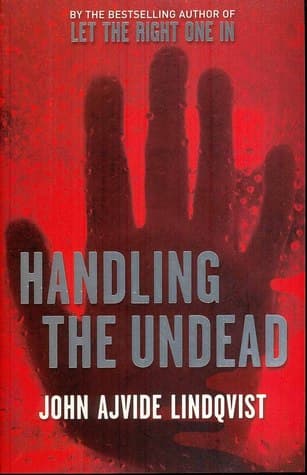
Synopsis
Covers the whole plot, including the ending.
- Difficulty
- Medium
- Pacing
- Moderate
- Mood
- Atmospheric, Eerie, Melancholy, Philosophical, Disturbing
- Read it if
- You enjoy thought-provoking, dark fantasy that explores grief, humanity, and societal breakdown through a unique take on the zombie apocalypse.
- Skip it if
- You prefer fast-paced horror with clear-cut heroes and villains, or find deeply unsettling philosophical questions about death and undeath too disturbing.
Handling the Undead Plot Summary
Covers the whole plot, including the ending.
The Unsettling Heatwave and Electrical Anomaly
Stockholm experiences a severe heatwave. At the same time, a strange electrical problem affects the city: lights will not turn off, appliances hum constantly, and car engines run even when switched off. This electrical disturbance creates a constant, low hum, adding to a general sense of unease. David, a journalist, sees this when his apartment lights stay on. Elina, an elderly woman, struggles with her oven remaining on. The city's residents are bewildered by these unexplained events, which seem to hint at something much larger and more terrifying.
The First Awakenings
Reports of the dead reanimating begin to appear, at first dismissed as hoaxes. In the city morgue, staff see the impossible: bodies, including that of Jompa, a recently deceased addict, sit up. Similar events happen in homes where wakes are held. Anna, whose grandmother just died, is horrified when her grandmother's body moves. These reanimated corpses are not violent; they are slow, confused, and emit a low murmur, seemingly drawn to the homes and people they knew. Authorities are overwhelmed and struggle to understand or control the crisis, initially trying to downplay it.
David's Grief and the Return of Eva
David, still recovering from his wife Eva's sudden death in a car accident, is deep in grief. He feels guilty, believing he is responsible for her death. As news of the dead returning spreads, David's grief mixes with a desperate, impossible hope. He sees the dead returning from a distance, slowly moving across the city. His longing for Eva is clear, and he starts to imagine her among them, despite knowing it is impossible. This sets the scene for his deeply personal encounter with the phenomenon.
The Reunited Families
Many families find their recently deceased loved ones returning home. Majsan, who recently lost her son, Elias, in a drowning accident, is overjoyed and terrified when he appears at her door. Similarly, Elina, a grieving grandmother, finds her grandson, also named Elias, at her apartment. These 'reawakened' are not the people they once were; they are silent, unresponsive, and seem to exist in a state of limbo, pulled by an instinct towards their former lives. Families struggle with the emotional and ethical problems of housing these silent, living dead, torn between love and revulsion.
The Political and Social Response
As the scale of the reanimations becomes clear, the Swedish government and military must act. They create protocols to control the situation and maintain public order. At first, there is a rule to keep the reawakened in their homes, but this does not last. Public opinion is split: some see the reawakened as a miracle, a second chance, while others see them as an abomination. Large gatherings of the reawakened, moving slowly and silently, become common, disrupting daily life. Authorities are caught between humanitarian concerns and the practicalities of a collapsing social order.
Gustav and the Search for Meaning
Gustav, a former pastor, becomes obsessed with understanding the religious meaning of the reanimations. He sees the event through a spiritual lens, struggling to fit it with his faith and traditional teachings about life and death. He visits families housing the reawakened, seeking answers and offering guidance, though often finding none. His journey reflects a wider societal search for meaning in the face of the inexplicable, as old beliefs are shattered. He questions the idea of a God who would allow such a thing to happen, and the nature of the soul and the afterlife.
The Growing Public Fear and Violence
As the initial shock fades, public fear and hostility towards the reawakened grow. Groups of people, driven by panic, start attacking the reawakened, seeing them as monsters. These violent acts are often brutal and unprovoked. The government struggles to protect the reawakened and maintain order, but their large numbers and widespread fear make it impossible. This societal breakdown shows humanity's darker side when faced with the unknown and the collapse of established norms, leading to tragic results for both the living and the reawakened.
David's Confrontation with Eva
David's desperate hope comes true when Eva, reawakened, appears at their apartment. However, the reunion is not the comfort he imagined. Eva is silent, unresponsive, and a shell of her former self, a constant reminder of his loss rather than a true return. David struggles with her presence, moving between love, despair, and unease. He tries to communicate with her, to find some spark of the woman he loved, but she remains distant. This personal tragedy reflects the broader societal struggle to reconcile the living with the reawakened, highlighting the gap between life and this new existence.
The Collective Gathering and the 'Nest'
Over time, the reawakened start to show collective behavior, slowly moving towards specific places, often parks. They form silent, still congregations, standing together in what some call 'nests.' These gatherings are eerie, drawing both curious onlookers and fearful mobs. The military tries to manage these gatherings, but their numbers and lack of aggression make them hard to disperse without violence. The 'nests' become symbols of the new reality, raising questions about the reawakened's purpose and whether they share a consciousness or are simply drawn by an unknown force.
The Final Stand and the End of the Anomaly
As suddenly as it began, the heatwave breaks, and the electrical problems stop. At the same time, the reawakened, who had been preserved until this point, begin to decay. Their bodies start to decompose like any normal corpse. This marks the end of their strange existence. The remaining reawakened eventually decompose, leaving families and society to process what happened. The event leaves a lasting mark on Stockholm, forcing its residents to face the fragility of life, the nature of death, and the limits of their understanding.
Handling the Undead Characters
David
Protagonist
A grieving journalist whose wife returns as one of the reawakened.
David is a journalist grappling with the recent, sudden death of his wife, Eva, in a car accident. He is consumed by guilt and a profound sense of loss. His initial skepticism about the reanimations quickly turns into a desperate hope that Eva might return. He is a sensitive and introspective man, deeply affected by the strangeness unfolding around him. His journey is one of personal reconciliation with grief and the impossible reality of his wife's return, forcing him to confront the true meaning of life and death.
Relationships: Eva (Deceased wife, then reawakened and silent); Gustav (Acquaintance, shares discussions about the phenomenon)
Eva
Supporting
David's deceased wife, who returns as one of the reawakened.
Eva is David's wife, whose sudden death in a car accident plunges him into despair. She is the catalyst for David's personal involvement in the reawakening phenomenon. When she returns, she is a silent, unresponsive shell, a physical manifestation of David's grief and the profound mystery of the reawakened. Her presence forces David to confront the reality that she is not truly 'back' in the way he hoped, but rather a haunting reminder of what was lost. She symbolizes the ambiguous nature of the reawakening.
Relationships: David (Husband, deeply grieved by her death and then confronted by her reawakened form)
Majsan
Supporting
A mother whose drowned son, Elias, returns as one of the reawakened.
Majsan is a mother who recently lost her young son, Elias, in a drowning accident. Her grief is profound and raw. When Elias returns, she is initially overjoyed, seeing it as a miracle and a second chance. She fiercely protects him, even as others view him with fear or disgust. Her character embodies the unconditional love of a parent and the desperate hope for reunion, even in the face of the unnatural. She struggles with the reality of Elias's altered state but chooses to embrace him regardless.
Relationships: Elias (son) (Deceased son, then reawakened and silent)
Elias (Majsan's son)
Supporting
A young boy who drowned and returns as one of the reawakened.
Elias is Majsan's young son, whose accidental drowning is a source of immense pain for his mother. He is one of the first children to reawaken, returning to his mother's home. Like the other reawakened, he is silent, unresponsive, and seems to exist in a state of suspended animation. His presence forces Majsan to confront the boundaries of love and loss. He is a symbol of innocence lost and then returned in a deeply unsettling way, challenging the natural order of life and death.
Relationships: Majsan (Mother, fiercely protective of him)
Elina
Supporting
An elderly woman whose grandson, Elias, returns to her apartment.
Elina is an elderly woman, a grandmother who is grieving the loss of her grandson, Elias. She is initially affected by the strange electrical phenomena. When her grandson returns to her apartment, she, like Majsan, takes him in, driven by a deep, grandmotherly love. Her character represents the resilience of the elderly and their quiet acceptance of the inexplicable. She provides a grounded, compassionate perspective amidst the chaos, demonstrating a profound capacity for love despite the unsettling circumstances.
Relationships: Elias (grandson) (Deceased grandson, then reawakened and silent)
Elias (Elina's grandson)
Supporting
Elina's grandson, who returns as one of the reawakened.
Elias is Elina's grandson, whose return as one of the reawakened brings him back to her apartment. His presence is a quiet, unsettling force in Elina's life, challenging her understanding of the world. Like the other reawakened, he is silent and unresponsive, a physical manifestation of a profound mystery. He represents the universal experience of loss and the unsettling possibility of a return that is not truly a return, forcing those who knew him to redefine their understanding of life and death.
Relationships: Elina (Grandmother, cares for him after his reawakening)
Gustav
Supporting
A retired pastor seeking theological answers for the reawakening.
Gustav is a former pastor, now retired, who becomes deeply troubled by the reawakening phenomenon. He approaches the event from a theological and philosophical perspective, searching for meaning and an explanation within his understanding of God and the afterlife. He visits families with the reawakened, attempting to offer spiritual guidance and to understand the implications for faith. His character embodies the intellectual and spiritual struggle to reconcile the inexplicable with established belief systems, representing a broader societal quest for answers.
Relationships: David (Acquaintance, discusses the phenomenon with him)
Anna
Supporting
A young woman whose grandmother reawakens.
Anna is a young woman who experiences the reawakening firsthand when her recently deceased grandmother stirs back to life. She represents the younger generation's reaction to the impossible, initially horrified and confused. While not a central protagonist, her experience illustrates the immediate, visceral impact of the phenomenon on ordinary citizens. Her struggle to comprehend and accept her grandmother's return highlights the widespread societal shock and the breakdown of established norms.
Relationships: Grandmother (Deceased, then reawakened)
Handling the Undead Themes
The Nature of Grief and Loss
The novel explores how people deal with grief when death is no longer final. David's deep sorrow over Eva's death intensifies when she reawakens, forcing him to face a 'loss' that is both present and absent. Majsan's desperate joy at Elias's return shows the human desire to reverse loss, even if the 'return' is incomplete. The reawakened, silent and unresponsive, serve as constant, haunting reminders of what was, rather than true restorations. This forces characters to redefine closure and acceptance. The story suggests that true grief involves letting go, a process complicated when the deceased physically return.
“What is death, if not the end of a story? And what is a story, if not a series of choices?”
The Meaning of Life and Death
The reawakening challenges common ideas about life and death. The reawakened are neither truly alive nor truly dead, existing in a state that blurs these lines. This forces characters like Gustav, the former pastor, to question religious and philosophical definitions of the soul, consciousness, and the afterlife. The phenomenon removes the comfort of established beliefs, prompting a re-evaluation of what it means to be human and what makes a 'person.' The novel suggests that life and death may not be as absolute as once thought, opening up terrifying possibilities.
“They were not dead. But they were not alive either. They were something else.”
Societal Collapse and Human Nature
The reawakening quickly destabilizes society, showing both the best and worst of human nature. At first, there is confusion and an attempt by authorities to keep order, but as the phenomenon continues, fear turns into prejudice and violence. Groups form to attack the reawakened, showing humanity's capacity for cruelty towards the 'other.' In contrast, characters like Majsan and Elina show deep love and compassion, caring for their reawakened loved ones despite the horror. The breakdown of social norms and the struggle for control illustrate how quickly civilization can unravel when faced with an existential threat that defies explanation.
“Fear makes monsters of us all, whether the monsters are real or imagined.”
The Search for Understanding and Control
Throughout the story, characters and institutions try to understand and control the reawakening. Scientists and government officials attempt to find logical explanations and containment strategies, but the phenomenon defies all scientific frameworks. Gustav's religious search for meaning also reflects this desire for understanding. The inability to understand or control the reawakened creates widespread anxiety and a sense of powerlessness. The novel suggests that some mysteries may be beyond human grasp, and that true control is often an illusion, especially when faced with the unknown.
“We want to understand everything, to put a name on it, to put it in a box. But some things refuse to be boxed.”
Plot Devices & Literary Techniques
The Electrical Anomaly
A city-wide electrical disturbance that precedes the reawakening.
The persistent electrical malfunction, where lights stay on and appliances hum, serves as a significant atmospheric plot device. It creates a pervasive sense of unease and abnormality, signaling that something is fundamentally wrong with the natural order even before the dead begin to stir. This constant, low-level hum and the inability to control basic household functions mirror the loss of control that society will soon experience on a much larger scale. It functions as an ominous prelude, building tension and foreshadowing the deeper, more profound disruption to come.
The Silent Reawakened
The reanimated corpses are unresponsive and emit only a low murmur.
The fact that the reawakened are silent, unresponsive, and merely emit a low, persistent murmur is a crucial plot device. This lack of communication prevents any true reunion or understanding, amplifying the characters' grief and frustration. It underscores that these are not truly 'returned' loved ones but something else entirely, a haunting shell. Their silence makes them enigmatic and terrifying to some, while to others, it allows for projection and a desperate clinging to memory. It highlights the unbridgeable chasm between life and this new form of existence, making them both pitiful and unnerving.
The Heatwave
An oppressive, record-breaking heatwave grips Stockholm during the events.
The intense, unyielding heatwave serves as a powerful atmospheric device. It creates a stifling, oppressive environment that physically and psychologically affects the characters. The heat contributes to a sense of discomfort, irritability, and a feeling of being trapped, mirroring the societal and personal suffocation caused by the reawakening. It also adds a layer of surrealism and heightened sensory experience to the unfolding horror, making the city itself feel alien and inhospitable. The breaking of the heatwave coincides with the resolution of the reawakening, linking the environmental anomaly to the supernatural event.
The 'Nests' of Reawakened
The reawakened gather in silent, unmoving congregations in public spaces.
The formation of 'nests' – large, silent gatherings of the reawakened in parks and public spaces – is a potent symbolic and narrative device. These gatherings are eerie and unsettling, representing the collective, mysterious nature of the phenomenon. They are not aggressive, yet their sheer numbers and silent presence are deeply disquieting, challenging the living's sense of ownership over public spaces. The 'nests' symbolize the unknown purpose or drive of the reawakened, hinting at a collective consciousness or instinct that remains beyond human comprehension, further emphasizing the limits of understanding.
Handling the Undead Quotes
“They had come home. They were back. But they were not the same. And neither were we.”
“Death was not the end. It was, apparently, just a pause. A brief intermission before an encore no one had asked for.”
“The problem wasn't that they were dead. The problem was that they were here, and we didn't know why.”
“Love, it turned out, could be a very selfish thing. Especially when confronted with the impossible.”
“We had always defined ourselves by our living. Now, we had to redefine ourselves by our dead.”
“The silence in the city was not the silence of peace, but the silence of waiting. Of holding breath.”
“He was still her husband, in some fundamental, broken way. And that was enough, for now.”
“It was not a miracle. It was an intrusion. A violation of everything we thought we knew.”
“The smell. It was the smell of something forgotten, something that should have stayed buried.”
“Grief was a wound that never truly healed. But this… this was like picking at the scab with a rusty nail.”
“They didn't want anything. That was the most terrifying part. No hunger, no malice. Just… presence.”
“The city was a graveyard that had decided to get up and walk around.”
“Perhaps they were not dead at all. Perhaps they were just… different.”
“The sun still rose, the birds still sang. But the world had irrevocably shifted on its axis.”
Quiz
10 questions on the plot and the characters. Each answer comes with a short explanation.
Question 1
What unusual phenomenon precedes the reanimation of the dead in Stockholm?
- A sudden, inexplicable cold snap
- A severe earthquake
- An intense heatwave that prevents electrical appliances from being turned off
- A city-wide blackout
Show answer
C. An intense heatwave that prevents electrical appliances from being turned off The book opens with a description of a persistent heatwave where people are unable to turn off their lights or appliances, which is the immediate precursor to the dead reanimating.
Question 2
Which character is a comedian whose wife, Eva, is among the reanimated?
- Gustav Mahler
- David
- Elvy
- Anna
Show answer
B. David David is a comedian who struggles with the return of his deceased wife, Eva, and tries to keep her presence a secret from his son.
Question 3
What is the primary characteristic of the reanimated individuals in 'Handling the Undead'?
- They are violent, flesh-eating zombies.
- They are fully sentient and capable of normal conversation.
- They are mostly inert, unresponsive, and seem to be driven by a rudimentary instinct to return home.
- They are invisible to most people.
Show answer
C. They are mostly inert, unresponsive, and seem to be driven by a rudimentary instinct to return home. Unlike typical zombies, the reanimated in Lindqvist's novel are not aggressive or intelligent. They are mostly passive, moving slowly and seeming to be drawn back to familiar places or people.
Question 4
Which character is an elderly woman who finds her grandson, Elias, has returned from the dead?
- Anna
- Elvy
- Maj-Lis
- Maria
Show answer
B. Elvy Elvy is one of the main protagonists who discovers her grandson, Elias, has returned from the dead, and she tries to care for him despite his unresponsive state.
Question 5
What is the initial reaction of the authorities and the general public to the reanimated dead?
- Immediate panic and widespread violence against the dead.
- A combination of disbelief, fear, and attempts to understand and contain the situation.
- They are completely ignored as a hoax.
- Celebration and religious fervor.
Show answer
B. A combination of disbelief, fear, and attempts to understand and contain the situation. The authorities initially try to contain the situation and understand what is happening, while the public experiences a range of emotions from fear to a strange sense of hope or confusion.
Question 6
What does the phenomenon of the 'resurrection' in the novel primarily explore as a theme?
- The triumph of science over the unknown.
- The nature of grief, memory, and the difficulty of letting go.
- The potential for human evolution.
- The dangers of overpopulation.
Show answer
B. The nature of grief, memory, and the difficulty of letting go. The novel deeply delves into how people cope with the return of their loved ones, forcing them to confront their grief, memories, and the emotional struggle of either accepting or letting go of what they've lost.
Question 7
What specific detail about the reanimated bodies causes distress and complicates their care?
- They constantly scream in pain.
- They slowly begin to decay and emit a strong odor.
- They require constant feeding of human flesh.
- They are extremely cold to the touch.
Show answer
B. They slowly begin to decay and emit a strong odor. Despite being reanimated, the bodies of the 'returned' still undergo the process of decomposition, leading to a foul smell and physical degradation that makes their continued presence difficult for their loved ones.
Question 8
How does Mahler, the journalist, initially react to the news of the reanimated dead, particularly regarding his own deceased wife?
- He immediately rushes to the morgue, hoping to find her.
- He is skeptical and tries to find a rational explanation, avoiding the emotional implications.
- He becomes a zealous advocate for their rights.
- He tries to profit from the story by selling exclusive interviews.
Show answer
B. He is skeptical and tries to find a rational explanation, avoiding the emotional implications. Mahler, initially, is detached and journalistic in his approach, trying to rationalize the events and avoid the profound personal implications of his wife's potential return, which he later finds impossible to ignore.
Question 9
What ultimate decision do many of the families face regarding their reanimated loved ones?
- Whether to train them to perform household chores.
- Whether to give them a second, final burial or try to keep them at home indefinitely.
- Whether to use them for scientific experimentation.
- Whether to introduce them back into society as fully functional individuals.
Show answer
B. Whether to give them a second, final burial or try to keep them at home indefinitely. The core conflict for many characters revolves around the agonizing decision of whether to accept the 'returned' as truly back and try to care for them despite their condition, or to recognize their continued state of death and allow them a proper, final rest.
Question 10
What is the significance of the persistent heatwave and electrical issues at the beginning of the book?
- It is a coincidental atmospheric event with no connection to the plot.
- It symbolizes the breakdown of natural order and the inexplicable forces at play.
- It is a government experiment gone wrong.
- It is merely used to set a specific mood.
Show answer
B. It symbolizes the breakdown of natural order and the inexplicable forces at play. The unceasing heat and uncontrollable electricity act as an early, unsettling sign that something fundamental and unnatural is occurring, disrupting the normal functions of life even before the dead begin to stir, foreshadowing the larger breakdown of natural order.
Handling the Undead FAQ
What is the initial strange phenomenon observed in Stockholm before the dead rise?
Before the dead awaken, Stockholm experiences an unusual heatwave coupled with a peculiar electrical anomaly: lights cannot be turned off, and appliances remain active despite attempts to switch them off. This widespread power issue serves as an unsettling precursor to the more macabre events that follow, hinting at a disruption of natural order.
Who are the main characters whose lives are directly impacted by the return of the dead?
The narrative primarily follows several interconnected characters, including David, whose wife Eva returns; Elina, an elderly woman whose grandson returns; and Mahler, a journalist who initially investigates the phenomenon. Other significant characters include Anna, who cares for her deceased mother, and the various government and media figures grappling with the crisis.
How do the 're-animated' differ from traditional zombies in other fiction?
The re-animated in 'Handling the Undead' are not aggressive, flesh-eating zombies; instead, they are largely passive, silent, and seem to retain only basic motor functions and perhaps a flicker of their former selves. They are drawn to their loved ones and former homes, exhibiting a profound, melancholic presence rather than a ravenous hunger, making them a unique and unsettling form of undead.
What is the initial government response to the phenomenon of the dead rising?
The government's initial response is characterized by confusion, disbelief, and a desperate attempt to maintain order and secrecy. They try to contain the re-animated, often collecting them in designated facilities, while simultaneously trying to manage public panic and media speculation. Their efforts are largely overwhelmed by the sheer scale and unprecedented nature of the event.
What happens to Eva, David's wife, after she returns from the dead?
Eva returns as one of the re-animated, silent and uncommunicative, yet still recognizably herself to David. David brings her home, attempting to care for her and hoping for some sign of her former consciousness, despite her physical deterioration and lack of response. Their struggle to reconnect forms a central emotional core of the novel.
What is the significance of the constantly burning lights and active appliances in the early stages of the event?
The ceaselessly burning lights and active appliances are a subtle yet crucial detail, symbolizing a disruption of the natural order and a world that can no longer 'turn off.' It hints at a pervasive energy or force at play, perhaps the same one that reanimates the dead, and creates an atmosphere of unease and unnatural vigilance before the true horror is revealed.
Is there a scientific or supernatural explanation offered for the reanimation of the dead?
The novel deliberately avoids providing a clear scientific or supernatural explanation for the reanimation. Instead, it focuses on the human response to the inexplicable. The phenomenon is presented as an abrupt, unexplainable occurrence that challenges all known paradigms, forcing characters and readers to confront the unknown directly.
What role does the character of Mahler, the journalist, play in uncovering the truth?
Mahler, a cynical journalist, initially covers the strange electrical phenomena and later the rising dead. He acts as an investigative force, trying to piece together the government's cover-up and the true nature of the events. His perspective offers a broader, more public lens on the unfolding crisis, contrasting with the intimate struggles of the other characters.
How does David's grief for Eva manifest before and after her reanimation?
Before Eva's reanimation, David's grief is a profound, aching sorrow, marked by loneliness and despair. After her return, his grief transforms into a complex mix of hope, denial, and a new kind of suffering, as he grapples with her silent, unresponsive presence. He desperately tries to find the Eva he lost, even as the 'new' Eva becomes a constant reminder of her absence.
What psychological impact does the return of loved ones have on the living characters?
The return of loved ones inflicts immense psychological trauma on the living. It forces them to confront their grief in an unending, unresolved manner, blurring the lines between life and death. Characters like David and Elina experience a profound emotional burden, oscillating between love, despair, and the agonizing question of what constitutes life and personhood.
How do the characters cope with the ethical dilemmas of housing and caring for the re-animated?
The characters cope in various ways, often driven by love and a desperate need for connection. David cares for Eva, while Elina cares for her grandson, despite their unresponsive states. These actions highlight the profound ethical dilemmas: are these beings still their loved ones, do they have rights, and what responsibilities do the living have towards them? The novel explores the emotional rather than legalistic aspects of these choices.
What does the phenomenon of the re-animated say about the nature of grief and loss?
The re-animated serve as a powerful metaphor for the enduring and often unresolved nature of grief. They represent the lingering presence of the lost, the inability to truly 'let go,' and the way loved ones continue to exist in memory and emotional impact long after their physical death. The book suggests grief is not a process to be completed, but a state that can become permanently altered.
Does the book offer any hope or resolution for the characters and the world?
The book offers a melancholic and ambiguous resolution rather than clear hope. The re-animated remain, and the world is forever changed, but characters like David find a new, albeit painful, way to exist with their returned loved ones. The resolution is more about acceptance of a new reality than a return to the old, leaving a lingering sense of profound change.
How does the novel challenge traditional notions of life, death, and consciousness?
The novel fundamentally challenges traditional notions by presenting beings that are neither truly alive nor truly dead, possessing bodies but lacking apparent consciousness. It forces readers to question what defines life, what constitutes a 'person,' and whether the physical form, even without intellect or will, still holds intrinsic value and connection to identity.
What is the possible symbolic meaning of the heatwave accompanying the reanimation?
The heatwave can be interpreted symbolically as an unnatural pressure or intensity preceding and accompanying the reanimation. It might represent a 'fever' in the world, a build-up of energy or tension that culminates in the dead rising. It also adds a layer of discomfort and an oppressive atmosphere, mirroring the psychological burden on the characters.
How do different characters react to the re-animated – with fear, love, or scientific curiosity?
Reactions are diverse: David and Elina react with profound, agonizing love and a desperate attempt to reconnect, despite the re-animated's unresponsive state. The general public and authorities initially react with fear, confusion, and a desire for containment. Mahler, the journalist, displays a mix of professional curiosity and a growing horror at the implications, while some scientists and officials approach it with a detached, clinical interest.
What is the ultimate fate of the re-animated in the story?
The ultimate fate of the re-animated is not a cure or a second death, but a state of continued, silent existence. They are eventually allowed to remain with their families, or in designated care facilities, becoming a permanent, unsettling fixture of the new world. The story ends with them still present, a constant reminder of the profound shift in reality.
How does the author use the setting of Stockholm to enhance the story's atmosphere?
The author uses Stockholm's familiar, modern urban setting to heighten the unsettling nature of the events. The contrast between everyday life and the extraordinary phenomenon creates a sense of vulnerability and surrealism. The city's specific locations, from morgues to apartments, become stages for intimate horror, grounding the fantastical in a relatable reality.
About the author
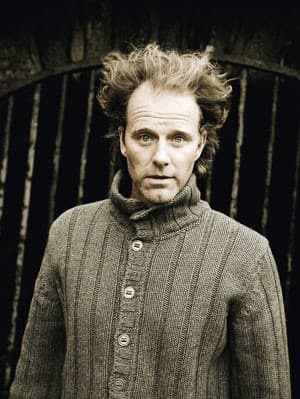
John Ajvide Lindqvist is a Swedish author known for his contributions to contemporary fiction, particularly in the horror genre. He is best known for his novel "Let the Right One In," which explores themes of loneliness and the supernatural, as well as "Handling the Undead," which delves into the complexities of life and death.
Similar books
- Let the Right One In
John Ajvide Lindqvist
4.0 (90k) average on GoodreadsThrillerShares Lindqvist's signature blend of mundane realism with supernatural horror and deep character study.
- The Road
Cormac McCarthy
4.0 (716k) average on GoodreadsScience FictionExplores a post-apocalyptic world with a focus on human relationships, despair, and the struggle for meaning.
- World War Z: An Oral History of the Zombie War
Max Brooks
4.0 (440k) average on GoodreadsFantasyOffers a broad societal response to a zombie-like pandemic, though 'Handling the Undead' is more introspective.
- Harry Potter and the Sorcerer's Stone
J.K. Rowling
4.5 (7M) average on GoodreadsFantasyRescued from a miserable life under the stairs, an orphaned boy discovers he's a wizard destined for a magical school, where he uncovers a dangerous secret tied to the dark wizard who murdered his parents.
- The Hunger Games
Suzanne Collins
4.3 (6.4M) average on GoodreadsFantasyIn a future where children fight to the death on live television, Katniss Everdeen volunteers for the arena, turning a death sentence into a fight for survival and a spark of rebellion.
- 1984
George Orwell
4.2 (3.1M) average on GoodreadsPoliticsIn a future where surveillance and thought control are absolute, a man's search for truth clashes with the Party, showing that hope can be a form of rebellion.





Enjoyed the summary?
A summary gives you the shape of the book. The book itself has the detail, the examples and the voice.
Find Handling the Undead on AmazonAs an Amazon Associate, BookBrief earns from qualifying purchases. How we're funded