
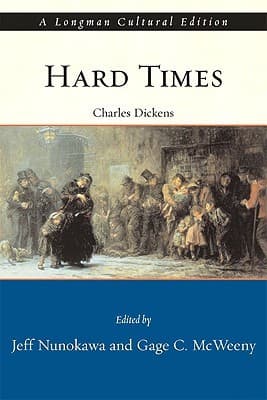
Synopsis
Covers the whole plot, including the ending.
- Difficulty
- Medium
- Pacing
- Moderate
- Mood
- Dark, Critical, Melancholy, Satirical
- Read it if
- You want a powerful social critique of industrialization and education, or enjoy Dickens' character-driven narratives and moral depth.
- Skip it if
- You prefer light-hearted stories, or find heavy social commentary and Victorian prose challenging.
Hard Times Plot Summary
Covers the whole plot, including the ending.
Mr. Gradgrind's Utilitarian School
The novel starts in Coketown, a bleak industrial place with many factories. Thomas Gradgrind, a rich, retired merchant who strongly believes in Utilitarianism and facts, runs a school where imagination is forbidden. He questions Sissy Jupe, a young girl whose father works in a circus. He finds her answers unsatisfactory because she speaks of 'fancy' and 'flowers' instead of 'facts.' Mr. Gradgrind's children, Louisa and Tom, are present, raised in the same strict, fact-based way, without emotional or imaginative development. He dismisses Sissy, thinking she is not right for his system, but the headmaster, Mr. M'Choakumchild, convinces him to let her stay, hoping to 'reclaim' her.
The Circus and Sissy's Plight
Louisa and Tom, restricted by their upbringing, secretly watch Sleary's circus, a sharp contrast to their dull lives. Later, Mr. Gradgrind discovers that Sissy's father, a clown named Signor Jupe, has disappeared, leaving Sissy behind. He offers Sissy a home, planning to educate her by his rules and save her from the perceived moral dangers of the circus. Sissy, though sad about her father leaving, accepts, grateful for a home. This event is a turning point for Sissy, who, despite the Gradgrind's strict environment, keeps her kindness and emotional depth. She provides a subtle contrast to their fact-driven world.
Bounderby's Proposal and Louisa's Acceptance
Josiah Bounderby, a rough factory owner and banker, and a close friend of Mr. Gradgrind, proposes marriage to Louisa. Bounderby, much older than Louisa, is a loud man who constantly brags about his poor beginnings. Louisa feels no love for him, but sees no other choice and believes it might help her brother Tom. She asks her father. Mr. Gradgrind, using his utilitarian logic, presents the marriage as a sensible arrangement, focusing on Bounderby's wealth and status. Louisa, without emotional guidance and seeing no other option, agrees to the loveless marriage, which shows how her upbringing created an emotional emptiness.
Stephen Blackpool's Dilemma
Stephen Blackpool, an honest factory worker, is stuck in an unhappy marriage to an alcoholic wife. He asks Bounderby for advice about divorce but is told it is impossible for someone of his class. Stephen is also shunned by his fellow workers after refusing to join a union, believing it will cause more conflict. He is seen as a 'hand' by factory owners and a traitor by his peers, caught between the harsh realities of industrial work and the indifference of the upper classes. His situation highlights how the industrial system dehumanizes people and the lack of compassion for the working class.
James Harthouse's Arrival
James Harthouse, a bored, cynical young aristocrat, arrives in Coketown, sent by Mr. Gradgrind to observe the election. He soon becomes a regular at the Bounderby house. Noticing Louisa's unhappiness and emotional distance, Harthouse, driven by idleness and a desire for entertainment, decides to pursue her. He subtly tries to charm and manipulate Louisa, using her emotional vulnerability and the emptiness of her marriage. His presence brings another layer of moral corruption into the story, representing the decadent side of the upper class, contrasting with Gradgrind's utilitarian strictness and Bounderby's crudeness.
The Bank Robbery
Bounderby's bank is robbed, and a lot of money is stolen. Suspicion immediately falls on Stephen Blackpool, mainly because he had recently been fired from Bounderby's factory and had spoken against him. Tom Gradgrind, Louisa's brother, who has become increasingly corrupt and in debt, is secretly involved in the robbery, having planned it to pay off his gambling debts. He manipulates Stephen into being seen near the bank and then frames him. This act of betrayal shows Tom's moral decay, a direct result of his emotionally deprived upbringing, and how easily an innocent man can be condemned in a society that values facts over justice.
Louisa's Crisis and Return Home
Harthouse directly tells Louisa he loves her, urging her to leave Bounderby and run away with him. Louisa, deeply conflicted and seeing the moral danger, rejects Harthouse. In a moment of despair and emotional exhaustion, she flees Coketown and returns to her father's house. There, she collapses at Mr. Gradgrind's feet, accusing him of depriving her of emotional education or guidance, leaving her unprepared for life's complexities. This confrontation forces Mr. Gradgrind to face the devastating effects of his fact-based philosophy on his own children.
Gradgrind's Realization
Seeing Louisa's emotional breakdown and hearing her accusations, Mr. Gradgrind is deeply shocked. He begins to realize his utilitarian system has failed. His cherished 'facts' have left his children emotionally empty and vulnerable to corruption. Sissy Jupe, who has always kept her compassion and emotional intelligence, comforts Louisa and helps Mr. Gradgrind see his mistakes. This scene is a moment of self-awareness for Gradgrind, as he starts to question his life's philosophy and recognizes the importance of imagination, empathy, and human connection, things he had suppressed.
Stephen's Vindication and Death
Stephen Blackpool, having left Coketown to find work elsewhere, decides to return to clear his name after hearing about the bank robbery and his involvement. On his way back, he falls into an abandoned mine shaft. He is found and rescued but is badly hurt. Before he dies, he speaks of his innocence and hints at the real culprit. His death, a tragic result of both industrial negligence and social injustice, further highlights the harsh realities faced by the working class. His final words, though vague, start the process of uncovering Tom's guilt.
Tom's Exposure and Escape
Through careful investigation, mainly led by Sissy Jupe and helped by Mr. Gradgrind and Bitzer, a former student of Gradgrind's who represents the extreme of the fact-based system, Tom's involvement in the bank robbery is found out. Tom confesses his guilt to Louisa, saying his motive was to pay off gambling debts. To save him from arrest, Sissy arranges his escape from the country with the help of the circus performers, Mr. Sleary and his group. Tom, still unrepentant and self-pitying, leaves, having caused much destruction.
Consequences and Redemption
After these events, Mr. Gradgrind gives up his strict, fact-based philosophy and spends his life advocating for social reform and a more humane education system. He becomes a Member of Parliament, trying to fix the harm he caused. Josiah Bounderby, his reputation damaged by the scandal and his wife's departure, is revealed to have lied about his poor beginnings and dies of a stroke. Louisa lives alone, never remarrying, but finds purpose in helping Sissy raise her children. Sissy, who embodies compassion, thrives, raising a family and showing the values of love and imagination that Coketown lacked. The novel ends with a vision of a future where emotional intelligence and human connection are more important than cold facts.
Principal Figures
Thomas Gradgrind
Protagonist/Antagonist
A rigid, utilitarian educator and former merchant who champions facts over fancy.
Thomas Gradgrind is the wealthy, retired merchant and Member of Parliament who founds a school based entirely on facts and statistics, systematically suppressing imagination and emotion in his children, Louisa and Tom, and his students. He is a 'man of realities' who believes that human nature can be reduced to quantifiable data. He is well-intentioned in his pursuit of what he believes is beneficial for society, but his philosophy is ultimately flawed and destructive, leading to emotional barrenness in his offspring and a lack of understanding for the human condition.
Relationships: Louisa Gradgrind (Father, whose rigid upbringing stunts her emotional growth.); Tom Gradgrind (Father, whose fact-based education leads him to moral decay.); Josiah Bounderby (Close business associate and friend, who marries his daughter.); Sissy Jupe (Reluctant guardian, later learns from her emotional intelligence.)
Louisa Gradgrind
Protagonist
Gradgrind's emotionally repressed daughter, trapped in a loveless marriage.
Louisa is the eldest child of Thomas Gradgrind, raised entirely on facts and devoid of emotional expression or imaginative thought. She is intelligent and perceptive but deeply unhappy and alienated, feeling a void within herself. Her upbringing leaves her unprepared for the complexities of human relationships and vulnerable to manipulation. She marries Josiah Bounderby out of a sense of duty and a misguided hope of helping her brother, but finds no happiness in the union. Her internal conflict between her repressed emotions and her logical upbringing drives much of the novel's plot.
Relationships: Thomas Gradgrind (Daughter, deeply affected by his educational system.); Tom Gradgrind (Devoted sister, tries to protect him despite his flaws.); Josiah Bounderby (Wife in a loveless and unfulfilling marriage.); James Harthouse (Object of his cynical seduction attempts.); Sissy Jupe (Confidante and source of emotional warmth.)
Tom Gradgrind
Antagonist/Supporting
Louisa's younger brother, who descends into moral corruption.
Tom, known as 'the whelp,' is Louisa's younger brother, also raised under his father's rigid system. Unlike Louisa, who internalizes her suffering, Tom becomes a selfish, dissolute, and ultimately criminal character. He is lazy, cynical, and driven by self-interest, using his sister for his own ends. His lack of moral compass and emotional development, a direct result of his upbringing, leads him to commit fraud and frame an innocent man. He embodies the worst potential outcome of an education devoid of moral and emotional guidance.
Relationships: Thomas Gradgrind (Son, a failure of his father's system.); Louisa Gradgrind (Brother, manipulates her and causes her pain.); Josiah Bounderby (Employee at his bank, later robs him.)
Josiah Bounderby
Antagonist
A boastful, self-made industrialist and banker, who marries Louisa.
Josiah Bounderby is a wealthy factory owner and banker, a close friend and associate of Thomas Gradgrind. He is a crude, bombastic man who constantly boasts about his humble origins and self-made success, fabricating tales of his abandonment and struggle. He is a symbol of the self-serving, heartless industrialist, exploiting his workers and devoid of genuine compassion. His marriage to Louisa is one of convenience, and he treats her more as a possession than a wife. His true origins are eventually exposed, revealing him as a liar and a hypocrite.
Relationships: Thomas Gradgrind (Business partner and friend.); Louisa Gradgrind (Husband in a loveless marriage.); Stephen Blackpool (Employer, dismisses him unfairly.)
Sissy Jupe
Supporting/Moral Compass
A kind-hearted circus girl who embodies imagination and empathy.
Sissy Jupe is the daughter of a circus performer, initially taken in by Mr. Gradgrind to be educated in facts. Despite her exposure to the Gradgrind system, she retains her innate compassion, imagination, and emotional intelligence. She struggles with factual learning but excels in understanding human nature and providing comfort. Sissy serves as the moral compass of the novel, representing the values that Gradgrind's system rejects. She becomes a source of emotional support for Louisa and helps Mr. Gradgrind in his eventual redemption.
Relationships: Thomas Gradgrind (Student/Ward, later a moral guide for him.); Louisa Gradgrind (Confidante and emotional support.); Stephen Blackpool (Sympathetic to his plight and helps clear his name.)
Stephen Blackpool
Supporting/Victim
An honest and hardworking factory hand, unjustly accused of robbery.
Stephen Blackpool is an honest, hardworking, and morally upright factory worker in Coketown. He is a symbol of the oppressed working class, suffering under the harsh industrial system and trapped in an unhappy marriage to an alcoholic wife. He refuses to join the union, believing it will only lead to further conflict, which alienates him from his peers. His integrity makes him a target, and he is unjustly accused of robbing Bounderby's bank, becoming a victim of both social injustice and personal betrayal. His tragic death highlights the dehumanizing effects of the industrial age.
Relationships: Josiah Bounderby (Employer, dismisses him.); Rachael (His only source of comfort and love.); Sissy Jupe (Receives her sympathy and help.)
Rachael
Supporting
A compassionate factory worker, Stephen Blackpool's only friend.
Rachael is a kind and compassionate factory worker, the only true friend and confidante of Stephen Blackpool. She represents the quiet dignity and resilience of the working class, possessing a strong moral sense and unwavering loyalty. She stands by Stephen during his ostracism and false accusation, offering him solace and support. Her simple goodness and unwavering faith contrast sharply with the cynicism and materialism prevalent in Coketown. She is a voice of quiet reason and empathy amidst the harsh realities of industrial life.
Relationships: Stephen Blackpool (His devoted friend and companion.)
James Harthouse
Antagonist/Supporting
A bored and cynical aristocrat who attempts to seduce Louisa.
James Harthouse is a young, aristocratic gentleman, characterized by his indolence, cynicism, and utter lack of purpose. He is a product of a privileged but equally empty upbringing, finding amusement in observing and manipulating others. Sent to Coketown by Mr. Gradgrind, he quickly perceives Louisa's unhappiness and decides to pursue her as a diversion. He represents a different kind of moral bankruptcy than Bounderby or Tom – one born of ennui and a lack of genuine feeling, rather than calculation or greed. He is ultimately thwarted by Louisa's sudden emotional awakening.
Relationships: Louisa Gradgrind (Attempts to seduce her.); Thomas Gradgrind (Acquaintance, sent to Coketown by him.)
Mr. Sleary
Supporting
The kind-hearted, lisping owner of the circus.
Mr. Sleary is the owner and manager of the circus troupe, a kind and benevolent man with a distinctive lisp. He represents the world of 'fancy' and entertainment, a stark contrast to Gradgrind's world of 'facts.' Despite his humble profession, he embodies genuine human warmth, compassion, and a belief in the importance of imagination and joy. He cares deeply for his performers, including Sissy's father, and later helps Tom escape, demonstrating a practical kindness that surpasses the rigid morality of Coketown.
Relationships: Sissy Jupe (Her father's employer and a kind figure in her life.); Tom Gradgrind (Aids in his escape from justice.)
Themes & Insights
The Dangers of Utilitarianism and Fact-Based Education
Dickens criticizes the utilitarian philosophy, supported by Mr. Gradgrind, which values facts and statistics over imagination, emotion, and human connection. The novel shows how this philosophy, when strictly applied to education and society, leads to emotional emptiness, moral decay, and deep unhappiness. Louisa's loveless marriage and Tom's crime are direct results of an upbringing that deprived them of empathy and creativity, forcing Mr. Gradgrind to confront the flaws in his system, as seen in Louisa's emotional breakdown.
“Now, what I want is, Facts. Teach these boys and girls nothing but Facts. Facts alone are wanted in life. Plant nothing else, and root out everything else.”
The Dehumanizing Effects of Industrialism
The novel shows Coketown as a grim, polluted industrial city where people are reduced to 'hands'—mere parts of production. The repetitive work, uniform buildings, and lack of beauty contribute to the spiritual and emotional poverty of its residents. Stephen Blackpool's struggle, caught between indifferent factory owners and demanding fellow workers, shows how the industrial system wears down individuals, denying them dignity. The widespread soot and smoke symbolize the moral blight that industrialization casts over the human spirit.
“Fact, fact, fact, everywhere in the air, and everywhere in the earth, and everywhere in the water, and everywhere in the visible world, and in the invisible. The Gradgrind system, in short.”
The Importance of Imagination and Emotion
In contrast to Gradgrind's world of facts, the novel supports the important role of imagination, empathy, and emotion in human life. The circus, with its colors, music, and performance, represents the 'fancy' that Gradgrind tries to remove. Sissy Jupe, who keeps her kindness and emotional intelligence despite exposure to the Gradgrind system, serves as the novel's moral guide. She demonstrates the resilience of the human spirit when nurtured by love and imagination. Her ability to comfort Louisa and help Mr. Gradgrind move towards a more compassionate understanding highlights the need for these qualities for true human well-being.
“The Grand Junction Canal was a black ditch, and the air above it a black mist, and the whole effect a black picture. But there were lights in the distant streets, and lights in the distant factories, and a light in the distant sky, and the whole was a black picture, not without a certain grandeur.”
Social Class and Injustice
Dickens explores the clear divisions and injustices in Victorian society. The novel contrasts the lives of wealthy industrialists like Bounderby and Gradgrind with the poor and exploited working class, represented by Stephen Blackpool. The legal and social systems are shown to favor the privileged, leaving the poor with little help. Stephen's inability to divorce his alcoholic wife, his firing from the factory, and his unjust framing for the bank robbery all highlight the systemic disadvantages faced by the working class, who are seen as interchangeable 'hands' rather than individuals with rights and feelings.
“He knew of nothing else that was so hard as the hard fact of such a life.”
Plot Devices & Literary Techniques
Symbolism of Coketown
The physical environment reflects the novel's themes.
Coketown, with its red brick factories, perpetually smoking chimneys, and uniform streets, is a powerful symbol of the dehumanizing effects of industrialism and utilitarianism. Its monotonous appearance and pollution mirror the spiritual and emotional barrenness imposed by the fact-based philosophy. The 'serpent of smoke' coiling from the chimneys visually represents the insidious nature of the system, while the uniformity of the buildings suggests the suppression of individuality and imagination. It's a character in itself, embodying the oppressive forces at play.
Foil Characters
Contrasting characters highlight thematic ideas.
Dickens effectively uses foil characters to emphasize the novel's central themes. Sissy Jupe, with her innate compassion and imagination, serves as a direct foil to the Gradgrind children, Louisa and Tom, who are starved of emotional development. Her presence highlights the deficiencies of their upbringing and offers an alternative, more humane way of understanding the world. Similarly, the vibrant, 'fancy' world of the circus acts as a foil to the grim, 'fact-based' world of Coketown, showcasing the importance of joy and imagination.
Irony
Discrepancy between appearance and reality.
Irony is prevalent throughout the novel, particularly in the character of Josiah Bounderby. He constantly boasts about his self-made origins, claiming to have been abandoned by his mother and raised in poverty, yet it is later revealed that he had a loving mother who supported him. This ironic contrast between his fabricated persona and his true background exposes his hypocrisy and the superficiality of his 'self-made' image. There is also the overarching irony of Gradgrind's system, which aims to create rational, successful individuals but instead produces unhappiness and moral corruption.
Social Commentary
Critique of Victorian society's ills.
Dickens uses 'Hard Times' as a vehicle for sharp social commentary on mid-19th-century industrial practices, education, and class structures. The novel directly criticizes the utilitarian philosophy for its cold, calculating approach to human life, and the factory system for its exploitation and dehumanization of workers. Through characters like Stephen Blackpool, Dickens exposes the profound injustices faced by the working class, while the Gradgrind family's fate serves as an indictment of an educational system that neglects the emotional and imaginative development of children. The entire narrative is structured to highlight these societal flaws.
Hard Times Quotes
“Now, what I want is, Facts. Teach these boys and girls nothing but Facts. Facts alone are wanted in life. Plant nothing else, and root out everything else.”
“The Gradgrind system, by which all children were to be put through a mill and have their heads ground down with facts till they were all of the same shape, was in full operation.”
“You are to be in all respects an example of the efficiency of the Gradgrind system. You are to prove, every day and hour of your life, that in Gradgrind system, all is right and all is calculated.”
“It was a town of red brick, or of brick that would have been red if the smoke and ashes had allowed it; but as matters stood it was a town of unnatural red and black like the painted face of a savage.”
“There was a pause, in which the mill worked on, and all the multitude of red eyes in the town seemed to stare at Sissy Jupe.”
“The speaker, a man of about fifty, with a large, loud voice, and a stare of perpetual astonishment, which had become a habit with him, was Mr. Thomas Gradgrind.”
“All he had to do was to declare himself a Coketowner, and to be for ever asserting that he was a self-made man.”
“It was a good thing for him, you see, that he had no heart, that he had no feeling; for if he had, he would have broken it many and many a time.”
“She was a child of the circus, a girl of the Fancy, a creature of the imagination, a being of the heart.”
“You have been so careful of me, that I never had a child's heart of my own. You have sown the wind, and you must reap the whirlwind.”
“She knew that her heart was a void; she knew that she had been taught to avoid the Fancy and the Beautiful; she knew that she had been taught to avoid all graces of the human character.”
“It was a great comfort to him, and a great support, that Stephen Blackpool was a 'hand'.”
“The only difference between the two was, that one had been brought up in a Factory, and the other in a Circus. But the Factory was better than the Circus, for the Factory had Facts.”
“It was a town of red brick, or of brick that would have been red if the smoke and ashes had allowed it; but as matters stood it was a town of unnatural red and black like the painted face of a savage.”
“He knew that he was a man who had missed his life; a man who had never been able to make a satisfactory impression on his own children.”
Quiz
10 questions on the plot and the characters. Each answer comes with a short explanation.
Question 1
Who is the central character described as a 'fanatic of the demonstrable fact' and raises his children in a stifling atmosphere of grim practicality?
- Josiah Bounderby
- Thomas Gradgrind
- Tom Gradgrind
- Stephen Blackpool
Show answer
B. Thomas Gradgrind Thomas Gradgrind is introduced as the 'fanatic of the demonstrable fact' who rigidly adheres to practicality and facts, shaping his children's upbringing based solely on these principles.
Question 2
What is the name of the industrial town that serves as the 'grim background' for the story?
- London
- Manchester
- Coketown
- Birmingham
Show answer
C. Coketown The story explicitly states that the children's lives are 'played out against the grim background of Coketown, a wretched community shadowed by an industrial behemoth.'
Question 3
What happens to Louisa Gradgrind as a consequence of her upbringing?
- She becomes a successful businesswoman.
- She falls into a loveless marriage with Josiah Bounderby.
- She runs away to join a circus.
- She dedicates her life to social reform.
Show answer
B. She falls into a loveless marriage with Josiah Bounderby. The text states that 'Louisa falls into a loveless marriage with Josiah Bouderby, a vulgar banker,' illustrating the negative impact of her upbringing.
Question 4
Which specific aspect of mid-19th-century society does Dickens' novel 'Hard Times' most harshly indict?
- The education system's focus on classical languages.
- The rise of the aristocracy and their political power.
- Industrial practices and their dehumanizing effects.
- The lack of religious freedom in England.
Show answer
C. Industrial practices and their dehumanizing effects. The description explicitly calls the novel 'Dickens' harshest indictment of mid-19th-century industrial practices and their dehumanizing effects.'
Question 5
What is the ultimate realization Thomas Gradgrind comes to regarding his own principles?
- That his principles led his children to great success.
- That his misguided principles had ruined his children's lives.
- That his principles were too lenient on his children.
- That his principles were universally applicable and correct.
Show answer
B. That his misguided principles had ruined his children's lives. The text states, 'Witnessing the degradation and downfall of his children, Gradgrind realizes that his own misguided principles have ruined their lives.'
Question 6
What crime does Tom Gradgrind commit, and what is its immediate consequence for another character?
- He commits fraud and is caught by his father.
- He becomes a thief and frames an innocent man for his crime.
- He embezzles money from Josiah Bounderby and flees the country.
- He incites a worker's strike, leading to his arrest.
Show answer
B. He becomes a thief and frames an innocent man for his crime. The description states that 'the unscrupulous Tom, totally lacking in principle, becomes a thief who frames an innocent man for his crime.'
Question 7
According to the provided text, what did Charles Dickens proclaim was the main target of his satire in 'Hard Times'?
- The extravagance of the upper classes.
- Those who see figures and averages, and nothing else.
- The hypocrisy of religious institutions.
- The lack of educational opportunities for the poor.
Show answer
B. Those who see figures and averages, and nothing else. Dickens himself explained his theme: 'My satire is against those who see figures and averages, and nothing else,' which directly criticizes the utilitarian mindset.
Question 8
What specific characteristic does the eminent Victorian critic John Ruskin highlight about Dickens' work, particularly 'Hard Times'?
- Its complex narrative structure.
- Its romantic portrayal of industrial life.
- Its entertainment value for general readers.
- Its 'main drift and purpose' being entirely right, especially for social questions.
Show answer
D. Its 'main drift and purpose' being entirely right, especially for social questions. John Ruskin's quote is provided: 'He is entirely right in his main drift and purpose in every book he has written; and all of them, but especially Hard Times, should be studied with close and earnest care by persons interested in social questions.'
Question 9
How does the novel portray the children, Tom and Louisa, as a direct consequence of their upbringing?
- They become successful and well-adjusted members of society.
- They sink into lives of desperation and despair.
- They rebel against their father by becoming artists.
- They lead a movement to reform industrial practices.
Show answer
B. They sink into lives of desperation and despair. The text clearly states, 'Without a moral compass to guide them, the children sink into lives of desperation and despair,' directly linking their fate to their upbringing.
Question 10
What does the description suggest is lacking in the children's upbringing by Thomas Gradgrind, leading to their downfall?
- Financial resources.
- Access to formal education.
- A moral compass to guide them.
- Opportunities for social advancement.
Show answer
C. A moral compass to guide them. The text states, 'Without a moral compass to guide them, the children sink into lives of desperation and despair,' highlighting the absence of moral guidance as a critical flaw in their fact-based upbringing.
Hard Times FAQ
What is the central theme of 'Hard Times' as articulated by Charles Dickens?
Charles Dickens intended 'Hard Times' as a satire against individuals who prioritize 'figures and averages' over human emotion and imagination. He specifically targeted the utilitarian philosophy prevalent in mid-19th-century industrial society, arguing that an exclusive focus on demonstrable facts leads to a dehumanizing and stifling existence.
Who are the primary protagonists, and what are their initial circumstances?
The primary protagonists are Thomas Gradgrind, a rigid educator and 'fanatic of the demonstrable fact,' and his children, Louisa and Tom. They are raised in a severe, fact-driven environment in Coketown, devoid of any imaginative or emotional outlets, which ultimately stunts their moral and psychological development.
How does Louisa Gradgrind's life exemplify the novel's critique of utilitarianism?
Louisa, stifled by her upbringing, marries the vulgar banker Josiah Bounderby not out of love, but as a calculated, practical decision. This loveless marriage, devoid of emotional connection, highlights how her fact-based education leaves her ill-equipped to understand or pursue genuine happiness, leading to her profound unhappiness and inner turmoil.
What is Tom Gradgrind's ultimate downfall, and how does it connect to his upbringing?
Tom, lacking any moral compass due to his education, becomes a thief and frames the innocent Stephen Blackpool for his crime. His unscrupulous actions are a direct consequence of being raised without principles, imagination, or empathy, demonstrating how a purely factual education can foster amorality rather than virtue.
How does Thomas Gradgrind's perspective evolve by the end of the novel?
Witnessing the degradation and despair of his children, Louisa and Tom, Thomas Gradgrind experiences a profound realization. He acknowledges that his own misguided, fact-driven principles have ruined their lives, leading him to question and ultimately abandon his rigid utilitarian philosophy.
What is the significance of the character Stephen Blackpool in the context of Coketown's industrial setting?
Stephen Blackpool represents the honest, hardworking but exploited factory operative in Coketown. His inability to divorce his wife due to harsh laws, his rejection by both unions and management, and his eventual framing by Tom highlight the systemic injustices and dehumanizing conditions faced by the working class in the industrial era.
How does Sissy Jupe's background contrast with the Gradgrind children's, and what role does she play?
Sissy Jupe, from the imaginative and empathetic world of the circus, contrasts sharply with the Gradgrind children's utilitarian upbringing. Despite Mr. Gradgrind's attempts to educate her in facts, she retains her compassion and imagination, ultimately serving as a moral guide and source of comfort for Louisa, demonstrating the resilience of human spirit against rigid systems.
What is the implied fate of Josiah Bounderby, and what does it signify?
Josiah Bounderby, the self-made man and vulgar banker, is ultimately exposed as a fraud regarding his humble origins by Mrs. Sparsit. While the novel doesn't explicitly detail his demise, his public humiliation and loss of social standing signify the collapse of the false narratives and superficial values he represents, suggesting that unchecked self-interest eventually unravels.
Discuss the psychological impact of Gradgrind's education on Louisa's emotional development.
Louisa's upbringing, devoid of imagination and emotional expression, leaves her psychologically stunted and deeply repressed. She struggles to identify or articulate her own feelings, leading to a profound sense of emptiness and detachment, which manifests in her passive acceptance of a loveless marriage and her later emotional crisis when confronted with Harthouse's advances.
How does Tom Gradgrind's behavior illustrate the concept of moral relativism stemming from his education?
Tom's unscrupulous actions, including theft and framing an innocent man, demonstrate a complete lack of an internal moral compass. His education, focused solely on facts and utility, failed to instill principles of right and wrong, leading him to believe that actions are justifiable if they serve his immediate self-interest, without consideration for ethical implications.
Analyze the psychological motivations behind Josiah Bounderby's constant fabrication of his past.
Bounderby's relentless fabrication of a poverty-stricken past is a psychological defense mechanism designed to inflate his self-importance and justify his current wealth and status. By exaggerating his 'self-made' image, he seeks to garner admiration and deflect any criticism, while simultaneously reinforcing his contempt for those less fortunate, projecting an image of unyielding resilience.
What is the psychological significance of Coketown as a setting?
Coketown, with its monotonous brick buildings, smoke-filled air, and repetitive industrial rhythms, serves as a psychological metaphor for the stifling and dehumanizing effects of utilitarianism. It reflects the inner emptiness and lack of vibrancy experienced by its inhabitants, particularly the Gradgrind children, mirroring the drabness of their emotional lives.
To what extent is 'Hard Times' a critique of the education system of Dickens' era?
'Hard Times' is a scathing indictment of an education system that prioritizes rote learning, facts, and utility over imagination, empathy, and moral development. Dickens argues that such a system, exemplified by Gradgrind's school, produces emotionally stunted individuals ill-equipped for genuine human connection and susceptible to moral corruption, rather than well-rounded citizens.
How does the novel explore the tension between 'fact' and 'fancy'?
The novel explicitly explores the destructive tension between 'fact' (utilitarianism, statistics, rigid logic) and 'fancy' (imagination, emotion, art, human connection). Dickens argues that an exclusive reliance on facts, as seen in Gradgrind's philosophy, starves the human spirit, while a balanced integration of fancy is essential for moral development, empathy, and true happiness, a point underscored by Sissy Jupe's character.
Is 'Hard Times' primarily a social commentary or a character-driven narrative?
While 'Hard Times' is undeniably a powerful social commentary on industrialism and utilitarianism, it is also deeply character-driven. The social critique is primarily conveyed through the specific fates and psychological journeys of characters like Louisa, Tom, Stephen Blackpool, and Gradgrind himself, whose personal tragedies serve as direct consequences of the societal issues Dickens addresses.
How does the novel's ending reflect Dickens' views on redemption and social change?
The novel's ending, particularly Gradgrind's realization and the eventual fates of the characters, suggests a possibility of personal redemption through acknowledging past errors, but offers a more nuanced view on broader social change. While individuals like Gradgrind can change, the systemic issues of industrial society remain largely unresolved, implying that societal transformation is a long and arduous process, though not entirely hopeless.
What is the role of the circus, particularly Sleary's horse-riding, in the novel's thematic structure?
The circus, with its emphasis on performance, imagination, and human connection, serves as a vital thematic counterpoint to the grim practicality of Coketown. It represents the 'fancy' that Gradgrind's philosophy rejects, offering a space where empathy, loyalty, and joy are valued, and ultimately provides refuge and assistance to characters like Sissy Jupe and the fleeing Tom.
How does the character of James Harthouse challenge Louisa's emotional defenses?
James Harthouse, a jaded and cynical aristocrat, poses a significant threat to Louisa's emotional defenses by offering her an escape from her loveless marriage. His sophisticated charm and intellectual nihilism appeal to her repressed desire for something beyond her factual existence, nearly leading her to abandon her husband before her moral awakening.
About the author
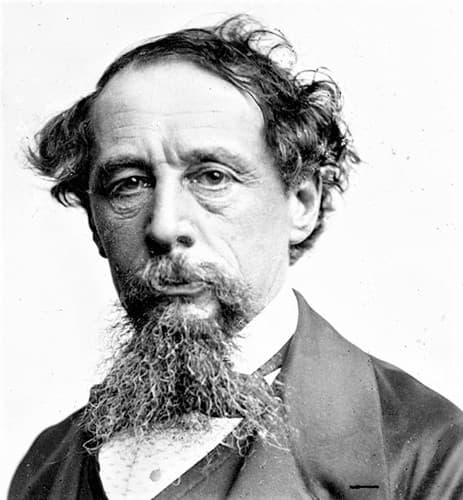
Charles John Huffam Dickens was an English writer and social critic who created some of the world's best-known fictional characters and is regarded by many as the greatest novelist of the Victorian era. His works enjoyed unprecedented popularity during his lifetime and, by the 20th century, critics and scholars had recognised him as a literary genius. His novels and short stories are widely read today.
Similar books
- Oliver Twist
Charles Dickens
3.9 (319k) average on GoodreadsHistorical FictionExplores social injustice and the plight of the poor in Victorian England.
- Jane Eyre
Charlotte Brontë
4.1 (1.6M) average on GoodreadsHistorical FictionFeatures a strong female protagonist navigating societal constraints and moral dilemmas.
- Germinal
Emile Zola
4.2 (29k) average on GoodreadsHistorical FictionA harsh and realistic portrayal of industrial working conditions and class struggle.
- North and South
Elizabeth Gaskell
4.2 (57k) average on GoodreadsHistorical FictionWhile both Hard Times and Gaskell's North and South (1855) address the industrial North of England and the tensions between capital and labor, Gaskell's novel offers a more nuanced and less polemical exploration of class conflict. Gaskell's characters, particularly Margaret Hale and John Thornton, are often more psychologically complex and less allegorical than Dickens's, allowing for a deeper exploration of individual moral dilemmas and cross-class understanding. Gaskell also delves into the domestic sphere and the challenges faced by women in a way Dickens does not prioritize in Hard Times. Dickens's novel is more overtly a moral fable, while Gaskell's aims for a more realistic portrayal of social dynamics and personal growth.
- Angels & Demons
Dan Brown
3.9 (2.7M) average on GoodreadsThrillerA Harvard symbologist races through Rome's ancient sites, deciphering cryptic clues to unmask the Illuminati and stop a vengeful plot to destroy the Vatican with a stolen antimatter weapon.
- Gone Girl
Gillian Flynn
4.1 (2.3M) average on GoodreadsThrillerA wife's sudden disappearance on her fifth anniversary reveals a web of lies and psychological warfare, exposing the secrets within a seemingly perfect marriage.




Enjoyed the summary?
A summary gives you the shape of the book. The book itself has the detail, the examples and the voice.
Find Hard Times on AmazonAs an Amazon Associate, BookBrief earns from qualifying purchases. How we're funded