
Synopsis
Covers the whole plot, including the ending.
- Difficulty
- Easy
- Pacing
- Moderate
- Mood
- Heartwarming, Resilient, Hopeful, Historical
- Read it if
- You enjoy heartwarming historical fiction with a strong, feisty female protagonist and themes of family and self-discovery.
- Skip it if
- You prefer fast-paced thrillers or stories without a focus on historical settings and social issues.
Hetty Feather Plot Summary
Covers the whole plot, including the ending.
A New Beginning: Life with the Feathers
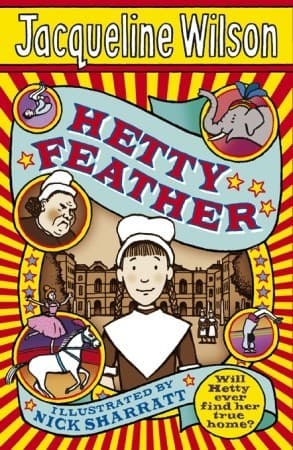
The story starts with baby Hetty Feather left at the London Foundling Hospital in 1876. She is sent to a foster family, the Feathers, in rural Suffolk. There, she grows up with foster siblings: Martha, Jem, and Gideon. Hetty, with her red hair and independent nature, quickly bonds with Jem, who becomes her confidante. Country life is simple but hard, with chores and farm work, but also with freedom to play and explore.
The Circus Comes to Town
One day, a traveling circus comes to their village. Despite Mrs. Feather's warnings to stay away, Hetty and Jem, curious, sneak off to see it. Hetty is captivated by the performers, especially the beautiful equestrian, Madame Adeline, who rides white horses. The experience deeply affects Hetty, sparking a fantasy that Madame Adeline might be her mother and fueling dreams of a life beyond the foster home.
Return to the Foundling Hospital
As Hetty nears her sixth birthday, she and Jem must return to the Foundling Hospital, as per the rules for children old enough to start school. The change is a shock for Hetty. She is taken from the Feathers' loving, though strict, care and put into the impersonal, regimented hospital. Children wear drab uniforms, eat bland food, and follow a strict schedule. Hetty struggles with the loss of freedom and the cold atmosphere, often clashing with matrons and teachers.
Friendships and Rivalries within the Walls
Inside the Foundling Hospital, Hetty quickly learns the rules and forms new relationships. She becomes friends with Ida, a quiet girl, and later with Sheila, a more boisterous orphan. Hetty also deals with bullies, like Matron Bottomly, and develops a rivalry with the favored Polly. Despite hardships, Hetty's resilient spirit shows. Her outspoken nature often gets her into trouble, leading to punishments but also solidifying her reputation among peers.
The Search for Her Mother Begins
Driven by her wish for a family and the fantasy of Madame Adeline, Hetty becomes intent on finding her birth mother. She watches hospital staff for clues and tries to piece together information. Her imagination runs wild, fueled by the idea of a glamorous mother. This search becomes a main focus in her hospital life, giving her purpose and secret hope amid daily routines. She confides in Jem, who visits her, and they speculate about her origins.
The Hospital's Hidden Secrets
As Hetty gets older in the Foundling Hospital, she notices hushed conversations and clues that suggest deeper secrets. She learns about 'Foundling Tokens'—small items left with babies by their mothers—and wonders about her own. She also sees differences in how children are treated and the visits from wealthy patrons, which makes her aware of social class and injustice. These observations strengthen her resolve to find the truth about her past and the institution.
A Glimpse of the Outside World
Hetty sometimes sees the world outside the hospital, like when she goes on a special outing or sneaks out with Jem during his visits. These brief tastes of freedom and London life only increase her longing for a life beyond the institution. She sees street performers, busy markets, and various people, which contrasts sharply with the monotonous hospital life. These experiences confirm her belief that her place is outside, pursuing her dreams.
The Truth About Her Brother
A key moment occurs when Hetty uncovers a secret about her foster brother, Gideon. She learns that Gideon is her full biological brother, and they share the same mother. This revelation shatters her understanding of her family and adds complexity to her search. It also suggests her mother might be someone different from the circus performer she imagined, forcing Hetty to face a more grounded, perhaps painful, reality about her origins.
Confrontation and Revelation
Driven by her discoveries, Hetty eventually confronts Matron Bottomly, demanding to know the truth about her mother. The matron, initially resistant, is pressured by Hetty's persistence and the growing evidence. It is revealed that Hetty's mother, Sissy, was a young housemaid at the Foundling Hospital who had a secret affair with a wealthy gentleman, Mr. Moshie, resulting in Hetty's birth. Sissy was forced to leave Hetty and later Gideon at the hospital, unable to care for them. This revelation is both a relief and a disappointment for Hetty, as it is far from her romantic fantasy.
A New Chapter, A New Hope
With the truth known, Hetty begins to process her parentage. While her fantasy of Madame Adeline is gone, she finds a new connection to her biological brother, Gideon, and a deeper understanding of her mother's difficult situation. The story ends with Hetty, still at the Foundling Hospital but now with knowledge and a stronger sense of self, looking to the future. She remains spirited and determined, understanding her journey is not over, but now with a clearer, though more complex, understanding of who she is and where she comes from. She holds onto the hope of one day finding her mother, Sissy.
Principal Figures
Hetty Feather
Protagonist
A fiery, imaginative, and independent foundling determined to find her true family.
Hetty is a spirited and red-haired girl with an indomitable will and a vivid imagination. She possesses a strong sense of justice and often chafes against authority, especially the rigid rules of the Foundling Hospital. Her core drive is to uncover the truth about her birth mother, fueled by a romanticized fantasy of a glamorous circus performer. Despite facing numerous hardships and disappointments, Hetty remains resilient and hopeful, constantly seeking freedom and love.
Relationships: Jem Feather (Foster brother and closest confidante); Gideon Feather (Foster brother, later revealed to be her biological brother); Mrs. Feather (Kind foster mother); Mr. Feather (Strict but fair foster father); Ida (Close friend at the Foundling Hospital); Sheila (Friend at the Foundling Hospital); Matron Bottomly (Antagonistic matron at the Foundling Hospital); Sissy (Biological mother); Mr. Moshie (Biological father)
Jem Feather
Supporting
Hetty's loyal and protective foster brother and best friend.
Jem is Hetty's closest companion and foster brother, often sharing her adventures and bearing the brunt of her mischievous schemes. He is kind, brave, and deeply devoted to Hetty, always looking out for her, especially during their time together in the countryside and later during her visits at the Foundling Hospital. He represents a stable, loving presence in Hetty's often tumultuous life, offering unwavering support and understanding.
Relationships: Hetty Feather (Foster sister and best friend); Gideon Feather (Brother); Mrs. Feather (Mother); Mr. Feather (Father)
Gideon Feather
Supporting
Hetty's quiet, artistic foster brother, later revealed to be her biological brother.
Gideon is the quietest of the Feather children, often absorbed in his artistic pursuits, sketching and drawing. He is sensitive and observant, often seeing things others miss. His initial role is that of a gentle foster brother, but his character gains significant importance when it is revealed that he is Hetty's full biological brother, sharing the same mother. This revelation adds a layer of poignancy to his character and deepens his connection with Hetty.
Relationships: Hetty Feather (Foster sister, later revealed to be biological sister); Jem Feather (Brother); Mrs. Feather (Foster mother); Mr. Feather (Foster father); Sissy (Biological mother)
Mrs. Feather
Supporting
Hetty's kind but strict foster mother.
Mrs. Feather is Hetty's first foster mother, a hardworking and generally kind woman who takes in Foundling children. She provides a loving home for Hetty, Jem, and Gideon, teaching them the values of hard work and discipline. Despite her stern demeanor at times, especially concerning Hetty's rebellious streak, she genuinely cares for the children under her charge. Her house represents Hetty's ideal of a true home before her return to the Foundling Hospital.
Relationships: Hetty Feather (Foster daughter); Jem Feather (Son); Gideon Feather (Son); Mr. Feather (Husband)
Matron Bottomly
Antagonist
The stern and formidable matron at the Foundling Hospital.
Matron Bottomly is one of the primary antagonists within the Foundling Hospital. She is a strict, unyielding figure who enforces the hospital's rigid rules with an iron fist. She has little patience for Hetty's rebellious spirit and often punishes her for her defiance. While seemingly cold and unfeeling, she is a product of the institutional system and eventually, under pressure, reveals crucial information about Hetty's past, showing a glimpse of a hidden human side.
Relationships: Hetty Feather (Adversary, source of information); Ida (Authority figure); Sheila (Authority figure)
Ida
Supporting
Hetty's intelligent and loyal friend at the Foundling Hospital.
Ida is one of Hetty's closest friends at the Foundling Hospital. She is intelligent, observant, and often more cautious than Hetty, but her loyalty is unwavering. Ida provides a grounding influence for Hetty, often offering practical advice and a listening ear. She shares Hetty's struggles within the institution and is a source of emotional support and companionship, helping Hetty navigate the complexities of hospital life.
Relationships: Hetty Feather (Close friend); Sheila (Friend)
Madame Adeline
Mentioned
The glamorous circus performer Hetty fantasizes is her birth mother.
Madame Adeline is the beautiful and enigmatic equestrian from the travelling circus. She represents Hetty's idealized vision of her birth mother: glamorous, free, and strong. Although she never directly interacts with Hetty, her image profoundly impacts Hetty's imagination and fuels her quest for identity. She is a symbol of the exciting, unconventional life Hetty dreams of, far removed from the drudgery of the Foundling Hospital.
Relationships: Hetty Feather (Object of Hetty's fantasy and desire for a mother)
Sissy
Mentioned
Hetty and Gideon's biological mother, a former housemaid at the Foundling Hospital.
Sissy is Hetty and Gideon's biological mother, revealed late in the story. She was a young housemaid at the Foundling Hospital who had a secret affair with a wealthy gentleman, Mr. Moshie. Due to societal pressures and her vulnerable position, she was forced to abandon her children at the hospital, a decision that caused her immense pain. She represents the tragic reality of many women in Victorian society who faced difficult choices due to their circumstances.
Relationships: Hetty Feather (Daughter); Gideon Feather (Son); Mr. Moshie (Father of her children)
Themes & Insights
The Search for Identity and Belonging
Hetty's journey is driven by her need to understand who she is and where she comes from. As a foundling, she lacks a clear origin, which fuels her imaginative idea of a glamorous mother and her search for the truth. Her longing for a 'real' family is constant, shown in her bond with Jem, her idealization of Madame Adeline, and her eventual acceptance of her true parents. The contrast between the loving Feather home and the impersonal Foundling Hospital highlights her search for a place where she belongs, outside the institutional walls.
“I was Hetty Feather, and I was going to find my mother, no matter what.”
Freedom vs. Confinement
This theme is shown through Hetty's experiences in two different places. The fields and woods of the Suffolk countryside with the Feathers represent freedom, adventure, and childhood wildness. Hetty thrives here, often breaking rules to explore or visit the circus. In contrast, the Foundling Hospital means confinement, strict rules, and a loss of personal freedom. The drab uniforms, schedules, and punishments crush the children's spirits. Hetty's constant defiance and her desire for the outside world show her innate wish for freedom, making her a symbol of resistance against oppressive systems.
“The hospital walls were like a cage, and I was a wild bird longing to fly.”
The Power of Imagination and Storytelling
Hetty's imagination is a key coping mechanism and driving force. Faced with her abandonment and the bleakness of the Foundling Hospital, she creates fantasies, especially her belief that Madame Adeline, the circus performer, is her mother. These stories give her hope, purpose, and a sense of self beyond her circumstances. Even when these fantasies are broken by the truth, her ability to imagine a different future and find beauty in the everyday remains a core part of her character, showing how imagination sustains the human spirit.
“I made up stories in my head all the time, stories where I was brave and beautiful, and my mother was the most wonderful woman in the world.”
Social Injustice and Class Disparity
The novel shows the realities of Victorian society, especially for abandoned children and working-class women. The Foundling Hospital, while providing care, operates with a cold efficiency that takes away children's individuality. The revelation of Hetty's mother, Sissy, as a housemaid forced to abandon her children due to an affair with a wealthy man, shows the social consequences for women who broke moral codes, especially across class lines. Hetty's experiences with poverty, strict rules, and lack of choice highlight social inequality and the vulnerability of marginalized people in 19th-century London.
“We were Foundlings. We didn't have names, not real ones. We had numbers, and a few scraps of cloth left by our mothers.”
Plot Devices & Literary Techniques
The Foundling Token
A small, symbolic item left with a baby at the Foundling Hospital.
The Foundling Token is a recurring motif and a significant plot device. It is a small, unique item (a coin, a ribbon, a piece of jewelry) left by a mother with her child upon admission to the Foundling Hospital. These tokens are meant to be a potential means of identification should the mother ever return. For Hetty, the absence of her own token becomes a source of mystery and longing, fueling her quest for her mother. The tokens represent the desperate hope of the mothers and the fragile connection between parent and child in a system designed to sever ties, adding emotional weight to the narrative.
The Circus as a Symbol
A vibrant, fleeting spectacle representing freedom, glamour, and Hetty's idealized dreams.
The circus serves as a powerful symbol throughout the novel, particularly the image of Madame Adeline and her performing horses. For Hetty, the circus represents everything she longs for: freedom, beauty, excitement, and a life far removed from the drudgery of her reality. It is the catalyst for her fantasy about her mother, embodying the romanticized version of her origins. The circus's fleeting nature underscores the transient happiness and elusive dreams Hetty experiences, contrasting sharply with the permanence of her institutional life. It represents the escapism and imaginative power that sustains her.
The Foundling Hospital Rules and Regulations
The strict, impersonal rules of the institution that govern the children's lives.
The elaborate system of rules, uniforms, and daily routines at the Foundling Hospital acts as a plot device to create conflict and highlight Hetty's rebellious nature. These rules are designed to strip the children of their individuality and enforce conformity, directly clashing with Hetty's fiery spirit. Her frequent defiance of these regulations leads to punishments, but also demonstrates her resilience and determination to maintain her sense of self. The rules also serve to illustrate the harsh realities of institutional life in Victorian times and the dehumanizing aspects of charity, pushing Hetty to seek an alternative life.
The Secret Journal/Letters
Hidden documents that reveal crucial information about Hetty's past.
While not a physical journal, the 'hidden' information about Hetty's past, particularly the details surrounding her and Gideon's birth and their mother's identity, functions like a secret journal or set of letters. The slow drip-feed of this information, pieced together by Hetty through overheard conversations, subtle clues, and eventually direct confrontation with Matron Bottomly, drives the central mystery of the plot. These 'secrets' build suspense and propel Hetty's personal quest, ultimately leading to the painful but necessary revelation of her true origins and disrupting her idealized fantasies. It represents the buried truths that Hetty must unearth to find her identity.
Hetty Feather Quotes
“I was Hetty Feather, and I was going to find my mother.”
“There are some things you can't learn from a book. You have to experience them.”
“Sometimes, when you least expect it, something wonderful happens.”
“The world was a big, confusing place, and I was just a little girl trying to make sense of it.”
“You can always find a way if you try hard enough.”
“A secret is like a heavy stone. The longer you carry it, the heavier it gets.”
“I might have been a foundling, but I wasn't nobody.”
“Life isn't fair, but you've got to keep going anyway.”
“The circus was a place of magic and wonder, where anything seemed possible.”
“It's funny how a little bit of kindness can make such a difference.”
“I knew what it was like to be an outsider, to feel like you didn't belong.”
“Sometimes the bravest thing you can do is ask for help.”
“Home isn't always a place. Sometimes it's a feeling, or the people you're with.”
“Even though I was small, I had a big heart and a fiery spirit.”
Quiz
10 questions on the plot and the characters. Each answer comes with a short explanation.
Question 1
Where is Hetty Feather initially left by her mother as a tiny baby?
- A rural orphanage
- The Foundling Hospital
- A private boarding school
- With a wealthy family in London
Show answer
B. The Foundling Hospital The book explicitly states Hetty's mother leaves her at the Foundling Hospital.
Question 2
Who are Hetty's foster 'brothers' in the countryside?
- Arthur and Thomas
- Jem and Gideon
- Peter and Sam
- Daniel and Mark
Show answer
B. Jem and Gideon The summary mentions Hetty's foster 'brothers' are Jem and Gideon.
Question 3
What event mesmerizes Hetty during her time in the countryside?
- A grand fair
- A royal parade
- The travelling circus
- A local theatre production
Show answer
C. The travelling circus Hetty and her foster brothers sneak off to visit the travelling circus, which she finds mesmerising.
Question 4
What is Hetty's initial hope regarding the identity of her real mother?
- That she is a wealthy lady from the city
- That she is Madame Adeline, the performing horse rider
- That she is one of the Foundling Hospital matrons
- That she is a kind village woman from the countryside
Show answer
B. That she is Madame Adeline, the performing horse rider The summary states Hetty wonders if her real mother 'could she really be the wonderful Madame Adeline?'
Question 5
What aspect of life at the Foundling Hospital does Hetty find particularly challenging?
- The strict academic lessons
- The awful uniforms and terrible food
- The lack of other children to play with
- The constant chores and manual labor
Show answer
B. The awful uniforms and terrible food The text describes Hetty's 'new life of awful uniforms and terrible food is a struggle for her' at the Foundling Hospital.
Question 6
What historical period is 'Hetty Feather' set in?
- Edwardian times
- Georgian times
- Victorian times
- Regency times
Show answer
C. Victorian times The summary explicitly mentions the novel is 'Set in Victorian times'.
Question 7
What is a central theme explored by Hetty's journey from foster care to the Foundling Hospital and her search for her mother?
- The importance of wealth and social status
- The universal search for belonging and identity
- The challenges of rural farming life
- The glamour of circus life
Show answer
B. The universal search for belonging and identity Hetty's entire story revolves around her origins, her different living situations, and her quest to find her birth mother, all pointing to a search for identity and a place to belong.
Question 8
The description compares Hetty Feather to which other well-known Jacqueline Wilson character, suggesting a similar spirited personality?
- Tracy Beaker
- Ruby Batton
- Daisy Star
- Lottie Project
Show answer
A. Tracy Beaker The summary states, 'this is a Tracy Beaker-esque tale that will thrill young readers', highlighting Hetty's 'feisty heroine' nature.
Question 9
Based on the summary, what can be inferred about the 'truth' regarding Hetty's mother?
- She is definitely Madame Adeline.
- She is likely a woman Hetty has never met before.
- The truth about her mother will be unexpected and potentially surprising.
- She abandoned Hetty out of cruelty and will not be found.
Show answer
C. The truth about her mother will be unexpected and potentially surprising. The summary concludes with 'Or will Hetty find the truth is even more surprising?', implying that the initial hope of Madame Adeline might not be correct and the actual truth will be unexpected.
Question 10
The Foundling Hospital's practice of placing children with foster families before bringing them back to the institution reflects what common historical reality for such establishments?
- A desire to provide children with agricultural skills before formal education.
- A system to ensure children were healthy and robust enough for institutional life.
- A way to reduce the immediate cost of caring for infants within the hospital.
- A method to allow birth mothers to reconsider their decision.
Show answer
B. A system to ensure children were healthy and robust enough for institutional life. Historically, foundling hospitals often 'wet-nursed' infants in rural foster homes until they were older and stronger, as infant mortality rates within the crowded, unsanitary city institutions were extremely high.
Hetty Feather FAQ
What is the central premise of 'Hetty Feather'?
The book follows Hetty Feather, an abandoned child in Victorian London, from her early days with a foster family in the countryside to her return to the Foundling Hospital. Her primary goal becomes finding her birth mother, fueled by a strong desire for belonging and a connection to the world outside the institution.
Who are Hetty's foster parents and what is her relationship with them?
Hetty's foster parents are Peg and Silas, who live on a farm in the countryside. Peg is generally kind and loving, treating Hetty as her own, while Silas is often stern and demanding. Despite the hardships, Hetty feels a strong bond with Peg and her foster brothers, Jem and Gideon.
How does the travelling circus influence Hetty's aspirations?
Hetty's visit to the travelling circus, particularly seeing Madame Adeline and her beautiful performing horses, ignites a deep fascination and longing for a more glamorous, independent life. This experience fuels her dreams and later becomes a key part of her search for her mother, as she suspects Madame Adeline might be her.
What challenges does Hetty face upon returning to the Foundling Hospital?
At the Foundling Hospital, Hetty struggles with the strict rules, harsh discipline, monotonous uniforms, and unappetizing food. She misses the freedom of the countryside and the warmth of her foster family, finding it difficult to conform to the rigid institutional life.
What is the biggest revelation about Hetty's parentage?
The biggest revelation is that Hetty's mother is not Madame Adeline, but rather a woman named Sarah, who worked at the Foundling Hospital. Even more surprisingly, her father is the wealthy and respected Mr. Moshie, a benefactor of the hospital, making Hetty the product of a secret affair.
What is the significance of Hetty's red hair?
Hetty's vibrant red hair is a distinguishing feature that sets her apart and is often commented upon. It symbolizes her fiery spirit, her individuality, and her wild, untamed nature, contrasting with the uniformity expected of Foundling children. It also becomes a subtle clue to her true parentage.
How does Gideon's character reflect a specific type of Victorian child?
Gideon, Hetty's foster brother, represents a typical working-class Victorian child, forced to contribute to the family's labor from a young age. His practical nature and occasional resentment towards Hetty's more imaginative spirit highlight the harsh realities and limited opportunities for children in that era.
Are there any subtle clues foreshadowing Hetty's father's identity?
Yes, there are subtle hints, such as Mr. Moshie's unusual interest in Hetty and his seemingly benevolent but somewhat paternal behavior towards her at the hospital. While not explicit, his presence and actions are slightly out of place for a typical benefactor, foreshadowing his true connection.
What role does Ida play in Hetty's journey and understanding of her past?
Ida, one of the older girls at the Foundling Hospital, becomes a crucial confidante and helper for Hetty. She shares stories and insights about the hospital's workings and its inhabitants, eventually revealing the truth about Hetty's mother, Sarah, and guiding Hetty towards the answers she seeks.
How does Hetty's imagination serve as a coping mechanism?
Hetty's vivid imagination, particularly her games with Jem and Gideon and her internal monologues, acts as a powerful coping mechanism against the harsh realities of her life. It allows her to escape boredom, find joy in simple things, and maintain a sense of individuality and hope when faced with institutional rigidity.
Discuss Hetty's recurring feelings of abandonment and how they shape her actions.
Hetty's deep-seated feelings of abandonment, stemming from being left at the Foundling Hospital, drive her relentless quest to find her mother. This shapes her yearning for connection, her occasional rebellious behavior, and her desperate need for a sense of belonging and a true family.
What psychological impact does the Foundling Hospital environment have on children like Hetty?
The Foundling Hospital's strict, impersonal environment can foster feelings of anonymity, suppression of individuality, and a struggle for self-worth among its inhabitants. For Hetty, it creates a tension between her wild spirit and the demand for conformity, leading to internal conflict and acts of defiance.
How does Hetty's relationship with Jem differ from her relationship with Gideon?
Hetty shares a deeper, more imaginative bond with Jem, her foster brother, who is often her partner in adventures and understands her playful spirit. Her relationship with Gideon, while affectionate, is more grounded in the shared realities of farm life, with Gideon often being more pragmatic and less inclined to fantasy.
Is Hetty a reliable narrator? Why or why not?
Hetty is a generally reliable narrator in terms of recounting events, but her perspective is filtered through her youthful experiences, desires, and emotions. Her interpretations of events, particularly her idealization of Madame Adeline, show the subjective nature of her narration, reflecting her hopes and fears rather than objective truth.
How does the book challenge or uphold typical Victorian societal expectations for children?
The book challenges Victorian expectations by portraying Hetty as a feisty, independent girl who actively seeks her own path, rather than passively accepting her fate. While it depicts the harsh realities of child labor and institutional life, Hetty's resilience and defiance offer a counter-narrative to the expected subservience of children.
What is the significance of the title 'Hetty Feather'?
The title emphasizes Hetty's unique identity. 'Hetty' is her given name, representing her personal self, while 'Feather' evokes lightness, freedom, and perhaps a sense of being easily carried or left behind, yet also possessing a delicate strength. It highlights her individuality and her journey to find her place.
Could Hetty's mother, Sarah, be considered a sympathetic character despite her initial abandonment?
Yes, Sarah can be seen as sympathetic. Her decision to leave Hetty at the Foundling Hospital was likely born out of desperation and the severe societal stigma of having an illegitimate child in Victorian times, especially with a married, prominent man. Her later actions, though limited, suggest a continued, hidden love for her daughter.
How does the ending of the book set up future installments or leave room for interpretation?
The ending, with Hetty discovering her true parents but not fully resolving her future or her relationship with them, leaves much open. It suggests Hetty's continued journey of self-discovery, her integration into a different social class, and the complex emotional fallout of her origins, setting the stage for further adventures and growth.
About the author

Jacqueline Wilson is a British author known for her engaging children's fiction. Her notable works include "The Story of Tracy Beaker," "Double Act," "The Illustrated Mum," "Hetty Feather," "Queenie," and "Diamond." Wilson's stories often explore themes of friendship, family, and personal growth, resonating with young readers.
Similar books
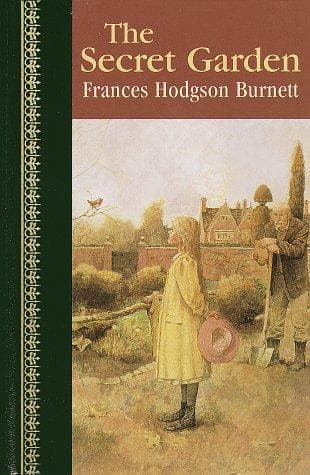
- The Secret Garden
Frances Hodgson Burnett
4.1 (891k) average on GoodreadsFantasyFeatures a strong, determined young girl overcoming adversity and finding her place.
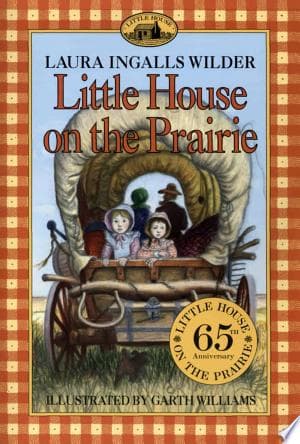
- Little House on the Prairie
Laura Ingalls Wilder
4.2 (256k) average on GoodreadsChildren'sWilder's Little House series presents a more idealized and nostalgic view of historical childhood, focusing on domestic life, family values, and the pioneering spirit. In contrast, Hetty Feather delves into the harsher realities of Victorian society, specifically institutional neglect and abuse, and the absence of a conventional family, offering a much darker and more critical perspective on historical childhood experiences. Wilson confronts the lack of agency and the struggle for survival, a stark contrast to Wilder's emphasis on self-sufficiency within a loving family unit.
- Harry Potter and the Sorcerer's Stone
J.K. Rowling
4.5 (7M) average on GoodreadsFantasyRescued from a miserable life under the stairs, an orphaned boy discovers he's a wizard destined for a magical school, where he uncovers a dangerous secret tied to the dark wizard who murdered his parents.
- The Hobbit, or There and Back Again
J.R.R. Tolkien
4.3 (2.9M) average on GoodreadsFantasyA comfort-loving hobbit named Bilbo Baggins is whisked away by a mischievous wizard and a band of dwarves on an unexpected journey to reclaim stolen treasure from a fearsome dragon, discovering courage and a magical ring along the way.
- Harry Potter and the Goblet of Fire
J.K. Rowling
4.6 (2.6M) average on GoodreadsFantasyA bewildered Harry Potter, underage and thrust into a deadly Triwizard Tournament, must brave dragons, mermaids, and a resurgent dark magic to survive a year that will forever alter the wizarding world.
- Harry Potter and the Order of the Phoenix
J.K. Rowling
4.5 (2.5M) average on GoodreadsFantasyIn a year of oppressive secrets and the threat of Voldemort, Harry Potter and Dumbledore's Army secretly train for war, shown through Jim Kay and Neil Packer's dark illustrations.




Enjoyed the summary?
A summary gives you the shape of the book. The book itself has the detail, the examples and the voice.
Find Hetty Feather on AmazonAs an Amazon Associate, BookBrief earns from qualifying purchases. How we're funded