
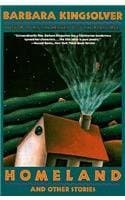
Synopsis
Covers the whole plot, including the ending.
- Difficulty
- Easy
- Pacing
- Moderate
- Mood
- Reflective, Observational, Poignant, Grounded
- Read it if
- You enjoy character-driven literary fiction with a focus on human relationships, environmental themes, and a strong sense of place, particularly the American South.
- Skip it if
- You prefer fast-paced plot-driven narratives, high fantasy, or science fiction.
Homeland and Other Stories Plot Summary
Covers the whole plot, including the ending.
Homeland
The story introduces Gloria, a young girl living with her eccentric grandmother, Mama, in rural Kentucky. Mama is a great storyteller, constantly sharing tales of their Cherokee ancestors' migration and struggles. Gloria's practical mother tries to keep her grounded, but Gloria is drawn to Mama's stories and her family's rich past. The story examines the conflict between inherited identity and individual experience. Gloria observes her large, colorful family's rituals and unspoken rules. She learns about their deep connection to the land and their feeling of being different in the community.
Quality Time
Melinda, a single mother, struggles to connect with her pre-teen son, Tyler. She feels guilty about her demanding job and Tyler's lack of a father figure, so she plans elaborate 'quality time' activities. These often fail, like a disastrous camping trip where Tyler prefers his Walkman, or a cultural festival where both feel out of place. Melinda tries to understand Tyler's growing independence and his world of video games and pop culture. Tyler, in turn, quietly deals with his mother's worries and her sometimes overwhelming efforts to bond. The story highlights the generation gap and the difficulties of parenting in a modern, often disconnected world.
The Way We Keep House
This story focuses on a couple, Anna and Ben, and their different ideas about home and order. Anna is neat, finding comfort in a perfectly organized house. Ben is more relaxed, tending towards clutter. Their different habits cause small but constant arguments, from lost keys to overflowing laundry. The story shows how these small domestic disagreements reflect bigger issues in their relationship, like communication problems and unspoken expectations. As they live together, they must decide if their love can bridge the gap between their different ways of seeing and maintaining their shared space. It explores the compromises needed in a long-term partnership.
Rose-Johnny
Set in a small, conservative Southern town, the story follows Rose, a curious girl. Rose is fascinated by the town's outcast, Rose-Johnny, a reclusive woman rumored to be strange or dangerous. Despite warnings from the town and her parents, Rose is drawn to Rose-Johnny's mystery and her unique, handmade crafts. Through careful interactions, Rose slowly understands Rose-Johnny's loneliness and the prejudice she faces. Their friendship goes beyond social norms, giving Rose a different view of acceptance, judgment, and the hidden lives of others. It challenges her community's narrow-mindedness and the assumptions she grew up with.
Covered Bridges
The story features Susan, a middle-aged woman driving through rural New England, looking for covered bridges. Each bridge brings back a memory of a past lover or a significant life moment. The story moves between Susan's current journey and her vivid memories of relationships, both short and long, and the choices she made at different points. She thinks about the 'roads not taken,' the different paths her life could have followed, and the lasting impact of love and loss. The covered bridges symbolize transitions, connections, and the passage of time. Susan deals with nostalgia, regret, and eventually, a quiet acceptance of her life's course.
Bereaved
Eleanor is a recent widow, intensely struggling with the loss of her husband, Arthur. The story details her raw grief: everyday tasks now feel huge, reminders of Arthur are everywhere in their home, and she feels an overwhelming emptiness. Her friends and family offer well-meaning but often unhelpful advice, telling her to 'move on.' Eleanor, however, is stuck in mourning, holding onto memories and resisting a future without Arthur. The story explores the isolating nature of deep grief, the struggle to keep a sense of self after losing a partner, and the slow, hard process of learning to live with an absence that will never truly be filled but can become part of a new life.
Islands on the Moon
Lily, the main character, has fled a difficult past and works as a cook at a remote scientific research station in the desert. She lives a solitary life, finding peace in the stark, beautiful landscape and the anonymity of her job. She interacts little with the scientists and keeps her past hidden. The isolation offers peace, allowing her to process her experiences and heal. However, a new, curious scientist disrupts her solitude, forcing Lily to consider connection and the risks of opening up again. The story examines escape, healing, and how human connection can break through strong defenses.
Stone Dreams
Maria, a sculptor from the city, moves to a small, isolated town for quiet work and new inspiration. At first, she sees the townspeople as simple and uncultured, focusing only on her art. But as she spends more time there, she observes their lives, their resilience, and their deep connection to the land and its history. She is drawn to the local quarry, where she finds unique stones that inspire her art. Through interactions, especially with an elderly local farmer, Maria begins to see the beauty and wisdom in their way of life. This challenges her assumptions and eventually influences her art and her sense of belonging.
The Farmer's Daughter
Clara, a college-educated woman, reluctantly returns to her family's struggling farm after her father gets sick. She always wanted a life away from demanding farm work, but now faces her family's legacy and their deep connection to the land. She argues with her traditional father about modern farming methods and the farm's financial problems. As she takes on more responsibility, Clara begins to understand the dedication and hard work involved, and the subtle beauty of the rural life she once rejected. The story explores duty, tradition versus progress, and the complex relationship between generations as Clara re-evaluates her own path and her place in her family's history.
Why I Am a Danger to the Public
The narrator, a woman prone to distraction and a somewhat chaotic approach to life, describes incidents that, while not malicious, often lead to minor problems or near-misses. From forgetting to turn off the stove to causing a small traffic jam, her absentmindedness is a recurring theme. The tone is self-deprecating and humorous, as she admits her flaws and the exasperation she sometimes causes. Despite the chaos, her character has a certain charm, suggesting a life lived with an adventurous spirit, even if unintentional. The story subtly explores embracing imperfections and finding humor in everyday struggles.
Mending Wall
This story focuses on two neighbors: Mr. Henderson, an older, traditional man who believes in strict boundaries, and Sarah, a younger, free-spirited woman who prefers openness. They must interact when a section of their shared stone wall collapses, needing repair. Mr. Henderson insists on rebuilding it exactly as it was, following old customs. Sarah questions the need for such rigid divisions. Their different views on property, community, and human connection emerge during their work. The story, like Robert Frost's poem, explores the balance between independence and interdependence, the value of tradition, and how people connect or push each other away, even when working together.
The Other Woman
The narrator is a woman who constantly feels overshadowed by her husband's first wife, even though that marriage ended years ago. She compares herself to 'the other woman,' whose presence seems to linger in their home, in her husband's memories, and in the expectations of his family and friends. She struggles with feelings of inadequacy, jealousy, and a desire to create her own identity within the relationship. The story explores the psychological challenges of being a second wife, accepting a partner's past, and the internal struggle to overcome insecurity. Ultimately, it is about finding self-acceptance and coming to terms with her husband's history.
Homeland and Other Stories Characters
Gloria (Homeland)
Protagonist
A young girl navigating her family's rich but sometimes embellished history.
Gloria is a curious and observant young girl, caught between the fantastical narratives of her grandmother, Mama, and the more grounded reality presented by her mother. She is a keen listener, absorbing the stories of her Cherokee heritage and the vibrant personalities within her extended family. Gloria is intelligent and reflective, grappling with questions of identity, belonging, and the nature of truth in family lore. She is empathetic, often trying to understand the motivations and perspectives of others, even when they conflict.
Relationships: Mama (Grandmother, primary storyteller and influence); Gloria's Mother (Practical mother, provides a counterpoint to Mama's stories)
Melinda (Quality Time)
Protagonist
A single mother striving to connect with her son amidst guilt and modern life's demands.
Melinda is a well-meaning and loving single mother who feels immense pressure to compensate for her son Tyler's perceived lack of a father figure and her own demanding work schedule. She is often anxious, overthinking her parenting choices and trying too hard to create 'perfect' bonding experiences. Her intentions are good, but her efforts sometimes miss the mark, leading to awkward or unfulfilling interactions. Melinda is resilient and determined, constantly seeking ways to bridge the generational and emotional gap with her son, driven by a deep maternal love.
Relationships: Tyler (Son, with whom she struggles to connect)
Rose (Rose-Johnny)
Protagonist
A curious young girl who befriends an outcast, challenging her town's prejudices.
Rose is a perceptive and open-minded young girl living in a conservative town. Unlike her peers and many adults, she possesses an innate curiosity that allows her to look beyond surface appearances and societal judgments. She is brave enough to defy community norms by seeking out Rose-Johnny, driven by genuine interest rather than fear or gossip. Rose embodies innocence and a burgeoning sense of justice, questioning the 'rules' and prejudices of her small world. Her imagination allows her to see beauty and complexity where others see only strangeness.
Relationships: Rose-Johnny (Ostracized friend, catalyst for Rose's growth); Rose's Parents (Conservative parents, represent community norms)
Rose-Johnny (Rose-Johnny)
Supporting
An enigmatic and ostracized woman who finds an unlikely friend in a young girl.
Rose-Johnny is a reclusive woman living on the fringes of her small Southern town, a figure of mystery and local gossip. She is perceived as strange or even dangerous by most, largely due to her unconventional lifestyle and appearance. Despite her isolation, she possesses a quiet dignity and a unique artistic talent, creating beautiful crafts. Her interactions are minimal, but she shows a gentle, if cautious, warmth towards Rose, who sees past the town's prejudices. Rose-Johnny represents the 'other' in a close-knit community, embodying resilience in the face of judgment.
Relationships: Rose (Young friend, sees beyond her reputation)
Susan (Covered Bridges)
Protagonist
A reflective woman revisiting her past relationships and life choices during a road trip.
Susan is a introspective and somewhat melancholic woman in her middle age. She is thoughtful and prone to reflection, using her road trip as a catalyst to revisit significant moments and relationships from her past. Susan carries a sense of nostalgia, and perhaps some regret, for the different paths her life could have taken. She is observant of the world around her, but her internal landscape is rich and complex, filled with the echoes of past loves and decisions. She embodies a quiet strength in her acceptance of her life's journey.
Relationships: Various past lovers (Figures from her memory, representing different life stages and choices)
Eleanor (Bereaved)
Protagonist
A widow grappling with overwhelming grief after the loss of her husband.
Eleanor is a woman deep in the throes of profound grief. She is deeply attached to the memory of her late husband, Arthur, and struggles immensely with the practical and emotional realities of widowhood. She is often overwhelmed, finding everyday tasks daunting and the well-intentioned advice of others unhelpful. Eleanor is fiercely protective of her mourning process, resisting external pressures to 'move on' before she is ready. Her character portrays the raw, isolating, and often messy reality of loss, emphasizing the enduring nature of love and sorrow.
Relationships: Arthur (Deceased husband, central to her identity and grief); Friends and Family (Support network, often well-meaning but sometimes unhelpful)
Lily (Islands on the Moon)
Protagonist
A young woman seeking solace and anonymity in a remote desert research station.
Lily is a guarded and resilient young woman who has deliberately chosen a life of isolation to escape a troubled past. She is self-sufficient and capable, finding comfort in the routine and anonymity of her work as a cook. Lily is initially wary of human connection, fearing exposure and vulnerability. She finds solace in the stark beauty of the desert landscape. Despite her desire for solitude, there is an underlying longing for connection, which is slowly awakened by new interactions. She represents the human capacity for healing and the slow process of opening up after trauma.
Relationships: Scientists at the station (Colleagues, initially distant, later a source of connection)
Maria (Stone Dreams)
Protagonist
A city sculptor who finds unexpected inspiration and connection in a rural town.
Maria is an artist, initially somewhat elitist and focused on her craft. She approaches the rural town with a degree of intellectual detachment, viewing its inhabitants as simple. However, she possesses an artist's keen eye and an openness to new experiences, which allows her to eventually see beyond her initial preconceptions. Maria is driven by a desire for artistic inspiration and a deeper understanding of her materials. She is reflective and capable of personal growth, ultimately allowing the community and landscape to profoundly influence her art and worldview.
Relationships: Local farmer (Elderly local, provides wisdom and insight); Townspeople (Community, initially perceived as simple, later as a source of rich life)
Clara (The Farmer's Daughter)
Protagonist
A college-educated woman returning to her family farm, grappling with duty and identity.
Clara is an intelligent and independent young woman who initially views her family's farm as a burden and an escape. She is ambitious and has sought a different life through education. Her return to the farm is tinged with reluctance and frustration, as she clashes with her traditional father. However, Clara is also capable and resilient, slowly learning the demands of farming and beginning to appreciate the deep connection to the land that her family embodies. She is torn between her personal aspirations and a growing sense of duty and belonging.
Relationships: Clara's Father (Traditional farmer, represents legacy and duty); Clara's Mother (Supportive parent, mediates between Clara and her father)
Narrator (Why I Am a Danger to the Public)
Protagonist
An endearingly absentminded woman who recounts her humorous, chaotic mishaps.
The narrator is a charmingly chaotic and self-aware woman with a pronounced tendency towards absentmindedness. She is not malicious, but her lack of focus often leads to humorous, slightly dangerous, or inconvenient mishaps. She possesses a good sense of humor, often at her own expense, and a unique way of observing the world. Despite her flaws, she is relatable and endearing, embodying a spirit of living life with a certain unpolished authenticity. Her character highlights the humor found in everyday human imperfection.
Relationships: The Public (Unwitting recipients of her minor mishaps)
Mr. Henderson (Mending Wall)
Supporting
An older, traditional neighbor who believes in strict boundaries.
Mr. Henderson is an older man who embodies traditional values and a firm belief in order and clear boundaries, both physical and metaphorical. He is set in his ways, preferring to adhere to established customs, such as meticulously rebuilding the shared stone wall. He is pragmatic and perhaps a bit rigid in his thinking, valuing privacy and the clear demarcation of property. While not unkind, he represents a conservative viewpoint that contrasts with his younger neighbor's more open approach.
Relationships: Sarah (Younger neighbor, with whom he has differing views on boundaries)
Narrator (The Other Woman)
Protagonist
A woman grappling with insecurity and the lingering presence of her husband's first wife.
The narrator is a woman deeply affected by the 'ghost' of her husband's first wife. She struggles with profound insecurity, constantly comparing herself to this perceived ideal and feeling overshadowed. She is introspective and sensitive, acutely aware of the past and its influence on her present relationship. Her internal monologue reveals her anxieties, jealousy, and her earnest desire to be seen and valued for herself, not just as a successor. She represents the psychological complexities of navigating a relationship with a partner who has a significant past.
Relationships: Her Husband (Partner, whose past affects her deeply); The 'Other Woman' (Husband's former wife, a lingering presence in her mind)
Homeland and Other Stories Themes
The Power of Storytelling and Family History
Many stories, especially 'Homeland,' show how family narratives, true or embellished, shape identity and belonging. Mama's tales in 'Homeland' are not just entertainment; they are living history connecting Gloria to her Cherokee ancestors and the land. These stories offer comfort and a way to understand the world, even when they bend the truth. Sharing and listening to these histories strengthens family bonds and cultural identity, showing how the past always influences the present.
“Mama knew a hundred stories, a thousand, and she told them all the time, stories about the family and the land, about what happened and what might have happened, and sometimes she just made them up.”
The Search for Connection and Belonging
This theme appears in several stories, showing characters who are either isolated or trying to form meaningful bonds. In 'Quality Time,' Melinda tries to connect with her son. In 'Rose-Johnny,' Rose seeks connection with an outcast, going against community norms. Lily in 'Islands on the Moon' initially avoids connection but slowly finds herself drawn to it. These narratives explore the human need for understanding and acceptance within family, community, or romantic relationships, highlighting the vulnerability and effort needed to bridge gaps and find one's place.
“She looked for the place where she belonged, in his eyes, in the spaces between their words.”
Tradition vs. Modernity
This tension is clear in 'The Farmer's Daughter' and 'Mending Wall.' Clara's struggle to balance her education and modern ideas with her family's traditional farming shows the conflict between progress and inherited ways of life. Similarly, Mr. Henderson's insistence on rebuilding the wall in 'Mending Wall' highlights adherence to old customs against Sarah's more modern questions. The collection often shows the challenges and compromises of navigating a world where old meets new, and the complex choices individuals make about which values to keep or discard.
“He always said, 'Good fences make good neighbors,' but sometimes I wondered if good neighbors didn't make fewer fences.”
Grief, Loss, and Resilience
The impact of loss and the subsequent journey of healing are central to stories like 'Bereaved' and 'Covered Bridges.' Eleanor's deep grief over her husband's death illustrates the isolating and overwhelming nature of mourning. Susan's reflections on past relationships in 'Covered Bridges' explore the lingering effects of love and loss over time. These narratives emphasize human resilience, not necessarily in 'getting over' loss, but in learning to live with its lasting mark, finding new ways to cope, and moving forward with a changed but strong sense of self.
“Grief was not a thing that ended, she realized. It was a thing that changed shape, like a river finding a new course.”
Perception, Prejudice, and Acceptance
Several stories explore how people perceive each other, often leading to prejudice, and the path to acceptance. 'Rose-Johnny' is a key example, where a young girl challenges the town's prejudiced view of an outcast. In 'Stone Dreams,' Maria's initial city-centric view of rural people changes to appreciation. 'The Other Woman' delves into the narrator's internal struggle with self-perception, influenced by the 'ghost' of her husband's past. These narratives highlight the importance of empathy, looking beyond superficial judgments, and the transformative power of true understanding.
“People will tell you what they think they know, but it’s rarely the whole truth.”
Plot Devices & Literary Techniques
Framing Device (Homeland)
The use of Mama's storytelling to structure the narrative and explore themes.
In 'Homeland,' Mama's endless, often embellished, stories about the family's Cherokee heritage serve as a framing device. These narratives don't just provide exposition; they actively shape Gloria's understanding of her identity and the world. The device allows for a fluid exploration of history, myth, and personal truth, blurring the lines between what 'really happened' and what is remembered or imagined. It underscores the power of oral tradition in cultural transmission and personal development, allowing the past to constantly inform the present experience of the young narrator.
Symbolic Setting (Covered Bridges, Islands on the Moon)
Using a physical location to represent internal states or thematic ideas.
In 'Covered Bridges,' the covered bridges themselves symbolize transitions, connections, and the passage of time, mirroring Susan's reflections on her life's crossroads and relationships. In 'Islands on the Moon,' the remote desert research station serves as a metaphor for Lily's emotional isolation and her attempt to escape her past. The stark, beautiful, yet desolate landscape reflects her internal state of guardedness and her journey towards healing. These settings are not merely backdrops but active participants in the characters' emotional and psychological journeys.
Contrasting Characters (The Way We Keep House, Mending Wall)
Pairing characters with opposing views or habits to highlight thematic conflicts.
This device is prominent in 'The Way We Keep House' with Anna's meticulousness versus Ben's clutter, and in 'Mending Wall' with Mr. Henderson's traditionalism versus Sarah's openness. By placing these contrasting personalities in close proximity, the stories effectively highlight underlying thematic conflicts such as order vs. chaos, tradition vs. modernity, and boundaries vs. connection. The interactions between these characters drive the narrative and force them (and the reader) to examine their own beliefs and the compromises inherent in human relationships.
First-Person Narrative (Multiple Stories)
Telling the story from the perspective of a single character.
Many stories in the collection employ a first-person narrative, giving readers direct access to the protagonist's thoughts, feelings, and internal struggles. This creates a strong sense of intimacy and allows for deep character exploration. For instance, in 'Bereaved,' Eleanor's first-person account immerses the reader in her raw grief, while the narrator's voice in 'Why I Am a Danger to the Public' provides humor and self-awareness. This device allows for a nuanced exploration of individual experience, making the characters' emotional journeys particularly resonant and relatable.
Episodic Structure (Why I Am a Danger to the Public)
A series of distinct but thematically linked anecdotes.
In 'Why I Am a Danger to the Public,' the story is composed of a series of short, humorous anecdotes, each detailing a different mishap caused by the narrator's absentmindedness. While each incident is distinct, they are unified by the narrator's consistent character and the overarching theme of embracing imperfection and finding humor in chaos. This episodic structure allows for a lighthearted and engaging exploration of a character trait without relying on a traditional linear plot, showcasing different facets of the narrator's personality through various situations.
Homeland and Other Stories Quotes
“Every life is a story. Every story is a a life. Each one a tiny miracle, a thing that almost didn't happen, and then did.”
“The very best thing about being a grown-up is that you can decide what you believe.”
“You can't be brave if you've only had wonderful things happen to you.”
“Sometimes the only way to stay sane is to go a little crazy.”
“It's a strange thing, but often the people who are most sure they know what's right are also the ones who are most wrong.”
“The greatest gift you can give another person is the space to be themselves.”
“You don't get to choose your family, but you do get to choose how you deal with them.”
“There are some things you learn best in calm, and some in storm.”
“Memory is a funny thing. Sometimes it's a blessing, sometimes it's a curse.”
“Every person carries a secret sorrow, and every person carries a secret joy.”
“The world is full of people who are trying to make sense of things that don't make sense.”
“It's not what happens to you, but how you react to it, that matters.”
“Love is not a place to arrive, but a home to build.”
Quiz
10 questions on the plot and the characters. Each answer comes with a short explanation.
Question 1
In 'The Space Between the Stars,' what is the protagonist's unusual job that involves animals?
- She trains racing pigeons.
- She photographs rare birds.
- She cares for an orphaned baby opossum.
- She rehabilitates injured raptors.
Show answer
C. She cares for an orphaned baby opossum. In 'The Space Between the Stars,' the protagonist finds and cares for a baby opossum, which becomes a significant part of her life and observations.
Question 2
What common theme connects many of the stories in 'Homeland and Other Stories,' often reflected in characters' relationships with nature or their communities?
- The struggle for financial success in urban environments.
- The pursuit of fame and recognition.
- The search for belonging and connection to a place or people.
- The thrill of international travel and adventure.
Show answer
C. The search for belonging and connection to a place or people. A pervasive theme throughout the collection is the characters' deep-seated need for belonging, whether to a specific landscape, a family, or a community, often highlighting their rootedness.
Question 3
In the story 'Homeland,' what significant item does the narrator's grandmother, 'Mama,' possess that connects her to her family's history?
- A valuable antique porcelain doll.
- A hand-stitched quilt depicting family events.
- A collection of rare first-edition books.
- A silver locket containing a photograph.
Show answer
B. A hand-stitched quilt depicting family events. In 'Homeland,' Mama's quilt is a central artifact, serving as a narrative device to tell the family's history and struggles through its intricate patterns and images.
Question 4
Which of the following best describes the typical narrative voice in Barbara Kingsolver's stories within this collection?
- Detached, academic, and highly analytical.
- Wry, observant, and often infused with a down-to-earth wisdom.
- Flowery, romantic, and overly sentimental.
- Suspenseful, fast-paced, and plot-driven.
Show answer
B. Wry, observant, and often infused with a down-to-earth wisdom. Kingsolver's narrative voice is often characterized by its wry humor, keen observation of human nature and the natural world, and a grounded, accessible wisdom.
Question 5
In 'Quality Time,' what is the main source of contention and misunderstanding between the mother and her teenage daughter?
- The daughter's choice of college.
- The mother's disapproval of the daughter's boyfriend.
- Their differing definitions and expectations of 'quality time' together.
- Arguments over household chores.
Show answer
C. Their differing definitions and expectations of 'quality time' together. The story 'Quality Time' humorously and poignantly explores the generational gap and differing perspectives on what constitutes meaningful interaction between a mother and her adolescent daughter.
Question 6
The story 'Covered Bridge' features a character who is a botanist. What specific passion or area of study does this character focus on?
- Tropical rainforest ecosystems.
- The medicinal properties of desert plants.
- Endangered native wildflowers.
- Genetically modified crops.
Show answer
C. Endangered native wildflowers. In 'Covered Bridge,' the botanist character is deeply dedicated to the study and preservation of endangered native wildflowers, reflecting Kingsolver's recurring environmental themes.
Question 7
Many characters in 'Homeland and Other Stories' grapple with feelings of displacement or being an outsider. How do they often find resolution or a sense of peace?
- By moving to a completely new, exotic location.
- Through reconnecting with their natural environment or finding a sense of purpose in their immediate surroundings.
- By achieving significant financial wealth.
- By adopting a cynical and isolated worldview.
Show answer
B. Through reconnecting with their natural environment or finding a sense of purpose in their immediate surroundings. A recurring pattern shows characters finding solace and belonging not through grand gestures, but by engaging with their local environment, community, or finding meaning in simple, everyday acts.
Question 8
In 'Why I Am a Danger to the Public,' what is the primary, seemingly mundane, activity that the narrator recounts with a sense of humorous self-awareness?
- Her attempts at learning to play a musical instrument.
- Her struggles with parallel parking.
- Her frequent mishaps in the kitchen.
- Her inability to keep houseplants alive.
Show answer
B. Her struggles with parallel parking. This story is a humorous essay where the narrator details her ongoing, often disastrous, attempts and failures at parallel parking, using it as a metaphor for other life challenges.
Question 9
The story 'Bereaved' explores the complexities of grief and family relationships. What specific, somewhat unusual, event triggers the family's gathering and the narrator's reflections?
- A surprise birthday party for an elderly relative.
- The unexpected death of a family pet.
- The funeral of a distant, eccentric aunt.
- A family reunion after many years apart.
Show answer
C. The funeral of a distant, eccentric aunt. In 'Bereaved,' the family converges for the funeral of a quirky aunt, providing the backdrop for the narrator's observations on grief, family dynamics, and individual eccentricities.
Question 10
Considering the overall tone and thematic focus of 'Homeland and Other Stories,' what is a key characteristic of the 'love and possibility' mentioned in the book's description?
- It implies a utopian vision where all problems are easily solved.
- It highlights the resilience of human spirit and the potential for connection even amidst hardship and imperfection.
- It suggests a focus on romantic love above all other forms of affection.
- It refers exclusively to the possibility of escaping rural life for urban opportunities.
Show answer
B. It highlights the resilience of human spirit and the potential for connection even amidst hardship and imperfection. Kingsolver's 'love and possibility' stems from the endurance of characters, their ability to find joy and connection in imperfect situations, and the ongoing potential for growth and understanding despite life's difficulties.
Homeland and Other Stories FAQ
What is the overarching theme connecting the diverse stories in 'Homeland and Other Stories'?
While each story stands alone, a recurring theme is the resilience of individuals, particularly women, navigating challenging circumstances and finding unexpected moments of grace, connection, and self-discovery within their specific 'homelands,' whether literal or metaphorical. The collection explores themes of family, community, environmental awareness, and the search for belonging amidst change.
Which story features a young girl dealing with her mother's unique profession and a new stepfather?
The story 'Homeland' centers on a young girl named Lou Ann whose mother, a taxidermist, brings a somewhat unconventional atmosphere to their home. Lou Ann grapples with her mother's work and the arrival of a new stepfather, learning to navigate the complexities of family and acceptance in her own quirky way.
Can you describe the central conflict or premise of 'Quality Time'?
'Quality Time' focuses on a mother's struggle to connect with her children, particularly her teenage daughter, in a meaningful way. The story highlights the tension between parental expectations and children's autonomy, as the mother attempts to engineer 'quality time' that often backfires, revealing deeper anxieties about their evolving relationships.
What kind of environmental concerns are touched upon in the collection, specifically in a story like 'Stone Dreams'?
In 'Stone Dreams,' environmental concerns are woven into the narrative through the character of a woman deeply connected to the land and its history, particularly in relation to mining. The story subtly critiques industrial encroachment and the loss of natural heritage, emphasizing the spiritual and practical importance of preserving ecological balance.
Which story showcases a protagonist's journey of self-reliance after a significant life change?
In 'Rose-Johnny,' the protagonist, a young girl named Rose, faces the challenge of growing up in a rural setting with limited resources and a somewhat neglectful mother. She finds solace and a sense of purpose through her interactions with a mysterious, reclusive woman named Johnny, who teaches her about resilience and finding beauty in unexpected places.
Are there any subtle connections between characters or settings in different stories, suggesting a shared universe?
While not explicitly stated as a shared universe with recurring characters, Kingsolver often revisits themes of Appalachian life, rural communities, and strong female protagonists across her works. The underlying ethos of resilience, connection to nature, and social observation provides a thematic thread, creating a sense of continuity in her portrayal of human experience rather than direct plot links.
In 'The View from Bluff Mountain,' what is the significance of the protagonist's recurring dreams or memories?
The protagonist's recurring dreams and memories in 'The View from Bluff Mountain' serve as a powerful link to her past, particularly her childhood experiences and her relationship with her grandmother. These fragmented recollections are not just nostalgic but offer insights into her present anxieties and her evolving understanding of family legacy and personal identity.
What role does humor play in softening the more poignant or difficult themes presented in stories like 'Why I Am a Danger to the Public'?
In 'Why I Am a Danger to the Public,' humor acts as a coping mechanism and a narrative device to make the protagonist's frustrations and observations more accessible and relatable. The self-deprecating wit and ironic commentary allow Kingsolver to address societal absurdities and personal dilemmas without becoming overly didactic or melancholic, inviting readers to find common ground in shared human foibles.
How does the story 'Covered Bridge' utilize symbolism to convey its message about transition and permanence?
The covered bridge in the story 'Covered Bridge' functions as a potent symbol of transition, marking a passage from one state to another, both literally and metaphorically. Its enclosed nature suggests a momentary pause or protection, while its enduring structure speaks to the permanence of certain human connections and the passage of time, even as the world around it changes.
Analyze the psychological impact of community expectations on the main character in 'Bereaved of Light'.
In 'Bereaved of Light,' the main character, a woman who experiences a profound loss, struggles with the immense psychological pressure of community expectations to grieve in a prescribed manner. This external pressure often clashes with her internal process, leading to feelings of isolation and misunderstanding, as she navigates her personal sorrow while trying to conform to societal norms of mourning.
How does the concept of 'home' psychologically manifest for the characters who leave their origins and then return, as seen in some stories?
For characters who leave and return, 'home' often becomes a complex psychological construct, representing both comfort and constraint, nostalgia and unresolved issues. Their return is frequently driven by a need for grounding or reconciliation, but they must also confront how both they and their 'homeland' have changed, leading to a reevaluation of their identity and belonging.
Discuss the psychological resilience exhibited by the female protagonists in the face of adversity throughout the collection.
The female protagonists consistently demonstrate remarkable psychological resilience, often characterized by an inner strength, adaptability, and a capacity for finding agency even in difficult situations. They process loss, navigate societal pressures, and endure personal struggles by drawing upon their resourcefulness, their connections to family or nature, and an underlying optimism that allows them to move forward.
What psychological defense mechanisms are evident in characters who initially resist change, such as in 'Mending Wall'?
In stories like 'Mending Wall' (or similar ones focused on resistance to change), characters often employ defense mechanisms such as denial, rationalization, and withdrawal. They might deny the necessity of change, rationalize their current behaviors, or withdraw emotionally to protect themselves from perceived threats to their established routines or beliefs, revealing a deep-seated fear of the unknown.
Is there a definitive interpretation of the ending of 'Homeland,' particularly regarding Lou Ann's future perspective?
The ending of 'Homeland' is open to interpretation, but it generally suggests Lou Ann has gained a deeper, more nuanced understanding of her family and her place within it. While not overtly happy-ever-after, her perspective shifts towards acceptance and a quiet resilience, implying she's equipped to navigate life's eccentricities with a newfound maturity, rather than a definitive resolution of all conflicts.
How does the collection challenge or reinforce traditional gender roles, particularly through the mothers and daughters depicted?
The collection often challenges traditional gender roles by presenting mothers and daughters who defy conventional expectations, pursuing unconventional paths or expressing their identities in non-traditional ways. While some characters may reinforce certain nurturing aspects, Kingsolver consistently highlights female agency, intellectual curiosity, and strength outside of domestic confines, promoting a more expansive view of womanhood.
What is the author's likely stance on the balance between individual freedom and community responsibility as explored in various stories?
Kingsolver appears to advocate for a nuanced balance, suggesting that true individual freedom often thrives within a supportive, albeit sometimes challenging, community. While characters strive for personal autonomy, the stories frequently illustrate that neglecting community responsibility can lead to isolation, and conversely, healthy communities provide the foundation for individual flourishing and mutual aid.
Could the occasional magical realism elements, such as in 'The Way We Live Now,' be interpreted as a form of wish fulfillment or a deeper commentary on reality?
The subtle magical realism elements, like those in 'The Way We Live Now,' can be interpreted as both wish fulfillment and a deeper commentary. They often represent characters' internal desires or anxieties manifesting externally, blurring the lines between objective reality and subjective experience. This allows Kingsolver to explore profound emotional truths or societal critiques in a way that transcends literal representation.
What philosophical statement about human connection does 'Marley's Ghost' make through its unique narrative structure?
'Marley's Ghost' (or a similar story focusing on unconventional connections) makes a philosophical statement that human connection transcends conventional boundaries of life and death, or even direct interaction. The narrative structure, perhaps involving a character influenced by a spectral or unseen presence, suggests that our lives are deeply intertwined with others, even those we never physically meet or who exist in memory, emphasizing the enduring impact of relationships.
How does Kingsolver use the natural world as a metaphor or backdrop to reflect the internal states of her characters?
Kingsolver frequently uses the natural world as a powerful metaphor and a resonant backdrop, mirroring the internal states of her characters. A harsh winter might reflect emotional isolation, a thriving garden could symbolize hope and new growth, and the enduring mountains often represent resilience. The environment is not just scenery but an active participant, reflecting and influencing the characters' psychological landscapes and journeys.
About the author

Barbara Kingsolver is a Pulitzer Prize winning American novelist, essayist and poet. She was raised in rural Kentucky and lived briefly in the Congo in her early childhood. Kingsolver earned degrees in biology at DePauw University and the University of Arizona and worked as a freelance writer before she began writing novels. Her widely known works include The Poisonwood Bible, the tale of a missionary family in the Congo, and Animal, Vegetable, Miracle, a non-fiction account of her family's attempts to eat locally.
Similar books
- Tenth of December
George Saunders
4.0 (62k) average on GoodreadsLiterary FictionA collection of short stories exploring the lives of ordinary Americans with humor and pathos.
- Pastoralia
George Saunders
4.1 (18k) average on GoodreadsLiterary FictionAnother short story collection by Saunders, known for its blend of humor, social commentary, and unique characters.
- The Old Man and the Sea
Ernest Hemingway
3.8 (831k) average on GoodreadsLiterary FictionA Cuban fisherman's long struggle with a giant marlin becomes a story of endurance and dignity, now retold for young adults with illustrations, phonetic guides, and writing prompts in Traditional Chinese.
- One Hundred Years of Solitude
Gabriel García Márquez
4.1 (753k) average on GoodreadsLiterary FictionThrough the multi-generational story of the Buendía family, a mythical town deals with the repeating patterns of time, love, and solitude, as the extraordinary mixes with the ordinary.
- The Goldfinch
Donna Tartt
3.9 (720k) average on GoodreadsLiterary FictionHaunted by a tragic explosion and clutching a stolen Dutch masterpiece, a young orphan navigates the opulent drawing rooms of New York and the gritty underbelly of the art world, desperately seeking connection and redemption amidst a life spiraling into crime and obsession.
- Little Fires Everywhere
Celeste Ng
4.1 (713k) average on GoodreadsLiterary FictionIn Shaker Heights, an artist and her daughter move in, and their free-spirited lives clash with a rule-bound matriarch, revealing hidden conflicts beneath a perfect surface.





Enjoyed the summary?
A summary gives you the shape of the book. The book itself has the detail, the examples and the voice.
Find Homeland and Other Stories on AmazonAs an Amazon Associate, BookBrief earns from qualifying purchases. How we're funded