
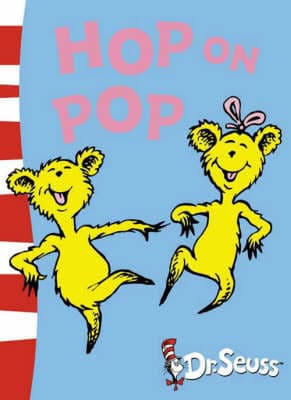
Synopsis
Covers the whole plot, including the ending.
- Difficulty
- Easy
- Pacing
- Moderate
- Mood
- Playful, Educational, Whimsical, Joyful
- Read it if
- You are a parent or educator looking for a fun, engaging, and effective way to introduce very young children to basic phonics, rhyming, and early reading skills.
- Skip it if
- You are looking for a book with a complex plot, character development, or a deep narrative arc.
Hop On Pop Plot Summary
Covers the whole plot, including the ending.
Introduction to Simple Words: Up and Down
The book starts with simple, two-letter words like 'UP' and 'PUP', showing how a small change creates a new word. It then shows a 'PUP' going 'UP'. This is followed by 'UP' and 'DOWN', with a picture of a small brown dog, a 'PUP', jumping up and down. The text highlights these basic ideas, using large, clear letters and repeated words to help young readers understand the sounds and meanings. The pictures show a playful pup doing these actions, making the ideas clear for children.
Hop on Pop and Other Actions
The phrase 'HOP ON POP' is introduced, showing two small, blue-haired children happily hopping on their red-shirted father, Pop. This section also looks at other action words like 'WE SIT', 'WE TWO', 'WE ALL', 'SIT ON A WALL'. The children are seen sitting on a low, red wall, reinforcing the idea of 'sit'. The text continues to build simple sentences and rhyming patterns, helping children sound out and recognize words in familiar scenes of play and family.
The Fox in a Box and Other Objects
This part introduces objects and their words. A 'FOX IN A BOX' is shown, with the fox looking out of a red box. This pairing helps children understand prepositions and object names. The story then goes to 'FISH IN A DISH', showing a blue fish in a yellow dish, and 'RED', 'RED', 'ALL RED', with a red bed. These simple, colorful pictures and repeated words help with color recognition and naming objects, building words in an engaging way for young readers.
Tall and Small, We All Play Ball
Ideas of size are introduced with 'TALL' and 'SMALL'. A tall blue boy stands next to a small red girl. This leads into 'WE ALL PLAY BALL', showing the tall boy and small girl playing with a red ball. The text then presents 'BALL' and 'WALL', showing the ball hitting a wall. This section uses opposite adjectives and common play activities to expand the reader's vocabulary and understanding of descriptive words, while keeping the book's simple rhyming structure.
Day, Play, Way, Say
This section focuses on words ending with '-AY'. It begins with 'DAY', showing a bright, sunny scene. This moves to 'WE PLAY', with children playing outdoors. Then, 'WHAT DO WE SAY?'. A boy asks, 'HELLO, HELLO'. The focus is on word families and their sounds. The pictures show children talking and playing, connecting the written words to speaking and everyday experiences, making learning interactive and fun for young children.
My Dad Is Sad, Very, Very Sad
The book mentions feelings with 'MY DAD IS SAD'. Pop is shown with a tear, looking sad. The text emphasizes this with 'VERY, VERY SAD'. This simple sentence introduces an emotional idea directly, letting children recognize and relate to feelings. The picture clearly shows Pop's sadness, helping children connect the word 'sad' to a visual of the emotion, expanding their understanding beyond just objects and actions.
Three Fish, Red Fish, Blue Fish
This part includes counting and colors. 'ONE FISH, TWO FISH, RED FISH, BLUE FISH' is shown, with many colorful fish. While a direct quote from another Seuss book, it fits the rhyming and simple word structure of 'Hop on Pop'. The pictures feature different fish, helping with both numbers and colors. This playful repetition and visual aid help children practice counting and color identification within rhyming words.
Book, Cook, Look
The book introduces words like 'BOOK', 'COOK', and 'LOOK'. A chef character, 'COOK', is shown reading a 'BOOK', and then looking at something in a pot. This sequence connects actions with objects, showing how words relate to daily activities. The simple pictures clearly show the 'COOK' and the 'BOOK', making the words easy to identify and understand in context. This section encourages an early enjoyment of reading and common household activities.
See My Hat, See My Cat
This part focuses on words with similar sounds, like 'HAT' and 'CAT'. A character is shown saying 'SEE MY HAT' while pointing to a hat, and then 'SEE MY CAT' while pointing to a cat. The pictures clearly show the difference between the hat and the cat, helping children understand the distinct meanings of similar-sounding words. This helps with phonics and word recognition through simple sentences and clear pictures.
We Like to Play, We Like to Say
The story returns to the fun of learning and playing with words. 'WE LIKE TO PLAY' shows children happily doing various activities. 'WE LIKE TO SAY' highlights the enjoyment of speaking and rhyming. The book ends by repeating that learning words can be a fun game. The children's happy faces in the pictures show this message, leaving the reader with a good feeling about exploring language.
Hop On Pop Characters
Pop
Supporting
The father figure who serves as a rhyming object and source of affection.
Pop is depicted as a patient and loving father, often seen with a red shirt. He is primarily a passive character, serving as the object of the children's playful 'hopping' and as an example for the word 'Pop'. He also demonstrates the emotion of 'sad' in one section, providing a simple emotional context for young readers. His interactions are minimal but central to the book's most famous phrase, making him a memorable, if not deeply developed, figure.
Relationships: Children (Father to the children who hop on him.)
The Children
Protagonist
Playful and curious children who demonstrate various actions and words.
The children, often depicted with blue hair and simple clothing, are the active participants in most of the book's scenarios. They hop, sit, play ball, and engage in the various word exercises presented. They represent the young readers themselves, learning and interacting with the world through words. Their actions are simple and direct, making the concepts easy for children to grasp and emulate. They are the primary agents showing the meaning of the words.
Relationships: Pop (Children to Pop, engaging in playful interactions.)
The Pup
Supporting
A small dog illustrating actions like 'up' and 'down'.
The Pup is a small, brown dog that appears early in the book. Its primary function is to visually demonstrate the words 'UP' and 'DOWN' by jumping and moving. The Pup adds an element of animal charm and playfulness to the book, making the initial word concepts more engaging for young readers. It is a simple, illustrative character designed to aid in word recognition.
The Fox
Mentioned
An animal character used to illustrate rhyming words like 'box'.
The Fox is a character that appears briefly, peeking out of a 'BOX'. Its purpose is purely illustrative, helping to demonstrate the rhyming pair 'FOX IN A BOX'. It adds a touch of whimsical animal presence but has no active role in the narrative beyond its visual representation of a word pairing.
The Fish
Mentioned
Aquatic creatures used to illustrate rhyming words and colors.
The Fish appear in a 'DISH' and later in a counting and color sequence ('ONE FISH, TWO FISH, RED FISH, BLUE FISH'). They are visual aids for rhyming words ('FISH IN A DISH') and for teaching basic concepts like numbers and colors. Their vibrant appearance makes them engaging but they have no personality or active role.
The Cook
Mentioned
A chef character used to illustrate words like 'book' and 'look'.
The Cook is a character depicted wearing a chef's hat, shown reading a 'BOOK' and then 'LOOKing' into a pot. This character serves to illustrate words related to common activities and objects, reinforcing vocabulary through action. The Cook's presence helps link words to real-world roles and tasks, making the learning more concrete.
Hop On Pop Themes
Language Acquisition and Phonics
The main theme of 'Hop On Pop' is giving young children a fun and easy introduction to language. The book shows rhyming words, word families (e.g., 'day', 'play', 'say'), and simple sentences. Through repetition, large print, and clear pictures, it teaches children to see patterns in words, sound out new words by changing initial letters (e.g., 'Pop' to 'Hop'), and build basic vocabulary. The whole book is a direct lesson in early phonics and getting ready to read.
“WE SEE A PUP. PUP IS UP. UP. PUP. POP. PUP IS UP ON POP.”
Playfulness and Learning
The book always shows learning as a fun and interesting activity. The children are seen playing, laughing, and interacting with their surroundings in a happy way while also learning new words. The famous 'HOP ON POP' scene shows this, turning a potentially naughty act into a lighthearted word lesson. This theme creates a good feeling about reading and education, making the process seem like a game instead of work, which is important for young children.
“WE LIKE TO PLAY. WE LIKE TO SAY. WHAT DO WE SAY?”
Everyday Concepts and Experiences
'Hop On Pop' bases its word lessons on ideas and experiences familiar to young children. It covers actions (hop, sit, play), objects (box, dish, ball, hat, cat, book), basic feelings (sad), and how things are placed (up, down, in). By connecting words to real, understandable situations and items, the book makes abstract language ideas clearer for its young audience. This way helps children build a basic vocabulary relevant to their daily lives.
“MY DAD IS SAD. VERY, VERY SAD.”
Parent-Child Interaction
While not directly stated as a main theme, the interactions between Pop and the children quietly show the value of parents and children learning together. The 'HOP ON POP' scene, though simple, shows a playful and accepting father. The book encourages reading together, where parents and children can explore words, point to pictures, and sound out words. This interactive part helps build connections and supports a home where early reading is encouraged.
“HOP ON POP. WE LIKE TO HOP. WE LIKE TO HOP ON TOP OF POP.”
Plot Devices & Literary Techniques
Repetition
Frequent reuse of words and phrases to reinforce learning.
Dr. Seuss heavily employs repetition of words and simple sentence structures throughout 'Hop On Pop'. For instance, 'UP. PUP IS UP.' and 'WE SIT. WE TWO. WE ALL. SIT ON A WALL.' This device is crucial for early readers as it helps them memorize words, recognize patterns, and build confidence by encountering familiar text. The rhythmic nature of the repetition also makes the book engaging and enjoyable to read aloud, aiding in auditory learning and comprehension.
Rhyme and Alliteration
The use of rhyming words and similar initial sounds to teach phonics.
The core of 'Hop On Pop' lies in its consistent use of rhyme (e.g., 'hop' and 'pop', 'fox' and 'box', 'fish' and 'dish') and subtle alliteration. This literary device is fundamental for teaching phonological awareness, helping children understand that words with similar sounds often share similar spellings. By highlighting these phonetic relationships, the book guides young readers in decoding new words and grasping the basic principles of English orthography in a fun, accessible manner.
Illustrative Word-Picture Association
Direct visual representation of words and actions.
Every page of 'Hop On Pop' features clear, simple illustrations that directly correspond to the words being presented. When the text says 'PUP IS UP', an image of a pup going up appears. This strong word-picture association is vital for young children who are still developing their reading skills. It provides immediate context for new vocabulary, helping children to understand the meaning of words without having to rely solely on decoding skills, thus building comprehension and vocabulary simultaneously.
Limited Vocabulary and Sentence Structure
Simplistic language to ensure accessibility for beginners.
The book deliberately uses a very restricted vocabulary and extremely simple, often two- or three-word, sentence structures. This intentional limitation prevents overwhelming emergent readers and allows them to focus on mastering a small set of words and basic grammatical patterns. By keeping the language straightforward, the book ensures that children can experience success in reading, which is a powerful motivator for continued learning and builds foundational literacy skills without frustration.
Hop On Pop Quotes
“Hop on Pop.”
“We like to hop on top of Pop.”
“STOP You must not hop on Pop.”
“Pat sat on hat.”
“Three fish in a tree. Fish in a tree? How can that be?”
“Cup. Pup. Pup in cup.”
“All tall. We all are tall.”
“Mouse on house.”
“See Bee. We see a bee.”
“Red. Ned. Ned is red.”
“Day. Play. We play all day.”
“Thing. Sing. Sing a song of things.”
“Ball. Wall. We play ball on the wall.”
“Night. Light. Light the light at night.”
“Brown. Down. Brown goes down.”
Quiz
10 questions on the plot and the characters. Each answer comes with a short explanation.
Question 1
What is the main purpose of 'Hop On Pop' according to its description?
- To tell a long adventure story
- To teach children about rhyming words
- To explain complex scientific concepts
- To provide moral lessons about friendship
Show answer
B. To teach children about rhyming words The book is described as introducing young children to words that rhyme, such as 'Hop and Pop', making it an educational tool for early reading skills.
Question 2
Which of these rhyming pairs is mentioned in the book's description?
- Cat and Hat
- Mouse and House
- Dog and Log
- Fish and Dish
Show answer
B. Mouse and House The description specifically lists 'Mouse and House' as one of the rhyming pairs used in the book to teach children.
Question 3
What skill do children develop by reading 'Hop On Pop', as described?
- Memorizing long poems
- Recognizing words by changing the first letter
- Writing their own stories
- Learning to count numbers
Show answer
B. Recognizing words by changing the first letter The description states that once children learn one word, they can read another by simply changing the first letter, helping build early reading confidence.
Question 4
Based on the description, what genre is 'Hop On Pop' primarily classified as?
- Mystery
- Fantasy
- Historical Fiction
- Biography
Show answer
B. Fantasy The book is listed under 'Fantasy, Children's, Young Adult' in the description, with Fantasy being the first genre mentioned.
Question 5
Why might 'Hop On Pop' be considered a children's book?
- It uses complex vocabulary for advanced readers
- It introduces rhyming words to young learners
- It contains scary themes to thrill children
- It is written only for adult audiences
Show answer
B. It introduces rhyming words to young learners The description emphasizes that it introduces young children to rhyming words, making it accessible and educational for early readers.
Question 6
Which rhyming pair from the description involves an animal?
- Cup and Pup
- Tall and Small
- Hop and Pop
- Mouse and House
Show answer
A. Cup and Pup 'Cup and Pup' includes 'Pup', which refers to a young dog, making it an animal-related pair, as per the description's examples.
Question 7
How does the book help children with reading, according to the description?
- By using only pictures without words
- By teaching them to change the first letter of words to read new ones
- By providing a dictionary of all English words
- By focusing on grammar rules and punctuation
Show answer
B. By teaching them to change the first letter of words to read new ones The description explicitly states that children can read another word 'simply by changing the first letter', which is a key phonics skill.
Question 8
What is a key theme in 'Hop On Pop' based on its description?
- The importance of family traditions
- The joy of learning through rhyming and wordplay
- The challenges of growing up in a fantasy world
- The history of children's literature
Show answer
B. The joy of learning through rhyming and wordplay The book is described as 'charming' and focuses on rhyming words to delight children, highlighting themes of fun and educational play.
Question 9
Which aspect of 'Hop On Pop' makes it suitable for Young Adult readers as per the description?
- It contains mature romantic plots
- It is listed under Young Adult genre, suggesting broader appeal beyond just young children
- It uses advanced scientific terminology
- It is based on a classic novel adaptation
Show answer
B. It is listed under Young Adult genre, suggesting broader appeal beyond just young children The description includes 'Young Adult' in its genre listing, indicating it might be used for older readers or in educational settings, though it's primarily for children.
Question 10
In the context of the book, what does the phrase 'to their delight' imply about the children's experience?
- They find reading frustrating and difficult
- They enjoy discovering they can read new words easily
- They prefer listening to stories rather than reading
- They are forced to read against their will
Show answer
B. They enjoy discovering they can read new words easily The description says children find 'to their delight' they can read another word, emphasizing a positive and joyful learning experience.
Hop On Pop FAQ
What is 'Hop On Pop' about?
'Hop On Pop' is a children's book by Dr. Seuss that uses simple, rhyming word pairs like 'Hop' and 'Pop', 'Cup' and 'Pup', and 'Mouse' and 'House' to teach early reading skills. Through playful illustrations and repetitive patterns, it helps young children recognize words and understand how changing the first letter creates new words, making reading an engaging and accessible activity.
Why should I read 'Hop On Pop'?
You should read 'Hop On Pop' because it's a foundational tool for early literacy, using Dr. Seuss's signature whimsical style to make learning fun. Its repetitive rhymes and vibrant illustrations help children build confidence in word recognition and phonics, fostering a love for reading from a young age through memorable characters and simple, joyful scenarios.
What is the background/setting of 'Hop On Pop'?
The book is set in a fantastical, cartoon-like world typical of Dr. Seuss, featuring imaginative landscapes and anthropomorphic characters. There's no specific time or place, but the setting revolves around everyday scenes like homes and playgrounds, exaggerated with Seussian elements to create a playful environment that emphasizes the rhyming words and actions.
What are the most memorable quotes?
Memorable quotes include the titular phrase 'Hop on Pop' and rhyming pairs like 'Cup Pup' and 'Mouse House'. Lines such as 'We like to hop on top of Pop' and 'See Red. Ned is in bed' stick in readers' minds due to their rhythmic simplicity and repetition, making them easy for children to recall and repeat.
What writing style does the author use?
Dr. Seuss uses a playful, rhythmic writing style with simple vocabulary, heavy repetition, and strong rhyme schemes. The text is sparse and focused on phonetics, often pairing words that differ only by the first letter to highlight word families, all presented in his distinctive, whimsical prose that appeals to young readers.
What minor details add significant meaning?
Minor details like the exaggerated expressions on characters' faces, such as Pop's surprised look when being hopped on, add humor and emotional resonance. The use of color-coding in some editions to highlight rhyming words subtly reinforces the learning objective, making the book both entertaining and educational.
What are some subtle foreshadowing moments?
In a book focused on basic literacy, foreshadowing is minimal, but the progression from simple word pairs to slightly more complex phrases, like moving from 'Hop Pop' to 'We like to hop on top of Pop', subtly prepares children for reading longer sentences, building skills step-by-step without overt instruction.
What unexpected character connections exist?
Character connections are straightforward, with figures like Pop, the children hopping on him, and animals like the Pup and Mouse serving as archetypes. The unexpected link is how these diverse characters—humans and animals—interact in shared scenarios, subtly teaching social concepts like play and family dynamics through simple, relatable actions.
What are unspoken character motivations?
Unspoken motivations include the children's desire for playful interaction and bonding, as seen in their repeated hopping on Pop, which implies affection and fun rather than mischief. Pop's tolerance suggests a patient, loving parental figure, encouraging a safe environment for learning and play without explicit dialogue.
What psychological complexities do characters exhibit?
Characters exhibit simple psychological traits: the children show curiosity and joy in exploration, while Pop displays patience and warmth. These traits are portrayed through actions rather than deep complexity, emphasizing positive emotions like happiness and security, which support early childhood development in a lighthearted way.
What are the major emotional turning points?
Emotional turning points are subtle, such as the shift from individual word pairs to collaborative phrases like 'We all play', fostering a sense of togetherness. The climax involves the children and Pop engaging in shared activities, reinforcing themes of family bonding and the joy of learning through playful repetition.
How do relationship dynamics evolve?
Relationship dynamics evolve from simple interactions, like hopping on Pop, to more inclusive play involving multiple characters. This progression mirrors social development in children, moving from individual exploration to group participation, subtly teaching cooperation and familial love through rhythmic, engaging scenarios.
Which parts remain ambiguous or open-ended?
Parts like the exact identities of the characters (e.g., whether Pop is a father or a generic adult) and the broader setting are left ambiguous, allowing readers to project their own experiences. The lack of a traditional plot leaves room for interpretation, focusing instead on the experiential joy of reading and wordplay.
What are controversial scenes or decisions?
There are no controversial scenes; the book is universally praised for its educational value. Some modern readers might debate the physical act of 'hopping on Pop' as promoting rough play, but it's generally interpreted as harmless fun that emphasizes trust and playfulness within safe, familial boundaries.
'Hop On Pop' ending explained: how it ends & what it means
The book ends with a celebratory scene of characters playing together, often summarized in phrases like 'We all play'. This conclusion reinforces the themes of unity and joy in learning, suggesting that reading is a communal, enjoyable activity that brings people together, leaving readers with a positive, uplifting message about literacy and family.
About the author
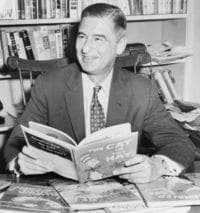
Dr. Seuss, born Theodor Seuss Geisel, was a beloved American children's author and illustrator. He is renowned for his imaginative tales and whimsical rhymes, including iconic works like 'The Cat in the Hat,' 'Green Eggs and Ham,' and 'Oh, the Places You'll Go!'. His unique style and memorable characters have made him a staple in children's literature for generations.
Similar books
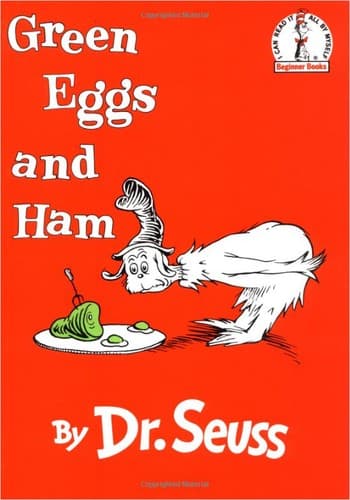
- Green Eggs and Ham
Dr. Seuss
4.3 (617k) average on GoodreadsFantasyFeatures simple, repetitive rhyming text perfect for early readers and a playful narrative style.
- The Very Hungry Caterpillar
Eric Carle
4.3 (396k) average on GoodreadsChildren'sCarle's book integrates learning (counting, days of the week, life cycle) within a more developed narrative arc and features tactile elements. While also beneficial for emergent readers, "Hop On Pop" is more systematically designed for explicit phonetic drilling, whereas Carle's book weaves learning more subtly into a compelling story.
- Harry Potter and the Sorcerer's Stone
J.K. Rowling
4.5 (7M) average on GoodreadsFantasyRescued from a miserable life under the stairs, an orphaned boy discovers he's a wizard destined for a magical school, where he uncovers a dangerous secret tied to the dark wizard who murdered his parents.
- The Hunger Games
Suzanne Collins
4.3 (6.4M) average on GoodreadsFantasyIn a future where children fight to the death on live television, Katniss Everdeen volunteers for the arena, turning a death sentence into a fight for survival and a spark of rebellion.
- 1984
George Orwell
4.2 (3.1M) average on GoodreadsPoliticsIn a future where surveillance and thought control are absolute, a man's search for truth clashes with the Party, showing that hope can be a form of rebellion.
- Divergent
Veronica Roth
4.2 (2.9M) average on GoodreadsFantasyIn a society divided by virtues, a sixteen-year-old's difference from the norm starts a rebellion that threatens her world.




Enjoyed the summary?
A summary gives you the shape of the book. The book itself has the detail, the examples and the voice.
Find Hop On Pop on AmazonAs an Amazon Associate, BookBrief earns from qualifying purchases. How we're funded