
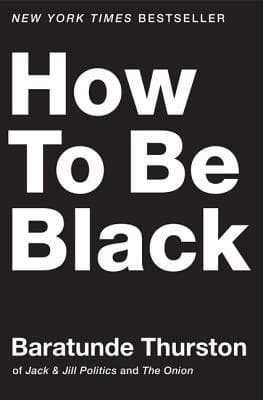
Core Idea
- Difficulty
- Easy
- Read it if
- You enjoy satire and humor to tackle serious social issues like race and identity, want to understand the complexities and absurdities of racial categorization in America, or appreciate a fresh, personal perspective on what it means to be Black beyond stereotypes.
- Skip it if
- You are looking for a straightforward, academic analysis of race, prefer serious and somber discussions over comedic approaches to sensitive topics, or might be offended by irreverent humor applied to racial identity.
Key Takeaways from How to Be Black
The Performance of Blackness
Race is often perceived as a performance, with societal expectations dictating what 'blackness' should look like.
Thurston skillfully examines the idea that 'being black' is not a single identity but a set of roles and expectations from both white society and, at times, within the community. He points out how absurd these expectations are, especially for those who do not fit stereotypes. This performance ranges from how one speaks to what one buys, creating constant pressure to prove one's racial identity. The book suggests this performative aspect is a way to cope, a way to navigate a world that often tries to define and categorize based on superficial traits, instead of embracing the rich diversity within the black community.
“Being black is not a box you check; it's a performance you deliver.”
In the book: Thurston's personal anecdotes about being questioned on his 'blackness' for liking 'white' things or speaking 'too articulately,' as well as the 'How to Speak for All Black People' chapter.
Try this: Reflect on how you might subconsciously categorize or expect certain behaviors from individuals based on their race. Challenge these assumptions and recognize the individuality within every racial group.
Related ideas: racial-performance, identity-politics, stereotypes
Navigating the 'Black Friend' Role
For many, being the 'black friend' comes with unspoken responsibilities and representational burdens.
Thurston's chapter on 'How to Be the Black Friend' is a great example of satirical observation. He reveals the often-unconscious ways white individuals use their black friends to avoid accusations of racism, or as a convenient spokesperson for an entire race. This role can be tiring, as the 'black friend' is expected to offer racial forgiveness, explain complex racial issues, and perhaps even laugh at racially insensitive jokes to keep things comfortable. It highlights the burden of representation placed on individuals from marginalized groups, forcing them into a position where their personal identity is often overshadowed by their racial identity in certain social settings.
“Your job as the black friend is to be the living, breathing proof that your white friends are not racist.”
In the book: The satirical 'rules' for being a black friend, such as having to 'like' specific types of music or being the designated 'expert' on all things black culture.
Try this: If you are a non-black individual, examine your relationships with black friends. Are you genuinely engaging with them as individuals, or are you inadvertently placing representational burdens on them? Actively listen and avoid tokenism.
Related ideas: tokenism, racial-representation, microaggressions
The Absurdity of Racial Categorization
Thurston's satire highlights the inherent absurdity and limitations of trying to neatly categorize human experience by race.
The entire idea of 'How to Be Black' is a satirical attack on the simple nature of racial categorization. Thurston uses humor to show how society tries to package and market 'blackness' into easy-to-understand, often stereotypical, forms. By giving 'instructions' on how to be black, he shows how impossible and ridiculous such a task is, as black identity is as varied and complex as humanity itself. The book pushes readers to question the basic ideas of racial classification and to recognize that race is a social construct with real-world effects, rather than a biological fact that dictates behavior or personality.
“We are taught to see race as a fixed, immutable thing, when in reality, it’s a fluid, often contradictory social construct.”
In the book: The 'how-to' format itself, which ironically attempts to provide a guide for something inherently un-guideable due to its vast diversity. Specific examples like 'How to Celebrate Black History Month' which lampoon superficial engagement.
Try this: Challenge your own assumptions about what constitutes 'black culture' or any racial culture. Seek out and appreciate the vast diversity within racial groups rather than relying on broad generalizations.
Related ideas: social-construct-of-race, racial-identity, deconstruction
Beyond the Monolith: Black Diversity
The book aggressively combats the pervasive media portrayal of black people as a singular, undifferentiated group.
One of Thurston's main arguments is the lack of varied representation of black experiences in mainstream media and culture. He critiques how media often shows a narrow, often stereotypical, view of black life, ignoring the wide range of socioeconomic statuses, political beliefs, cultural interests, and personal identities within the black community. This single portrayal not only misinforms non-black audiences but can also limit how black individuals see themselves, creating pressure to conform to these narrow types. The book supports the idea that blackness is a mix of experiences, not a single color.
“There are 40 million ways to be black in America. The media only shows you about three and a half.”
In the book: Thurston's own story as a 'nerdy' black man who didn't fit traditional stereotypes, and his discussion of the limited roles available for black actors or characters in media.
Try this: Actively seek out diverse voices and narratives from black creators, artists, and thinkers. Support media that showcases a wide range of black experiences beyond the common tropes.
Related ideas: media-representation, diversity, stereotypes
Humor as a Tool for Critique
Satire and wit are powerful weapons for dissecting and challenging deeply ingrained racial biases.
Thurston uses satire, irony, and sharp wit to address sensitive and often painful topics about race in America. His comedic approach does not lessen the seriousness of the issues but makes them more accessible, allowing readers to engage with uncomfortable truths without becoming defensive. By presenting absurd 'rules' and 'guides,' he highlights the inherent absurdity of racism and racial expectations. This comedic frame delivers social commentary wrapped in laughter, making the message more memorable and effective than a purely academic approach.
“Humor is often the only way to talk about the things that make us most uncomfortable, without everyone shutting down.”
In the book: The entire 'how-to' structure of the book, which uses a seemingly instructional format to lampoon societal expectations and prejudices. Specific chapter titles like 'How to Speak for All Black People.'
Try this: Consider how humor can be used constructively in your own conversations about difficult topics. Understand that satire can reveal deeper truths and should be engaged with critically, not dismissed as mere joking.
Related ideas: satire, social-commentary, humor-in-activism
The Burden of Representation
Black individuals often bear the disproportionate burden of representing their entire race in various settings.
Thurston points out the pressure and exhaustion that comes with being one of the few black individuals in a mostly white space, whether it is a workplace, a social gathering, or a media panel. This 'burden of representation' means that their actions, words, and even perceived attitudes are often generalized to represent all black people, rather than being seen as individual expressions. This creates constant internal tension and a feeling of being watched, forcing individuals to self-censor or over-perform to counteract negative stereotypes, instead of simply being themselves. It is a subtle but widespread form of microaggression that affects mental and emotional well-being.
“When you are the only one, you are not just yourself; you are a walking, talking ambassador for an entire people.”
In the book: His experiences in predominantly white institutions and media environments where he was often called upon to be the 'black voice' or explain black perspectives.
Try this: If you are in a position of power, ensure that diverse voices are not tokenized but genuinely integrated into decision-making processes. Avoid asking individuals to speak for their entire racial group.
Related ideas: tokenism, microaggressions, racial-fatigue
Challenging Internalized Racism
The book implicitly encourages black readers to question and dismantle internalized notions of 'authentic' blackness.
While aimed at a broader audience, Thurston's work also serves as a critical mirror for black readers. He subtly questions the idea that there is a 'correct' way to be black, a notion that can lead to internal policing and judgment within the black community. By satirizing external expectations, he empowers readers to define their own blackness, free from stereotypes or perceived authenticity tests. This encourages a more expansive and inclusive understanding of black identity, celebrating individuality and rejecting narrow definitions from either outside society or within the community.
“Don't let anyone tell you how to be black, not even me. Especially not me.”
In the book: The very act of writing a 'how-to' guide for something so personal and diverse inherently questions the validity of such a guide, inviting readers to reject its 'rules.'
Try this: For black individuals, embrace your unique identity and interests without feeling the need to conform to external or internal expectations of 'blackness.' For all, recognize that racial identity is self-defined.
Related ideas: internalized-racism, racial-authenticity, self-definition
The Power of Self-Definition
Ultimately, the book advocates for individuals to define their own identity, free from societal impositions.
Underneath the humor and satire, a strong message of self-determination appears. Thurston argues that true freedom comes from taking back the power to define oneself, rather than letting outside forces—whether racist stereotypes, well-meaning but misguided allies, or even internal community pressures—dictate one's identity. The book calls for black individuals to embrace their unique experiences, interests, and perspectives, and for everyone else to respect that individuality. It champions the idea that identity is fluid, personal, and complex, resisting any attempt at simple categorization.
“Your blackness is yours to define. No one else gets a vote.”
In the book: The consistent subversion of expectations throughout the book, where Thurston frequently undermines the 'rules' he sets, implying that the true rule is to make your own.
Try this: Actively work to define your own identity and support others in defining theirs. Resist the urge to label or categorize individuals based on superficial characteristics.
Related ideas: self-determination, identity-formation, empowerment
Beyond 'Race Discussions': Real Engagement
The book pushes for deeper, more authentic engagement with racial issues beyond superficial conversations.
Thurston’s work critiques the often-superficial ways race is discussed in America, especially in liberal circles. He exposes the performative aspects of 'having a conversation about race' that often avoids real discomfort or transformative action. By using satire, he makes readers confront the underlying biases and systemic issues that polite conversations often overlook. The book implicitly calls for a more honest, direct, and sometimes uncomfortable engagement with racial realities, urging readers to move beyond performative allyship to meaningful, impactful change. It is about dismantling systems, not just changing individual attitudes.
“We need to move beyond the polite, awkward 'race discussion' to actual, uncomfortable, transformative dialogue.”
In the book: Chapters like 'How to Celebrate Black History Month,' which satirize the often-perfunctory and superficial ways institutions engage with black history, rather than integrating it meaningfully.
Try this: When engaging in discussions about race, push past superficiality. Be willing to confront discomfort, listen actively, and advocate for systemic changes, not just individual attitude adjustments.
Related ideas: anti-racism, systemic-racism, racial-dialogue
How to Be Black Quotes
“Being black in America is less a color, more a feeling.”
“I was born black, but I became black. There's a difference.”
“The key to being black is not being white. That's a good start.”
“Black people are not a monolith, but we do share some common experiences, like finding out your white friends think you can get them weed.”
“There are two kinds of black people: those who know how to swim and those who pretend not to.”
“White people are not the enemy. Ignorance is.”
“My mother taught me that being black was a superpower, not a burden.”
“The black experience is a constant negotiation between what you are and what others expect you to be.”
“You can't be black alone. It's a team sport.”
“Being black is not about suffering. It's about resilience, joy, and a damn good sense of humor.”
“The only thing worse than being misunderstood is being understood incorrectly.”
“If you're going to be black, you might as well be good at it.”
“The problem isn't that white people don't understand; it's that they don't always *want* to understand.”
“My blackness is not a costume I can take off. It's the skin I live in.”
Quiz
10 questions on the main ideas. Each answer comes with a short explanation.
Question 1
According to Baratunde, what is the primary prerequisite for being black, as humorously stated early in the book?
- Having a strong knowledge of Black history.
- Being born to black parents.
- Living in a predominantly black neighborhood.
- Possessing a deep understanding of hip-hop culture.
Show answer
B. Being born to black parents. Baratunde humorously states that the first step to 'being black' is simply being born to black parents, setting the satirical tone for the guide.
Question 2
In the chapter 'How to Be the Black Friend,' what common expectation does Baratunde satirize regarding the role of a black friend?
- To always be the life of the party.
- To provide a constant source of 'urban' slang.
- To be the arbiter of all things black for their non-black friends.
- To introduce their non-black friends to new soul food restaurants.
Show answer
C. To be the arbiter of all things black for their non-black friends. The chapter humorously dissects the often-unspoken expectation that a black friend will serve as a token representative and cultural expert for their non-black peers.
Question 3
Baratunde's mother, as depicted in the memoir sections, often emphasized what key principle in raising him?
- The importance of conforming to mainstream expectations.
- The necessity of always being polite and agreeable.
- The power of critical thinking and questioning authority.
- The advantage of avoiding discussions about race.
Show answer
C. The power of critical thinking and questioning authority. His mother, a radical activist, instilled in him a strong sense of critical thinking and an imperative to challenge the status quo, which is a recurring theme in the memoir.
Question 4
What is the satirical advice Baratunde offers regarding 'How to Speak for All Black People'?
- To conduct extensive surveys of black opinions before speaking.
- To use a specific, formal tone to convey authority.
- To choose a representative topic and then generalize broadly from it.
- To always preface remarks with a disclaimer that you only speak for yourself.
Show answer
C. To choose a representative topic and then generalize broadly from it. Baratunde's advice on 'How to Speak for All Black People' is a humorous critique of the media's tendency to seek out a single black voice to represent an entire diverse community.
Question 5
The book frequently uses the phrase 'Black Card' in a satirical context. What does 'losing your Black Card' typically imply?
- Forgetting an important historical date.
- Engaging in behavior or holding opinions perceived as 'not black enough'.
- Failing to attend a family reunion.
- Not being able to cook traditional soul food.
Show answer
B. Engaging in behavior or holding opinions perceived as 'not black enough'. 'Losing your Black Card' is a recurring humorous metaphor for failing to adhere to perceived, often stereotypical, notions of blackness.
Question 6
Baratunde discusses the phenomenon of 'code-switching.' What does he primarily illustrate through this concept?
- The act of changing one's fashion style depending on the social setting.
- The necessity for black individuals to alter their speech, behavior, and presentation in different racial contexts.
- The ability to quickly learn new languages.
- The habit of switching between different TV channels to find black-focused content.
Show answer
B. The necessity for black individuals to alter their speech, behavior, and presentation in different racial contexts. Code-switching, for Baratunde, highlights the often exhausting performance black individuals must undertake to navigate predominantly white spaces, adapting their identity to fit in or be understood.
Question 7
In the section 'How to Celebrate Black History Month,' what specific critique does Baratunde offer regarding its typical celebration?
- It focuses too much on contemporary black figures.
- It often feels performative and superficial, reducing black history to a few well-known figures and sanitized narratives.
- It fails to include enough international black historical figures.
- It is celebrated at the wrong time of year.
Show answer
B. It often feels performative and superficial, reducing black history to a few well-known figures and sanitized narratives. Baratunde critiques the common, often superficial, way Black History Month is observed, reducing complex history to easily digestible, non-threatening narratives and figures.
Question 8
Baratunde's personal anecdotes often touch on his experiences growing up in a predominantly white environment. What challenge did this often present for him?
- Difficulty finding good soul food restaurants.
- Feeling pressure to constantly explain or justify his blackness to others.
- Struggling to learn the local dialect.
- Lack of access to diverse educational resources.
Show answer
B. Feeling pressure to constantly explain or justify his blackness to others. His experiences growing up in predominantly white spaces often meant he was seen as 'the black kid,' constantly having to navigate and explain his identity to others.
Question 9
The book challenges the 'monochromatic portrayal of black culture' by mass media. What is a key implication of this critique?
- That black culture is inherently simple and easy to understand.
- That media accurately reflects the diversity within the black community.
- That the media often reduces the vast richness and diversity of black experiences to a narrow set of stereotypes.
- That black people should create their own media exclusively.
Show answer
C. That the media often reduces the vast richness and diversity of black experiences to a narrow set of stereotypes. A central argument of the book is that mainstream media often fails to capture the immense diversity of black experiences, instead relying on limited, often negative, stereotypes.
Question 10
What is the overarching tone and purpose of Baratunde R. Thurston's 'How to Be Black'?
- A serious academic treatise on race relations.
- A straightforward guide offering practical advice for black people.
- A satirical guide using humor to expose and critique racial stereotypes and societal expectations.
- A historical account of African American cultural development.
Show answer
C. A satirical guide using humor to expose and critique racial stereotypes and societal expectations. The book is explicitly described as a satirical guide, using humor and wit to address complex issues of race, identity, and media representation.
How to Be Black FAQ
What is 'How to Be Black' by Baratunde R. Thurston about?
'How to Be Black' is a satirical guide to race issues, drawing on Baratunde Thurston's personal experiences and observations. It offers humorous yet insightful essays on various aspects of black identity and culture in America, written for both black people and those interested in understanding racial dynamics.
Is 'How to Be Black' a serious guide or a comedic one?
While addressing serious topics related to race and identity, the book is primarily a comedic and satirical work. Baratunde Thurston uses humor, wit, and irony to expose the absurdities and stereotypes surrounding black culture and racial discourse in America.
Does 'How to Be Black' offer practical advice for navigating racial issues?
The book offers 'advice' through a satirical lens, highlighting common tropes and expectations placed upon black individuals. While not a literal self-help guide, its humor serves to illuminate and critique societal pressures, indirectly offering insights into navigating or challenging them.
What is the concept of 'speaking for all Black people' as discussed in the book?
The book satirizes the societal expectation that a single Black person should or can represent the entire Black community. Thurston uses this concept to highlight the fallacy and burden of such an expectation, emphasizing the diversity within Black culture that is often overlooked by mainstream media.
How does 'How to Be Black' differ from other books on race relations?
Unlike many academic or purely serious works on race, 'How to Be Black' employs sharp satire and personal memoir to engage with complex racial issues. It aims to provoke thought and conversation through humor, making it accessible and engaging for a broad audience, similar to works like 'Stuff White People Like' but focused on the Black experience.
Who is the target audience for 'How to Be Black'?
Baratunde Thurston states the book is for 'black people and those who love them.' This includes anyone interested in race, culture, and social commentary, particularly those who appreciate humor and satire as tools for understanding and critiquing societal norms.
Does 'How to Be Black' address the issue of cultural appropriation?
While not explicitly having a chapter titled 'How to Address Cultural Appropriation,' the book's broader critique of how black culture is perceived and consumed by mass media implicitly touches upon themes related to appropriation and misrepresentation, exposing the superficial understanding often applied to it.
Is 'How to Be Black' suitable for all ages?
Given its satirical nature and discussions of complex racial and societal issues, 'How to Be Black' is generally recommended for adult readers or mature young adults. Its humor can be sharp and may require a certain level of understanding of social commentary.
About the author

Baratunde Thurston is a critically acclaimed author and comedian known for his insightful commentary on race and culture. His debut book, "How to Be Black," was a New York Times bestseller, praised for its humor and honesty. Thurston's work often explores identity, technology, and the Black experience in America.
Similar books
- Between the World and Me
Ta-Nehisi Coates
4.4 (235k) average on GoodreadsPoliticsCoates's Between the World and Me is a deeply personal, elegiac letter to his son, grappling with the historical and ongoing realities of racial violence and the destruction of the Black body. Like Thurston, Coates uses personal narrative to explore Black identity, but his tone is far more somber, urgent, and existential, devoid of Thurston's comedic approach. While Thurston satirizes the absurdity of racial expectations, Coates confronts the profound terror and vulnerability inherent in being Black in America. Both are memoirs offering critical perspectives on race, but Coates's work is an emotionally raw exploration of systemic fear and historical trauma, contrasting with Thurston's more satirical and performative critique of racial identity.
- 1984
George Orwell
4.2 (3.1M) average on GoodreadsPoliticsIn a future where surveillance and thought control are absolute, a man's search for truth clashes with the Party, showing that hope can be a form of rebellion.
- Animal Farm
George Orwell
4.0 (2.7M) average on GoodreadsPoliticsA farm animals' rebellion against humans turns into a pig-led dictatorship, showing how power corrupts and revolutionary ideals are betrayed.
- Freakonomics: A Rogue Economist Explores the Hidden Side of Everything
Steven D. Levitt
4.0 (709k) average on GoodreadsBusinessThis book uses economic principles to reveal the surprising incentives behind everything from drug dealing and real estate to cheating teachers and the decline of crime.
- I Am Malala: The Story of the Girl Who Stood Up for Education and Was Shot by the Taliban
Malala Yousafzai
4.1 (419k) average on GoodreadsPoliticsA teenage girl from a Taliban-controlled valley refuses to give up her books, becoming a global voice for education even after an assassination attempt.
- Atlas Shrugged
Ayn Rand
3.7 (354k) average on GoodreadsPoliticsIn a dystopian America where innovators vanish, a brilliant heiress races to uncover the truth behind the disappearing industrialists and the enigmatic John Galt, who vows to stop the world's progress.





Enjoyed the summary?
A summary gives you the shape of the book. The book itself has the detail, the examples and the voice.
Find How to Be Black on AmazonAs an Amazon Associate, BookBrief earns from qualifying purchases. How we're funded