

Synopsis
Covers the whole plot, including the ending.
- Difficulty
- Medium
- Pacing
- Slow
- Mood
- Introspective, Philosophical, Disquieting, Melancholy
- Read it if
- You enjoy philosophical exploration of identity, love, and perception within a concise, character-driven narrative.
- Skip it if
- You prefer fast-paced thrillers or clear-cut resolutions to complex psychological dilemmas.
Identity Plot Summary
Covers the whole plot, including the ending.
Chantal's Unease at the Beach
The novel opens with Chantal and Jean-Marc on a beach in Normandy. Chantal tells Jean-Marc she feels men no longer look at her, which deeply bothers her. She watches other men on the beach, noticing their gazes on younger women. This reinforces her worry about her diminishing attractiveness and her fear of becoming invisible. Jean-Marc tries to reassure her, but his dismissal only makes her feel more misunderstood by him. This first scene establishes Chantal's insecurity about her identity and her need for outside approval.
Jean-Marc's Deceptive Reassurance
After Chantal's complaints about feeling invisible, Jean-Marc, wanting to ease her distress and perhaps test her, decides to send her anonymous love letters. He believes these letters, full of passionate declarations and observations of her beauty, will restore her self-esteem and make her feel desired. He carefully writes the first letter, choosing words he thinks will deeply affect her. He aims to create the illusion of a secret admirer who truly sees and appreciates her in a way she feels he no longer does. This act, though seemingly kind, is based on deceit.
The First Anonymous Letter
Chantal receives the first anonymous letter. It is personal and flattering, describing her movements, appearance, and the effect she has on the sender. The letter explicitly says she is being watched and admired. At first, Chantal is shocked and intrigued. The letter's passionate tone and the mystery of its sender spark excitement and a renewed sense of desirability. She wonders who her secret admirer might be, thinking of acquaintances, unaware that Jean-Marc wrote it.
Chantal's Growing Obsession
As more letters arrive, Chantal becomes obsessed with her secret admirer. The letters offer an exciting escape from her daily life and her worries about aging. She starts to examine the men around her, looking for clues to the sender's identity. She constantly thinks about the passionate words written to her. This obsession begins to affect her daily life and her interactions with Jean-Marc, as her inner world is taken over by the romantic fantasy. She feels a new vitality, even as she keeps the letters secret from Jean-Marc.
Jean-Marc's Jealousy and Escalation
Jean-Marc notices the change in Chantal, her new vibrancy and confidence, but also her growing emotional distance from him. He feels a mix of satisfaction that his plan is working and a perverse jealousy that she responds so strongly to a fictional admirer. This jealousy leads him to make the letters more explicit and daring, pushing what he thinks Chantal desires. He starts to suggest more intimate encounters, further blurring his intention to reassure her with his own complex, perhaps voyeuristic, desires.
The Shift in Tone of the Letters
The anonymous letters begin to change tone. What started as flattering admiration becomes more intrusive and unsettling. The sender's descriptions grow more detailed and possessive, suggesting a surveillance that makes Chantal uncomfortable. The passion turns into an almost threatening intensity, and the romantic fantasy starts to feel like a violation of her privacy. She feels less cherished and more exposed, a shift that brings fear and apprehension to her previous excitement.
Chantal's Growing Fear and Suspicion
The unsettling nature of the letters turns Chantal's initial excitement into real fear. She no longer feels flattered but targeted and vulnerable. The vivid descriptions of her daily life and private moments suggest her admirer is not just observant but actively stalking her. She starts to feel watched everywhere, becoming paranoid and anxious. Her trust in her surroundings lessens, and she begins to suspect various men in her life, including acquaintances and strangers, of being the anonymous sender, though she still cannot identify anyone specific.
Chantal Confides in Jean-Marc (Partially)
Disturbed by the letters, Chantal subtly tries to confide in Jean-Marc, hinting at a secret admirer and her growing unease. She does not reveal the full extent of the letters or her fear, perhaps out of privacy or shame. Jean-Marc, continuing his deception, pretends ignorance and concern, offering vague reassurances. His act as the supportive partner, while knowing he is the cause of her distress, adds another layer of manipulation to their relationship. Chantal, however, remains unconvinced by his casual dismissal.
The Trip to the Sanatorium
Chantal and Jean-Marc travel to a sanatorium for a supposed holiday. Jean-Marc hopes to 'cure' Chantal of her obsession and bring her back to him there. In this sterile, isolated environment, the psychological tension peaks. Chantal receives a final, disturbing letter that shatters her romantic illusion. The letter details her presence at the sanatorium, revealing the sender's relentless pursuit. This final violation pushes her to the brink, making her question everyone and everything around her, including Jean-Marc.
The Revelation and Collapse
In a confrontation, Chantal, overcome by fear and betrayal, directly accuses Jean-Marc. Faced with her distress and his crumbling charade, Jean-Marc confesses to sending the letters. The revelation devastates Chantal. The man she trusted, her supposed protector, was her tormentor. This confession destroys her perception of him and their relationship, leading to a profound crisis of identity and trust. Their intimacy is irrevocably tainted by his manipulation.
Chantal's Disorientation and Loss of Self
After Jean-Marc's confession, Chantal experiences a complete disorientation of her sense of self. The identity she had built, through her perceptions and the validation (or lack thereof) from Jean-Marc and the anonymous letters, collapses. She struggles to reconcile her lover's image with the manipulative deceiver. Her sense of being seen, desired, and even feared was a fabrication, leaving her lost and without a stable anchor for her identity. The world, and her place in it, suddenly feels unreal and untrustworthy.
The Ambiguous Ending
The novel ends ambiguously, leaving Chantal's future and the state of her identity unresolved. She is left in deep uncertainty, her perception of reality and her relationship with Jean-Marc irrevocably altered. The final scenes suggest a deeply scarred Chantal, struggling to understand who she is outside of others' gazes, real or imagined. The ending emphasizes the fragility of identity and the devastating impact of manipulation, leaving the reader to wonder if Chantal can ever truly recover her sense of self and trust.
Principal Figures
Chantal
Protagonist
A woman grappling with her sense of identity, attractiveness, and the gaze of others.
Chantal is a woman in her late thirties or early forties, deeply sensitive to how she is perceived by others, particularly men. She struggles with anxieties about aging and losing her attractiveness, which she equates with losing her identity and visibility in the world. Her sense of self is heavily influenced by external validation. She is initially drawn into the romantic fantasy of the anonymous letters, which briefly revitalizes her, but ultimately becomes terrified by their increasingly intrusive nature. She is intelligent and introspective but vulnerable to manipulation.
Relationships: Jean-Marc (Long-term partner; she depends on him for validation, but he ultimately betrays her trust.)
Jean-Marc
Antagonist/Supporting
Chantal's partner, who orchestrates a deceptive plot to 'reassure' her.
Jean-Marc is Chantal's partner, a man who initially appears caring and attentive but harbors a complex mix of love, control, and perhaps a touch of sadism. He is the architect of the anonymous letter scheme, believing he is helping Chantal by restoring her confidence. However, his actions quickly reveal a deeper need to control her perceptions and emotions. He experiences a perverse jealousy as Chantal responds to his fabricated admirer, leading him to escalate the letters' intensity. He is manipulative and detached, observing Chantal's reactions to his deceit with a clinical interest.
Relationships: Chantal (Long-term partner; he loves her but also manipulates and betrays her trust through his elaborate scheme.)
Themes & Insights
The Fragility of Identity
The novel explores how identity is built and how easily it can break. Chantal's sense of self depends heavily on how others, especially men, see her. Her initial feeling of invisibility on the beach (Plot Summary 1) sparks her anxiety, and the anonymous letters initially restore a sense of desirability (Plot Summary 3, 4). But when the letters turn dark and Jean-Marc's deception is revealed (Plot Summary 10, 11), her entire identity collapses. Kundera suggests that without a stable inner core, identity is just a reflection of external perceptions, making it vulnerable to manipulation.
“What is identity? It is the sum of our habits, our memories, our acts. It is what we are.”
The Nature of Love and Deception
Kundera examines the complex and often contradictory nature of love, how it can exist with deception and manipulation. Jean-Marc's actions, though he claims they are motivated by love and a desire to help Chantal, are ultimately acts of betrayal. His decision to send anonymous letters (Plot Summary 2) comes from a desire to control Chantal's emotions and perceptions, rather than truly understanding her insecurities. The letters' evolution from flattering to intrusive shows how easily love can become psychological torture, revealing the dark parts that can exist in intimate relationships (Plot Summary 6, 7). The novel questions if love can truly exist when trust has been so violated.
“To love is to be always on the defensive.”
The Gaze and Self-Perception
The theme of the 'gaze'—how others see us and how that shapes our self-perception—is central to the novel. Chantal's initial crisis comes from her belief that men no longer look at her, making her feel invisible (Plot Summary 1). The anonymous letters, by explicitly stating she is being watched and admired, initially counter this anxiety, validating her existence through another's eyes (Plot Summary 3). However, this external validation becomes a double-edged sword, as the gaze eventually turns intrusive and terrifying (Plot Summary 6, 7). The novel shows how deeply our sense of self connects to how we believe we are perceived, and the vulnerability that comes with such dependence.
“She felt that the gaze of men was a kind of light that illuminated her, and without it, she was plunged into darkness.”
The Illusion of Reality
Kundera explores the blurred lines between reality and illusion, especially in psychological manipulation. Jean-Marc deliberately creates a fantasy for Chantal through the anonymous letters, which she initially accepts as real (Plot Summary 3, 4). Her experience of being desired and then stalked is manufactured, yet its emotional impact is real. The novel makes the reader question truth and perception: if an experience, even a fake one, creates real emotions and changes behavior, is it not real in some way? The collapse of this illusion (Plot Summary 10) leaves Chantal disoriented, unable to trust her perceptions or the reality around her.
“Is it possible that the existence of a person depends only on the gaze of others?”
Plot Devices & Literary Techniques
Anonymous Letters
A series of letters sent by Jean-Marc to Chantal, acting as the central catalyst for the plot.
The anonymous letters are the primary plot device, driving the entire narrative. Initially, they serve to 'reassure' Chantal and reignite her sense of desirability, providing a false sense of external validation. As the plot progresses, their tone shifts from passionate to increasingly intrusive and menacing, transforming from a source of excitement to one of terror. The letters also function as a mirror, reflecting Jean-Marc's complex motivations and Chantal's escalating psychological state, ultimately leading to the revelation of his deception and the collapse of Chantal's identity.
Psychological Manipulation
Jean-Marc's deliberate control over Chantal's perceptions and emotions.
Psychological manipulation is the core mechanism through which the plot unfolds. Jean-Marc meticulously crafts the anonymous letters to elicit specific emotional responses from Chantal, aiming to 'cure' her insecurity. His actions demonstrate a calculated effort to control her reality and self-perception, rather than engage with her genuine anxieties. This device highlights the vulnerability of the human mind to external influence and the destructive power of deceit within intimate relationships, ultimately leading to Chantal's profound crisis of identity and trust.
The Unreliable Narrator (Implicit)
The narrative often focuses on Chantal's internal, subjective experience, making her perception of events potentially skewed.
While not a first-person narrative, the story largely filters events through Chantal's subjective experience and anxieties. Her initial interpretation of the letters as romantic, her growing paranoia, and her internal monologues guide the reader's understanding. This implicit unreliability creates suspense and emphasizes the theme of illusion vs. reality. The reader is invited to question Chantal's perceptions, even as they sympathize with her, mirroring the novel's central concern with how easily one's sense of reality can be distorted, especially when influenced by external forces and internal fears.
Identity Quotes
“The first step in liquidating a people is to erase its memory. Destroy its books, its culture, its history. Then have somebody write new books, manufacture a new culture, invent a new history. Before long the nation will begin to forget what it is and what it was.”
“The only reason for being alive is to enjoy it.”
“The past is a foreign country; they do things differently there.”
“Love is not a matter of counting the days, but making the days count.”
“Man can never know what to want, because he lives only one life and in neither can he compare it with his previous lives nor perfect it in his future lives.”
“The heavier the burden, the closer our lives come to the earth, the more real and truthful they become.”
“The struggle of man against power is the struggle of memory against forgetting.”
“What is serious in life is often ridiculous, and what is ridiculous is often serious.”
“She had lost her identity. Her name, her past, her future, everything was gone.”
“We can never establish with certainty what we are to believe.”
“The greatest danger for man is not to lose his identity but to lose the memory of his loss.”
“The only way to escape the weight of the past is to embrace the lightness of the present.”
“She lived in a world where the only certainties were her own uncertainties.”
“To exist means to be one, to be united, to be present.”
Quiz
10 questions on the plot and the characters. Each answer comes with a short explanation.
Question 1
Which author wrote the book 'Identity' that this quiz is based on?
- Milan Kundera
- Ted Dekker
- Stephen King
- Suzanne Collins
Show answer
B. Ted Dekker The provided text clearly states, 'Identity is Book 1 of a four episode thrill ride from New York Times bestselling author Ted Dekker.'
Question 2
What is the name of the protagonist who claims to be buried in a coffin?
- Sarah Miller
- Christy Snow
- Emily White
- Jessica Stone
Show answer
B. Christy Snow The narrator repeatedly states, 'My name is Christy Snow.'
Question 3
How old is Christy Snow when she believes she is about to die?
- Sixteen
- Seventeen
- Eighteen
- Nineteen
Show answer
B. Seventeen Christy Snow explicitly states, 'I'm seventeen and I'm about to die.'
Question 4
What is the primary physical sensation Christy describes experiencing while buried?
- Extreme cold and shivering uncontrollably
- Intense hunger and thirst
- Being soaked with sweat and shaking
- A feeling of peaceful calm
Show answer
C. Being soaked with sweat and shaking Christy states, 'I'm lying on my back, soaked with sweat from the hair on my head to the soles of my feet. My hands and feet won't stop shaking.'
Question 5
What literary device is the author Ted Dekker employing by asking 'Who am I?' and 'So who are you?' throughout the narrative description?
- Foreshadowing
- Metaphor
- Direct address and rhetorical questioning
- Irony
Show answer
C. Direct address and rhetorical questioning The author directly addresses the reader with 'Who am I?' and 'So who are you?' which are rhetorical questions designed to engage the reader and explore themes of identity.
Question 6
What kind of 'ride' is 'Identity' described as for the reader?
- A philosophical journey
- A slow-burn mystery
- A four-episode thrill ride
- A historical drama
Show answer
C. A four-episode thrill ride The description explicitly states, 'Identity is Book 1 of a four episode thrill ride from New York Times bestselling author Ted Dekker.'
Question 7
What is the central philosophical theme Ted Dekker's 'Identity' aims to explore, according to the description?
- The nature of good versus evil
- The concept of free will
- How we see ourselves
- The meaning of life after death
Show answer
C. How we see ourselves The text states Dekker 'drags that question [Who are you?] into the light with this modern day parable about how we see ourselves.'
Question 8
What specific sound does Christy describe her heart making while she is buried?
- A frantic drumming against her ribs
- A monster with clobber feet, running straight toward her
- A faint, barely audible whisper
- A steady, rhythmic beat
Show answer
B. A monster with clobber feet, running straight toward her Christy vividly describes, 'My heart sounds like a monster with clobber feet, running straight toward me.'
Question 9
The description mentions 'blindsided twists' and 'raw adrenaline.' What does this imply about the narrative structure of 'Identity'?
- It is a straightforward, linear story with predictable outcomes.
- It features unexpected plot developments and a fast-paced, suspenseful style.
- It focuses primarily on character development over plot progression.
- It is a contemplative, slow-paced narrative without much action.
Show answer
B. It features unexpected plot developments and a fast-paced, suspenseful style. Phrases like 'blindsided twists' and 'raw adrenaline' strongly suggest a narrative filled with unexpected turns and high-intensity suspense, indicating a non-linear or unpredictable plot.
Question 10
The blurb states, 'Not all is as it seems. Or is it?' What does this phrase suggest about the nature of the reality presented in the book?
- The story will be a simple tale of survival.
- The events described by Christy Snow are undoubtedly real and factual.
- The narrative will likely feature unreliable narration, illusions, or a blurring of reality and perception.
- The plot will involve supernatural elements exclusively.
Show answer
C. The narrative will likely feature unreliable narration, illusions, or a blurring of reality and perception. The phrase 'Not all is as it seems. Or is it?' directly implies that the reader should question the reality presented, suggesting themes of perception, illusion, or an unreliable narrator, which is common in psychological thrillers exploring identity.
Identity FAQ
What is the central premise of 'Identity' by Ted Dekker?
'Identity' centers on Christy Snow, a seventeen-year-old girl who believes she is buried alive in a coffin under concrete. The narrative explores her desperate struggle for survival and understanding, while simultaneously questioning the reality of her situation and her very existence.
Who is Christy Snow, and what is her immediate predicament?
Christy Snow is the protagonist, a seventeen-year-old who finds herself in a terrifying scenario, convinced she is buried alive. Her immediate predicament is her fight for survival, trapped and alone, while grappling with the possibility that her experience might not be real.
What kind of storytelling can readers expect from 'Identity'?
Readers can expect a return to the intense, twist-filled storytelling style characteristic of Dekker's earlier works like 'Black' and 'Showdown'. The book is described as a 'modern day parable' packed with adrenaline, unexpected turns, and deeper truths about self-perception.
How does the book challenge the reader's perception of reality?
The book explicitly challenges perception by introducing characters who question Christy's reality, suggesting she might be delusional or not even exist. This narrative device forces readers to constantly doubt what is real, paralleling Christy's own struggle.
What is the significance of the repeated phrase 'My name is Christy Snow. I'm seventeen. I'm about to die'?
This repeated phrase serves as Christy's anchor to her identity and reality amidst extreme disorientation. It's a mantra she uses to assert her existence and current terrifying situation, even as others might deny it, highlighting her desperate fight for self-preservation.
How does the 'monster with clobber feet' relate to Christy's internal state?
The 'monster with clobber feet' is a vivid metaphor for Christy's own racing heartbeat, personifying her intense fear and anxiety. It suggests an internal threat, a physical manifestation of her terror that feels like it's actively pursuing her within her trapped state.
What clues suggest that Christy's burial might not be literal?
The synopsis states that 'Some will say that I'm not really here. Some will say I'm delusional. Some will say that I don't even exist.' These external voices directly contradict Christy's experience, hinting that her perceived burial could be a mental or psychological state rather than a physical one.
What is the 'inescapable truth' the book aims to explore?
The 'inescapable truth' likely refers to profound insights about how individuals perceive themselves and the world around them. Given the emphasis on identity and questioning reality, it suggests a deeper philosophical exploration of self-awareness and the nature of existence.
How does the extreme isolation in the coffin impact Christy's psychology?
The extreme isolation in the coffin would profoundly impact Christy's psychology, potentially leading to sensory deprivation, hallucinations, and a heightened sense of existential dread. Her internal monologue suggests a struggle to maintain sanity and a grip on reality amidst the terrifying solitude.
What psychological defense mechanisms might Christy be employing?
Christy might be employing denial, refusing to accept that her situation isn't real, or dissociation, where her mind attempts to separate from the overwhelming trauma. Her repeated affirmations of her identity could also be a form of self-preservation against mental breakdown.
How does the narrative explore the concept of self-perception?
The narrative explicitly explores self-perception by presenting Christy's unwavering belief in her reality versus the external voices that deny it. This creates a psychological tension, forcing both Christy and the reader to question how we construct and maintain our sense of self.
What role does fear play in shaping Christy's experience?
Fear is a dominant force, driving Christy's physical sensations like shaking and sweating, and fueling her internal monologue. It warps her perception, making her heartbeat sound like a monster, and is central to her desperate fight for survival and understanding.
Is 'Identity' a literal thriller, or does it operate on a symbolic level?
'Identity' appears to operate on both levels. While it promises the raw adrenaline of a thriller, its description as a 'modern day parable' and its focus on questioning reality suggest a strong symbolic and philosophical undercurrent, exploring deeper truths about identity.
What philosophical questions does the book raise about existence?
The book directly raises questions about the nature of existence: 'Some will say that I don't even exist.' It delves into what constitutes reality, the reliability of individual experience, and whether external validation is necessary for one's existence to be true.
How does the title 'Identity' relate to the central themes?
The title 'Identity' is central, as the book directly addresses who Christy is, who 'they' are, and ultimately challenges the reader with 'So who are you?' It explores how identity is formed, perceived, and potentially shattered under extreme psychological duress and conflicting realities.
Could the 'burial' be a metaphor for a different kind of entrapment?
Yes, the 'burial' could very well be a metaphor for psychological or spiritual entrapment, rather than a literal physical one. Given the philosophical bent and questioning of reality, it might symbolize being trapped by one's own perceptions, trauma, or a societal construct.
What is the likely purpose of the 'blindsided twists' mentioned in the description?
The 'blindsided twists' are designed to constantly destabilize the reader's understanding of what is real, mirroring Christy's own confusion. Their purpose is to enhance the thriller aspect, deepen the mystery, and ultimately lead to a more profound revelation about identity and perception.
About the authors

Milan Kundera is a Czech-born French writer. Kundera went into exile in France in 1975, acquiring citizenship in 1981. His Czech citizenship was revoked in 1979 and restored in 2019. He "sees himself as a French writer and insists his work should be studied as French literature and classified as such in book stores".
Ted Dekker is an American author known for his work in the fiction genre, particularly in the thriller and fantasy categories. His notable books include "Identity," "Blink," "The Bride Collector," "Kiss," "Obsessed," and "Skin," which often explore themes of good versus evil and the complexities of the human experience. Dekker has garnered a significant readership and has been recognized for his engaging storytelling.
Similar books
- The Unbearable Lightness of Being
Milan Kundera
4.1 (342k) average on GoodreadsLiterary FictionExplores philosophical themes of love, freedom, and identity with a similar introspective style.
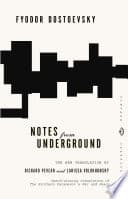
- Notes from Underground
Fyodor Dostoevsky
4.2 (84k) average on GoodreadsPsychologyDelves into the psychological torment and self-deception of a protagonist struggling with their identity.
- The Stranger
Albert Camus
4.1 (3k) average on GoodreadsFantasyWhile both explore alienation, Camus's novel focuses on external indifference and the individual's reaction to an absurd world. Kundera, in Identity, delves more deeply into the internal construction and deconstruction of identity within the confines of a relationship, particularly how external perception shapes the self.
- Atonement
Ian McEwan
4.4 (70) average on GoodreadsMcEwan's Atonement also deals with themes of perception, truth, and narrative manipulation, but through a broader historical lens and with a more overt focus on literary meta-fiction. Kundera's Identity is more narrowly concentrated on the subjective, psychological experience of identity and the fragility of self within an intimate relationship, rather than grand historical narratives or the nature of storytelling itself.
- The Old Man and the Sea
Ernest Hemingway
3.8 (831k) average on GoodreadsLiterary FictionA Cuban fisherman's long struggle with a giant marlin becomes a story of endurance and dignity, now retold for young adults with illustrations, phonetic guides, and writing prompts in Traditional Chinese.
- One Hundred Years of Solitude
Gabriel García Márquez
4.1 (753k) average on GoodreadsLiterary FictionThrough the multi-generational story of the Buendía family, a mythical town deals with the repeating patterns of time, love, and solitude, as the extraordinary mixes with the ordinary.





Enjoyed the summary?
A summary gives you the shape of the book. The book itself has the detail, the examples and the voice.
Find Identity on AmazonAs an Amazon Associate, BookBrief earns from qualifying purchases. How we're funded