
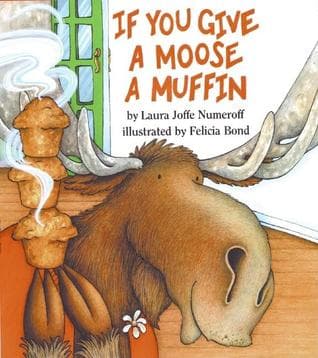
Synopsis
Covers the whole plot, including the ending.
- Difficulty
- Easy
- Pacing
- Fast
- Mood
- Whimsical, Humorous, Lighthearted
- Read it if
- You enjoy circular stories, humorous escalating chaos, and gentle tales about unexpected guests.
- Skip it if
- You prefer complex plots, deep character development, or stories without repetitive elements.
If You Give a Moose a Muffin Plot Summary
Covers the whole plot, including the ending.
A Moose Arrives and Wants a Muffin
The story begins with a young boy at home when a large, friendly moose unexpectedly appears at his door. The boy, being a good host, offers the moose a muffin. This simple act starts a chain reaction of requests. The moose takes the muffin, and it quickly becomes clear that this is just the beginning of his needs, as the boy wants to accommodate his new, rather demanding guest. The first muffin establishes the book's main idea: one action leads to another, larger request from the moose.
Jam, More Muffins, and a Trip to the Store
After getting the muffin, the moose immediately asks for some jam. The boy gives him jam. The moose, having enjoyed the first muffin and jam, asks for more muffins. When the boy's muffins run out, the moose, still hungry, suggests they go to the store to buy more muffin mix. This makes the situation bigger, moving from simple kitchen requests to an outing. It shows the moose's growing control over the boy's day and the boy's continued willingness to meet the moose's desires, no matter how inconvenient.
Baking, Sweaters, and Wood Chopping
Upon returning from the store, the boy and the moose bake the new muffin mix. The warmth from the oven makes the moose feel hot. He then asks for a sweater to cool down, which is a strange request. After putting on the sweater, the moose decides he is too warm and suggests chopping wood for a fire, perhaps to warm up later or just for the activity. This continues the pattern of the moose's changing and often conflicting needs, further involving the boy in a series of tasks.
Building a Fire and Telling Stories
With the wood chopped, the moose wants to build a fire in the fireplace. The boy helps him. Once the fire is burning, the moose feels cozy and then asks the boy to tell him a story. This moment moves from physical work to a more domestic activity. It shows the moose's desire for company and entertainment, and the boy's patience and willingness to engage with his unusual guest's whims. The fire makes a comfortable setting for the next request.
Puppets, Socks, and a Stage
As the boy prepares to tell a story, the moose interrupts, suggesting they need puppets to make the story better. He then looks at the boy's socks, deciding they would make good puppets. After putting the socks on his antlers to use as puppets, the moose declares that they also need a stage for their puppet show. This sequence shows the moose's growing creativity and demands, drawing the boy further into an elaborate performance, and sacrificing his socks. The boy continues to comply, adapting to each new suggestion.
Curtains, Painting, and a New Problem
To finish the puppet stage, the moose decides they need curtains. After the curtains are set up, he realizes they look plain and suggests they paint them. While painting the curtains, the moose accidentally gets paint on the wall. This creates a small problem, showing the potential for mess that comes with the moose's energetic ideas. The boy, always obliging, now has to deal with a painted wall.
Cleaning Up and a Shower
Seeing the paint on the wall, the moose immediately suggests cleaning it up with a sponge. While cleaning, he gets paint on himself. Feeling sticky and messy from the paint, the moose then says he needs a shower. This continues the cycle of one action leading to a new, often related, but increasingly involved, demand. The boy's day is completely taken up by the moose's needs, moving from one task to the next without a break.
Shower, Bubbles, and a Bath
In the shower, the moose decides he wants bubbles. He adds too much bubble bath, creating a huge amount of foam. Overwhelmed by the bubbles, he then decides he would prefer a bath instead of a shower. This shows the moose's changing nature and his tendency to create new problems while trying to solve old ones, further complicating the simple act of getting clean. The boy is left to manage the growing mess and the moose's changing preferences.
Rubber Duck, Water, and a Spill
During his bath, the moose asks for a rubber duck to play with. After getting the duck, he then requests more and more water for the bath, until the tub overflows, spilling water all over the bathroom floor. This creates another mess for the boy to clean up, coming directly from the moose's unending desires and lack of foresight. The boy's home is slowly being taken over by the moose's presence and demands, from small requests to big clean-up jobs.
Cleaning the Floor, a Mop, and a New Request
Seeing the spilled water, the moose decides he needs to mop the floor. The boy gives him a mop. After mopping, the moose, feeling accomplished and perhaps a bit tired from all the activity, suddenly announces that he is hungry and wants a snack. This brings the story full circle, returning to the theme of food and starting a new possible chain of requests. The boy's day has been completely controlled by the moose, and it seems the cycle is about to repeat.
Snack, Jam, and the Muffin Again
For his snack, the moose again requests jam. And what goes with jam? A muffin, of course! The story ends as the moose asks for a muffin, bringing the narrative back to its start. This cyclical structure shows the endless nature of the moose's requests and the boy's continuous, good-natured compliance. The final image suggests that the entire sequence of events could, and likely will, begin all over again. It highlights the humorous and exhausting nature of entertaining such a demanding guest.
Principal Figures
The Boy
Protagonist
A young, accommodating host who tries to fulfill all the moose's requests.
The unnamed boy is the central human character and the primary protagonist of the story. He is characterized by his immense patience, generosity, and willingness to accommodate the increasingly outlandish and numerous demands of his unexpected moose guest. He is shown performing a wide array of tasks, from baking muffins and chopping wood to telling stories and cleaning up spills, all at the moose's behest. His actions drive the plot forward as he reacts to each new request. He never complains, embodying a spirit of endless hospitality.
Relationships: The Moose (host and demanding guest)
The Moose
Antagonist/Catalyst
A large, friendly, but incredibly demanding and somewhat clumsy animal guest.
The moose is the catalyst for all the events in the story. He is portrayed as large, friendly, and gregarious, but also incredibly demanding, impulsive, and somewhat clumsy. His requests, which start simply with a muffin, quickly escalate into a complex chain of activities that consume the boy's entire day. The moose's desires are often contradictory (e.g., wanting a sweater to cool down, then wanting a fire) and lead to minor messes, such as paint on the wall or an overflowing bathtub. He is the engine of the plot, constantly seeking new forms of entertainment, comfort, or sustenance.
Relationships: The Boy (demanding guest and accommodating host)
Themes & Insights
The Chain Reaction of Demands
This theme explores how one small request can lead to an escalating series of connected demands and tasks. The entire plot of 'If You Give a Moose a Muffin' shows this idea: giving the moose a muffin leads to needing jam, then more muffins, a trip to the store, baking, getting hot, wanting a sweater, chopping wood, building a fire, telling stories, making puppets, creating a stage, painting, cleaning, showering, bathing, and so on, until the cycle restarts. This shows how a simple act of generosity can grow into a big effort, highlighting the humorous chaos that can come from one starting point.
“If you give a moose a muffin, he'll want some jam to go with it.”
Hospitality and Patience
The story shows hospitality and the young boy's patience. Despite the moose's increasingly elaborate, often contradictory, and sometimes messy demands, the boy never complains or refuses a request. He consistently tries to make his guest comfortable, from baking and shopping to cleaning up spills and putting on a puppet show. This kindness and endurance in the face of growing inconvenience are central to the boy's character and the story's heartwarming, if tiring, tone. It emphasizes how dedicated a host can be.
“So he'll build a fire in your fireplace.”
The Cyclical Nature of Wants
A main theme is that desires and needs can be never-ending and often return to their start. The story's structure is cyclical, starting with a muffin and ending with the moose wanting another muffin, suggesting that the entire sequence of events will repeat. This shows how satisfying one desire often creates new ones, suggesting an unending loop of wants and the efforts to fulfill them. It humorously reflects the continuous cycle of consumption and how one activity often sparks the need for another, bringing the story full circle.
“And chances are, if he asks for some jam, he'll want a muffin to go with it.”
Plot Devices & Literary Techniques
Chain Reaction Narrative
A narrative structure where one event directly and inevitably leads to the next.
This is the primary structural device of the book. Each sentence or short paragraph describes an action or request from the moose, immediately followed by the boy's response or the next logical (or illogical) consequence. For example, 'If you give a moose a muffin, he'll want some jam to go with it. When he's eaten all your muffins, he'll want to go to the store to get some more muffin mix.' This device creates a fast-paced, cumulative plot that builds humor through escalation and inevitability, making the reader anticipate the next consequence.
Cyclical Structure
The story's ending loops back to its beginning, suggesting endless repetition.
The narrative begins with the boy giving the moose a muffin, and after a long series of interconnected events, it concludes with the moose wanting another muffin. This cyclical structure emphasizes the unending nature of the moose's demands and the boy's accommodating spirit. It creates a sense of playful inevitability, suggesting that the entire adventure could, and probably will, happen all over again, reinforcing the humorous exhaustion of the situation without a true resolution.
Anthropomorphism
Giving human characteristics and behaviors to an animal character.
The moose in the story is fully anthropomorphized. He doesn't just eat; he asks for specific foods, suggests activities like chopping wood and telling stories, uses human objects like sweaters and mops, and expresses complex desires and preferences. This allows for the humorous and relatable scenarios of a demanding guest, despite the guest being a wild animal. The moose's human-like actions are central to driving the plot and creating the whimsical tone of the book.
Cumulative Plot
A plot that builds by adding new elements or complications with each step.
Similar to a chain reaction, the cumulative plot steadily adds new tasks, objects, and situations to the boy's day. Each request from the moose doesn't replace the last but builds upon it, creating an ever-growing list of things the boy must do or problems he must solve. From a single muffin, the story accumulates baking, shopping, chopping wood, building a fire, puppet shows, painting, cleaning, showering, and bathing, making the boy's day increasingly full and complicated.
If You Give a Moose a Muffin Quotes
“If you give a moose a muffin, he'll want some jam to go with it.”
“When he's finished eating the muffin, he'll want another.”
“He'll ask you for some jam to go with it.”
“When he's eaten all your muffins, he'll want to go to the store to get some more muffin mix.”
“On the way, he'll see a sweater in the window that reminds him of his grandmother.”
“He'll want to try it on.”
“When he tries on the sweater, he'll want to look in the mirror.”
“Looking in the mirror will remind him of the antlers on his head.”
“He'll want to hang them up.”
“When he hangs up his antlers, he'll want to draw a picture.”
“He'll draw a picture of his family.”
“When he's finished drawing, he'll want to hang the picture on the refrigerator.”
“To hang up the picture, he'll need a thumbtack.”
“Looking for the thumbtack will make him hungry again.”
“And chances are, if he's hungry, he'll want a muffin.”
Quiz
10 questions on the plot and the characters. Each answer comes with a short explanation.
Question 1
What does the moose first ask for after being given a muffin?
- Some milk to drink
- Jam to go with it
- A napkin to wipe his mouth
- Another muffin
Show answer
B. Jam to go with it The story begins with the moose being given a muffin, and immediately he wants jam to go with it, setting off the chain of events.
Question 2
Why does the moose want to go to the store?
- To buy more jam
- To get more muffin mix
- To find a friend to play with
- To buy a new sweater
Show answer
B. To get more muffin mix After eating all the muffins, the moose decides he needs more, so he wants to go to the store to get muffin mix to make more.
Question 3
What does the moose do with the old socks he finds?
- He throws them away
- He uses them as puppets
- He gives them to the boy as a gift
- He wears them on his antlers
Show answer
B. He uses them as puppets While looking for something to go with the muffins, the moose finds old socks and decides to put on a puppet show with them.
Question 4
What happens when the moose sees his reflection in the mirror?
- He gets scared and runs away
- He decides to clean the house
- He thinks he needs a haircut
- He wants to paint a picture of himself
Show answer
D. He wants to paint a picture of himself After the puppet show, the moose sees his reflection and gets inspired to paint a self-portrait, leading to more requests.
Question 5
What does the moose ask for to help with his painting?
- A paintbrush and some paint
- An easel to set up the canvas
- A sheet to hang up for the background
- A ladder to reach higher spots
Show answer
C. A sheet to hang up for the background To paint his self-portrait, the moose asks for a sheet to hang up as a background, which then leads to him wanting to put it up with thumbtacks.
Question 6
How does the story end?
- The moose falls asleep on the couch
- The boy gives the moose another muffin
- The moose says goodbye and leaves
- They both go to the store again
Show answer
B. The boy gives the moose another muffin The circular narrative concludes with the boy giving the moose another muffin, hinting that the whole chain of events might start over, similar to the book's predecessor.
Question 7
What is a key theme illustrated by the moose's behavior?
- The importance of sharing with others
- How one small action can lead to a series of unpredictable events
- The value of hard work and perseverance
- The joys of cooking and baking at home
Show answer
B. How one small action can lead to a series of unpredictable events The story humorously shows cause and effect, where giving a moose a muffin sets off a chain of escalating and connected requests, emphasizing how simple acts can spiral into bigger adventures.
Question 8
What does the moose do after he gets the thumbtacks for the sheet?
- He immediately starts painting
- He accidentally spills the paint
- He notices the sheets remind him of his grandmother's curtains
- He asks for a hammer to help with the thumbtacks
Show answer
C. He notices the sheets remind him of his grandmother's curtains When hanging the sheet with thumbtacks, the moose is reminded of his grandmother's curtains, which then makes him want to call her, adding another link in the chain of events.
Question 9
How does the moose's request to call his grandmother connect back to the muffins?
- His grandmother sends a recipe for muffins
- Talking to her makes him hungry again for muffins
- She tells him to buy more muffin mix
- He invites her over to eat muffins
Show answer
B. Talking to her makes him hungry again for muffins After calling his grandmother, the moose gets hungry again, which reminds him of the muffins and leads him to ask for another one, closing the loop of the story.
Question 10
What literary device is primarily used to structure the events in this book?
- Flashbacks to the moose's childhood
- A circular or cyclical narrative
- Foreshadowing of future adventures
- Parallel plots between the boy and moose
Show answer
B. A circular or cyclical narrative The story employs a circular narrative, where the end loops back to the beginning (giving a muffin), creating a humorous and predictable pattern that delights young readers and emphasizes the theme of cause and effect.
If You Give a Moose a Muffin FAQ
What is 'If You Give a Moose a Muffin' about?
The book follows a young boy who offers a muffin to a visiting moose, triggering a chain of escalating requests. The moose wants jam, then more muffins, then a trip to the store for muffin mix, leading to increasingly elaborate activities like sewing, painting, and putting on a puppet show until the cycle comes full circle back to muffins.
Why should I read 'If You Give a Moose a Muffin'?
It's a delightful, humorous children's book that teaches cause-and-effect relationships through a whimsical, circular narrative. The charming illustrations by Felicia Bond and the escalating absurdity of the moose's requests make it engaging for young readers while demonstrating hospitality and patience.
What is the background/setting of 'If You Give a Moose a Muffin'?
The story takes place in a cozy, domestic setting—primarily a child's home and yard—with no specific time period indicated. The familiar household environment contrasts humorously with the unexpected presence of a large, talking moose making increasingly elaborate demands.
What are the most memorable quotes?
Key repetitive phrases include the opening 'If you give a moose a muffin, he'll want some jam to go with it' and variations like 'When he's eaten all your muffins, he'll want to go to the store to get some more muffin mix.' The cyclical ending 'And chances are... he'll want a muffin to go with it' completes the loop.
What writing style does the author use?
Laura Numeroff employs a simple, repetitive, cause-and-effect narrative structure with conditional 'if...then' phrasing. The writing is rhythmic and predictable, building anticipation as each request leads logically to the next, making it ideal for read-aloud sessions and early literacy development.
What minor details add significant meaning?
Small details like the moose wearing the boy's sweater when he gets cold, or using socks for puppet show puppets, emphasize resourcefulness and sharing. The jam jar's appearance throughout—on the table, at the store, in paintings—subtly reinforces the interconnectedness of all the activities.
What are some subtle foreshadowing moments?
Early mentions of jam foreshadow the later painting scene where the moose paints a picture of the jar. The moose's request for old socks to dust with hints at their reuse as puppet materials later. Each new activity contains seeds of the next request in the chain.
What unexpected character connections exist?
While not explicitly connected to other characters within this book, the moose's behavior mirrors the mouse from 'If You Give a Mouse a Cookie'—both are unexpected guests who make escalating demands through similar circular logic, creating an intertextual relationship between Numeroff's animal visitors.
What are unspoken character motivations?
The boy's motivation appears to be a desire to be hospitable and accommodating, even as the moose's requests become increasingly burdensome. The moose seems driven by boundless curiosity and a childlike inability to anticipate consequences, seeking immediate gratification without considering the boy's efforts.
What psychological complexities do characters exhibit?
The boy demonstrates remarkable patience and adaptability in the face of escalating demands, while the moose exhibits impulsive, associative thinking—each activity triggers a new desire without planning. Their dynamic explores themes of generosity versus imposition, and how hospitality can sometimes spiral beyond expectations.
What are the major emotional turning points?
Key moments include the shift from simple hospitality (giving a muffin) to significant inconvenience (going to the store), the creative collaboration during painting and puppet-making, and the final return to the beginning where the cycle could repeat. The emotional arc moves from surprise to exhaustion to shared accomplishment.
How do relationship dynamics evolve?
Initially host-and-guest, the relationship develops into a collaborative partnership as they paint together and create a puppet show. However, the power dynamic remains uneven—the moose drives all activities while the boy facilitates them, culminating in a tired but possibly fond resignation as the cycle prepares to repeat.
Which parts remain ambiguous or open-ended?
The book ends ambiguously with 'And chances are... he'll want a muffin to go with it,' suggesting the entire cycle could repeat indefinitely. It's unclear whether the boy has learned to set boundaries or will continue accommodating the moose, and whether their interaction represents friendship or imposition.
What are controversial scenes or decisions?
Some readers might question why the boy never says 'no' to the increasingly demanding moose, or whether the story inadvertently teaches children to be overly accommodating. The moose's takeover of the boy's home and possessions without explicit permission could be interpreted as problematic rather than humorous.
'If You Give a Moose a Muffin' ending explained: how it ends & what it means
The story ends circularly with the moose likely wanting another muffin after their puppet show, implying the entire sequence could repeat. This emphasizes the book's theme of endless cause-and-effect chains, suggesting that small acts of kindness can lead to unpredictable, ongoing commitments, and that hospitality sometimes has no clear endpoint.
Similar books
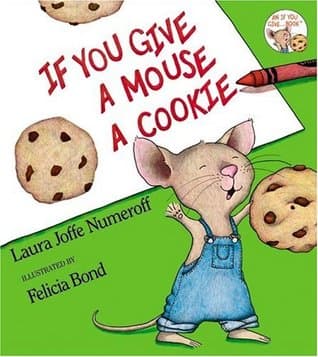
- If You Give a Mouse a Cookie
Laura Joffe Numeroff
4.3 (251k) average on GoodreadsFantasyShares the same circular narrative structure and escalating chain of events with an animal guest.
- The Very Hungry Caterpillar
Eric Carle
4.3 (396k) average on GoodreadsChildren'sBoth books feature a cyclical, cumulative structure. However, Carle's The Very Hungry Caterpillar incorporates an educational element about metamorphosis and healthy eating, and includes interactive die-cut pages, offering a more multi-sensory and educational experience than Numeroff's primarily narrative-driven approach. Carle's work, as noted by researchers like Perry Nodelman, often integrates tactile and visual learning in a more sophisticated manner.
- Harry Potter and the Sorcerer's Stone
J.K. Rowling
4.5 (7M) average on GoodreadsFantasyRescued from a miserable life under the stairs, an orphaned boy discovers he's a wizard destined for a magical school, where he uncovers a dangerous secret tied to the dark wizard who murdered his parents.
- The Hunger Games
Suzanne Collins
4.3 (6.4M) average on GoodreadsFantasyIn a future where children fight to the death on live television, Katniss Everdeen volunteers for the arena, turning a death sentence into a fight for survival and a spark of rebellion.
- 1984
George Orwell
4.2 (3.1M) average on GoodreadsPoliticsIn a future where surveillance and thought control are absolute, a man's search for truth clashes with the Party, showing that hope can be a form of rebellion.
- Divergent
Veronica Roth
4.2 (2.9M) average on GoodreadsFantasyIn a society divided by virtues, a sixteen-year-old's difference from the norm starts a rebellion that threatens her world.




Enjoyed the summary?
A summary gives you the shape of the book. The book itself has the detail, the examples and the voice.
Find If You Give a Moose a Muffin on AmazonAs an Amazon Associate, BookBrief earns from qualifying purchases. How we're funded