
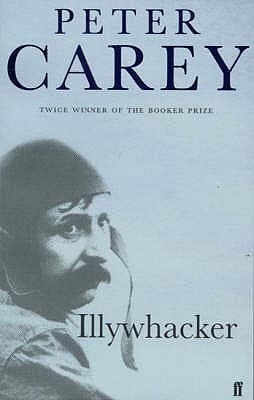
Synopsis
Covers the whole plot, including the ending.
- Difficulty
- Hard
- Pacing
- Variable
- Mood
- Whimsical, Satirical, Philosophical, Eccentric, Epic
- Read it if
- You enjoy sprawling, picaresque narratives with a distinct Australian voice, historical scope, and elements of magical realism and satire.
- Skip it if
- You prefer tightly plotted, linear stories or find digressions and an unreliable narrator frustrating.
Illywhacker Plot Summary
Covers the whole plot, including the ending.
Early Life and the Lure of Flight
Herbert Badgery, born in 1886, tells about his early life in rural Australia, showing a strong interest in flying machines from a young age. He describes his father's attempts at inventing and the family's difficulties, which make him want more. This early time includes his observations of the Australian landscape and its unique animals. Herbert's first 'illywhacking' or confidence trick involves convincing his family and a local community that he can build a working flying machine, even with basic knowledge. This first trick, though small, sets the stage for a life of complex plans and blurring the lines between reality and his grand ideas. He dreams of leaving the ordinary and reaching for the sky.
The Aviator and the Serpent
Herbert becomes a barnstorming aviator, traveling Australia with a biplane, doing stunts and selling rides. His life is a series of risky flights and near-crashes, driven by a mix of real skill and bold bluff. During one tour, he meets Phoebe Selkirk, a beautiful and mysterious woman who travels with exotic animals, including a python. Phoebe represents a different kind of freedom and mystery, which deeply fascinates Herbert. Their relationship is quick and strong, marked by a shared feeling of being outsiders and understanding a life lived on the edges. Phoebe's presence adds a fantastical and wild element to Herbert's already unusual life.
The Car Salesman and the Mechanical Serpent
After a flying accident, Herbert becomes a car salesman, using his persuasive skills to sell vehicles in an increasingly modern Australia. He applies the same 'illywhacking' ideas to car sales, creating elaborate stories around the machines. During this time, he develops a strange obsession: building a giant mechanical serpent. This invention, a symbol of both technological ambition and a deep link to Australia's ancient past, becomes a main project. The serpent is not just a machine; it shows his desire to create something truly unique and amazing, a grand deception that blurs the lines between art, engineering, and pure fantasy. His car sales job is only a way to fund his real, more daring, inventive pursuits.
The Museum of the Australian Nobody
Herbert's most ambitious project is The Museum of the Australian Nobody. He imagines this museum not as a place for famous items, but as a record of the lives, inventions, and quirks of ordinary Australians—the 'nobodies' often overlooked. He begins collecting strange and everyday objects, each with a story, each adding to a larger story of Australian identity. The museum becomes a physical example of his philosophy, a place where the overlooked are celebrated, and where his own life story, and the stories of those he meets, can find a home. This project is his attempt to make permanent the spirit of invention and the unique character of his countrymen, even if he has to 'illywhack' his way into getting money and acceptance.
The Chinese Connection and the Great Exhibition
Herbert gets involved with Chinese immigrants in Australia, especially a family named Chang. He observes their hard work, their unique cultural ways, and their often-marginalized place in Australian society. He sees in them a similar spirit of cleverness and toughness that he values. This interaction leads to his idea for a grand exhibition, not just of his own inventions and the Museum of the Australian Nobody, but also of the Chinese community's contributions. He imagines a show that will attract crowds and challenge common prejudices. This period shows the diverse nature of early 20th-century Australia and Herbert's changing understanding of his country's identity, even as his plans become more complex and his hold on normal reality weakens.
The Prison Years and Philosophical Musings
Herbert's various plans and unusual behaviors eventually lead to him being put in prison. While there, he uses the time for deep thought. He thinks about truth, the art of deception, and the subjective reality each person creates. He carefully examines his own life, his 'illywhacking' tendencies, and the fine line between genius and madness. Prison, instead of breaking him, becomes a place where his ideas grow, strengthening his belief in the power of stories and the importance of individual vision. He leaves prison with an even stronger belief in his life's purpose and the validity of his unique view, ready to continue his grand projects, but with a new awareness of the world's doubts.
The Return to the Museum and the Next Generation
After his release, Herbert returns to his Museum of the Australian Nobody, determined to make his vision real. He finds that his family, especially his grandson, has become involved in the project, sometimes supporting him, sometimes questioning his methods. The relationship between Herbert and his family shows how ideas pass between generations and the lasting effect of his quirks. His grandson, though more practical, is still drawn into Herbert's world of elaborate tales and unusual items. Herbert continues to improve his collection, adding new stories and objects, always believing that every 'nobody' has a story worth keeping. The museum becomes a living thing, always changing with Herbert's endless imagination.
The Modern World and Enduring Visions
As Herbert ages and the world modernizes, he faces new difficulties in making his Museum of the Australian Nobody relevant to today's audiences. He struggles with rules, changing tastes, and the doubts of a more cynical world. Despite these problems, his commitment to his vision remains strong. He continues to tell his life story, carefully describing his adventures, inventions, and the people he has met, all while maintaining the museum. His old age (139 years old) allows him to reflect on a long period of Australian history, offering a unique view of the nation's growth and its lasting character. The museum, like Herbert himself, becomes a defiant tribute to individuality and the power of imagination.
The Serpent's Legacy and the Aerial Car
Herbert tells the final story of his giant mechanical serpent, a project that took so much of his life and money. Its end or change is described, showing that even the grandest inventions are temporary. Yet, his inventive spirit remains strong. In his extreme old age, Herbert continues to dream and plan, imagining an 'aerial car'—a final, impossible flying machine that shows his lifelong desire to defy gravity and normal limits. This last invention, though perhaps never fully built, symbolizes his lasting belief in human cleverness and his refusal to be limited by reality. It shows his continuous 'illywhacking' spirit, always reaching for the next impossible dream.
The Illywhacker's Philosophy
In his old age, Herbert Badgery shares his final philosophical thoughts, reflecting on his long and unusual life. He explains his idea of the 'illywhack'—not just a trick, but an art form, a way of shaping reality through stories and belief. He argues that truth itself is often made up, and that the most convincing stories, even if exaggerated, can show deeper truths about humanity and the world. He accepts his identity as an 'illywhacker,' seeing it as a necessary tool for survival, creativity, and challenging established norms. His final thoughts combine his personal history with broader observations on Australian society, the individual's role, and the lasting power of imagination over simple facts.
Principal Figures
Herbert Badgery
Protagonist
The 139-year-old 'illywhacker,' aviator, inventor, and museum founder.
Herbert Badgery is the novel's central character and unreliable narrator, a man who lives to be 139 years old. He is a self-proclaimed 'illywhacker' – a confidence trickster – but also a visionary inventor, aviator, and the founder of the 'Museum of the Australian Nobody.' Driven by an insatiable curiosity and a profound belief in the power of imagination, Herbert constantly blurs the lines between truth and fiction, reality and his elaborate schemes. He possesses an extraordinary gift for storytelling and persuasion, using it to navigate a changing Australia, from the early days of flight to the modern era. His motivations are complex: part genuine genius, part a desire to leave a lasting mark, and part a deep-seated need to challenge conventional thinking.
Relationships: Phoebe Selkirk (Intense, romantic, and intellectually stimulating partner.); His Grandson (Recipient of his stories and inheritor of his vision, though more grounded.); The Chang Family (Objects of his observation and collaborators in his exhibition plans.)
Phoebe Selkirk
Supporting
The enigmatic woman who travels with exotic animals and captivates Herbert.
Phoebe Selkirk is a mysterious and captivating woman who enters Herbert's life during his barnstorming days. She travels with a collection of exotic animals, including a python, and embodies a free-spirited, unconventional existence. Phoebe is intelligent, perceptive, and seems to understand Herbert's unique way of seeing the world better than anyone else. She is not easily fooled by his 'illywhacking' but rather appreciates the artistry in his deceptions. Her presence introduces an element of the fantastical and the untamed, mirroring Herbert's own wild imagination. She represents a deep, almost primal connection for Herbert, a soulmate who shares his detachment from conventional society.
Relationships: Herbert Badgery (Intense, romantic, and intellectually stimulating partner.)
The Grandson (unnamed)
Supporting
Herbert's more grounded grandson, who helps maintain the museum.
Herbert's grandson, whose name is often left unmentioned, serves as a more pragmatic counterpoint to Herbert's flights of fancy. He is involved in the maintenance and operation of the Museum of the Australian Nobody, often trying to bring some order and conventional appeal to his grandfather's eccentric vision. While he may not fully grasp or endorse all of Herbert's 'illywhacking' philosophies, he is deeply influenced by his grandfather's stories and the unique legacy he is building. He represents the next generation, grappling with the inheritance of a truly extraordinary and unconventional family history, attempting to bridge the gap between Herbert's world and contemporary reality.
Relationships: Herbert Badgery (Grandson and inheritor of his vision, often trying to temper his grandfather's eccentricities.)
The Chang Family
Supporting/Mentioned
A Chinese immigrant family whose lives intersect with Herbert's.
The Chang family represents the Chinese immigrant community in Australia, whose lives and contributions Herbert observes and includes in his broader vision for the nation. Herbert is fascinated by their industriousness, their unique cultural practices, and their often-marginalized position. He sees in them a similar spirit of ingenuity and resilience that he values in his 'nobodies.' His interactions with them fuel his desire to create a more inclusive exhibition, one that acknowledges the multicultural fabric of Australia. The Chang family's story provides a lens through which Carey explores themes of immigration, identity, and the overlooked histories within Australian society, contrasting with the more dominant narratives.
Relationships: Herbert Badgery (Business acquaintances and subjects of his observational interest.)
The Narrator (Herbert Badgery)
Protagonist
The voice telling the story, whose perspective shapes the entire narrative.
While Herbert Badgery is the character, the 'Narrator' refers specifically to the voice and perspective through which the entire story is told. This narrator is Herbert himself, speaking at the age of 139, making him an inherently unreliable and subjective source. His advanced age allows for a vast historical sweep, but also means his memories are filtered through decades of experience, embellishment, and philosophical reflection. The narrator's voice is characterized by a distinctive blend of wit, grandiosity, self-awareness, and a profound belief in the power of storytelling to shape reality. He is not merely recounting events; he is actively constructing and interpreting his life and the world around him, inviting the reader to question the nature of truth itself.
The Australian Landscape
Supporting
The physical and symbolic backdrop that shapes characters and events.
The Australian landscape, with its vastness, unique flora and fauna, and often harsh conditions, acts as a significant character in itself. It is the canvas upon which Herbert's life unfolds, influencing his inventions, his dreams of flight, and his understanding of 'Australianness.' The landscape is portrayed as both inspiring and indifferent, a place of ancient mysteries and modern transformations. It is integral to the novel's themes of identity, belonging, and the relationship between humanity and nature. Herbert's mechanical serpent, for example, is deeply rooted in the imagery and mythology of the Australian land, reflecting a desire to merge technology with the primal forces of the continent.
Relationships: Herbert Badgery (Source of inspiration, challenge, and a deep sense of national identity.)
Themes & Insights
The Nature of Truth and Deception
At the core of 'Illywhacker' is an exploration of the unclear boundaries between truth and deception. Herbert Badgery, the ultimate 'illywhacker,' constantly questions what reality is, suggesting that much of what we accept as truth is just a compelling story. His life shows how much stories can shape what we perceive. From convincing people he could fly as a child to building his fantastic museum, Herbert's 'tricks' often reveal a deeper, subjective truth rather than simple fraud. The novel asks readers to consider how much of history, personal identity, and even national character is built through storytelling and belief, rather than objective fact. The mechanical serpent, a grand 'deception,' symbolizes this constructed reality.
“An illywhacker is not a liar. He is a teller of stories, of histories, of futures, of what might be.”
Australian Identity and History
The novel presents a broad, unique view of Australian identity and its changing history from the late 19th to the late 20th century. Through Herbert's long life, readers see Australia change from a colony to a modern nation, dealing with its past, its diverse present, and its future. The 'Museum of the Australian Nobody' is Herbert's effort to define and keep alive the unique character of his countrymen—the forgotten inventors, dreamers, and eccentrics—suggesting that true national identity comes not from grand monuments but from the individual stories of its 'nobodies.' The inclusion of Chinese immigrants and their contributions adds to this complex picture, challenging simple ideas of what it means to be Australian.
“We are a nation of inventors, yes, but more, we are a nation of dreamers, of those who see what is not yet there.”
The Power of Imagination and Invention
Imagination and invention are central to Herbert Badgery's life and the novel's main ideas. Herbert is driven by a strong belief in human cleverness, whether it is building flying machines, mechanical serpents, or an entire museum of forgotten dreams. His inventions are often impractical or fantastic, but they show a defiant refusal to accept the limits of the ordinary world. This theme celebrates the creative spirit, the desire to build, to explore, and to imagine what does not yet exist. It suggests that imagination is not just an escape, but a basic force that shapes human progress and gives meaning to life, even when it seems like delusion. His aerial car, a final impossible dream, embodies this lasting spirit.
“A man without a dream, even a foolish one, is a man already dead.”
Freedom vs. Confinement
The conflict between freedom and confinement appears throughout Herbert's life. His early desire to fly, his barnstorming adventures, and his traveling life with Phoebe all show a longing for ultimate freedom—physical, social, and intellectual. In contrast, his time in prison, the societal limits on his unusual projects, and the literal and figurative walls of conventional thinking represent various forms of confinement. The novel explores how individuals handle these forces, with Herbert often finding ways to assert his freedom even in restrictive situations, using his imagination to escape. His museum, in a way, is a space he creates to be free from the limits of conventional history.
“The greatest prison is not of stone, but of the mind.”
The Legacy of Storytelling
As a 139-year-old narrator, Herbert Badgery is very aware of the power and importance of storytelling to create and keep alive a legacy. His entire story is an act of building a legacy, not just for himself but for the 'Australian Nobodies' he supports. The novel itself comments on the act of writing and remembering, suggesting that stories are how we make ourselves and our cultures last forever. Herbert carefully crafts his own history, understanding that the version of events he presents will be the one that continues. His museum is a physical example of this theme, a collection of stories shown through objects, ensuring that even the most obscure lives are remembered.
“A life unrecorded is a life unlived, or worse, forgotten.”
Plot Devices & Literary Techniques
Unreliable Narrator
Herbert Badgery's subjective and embellished account of his life.
The entire novel is narrated by Herbert Badgery at the age of 139, making him an inherently unreliable narrator. His advanced age, his self-proclaimed identity as an 'illywhacker,' and his philosophical musings on truth and deception mean that the reader must constantly question the veracity of his account. This device allows Peter Carey to explore themes of subjective reality, the construction of history, and the power of storytelling. The embellishments and contradictions in Herbert's narrative are not flaws but integral to the novel's message, inviting the reader to engage critically with the text and form their own conclusions about what is 'true' within the story.
Metafiction
The novel's self-awareness of its own fictional nature and storytelling process.
Illywhacker frequently employs metafiction, drawing attention to its own status as a constructed narrative. Herbert Badgery, as the narrator, often comments on the act of telling his story, the selection of details, and the shaping of his autobiography. This device highlights the novel's central themes of truth and deception, as Herbert, the 'illywhacker,' is essentially the author of his own life story within the book. The Museum of the Australian Nobody can also be seen as a metafictional device, a 'story within a story' that reflects on how narratives (of lives, of objects) are collected, curated, and presented to create meaning.
Magical Realism
The seamless integration of fantastical elements into a realistic setting.
While largely grounded in historical Australia, 'Illywhacker' incorporates elements of magical realism. Herbert's extraordinary longevity (139 years), the almost mythical quality of some of his inventions (like the colossal mechanical serpent), and the dreamlike atmosphere surrounding certain events (such as his relationship with Phoebe Selkirk and her exotic animals) blur the line between the plausible and the fantastical. This device enhances the novel's exploration of imagination and the subjective nature of reality, suggesting that the world itself can be as strange and wondrous as Herbert's most ambitious dreams, and that the 'ordinary' can contain profound magic.
The Museum as Metaphor
The 'Museum of the Australian Nobody' as a symbol for history, identity, and storytelling.
The 'Museum of the Australian Nobody' functions as a central metaphorical plot device. It is not just a physical location but a symbolic representation of Herbert's philosophy and the novel's core themes. The museum, dedicated to the overlooked, the eccentric, and the 'failed' inventors of Australia, challenges conventional notions of history and greatness. It serves as a repository of stories, a testament to the power of individual lives, and a physical manifestation of Herbert's 'illywhacking' – creating a grand narrative out of seemingly insignificant objects. It embodies the idea that every 'nobody' has a story worth preserving and that identity is built from these collected, often forgotten, fragments.
Illywhacker Quotes
“The past, after all, was like a dream, and one could not always remember the details.”
“He knew, with a sudden, terrible clarity, that the world was not a simple place, and that there were things in it beyond his understanding.”
“Every man builds his own prison, and then tries to escape it.”
“The landscape was a palimpsest of desires, each layer written over the last, but never quite erased.”
“To forget was a kind of death, a small, daily annihilation.”
“He was an inventor of things, and a discoverer of their secrets.”
“The future was a country he had never visited, but always dreamed of.”
“History was not a straight line, but a tangled knot of stories, whispered and forgotten.”
“There were ghosts in every corner of the house, not of the dead, but of the never-born.”
“He understood then that magic was not about tricks, but about seeing the world in a different way.”
“The truth was a slippery thing, always just beyond his grasp.”
“Every secret was a weight, and he carried many.”
“The birds knew more than he did, their songs ancient maps of the wind and the earth.”
“He was a man who lived between worlds, never quite belonging to either.”
Quiz
10 questions on the plot and the characters. Each answer comes with a short explanation.
Question 1
What is Herbert Badgery's primary occupation or self-identified role throughout much of his life, as suggested by the novel's title?
- A successful industrialist
- An 'illywhacker' or confidence trickster
- A renowned academic historian
- A famous aviator and inventor
Show answer
B. An 'illywhacker' or confidence trickster Herbert Badgery explicitly identifies himself and his life's work as that of an 'illywhacker,' a term for a confidence trickster or swindler.
Question 2
Which animal is a recurring motif and central to Herbert's early business ventures and later, the exotic pet shop?
- Dogs
- Cats
- Birds
- Snakes
Show answer
C. Birds Birds, particularly parrots and other exotic species, are central to Herbert's early bird-selling business and later, the exotic pet shop.
Question 3
What is the name of the woman Herbert Badgery is obsessed with and attempts to 'tame' by keeping her in a cage?
- Leah
- Phoebe
- Sarah
- Elizabeth
Show answer
B. Phoebe Phoebe is the woman with whom Herbert has a complex and often disturbing relationship, including his attempt to keep her confined.
Question 4
What significant historical event in Australia's aviation history does Herbert Badgery witness and become involved with early in his life?
- The first non-stop flight across Australia
- The establishment of Qantas
- The first flight of the Southern Cross by Kingsford Smith
- The bombing of Darwin
Show answer
C. The first flight of the Southern Cross by Kingsford Smith Herbert is present and involved with Charles Kingsford Smith's historic flight of the Southern Cross, a pivotal moment in Australian aviation.
Question 5
What is the primary function of the 'Australian Greatness' theme park that becomes a central setting later in the novel?
- To celebrate Australia's natural landscapes
- To educate visitors about Aboriginal culture
- To showcase and profit from exaggerated, often fantastical, versions of Australian history and achievements
- To provide a sanctuary for endangered Australian animals
Show answer
C. To showcase and profit from exaggerated, often fantastical, versions of Australian history and achievements The 'Australian Greatness' theme park is a grand, often absurd, commercial enterprise designed to showcase and profit from a particular, often fabricated, vision of Australian identity and history.
Question 6
Which character, often referred to as 'the Chinaman,' represents a significant and complex relationship with Herbert, involving business, rivalry, and a shared history?
- Mr. Wang
- Mr. Chu
- Mr. Lee
- Mr. Chan
Show answer
C. Mr. Lee Mr. Lee is the prominent 'Chinaman' character who has a long-standing and intricate relationship with Herbert, encompassing various aspects of their lives.
Question 7
What is the symbolic significance of the cages and enclosures that appear repeatedly throughout the novel, both literally and metaphorically?
- They represent the beauty and wonder of nature.
- They symbolize freedom and escape from societal norms.
- They represent the human desire for control, confinement, and the illusion of ownership, often relating to people, animals, and even ideas.
- They are purely functional elements of the exotic pet trade.
Show answer
C. They represent the human desire for control, confinement, and the illusion of ownership, often relating to people, animals, and even ideas. Cages and enclosures are a powerful recurring motif, symbolizing Herbert's attempts to control, possess, and define others, whether it's Phoebe, exotic birds, or even the narrative of Australian history.
Question 8
How does the novel challenge conventional notions of Australian history and national identity?
- By presenting a strictly factual and academic account of historical events.
- By focusing exclusively on the achievements of renowned national heroes.
- By demonstrating how history is often fabricated, exaggerated, and manipulated for personal gain or national myth-making, particularly through Herbert's unreliable narration and the 'Australian Greatness' park.
- By emphasizing the natural beauty of the Australian landscape above all else.
Show answer
C. By demonstrating how history is often fabricated, exaggerated, and manipulated for personal gain or national myth-making, particularly through Herbert's unreliable narration and the 'Australian Greatness' park. The novel, through Herbert's unreliable narration and the 'Australian Greatness' park, deconstructs and satirizes the process of national myth-making, showing how history can be a constructed narrative rather than an objective truth.
Question 9
What is the ultimate fate or state of Herbert Badgery at the very end of the novel, reflecting his longevity and the narrative's structure?
- He dies peacefully surrounded by his family.
- He successfully stages his greatest confidence trick yet and disappears.
- He is imprisoned for his past misdeeds.
- He is an extremely old man, still spinning his tales and observing the world, often confined or cared for, but his mind remains active.
Show answer
D. He is an extremely old man, still spinning his tales and observing the world, often confined or cared for, but his mind remains active. At 139 years old, Herbert is depicted as an incredibly aged man, physically frail but mentally sharp, still narrating his life and observing the world around him, often from a state of confinement or care.
Question 10
How does the narrative structure of 'Illywhacker' contribute to its themes of truth, illusion, and storytelling?
- It follows a strict chronological order, ensuring historical accuracy.
- It is told by an omniscient, objective narrator, providing unbiased facts.
- It is a first-person narrative from the highly unreliable and self-serving Herbert Badgery, blurring the lines between fact and fiction and forcing the reader to question the 'truth' of his stories.
- It uses multiple, conflicting perspectives to create a sense of postmodern ambiguity without a central protagonist.
Show answer
C. It is a first-person narrative from the highly unreliable and self-serving Herbert Badgery, blurring the lines between fact and fiction and forcing the reader to question the 'truth' of his stories. The entire novel is narrated by Herbert Badgery, an admitted 'illywhacker,' whose advanced age and penchant for embellishment make him a highly unreliable narrator. This structure directly serves the themes of how truth is constructed, how stories shape reality, and the nature of confidence tricks.
Illywhacker FAQ
Who is Herbert Badgery and what does 'illywhacker' mean in the context of the novel?
Herbert Badgery is the 139-year-old narrator, an Australian aviator, inventor, and 'visionary' who often finds himself on the fringes of society, pursuing grand, often impractical, schemes. An 'illywhacker' is an Australian colloquialism for a confidence trickster or swindler, a term that describes Herbert's lifelong knack for charming, manipulating, and occasionally deceiving others to further his often quixotic projects.
What is the primary setting and time frame of 'Illywhacker'?
The novel spans nearly a century of Australian history, from the early 20th century (beginning around World War I) to the late 1980s, primarily set in various parts of Australia including rural towns, Sydney, and Melbourne. It chronicles Herbert Badgery's life and the country's transformation, reflecting on its cultural identity and burgeoning modernity.
What role do Herbert's inventions and aviation play in his life and the plot?
Herbert's inventions, particularly his early fascination with flight and his attempts to build aircraft, are central to his identity and drive many of the novel's early plot points. They symbolize his ambition, his struggle against conventionality, and his often-failed attempts to leave a tangible mark on the world, frequently leading to financial ruin or public ridicule.
Who are some of the key women in Herbert Badgery's life and what impact do they have on him?
Herbert's life is shaped by several significant women, including his first wife, the pragmatic and long-suffering Phoebe, and his later, more unconventional relationship with Emma. These women often represent different facets of stability, ambition, and the domestic versus the adventurous, grounding or challenging Herbert's wilder impulses and providing emotional anchors or catalysts for his schemes.
What is the significance of the 'pet shop' that Herbert eventually owns?
The pet shop, initially a mundane business, becomes a metaphor for Australia itself – a collection of unique, often exotic, and sometimes caged creatures, both literally and figuratively. It represents a place where Herbert can finally achieve a semblance of stability and even a form of quiet authority, while also allowing him to observe human nature and its eccentricities up close.
How does the novel subtly comment on Australian national identity and its relationship with 'the outside world'?
Carey uses Herbert's experiences and observations to critique Australia's evolving sense of self, its colonial past, and its struggle for an independent identity separate from European influences. The 'pet shop' later becomes a microcosm, showcasing Australia's unique flora and fauna, and its inhabitants' often conflicted views on their place in the global order, oscillating between isolation and a desire for recognition.
Are there any recurring symbolic motifs or objects in the novel beyond the pet shop?
Beyond the pet shop, birds and flight are prominent symbols, representing freedom, ambition, and the human desire to transcend limitations, often leading to spectacular failures. The idea of 'cages' or confinement, both literal and metaphorical (social expectations, mental limitations), also recurs, contrasting with Herbert's relentless pursuit of the impossible.
What is the underlying psychological motivation behind Herbert Badgery's relentless pursuit of 'grand schemes' and inventions, even after repeated failures?
Herbert's relentless pursuit stems from a deep-seated need for recognition, to prove his worth, and to leave a lasting mark on the world, compensating for feelings of inadequacy or being overlooked. His inventions are not just about practicality; they are expressions of his unique vision and a defiance against the mundane, fueled by an almost childlike wonder and stubborn optimism.
How does Herbert's advanced age as a narrator influence the reader's perception of his story and his reliability?
Herbert's extreme age imbues his narration with a profound sense of historical perspective and a melancholic wisdom, but also raises questions about the reliability of memory. His often embellished or self-serving accounts suggest that he is still 'illywhacking' the reader, shaping his own legend and inviting us to consider the subjective nature of truth and autobiography.
Discuss the psychological impact of Herbert's various periods of imprisonment or confinement on his character development.
Periods of confinement, whether in literal jails or metaphorically in unfulfilling jobs or relationships, deeply affect Herbert. Rather than breaking his spirit, these experiences often fuel his creativity, providing time for reflection and new ideas to germinate, reinforcing his resilience and his unique ability to find freedom even within constraints.
How does Herbert Badgery embody the 'trickster' archetype, and what moral ambiguities does this raise?
Herbert embodies the trickster through his cleverness, his ability to charm and manipulate, and his disregard for conventional rules, often bending the truth for his own ends. This raises moral ambiguities as his actions, while sometimes leading to positive outcomes, are frequently self-serving and can cause distress or financial ruin for others, blurring the lines between visionary and conman.
Is 'Illywhacker' ultimately an optimistic or pessimistic view of human ambition and the Australian dream?
The novel presents a complex, often contradictory view. While Herbert's enduring spirit and the sheer inventiveness of the narrative suggest optimism in the face of adversity, the repeated failures, the exploitation, and the fleeting nature of success can lead to a more pessimistic conclusion about the often-unfulfilled promise of the Australian dream and the futility of grand ambition.
What is the significance of the novel's non-linear narrative structure and the way Herbert jumps between past and present?
The non-linear structure mirrors the meandering nature of memory and Herbert's own subjective experience of time. It allows Carey to weave together different threads of Herbert's life and Australian history, creating a rich tapestry that emphasizes how past events continuously inform and reshape the present, reflecting the fragmented yet interconnected nature of identity and national narrative.
To what extent can Herbert Badgery be seen as a representative figure for Australia itself?
Herbert can be seen as a metaphorical representation of Australia, with his blend of pioneering spirit, resourcefulness, occasional self-delusion, and a history marked by both grand aspirations and significant setbacks. His struggle for identity, his unique quirks, and his relationship with the 'old world' (represented by his European fascinations) mirror Australia's own historical and cultural journey.
How does the novel balance its comic elements with its more serious historical and philosophical themes?
Carey masterfully balances comedy with seriousness by embedding profound observations within Herbert's often absurd situations and witty narration. The humor often arises from the clash between Herbert's grand visions and the mundane realities, or from the eccentricities of the characters, allowing the reader to engage with complex themes of history, identity, and ambition without being overwhelmed by didacticism.
What is the role of the Chinese characters, particularly Herbert's interactions with them, in the broader narrative?
Herbert's interactions with Chinese characters, particularly in the context of the pet shop, highlight themes of cultural exchange, immigration, and the complex racial dynamics within Australia. They often represent a different perspective on business, family, and tradition, challenging Herbert's Anglo-centric views and adding another layer to the novel's exploration of Australian multiculturalism and its hidden histories.
How does the author use magical realism or fantastical elements in an otherwise historically grounded narrative?
The magical realism in 'Illywhacker' is subtle but pervasive, primarily through Herbert's subjective, often embellished narration and his almost supernatural ability to survive and reinvent himself. While the world is mostly grounded in reality, Herbert's larger-than-life character, his improbable inventions, and the sheer longevity of his life inject a sense of wonder and the extraordinary, blurring the lines between fact and the fantastic in his personal myth-making.
What is the significance of the 'Grand Badgery Museum of Australia' in the novel's conclusion?
The 'Grand Badgery Museum' represents Herbert's ultimate, albeit ironic, triumph and his final act of 'illywhacking.' It is a repository of his life's failures and successes, a self-curated legacy that allows him to control his own narrative and achieve a form of immortality. It symbolizes the idea that history itself is often a constructed, subjective tale, and Herbert, as the ultimate storyteller, finally gets to tell his own.
About the author

Peter Carey may refer to:Peter Carey, Australian rules player for Glenelg Peter Carey, English footballer Peter Carey (historian), British historian of south-east Asia Peter Carey (novelist), Australian novelist Peter Carey (umpire), Australian rules umpire "Black Peter" Carey, a fictional character in The Adventure of Black Peter, a Sherlock Holmes story by Sir Arthur Conan Doyle
Similar books
- Oscar and Lucinda
Peter Carey
3.7 (20k) average on GoodreadsLiterary FictionShares Carey's distinctive style, historical Australian setting, and focus on eccentric characters and grand, often doomed, ventures.
- Cloudstreet
Tim Winton
4.0 (20k) average on GoodreadsLiterary FictionFeatures a multi-generational Australian saga with a strong sense of place, memorable characters, and a touch of the fantastical.
- One Hundred Years of Solitude
Gabriel García Márquez
4.1 (753k) average on GoodreadsLiterary FictionAn epic, multi-generational saga with magical realism, a unique narrative voice, and a focus on national identity and myth-making.
- Flaubert's Parrot
Julian Barnes
3.7 (12k) average on GoodreadsLiterary FictionBoth novels engage with the nature of storytelling, biographical reconstruction, and the unreliable narrator. However, Illywhacker is far more expansive in its scope and adventurous in its plot, embedding its meta-fictional explorations within a grand narrative of invention and deception, whereas Barnes's novel is more focused on the academic and personal quest for biographical truth and the act of interpretation itself.
- The Old Man and the Sea
Ernest Hemingway
3.8 (831k) average on GoodreadsLiterary FictionA Cuban fisherman's long struggle with a giant marlin becomes a story of endurance and dignity, now retold for young adults with illustrations, phonetic guides, and writing prompts in Traditional Chinese.
- The Goldfinch
Donna Tartt
3.9 (720k) average on GoodreadsLiterary FictionHaunted by a tragic explosion and clutching a stolen Dutch masterpiece, a young orphan navigates the opulent drawing rooms of New York and the gritty underbelly of the art world, desperately seeking connection and redemption amidst a life spiraling into crime and obsession.



Enjoyed the summary?
A summary gives you the shape of the book. The book itself has the detail, the examples and the voice.
Find Illywhacker on AmazonAs an Amazon Associate, BookBrief earns from qualifying purchases. How we're funded