
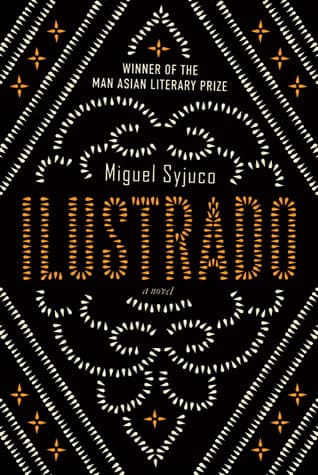
Synopsis
Covers the whole plot, including the ending.
- Difficulty
- Hard
- Pacing
- Variable
- Mood
- Literary, Satirical, Reflective, Mysterious, Historical
- Read it if
- You enjoy intricate literary mysteries, multi-generational sagas, and experimental narrative structures that blend history, satire, and personal reflection.
- Skip it if
- You prefer straightforward plots with clear resolutions and dislike meta-fiction or narratives with unreliable narrators.
Ilustrado Plot Summary
Covers the whole plot, including the ending.
The Discovery
The novel opens with the discovery of Crispin Salvador's battered body, a celebrated Filipino author, floating in the Hudson River in New York City. His death is suspicious, particularly because the only manuscript of his final book, an exposé of the Philippines' ruling families, is missing. Miguel Syjuco, Salvador's former student and close friend, is devastated. He believes Salvador's death was murder, linked to his lost manuscript. Driven by loyalty and a desire for truth, Miguel travels to Manila to investigate and recover the missing work.
Miguel's Return to Manila
In Manila, Miguel Syjuco immediately faces Crispin Salvador's complex legacy. He begins his investigation by meeting people from Salvador's past—friends, rivals, lovers, and family members—each offering a different view of the author. Miguel examines Salvador's works, including novels, poems, essays, and interviews, hoping to find clues about the missing manuscript and its potential saboteurs. His journey is not only a search for answers about Salvador's death but also a reconnection with his own Filipino heritage and Manila's literary and political scene.
Uncovering Family Secrets
As Miguel reconstructs Salvador's life, he uncovers a family story spanning generations, interwoven with Philippine history. He learns about the Salvador lineage, including figures like General Lualhati, the poet Carlos Salvador, and Crispin's parents. Miguel discovers that the family's fate is tied to the country's powerful ruling clans—the Ilustrado families—whose secrets Crispin planned to expose. This historical background reveals the corruption and political schemes that shaped the nation, which Crispin's final book threatened to reveal, giving Miguel more reason to suspect foul play.
The Salvador Archives
Miguel gains access to Crispin Salvador's personal archives: letters, journals, drafts, and unpublished works. Through these documents, Miguel sees a more nuanced portrait of his mentor—not just the public intellectual, but a man with personal struggles, artistic worries, and complex relationships. He reads about Salvador's challenges with his literary legacy, his love life, and his strained family relationships. The archives offer insights into Salvador's reasons for writing the controversial manuscript, confirming its potential impact on those it implicated and strengthening Miguel's belief that the book caused his death.
Encounters with the Elite
In his investigation, Miguel meets various members of the Filipino elite, many of whom were likely subjects of Crispin Salvador's damning manuscript. These interactions are often tense and revealing, as Miguel tries to assess their reactions to Salvador's death and the missing manuscript. He observes their wealth, influence, and subtle attempts to control the story surrounding Salvador. These encounters confirm Miguel's understanding of these families' power and the lengths they might go to protect their reputations, reinforcing his belief that Salvador was murdered to prevent his final work's publication.
Literary Circles and Rivalries
Miguel explores the competitive world of Filipino literature that Crispin Salvador inhabited. He speaks with other writers, critics, and academics, many of whom had complex relationships with Salvador—some admiring, others critical or envious. He learns about Salvador's intellectual rivalries, public feuds, and personal animosities that fueled much of his work. This exploration shows that while Salvador was respected by many, he also made powerful enemies within the literary establishment, adding complexity to the investigation into his death and the manuscript's disappearance. The competitive nature of this world suggests multiple possible motives for foul play.
The Ghost of the Manuscript
The missing manuscript of Crispin Salvador's final book becomes almost mythical during Miguel's investigation. It drives the plot, its contents rumored to be so explosive they could ruin the reputations of the most powerful families in the Philippines. Everyone Miguel interviews has an opinion or theory about its fate—whether destroyed, hidden, or stolen. Miguel's search for this object symbolizes his deeper quest for truth and justice, and his desire to honor his mentor's legacy by ensuring his dangerous work is published.
Miguel's Own Past
As Miguel learns more about Crispin Salvador's past, his own family's history and struggles emerge. He finds unexpected connections between his own lineage and the powerful Ilustrado families Salvador was investigating. Miguel's journey becomes more introspective, forcing him to confront truths about his identity, his family, and his place within Filipino society. This personal discovery mirrors his investigation into Salvador, suggesting that the search for truth often leads one to face their own hidden past and family secrets.
A Web of Deceit
Miguel's investigation reveals a culture of deceit and historical revisionism in the Philippines. He finds that many stories about Crispin Salvador, and the nation's history, are constructed fictions designed to protect powerful interests. He uncovers corruption, political assassinations, and long-held family secrets buried to maintain public image and power. This web of lies makes his quest for truth difficult, as he must constantly distinguish fact from fiction, and genuine memory from self-serving fabrication, showing the challenge of finding objective truth in a society built on curated narratives.
The Unreliable Narrator
As the story progresses, Miguel Syjuco's reliability as a narrator is questioned. His biases, his admiration for Crispin Salvador, and his emotional state begin to color his interpretation of events. The novel suggests that Miguel might be creating his own narrative, influenced by his desires and preconceptions. This meta-narrative layer makes the reader critically examine the information, blurring the lines between objective truth and subjective interpretation. It suggests that storytelling, by an author or an investigator, is always an act of creation, not just discovery.
The Climax of the Search
After months of investigation, piecing together fragments of Crispin Salvador's life and death, Miguel Syjuco uncovers a shocking truth. The story's peak involves a confrontation, or a piece of evidence, that changes his understanding of what happened to his mentor and the missing manuscript. This revelation challenges Miguel's earlier assumptions, forcing him to re-evaluate everything he thought he knew. The truth is often more complex and personal than he imagined, showing that the reasons behind Salvador's death and the manuscript's disappearance are tied to the characters' personal histories and the nature of storytelling itself.
The Resolution, or Lack Thereof
The novel ends not with a simple answer to Crispin Salvador's death or the manuscript's recovery, but with a nuanced understanding of truth, authorship, and legacy. Miguel Syjuco's journey transforms him, revealing that writing and storytelling are subjective and often self-serving. He accepts that the 'truth' of Salvador's life and death might be less important than the stories people tell about it. The ending suggests that Miguel has become an 'ilustrado' himself, grappling with history, identity, and the power of narrative to shape reality, leaving the reader to consider the elusive nature of ultimate truth.
Principal Figures
Miguel Syjuco
Protagonist
Crispin Salvador's protégé, investigating his mentor's death and missing manuscript.
Miguel is a young, aspiring Filipino writer living in New York, deeply devoted to his mentor, Crispin Salvador. He is intelligent, observant, and initially somewhat naive, holding an idealized view of Salvador. Driven by loyalty and a thirst for truth, he returns to Manila to uncover the mystery surrounding Salvador's death and the disappearance of his final manuscript. Miguel is a keen observer of human nature and society, often reflecting on the complexities of Filipino identity and history. He is also a meta-narrator, whose own story and biases become part of the novel's intricate structure.
Relationships: Crispin Salvador (Mentor and protégé, deeply admired); His family (Complex, often strained; he feels a sense of detachment but also belonging)
Crispin Salvador
Central Figure (posthumous)
The controversial, brilliant, and ultimately deceased Filipino literary lion whose life and death drive the narrative.
Crispin Salvador is a larger-than-life figure, a celebrated and provocative Filipino author whose works are known for their biting social commentary and historical scope. He is portrayed through Miguel's memories, his writings, and the diverse perspectives of those who knew him. Salvador is depicted as brilliant, charismatic, self-destructive, and deeply committed to exposing the corruption of the Filipino elite. His final, explosive manuscript, meant to reveal the secrets of powerful families, is the catalyst for his suspicious death and the novel's central mystery. He embodies the complex, often contradictory, nature of the 'ilustrado' class.
Relationships: Miguel Syjuco (Mentor and protégé, deep intellectual and personal bond); Various lovers and wives (Tumultuous, passionate, often destructive relationships); His family (e.g., General Lualhati, Carlos Salvador) (Complex family legacy, both a source of pride and burden); Filipino elite (Antagonistic, as he sought to expose their corruption)
General Lualhati
Ancestral Figure (historical)
Crispin Salvador's great-grandfather, a revolutionary figure in Philippine history.
General Lualhati is a historical figure within the Salvador family lineage, a revered revolutionary who fought against both Spanish and American colonial rule. His story is recounted through historical excerpts, family lore, and Salvador's own writings. He represents the idealized, heroic past of the Philippines, a counterpoint to the corruption and moral decay that Crispin Salvador sought to expose in his own time. Lualhati's legacy is both an inspiration and a burden for his descendants, embodying the nation's struggle for identity and freedom. He serves as a symbol of the nation's complicated relationship with its past.
Relationships: Crispin Salvador (Great-grandfather, a source of family pride and historical connection)
Carlos Salvador
Ancestral Figure (historical/literary)
Crispin Salvador's grandfather, a poet and politician.
Carlos Salvador is Crispin's grandfather, a prominent poet, and politician whose life and work further illustrate the complex intersection of art, power, and national identity in the Philippines. Like Crispin, he was an 'ilustrado' figure, navigating the intellectual and political currents of his era. His story, intertwined with national events, reveals the shifting allegiances and moral compromises faced by those in power. Carlos's literary legacy and political involvement provide Miguel with more context for Crispin's own struggles and his family's deep roots in the country's elite. He represents a bridge between the revolutionary past and the more corrupt present.
Relationships: Crispin Salvador (Grandfather, a literary and political predecessor)
Mimi Sinag
Supporting
A former lover of Crispin Salvador, offering a personal perspective on the author.
Mimi Sinag is one of Crispin Salvador's many former lovers, a strong and independent woman who provides Miguel with intimate insights into Salvador's personal life, his vulnerabilities, and his artistic process. She offers a perspective often missing from the public narrative of the literary lion, revealing the human side of the controversial author. Mimi's stories shed light on Salvador's capacity for both great love and great cruelty, helping Miguel to form a more complete and nuanced picture of his mentor beyond the public persona. Her memories are tinged with both affection and bitterness.
Relationships: Crispin Salvador (Former lover, close confidante at times)
The Filipino Elite / Ilustrados
Antagonists (collective)
The powerful, wealthy ruling families of the Philippines, whose secrets Crispin Salvador sought to expose.
This collective character represents the entrenched political and economic dynasties that have historically controlled the Philippines. They are the primary targets of Crispin Salvador's final, explosive manuscript. While individual members are sometimes mentioned or briefly encountered, their collective presence looms large as the shadowy force that might have orchestrated Salvador's death. They embody corruption, privilege, historical revisionism, and the abuse of power. Their influence is pervasive, making Miguel's investigation dangerous and complex. They are the embodiment of the systemic issues Salvador fought against.
Relationships: Crispin Salvador (Antagonistic, as he sought to expose their crimes and secrets)
The Narrator (meta-fictional layer)
Meta-fictional
The implied authorial voice commenting on the process of writing and storytelling.
This character is not a person within the story but an implied authorial presence that occasionally breaks the fourth wall or comments on the act of writing, memory, and truth. This meta-fictional layer questions the reliability of the narrative itself, blurring the lines between fiction and reality, and between the author's voice and Miguel's. It challenges the reader to consider the constructed nature of all stories, including the one they are reading. This narrator often interjects with literary theories, historical context, or self-reflexive commentary on the novel's own creation.
Relationships: Miguel Syjuco (Implied author/character, blurring the lines between them)
Themes & Insights
The Elusiveness of Truth and Memory
The novel questions the nature of truth in historical and personal narratives. Miguel's investigation shows that 'truth' is often subjective, shaped by individual biases, political agendas, and the act of storytelling. Characters offer conflicting accounts of Crispin Salvador, and historical events are reinterpreted or suppressed. The missing manuscript symbolizes a truth out of reach, suggesting that definitive answers are often illusions. The novel shows how collective memory is built and manipulated, making it hard to distinguish facts from crafted fictions, as seen in the varying accounts of Salvador's life and death.
“History, after all, is a tale told by the victors, and the truth is often buried under layers of myth and self-serving narratives.”
The Power and Corruption of the Elite
A central theme is the lasting power and corruption of the Filipino 'Ilustrado' families. Crispin Salvador's work, especially his final manuscript, aimed to expose the systemic abuses and hidden crimes of these dynasties. Miguel's journey through Manila constantly confronts him with the wealth, influence, and moral decay of this class. The novel suggests that this elite maintains power through historical revisionism, media control, and violence, illustrating how deep-seated patronage and corruption hinder national progress. The Salvador family, despite its intellectual and revolutionary roots, is involved in this complex system.
“The Philippines is a country where the past is never dead. It's not even past. It's just waiting to bite you in the ass.”
The Nature of Authorship and Storytelling
The novel explores the act of writing, narrating, and creating a story. Miguel, as a character and potential author, grapples with the responsibility and subjectivity of telling someone else's story, especially a literary giant like Salvador. The fragmented structure, including various genres (memoirs, interviews, historical accounts), mirrors the complex process of building a narrative. It questions whether any story, even a biography, can truly capture objective reality, suggesting that all writing is a form of self-creation and interpretation. The ultimate twist reinforces the idea that the 'author' is not always who they seem.
“Every story is a lie, but a good lie can reveal a truth truer than fact.”
Filipino Identity and Post-Colonial Legacy
The novel explores Filipino identity, shaped by its colonial past under Spanish and American rule, and its ongoing struggle for self-definition. Crispin Salvador's works address these historical wounds and the challenges of nation-building. Miguel's return to Manila forces him to confront his own heritage, the blend of Western and indigenous influences, and the nation's internal conflicts. The 'ilustrado' class itself is a product of this colonial history, both enlightened and complicit, showing the lasting impact of external forces on the country's psyche and socio-political structure.
“We are a nation of orphans, forever searching for a father figure, or perhaps, forever trying to kill him.”
Mentor-Protégé Relationship and Legacy
The bond between Miguel Syjuco and Crispin Salvador forms the novel's emotional core. Miguel idolizes Salvador, seeing him as a literary father figure and guide. His quest is driven by a desire to honor Salvador's legacy and complete his unfinished work. However, as Miguel learns more about Salvador's personal failings and complexities, his idealized view changes. The theme explores the burdens of inheriting a mentor's legacy, and how one eventually forms their own identity while dealing with the shadow of a powerful predecessor. It covers both admiration and eventual differentiation.
“To truly understand a man, you must not only read his words, but also the silences between them, the lives he touched, and the lies he told himself.”
Plot Devices & Literary Techniques
Unreliable Narrator
The perspective of Miguel Syjuco, and the meta-fictional structure, frequently challenge the reader's trust in the narrative.
Miguel Syjuco, as the primary investigator and implied author of the book we are reading, gradually reveals his own biases, personal connections, and artistic motivations. The novel subtly suggests that his account of Crispin Salvador's life and death might be colored by his hero-worship, his own literary ambitions, or even his mental state. This unreliability is amplified by the meta-fictional layers, where the 'author' of the novel itself sometimes intervenes, blurring the lines between Miguel's story and the book's construction. This device forces the reader to actively question the presented 'facts' and consider multiple interpretations of events.
Frame Narrative / Nested Narratives
The story of Miguel's investigation frames a broader narrative encompassing Salvador's life, writings, and Philippine history.
The novel employs a complex frame narrative structure. Miguel Syjuco's present-day investigation into Crispin Salvador's death acts as the outer frame. Within this, the narrative delves into numerous nested stories: excerpts from Salvador's novels, poems, interviews, memoirs, and historical accounts of his family and the Philippines. This multi-layered approach allows the author to present a panoramic view of Philippine history and culture, while also demonstrating how different forms of storytelling contribute to a character's legacy and the construction of national identity. It creates a rich, textured reading experience that mimics the process of historical and literary research.
Metafiction
The novel self-consciously comments on its own nature as a fictional construct and the act of writing.
Ilustrado frequently breaks the fourth wall, directly addressing the reader or commenting on the process of writing, editing, and storytelling. It includes fictional critiques, author's notes, and discussions about literary theory within the narrative itself. This metafictional approach highlights the constructed nature of the novel, reminding the reader that they are engaging with a crafted text rather than a transparent window into reality. It reinforces the themes of truth's elusiveness and the subjectivity of authorship, ultimately culminating in a twist that blurs the lines between the 'author' of the book and the character within it.
The MacGuffin (Missing Manuscript)
Crispin Salvador's lost final manuscript serves as the central object driving the plot's mystery.
The missing manuscript of Crispin Salvador's final, explosive book acts as the primary MacGuffin. Its specific contents are only hinted at and never fully revealed, but its presumed power to expose the Filipino elite is the catalyst for Salvador's suspicious death and Miguel's entire investigation. The search for this physical object provides the immediate motivation for Miguel's journey, even as the deeper themes of truth, legacy, and national identity unfold around it. The manuscript's absence keeps the reader engaged in the mystery while allowing the narrative to explore broader historical and literary concerns.
Ilustrado Quotes
“All that a man has to say or do that can in any manner be called literature, is but the expression of the man himself.”
“The past is a foreign country; they do things differently there. But the present is also a foreign country, and we are constantly trying to decipher its strange customs.”
“We are all walking archives of our own lives, and the lives of those we have loved, and those we have merely passed.”
“To be a writer in a country like ours is to be a professional mourner, a chronicler of our many deaths, both literal and metaphorical.”
“The greatest mystery is not death, but life itself. The inexplicable urge to continue, to create, to love, despite the inevitable end.”
“History is not what happened, but what is told. And the telling, my friend, is always a matter of power.”
“Every writer is a failed politician, a frustrated revolutionary, a silenced prophet.”
“Books are not just stories; they are conversations across time, whispers from the dead to the living.”
“The truth is a slippery thing, like a fish in a basket. It wriggles and squirms, and sometimes, it jumps right out when you're not looking.”
“We are all haunted by the ghosts of our past, the choices we made, and the paths we didn't take.”
“In a country where memory is short and justice is blind, literature is sometimes the only witness.”
“Perhaps all stories are just different ways of trying to understand ourselves, to make sense of the chaos.”
“To truly know a place, you must know its secrets, its whispers, its unwritten histories.”
“The greatest tragedy is not death, but a life unlived, a voice unheard, a story untold.”
Quiz
10 questions on the plot and the characters. Each answer comes with a short explanation.
Question 1
Where is the body of Crispin Salvador found at the beginning of the novel?
- Pasig River, Manila
- Hudson River, New York
- Thames River, London
- Seine River, Paris
Show answer
B. Hudson River, New York Crispin Salvador's battered corpse is pulled from the Hudson River on a clear winter day, marking the start of the mystery.
Question 2
What is the name of Crispin Salvador's student and friend who travels to Manila to investigate his death?
- Joaquin
- Miguel
- Ramon
- Ferdinand
Show answer
B. Miguel Miguel, Crispin's student and only remaining friend, takes on the task of investigating his mentor's death and recovering his final manuscript.
Question 3
What was the intended purpose of Crispin Salvador's final, missing manuscript?
- A collection of love poems dedicated to his muse
- A historical account of pre-colonial Philippines
- To expose the crimes of the Filipino ruling families
- A philosophical treatise on the nature of truth
Show answer
C. To expose the crimes of the Filipino ruling families The missing manuscript was intended to be Crispin's magnum opus, exposing the corruption of the Filipino ruling families and rescuing him from obscurity.
Question 4
How does Miguel attempt to piece together Crispin Salvador's life and the circumstances of his death?
- By interviewing all of Crispin's living relatives in New York
- By reading Crispin's personal diaries and unsent letters
- By analyzing Crispin's poetry, interviews, novels, polemics, and memoirs
- By consulting with police detectives involved in the case
Show answer
C. By analyzing Crispin's poetry, interviews, novels, polemics, and memoirs Miguel delves into Crispin's extensive body of work—his poetry, interviews, novels, polemics, and memoirs—to understand his mentor's life and the truth behind his death.
Question 5
What historical period does the family saga within 'Ilustrado' trace?
- 50 years of post-WWII Philippine independence
- 150 years of Philippine history under Spanish, American, and Filipino rule
- 200 years from the Spanish arrival to their departure
- The Marcos era and its immediate aftermath
Show answer
B. 150 years of Philippine history under Spanish, American, and Filipino rule The novel's rich family saga spans 150 years of Philippine history, encompassing periods under Spanish, American, and self-governed Filipino rule.
Question 6
The novel suggests that the story of Crispin Salvador ultimately belongs to whom as well?
- The Filipino ruling families he sought to expose
- Crispin's estranged wife and children
- Young Miguel, his student and investigator
- The anonymous narrator of the historical sections
Show answer
C. Young Miguel, his student and investigator The summary reveals a twist: the story, while ostensibly about Crispin, ultimately belongs to Miguel as much as his lost mentor.
Question 7
Which of the following literary forms is NOT explicitly mentioned as a source Miguel uses to understand Crispin Salvador?
- Poetry
- Interviews
- Letters to the editor
- Memoirs
Show answer
C. Letters to the editor The text lists poetry, interviews, novels, polemics, and memoirs as sources Miguel uses, but not 'letters to the editor'.
Question 8
What overarching theme does 'Ilustrado' explore regarding families?
- The unbreakable bonds of familial love
- The universal struggle for individual identity within a family
- The hidden truths that haunt every family
- The economic pressures facing modern families
Show answer
C. The hidden truths that haunt every family The summary explicitly states that 'Ilustrado explores the hidden truths that haunt every family,' making this a central theme.
Question 9
The society depicted in 'Ilustrado' is described as being caught between what two opposing states?
- Colonial subjugation and complete independence
- Reckless decay and hopeful progress
- Economic boom and financial collapse
- Traditional values and modern secularism
Show answer
B. Reckless decay and hopeful progress The novel offers 'an unhindered view of a society caught between reckless decay and hopeful progress,' highlighting a key thematic tension.
Question 10
What is the primary genre classification of 'Ilustrado' as described in the provided text?
- Romantic Comedy
- Science Fiction
- Literary Fiction, Historical Fiction, Mystery
- Young Adult Dystopian
Show answer
C. Literary Fiction, Historical Fiction, Mystery The very first line of the provided text explicitly states the genres: 'Literary Fiction, Historical Fiction, Mystery.'
Ilustrado FAQ
What is the central mystery driving the plot of Ilustrado?
The central mystery revolves around the death of Crispin Salvador, a controversial Filipino author, whose battered corpse is found in the Hudson River. His final manuscript, which was supposed to expose the crimes of powerful Filipino ruling families, is also missing, prompting his student Miguel to investigate.
Who is Crispin Salvador and why is he a significant figure?
Crispin Salvador is a "lion of Philippine literature," known for his controversial works and critiques of Filipino society. He is Miguel's mentor and the subject of Miguel's investigation, with his life story, spanning 150 years of Philippine history, being meticulously pieced together through various texts.
What is Miguel's role in the story beyond investigating Crispin's death?
Miguel, Crispin's student and friend, travels to Manila to uncover the truth behind his mentor's death and the missing manuscript. However, as the narrative progresses, it becomes clear that the story of Crispin and his family saga is intricately linked to Miguel's own past and identity, revealing his personal stake in the unraveling events.
How does the novel explore Philippine history?
The novel delves into 150 years of Philippine history through the lens of the Salvador family saga, tracing their experiences under Spanish, American, and Filipino rule. This historical backdrop provides context for Crispin's political critiques and the societal issues he sought to expose.
What is the significance of the missing manuscript in Crispin Salvador's final work?
The missing manuscript is crucial because it was Crispin's last major work, intended to expose the alleged crimes of powerful Filipino ruling families. Its disappearance immediately after his death suggests foul play and points towards a potential motive related to the sensitive information it contained.
What is the true identity of Miguel and how does it connect to Crispin Salvador?
Miguel is revealed to be Crispin Salvador's grandson, Miguel Syjuco. This familial connection, hidden for much of the narrative, profoundly recontextualizes his investigation, making him not just a student but a direct inheritor of Crispin's legacy and a participant in the family's complex history.
How does the novel's structure, with its inclusion of excerpts from Crispin's works, contribute to the narrative?
The novel's fragmented structure, incorporating excerpts from Crispin's poetry, interviews, novels, and memoirs, serves multiple purposes. It allows Miguel, and the reader, to piece together Crispin's life and perspectives, while also mirroring the investigative process and highlighting the subjective nature of truth and memory.
Are the "crimes of the Filipino ruling families" that Crispin's final book aimed to expose ever fully detailed?
While Crispin's works hint at corruption, abuse of power, and historical injustices perpetuated by the elite, the full, explicit details of these "crimes" are often presented through implication, fragmented accounts, and the general atmosphere of societal decay rather than a direct, comprehensive exposé. The focus is more on the impact and the attempt to reveal them.
How does Crispin Salvador grapple with his own legacy and public perception?
Crispin constantly struggles with his public persona as a controversial and often misunderstood intellectual. He seeks to use his writing to effect change, yet he is also aware of his own flaws and the potential for his work to be misinterpreted or co-opted, as evidenced by his desire for his final manuscript to redeem him.
What psychological motivations drive Miguel's relentless pursuit of the truth about Crispin's death?
Miguel's motivations are complex, stemming from a deep respect and affection for his mentor, a desire for justice, and an underlying need to understand his own identity and place within the tangled history of his family and country. The investigation becomes a journey of self-discovery as much as a search for answers.
How does the novel portray the psychological impact of historical trauma and colonialism on Filipino society and individuals?
The novel subtly illustrates the lasting psychological impact of colonialism and historical trauma through the characters' struggles with identity, corruption, and a sense of national malaise. The generational cycle of power and exploitation, alongside the search for an authentic Filipino voice, reflects the deep-seated psychological scars on both individuals and the collective psyche.
What is the psychological significance of the Hudson River as the site of Crispin's body being found?
The Hudson River, far from the Philippines, symbolizes Crispin's exile and his status as an intellectual who critiqued his homeland from afar. His death there suggests a final, tragic disconnect from the very society he sought to influence, while also hinting at a universal struggle for truth that transcends geographical boundaries.
Is Crispin Salvador ultimately a hero or a flawed figure?
Crispin Salvador is presented as a complex, deeply flawed figure rather than a straightforward hero. While he is a courageous truth-teller who challenges the status quo, he also possesses personal failings, ego, and a tendency towards self-destruction, making him a more realistic and nuanced character whose impact is debatable.
How does the novel's ending, particularly the revelation about Miguel, reshape the reader's understanding of the entire narrative?
The revelation that Miguel is Crispin's grandson fundamentally alters the reader's perception, transforming the detached investigation into a deeply personal quest for familial and national identity. It imbues the entire narrative with a new layer of emotional resonance and suggests that the search for truth is inherently intertwined with one's own legacy.
What is the novel's stance on the possibility of "hopeful progress" in a society caught between "reckless decay"?
The novel offers a nuanced and somewhat ambivalent view on hopeful progress. While it exposes pervasive corruption and decay, the act of writing, the pursuit of truth, and Miguel's eventual understanding suggest a glimmer of hope. Progress is not guaranteed or easy, but the possibility exists through critical examination and the courage to confront difficult truths.
To what extent does the novel critique the role of intellectuals and artists in social change?
Ilustrado critiques the often-complex and sometimes ineffectual role of intellectuals and artists in social change. Crispin, despite his literary prowess and controversial views, struggles to translate his critiques into tangible societal improvement, highlighting the limitations of art alone while still affirming its power to provoke thought and reveal truths.
How does the meta-fictional aspect, where the author Miguel Syjuco inserts himself as a character, influence the reader's trust in the narrative?
The meta-fictional device, where the author shares his name with the protagonist, blurs the lines between fiction and reality, potentially challenging the reader's trust in the narrative's objectivity. It invites readers to question authorship, authenticity, and the construction of truth, making them active participants in interpreting the story.
About the author

Miguel Syjuco is a Filipino author known for his fiction, particularly his novel "Ilustrado." The book explores themes of identity and culture in the Philippines and has garnered attention for its innovative narrative style. Syjuco's work often reflects his experiences and observations of Filipino society.
Similar books
- One Hundred Years of Solitude
Gabriel García Márquez
4.1 (753k) average on GoodreadsLiterary FictionFeatures a multi-generational family saga, magical realism, and a deep dive into national history and identity.
- The Name of the Rose
Umberto Eco
4.1 (301k) average on GoodreadsHistorical FictionA literary mystery driven by intellectual puzzles, historical context, and a complex narrative style.
- A Portrait of the Artist as a Young Man
James Joyce
3.6 (128k) average on GoodreadsLiterary FictionExplores the development of an artist and writer, with a focus on national identity and literary ambition.
- The Old Man and the Sea
Ernest Hemingway
3.8 (831k) average on GoodreadsLiterary FictionA Cuban fisherman's long struggle with a giant marlin becomes a story of endurance and dignity, now retold for young adults with illustrations, phonetic guides, and writing prompts in Traditional Chinese.
- The Goldfinch
Donna Tartt
3.9 (720k) average on GoodreadsLiterary FictionHaunted by a tragic explosion and clutching a stolen Dutch masterpiece, a young orphan navigates the opulent drawing rooms of New York and the gritty underbelly of the art world, desperately seeking connection and redemption amidst a life spiraling into crime and obsession.
- Little Fires Everywhere
Celeste Ng
4.1 (713k) average on GoodreadsLiterary FictionIn Shaker Heights, an artist and her daughter move in, and their free-spirited lives clash with a rule-bound matriarch, revealing hidden conflicts beneath a perfect surface.





Enjoyed the summary?
A summary gives you the shape of the book. The book itself has the detail, the examples and the voice.
Find Ilustrado on AmazonAs an Amazon Associate, BookBrief earns from qualifying purchases. How we're funded