
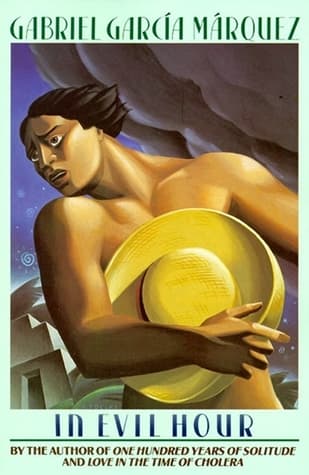
Synopsis
Covers the whole plot, including the ending.
- Difficulty
- Medium
- Pacing
- Moderate
- Mood
- Atmospheric, Oppressive, Political, Somber
- Read it if
- You enjoy early works of literary giants, political allegories, or explorations of tyranny and fear in small communities.
- Skip it if
- You prefer fast-paced plots, clear-cut heroes, or avoid stories with pervasive bleakness and injustice.
In Evil Hour Plot Summary
Covers the whole plot, including the ending.
The First Lampoon and the Mayor's Response
The novel begins in an unnamed Colombian river town where anonymous, satirical lampoons, or pasquinades, are appearing, exposing hidden shames. The first reveals an affair between Ricardo Rosales and Octavio Giraldo's wife. Enraged, Octavio Giraldo murders Ricardo Rosales. This act of violence brings the military mayor into the investigation. He orders a curfew and a crackdown, seeing the lampoons as a threat to his authority and the town's peace, even as he tries to understand their origin and purpose.
The Spread of the Lampoons and Growing Paranoia
After the first murder, more lampoons appear, targeting other prominent citizens and revealing various illicit activities. The town fills with paranoia and distrust. People suspect neighbors, friends, and even family members of writing or distributing them. The mayor's efforts to catch the culprit are frustrated, as the lampoons appear mysteriously. General anxiety is high, and the town's usual rhythm is disrupted by fear, leading to constant low-level conflict and accusations.
Father Ángel's Dilemma and Moral Crisis
Father Ángel, the town priest, faces a moral dilemma. He knows many of the sins exposed by the lampoons from confession. His vow of silence prevents him from revealing what he knows, even as the lampoons cause chaos. He struggles with his conscience, torn between his priestly duties and his desire to ease the suffering. He tries to offer guidance, but his sermons are ineffective against the rising fear that has enveloped the community.
The Mayor's Investigation and Torture
Desperate to restore order and find the lampoon writer, the mayor intensifies his investigation. He rounds up several suspects, including Pepe Montana, known for his rebellious nature. The mayor believes force will work and subjects Pepe and others to torture. These interrogations show the mayor's authoritarian methods and the escalating violence he uses to keep control, further eroding the town's sense of justice. The torture, however, fails to produce a confession or reveal the true culprit.
Arrival of the Judge and Legal Facade
After Ricardo Rosales's murder and the mayor's failed attempts, Judge Arcadio arrives from the capital to conduct a formal investigation. His arrival brings brief hope for justice, but it quickly becomes clear that the legal system is a pretense. Judge Arcadio is more interested in maintaining appearances and following procedures than in finding the truth. His investigation is slow and ineffective, failing to challenge the mayor's authority or bring accountability for the town's violence and oppression. He contributes to the systemic inertia.
The Dentist's Silence and Political Tension
The town's dentist, a quiet but principled man, resents the mayor and his oppressive regime. He is a known liberal and a symbol of quiet resistance. When the mayor tries to interrogate him or force cooperation, the dentist remains defiantly silent, refusing intimidation. His passive resistance highlights the political divisions in the town, showing how ordinary citizens are forced to choose sides in the conflict between authority and individual freedom, and how ideological differences worsen under fear.
Chepe Cotrino's Confession and Fate
As pressure mounts and the mayor's methods become more brutal, Chepe Cotrino, a local eccentric, unexpectedly confesses to writing the lampoons. His confession seems more an act of self-sacrifice or delusion than a genuine admission. He is arrested and, under the mayor's orders, brutally beaten to death in his cell. His death serves as a warning and a chilling display of the mayor's ruthlessness, silencing any further dissent or inquiry into the lampoons' true origin.
The Aftermath of Chepe's Death
Chepe Cotrino's death by torture has a chilling effect on the town. While the mayor declares the case closed and claims to have eliminated the source of the lampoons, a deeper fear settles over the community. The lampoons stop appearing, but the silence is one of terror, not peace. The townspeople are too afraid to speak out, question authority, or trust each other. The incident leaves a lasting scar, making the town a place where fear is ever-present, and the memory of injustice lingers beneath enforced order.
The Mayor's Continued Tyranny and Decline
With Chepe Cotrino's death, the mayor's authority is firmly re-established through violence and intimidation. He continues to rule with an iron fist, convinced his methods are necessary for order. However, his actions have also affected him. He becomes increasingly isolated, his initial practicality hardening into cynicism and cruelty. He is haunted by the events, though he would never admit it, and his relentless pursuit of control strips him of his humanity, leaving him a figure of oppressive power. The town lives under his shadow, but his own internal world becomes bleak.
The Enduring Legacy of Fear
The novel ends with the town living under a cloud of fear and silence. The immediate crisis of the lampoons has passed, but the 'evil hour' they began has left a permanent mark. The community is fractured, distrustful, and subdued. The mayor remains in power, his regime solidified by the terror he instilled. The true author of the lampoons is never revealed, leaving a lingering sense of unresolved mystery. The town, once full of secrets, is now a place where fear is a way of life, and the memory of violence shapes its inhabitants' existence.
In Evil Hour Characters
The Mayor
Antagonist
The military authority figure who rules the town with an iron fist.
The unnamed Mayor is a pragmatic, authoritarian military officer sent to govern the town. He views the lampoons as a direct challenge to his authority and believes that order can only be maintained through strict discipline and, if necessary, brutal force. He is initially driven by a desire to restore peace but quickly devolves into a tyrannical figure, resorting to torture and intimidation. He is intelligent but lacks empathy, prioritizing control above all else.
Relationships: Father Ángel (antagonistic, ideological conflict over justice and morality); The Dentist (antagonistic, political opposition and resistance); Chepe Cotrino (victimizer, responsible for his torture and death)
Father Ángel
Supporting
The town priest, caught between his sacred vows and the town's suffering.
Father Ángel is the spiritual leader of the town, a man of faith deeply troubled by the events unfolding around him. He hears the town's secrets in confession, often the very ones exposed by the lampoons, placing him in a moral dilemma. He struggles to reconcile his religious duties with the escalating violence and injustice. He tries to offer comfort and guidance but feels increasingly powerless against the secular authority of the Mayor and the pervasive fear.
Relationships: The Mayor (antagonistic, moral and ideological opposition); The Townspeople (spiritual guide, confessor, and moral compass)
Chepe Cotrino
Supporting
The eccentric recluse who falsely confesses to writing the lampoons.
Chepe Cotrino is a reclusive and somewhat eccentric old man, known for his strange habits and his isolated life. He becomes a tragic figure when he confesses to writing the lampoons, an admission that seems more like a desperate act of self-sacrifice or a delusion than a genuine confession. His confession allows the Mayor to close the case, but it leads directly to Chepe's brutal torture and death, making him a martyr to the town's injustice.
Relationships: The Mayor (victim, brutally murdered by the Mayor's orders)
Ricardo Rosales
Mentioned
The first victim of the lampoons, murdered for an exposed affair.
Ricardo Rosales is the initial catalyst for the novel's central conflict. He is the man whose affair with Octavio Giraldo's wife is exposed by the very first lampoon, leading to his immediate murder by Octavio. Though he dies at the very beginning of the story, his death sets off the chain of events that plunges the town into chaos and fear, demonstrating the destructive power of the anonymous accusations.
Relationships: Octavio Giraldo (murder victim, killed by Octavio)
Octavio Giraldo
Supporting
The cuckolded husband who commits the first murder.
Octavio Giraldo is a seemingly respectable citizen whose life is shattered by the first lampoon, which exposes his wife's infidelity with Ricardo Rosales. Driven by rage and humiliation, he murders Ricardo, setting a violent precedent for the town's response to the lampoons. His act of revenge underscores the deep-seated passions and honor codes that exist beneath the town's surface, and how easily they can be ignited.
Relationships: Ricardo Rosales (murderer, kills Ricardo for the affair)
Judge Arcadio
Supporting
The judge sent to investigate, more concerned with procedure than justice.
Judge Arcadio is dispatched from the capital to conduct a formal investigation into the murder of Ricardo Rosales and the lampoons. He represents the bureaucratic and often detached nature of official justice. While he follows legal procedures, he is ultimately ineffective in uncovering the truth or challenging the Mayor's authority. His presence highlights the systemic failings and the superficiality of justice in a town dominated by fear and military power.
Relationships: The Mayor (official superior on paper, but practically subordinate to the Mayor's local power)
The Dentist
Supporting
A quiet liberal who subtly resists the Mayor's authority.
The Dentist is a figure of quiet, principled resistance in the town. He is a known liberal and a symbol of intellectual and political opposition to the Mayor's authoritarian regime. Though he rarely speaks out directly, his refusal to cooperate with the Mayor's interrogations and his steadfast silence embody a form of passive defiance. He represents the underlying political tensions and the segment of the population that silently despises the oppression.
Relationships: The Mayor (political antagonist, object of the Mayor's suspicion and attempts at intimidation)
Pepe Montana
Supporting
A young man wrongly accused and tortured by the Mayor.
Pepe Montana is one of the young men rounded up and tortured by the Mayor in the desperate search for the lampoon writer. He is known for being somewhat rebellious but is likely innocent of the lampoons. His torture exemplifies the Mayor's brutal methods and the injustice inflicted upon innocent citizens caught in the dragnet. His suffering highlights the arbitrary nature of the Mayor's power and the complete disregard for due process.
Relationships: The Mayor (victim, tortured by the Mayor)
In Evil Hour Themes
The Corrosive Nature of Fear and Paranoia
The central theme is how fear and paranoia can destroy a community. The anonymous lampoons create distrust, turning neighbors against each other. The Mayor's brutal tactics, especially the torture and murder of Chepe Cotrino, increase this fear, silencing dissent and forcing the townspeople into terrified submission. The town's social fabric dissolves, replaced by suspicion and an inability to challenge power. This fear is not just external; it infiltrates minds, making people question everyone and everything, as seen in the general suspicion that grips even innocent conversations.
“Fear was like a fog, settling over everything, obscuring truth and distorting faces.”
The Abuse of Power and Authoritarianism
The novel critiques authoritarian rule and the abuse of power. The Mayor, a military officer, embodies this. He prioritizes order and control over justice, human rights, or morality. His methods escalate from investigation to intimidation, torture, and murder, showing how unchecked power corrupts. The Mayor's actions illustrate the dangers of a regime without accountability, where law is an instrument of oppression. His tyranny turns the town into a police state, where dissent is met with brutal force.
“He knew that the only way to maintain order was to make an example, no matter the cost.”
The Silence of Complicity and the Failure of Institutions
The novel explores various forms of silence and complicity that allow evil to thrive. Father Ángel, bound by confessional vows, represents a moral institution rendered powerless. Judge Arcadio, representing the legal system, cares more for bureaucratic procedure than justice, failing to challenge the Mayor. The townspeople, paralyzed by fear after Chepe Cotrino's death, fall into collective silence, effectively condoning the atrocities. This theme highlights how the breakdown of moral and legal institutions, combined with widespread fear, normalizes injustice.
“Everyone knew, but no one dared to speak.”
The Nature of Truth and Deception
The lampoons are anonymous 'truths' that expose hidden deceptions, but their anonymity also creates new layers of falsehood. The Mayor's regime operates on deception, fabricating a culprit in Chepe Cotrino to restore order. The true author of the lampoons remains unknown, blurring the lines between real and fabricated. This ambiguity forces characters, and the reader, to question truth in a society where information is controlled and fear dictates what can be said. The novel suggests that in an 'evil hour,' objective truth becomes a casualty, replaced by convenient narratives and pervasive doubt.
“The truth was less important than the appearance of truth.”
Plot Devices & Literary Techniques
The Anonymous Lampoons (Pasquinades)
The catalyst for all conflict, revealing secrets and sowing discord.
The anonymous lampoons are the central inciting incident and a primary plot device. They serve as a powerful narrative engine, driving the plot forward by exposing the town's hidden sins and secrets. Each new lampoon escalates the tension, fuels paranoia, and provokes violent reactions, from murder to torture. They represent a subversive form of truth-telling, challenging the established order and forcing the town to confront its own moral decay. Their anonymity makes them particularly potent and terrifying, as the source of the 'evil' cannot be easily identified or neutralized, leading to indiscriminate suspicion.
The 'Evil Hour' Metaphor
A pervasive atmosphere of dread, fear, and moral decay.
The 'evil hour' is more than just a title; it's a pervasive metaphor that defines the novel's atmosphere and the town's state of being. It signifies a period where moral order collapses, fear reigns supreme, and injustice becomes normalized. It's the time when the hidden evils of society come to the surface, and the community is plunged into a collective crisis of conscience and survival. This metaphorical 'hour' describes the psychological and social climate that grips the town, making every interaction fraught with tension and every decision tinged with fear, demonstrating a state of prolonged moral and social decay.
The Unnamed Town
A universal setting for a story of oppression and human nature.
The decision to leave the town unnamed is a significant plot device. It elevates the story from a specific historical event to a universal allegory about power, oppression, and human nature. By not naming the town, García Márquez suggests that the events depicted could happen anywhere, at any time, under similar conditions of authoritarian rule and social breakdown. This universality allows the reader to connect the story to broader themes of political injustice and the fragility of peace, making the narrative resonate beyond its immediate setting.
The Confessional Secret
A moral bind for Father Ángel, highlighting institutional powerlessness.
Father Ángel's confessional secret is a crucial plot device that underscores the theme of institutional failure and moral paralysis. Bound by the sacred vow of silence, he is aware of many of the truths exposed by the lampoons but cannot act on them. This creates a profound internal conflict for him, highlighting the impotence of religious authority in the face of secular, brutal power. His silence, though born of religious duty, inadvertently contributes to the general complicity and allows the injustices to continue unchecked, demonstrating the limitations of individual morality within a corrupt system.
In Evil Hour Quotes
“The problem with this country is that the government is in the hands of those who don't even know what they're doing.”
“It was the time when people were still surprised by things, when they believed in omens and prophecies, and when the simplest incident was enough to create a legend.”
“He had the impression that the world had been turned upside down, that everything that had been solid and certain was now floating in the air.”
“The truth is that the dead are more dangerous than the living, because they can't be reasoned with.”
“Nobody knows what's going to happen tomorrow, and that's the only certainty in life.”
“Justice is a luxury that only the rich can afford.”
“The only thing that changes is that everything gets worse.”
“Fear is contagious, and it spreads faster than any disease.”
“He realized that loneliness was not the absence of people, but the impossibility of being understood.”
“The past is a mirror that reflects the future.”
“The only way to escape the truth is to invent another one.”
“He had learned that the only way to endure the unendurable was to pretend it didn't exist.”
“Silence is the most terrible weapon.”
“Everyone has their own way of going crazy.”
Quiz
10 questions on the plot and the characters. Each answer comes with a short explanation.
Question 1
What is the primary catalyst for the widespread unrest and violence that grips the unnamed Colombian river town in 'In Evil Hour'?
- A sudden natural disaster, like a flood or earthquake.
- The discovery of anonymous lampoons (pasquinades) exposing private secrets.
- An economic crisis caused by a drop in coffee prices.
- The arrival of a charismatic revolutionary leader.
Show answer
B. The discovery of anonymous lampoons (pasquinades) exposing private secrets. The lampoons, or pasquinades, are the initial spark that ignites the town's paranoia, distrust, and eventually, open violence, as they reveal embarrassing and often scandalous secrets about the inhabitants.
Question 2
Who is Father Ángel, and what is his initial reaction to the lampoons appearing in the town?
- He is the town's mayor and tries to suppress the lampoons through force.
- He is the local doctor and attempts to diagnose the collective hysteria.
- He is the parish priest and initially dismisses them as pranks or gossip.
- He is a wealthy landowner who funds a private investigation into their origin.
Show answer
C. He is the parish priest and initially dismisses them as pranks or gossip. Father Ángel is the town's priest. He initially tries to downplay the significance of the lampoons, seeing them as trivial gossip, before realizing their destructive potential.
Question 3
What is the fate of the dentist, Dr. Giraldo, after he is implicated by a lampoon?
- He is forced to leave town in shame.
- He commits suicide after the public humiliation.
- He successfully sues the person he believes wrote the lampoon.
- He leads a counter-movement against the lampoons' spread.
Show answer
B. He commits suicide after the public humiliation. Dr. Giraldo is one of the first victims of the lampoons' psychological impact, choosing to end his life after his private affairs are publicly exposed.
Question 4
Which political faction is in power in the town at the beginning of the novel, and how does this influence the mayor's actions?
- The Liberals; the mayor tries to maintain order impartially.
- The Conservatives; the mayor is biased and uses the crisis to target political opponents.
- The Socialists; the mayor attempts to implement community-based solutions.
- A military junta; the mayor imposes strict martial law immediately.
Show answer
B. The Conservatives; the mayor is biased and uses the crisis to target political opponents. The town is under Conservative rule, and the mayor, a Conservative, uses the chaos caused by the lampoons as an excuse to consolidate power and persecute suspected Liberals, reflecting the political tensions of the time.
Question 5
What role does the character of Aurelio Escovar, the dentist from 'One Hundred Years of Solitude,' play in 'In Evil Hour'?
- He is the primary antagonist, secretly writing the lampoons.
- He does not appear in 'In Evil Hour'; this is a separate narrative.
- He is a minor character who treats a victim of the violence.
- He is the mayor's advisor, offering cynical political counsel.
Show answer
B. He does not appear in 'In Evil Hour'; this is a separate narrative. While 'In Evil Hour' precedes 'One Hundred Years of Solitude' and shares some thematic and atmospheric similarities, the specific character of Aurelio Escovar does not appear in this novel. The dentist character in 'In Evil Hour' is Dr. Giraldo.
Question 6
What is the underlying theme that the lampoons ultimately expose about the town's inhabitants, beyond their individual secrets?
- Their resilience and ability to unite in times of crisis.
- The pervasive hypocrisy, moral decay, and hidden violence simmering beneath the surface.
- Their deep-seated religious faith and devotion.
- Their unwavering loyalty to the political party in power.
Show answer
B. The pervasive hypocrisy, moral decay, and hidden violence simmering beneath the surface. The lampoons, by exposing individual secrets and vices, collectively reveal the widespread hypocrisy, moral corruption, and the underlying potential for violence and distrust that characterizes the town's social fabric.
Question 7
How does the mayor's wife, a character often seen with the priest, contribute to the narrative's exploration of power and morality?
- She actively supports her husband's oppressive measures, believing them necessary.
- She acts as a moral counterpoint, expressing distress and questioning the mayor's actions, often seeking guidance from the priest.
- She is indifferent to the town's suffering, focused only on her social standing.
- She secretly works with the Liberals to undermine her husband's authority.
Show answer
B. She acts as a moral counterpoint, expressing distress and questioning the mayor's actions, often seeking guidance from the priest. The mayor's wife often appears with Father Ángel, troubled by the unfolding events and her husband's increasingly authoritarian response, serving as one of the few voices of conscience or moral questioning in the novel.
Question 8
What is the significance of the constant rain mentioned throughout the novel?
- It is a literal representation of an impending flood that threatens the town.
- It symbolizes the pervasive gloom, decay, and the cleansing (or lack thereof) of the town's moral atmosphere.
- It is a practical detail reflecting the tropical climate with no deeper symbolic meaning.
- It represents the tears of the townspeople mourning their lost innocence.
Show answer
B. It symbolizes the pervasive gloom, decay, and the cleansing (or lack thereof) of the town's moral atmosphere. The relentless rain in 'In Evil Hour' is more than just a climatic detail; it heavily contributes to the oppressive, melancholic, and decaying atmosphere of the town, mirroring the moral and social rot brought about by the lampoons and political violence. It also foreshadows the 'rain-drenched corner' of Macondo.
Question 9
By the end of the novel, what is the ultimate outcome for the town and its inhabitants regarding the lampoons and the ensuing violence?
- The true author of the lampoons is discovered and punished, restoring peace.
- The town unites, overcoming the division caused by the lampoons and ousting the corrupt mayor.
- The lampoons cease, but the violence escalates into a full-blown political insurgency, with the mayor imposing martial law.
- A new, more tolerant government is installed, and the town begins to heal.
Show answer
C. The lampoons cease, but the violence escalates into a full-blown political insurgency, with the mayor imposing martial law. The novel concludes not with resolution but with an escalation of violence. The lampoons may fade, but they leave behind a legacy of distrust and open political conflict, leading the mayor to declare martial law and the town to descend further into chaos.
Question 10
How does 'In Evil Hour' serve as a 'prelude' or 'foundation' for García Márquez's later works, particularly 'One Hundred Years of Solitude,' as suggested by critics?
- It introduces many of the same characters and a direct storyline continuation.
- It establishes the magical realism style and a fully developed Macondo.
- It explores themes of solitude, political violence, memory, and the cyclical nature of history within a distinct Latin American setting, showcasing his early mastery of atmosphere and character idiosyncrasy.
- It is a direct historical account that inspired the fictional elements of his later novels.
Show answer
C. It explores themes of solitude, political violence, memory, and the cyclical nature of history within a distinct Latin American setting, showcasing his early mastery of atmosphere and character idiosyncrasy. Critics note that 'In Evil Hour' is a crucial precursor because it showcases García Márquez's developing style, his keen sense of place, the 'colorful idiosyncrasy of character,' and his engagement with themes like political oppression, violence, and the human condition, all of which would flourish in 'One Hundred Years of Solitude,' even if the magical realism isn't fully developed yet.
In Evil Hour FAQ
What is the central conflict that ignites the events in the unnamed Colombian river town?
The central conflict begins with the appearance of satirical lampoons, or pasquinades, pinned to doors throughout the town. These anonymous posters reveal scandalous secrets and accusations about various townspeople, creating an atmosphere of paranoia, suspicion, and escalating violence, ultimately leading to a cycle of retribution.
Who is Judge Arcadio and what role does he play in the town's unraveling?
Judge Arcadio is the seemingly impartial authority figure tasked with investigating the pasquinades and maintaining order. However, his investigations are often inept or deliberately stalled, and he himself is implicated in some of the town's moral failings, making him an ineffective and ultimately corrupt arbiter of justice.
How does the murder of Dr. Giraldo further destabilize the town?
Dr. Giraldo's murder, explicitly linked to a pasquinade accusing him of an affair, marks a critical escalation from rumor to lethal violence. His death confirms the town's descent into lawlessness and fear, demonstrating that the pasquinades are not just words but triggers for deadly retribution, making everyone a potential victim or perpetrator.
What is the significance of the constant rain in the novel?
The incessant rain throughout the novel serves as a pervasive atmospheric element, mirroring the town's moral decay and the oppressive mood. It creates a sense of stagnation, isolation, and inescapable gloom, physically trapping the characters and symbolically washing away any hope of clarity or resolution, contributing to the feeling of an 'evil hour'.
Who is Padre Ángel and what is his stance on the pasquinades?
Padre Ángel is the town's priest, initially dismissive of the pasquinades as mere gossip, but he gradually becomes more concerned as the violence escalates. He attempts to exert moral authority, urging confession and repentance, but his efforts are largely futile against the deep-seated corruption and fear gripping the community.
How do the pasquinades connect to the political climate and the larger 'Violencia' in Colombia?
The pasquinades, while seemingly about personal scandals, subtly reflect the political tensions and deep-seated grudges left over from the civil strife known as 'La Violencia'. They expose the underlying resentments and partisan divisions, showing how personal vendettas can be fueled by and contribute to a broader atmosphere of political oppression and fear, even in a seemingly quiet town.
What is the implied role of the Mayor in perpetuating the town's problems, despite his outward attempts at control?
The Mayor, despite his official position, often appears ineffective and complicit. He struggles to control the escalating violence and is implied to be more concerned with maintaining a facade of order than with true justice, potentially even benefiting from or turning a blind eye to the chaos that consolidates his own power or silences opposition.
Are there any characters who attempt genuine resistance or truth-seeking, and what is their fate?
While many characters are swept up in the fear, some, like the dentist and his assistant, exhibit a quiet defiance, refusing to fully conform to the prevailing hysteria. However, their attempts at independent thought or action are largely isolated and ultimately ineffective against the pervasive atmosphere of fear and violence, highlighting the overwhelming nature of the 'evil hour'.
How does the collective paranoia manifest in the townspeople's interactions and daily lives?
The collective paranoia manifests in constant suspicion, whispered conversations, and a breakdown of trust between neighbors. People become guarded, interpreting innocent actions as malicious, and personal relationships fray under the weight of fear that anyone could be a target or a betrayer, leading to social isolation and a sense of constant threat.
Analyze the psychological impact of living under a constant threat of public exposure and violence.
Living under such a threat creates a profound sense of helplessness and anxiety, eroding individual autonomy and fostering a climate where self-preservation dictates actions. Characters experience a moral paralysis, unable to act justly for fear of becoming the next victim, leading to a profound psychological toll characterized by chronic stress and a loss of community cohesion.
How do characters cope with the moral ambiguity and the blurring lines between victim and perpetrator?
Many characters cope by internalizing the town's moral decay, adopting a cynical detachment or succumbing to fatalism. Others find solace in denial or by aligning themselves with perceived power, however corrupt. The blurring lines make it difficult for anyone to maintain a clear moral compass, leading to a pervasive sense of guilt, fear, and a struggle for self-justification.
What is the psychological effect of the anonymous nature of the pasquinades?
The anonymity of the pasquinades amplifies fear and paranoia, as there is no identifiable enemy to confront. This fosters a sense of pervasive threat, as anyone could be the author or the next target, leading to deep-seated mistrust and a breakdown of community bonds. It weaponizes rumor, making every whispered word a potential precursor to violence.
Is the 'evil hour' a specific period, or a perpetual state of being for the town?
The 'evil hour' initially refers to the period of heightened violence triggered by the pasquinades, but the novel suggests it's a culmination of deeper, long-standing injustices and moral failings. The ending implies that while the immediate crisis might subside, the town's inherent corruption and susceptibility to such 'evil hours' make it a perpetual state, waiting for the next spark.
How does the novel serve as a precursor to 'One Hundred Years of Solitude' in terms of themes or narrative style?
The novel foreshadows 'One Hundred Years of Solitude' through its exploration of recurring themes like collective memory, the cycle of violence, and the burden of history in a small Latin American town. Its narrative style, though less expansive, already exhibits García Márquez's keen eye for eccentric characters, detailed settings, and a sense of impending doom, laying groundwork for magical realism.
What is the author's critique of authority and justice in 'In Evil Hour'?
García Márquez offers a scathing critique of authority, portraying it as either corrupt, inept, or complicit in the town's suffering. Figures like Judge Arcadio and the Mayor fail to uphold justice, instead contributing to the cycle of violence through inaction, self-interest, or outright abuse of power. The novel suggests that true justice is unattainable in such a morally compromised system.
Could the pasquinades be interpreted as a form of collective unconscious expressing the town's hidden truths?
Yes, the pasquinades can be interpreted as a manifestation of the town's collective unconscious, bringing to light the suppressed desires, resentments, and dark secrets that fester beneath the surface of polite society. They act as a catalyst, forcing the town to confront its own hypocrisy and moral decay, albeit in a destructive manner.
What is the ultimate fate of the town at the novel's conclusion, and what does it signify?
The novel concludes with an ambiguous sense of unresolved tension rather than a clear resolution. While some immediate conflicts may subside, the underlying causes of the 'evil hour' – fear, corruption, and a cycle of violence – remain. This signifies that the town is trapped in a perpetual state of moral decay, with no true escape from its past or present suffering.
About the author
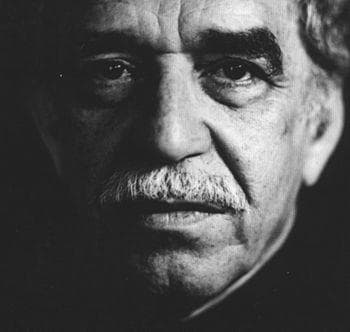
Gabriel José de la Concordia García Márquez was a Colombian novelist, short-story writer, screenwriter, and journalist, known affectionately as Gabo or Gabito throughout Latin America. Considered one of the most significant authors of the 20th century, particularly in the Spanish language, he was awarded the 1972 Neustadt International Prize for Literature and the 1982 Nobel Prize in Literature. He pursued a self-directed education that resulted in leaving law school for a career in journalism. From early on he showed no inhibitions in his criticism of Colombian and foreign politics. In 1958, he married Mercedes Barcha Pardo; they had two sons, Rodrigo and Gonzalo.
Similar books
- One Hundred Years of Solitude
Gabriel García Márquez
4.1 (753k) average on GoodreadsLiterary FictionExplores similar themes of Latin American life, politics, and the surreal, set in a fictional town.
- The Autumn of the Patriarch
Gabriel García Márquez
3.9 (18k) average on GoodreadsFictionAnother powerful exploration of an aging dictator's tyranny and isolation.
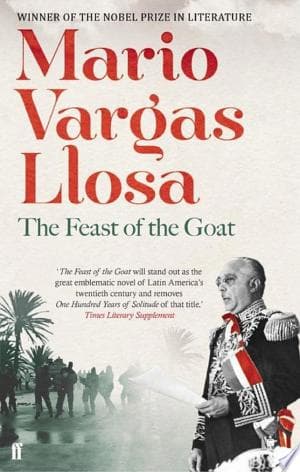
- The Feast of the Goat
Mario Vargas Llosa
4.3 (26k) average on GoodreadsPoliticsA vivid portrayal of a Latin American dictatorship and its impact on individuals and society.
- The Old Man and the Sea
Ernest Hemingway
3.8 (831k) average on GoodreadsLiterary FictionA Cuban fisherman's long struggle with a giant marlin becomes a story of endurance and dignity, now retold for young adults with illustrations, phonetic guides, and writing prompts in Traditional Chinese.
- The Goldfinch
Donna Tartt
3.9 (720k) average on GoodreadsLiterary FictionHaunted by a tragic explosion and clutching a stolen Dutch masterpiece, a young orphan navigates the opulent drawing rooms of New York and the gritty underbelly of the art world, desperately seeking connection and redemption amidst a life spiraling into crime and obsession.
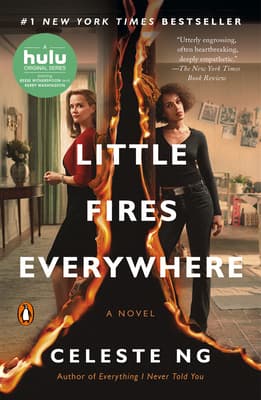
- Little Fires Everywhere
Celeste Ng
4.1 (713k) average on GoodreadsLiterary FictionIn Shaker Heights, an artist and her daughter move in, and their free-spirited lives clash with a rule-bound matriarch, revealing hidden conflicts beneath a perfect surface.




Enjoyed the summary?
A summary gives you the shape of the book. The book itself has the detail, the examples and the voice.
Find In Evil Hour on AmazonAs an Amazon Associate, BookBrief earns from qualifying purchases. How we're funded