

Core Idea
- Difficulty
- Medium
- Read it if
- You are interested in leadership, Stoic philosophy in practice, military history, or the psychology of survival and resilience in extreme environments.
- Skip it if
- You prefer light reading, are sensitive to detailed accounts of torture and deprivation, or are not interested in military memoirs.
Key Takeaways from In Love and War
The Power of Stoic Philosophy in Captivity
Ancient wisdom provided an unbreakable mental fortress for enduring unimaginable suffering.
Stockdale understood and used Stoicism, especially Epictetus's teachings, as survival tools. He separated what he could control (his thoughts, reactions, and morals) from what he could not (torture, imprisonment, the war). This mental approach helped him ignore the external horrors and focus on keeping his inner freedom and dignity. By accepting what he could not change and controlling his inner world, he built a strong psychological defense against his captors' dehumanizing methods. He changed from a victim to someone in control of his own moral path.
“The Stoic philosophy which I had studied, particularly Epictetus, told me that there are some things in our control and some things not in our control. I could not control my captors, but I could control my attitude and my response.”
In the book: Stockdale recounts frequently quoting Epictetus to himself and his fellow prisoners, emphasizing the dichotomy of control. His deliberate choice to disfigure himself rather than be used for propaganda is a stark example of controlling his response.
Try this: When faced with overwhelming external circumstances, identify what is truly within your control (your attitude, effort, integrity) and what is not. Dedicate energy only to the former, letting go of attachment to outcomes beyond your influence. Practice mental detachment from external stressors.
Related ideas: stoicism, epictetus, dichotomy-of-control, mental-fortitude
Leadership Through Moral Example
True leadership in extreme adversity is about embodying integrity and self-sacrifice.
Stockdale's leadership came from his strong moral compass and his willingness to face severe punishments for his men. In a situation with no information and constant pressure, his actions, not just his words, were the main way he communicated. By letting himself be tortured to protect his subordinates, by setting up a secret communication system, and by openly defying his captors, he showed courage, unity, and defiance. This kind of leadership creates strong loyalty and unity, which are necessary for survival in the worst situations.
“Moral leadership is not about giving orders, but about being the first to suffer, the first to sacrifice, the first to show the way.”
In the book: His deliberate self-mutilation (hitting himself with a stool and smashing his face) to avoid being paraded as a 'model prisoner' for propaganda purposes, and his constant efforts to establish and maintain a communication system (the tap code) among the prisoners, even at great personal risk.
Try this: In any leadership role, understand that your actions speak louder than words, especially during crises. Be willing to take the first step, bear the brunt of difficult situations, and prioritize the well-being and integrity of your team over personal comfort or safety.
Related ideas: moral-leadership, prisoner-of-war, integrity, self-sacrifice
The Importance of a Shared Code of Conduct
A collective moral framework is critical for group cohesion and resilience under duress.
The P.O.W.s in the Hanoi Hilton made and followed a strict code of conduct, sometimes called 'Stockdale principles' or based on the military's Code of Conduct. This was more than just rules; it was a basic agreement that defined their group identity and purpose. It told them how to resist, communicate, and support each other. This shared understanding stopped individual breakdowns from becoming group failures and gave them a moral guide when facing psychological warfare and physical torture. It created a sense of shared responsibility and accountability, turning isolated individuals into a unified, resistant group.
“Without a clear code, without a shared understanding of right and wrong, each man would have been an island, vulnerable to manipulation and despair.”
In the book: The meticulous development and enforcement of the 'tap code' and rules like 'no talking to captors beyond name, rank, serial number, and date of birth' (later adapted due to extreme torture, but the principle of limited cooperation remained).
Try this: In any team or organization, establish clear, shared values and a code of conduct, especially for challenging situations. Ensure everyone understands and commits to these principles, as they will serve as anchors during times of stress and uncertainty.
Related ideas: code-of-conduct, group-cohesion, resistance, psychological-warfare
The Paradox of Hope and Realism
Maintain an unwavering belief in ultimate success, but confront the brutal facts of your current reality.
This is the 'Stockdale Paradox.' It shows the balance between staying hopeful and facing hard truths without self-deception. Many prisoners who did not survive were those who set release dates and then gave up when those hopes were not met. Stockdale never doubted he would be free, but he avoided false hopes and always adjusted to the harsh reality of his situation. This helped him keep his resolve without being surprised by disappointment, creating a resilient long-term view needed to endure years of torture and isolation.
“You must never confuse faith that you will prevail in the end – which you can never afford to lose – with the discipline to confront the most brutal facts of your current reality, whatever they might be.”
In the book: Stockdale observed that optimists who believed they'd be home by Christmas often died of a broken heart by March. He, however, accepted the indefinite nature of his captivity while never losing faith in eventual liberation.
Try this: In any long-term challenge, cultivate an unshakeable belief in your ultimate success, but simultaneously engage in rigorous, honest assessment of your current obstacles and limitations. Avoid wishful thinking and adapt your strategies based on present realities, not just future desires.
Related ideas: stockdale-paradox, resilience, optimism, realism, long-term-perspective
The Indelible Impact of Family Support
A supportive family provides a crucial anchor and motivation for survival.
While Jim fought his war in a Hanoi prison, his wife Sybil fought her own war at home. Her ongoing activism, organizing other POW wives, questioning the government's silence, and bringing international attention to their situation, was key to their release and gave the prisoners important psychological support. Knowing they were not forgotten and that their families were fighting for them gave them a strong sense of purpose and hope. This dual story shows how important a supportive home front is for those facing extreme hardship, providing both practical and emotional help.
“My family was my rock, my reason for fighting, my hope for the future. Without Sybil's relentless efforts, I don't know if I would have made it.”
In the book: Sybil Stockdale's pivotal role in founding the National League of Families of American Prisoners and Missing in Southeast Asia, and her direct appeals to the UN and other international bodies, which directly pressured the North Vietnamese.
Try this: Recognize and actively cultivate strong family and community ties. During personal or collective crises, these networks provide essential emotional support, advocacy, and a powerful 'reason why' to persevere. Don't underestimate the power of external support.
Related ideas: family-support, advocacy, resilience, emotional-support
The Psychological Scars of Torture and Isolation
Even after liberation, the mind carries profound and lasting wounds.
Stockdale's memoir honestly discusses the lasting psychological effects of his imprisonment. While he became a hero, the years of torture, isolation, and constant psychological warfare left permanent marks. He describes a constant feeling of suspicion, difficulty trusting others, and a tendency towards thinking inward and being alone, which continued long after his return. This honest portrayal shows that even the strongest minds are affected by the deep trauma of such experiences. It challenges simple ideas of 'recovery' and highlights the long-term need for understanding and care for veterans of extreme hardship. It shows that heroism does not erase the human cost.
“The physical scars heal, but the psychological ones... they never truly leave you. The mind continues to replay the horrors, to suspect the motives of others, to seek solitude.”
In the book: Stockdale's personal reflections on his post-captivity life, including his struggles with adjusting to 'normalcy,' his continued introspective nature, and the difficulty in fully articulating the depth of his experiences to those who hadn't endured similar horrors.
Try this: Develop a deeper empathy for individuals who have experienced profound trauma, understanding that their struggles may be long-lasting and manifest in subtle ways. For leaders, recognize the importance of robust psychological support and reintegration programs for those returning from high-stress environments.
Related ideas: ptsd, trauma, psychological-impact, reintegration, veteran-support
The Moral Imperative of Resistance
Active resistance, even symbolic, preserves dignity and thwarts the oppressor's goals.
Stockdale believed his captors' main goal was not just to get information, but to break the American fighting spirit and turn them into compliant tools for propaganda. So, any act of resistance, no matter how small or seemingly useless, was a victory. This included refusing to cooperate beyond basic identification, communicating secretly, or even making a defiant gesture. These actions preserved individual dignity, maintained a sense of control, and stopped the enemy from reaching their psychological goals. It showed that resistance is not just about escaping, but about keeping oneself and one's moral integrity when facing absolute power.
“To give in, to break, was to give them victory not just over my body, but over my soul. That was a victory I could never allow.”
In the book: Stockdale's consistent refusal to sign false confessions or participate in propaganda broadcasts, often resulting in severe torture. His establishment of the tap code was a massive act of resistance, building a defiant community under the captors' noses.
Try this: When confronted with oppressive systems or individuals, seek opportunities for active, even symbolic, resistance. Understand that maintaining your integrity and refusing to be complicit can be a powerful form of defiance, preserving your moral compass and inspiring others.
Related ideas: resistance, moral-courage, dignity, psychological-warfare, agency
The Unseen War: The Home Front's Struggle
The families left behind fought a desperate, often lonely, battle against official silence and public indifference.
The book skillfully combines Jim's terrible experience with Sybil's equally compelling struggle at home. Her fight was against the U.S. government's 'keep 'em quiet' policy, which favored diplomatic channels over publicizing the prisoners' situation, fearing it would increase tensions. Sybil and other POW wives had to deal with government delays, public indifference, and the emotional stress of not knowing their loved ones' fates. Their decision to go public, going against official orders, was a brave act that changed the story, put pressure on North Vietnam, and set the stage for future advocacy for military families. It shows that war's effects go far beyond the battlefield.
“While we fought our war in the cells, our wives fought an equally brutal war against an indifferent government and a forgetful public.”
In the book: Sybil Stockdale's detailed accounts of forming the National League of Families, her public speaking engagements, and her direct confrontations with government officials who initially resisted her efforts to publicize the POW/MIA issue.
Try this: Recognize that major conflicts have profound and often invisible impacts on families and communities far from the front lines. Support advocacy efforts for those affected by such circumstances and challenge policies that prioritize political expediency over human dignity and transparency.
Related ideas: home-front, advocacy, government-policy, public-awareness, military-families
The Enduring Value of Education and Intellectual Curiosity
A cultivated mind provides internal resources for navigating extreme hardship.
Stockdale's intellectual background, especially his deep study of philosophy, was not just an academic pursuit but a practical advantage that sustained him through years of isolation and torture. He could retreat into his mind, remember philosophical texts, analyze his situation with a structured framework, and even create mental exercises to keep his mind sharp. This shows the usefulness of a well-trained mind, capable of independent thought and inner resourcefulness, especially when there is no external stimulation or social interaction. His ability to use his inner 'library' for comfort, analysis, and resilience shows the lasting power of curiosity and learning throughout life.
“My education, particularly my studies in philosophy, became my most powerful weapon. It was an internal library no captor could take away.”
In the book: Stockdale frequently recounts mentally re-reading books, composing lectures, and engaging in philosophical debates with himself or through the tap code with other prisoners, using his extensive knowledge as a coping mechanism.
Try this: Invest in lifelong learning and cultivate intellectual curiosity across diverse fields. These internal resources can become invaluable assets, providing mental resilience, perspective, and a sense of purpose when faced with personal or professional challenges.
Related ideas: intellectual-curiosity, education, philosophy, mental-resilience, lifelong-learning
In Love and War Quotes
“I never lost faith in the end of the story, I never doubted that I would get out, and I never doubted that I would prevail in the end.”
“You must never confuse faith that you will prevail in the end—which you can never afford to lose—with the discipline to confront the most brutal facts of your current reality, whatever they might be.”
“The test of a first-rate intelligence is the ability to hold two opposed ideas in mind at the same time and still retain the ability to function.”
“Character is the ability to carry out a good resolution long after the excitement of the moment has passed.”
“It was impossible to lose your dignity unless you gave it away.”
“You don't lead by hitting people over the head—that's assault, not leadership.”
“Pain and suffering are inevitable, but misery is optional.”
“The greatest dangers to a nation are not external enemies, but internal decay.”
“When you are in command, command.”
“The fact that you are a prisoner of war does not mean you have to be a prisoner of your mind.”
“I tried to be useful. That's what I kept telling myself. Be useful.”
“It's not what happens to you, but how you react to it that matters.”
“Leadership is primarily a moral art, not a science.”
Quiz
10 questions on the main ideas. Each answer comes with a short explanation.
Question 1
What was the primary role of Jim Stockdale when he was shot down over North Vietnam?
- Commander of a destroyer
- Squadron Commander of a fighter wing
- Pilot of a reconnaissance plane
- Naval Intelligence Officer
Show answer
B. Squadron Commander of a fighter wing Jim Stockdale was the Commander of Carrier Air Wing Sixteen (CVW-16) when his A-4E Skyhawk was shot down, making him a squadron commander of a fighter wing.
Question 2
What philosophical school of thought heavily influenced Jim Stockdale's ability to endure his captivity?
- Existentialism
- Stoicism
- Utilitarianism
- Nihilism
Show answer
B. Stoicism Stockdale explicitly credits his study of Stoicism, particularly Epictetus, with providing him the mental framework to distinguish between what he could control and what he could not, which was crucial for his survival and leadership in prison.
Question 3
Which of the following was NOT a key communication method used by American POWs in Hanoi to maintain morale and organization?
- The tap code
- Toilet paper notes
- Elaborate hand signals during supervised outings
- Whispering through walls
Show answer
C. Elaborate hand signals during supervised outings While POWs were incredibly ingenious, supervised outings were rare and heavily monitored, making elaborate hand signals nearly impossible and too risky for consistent, organized communication. The tap code, notes, and whispering were primary methods.
Question 4
What significant act of self-mutilation did Stockdale undertake to prevent his captors from using him for propaganda?
- He attempted to escape by breaking his leg.
- He disfigured his own face with a stool.
- He cut off his own finger.
- He refused food until severely emaciated.
Show answer
B. He disfigured his own face with a stool. When threatened with being paraded for propaganda, Stockdale smashed his own face with a stool, making himself unrecognizable and unsuitable for their purposes, demonstrating extreme defiance.
Question 5
How did Sybil Stockdale, Jim's wife, contribute to the effort to bring attention to the plight of American POWs?
- She organized a silent vigil outside the White House for years.
- She became a prominent leader in the National League of Families of American Prisoners and Missing in Southeast Asia.
- She wrote a series of anonymous articles for major newspapers detailing prison conditions.
- She personally negotiated with North Vietnamese diplomats in Paris.
Show answer
B. She became a prominent leader in the National League of Families of American Prisoners and Missing in Southeast Asia. Sybil Stockdale was instrumental in forming and leading the National League of Families, transforming it into a powerful advocacy group that pressured the U.S. government and raised international awareness about the POWs.
Question 6
The book emphasizes the 'Stockdale Paradox.' What does this concept primarily entail?
- Maintaining an optimistic outlook while ignoring brutal facts.
- The ability to lead effectively under conditions of extreme duress.
- Retaining unwavering faith that you can and will prevail in the end, regardless of the difficulties, AND at the same time confronting the most brutal facts of your current reality.
- The psychological phenomenon of Stockholm Syndrome applied to military captives.
Show answer
C. Retaining unwavering faith that you can and will prevail in the end, regardless of the difficulties, AND at the same time confronting the most brutal facts of your current reality. The Stockdale Paradox, popularized by Jim Collins, describes the dual necessity of maintaining faith in ultimate victory while simultaneously facing the harsh realities of the present situation, a lesson Stockdale learned and embodied in captivity.
Question 7
What was the significance of the 'Alcatraz Gang' within the Hanoi Hilton?
- They were the first group of POWs to successfully escape the prison.
- They were a group of senior officers, including Stockdale, isolated and subjected to particularly harsh treatment due to their leadership and defiance.
- They were the POWs who collaborated with the North Vietnamese for better treatment.
- They were a group of junior enlisted men who formed a secret resistance cell.
Show answer
B. They were a group of senior officers, including Stockdale, isolated and subjected to particularly harsh treatment due to their leadership and defiance. The 'Alcatraz Gang' was a group of eleven highly defiant senior POWs, including Stockdale, who were isolated in a separate, particularly brutal section of the prison as punishment for their leadership and resistance efforts.
Question 8
Beyond physical torture, what was one of the most insidious psychological tactics used by the North Vietnamese against the POWs, which Stockdale actively combated?
- Forcing them to watch daily propaganda films.
- Creating divisions and distrust among the prisoners by spreading false rumors and offering preferential treatment.
- Subjecting them to constant sleep deprivation.
- Denying them access to any reading material or entertainment.
Show answer
B. Creating divisions and distrust among the prisoners by spreading false rumors and offering preferential treatment. The North Vietnamese actively sought to break the prisoners' unity by exploiting differences, spreading misinformation, and offering small comforts to those who might cooperate, which Stockdale and other leaders fought against by enforcing a strict chain of command and communication.
Question 9
How did Stockdale's pre-war academic background and interest in philosophy specifically prepare him for the intellectual challenges of captivity?
- He had studied military strategy, which helped him plan resistance.
- His knowledge of ancient Greek and Roman philosophy, particularly Stoicism, provided him a framework for mental resilience and ethical decision-making under duress.
- He had a degree in psychology, allowing him to analyze his captors' motives.
- His study of world religions offered him spiritual comfort.
Show answer
B. His knowledge of ancient Greek and Roman philosophy, particularly Stoicism, provided him a framework for mental resilience and ethical decision-making under duress. Stockdale had a master's degree in International Relations from Stanford, where he delved deeply into philosophy, especially Stoicism. This intellectual grounding provided him with the ethical and psychological tools to endure and lead, distinguishing between what was within his control and what was not.
Question 10
What was the ultimate impact of the Stockdale family's combined efforts, as detailed in the book, on the broader American public and government regarding the Vietnam War POW issue?
- Their efforts led directly to an early withdrawal of U.S. troops from Vietnam.
- They successfully forced the North Vietnamese to release all POWs unconditionally.
- Their persistent advocacy, particularly Sybil's, transformed the POW issue from a hidden secret into a major national concern, compelling the U.S. government to act and ensuring better treatment and eventual return for the prisoners.
- Their story primarily served as a moral booster for military families, without significant policy changes.
Show answer
C. Their persistent advocacy, particularly Sybil's, transformed the POW issue from a hidden secret into a major national concern, compelling the U.S. government to act and ensuring better treatment and eventual return for the prisoners. The Stockdales' story is a testament to how individual and family perseverance can influence national policy. Sybil's relentless advocacy through the National League of Families brought the POW issue into the public and political spotlight, ultimately contributing to the conditions that ensured the prisoners' eventual return and improved their treatment during captivity.
In Love and War FAQ
What is 'In Love and War' about?
'In Love and War' is a joint memoir by Vice Admiral James Stockdale and his wife, Sybil, detailing their experiences during the Vietnam War. It chronicles Jim's eight years as a prisoner of war in Vietnam, including his leadership as the senior naval officer, and Sybil's tireless efforts on the home front to advocate for POW/MIA families.
Who are Jim and Sybil Stockdale?
James Stockdale was a highly decorated U.S. Navy Vice Admiral and a Medal of Honor recipient, known for his leadership and resilience as the highest-ranking American POW in Vietnam. Sybil Stockdale was a prominent activist who co-founded the National League of Families of American Prisoners and Missing in Southeast Asia, advocating for better treatment and recognition of POWs.
Does 'In Love and War' offer insights into stoicism?
Yes, the book heavily features Jim Stockdale's application of Stoic philosophy to endure the extreme conditions of his captivity. He credits Stoicism with providing the mental framework necessary for survival, leadership, and maintaining his integrity under immense pressure.
What is the significance of Jim Stockdale's leadership in the POW camps?
As the senior naval officer, Jim Stockdale established a code of conduct and communication system among the POWs, fostering resistance and maintaining morale despite severe torture and isolation. His leadership was crucial in preventing fellow prisoners from succumbing to despair and collaborating with their captors.
How different is 'In Love and War' from other Vietnam War memoirs?
Unlike many Vietnam War memoirs that focus solely on combat or a single individual's experience, 'In Love and War' offers a dual perspective: Jim's harrowing POW experience and Sybil's crucial advocacy at home. This provides a comprehensive view of the war's impact on a military family and the broader political landscape.
Does 'In Love and War' discuss the challenges faced by military families during wartime?
Absolutely. Sybil Stockdale's narrative vividly portrays the immense emotional, logistical, and political challenges faced by military wives and families whose loved ones were prisoners or missing in action. It highlights her courageous efforts to unite families and pressure the government for action.
What lessons on resilience can be learned from 'In Love and War'?
The book offers profound lessons on resilience through both Jim's unwavering spirit and Sybil's persistent advocacy. It demonstrates how philosophical principles, strong personal character, and dedicated support systems can enable individuals and families to overcome seemingly insurmountable adversity.
Is 'In Love and War' suitable for readers interested in military history?
Yes, it is an essential read for anyone interested in military history, particularly the Vietnam War. It provides an intimate, firsthand account of the POW experience and the political climate surrounding it, offering valuable historical context and personal insights.
How did Jim Stockdale apply Stoicism during his imprisonment?
Stockdale applied Stoicism by focusing on what he could control—his attitude, integrity, and internal responses—rather than the external circumstances of his captivity. He practiced self-discipline, rational thought, and acceptance of fate, which enabled him to maintain his resolve and lead others.
About the author

Jim Stockdale was a United States Navy officer and Vietnam War prisoner of war. He co-authored the book "In Love and War," which recounts his experiences and the impact of war on personal relationships. His writings focus on themes of resilience and the human spirit in the face of adversity.
Similar books
- Man's Search for Meaning
Viktor E. Frankl
4.4 (401k) average on GoodreadsBiographyExplores the psychological resilience and search for meaning in concentration camps, mirroring Stockdale's philosophical approach to suffering.
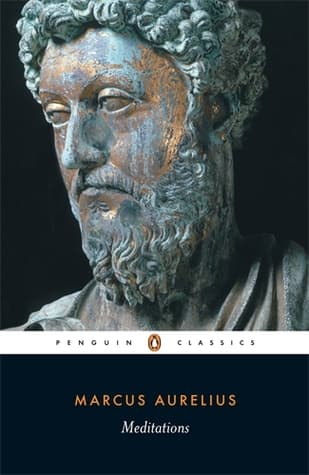
- Meditations
Marcus Aurelius
4.2 (124k) average on GoodreadsLeadershipThe foundational text of Stoic philosophy that heavily influenced Stockdale's worldview and approach to adversity.
- Unbroken: A World War II Story of Survival, Resilience and Redemption
Laura Hillenbrand
4.4 (767k) average on GoodreadsBiographyA biography of Louis Zamperini, a WWII POW who endured extreme suffering and demonstrated incredible resilience, similar to Stockdale's experiences.
- The Diary of a Young Girl
Anne Frank
4.2 (2.7M) average on GoodreadsBiographyDuring the Nazi occupation, a teenage girl's diary, written from a secret annex, shares observations on humanity, hope, and the wait for freedom.
- Eat, Pray, Love
Elizabeth Gilbert
3.6 (1.5M) average on GoodreadsLifestyleA heartbroken writer leaves her conventional life for a year-long global search for pleasure in Italy, spiritual devotion in India, and unexpected love and balance in Bali.
- Night
Elie Wiesel
4.3 (970k) average on GoodreadsBiographyIn the darkness of Auschwitz and Buchenwald, a teenage Elie Wiesel faces the extermination of his family, the loss of his faith, and the lasting scars of humanity's deepest cruelty.





Enjoyed the summary?
A summary gives you the shape of the book. The book itself has the detail, the examples and the voice.
Find In Love and War on AmazonAs an Amazon Associate, BookBrief earns from qualifying purchases. How we're funded