

Synopsis
Covers the whole plot, including the ending.
- Difficulty
- Medium
- Pacing
- Moderate
- Mood
- Atmospheric, Suspenseful, Dark, Haunting, Psychological
- Read it if
- You enjoy deep psychological thrillers, literary mysteries, and explorations of war trauma and its lasting impact on individuals, with an unreliable narrator and ambiguous ending.
- Skip it if
- You prefer straightforward mysteries with clear resolutions, or are sensitive to graphic depictions of war atrocities and mental unraveling.
In the Lake of the Woods Plot Summary
Covers the whole plot, including the ending.
The Retreat to Lake of the Woods
John Wade loses the Minnesota Democratic primary for the U.S. Senate. This happens because of stories about the My Lai massacre and his hidden past as 'Sorcerer' in Vietnam. He and his wife, Kathy, go to a remote cabin on Lake of the Woods. John, a magician, hopes to fix their relationship and escape the media. Kathy is upset and withdrawn because of John's exposed secrets and his evasiveness. The lake's isolation, meant to be a safe place, instead makes their existing tensions worse, setting a grim mood for their stay.
Kathy's Disappearance
Days into their retreat, Kathy Wade disappears from their cabin. John wakes to find her gone, along with their boat and the gas can, but no signs of a struggle. He reports her missing. This starts a search involving local police, including Sheriff Polson, and a private investigator, Tony Carbo. The lack of clear evidence and John's history of secrecy quickly make him the main suspect. The story then mixes the current investigation with parts of John's past, official papers, and speculative chapters. This creates an atmosphere of uncertainty and suspicion around Kathy's disappearance.
The My Lai Revelation
John Wade's political campaign for the U.S. Senate fails when a newspaper uncovers his true identity and his role in the My Lai massacre. His birth name was John "Sorcerer" Wade. He was a helicopter pilot during the Vietnam War and was at My Lai, but his records were sealed and his identity changed. This revelation ruins his public image and shows his lifelong pattern of lying, especially his efforts to hide his past from Kathy. This exposure leads to their retreat to Lake of the Woods and the events that follow. It shows how much his past affects his present life and relationships.
John's Childhood and Magic
The story describes John Wade's childhood. He had a distant, alcoholic father and a loving, overprotective mother. From a young age, John became interested in magic. He used it to cope, to control his surroundings, and to escape reality. He learned tricks and developed a persona that hid his insecurities. This period shows his pattern of evasion and manipulation. It explains how magic became his main tool for dealing with the world, both personally and professionally, and sets the stage for his adult deceptions and the mystery around Kathy's disappearance.
The Investigation Intensifies
Sheriff Polson leads the official search for Kathy. At first, he thinks she might have drowned by accident or run away. But as days pass and no trace of Kathy or the boat is found, suspicion falls more and more on John. Tony Carbo, a private investigator hired by Kathy's sister, starts his own, more aggressive investigation. He digs into John's past and interviews locals. The novel offers various theories through these investigations: Kathy's accidental death, her deliberate disappearance, or John's direct involvement. The conflicting evidence and John's unreliability make it impossible for the investigators—and the reader—to know what happened.
John's State of Mind
As the search for Kathy continues, John Wade's mental state worsens. He has vivid hallucinations, flashbacks to Vietnam, and increasing paranoia. He feels watched and judged. His carefully built life of illusion begins to fall apart. He struggles to tell reality from his distorted perceptions. He replays conversations with Kathy, looking for clues, and is tormented by guilt over his past lies. His inner turmoil is a main focus. It shows the psychological cost of his secrets and the ambiguity of his character, making readers question his sanity and guilt.
The Vietnam Years: "Sorcerer"
The story describes John Wade's time in Vietnam. He earned the nickname 'Sorcerer' because of his magic tricks and his ability to seemingly disappear and reappear. He was a helicopter pilot, often carrying bodies and seeing the horrors of war. The chapters explore the psychological effect of his experiences, including his presence at My Lai. His direct involvement in the massacre remains vague. The war deeply shaped his character, encouraging his detachment, his use of illusion, and his capacity for violence. All of these contribute to the mystery around Kathy's disappearance.
The Cabin as a Crucible
The cabin on Lake of the Woods was meant to be a safe place, but it becomes a psychological test for John Wade. Isolated, he must confront his past deceptions, his guilt over My Lai, and his failing marriage. The lake's silence and vastness reflect his inner emptiness and the unknowable nature of Kathy's fate. The cabin, filled with memories and Kathy's presence, becomes a stage where John performs his final, desperate acts of self-deception and delusion, blurring the lines between reality and his fractured mind.
The Power of Speculation
Tim O'Brien often includes chapters titled 'How to Tell a True War Story' and 'Hypothesis.' He speaks directly to the reader and presents many theories about Kathy's disappearance, which often contradict each other. These sections explore possibilities like accidental drowning, Kathy deliberately running away, John murdering her, or even her surviving in the wilderness. This technique highlights the ambiguity of truth, the unreliability of memory, and the limits of human understanding. It forces readers to face their own biases and the subjective nature of storytelling.
John's Escape and Final Delusions
Overwhelmed by the investigation, his guilt, and increasingly vivid hallucinations of Kathy, John Wade eventually leaves the cabin. He takes the remaining boat and goes deeper into the wilderness of Lake of the Woods. His escape becomes more and more tied to his worsening mental state. He imagines Kathy with him, comforting him, confirming his belief that she is still alive and has chosen to disappear. His journey becomes a descent into a private, self-made reality. There, magic and illusion offer a final, desperate refuge from the unbearable truths of his past and the uncertainty of Kathy's fate.
The Enduring Mystery
The novel ends without a clear answer to Kathy Wade's disappearance. Her body is never found, nor is the second boat. John Wade himself vanishes into Lake of the Woods; his ultimate fate also remains unclear. The various theories—murder, accidental death, deliberate disappearance—are all presented, but none are confirmed. This lasting mystery emphasizes the novel's main themes: the elusiveness of truth, the destructive power of secrets, and the lasting impact of war and personal deception. Readers are left with unsettling uncertainty, much like the characters in the story.
The Legacy of My Lai
Beyond the immediate mystery, the novel explores the psychological and moral legacy of the Vietnam War, especially through John Wade's experiences at My Lai. His direct actions in the massacre are never fully confirmed, but his presence and the subsequent cover-up deeply shape his life, identity, and relationship with Kathy. The war is shown as a source of trauma, moral compromise, and a reason for John's lifelong pattern of deception. The My Lai incident is a symbolic wound, festering beneath his life and ultimately contributing to the tragic events at Lake of the Woods.
Principal Figures
John Wade
Protagonist/Antagonist
A former politician and magician haunted by his past in Vietnam and his wife's disappearance.
John Wade, also known by his birth name 'Sorcerer' from his Vietnam days, is a complex and deeply flawed character. A former politician whose career is destroyed by the revelation of his hidden past at My Lai, he is a master of illusion, both literally as a magician and figuratively in his life. He is driven by a profound need for control, secrecy, and the desire to be loved, often at the expense of honesty. His childhood, marked by a distant father and an overprotective mother, fostered his reliance on magic as an escape and a means of manipulation. He is intelligent but emotionally stunted, struggling to connect genuinely with others, especially Kathy.
Relationships: Kathy Wade (Wife, object of his obsession and the central mystery); Sheriff Polson (Investigator, antagonist in John's eyes); Tony Carbo (Private investigator, relentless in uncovering John's past); His Mother (Overprotective and enabling figure in his childhood)
Kathy Wade
Supporting/Central Mystery
John's wife, whose mysterious disappearance drives the novel's plot.
Kathy Wade is an enigmatic figure, primarily defined by her absence. She is portrayed through John's memories, the observations of others, and speculative chapters. She is a woman who loved John but was increasingly burdened by his secrets, his evasiveness, and the public exposure of his past. She is intelligent, sensitive, and deeply affected by the My Lai revelations, feeling betrayed and isolated. Her motivations for disappearing (or being disappeared) are left ambiguous, making her a powerful symbol of the unknowable and the cost of deception. She represents the truth that John desperately tries to obscure.
Relationships: John Wade (Husband, source of her pain and the focus of her disappearance); Her Sister (Concerned family member who hires a private investigator)
Sheriff Polson
Supporting
The local sheriff investigating Kathy's disappearance.
Sheriff Polson is a pragmatic and observant local law enforcement officer. He approaches Kathy's disappearance with a methodical, if somewhat cautious, demeanor. Initially open to various possibilities, he quickly becomes suspicious of John Wade due to his evasiveness, his history of deception, and the lack of concrete evidence for any other scenario. He represents the official, rational attempt to uncover the truth, contrasting with John's magical thinking and the novel's embrace of ambiguity. He is persistent but ultimately thwarted by the elusiveness of the facts.
Relationships: John Wade (Primary suspect in his investigation); Tony Carbo (Fellow investigator, though their methods differ)
Tony Carbo
Supporting
A tenacious private investigator hired to find Kathy.
Tony Carbo is a relentless and cynical private investigator hired by Kathy's sister. Unlike Sheriff Polson, Carbo is immediately distrustful of John Wade and approaches the case with a strong conviction that John is responsible. He digs aggressively into John's past, particularly his Vietnam service and the My Lai incident, seeking to expose the truth behind John's carefully constructed facade. Carbo represents a more aggressive, less conventional pursuit of truth, fueled by a sense of moral outrage and a desire for justice. He is a foil to John's evasiveness, determined to cut through the illusions.
Relationships: John Wade (His primary target for investigation); Kathy's Sister (His client)
The Narrator (Tim O'Brien)
Supporting/Meta-Narrative
The authorial voice who directly addresses the reader and speculates on events.
The narrator, often identifiable as Tim O'Brien himself, is a distinctive and crucial 'character' in the novel. This voice frequently breaks the fourth wall, interjecting with chapters titled 'How to Tell a True War Story' or 'Hypothesis,' presenting various theories and acknowledging the inherent unreliability of memory and narrative. The narrator is a guide, a philosopher, and a provocateur, challenging the reader to question what they believe and how they arrive at truth. This meta-narrative voice is central to the novel's exploration of ambiguity and the nature of storytelling, making the reader an active participant in the mystery.
Relationships: John Wade (Subject of the narrator's analysis and speculation); The Reader (Directly addressed and engaged in the narrative process)
Lieutenant Calley
Mentioned
The historical figure convicted for his role in the My Lai massacre.
Lieutenant William Calley is a historical figure, the only American soldier convicted for his role in the My Lai massacre. He is mentioned frequently in the novel as John Wade's superior officer and a symbol of the atrocities committed during the Vietnam War. His name serves as a constant reminder of the horrific events at My Lai and the moral compromises made by soldiers. For John, Calley represents the dark underbelly of his own past and the collective guilt associated with the massacre.
Relationships: John Wade (Superior officer during My Lai, a haunting figure from his past)
John's Mother
Mentioned
Overprotective and enabling figure from John's childhood.
John's mother is presented in flashbacks as a doting, overprotective woman who shielded John from his alcoholic father and indulged his fascination with magic. She inadvertently fostered his reliance on illusion and secrecy by creating a world where he didn't have to confront harsh realities. Her influence contributes to John's inability to form genuine, honest relationships and his lifelong pattern of emotional evasion.
Relationships: John Wade (Her son, whom she enabled and protected); John's Father (Her husband, an alcoholic who created a tense home environment)
Themes & Insights
The Elusiveness of Truth
The novel shows how truth is subjective, hard to grasp, and often hidden by memory, trauma, and lies. Through the many 'Hypothesis' chapters and conflicting accounts of Kathy's disappearance, O'Brien makes readers face the impossibility of knowing what 'actually' happened. John Wade's entire life rests on illusion, from his magic tricks to his made-up past, making him an unreliable narrator. The uncertainty around Kathy's fate, John's guilt, and even the details of My Lai highlights how objective truth can be lost in the fog of war, personal trauma, and the desire for self-preservation. The narrator's direct comments challenge readers to accept that reality can remain unresolved.
“How do you separate what happened from what seemed to happen? What's the difference between a story that's true and a story that's accurate?”
The Destructive Power of Secrets and Deception
John Wade's life shows the damaging effect of secrets and lies. His hidden past in Vietnam, especially his involvement (or presence) at My Lai, and his attempts to change his identity and hide the truth, eventually destroy his political career and his marriage. His lifelong use of magic and illusion, at first a way to cope, becomes a pattern of deep dishonesty. This isolates him from Kathy and prevents true closeness. The exposure of his secrets leads to Kathy's disappearance, whether she fled, was murdered, or died by accident. The novel suggests that while secrets might offer temporary protection, their eventual discovery has devastating results, unraveling lives and relationships.
“He knew it was a terrible thing to hide a life. A terrible thing to be hidden from.”
The Psychological Scars of War
The novel explores the lasting psychological and moral trauma of the Vietnam War, especially through John Wade's character. His experiences as 'Sorcerer' in Vietnam, seeing atrocities and being at My Lai, leave him deeply scarred. He has flashbacks, paranoia, and a detachment from reality, made worse by the investigation's pressure. The war is not just history but a wound that continues to shape his perceptions, his capacity for violence, and his inability to handle truth. The novel suggests that war's horrors can change people, creating a deep darkness that can appear years later in unexpected and destructive ways, blurring the lines between soldier and civilian, sanity and madness.
“He brought the war home, he brought it to bed, he brought it to the dinner table. He brought it to the campaign trail. It was in his blood.”
Love and Betrayal
The relationship between John and Kathy Wade is a central emotional part of the novel. It is a deep, though flawed, love that John's constant deception ultimately undermines. Kathy loves John, but his secrets, evasiveness, and the public shame of his past being exposed slowly wear down that love. Her disappearance can be seen as the ultimate betrayal, either by John or by her own choice to escape a marriage built on lies. The novel explores how love, even strong love, cannot survive a foundation of chronic dishonesty, and how betrayal's pain can lead to desperate acts or tragic outcomes. Their bond, once a comfort, becomes a source of torment and unresolved grief.
“He loved her, yes, but he also loved the idea of her, the way she completed his illusions.”
Plot Devices & Literary Techniques
Unreliable Narrator
John Wade's perspective is consistently clouded by his mental state, secrets, and magical thinking.
John Wade serves as a highly unreliable narrator. His lifelong practice of magic and illusion, his history of deception, his deteriorating mental state, and his desperate need to control perceptions mean that his version of events cannot be fully trusted. The reader is constantly forced to question his memories, his interpretations, and his direct accounts, especially regarding Kathy's disappearance. This unreliability is a core mechanism for generating the novel's central mystery and reinforces the theme of the elusiveness of truth, making the reader an active participant in discerning what might have happened.
Meta-Narrative Commentary
The authorial voice directly addresses the reader, discussing the nature of storytelling and truth.
Tim O'Brien frequently breaks the fourth wall with chapters titled 'How to Tell a True War Story,' 'Hypothesis,' and 'Authorities Speak.' These sections feature an authorial voice that directly addresses the reader, discussing the challenges of recounting events, the subjective nature of memory, and the multiple possibilities surrounding Kathy's disappearance. This meta-narrative device serves to deconstruct the traditional novelistic expectation of a definitive truth. It highlights the constructed nature of stories and invites the reader to critically engage with the process of interpretation, underscoring the novel's central theme that some mysteries are inherently unsolvable.
Ambiguity and Multiple Endings
The novel deliberately withholds a definitive resolution, offering several plausible but unconfirmed scenarios.
The most prominent plot device is the pervasive ambiguity surrounding Kathy Wade's disappearance and John Wade's ultimate fate. The novel presents various 'hypotheses' for what happened—accidental drowning, deliberate disappearance, or murder by John—but never confirms any of them. This deliberate lack of resolution forces the reader to confront the unknowable and challenges the conventional desire for closure. It mirrors the real-life experience of unsolved mysteries and the lasting psychological impact of uncertainty, reinforcing the novel's thematic exploration of truth's elusiveness and the enduring scars of war and deception.
Flashbacks and Interspersed Documents
Non-linear storytelling using past events, official reports, and fictional interviews.
The narrative structure is non-linear, interweaving present-day events at Lake of the Woods with extensive flashbacks to John Wade's childhood, his time in Vietnam, and his political career. Additionally, the novel includes fictional 'evidence' such as official reports, excerpts from books, and interview transcripts. This fragmented approach mirrors John's fractured psyche and the piecemeal way truth is often discovered (or obscured). It allows the author to gradually reveal John's complex past and motivations, while simultaneously highlighting the difficulty of forming a complete, coherent picture from disparate and often contradictory sources, contributing to the overall sense of mystery and unreliability.
In the Lake of the Woods Quotes
“The thing about remembering is that you don't forget.”
“He would spend the rest of his life trying to remember, trying to forget.”
“How do you explain the unexplainable?”
“Love is a process, not a state.”
“War is like a fire—you can’t put it out, it just burns itself out.”
“The truth, like a cat, will find its way home.”
“What matters is not what you know, but what you can prove.”
“Sometimes you have to invent what you need to know.”
“He was a magician, after all, and magicians trade in illusions.”
“The past is never dead. It's not even past.”
“We're all just trying to make sense of things that don't make sense.”
“There are things you can't outrun, no matter how fast you are.”
“A good story, in the end, is about what you leave out.”
“The heart has its reasons of which reason knows nothing.”
“He understood that fear was a kind of magic, too, a spell that could transform the ordinary into the extraordinary.”
Quiz
10 questions on the plot and the characters. Each answer comes with a short explanation.
Question 1
What is John Wade's political ambition before his past is revealed?
- Governor of Minnesota
- U.S. Senator
- State Representative
- Mayor of a small town
Show answer
B. U.S. Senator John Wade was a candidate for the U.S. Senate before the revelations about his past derailed his campaign.
Question 2
What is the primary reason John Wade and Kathy retreat to the lakeside cabin in Minnesota?
- To celebrate their anniversary
- To escape the media scrutiny after John's past atrocities in Vietnam are exposed
- For a long-planned fishing trip
- To visit Kathy's ailing parents
Show answer
B. To escape the media scrutiny after John's past atrocities in Vietnam are exposed They retreat to the cabin to escape the intense public and media backlash after John Wade's involvement in the My Lai massacre is revealed.
Question 3
What is the name of the operation in Vietnam that John Wade was involved in, which later becomes a source of his public shame?
- Operation Rolling Thunder
- My Lai massacre
- Tet Offensive
- Operation Phoenix
Show answer
B. My Lai massacre John Wade's past involvement in the My Lai massacre is the specific atrocity that comes to light and ruins his political career.
Question 4
What is the most significant detail about John Wade's childhood that is presented as a potential explanation for his later behavior?
- He was an exceptional student in school.
- He often performed magic tricks and had a fascination with illusion.
- He grew up in extreme poverty.
- He was an accomplished athlete.
Show answer
B. He often performed magic tricks and had a fascination with illusion. John Wade's early interest in magic and illusion is frequently highlighted, suggesting a lifelong tendency towards deception and making things 'disappear.'
Question 5
Which of the following best describes the narrative structure of 'In the Lake of the Woods'?
- A straightforward chronological account of events.
- A series of interconnected short stories.
- A fragmented, multi-perspective approach including 'hypotheses,' 'documents,' and 'interviews.'
- A single first-person narration by John Wade.
Show answer
C. A fragmented, multi-perspective approach including 'hypotheses,' 'documents,' and 'interviews.' The novel is characterized by its experimental structure, using various narrative forms like authorial commentary, fictional documents, and speculative 'hypotheses' to explore the mystery.
Question 6
What is the central mystery that drives the plot after John and Kathy arrive at the cabin?
- The identity of the person leaking information about John's past.
- The disappearance of Kathy Wade.
- The discovery of a hidden treasure in the lake.
- The sudden illness of John Wade.
Show answer
B. The disappearance of Kathy Wade. Kathy Wade mysteriously vanishes from the lakeside cabin, becoming the central enigma that the novel explores through various possibilities.
Question 7
What is the primary thematic connection between John Wade's past in Vietnam and Kathy's disappearance?
- Both events involve a cover-up by government officials.
- They both highlight the destructive nature of secrets, violence, and the elusive nature of truth.
- They both occur in isolated, natural environments.
- Both are ultimately resolved through clear evidence.
Show answer
B. They both highlight the destructive nature of secrets, violence, and the elusive nature of truth. The novel draws parallels between the atrocities of war, the secrets kept, and the ambiguity surrounding Kathy's fate, emphasizing how violence and deception can erode truth and relationships.
Question 8
Which of the following is NOT one of the 'hypotheses' or possible explanations presented in the book for Kathy's disappearance?
- Kathy committed suicide by drowning herself in the lake.
- John Wade murdered Kathy and disposed of her body.
- Kathy ran away to start a new life, unable to cope with John's past.
- Kathy was abducted by a local cult.
Show answer
D. Kathy was abducted by a local cult. While various grim possibilities are explored, abduction by a local cult is not one of the specific hypotheses detailed in the narrative for Kathy's disappearance.
Question 9
How does the novel ultimately resolve the mystery of Kathy Wade's disappearance?
- John Wade confesses to her murder in a final chapter.
- Her body is found, and the cause of death is definitively determined.
- Kathy reappears years later, explaining her absence.
- The mystery remains unsolved, with multiple possibilities left open to the reader.
Show answer
D. The mystery remains unsolved, with multiple possibilities left open to the reader. True to its themes of ambiguity and the elusive nature of truth, the novel deliberately leaves Kathy's fate unresolved, presenting several plausible but unconfirmed scenarios.
Question 10
What literary device does O'Brien frequently employ to emphasize the uncertainty and subjectivity of truth in the novel?
- Alliteration
- Anachronism
- Metafiction and direct address to the reader about the nature of storytelling and evidence.
- Extensive use of third-person omniscient narration to provide definitive answers.
Show answer
C. Metafiction and direct address to the reader about the nature of storytelling and evidence. O'Brien frequently breaks the fourth wall, addressing the reader directly and commenting on the process of investigation and storytelling, thereby highlighting the constructed and often unreliable nature of 'truth.'
In the Lake of the Woods FAQ
What is the central mystery driving the plot of 'In the Lake of the Woods'?
The core mystery revolves around the sudden disappearance of Kathy Wade, wife of former U.S. Senate candidate John Wade, from their secluded lakeside cabin in northern Minnesota. Her vanishing act occurs shortly after John's political career implodes due to revelations about his involvement in the My Lai massacre, leaving readers to question if she fled, was murdered, or met with an accident.
Who is John Wade and what significant event led to his retreat to the lake house?
John Wade is a Vietnam veteran and a charismatic, albeit deeply troubled, politician who was running for the U.S. Senate. His campaign was derailed by a newspaper exposé revealing his direct participation in the My Lai massacre, specifically his role in the killing of innocent civilians, which he had successfully suppressed for decades. This public disgrace forced him and Kathy to seek refuge.
Describe Kathy Wade's character and her relationship with John before her disappearance.
Kathy Wade is portrayed as a beautiful, intelligent, and initially supportive wife, but her relationship with John is fraught with underlying tension and his controlling tendencies. She struggles with his secrecy, his 'magic' tricks, and the emotional toll of his past, eventually feeling trapped and isolated even before the My Lai revelations publicly fractured their life together.
What role does the Vietnam War play in John Wade's character and the overall narrative?
The Vietnam War is central to John Wade's identity and the novel's themes, particularly his service in Charlie Company and his participation in the My Lai massacre. His experiences in Vietnam, including his 'sorcerer' persona, profoundly shaped his psychological state, his capacity for violence, and his lifelong struggle with guilt and denial, directly influencing his actions and the mystery surrounding Kathy.
Are there any definitive answers provided regarding Kathy's fate by the end of the novel?
No, the novel deliberately offers multiple possibilities for Kathy's disappearance without confirming any single one as the truth. O'Brien presents various theories, including her fleeing, John killing her, an accidental drowning, or even a staged disappearance, leaving the ultimate resolution ambiguous and open to reader interpretation, mirroring the elusiveness of truth in war and memory.
How do the 'Theories' and 'Hypotheses' sections contribute to the novel's structure and themes?
The 'Theories' and 'Hypotheses' sections break the narrative, presenting objective evidence, speculative scenarios, and excerpts from real historical documents related to My Lai. They highlight the difficulty of reconstructing truth from fragmented information, emphasize the role of interpretation, and underscore the novel's meta-fictional exploration of storytelling, memory, and the unknowable.
What is the significance of John Wade's 'magic' tricks, both as a child and an adult?
John's 'magic' is a recurring motif representing his lifelong compulsion for control, deception, and the manipulation of reality. As a child, it's a way to cope with his father's abuse; as an adult, it manifests as a desire to make unpleasant truths disappear, to control perceptions, and ultimately, to escape responsibility for his actions in Vietnam and potentially with Kathy.
Are there any subtle clues or foreshadowing that point to John's capacity for violence or deception before the My Lai revelation?
Yes, early in the novel, John's intense possessiveness of Kathy, his controlling nature, and the descriptions of his 'sorcerer' persona in Vietnam, even before the My Lai reveal, subtly foreshadow his capacity for extreme acts. His ability to compartmentalize and his discomfort with direct confrontation also hint at a hidden darkness.
How does the novel use the setting of the 'Lake of the Woods' to reflect the characters' inner states?
The 'Lake of the Woods' serves as a symbolic landscape; its vastness, isolation, and murky depths mirror John's internal chaos, his hidden past, and the unknowable nature of Kathy's disappearance. The wilderness, both beautiful and threatening, reflects the characters' attempts to escape and their ultimate inability to outrun their own psychological demons or the legacy of violence.
How does John Wade's psychological state, particularly his PTSD and dissociative tendencies, influence his actions and the narrative's ambiguity?
John's severe PTSD, stemming from his Vietnam experiences, manifests as dissociative episodes, memory gaps, and a fragmented sense of self, making him an unreliable narrator and contributing to the narrative's ambiguity. His 'magic' is a form of dissociation, allowing him to detach from reality and responsibility, making it difficult for both characters and readers to discern his true actions or intentions regarding Kathy.
Discuss the theme of denial and its impact on John Wade's life and relationships.
Denial is a central psychological mechanism for John, allowing him to suppress the trauma of My Lai and present a sanitized version of himself to the world and Kathy. His lifelong denial ultimately prevents genuine intimacy, poisons his political career, and isolates him from the truth, creating the conditions for his eventual breakdown and Kathy's potential escape or demise.
What is the significance of John's childhood trauma, specifically his father's abuse, in understanding his adult behavior?
John's childhood trauma, including his father's verbal and physical abuse, instilled in him a deep-seated need for control, secrecy, and a fear of exposure. It shaped his 'magic' as a coping mechanism and laid the groundwork for his later dissociative tendencies, his capacity for violence, and his inability to confront his own darkness, making him prone to repeating patterns of harm.
How does Kathy's psychological journey evolve throughout the novel, especially in response to John's secrets?
Kathy initially tries to support John, but as his secrets and controlling behavior become more apparent, her psychological state deteriorates. She experiences growing anxiety, isolation, and a sense of being trapped, realizing the depth of John's deception and the impossibility of a truly honest relationship. Her increasing despair and desire for escape are crucial to understanding her disappearance.
How does O'Brien challenge the reader to confront uncomfortable truths about human nature and the legacy of war?
O'Brien challenges readers by refusing easy answers, forcing them to grapple with the moral complexities of John Wade's actions, the elusive nature of truth, and the lasting psychological scars of violence. He asks readers to consider how ordinary people can commit atrocities and how the burden of war contaminates not just soldiers, but also their loved ones and society at large.
In what ways does 'In the Lake of the Woods' blur the lines between fiction and non-fiction?
The novel blurs these lines by integrating real historical documents, such as excerpts from the My Lai investigation, alongside fictional narrative, creating a 'verisimilitude of truth.' This technique encourages readers to question the nature of storytelling, the reliability of memory, and how historical events are interpreted and presented, ultimately blurring the boundary between documented fact and imagined possibility.
What is the novel's stance on the concept of 'truth,' particularly in the context of war and personal history?
The novel suggests that 'truth' is inherently subjective, fragmented, and often unknowable, especially when obscured by trauma, denial, and the passage of time. It argues that there isn't one singular truth, but rather multiple perspectives and interpretations, making it difficult to ever fully grasp the reality of events like My Lai or Kathy's disappearance.
Could Kathy's disappearance be interpreted as an act of ultimate liberation rather than a tragedy?
Yes, one compelling interpretation is that Kathy's disappearance, whether through flight or even a staged death, represents her ultimate act of liberation from John's control, his secrets, and the suffocating reality of their life. It can be seen as her reclaiming agency in a relationship where she felt increasingly trapped and erased, choosing to vanish rather than continue to endure.
How does the novel's ambiguity regarding Kathy's fate contribute to its overall message or impact?
The pervasive ambiguity serves several purposes: it mirrors the unknowable aspects of war and human psychology, forces active reader engagement in constructing meaning, and emphasizes the lasting, unresolved nature of trauma and secrets. By denying a definitive answer, O'Brien underscores that some questions, particularly those involving profound human suffering and deception, may never have clear resolutions.
About the author

Similar books
- Gone Girl
Gillian Flynn
4.1 (2.3M) average on GoodreadsThrillerA missing wife mystery with an unreliable narrator and dark psychological twists.
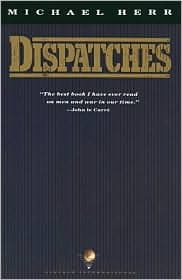
- Dispatches
Michael Herr
4.2 (16k) average on GoodreadsBiographyHerr's "Dispatches" is a groundbreaking work of New Journalism, capturing the chaotic and hallucinatory experience of the Vietnam War with raw, impressionistic prose. While both Herr and O'Brien convey the psychological toll of war, "Dispatches" is a non-fiction account that immerses the reader in the immediate, sensory overload of the conflict. "In the Lake of the Woods," by contrast, is a fictional deep dive into the long-term, internalized trauma and moral ambiguity that persists decades after the war's end, using a more analytical and fragmented narrative approach (Gitlin, 1980).
- The Old Man and the Sea
Ernest Hemingway
3.8 (831k) average on GoodreadsLiterary FictionA Cuban fisherman's long struggle with a giant marlin becomes a story of endurance and dignity, now retold for young adults with illustrations, phonetic guides, and writing prompts in Traditional Chinese.
- One Hundred Years of Solitude
Gabriel García Márquez
4.1 (753k) average on GoodreadsLiterary FictionThrough the multi-generational story of the Buendía family, a mythical town deals with the repeating patterns of time, love, and solitude, as the extraordinary mixes with the ordinary.
- The Goldfinch
Donna Tartt
3.9 (720k) average on GoodreadsLiterary FictionHaunted by a tragic explosion and clutching a stolen Dutch masterpiece, a young orphan navigates the opulent drawing rooms of New York and the gritty underbelly of the art world, desperately seeking connection and redemption amidst a life spiraling into crime and obsession.
- Little Fires Everywhere
Celeste Ng
4.1 (713k) average on GoodreadsLiterary FictionIn Shaker Heights, an artist and her daughter move in, and their free-spirited lives clash with a rule-bound matriarch, revealing hidden conflicts beneath a perfect surface.





Enjoyed the summary?
A summary gives you the shape of the book. The book itself has the detail, the examples and the voice.
Find In the Lake of the Woods on AmazonAs an Amazon Associate, BookBrief earns from qualifying purchases. How we're funded