
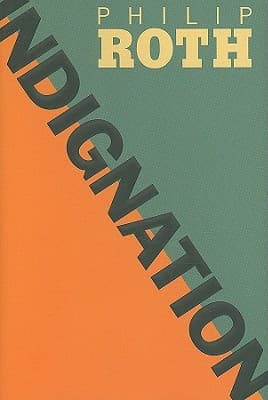
Synopsis
Covers the whole plot, including the ending.
- Difficulty
- Medium
- Pacing
- Moderate
- Mood
- Reflective, analytical, poignant, somewhat tragic, intellectually stimulating
Indignation Plot Summary
Covers the whole plot, including the ending.
The Butcher's Son
The novel opens with Marcus Messner, speaking from the perspective of being dead, reflecting on his life and the circumstances that led to his demise. He is a studious, serious young man from Newark, New Jersey, the son of a butcher. He recalls the growing paranoia and possessiveness of his father, who became obsessed with Marcus's safety and moral purity, fearing every potential danger. This paternal anxiety, though rooted in love, became a suffocating force that ultimately drove Marcus to seek independence and escape the confines of his family home. He narrates his decision to transfer from a local college to Winesburg College in Ohio to escape his father's influence and the looming threat of the Korean War draft.
Arrival at Winesburg College
Upon arriving at Winesburg College, Marcus, an atheist and intellectual, finds himself an outsider in a predominantly conservative and Christian environment. He struggles to adapt to the social norms and the rigid expectations of the university. His roommates, particularly the boisterous and religiously devout ones, clash with his reserved nature. Marcus's attempts to find a compatible social circle are hampered by his own intense personality and his disdain for what he perceives as the superficiality of his peers. This initial isolation sets the stage for his subsequent struggles with authority and social integration.
The Date with Olivia
Marcus meets Olivia Hutton, an attractive and seemingly sophisticated student, through a chance encounter. He is immediately captivated by her. Their first date, however, takes an unsettling turn when Olivia performs oral sex on him in his car. This intense and premature sexual act deeply disturbs Marcus, who, despite his intellectual prowess, is sexually inexperienced and morally conservative. He struggles to reconcile his attraction to Olivia with his shock and confusion over her forwardness, leading to an internal conflict and a sense of unease he cannot resolve.
The Dean's Office
Marcus's refusal to conform to the college's social expectations and his increasingly isolated behavior draw the attention of Dean Caudwell, the strict dean of men. Marcus is summoned to Caudwell's office, where the dean questions his academic performance, his social integration, and his general attitude. This meeting escalates into a heated intellectual and philosophical debate, with Marcus defending his atheism and his individualistic beliefs against Caudwell's attempts to instill conformity and traditional values. The confrontation highlights Marcus's intellectual arrogance and his inability to compromise, further solidifying his position as an outsider.
The Appendectomy and Hospitalization
Following the confrontation with Dean Caudwell, Marcus experiences severe abdominal pain and collapses. He is rushed to the hospital and undergoes an emergency appendectomy. During his recovery, he is visited by his mother, who expresses her concern and love. This period of illness offers Marcus a brief reprieve from the pressures of college life and his internal conflicts. He reflects on his mother's unwavering affection and the sacrifices she has made, but his underlying resentment towards his father and his desire for independence remain strong, even in his weakened state.
Olivia's Return and Revelation
While Marcus is recovering in the hospital, Olivia visits him. During their conversation, she reveals that she has previously been institutionalized for a mental breakdown, explaining her erratic behavior and her recent attempted suicide. This revelation affects Marcus, who begins to understand the complexities of Olivia's character and the underlying pain she carries. His initial judgment of her begins to soften, replaced by a mixture of pity, confusion, and a burgeoning sense of responsibility. This disclosure complicates his feelings for her even further, adding a layer of understanding to their relationship.
The Second Encounter with Dean Caudwell
After his recovery, Marcus is summoned to Dean Caudwell's office again. This time, the dean's tone is more severe. Caudwell expresses concerns about Marcus's academic standing, his social isolation, and his perceived negative influence on the college community. He also subtly alludes to Marcus's relationship with Olivia, suggesting that her reputation might be detrimental. The dean presents Marcus with an ultimatum: either conform to the college's expectations and integrate socially, or face potential disciplinary action, including expulsion. Marcus's defiance and his inability to articulate a satisfactory defense only deepen the chasm between him and the college administration.
Marcus's Mother Visits
Concerned by reports from the college, Marcus's mother travels to Winesburg to speak with Dean Caudwell. She attempts to defend Marcus, highlighting his intelligence and good character, and appealing to the dean's understanding. However, her efforts are largely in vain, as Caudwell remains firm in his assessment of Marcus's non-conformity. The visit shows the deep love and concern his mother has for him, but also reveals her limited ability to protect him from the consequences of his own choices and the rigid institutional environment. Marcus feels a mixture of gratitude and frustration at her well-intentioned but ultimately ineffective intervention.
The Expulsion and Draft Notice
Despite his mother's intervention, Marcus is ultimately expelled from Winesburg College. This expulsion immediately removes his student deferment from the military draft. Shortly thereafter, he receives his conscription notice for the Korean War. The sequence of events directly links his defiance at college to his forced entry into the military, illustrating the severe and unintended consequences of his actions. Marcus's intellectual resistance and his desire for independence, ironically, lead him to a situation where his freedom is completely curtailed and his life is put in grave danger.
Korea and Death
Marcus Messner is deployed to Korea, where he serves as an infantryman. His time in the war is brief and brutal. He recounts the harsh realities of combat, the arbitrary nature of death, and the complete loss of individual agency. Ultimately, Marcus is killed in action. The novel reveals that he dies not heroically, but from a random bullet, emphasizing the senselessness of his death. His narrative voice, speaking from the afterlife, shows the tragic irony of his life: a young man who sought to escape the perceived dangers of his father's world only to meet a far more brutal end in a distant war.
Principal Figures
Marcus Messner
Protagonist
An intellectually gifted but socially awkward and defiant young man.
Marcus Messner is a brilliant, intense, and principled young man from a working-class Jewish family in Newark. He possesses a sharp intellect and a strong sense of personal integrity, which often manifests as stubbornness and defiance against authority and social conformity. He is an atheist and deeply committed to his intellectual pursuits, viewing himself as superior to many of his peers. Sexually inexperienced and morally conservative, he struggles profoundly with his attraction to Olivia and the complexities of her character. His desire for independence and his inability to compromise ultimately lead to his tragic downfall.
Relationships: Mr. Messner (Father) (Strained, resentful, oppressive); Mrs. Messner (Mother) (Loving, supportive, concerned); Olivia Hutton (Conflicted, disturbing, empathetic); Dean Caudwell (Antagonistic, confrontational)
Mr. Messner
Supporting
Marcus's overprotective and increasingly paranoid butcher father.
Marcus's father is a hardworking, traditional Jewish butcher whose love for his son morphs into an overwhelming, suffocating fear and paranoia. He becomes obsessed with protecting Marcus from every conceivable danger, from the draft to moral corruption, leading to constant scrutiny and possessiveness. His escalating anxiety, though born of love, drives Marcus away. He represents the well-intentioned but ultimately destructive forces of parental control and the anxieties of a generation marked by war and economic hardship. His presence, even in Marcus's absence, looms large over the narrative.
Relationships: Marcus Messner (Oppressive, fearful, loving); Mrs. Messner (Marital, strained by his paranoia)
Mrs. Messner
Supporting
Marcus's devoted and long-suffering mother.
Marcus's mother is a loving, practical, and deeply concerned woman who tries to mediate between her son and his increasingly paranoid father. She understands Marcus's desire for independence but also fears for his safety. She remains a constant source of unconditional love and support for Marcus, even traveling to Winesburg to intervene on his behalf. Her character embodies maternal devotion and the quiet strength of a woman trying to hold her family together amidst internal and external pressures. She represents a grounding force, though ultimately powerless to alter Marcus's fate.
Relationships: Marcus Messner (Loving, supportive, concerned); Mr. Messner (Marital, enduring)
Olivia Hutton
Supporting
A beautiful and troubled Winesburg College student.
Olivia Hutton is a complex and enigmatic character who deeply impacts Marcus. Initially perceived by Marcus as sophisticated and sexually liberated, she is later revealed to be deeply troubled, having a history of mental illness and a recent suicide attempt. Her forward sexual act deeply disturbs Marcus, but her subsequent vulnerability and honesty evoke a complicated mix of pity, confusion, and attraction in him. She represents the unpredictable and often painful realities of human connection, challenging Marcus's rigid worldview and forcing him to confront emotional complexities he is ill-equipped to handle.
Relationships: Marcus Messner (Disturbing, empathetic, complicated)
Dean Caudwell
Antagonist
The strict and traditional dean of men at Winesburg College.
Dean Caudwell is a stern, traditional, and intellectually formidable figure who represents the institutional authority and conservative values of Winesburg College. He is deeply committed to maintaining order, discipline, and the moral integrity of his students. He views Marcus's atheism, intellectual arrogance, and social non-conformity as threats to the college's ethos. Their confrontations are intellectual battles, with Caudwell attempting to mold Marcus into a compliant student, and Marcus defiantly resisting. He serves as the primary antagonist against Marcus's individualism, ultimately playing a pivotal role in his expulsion.
Relationships: Marcus Messner (Antagonistic, authoritative)
The Roommates (Doris and others)
Supporting
Marcus's religiously devout and socially conventional dorm-mates.
Marcus's roommates, particularly Doris, are depicted as boisterous, religiously devout, and socially conventional students who clash with Marcus's reserved and intellectual nature. They represent the mainstream, conformist culture of Winesburg College that Marcus so vehemently rejects. Their casual conversations and social activities highlight Marcus's isolation and his inability or unwillingness to integrate. Their presence underscores Marcus's status as an outsider and provides a stark contrast to his internal world of intellectual inquiry and personal struggles.
Relationships: Marcus Messner (Distant, clashing, uncomprehending)
Themes & Insights
Indignation and Defiance
The central theme of indignation drives Marcus Messner's actions throughout the novel. His indignation stems from his father's suffocating fear, the perceived intellectual mediocrity of his peers, and the conservative rules of Winesburg College. This manifests as a fierce intellectual and personal defiance against authority, conformity, and anything he deems intellectually dishonest or morally compromising. His refusal to compromise, his inability to bend, and his unwavering commitment to his own principles, while noble in some respects, ultimately lead to his isolation and tragic downfall. It explores the fine line between principled resistance and self-destructive stubbornness.
“My indignation was one of my most powerful emotions. It burned in me, a righteous anger at the world's stupidity, its injustice, its sheer, unthinking conformity.”
The Perils of Inexperience and Naiveté
Marcus, despite his intellectual brilliance, is inexperienced in life, particularly in matters of sex, social navigation, and emotional complexity. His naiveté leads him to misinterpret social cues, to react with shock and confusion to Olivia's actions, and to underestimate the consequences of his defiance. He lacks the emotional intelligence and practical wisdom to navigate adult relationships and institutional power structures. This theme highlights how even great intelligence cannot compensate for a lack of life experience, making him vulnerable to forces he cannot comprehend or control.
“I was a young man, full of learning, but ignorant of the world beyond the pages of a book, especially the world of women.”
Fate, Chance, and Unintended Consequences
The novel emphasizes how seemingly minor decisions and chance encounters can have tragic consequences. Marcus's choice to leave Newark, his date with Olivia, his heated debate with Dean Caudwell, and even his appendectomy all contribute to a chain of events that lead directly to his military conscription and death. The narrative, told from the perspective of a dead man, reinforces the idea that life is often governed by forces beyond individual control, and that even well-intentioned actions or assertions of independence can have devastating, unforeseen outcomes. It questions the extent of free will against the backdrop of an indifferent universe.
“Every decision I made, every word I uttered, seemed to be but a step on a path I did not choose, a path that led inexorably to my end.”
The Conflict Between Individualism and Conformity
A core tension in the novel is the struggle between Marcus's individualism and the pressures of conformity exerted by society and institutions. Marcus, an atheist and intellectual, finds himself at odds with the conservative, Christian, and socially conformist environment of Winesburg College. He refuses to compromise his beliefs or integrate into social circles he deems beneath him. This conflict is personified in his clashes with Dean Caudwell, who represents the institutional demand for order and adherence to norms. The novel suggests that while individualism can be a source of strength, unyielding non-conformity can also lead to isolation and severe repercussions.
“I was not made for fitting in, for being one of a crowd. I was made for myself, and that was my greatest strength, and my greatest undoing.”
Parental Love and Its Destructive Potential
The novel explores the complex and sometimes suffocating nature of parental love, particularly through the figure of Marcus's father. Mr. Messner's intense love for Marcus manifests as an overwhelming fear and paranoia, leading him to exert excessive control over his son's life. While his intentions are rooted in protection, his actions ultimately drive Marcus away and contribute to his desire for complete independence. This theme suggests that even love, when expressed in an extreme or possessive manner, can be destructive, stifling a child's growth and pushing them towards rebellion, often with tragic results.
“His love, which was meant to save me, became the very thing I had to escape. It was a love that suffocated, a love that saw danger in every shadow.”
Plot Devices & Literary Techniques
First-Person Retrospective Narration (from the afterlife)
Marcus Messner narrates his life story after his death.
The entire novel is narrated by Marcus Messner from the perspective of being dead, specifically from a communal burial plot in a military cemetery. This device immediately establishes a sense of predestination and tragedy, as the reader knows Marcus's ultimate fate from the outset. It allows for ironic commentary, foreshadowing, and a detached, reflective tone. The afterlife perspective emphasizes the themes of fate, unintended consequences, and the futility of human endeavor, as Marcus recounts his life with the full knowledge of how it ended, making his choices and struggles all the more poignant and heartbreaking. It also allows for a unique, almost philosophical distance from the events.
Dramatic Irony
The reader is aware of Marcus's fate, while he is not during the events.
Given the retrospective narration from the afterlife, dramatic irony is pervasive. The reader knows that Marcus will die in the Korean War, which adds a layer of tragic poignancy to his struggles and aspirations. His desperate attempts to escape his father's fears and assert his independence are undercut by the knowledge that he is ultimately destined for a far more dangerous end. This irony highlights the themes of fate and the futility of human control, as Marcus's 'indignation' and defiance, intended to secure his freedom, ironically lead him directly to his doom, a fate he could not foresee in life.
Symbolism of Winesburg College
The college represents a microcosm of conservative American society.
Winesburg College, named after Sherwood Anderson's Winesburg, Ohio, functions as a symbolic setting. It represents a conservative, traditional, and predominantly Christian American society that stands in stark contrast to Marcus's urban, Jewish, and intellectually atheistic background. The college's rigid rules, social expectations, and the character of Dean Caudwell symbolize the broader societal pressures for conformity and the resistance to individualism. Its 'pastoral' setting also ironically contrasts with the harsh realities and emotional turbulence Marcus experiences within its confines, making it a crucible for his personal and intellectual conflicts.
The Korean War as a Framing Device
The war serves as the ultimate consequence and an inescapable backdrop.
The Korean War is not directly depicted in detail until the very end, but it serves as a constant, looming threat and the ultimate consequence of Marcus's decisions. It is the external force that his father desperately tries to protect him from, and the fate he inadvertently hastens by his expulsion from college. The war acts as a powerful symbol of the arbitrary and destructive forces of the world, against which individual aspirations and intellect are ultimately powerless. It frames the entire narrative, giving a tragic inevitability to Marcus's story and underscoring the themes of fate and the vulnerability of the individual.
Quiz
10 questions on the plot and the characters. Each answer comes with a short explanation.
Question 1
What is the primary historical backdrop for the novel 'Indignation'?
- World War II
- The Cold War
- The Korean War
- The Vietnam War
Show answer
C. The Korean War The text explicitly states that the novel is set against the backdrop of the Korean War.
Question 2
Who is the protagonist of 'Indignation'?
- Philip Roth
- Marcus Messner
- The butcher
- Marcus's father
Show answer
B. Marcus Messner The main character is identified as Marcus Messner, a young man from Newark.
Question 3
Why does Marcus Messner leave his initial college enrollment in Newark?
- He is expelled for academic reasons.
- He wants to experience a different part of the country.
- His father's excessive fear for his safety makes living at home unbearable.
- He is drafted into the army.
Show answer
C. His father's excessive fear for his safety makes living at home unbearable. Marcus leaves home and enrolls in a different college because his father's intense fear and apprehension for his safety make it impossible for him to continue living at home.
Question 4
What is the occupation of Marcus Messner's father?
- A butcher
- A professor
- A lawyer
- A butcher's assistant
Show answer
A. A butcher The text describes Marcus's father as 'the sturdy, hard-working neighborhood butcher'.
Question 5
Which of the following themes is NOT explicitly mentioned in the description of 'Indignation'?
- Sexual discovery
- Intellectual resistance
- Political activism
- Courage and error
Show answer
C. Political activism The provided text lists themes such as inexperience, foolishness, intellectual resistance, sexual discovery, courage, and error. Political activism is not mentioned.
Question 6
The description suggests that 'Indignation' represents a departure from Roth's recent works. What characterized those recent books?
- Focus on young adult experiences
- Narratives about old age and experience
- Historical fiction set during wartime
- Explorations of American political history
Show answer
B. Narratives about old age and experience The text states that 'Indignation' is 'a startling departure from the haunted narratives of old age and experience in his recent books'.
Question 7
What is the name of the college Marcus attends?
- Newark College
- Rutgers University
- Winesburg College
- Ohio State University
Show answer
C. Winesburg College The text mentions that Marcus is beginning his sophomore year on the 'pastoral, conservative campus of Ohio’s Winesburg College'.
Question 8
The father's fear for his son is described as arising from what?
- A desire for Marcus to be independent
- A deep-seated animosity towards the world
- Love and pride
- A history of personal trauma
Show answer
C. Love and pride The text states, 'As the long-suffering, desperately harassed mother tells her son, the father’s fear arises from love and pride.'
Question 9
The description of Marcus Messner emphasizes his character traits. Which of the following is LEAST emphasized?
- Intense
- Studious
- Law-abiding
- Rebellious
Show answer
D. Rebellious The text describes Marcus as 'studious, law-abiding, intense'. While his departure from home and search for his own way might imply some form of resistance, 'rebellious' is not directly used to describe his core character in the initial description, unlike the other traits.
Question 10
The novel is described as a story of 'inexperience, foolishness, intellectual resistance, sexual discovery, courage, and error'. This suggests the novel primarily explores:
- The societal impacts of the Korean War on a nation
- The personal journey of a young man navigating adulthood and its complexities
- The generational conflict between parents and children in post-war America
- The philosophical debates within American academia in the 1950s
Show answer
B. The personal journey of a young man navigating adulthood and its complexities The listed themes (inexperience, foolishness, sexual discovery, courage, error) all point towards the internal and personal struggles of a young individual as they mature and face life's challenges, rather than a broader focus on national events or societal trends.
Indignation FAQ
What is the main plot of "Indignation" by Philip Roth?
"Indignation" tells the story of Marcus Messner, a brilliant but intensely moral young Jewish man from Newark, New Jersey, who attends Winesburg College in 1951. His father, consumed by fear for his son's safety during the Korean War, forces Marcus to attend a college far from home. The novel follows Marcus as he navigates college life, his burgeoning sexuality, and the strict social codes of the era, leading to a confrontation with the dean that has profound consequences.
What historical period does "Indignation" take place in?
The novel is set in 1951, during the second year of the Korean War. This backdrop of national conflict and the looming draft significantly influences the characters' anxieties and decisions.
Who is the protagonist of "Indignation"?
The protagonist is Marcus Messner, a highly intelligent, principled, and somewhat rigid young man from a working-class background in Newark, New Jersey. He is characterized by his intense moral convictions and his struggles with authority and his own desires.
What is the central conflict for Marcus Messner?
Marcus's central conflict stems from his intense idealism and his inability to compromise his principles, especially in the face of perceived injustices or hypocrisies. This clashes with the expectations of his parents, the college administration, and societal norms, particularly concerning sexuality and conformity.
How does Marcus's father influence the story?
Marcus's father, a butcher, is consumed by an almost paralyzing fear for his son's well-being, especially given the ongoing Korean War. This fear leads him to exert extreme control over Marcus's life, ultimately forcing him to attend college far from home, which sets the stage for the novel's events.
What themes are explored in "Indignation"?
Key themes in "Indignation" include youthful idealism versus reality, the consequences of rigid morality, the clash between individual desire and societal expectations, the burden of parental love and fear, sexual awakening and repression, and the impact of historical events on personal lives.
Is "Indignation" a typical Philip Roth novel?
While "Indignation" showcases Roth's signature wit and exploration of Jewish identity and American life, it's noted as a departure from his later novels focusing on old age. It delves into the specific period of youthful inexperience, error, and the devastating consequences of seemingly small decisions.
What is the significance of the title "Indignation"?
The title refers to the righteous anger and moral outrage felt by Marcus Messner towards the injustices, hypocrisies, and constraints he encounters. His indignation is a driving force in his interactions and ultimately contributes to the tragic trajectory of his life.
What is the tone of "Indignation"?
The novel's tone is often intense, intellectual, and laced with Roth's characteristic dark humor. There's a sense of impending doom and regret, as the narrative is framed as a posthumous reflection, giving it a somber and contemplative mood.
What is the role of sexuality in the novel?
Marcus's sexual awakening and his struggles with desire are central to the plot. His attempts to navigate his sexuality, often influenced by his strict moral code and the conservative environment, lead to significant misunderstandings and contribute to the escalating conflict.
About the author

Philip Milton Roth was an American novelist and short story writer. Roth's fiction—often set in his birthplace of Newark, New Jersey—is known for its intensely autobiographical character, for philosophically and formally blurring the distinction between reality and fiction, for its "sensual, ingenious style" and for its provocative explorations of American identity. He first gained attention with the 1959 short story collection Goodbye, Columbus, which won the U.S. National Book Award for Fiction. Ten years later, he published the bestseller Portnoy's Complaint. Nathan Zuckerman, Roth's literary alter ego, narrates several of his books. A fictionalized Philip Roth narrates some of his others, such as the alternate history The Plot Against America.
Similar books
- A Separate Peace
John Knowles
3.6 (191k) average on GoodreadsHistorical FictionBoth Indignation and A Separate Peace are coming-of-age stories set in male-dominated academic environments, exploring themes of innocence lost, rivalry, and the pressures of conformity during wartime. However, while Knowles's novel focuses on a complex friendship and the internal guilt of the narrator, Roth's work is a more direct, almost defiant, rebellion against institutional authority and societal expectations, with Marcus's downfall stemming more from external forces and his own unyielding nature rather than an internal betrayal.
- Stoner
John Williams
4.3 (103k) average on GoodreadsLiterary FictionBoth Indignation and Stoner depict the lives of intelligent, earnest men within academia, navigating personal and professional disappointments. Both protagonists struggle with a sense of alienation and a quiet defiance against the mundane. However, while William Stoner's life is marked by a stoic endurance of quiet desperation and a deep, if unacknowledged, love for his academic pursuit, Marcus Messner's narrative is characterized by a fierce, vocal, and ultimately self-destructive indignation against perceived injustices, leading to a much more explosive and tragic conclusion. Stoner's struggles are largely internal and relational, whereas Marcus's are often direct confrontations with authority.
- The Old Man and the Sea
Ernest Hemingway
3.8 (831k) average on GoodreadsLiterary FictionA Cuban fisherman's long struggle with a giant marlin becomes a story of endurance and dignity, now retold for young adults with illustrations, phonetic guides, and writing prompts in Traditional Chinese.
- One Hundred Years of Solitude
Gabriel García Márquez
4.1 (753k) average on GoodreadsLiterary FictionThrough the multi-generational story of the Buendía family, a mythical town deals with the repeating patterns of time, love, and solitude, as the extraordinary mixes with the ordinary.
- The Goldfinch
Donna Tartt
3.9 (720k) average on GoodreadsLiterary FictionHaunted by a tragic explosion and clutching a stolen Dutch masterpiece, a young orphan navigates the opulent drawing rooms of New York and the gritty underbelly of the art world, desperately seeking connection and redemption amidst a life spiraling into crime and obsession.
- Little Fires Everywhere
Celeste Ng
4.1 (713k) average on GoodreadsLiterary FictionIn Shaker Heights, an artist and her daughter move in, and their free-spirited lives clash with a rule-bound matriarch, revealing hidden conflicts beneath a perfect surface.





Enjoyed the summary?
A summary gives you the shape of the book. The book itself has the detail, the examples and the voice.
Find Indignation on AmazonAs an Amazon Associate, BookBrief earns from qualifying purchases. How we're funded