

Synopsis
Covers the whole plot, including the ending.
- Difficulty
- Easy
- Pacing
- Moderate
- Mood
- Romantic, Witty, Engaging, Passionate
- Read it if
- You enjoy historical romance with a strong-willed heroine, a grumpy hero, and a delightful enemies-to-lovers trope.
- Skip it if
- You prefer slow-burn romances without much initial conflict or are looking for a plot-heavy narrative over character development.
It Happened One Autumn Plot Summary
Covers the whole plot, including the ending.
A Matchmaking Scheme and an Unlikely Encounter
The story begins with the four Wallflowers—Lillian Bowman, Daisy Bowman, Annabelle Peyton, and Evie Jenner—having agreed to help each other find husbands in London society. Lillian, a lively and wealthy American heiress, often argues with Marcus, Lord Westcliff, a powerful and traditional English earl. Their first big disagreement happens at a ball where Lillian's American manners and frankness annoy Marcus, who sees her as rude and unsuitable. Despite their mutual dislike, an attraction sparks between them, especially when Marcus must dance with Lillian and finds her surprisingly graceful.
A Fateful Countryside Visit
The Wallflowers, with their chaperone Lady Berwick, are invited to a house party at Stony Cross Park, Lord Westcliff's family estate. This invitation is partly because Marcus's mother, Lady Westcliff, likes the American girls. Lillian initially dislikes being at Marcus's home, but the change of scenery and time with friends appeal to her. During their stay, the tension between Lillian and Marcus grows, marked by witty remarks and hidden insults. Yet, being close also makes them confront the strong attraction they both feel, despite trying to ignore it.
The Stolen Kiss in the Garden
During a walk in the gardens of Stony Cross Park, Lillian and Marcus find themselves alone. Their argument quickly becomes heated, ending with Marcus pulling Lillian into a passionate kiss. This kiss changes everything, showing the intense physical attraction and deep emotion they both feel. Lillian is shocked by her own reaction, realizing she is strongly drawn to a man she claims to hate. Marcus, equally surprised by the kiss's power, struggles with his sense of duty and proper behavior, wondering how he could be so drawn to someone so 'unsuitable' for an earl's wife.
A Proposal of Convenience and Conflict
After the garden incident and more encounters, Marcus, driven by desire, duty, and a wish to protect Lillian's reputation (and his own), proposes marriage. He frames it as a marriage of convenience, stressing their differences and the practical benefits for both families. Lillian, hurt by his cold, practical approach, rejects him, feeling insulted that he sees her as just a means to an end. This rejection increases their conflict, as both are too proud to admit their true feelings, instead hiding behind their perceived differences and society's expectations.
The Hunt and the Near-Tragedy
During a fox hunt at Stony Cross Park, Lillian, a skilled rider, takes a risky jump and is thrown from her horse, getting seriously hurt. Marcus, seeing the accident, is overcome with fear for her. This event breaks down his emotional barriers, showing his deep concern and affection for her. He rushes to her side, acting with a tenderness and protectiveness that surprises them both. The incident highlights Lillian's vulnerability and the depth of Marcus's hidden feelings, showing his love for her is stronger than his social prejudices.
Convalescence and Growing Closeness
During Lillian's recovery from her riding accident, she stays at Stony Cross Park. Marcus, consumed by guilt and worry, visits her often, helping her and reading to her. This time together allows them to relax their defenses and have more personal talks. They find shared interests and a surprising intellectual connection. Lillian starts to see Marcus beyond his aristocratic image, recognizing his kindness and integrity. Marcus, in turn, values her intelligence and resilience. Their bond strengthens, turning their initial dislike into real affection and understanding.
The Intervention of the Bowman Family
Mr. Bowman, Lillian's wealthy American father, arrives at Stony Cross Park after hearing about his daughter's accident. He is a strong and protective figure, and his presence adds more complexity to Lillian and Marcus's relationship. Mr. Bowman is initially cautious of Marcus, seeing him as a traditional English aristocrat who might not appreciate his independent daughter. He questions Marcus's intentions and challenges his ideas about American women, making Marcus explain his feelings for Lillian more clearly and prove his worth to her family.
A Crisis of Reputation and Betrothal
A misunderstanding or planned rumor spreads about Lillian and Marcus's closeness during her recovery, threatening Lillian's reputation. This potential scandal forces Marcus to act. He realizes he cannot bear the thought of Lillian facing social criticism or marrying anyone else. He confronts his pride and the societal expectations he has always upheld, finally proposing to Lillian again, this time with genuine love and commitment, not just convenience or duty. Lillian, seeing his sincere change of heart, finally accepts, recognizing his deep affection for her.
Overcoming Obstacles and Family Approval
Even with Lillian's acceptance, Marcus still needs Mr. Bowman's full approval, as her father remains skeptical of the English aristocracy. Marcus shows his seriousness and commitment by speaking with Mr. Bowman directly, discussing business, and proving his capability and respect for Lillian's American background. He shows he is willing to bridge the cultural gap and accept Lillian for who she is, not just for her wealth or status. This effort slowly wins over Mr. Bowman, opening the way for a more peaceful future for the couple.
The Wedding and a Future Together
Lillian and Marcus marry, with the approval of their families and friends. Their wedding marks their journey from dislike to deep love, connecting American independence and English tradition. The novel ends with them looking forward to their life together, having found a love that defies social expectations and personal biases. They have both grown, learning to compromise and value each other's strengths, cementing their bond as a couple who found love in an unexpected autumn.
Principal Figures
Lillian Bowman
Protagonist
A spirited, independent American heiress who challenges English society.
Lillian Bowman is a wealthy American heiress, known for her outspoken nature, sharp wit, and disregard for stifling English social conventions. She is fiercely independent and loyal to her friends and family. Despite her bravado, she harbors a desire for genuine love and acceptance. She is intelligent and capable, accustomed to a more direct and less formal way of life than her English counterparts. She initially views Lord Westcliff as an arrogant snob but is secretly attracted to his strength and integrity.
Relationships: Marcus, Lord Westcliff (Love interest; initially antagonistic, evolving into deep, passionate love.); Daisy Bowman (Sister; close, supportive bond.); Annabelle Peyton (Friend (Wallflower); supportive and loyal.); Evie Jenner (Friend (Wallflower); supportive and loyal.); Mr. Bowman (Father; loving and protective.)
Marcus, Lord Westcliff
Protagonist
A rigid, duty-bound English earl who falls for an unconventional American.
Marcus, Lord Westcliff, is a powerful and highly respected English earl, burdened by a strong sense of duty, tradition, and propriety. He is known for his stoicism, intelligence, and unwavering control over his emotions. He initially finds Lillian Bowman's American brashness irritating and unsuitable for English society. However, beneath his reserved exterior lies a deep capacity for passion and loyalty. He struggles with his attraction to Lillian, as she challenges everything he believes an earl's wife should be.
Relationships: Lillian Bowman (Love interest; initially antagonistic, evolving into deep, passionate love.); Lady Westcliff (Mother; respectful, traditional relationship.); Julian, Lord Ramsay (Friend; shares common interests and social standing.); Simon Hunt (Friend; business associate and trusted confidante.)
Daisy Bowman
Supporting
Lillian's younger, gentler sister and fellow Wallflower.
Daisy Bowman is Lillian's younger sister, equally American but with a more demure and romantic disposition. She is intelligent and observant, often acting as a foil to Lillian's more fiery personality. Daisy is also part of the Wallflower pact and is looking for love, though she dreams of a more conventional romance. She adores her sister and offers quiet support and perspective.
Relationships: Lillian Bowman (Sister; close, supportive bond.); Annabelle Peyton (Friend (Wallflower); supportive and loyal.); Evie Jenner (Friend (Wallflower); supportive and loyal.)
Annabelle Peyton
Supporting
The beautiful but impoverished Wallflower, already married to Simon Hunt.
Annabelle Peyton is one of the four Wallflowers. She is beautiful but lacks a dowry, making her marriage prospects difficult. By the beginning of this book, she has already found her match with Simon Hunt in the previous novel, 'Secrets of a Summer Night.' She serves as a supportive friend and confidante to Lillian, offering advice based on her own experiences with an unconventional marriage.
Relationships: Simon Hunt (Husband; loving and supportive.); Lillian Bowman (Friend (Wallflower); supportive and loyal.); Daisy Bowman (Friend (Wallflower); supportive and loyal.); Evie Jenner (Friend (Wallflower); supportive and loyal.)
Evie Jenner
Supporting
The shy, stuttering Wallflower with a hidden strength.
Evie Jenner is the shyest and most timid of the Wallflowers, suffering from a severe stutter and a difficult past. She is incredibly sweet and gentle but possesses a surprising inner strength. She is a loyal friend to Lillian and the others. Her quiet observations often provide insight, and her presence highlights the diverse personalities within the Wallflower group.
Relationships: Lillian Bowman (Friend (Wallflower); supportive and loyal.); Daisy Bowman (Friend (Wallflower); supportive and loyal.); Annabelle Peyton (Friend (Wallflower); supportive and loyal.)
Mr. Bowman
Supporting
Lillian's wealthy, protective American father.
Mr. Bowman is Lillian and Daisy's powerful and immensely wealthy American father. He made his fortune in the railroad industry and is fiercely protective of his daughters. He embodies the American spirit of self-made success and directness, often clashing with the subtle nuances of English aristocratic society. He initially views Marcus with suspicion but ultimately seeks his daughters' happiness above all else.
Relationships: Lillian Bowman (Daughter; loving and protective.); Daisy Bowman (Daughter; loving and protective.); Marcus, Lord Westcliff (Prospective son-in-law; initially wary, eventually accepting.)
Lady Westcliff
Supporting
Marcus's kind and observant mother.
Lady Westcliff is Marcus's mother, a kind and gracious woman who possesses a keen understanding of people. She is traditional but also open-minded, particularly when it comes to her son's happiness. She is fond of the American Wallflowers and often subtly encourages the burgeoning relationship between Marcus and Lillian, seeing the potential for happiness despite their differences.
Relationships: Marcus, Lord Westcliff (Son; loving and supportive.); Lillian Bowman (Prospective daughter-in-law; fond and encouraging.)
Lady Berwick
Supporting
The Wallflowers' no-nonsense chaperone.
Lady Berwick is the formidable and pragmatic chaperone for the Wallflowers. She is a widow with extensive experience in London society and a no-nonsense approach to matchmaking. While often exasperated by Lillian's unconventional behavior, she genuinely cares for the girls and strives to help them secure good matches. She provides a grounding presence and a dose of reality.
Relationships: Lillian Bowman (Charge/Chaperone; often exasperated but caring.); Daisy Bowman (Charge/Chaperone; caring.); Annabelle Peyton (Charge/Chaperone; caring.); Evie Jenner (Charge/Chaperone; caring.)
Themes & Insights
Love Transcends Social Class and Expectation
The main theme is about Lillian, an American heiress from 'new money,' and Marcus, a strict English earl representing 'old money' and tradition. Their initial dislike comes from their different social standings and expectations. However, their strong attraction and growing emotional bond show that true love can overcome these differences. The garden kiss and Marcus's fear during Lillian's accident are key moments where social roles disappear, revealing raw, real affection that challenges their ideas of a suitable match.
“He wanted to kiss her. And he wanted to do things that would make kissing seem like a polite handshake.”
The Clash of Cultures (American vs. English)
The novel clearly shows the cultural differences between independent, direct American ways and the more reserved, tradition-bound English aristocracy. Lillian's frankness, informality, and confidence often clash with Marcus's manners and adherence to rules. This conflict causes much of their early arguments and humor. Ultimately, the story suggests that combining these cultures can create a stronger, more dynamic union, as both Lillian and Marcus learn to appreciate and adopt parts of each other's worlds, leading to a richer partnership.
“You are too loud, too uninhibited, too American,” he said, his voice a low growl. “And I find you utterly irresistible.”
The Power of Vulnerability and Emotional Honesty
Both Lillian and Marcus initially hide behind outward appearances—Lillian with her defiance and Marcus with his calm control. Their path to love requires them to drop these defenses and become open with each other. Marcus's fear for Lillian after her riding accident makes him face and express his deepest feelings. Lillian's acceptance of his flaws and her willingness to be loved allow their relationship to grow. The theme highlights that real connection needs honesty and the bravery to show one's true self, even if it means changing old habits or expectations.
““I’ve never wanted anything as badly as I want you,” he confessed, his voice rough with emotion.”
Female Friendship and Solidarity
The 'Wallflowers' pact is a key part of the story, showing how important female friendship is in a society that often makes women compete for marriage. Lillian, Daisy, Annabelle, and Evie support each other through social challenges, offering advice, comfort, and loyalty. Their bond provides a safe space for vulnerability and shared experiences, showing that women supporting each other can empower them to navigate tough social situations and reach their goals, whether it is finding love or simply getting through the season.
“We’re Wallflowers,” Lillian said, her voice soft. “We stick together.”
Plot Devices & Literary Techniques
The Wallflower Pact
A group of four unconventional young women band together to find husbands.
This device establishes the central premise for the series, uniting the four main heroines. It provides a common goal and a built-in support system for Lillian, Daisy, Annabelle, and Evie. For 'It Happened One Autumn,' it sets the stage for Lillian's entry into London society and her interactions with Marcus, as the pact is the reason she is there. It also allows for the inclusion of the other Wallflowers as supporting characters and provides a narrative framework for their individual stories across the series.
Enforced Proximity
Characters are forced into close contact, fostering intimacy and attraction.
This device is crucial to the development of Lillian and Marcus's relationship. Their initial clashes occur in social settings, but their true connection blossoms when they are compelled to spend extended time together at Stony Cross Park. Lillian's riding accident, in particular, forces them into even closer quarters during her recovery, stripping away their defenses and allowing for more intimate conversations and shared vulnerability. This proximity accelerates their emotional bond, making their eventual romance more believable and impactful.
The Opposites Attract Trope
Two characters with vastly different personalities and backgrounds fall in love.
This classic romance trope is central to the novel. Lillian's fiery, unconventional American spirit is a direct contrast to Marcus's reserved, duty-bound English aristocratic nature. Their initial animosity stems from these opposing qualities. However, the trope allows for compelling conflict and character development as they learn to appreciate and complement each other's differences, ultimately finding a deeper and more balanced love. It highlights the idea that true connection can be found in unexpected places, challenging societal norms and expectations.
Reputation and Scandal
The threat of social ruin drives key plot decisions and actions.
The rigid social rules of the era mean that a woman's reputation is paramount. The threat of scandal, particularly after Lillian's prolonged stay at Stony Cross Park and the intimacies she shares with Marcus, serves as a powerful external conflict. This pressure often forces Marcus to act decisively, such as his initial proposal of convenience, and later, his more heartfelt proposal, to protect Lillian and secure their future. It underscores the high stakes of their romance within their historical context.
It Happened One Autumn Quotes
“I've never understood the appeal of being a gentlemen. It's an affectation, not a virtue.”
“Love is not a decision, it's a feeling. If we could decide who we loved, it would be much simpler, but less magical.”
“She was a woman of spirit and fire, and he found himself drawn to the flame.”
“A man who cannot control his temper is a man who cannot control his life.”
“There are some things in life that are worth fighting for, even if you know you might lose.”
“Sometimes the most unlikely people are the ones who change your life the most.”
“He had never known a woman who could make him laugh and infuriate him in equal measure.”
“Politeness is a shield, and a very useful one at that.”
“The worst kind of loneliness is when you're surrounded by people, but still feel utterly alone.”
“A good kiss should make you forget where you are, and who you're with, and everything else.”
“He didn't want to conquer her; he wanted to be conquered by her.”
“It's never too late to become the person you were meant to be.”
“Her spirit was untamed, a wild, beautiful thing that he never wanted to see broken.”
Quiz
10 questions on the plot and the characters. Each answer comes with a short explanation.
Question 1
Which of the following best describes Lillian Bowman's initial demeanor in London society?
- Shy and reserved, struggling to adapt.
- Bold and independent, clashing with societal norms.
- Graceful and elegant, fitting in perfectly.
- Cynical and uninterested in finding a husband.
Show answer
B. Bold and independent, clashing with societal norms. The synopsis states that Lillian's 'independent American ways weren't entirely "the thing"', indicating her bold and unconventional nature.
Question 2
What is Lord Westcliff's first impression of Lillian Bowman?
- He finds her charming and witty.
- He is immediately smitten by her beauty.
- He considers her insufferable and snobbish due to her un-British ways.
- He is indifferent to her presence.
Show answer
C. He considers her insufferable and snobbish due to her un-British ways. The text describes Marcus as 'the most disapproving of all was insufferable, snobbish, and impossible Marcus, Lord Westcliff' in relation to Lillian's behavior.
Question 3
What is the primary goal of the four young ladies in London society?
- To establish a successful business venture.
- To pursue advanced academic studies.
- To find a suitable husband.
- To travel the world independently.
Show answer
C. To find a suitable husband. The first sentence of the synopsis explicitly states their goal: 'they must use their feminine wit and wiles to find a husband.'
Question 4
Where does Marcus first 'shockingly—and dangerously—sweep Lillian into his arms'?
- At a formal dinner party.
- During a carriage ride.
- In the garden.
- At a crowded ball.
Show answer
C. In the garden. The synopsis specifically mentions: 'It happened in the garden...When Marcus shockingly—and dangerously—swept her into his arms.'
Question 5
Despite her initial dislike, what is Lillian's reaction to Marcus sweeping her into his arms in the garden?
- She immediately pushes him away in anger.
- She is overcome with a consuming passion for him.
- She feels nothing but annoyance.
- She fears for her reputation and runs away.
Show answer
B. She is overcome with a consuming passion for him. The text states, 'Lillian was overcome with a consuming passion for a man she didn't even like.'
Question 6
How does Marcus, Lord Westcliff, generally perceive his own emotions?
- He sees himself as impulsive and unpredictable.
- He considers himself a man in charge of his emotions, a bedrock of stability.
- He struggles with extreme mood swings.
- He is completely detached and rarely feels anything.
Show answer
B. He considers himself a man in charge of his emotions, a bedrock of stability. The synopsis describes Marcus as 'a man in charge of his own emotions, a bedrock of stability.'
Question 7
What is the central conflict Marcus faces regarding Lillian?
- He is torn between his love for Lillian and another woman.
- He is afraid of commitment and marriage in general.
- He desires her but questions how he could marry a woman he deems 'blatantly unsuitable'.
- Lillian's family disapproves of him as a suitor.
Show answer
C. He desires her but questions how he could marry a woman he deems 'blatantly unsuitable'. The text highlights his dilemma: 'Yet how could he consider taking a woman so blatantly unsuitable... as his bride?'
Question 8
The phrase 'Time stood still; it was as if no one else existed...' refers to which specific event?
- The initial meeting between Lillian and Marcus at the ball.
- Lillian's first realization that she needs to find a husband.
- Marcus sweeping Lillian into his arms in the garden.
- The moment the four young ladies form their husband-hunting scheme.
Show answer
C. Marcus sweeping Lillian into his arms in the garden. This phrase directly follows the description of Marcus sweeping Lillian into his arms in the garden, emphasizing the intensity of that moment.
Question 9
What makes Lillian's American background a point of contention or uniqueness in London society?
- Her family's extreme wealth, which makes her an outcast.
- Her independent and bold ways, which are not considered 'the thing' in British society.
- Her lack of proper education compared to British ladies.
- Her strong political opinions that clash with the aristocracy.
Show answer
B. Her independent and bold ways, which are not considered 'the thing' in British society. The synopsis states 'beautiful but bold Lillian Bowman quickly learned that her independent American ways weren't entirely "the thing."'.
Question 10
The phrase 'every touch was exquisite torture, every kiss an enticement for more' describes Marcus's feelings for Lillian and highlights what theme?
- The pain of unrequited love.
- The conflict between duty and desire.
- The joy of a perfect, uncomplicated romance.
- The struggle to maintain emotional control.
Show answer
B. The conflict between duty and desire. This phrase shows Marcus's internal struggle between his controlled nature and his growing desire for Lillian, whom he considers 'unsuitable' as a bride, thus representing the conflict between duty/suitability and personal desire.
It Happened One Autumn FAQ
What is the central premise of 'It Happened One Autumn'?
The novel centers on Lillian Bowman, a wealthy, independent American heiress, and Marcus, Lord Westcliff, a rigid and snobbish English earl. Despite their mutual dislike and clashing personalities, they are forced into close proximity through their families' business dealings and find themselves unexpectedly drawn to each other, leading to a passionate romance that challenges their preconceived notions.
Who are the 'Wallflowers' and what is their significance?
The 'Wallflowers' are a group of four young ladies—Lillian Bowman, Annabelle Peyton, Evangeline Jenner, and Daisy Bowman—who band together to navigate the treacherous London marriage market. They support each other in their quest to find suitable husbands, providing companionship and advice as they face the challenges of society, and their bond forms a core element of the series.
What kind of conflict arises from Lillian and Marcus's differing backgrounds?
Lillian, with her American upbringing, is outspoken, informal, and values independence, often clashing with the strict social conventions of English aristocracy. Marcus, as an earl, embodies tradition, duty, and propriety. Their differing cultural norms create significant conflict, as Marcus initially views Lillian as unsuitable while Lillian finds his rigidity stifling, leading to numerous arguments and misunderstandings.
How does the business partnership between the Bowmans and Westcliff influence the plot?
The business venture, involving Lillian's father and Lord Westcliff, forces Lillian and Marcus into frequent, often unwilling, interaction. Their fathers' insistence on their involvement, and the potential financial implications, serve as a constant catalyst for their encounters, making it impossible for them to avoid each other and thereby fueling their developing attraction and animosity.
What is the 'husband-hunting scheme' mentioned in the synopsis?
The 'husband-hunting scheme' refers to the Wallflowers' collective effort to secure advantageous marriages in London society. They pool their resources and wits, offering each other emotional support and practical advice, such as attending balls together and strategizing how to attract eligible bachelors, as they navigate the competitive and often unforgiving social season.
Are there any subtle foreshadowing elements regarding Marcus's true feelings for Lillian?
Yes, early on, despite his outward disdain, Marcus often observes Lillian with a keen, almost possessive intensity that hints at a deeper fascination. His physical reactions to her, such as the described 'exquisite torture' and 'enticement for more,' subtly reveal his internal struggle and burgeoning attraction, even when his words are critical.
What is the significance of the 'garden' scene mentioned in the synopsis?
The garden scene is pivotal as it marks a turning point where the physical attraction between Lillian and Marcus becomes undeniable and dangerously passionate. It's the first time Marcus truly gives in to his desires, sweeping Lillian into his arms, and this moment of intense, almost illicit passion reveals the powerful chemistry they share, setting the stage for their complicated romance.
How does the author use secondary characters to highlight Lillian and Marcus's contrasting personalities?
The author uses characters like Daisy Bowman, Lillian's more demure sister, and the other Wallflowers to provide a foil for Lillian's brashness, making her independence stand out. Similarly, Marcus's interactions with his younger brothers or his estate staff often show his more responsible, caring side, contrasting with his initially cold demeanor towards Lillian.
Is there any subtle indication of Marcus's insecurities or vulnerabilities beneath his stoic exterior?
Yes, Marcus's rigid adherence to duty and tradition can be interpreted as a defense mechanism, perhaps masking a fear of losing control or failing in his responsibilities as an earl. His deep-seated belief that Lillian is 'unsuitable' for him suggests an underlying insecurity about how her unconventional nature might disrupt his carefully ordered world and reputation.
How does Lillian's independence impact her emotional vulnerability?
Lillian's fierce independence, while a strength, initially makes her resistant to admitting her feelings for Marcus, as it would mean ceding some control and opening herself up to potential hurt. Her strong self-reliance serves as a barrier, making her more emotionally guarded, and it takes significant emotional breakthroughs for her to embrace vulnerability and love.
What psychological factors contribute to Marcus's initial resistance to Lillian?
Marcus's resistance stems from deeply ingrained societal expectations, his sense of duty, and his need for control. He perceives Lillian as a threat to his carefully cultivated image and the stability of his earldom. His fear of scandal and his belief in rigid class distinctions make him psychologically averse to a woman who challenges every aspect of his ordered world.
How does their mutual 'dislike' evolve into passion from a psychological perspective?
Their initial 'dislike' is fueled by strong opinions and intellectual sparring, often masking an underlying attraction. Psychologically, the intense friction and constant challenge they pose to each other create a powerful dynamic, where the boundaries between irritation and fascination blur, eventually erupting into a passionate connection as they confront and accept their true feelings.
What role does the concept of 'control' play in both Lillian and Marcus's character arcs?
Control is central to both characters. Lillian values control over her own life and choices, rejecting societal constraints. Marcus, conversely, is defined by his control over his emotions and his estate. Their journey involves learning to relinquish some of that control, for Lillian to embrace interdependence and for Marcus to accept the beautiful chaos that Lillian brings into his life.
To what extent is Lillian's 'boldness' a genuine personality trait versus a defense mechanism?
Lillian's boldness is largely a genuine personality trait, stemming from her American upbringing and inherent confidence. However, it also functions as a defense mechanism. By being overtly unconventional and outspoken, she pushes people away, subtly protecting herself from the judgment and potential rejection of a society she doesn't fully understand or wish to conform to.
Is Marcus's 'snobbery' truly a character flaw, or a product of his societal position and responsibilities?
Marcus's 'snobbery' is a complex blend. While it certainly manifests as a character flaw in his initial judgmental attitude towards Lillian, it is also heavily influenced by his societal position. As an earl, he carries immense responsibility for his family and estate, and his 'snobbery' can be interpreted as a rigid adherence to the standards he believes are necessary to maintain his position and protect his lineage.
How does the novel challenge or reinforce traditional gender roles of the era?
The novel challenges traditional gender roles through Lillian, who is fiercely independent, outspoken, and involved in business, traits not typical for women of the era. However, it also reinforces some roles as Marcus, despite his evolving views, still embodies the traditional male protector and head of the household, and the ultimate goal for the Wallflowers remains marriage.
What is the broader social commentary on American vs. English aristocracy within the book?
The book offers a commentary on the clash between the 'old money' English aristocracy, with its emphasis on lineage, tradition, and rigid social codes, and the 'new money' American industrialists, who value innovation, independence, and practical wealth. It highlights the mutual disdain and eventual blending of these cultures, suggesting that both have merits and flaws.
Could Lillian and Marcus's relationship be seen as a metaphor for the changing times in the late Victorian era?
Yes, their relationship can be interpreted as a metaphor for the societal shifts occurring in the late Victorian era. Lillian represents the emerging modernity, independent spirit, and growing influence of America, while Marcus embodies the established, traditional, yet slowly adapting, British aristocracy. Their eventual union symbolizes the merging of old and new, tradition and progress.
Does the novel suggest that love can truly conquer all societal barriers, or are there lasting consequences?
The novel strongly suggests that love can conquer significant societal barriers, as Lillian and Marcus ultimately find happiness despite their vast differences in background and personality. However, it also subtly acknowledges lasting consequences, as both characters must make compromises and adapt to each other's worlds, indicating that while love triumphs, the journey of integration requires effort and mutual understanding.
About the author

Lisa Kleypas is an American author known for her historical and contemporary romance novels. Her notable works include "Devil in Winter," "Mine Till Midnight," "Secrets of a Summer Night," "It Happened One Autumn," and "Marrying Winterborne." Kleypas's writing often features strong character development and intricate plots, appealing to fans of the romance genre.
Similar books
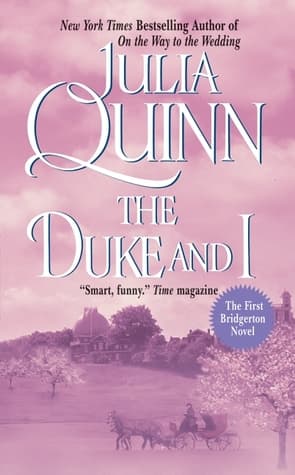
- The Duke and I
Julia Quinn
4.0 (87k) average on GoodreadsHistorical FictionFeatures a strong-willed heroine and a powerful duke in a Regency-era romance with a marriage-of-convenience plot.
- Pride and Prejudice
Jane Austen
4.3 (3M) average on GoodreadsHistorical FictionClassic enemies-to-lovers story with societal pressures and a spirited heroine clashing with a proud aristocrat.
- To Kill a Mockingbird
Harper Lee
4.3 (4.5M) average on GoodreadsHistorical FictionIn the 1930s Jim Crow South, Harper Lee writes about racial injustice, moral growth, and the quiet courage of a lawyer father, Atticus Finch, as seen through his young daughter's eyes.
- The Great Gatsby
F. Scott Fitzgerald
3.9 (3.8M) average on GoodreadsHistorical FictionIn the opulent Roaring Twenties, a mysterious millionaire's lavish parties hide his desperate, tragic pursuit of a lost love, exposing the emptiness within the American Dream.
- Angels & Demons
Dan Brown
3.9 (2.7M) average on GoodreadsThrillerA Harvard symbologist races through Rome's ancient sites, deciphering cryptic clues to unmask the Illuminati and stop a vengeful plot to destroy the Vatican with a stolen antimatter weapon.
- The Kite Runner
Khaled Hosseini
4.3 (2.4M) average on GoodreadsHistorical FictionIn pre-Taliban Afghanistan, a wealthy boy's betrayal of his servant's son during a kite-running tournament starts a lifelong journey for amends as his country collapses.





Enjoyed the summary?
A summary gives you the shape of the book. The book itself has the detail, the examples and the voice.
Find It Happened One Autumn on AmazonAs an Amazon Associate, BookBrief earns from qualifying purchases. How we're funded