
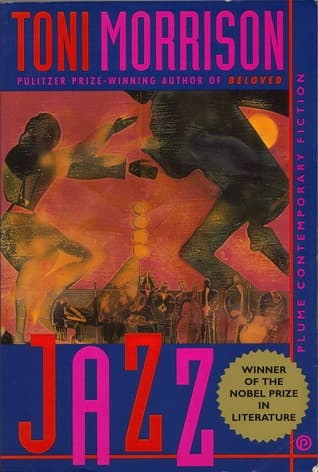
Synopsis
Covers the whole plot, including the ending.
- Difficulty
- Hard
- Pacing
- Variable
- Mood
- Atmospheric, Melancholic, Passionate, Reflective, Poetic
- Read it if
- You want a challenging, poetic exploration of love, jealousy, and the African American experience in the Jazz Age, with a non-linear narrative and deep psychological insight.
- Skip it if
- You prefer straightforward plots, clear resolutions, or find stream-of-consciousness narration difficult to follow.
Jazz Plot Summary
Covers the whole plot, including the ending.
The Shooting and the Funeral Attack
The novel begins in 1926 Harlem, showing the main tragedy: Joe Trace, a fifty-year-old salesman, has shot and killed his eighteen-year-old lover, Dorcas Manfred. At Dorcas's funeral, Joe's wife, Violet Trace, a hairdresser known for being unusual, attends the service. In a shocking act of grief and anger, she tries to slash Dorcas's face with a knife. The mourners, including Dorcas's Aunt Alice Manfred, are horrified and stop Violet. This violence sets the stage for the story, which then looks into the pasts of Joe and Violet, and the events that led to this tragedy, all in the Jazz Age.
Violet's Descent and the Silence
After the funeral, Violet Trace enters a period of inner turmoil. She becomes mostly silent, ignoring her hairdressing clients and withdrawing. Her conversations, when they happen, are often with herself or a bird she teaches to say 'I love you.' This withdrawal shows her deep pain, confusion, and the breakdown of her identity after Joe's affair and murder. Joe is also affected, though his grief is a quiet obsession with Dorcas's memory, replaying their time together. Their apartment becomes a place of shared, yet separate, suffering.
Joe's Childhood in Vesper County
The story flashes back to Joe Trace's childhood in rural Vesper County, Virginia. He was raised by foster parents, including True Belle. Joe's origins are a mystery; he believes his mother is a wild woman known only as Wild, who lives in the woods and never speaks. This unresolved connection to his mother affects Joe, leaving him with a lifelong desire for unconditional love. His early life involved sharecropping and racism in the post-Reconstruction South. These experiences shaped his strength and his eventual wish to move North.
Violet's Early Life in Loudoun County
The story also looks at Violet's difficult past in Loudoun County, Virginia. She grew up in a large, poor family and experienced the trauma of her mother, Rose Dear's, suicide. Rose Dear, overwhelmed by debt and losing her home, jumped down a well when Violet was young. This event leaves a lasting mark on Violet, fueling her fear of being left alone and her strong will to avoid her mother's fate. Her grandmother, True Belle, helps raise her, giving some stability amid the family's hardships, but her mother's despair remains.
The Migration North
Joe and Violet meet and fall in love in the Virginia countryside. They marry and, like many other African Americans seeking jobs and an escape from the Jim Crow South, they join the Great Migration, moving to New York City in 1906. Their journey north is full of hope for a modern future. Harlem, with its busy streets, music, and freedom, at first offers them a new start. They work hard, Joe as a salesman and Violet as a hairdresser, building a life together and believing they left their past struggles behind. The city itself becomes a character, representing both freedom and new forms of loneliness.
Dorcas's Background and Trauma
The story details Dorcas Manfred's past, showing why she is guarded and somewhat reckless. As a young girl, Dorcas saw the East St. Louis race riots of 1917, where her parents died in a fire. This event makes her an orphan, and she is raised by her strict, religious aunt, Alice Manfred. Alice tries to protect Dorcas from the perceived dangers of Harlem, especially its jazz music and fast lifestyle. However, Dorcas wants freedom and connection, and she is drawn to the things her aunt forbids, seeking escape from her past trauma and her aunt's control.
The Affair Begins
Joe Trace, nearing fifty, feels restless in his long marriage to Violet. He senses a growing distance and silence between them, a 'slack' he blames on their not having children and the passing of time. On his sales route, he meets Dorcas Manfred, then a young, impressionable teenager. Drawn to her youth, beauty, and vulnerability, Joe begins an affair with Dorcas. For Joe, Dorcas represents a chance to feel young, desired, and alive again, and perhaps to fill the void left by his absent mother. For Dorcas, Joe offers attention and an escape from her aunt's rules.
The Escalation and Dorcas's Choice
Joe's affair with Dorcas grows into an obsession for him. He gives her gifts and attention, seeing her as a reflection of his own youthful desires. However, Dorcas, while enjoying the attention, is also a teenager exploring her own identity. She grows tired of Joe's intensity and seeks independence, becoming interested in a younger man named Acton. When Dorcas chooses to spend time with Acton and ignores Joe, her rejection hurts Joe deeply, leading to a desperate and fatal reaction. Her desire for freedom clashes with Joe's possessive love.
The Shooting and Dorcas's Deathbed
Driven by jealousy and despair over Dorcas's rejection, Joe Trace finds her at a party. In a moment of passion, he shoots her. Dorcas does not die right away. She is taken back to her apartment, where she lingers for hours. Dorcas, influenced by romantic ideas of tragic love and perhaps a desire for drama, refuses to identify Joe to the police and, more importantly, refuses medical help that might save her life. She chooses to die slowly, embracing the tragic romance of her situation, believing it makes her more important, and perhaps to avoid the shame of her affair with an older, married man.
Violet and Alice's Unlikely Connection
After the murder and funeral incident, Violet, needing understanding and healing, begins to seek out Alice Manfred, Dorcas's aunt. At first, their talks are tense, full of unspoken grief and blame. Alice is careful around Violet, seeing her as the cause of the chaos and moral decay she blames for Dorcas's death. However, through awkward but persistent visits, the two women begin to form an unlikely connection. They discuss their lives, pasts, and shared pain, finding common ground as Black women navigating Harlem and the trauma of loss. This relationship becomes a step in Violet's healing.
The Traces' Reconciliation
As Violet and Alice become friends, Joe and Violet slowly begin to repair their own damaged relationship. The initial silence and anger in their apartment gradually give way to hesitant conversations, then shared memories, and eventually, renewed closeness. They face the pain of Joe's affair and the reasons for their marital distance. Through their individual journeys of self-discovery and their shared grief over Dorcas, they find a way back to each other, not to the love they once had, but to a deeper understanding and acceptance. Their reconciliation shows the enduring power of love and the possibility of healing.
Felice and the Photograph
A key moment in Joe and Violet's reconciliation is the visits from Felice, Dorcas's best friend. Felice, a sensible young woman, first comes to get a ring Dorcas had borrowed. Her presence in the Trace apartment brings a new view and a clear link to Dorcas. She talks with both Joe and Violet, offering insights into Dorcas's character and the complex dynamics of their relationship. Felice eventually brings a photograph of Dorcas, which, instead of fueling grief or anger, helps Joe and Violet to see Dorcas as a person and move past their idealized or demonized images of her, paving the way for deeper healing.
The Narrator's Self-Correction
Throughout the novel, the narrator offers insights and predictions about the characters' futures. However, near the end, the narrator admits her own mistakes and the subjective nature of storytelling. The narrator admits to having misjudged Joe and Violet, especially in predicting they couldn't recover from their trauma. This self-correction highlights the novel's meta-narrative quality, questioning the authority of one voice and emphasizing the complexity of human experience. The narrator's shift from an all-knowing voice to one that admits error shows that true understanding comes from empathy and a willingness to see multiple truths.
A New Harmony
By the novel's end, Joe and Violet Trace have found a quiet peace. Their apartment, once silent and sorrowful, now has the sounds of their renewed connection and the music of their shared history. They have moved past the initial shock and anger, learning to forgive each other and themselves. Their love, though scarred, has grown stronger and more understanding. Harlem continues around them, a constant background to their lives, but they have built a sanctuary within it, showing the enduring power of human connection and the possibility of redemption, even after great pain.
Jazz Characters
Joe Trace
Protagonist
A fifty-year-old door-to-door salesman who murders his teenage lover.
Joe is a complex man, driven by a deep-seated yearning for connection and a primal search for his absent mother, Wild. He is originally from rural Vesper County, Virginia, and migrated to Harlem with his wife, Violet. Despite his quiet demeanor, he possesses a passionate, almost obsessive nature, especially when it comes to love. His work as a salesman brings him into contact with various people, but he feels a growing emptiness in his marriage. His affair with Dorcas is an attempt to reclaim his youth and fill a void he has carried since childhood.
Relationships: Violet Trace (Wife; their marriage is long-standing but strained by unspoken grievances and childlessness.); Dorcas Manfred (Teenage lover; their affair leads to her murder.); Wild (His elusive, possibly feral, biological mother; a lifelong source of longing and mystery.); True Belle (His foster mother; provided stability and care in his youth.)
Violet Trace
Protagonist
Joe's wife, a hairdresser who publicly attacks her husband's lover's corpse.
Violet is a fifty-year-old hairdresser, known for her eccentricities and a tendency to speak her mind, often to herself. Her past is marked by the trauma of her mother's suicide and the harsh realities of poverty in the South. She is fiercely independent but also deeply insecure, particularly about her childlessness. The betrayal by Joe and the public spectacle of her rage plunge her into a period of silent introspection and mental distress. She grapples with her own identity and the meaning of love and commitment.
Relationships: Joe Trace (Husband; their marriage is strained but ultimately resilient.); Alice Manfred (Dorcas's aunt; they form an unexpected, therapeutic friendship.); Rose Dear (Her mother, whose suicide deeply impacted Violet.); True Belle (Her grandmother; a source of early care and stories.)
Dorcas Manfred
Supporting
Joe's eighteen-year-old lover, whose murder sparks the novel's central conflict.
Dorcas is a young woman orphaned by the East St. Louis riots, raised by her strict Aunt Alice. She is a product of her traumatic past and the alluring, yet dangerous, freedoms of Harlem. She yearns for excitement, attention, and a sense of belonging, often rebelling against her aunt's conservative upbringing. Her affair with Joe is partly an act of rebellion and partly a search for love and validation. She is both naive and manipulative, embracing a romanticized view of tragic love, which ultimately leads to her refusal of medical help after being shot.
Relationships: Joe Trace (Older lover; their affair ends in her death.); Alice Manfred (Her strict aunt and guardian; their relationship is characterized by tension and misunderstanding.); Felice (Her best friend; a confidante and witness to her choices.); Acton (A young man she flirts with, sparking Joe's jealousy.)
Alice Manfred
Supporting
Dorcas's strict, religious aunt who tries to protect her from Harlem's perceived dangers.
Alice is a cautious and morally upright woman, deeply scarred by the loss of her sister and brother-in-law in the riots. She raises Dorcas with a strict hand, attempting to shield her from the perceived moral laxity of Harlem, particularly the pervasive influence of jazz music and fast living. Her grief over Dorcas's death is compounded by a sense of failure and a rigid belief in traditional values. Despite her initial hostility towards Violet, she eventually forms a hesitant, yet therapeutic, friendship with her, finding solace and understanding in their shared female experience.
Relationships: Dorcas Manfred (Her niece and ward; she tries to protect her but ultimately fails.); Violet Trace (Initially an antagonist, they become unlikely friends.); Her deceased sister and brother-in-law (Her family members killed in the East St. Louis riots, a source of profound trauma.)
Felice
Supporting
Dorcas's sensible and observant best friend.
Felice is a pragmatic and grounded young woman, a stark contrast to Dorcas's more reckless nature. She is Dorcas's confidante and eyewitness to many of her choices, including her affair with Joe and her infatuation with Acton. After Dorcas's death, Felice visits Joe and Violet, initially to retrieve a borrowed ring. Her presence in their home acts as a catalyst for their healing, as she offers an objective perspective on Dorcas and helps them to process their grief. She represents a younger generation, navigating Harlem with a clearer sense of self.
Relationships: Dorcas Manfred (Best friend and confidante.); Joe Trace (Engages in conversations with him, helping him to process his grief.); Violet Trace (Forms a bond with her, sharing insights about Dorcas and offering comfort.)
True Belle
Supporting
Violet's grandmother and Joe's foster mother.
True Belle is a strong, maternal figure who raised Violet and also took in Joe as a foster child. She is a repository of stories and experiences from the South, having lived through slavery and the post-Reconstruction era. Her stories and presence provide a link to the characters' pasts and the historical context of their migration. She is a source of stability and practical wisdom, though her influence is primarily felt through memories and the foundational care she provided.
Relationships: Violet Trace (Grandmother and primary caregiver.); Joe Trace (Foster mother; provided him with a home and care.); Rose Dear (Her daughter, whose suicide deeply affected the family.)
Rose Dear
Mentioned
Violet's mother, who committed suicide.
Rose Dear is Violet's mother, whose tragic suicide by throwing herself down a well leaves a profound and lasting scar on Violet. Her despair, brought on by poverty and the loss of her home, serves as a cautionary tale and a source of deep-seated fear for Violet, influencing her decisions and her understanding of resilience and vulnerability.
Relationships: Violet Trace (Mother; her death deeply impacts Violet's life.); True Belle (Daughter.)
Wild
Mentioned
Joe's elusive, possibly feral, biological mother.
Wild is a mysterious, almost mythical figure in Joe's past. She lives in the woods, never speaks, and is only glimpsed, leaving Joe with a lifelong yearning to understand and connect with his origins. She represents a primal, untamed aspect of nature and motherhood, and her absence fuels Joe's relentless search for love and belonging. Her ambiguity allows for various interpretations of her character and her impact on Joe.
Relationships: Joe Trace (Biological mother; her elusiveness shapes his identity.)
Jazz Themes
The Impact of the Past on the Present
The novel connects the characters' past experiences, especially their lives in the rural South, to their present in Harlem. Joe's search for his mother, Wild, directly influences his obsessive love for Dorcas. Violet's mother's suicide fuels her fears of being left alone and her fierce independence. The trauma of the East St. Louis riots shapes Dorcas's reckless pursuit of freedom. These past traumas and desires appear in their present actions, showing how history is never truly left behind, but always informs the present, even in the Jazz Age.
“It was the past that was waiting for them... the past, a city they had never seen, but had heard rumors of, a place where their families had been broken, where their desires had been thwarted.”
Love, Obsession, and Violence
The novel explores the complex and often destructive nature of love, especially how it can become obsession and lead to violence. Joe's love for Dorcas, fueled by his own needs, becomes possessive and fatal. Violet's love for Joe, tied to her insecurities and past traumas, shows as extreme rage at the funeral. The story looks into the psychology of these intense emotions, suggesting that love, without self-awareness, can become destructive. Even Dorcas's 'love' for a tragic romance contributes to her death.
“I loved the City. All the voices of the City. The way it was a woman, and yet it was a man. And then Joe come. And he took it all away. Or I let him. Or I helped him.”
The Allure and Alienation of the City
Harlem in the 1920s is shown as an exciting, freeing force, drawing Black migrants from the South with promises of opportunity and culture. The 'City' is almost a character, offering anonymity and reinvention. However, this freedom also brings new forms of loneliness and moral uncertainty. The fast pace, jazz music, and breakdown of old community structures contribute to a feeling of rootlessness and can lead to destructive behaviors, as seen in Dorcas's pursuit of pleasure and Joe's affair. The city offers both escape and new traps, highlighting the dual nature of urban life.
“The City is a woman, and she is a man. It is a place where you can lose yourself and find yourself. It is a place where you can be free, and a place where you can be trapped.”
Identity and Self-Discovery
Many characters in 'Jazz' are on a journey of self-discovery, especially after trauma or big life changes. Joe's lifelong search for his mother is a quest for self-knowledge. Violet's breakdown after the funeral forces her to face her identity, fears, and past. Dorcas, though young, tries to create an identity separate from her aunt's expectations and her traumatic past. Joe and Violet's healing involves a painful but necessary look at who they are individually and as a couple, leading to a more authentic self and a deeper connection.
“She had fallen in love with a man, and then she had fallen in love with herself.”
The Power of Storytelling and Memory
The novel's structure itself shows this theme, with an all-knowing, often wrong, narrator who puts together memories, rumors, and guesses to build the story. The characters' own memories, both individual and collective, are central to understanding their reasons and pasts. The act of telling and retelling, whether by the narrator or by the characters (e.g., Violet and Alice sharing stories), becomes a way to process trauma, make sense of events, and heal. The narrator's self-correction at the end highlights the subjective nature of truth and the power of narrative to shape understanding.
“I can't say that I did not predict her life. I did. I knew it. But I was wrong.”
Plot Devices & Literary Techniques
Unreliable Narrator
An omniscient narrator who occasionally interjects personal opinions and admits to fallibility.
The narrator in 'Jazz' is a highly distinctive and central plot device. While seemingly omniscient, providing deep insight into characters' thoughts and historical context, the narrator also frequently interjects with personal opinions, biases, and even direct addresses to the reader. Crucially, at the end of the novel, the narrator openly admits to having misjudged the characters' outcomes, particularly Joe and Violet's ability to heal. This unreliability challenges the reader to question the authority of the narrative voice and to consider the subjective nature of truth, memory, and storytelling itself, emphasizing the complexity of human experience.
Non-Linear Narrative Structure
The story jumps back and forth in time, revealing character histories and motivations gradually.
Morrison employs a highly fragmented and non-linear narrative, constantly shifting between the present (1926 Harlem) and various points in the characters' pasts, both in the rural South and earlier in Harlem. This structure mimics the improvisational nature of jazz music, with themes and motifs recurring and developing. It allows the reader to piece together the characters' histories and motivations gradually, rather than through a straightforward chronological account. This device creates suspense, deepens character understanding by revealing the roots of their present actions, and emphasizes how the past continuously informs and shapes the present moment for the characters.
The City as a Character
Harlem is personified and plays an active role in shaping the characters' lives and desires.
Harlem in the 1920s is not merely a setting but a living, breathing entity that actively influences the characters. The narrator frequently personifies 'the City,' describing its allure, its sounds, its dangers, and its transformative power. It draws migrants from the South with promises of freedom and opportunity, yet it also exposes them to new forms of temptation and alienation. The city's rhythm, particularly the pervasive jazz music, mirrors the emotional landscape of the characters, reflecting their desires, anxieties, and the improvisational nature of their lives. It acts as both a liberator and a potential corruptor, a force that shapes their identities and fates.
Motif of Wildness/Nature vs. Civilization
The recurring imagery of 'wildness' and nature contrasts with the urban environment.
The motif of 'wildness' permeates the novel, most explicitly through Joe's elusive mother, Wild, who lives in the woods and never speaks. This imagery extends to descriptions of characters' untamed emotions, their primal instincts, and the raw, uninhibited nature of jazz music. This 'wildness' often stands in contrast to the attempts at civilization, order, and social norms, particularly those imposed by figures like Alice Manfred. The tension between instinctual urges and societal constraints is a driving force in the characters' lives, highlighting their internal conflicts and the liberating yet dangerous aspects of embracing one's true nature, even in the heart of the city.
Jazz Quotes
“I’m crazy about this city. New York, New York, New York. Everybody who is anybody is here. The best of everything. You can’t get enough of it. It’s too much for anybody, but it’s just enough for me.”
“Quiet as it's kept, there were no marigolds in the fall of 1926. We thought at the time that it was because of the unusually cold weather... But it wasn't the weather. It was the City.”
“But I have to say this: I like the way the women in this city are. They are so free. So strong. So… so… so themselves.”
“Risky, I’d say, trying to live your life to a jazz track.”
“She had been a girl, and then a woman, and both were good things. But the best thing, the thing that made her sing, was to be a woman in the city.”
“The past was an abused woman, and the present was a man who still beat her.”
“It was the music. The dirty, get-on-down music. The music that made them forget where they were and what they were supposed to do.”
“When they fall, they fall like stones, with a sound you can hear for days.”
“Knowing what to do with a long life is the way to have one.”
“The City had its own ways of talking, and it was mostly in music.”
“I’m not saying that a man can’t love two women. I’m just saying that he can’t love two women the same way.”
“The past was something they had to get rid of. The past was a country they had to leave. The past was a body they had to bury.”
“It was impossible to be a woman and not be in love with the world. It was impossible to be a woman and not be in love with the city.”
“But I can’t say that I know everything. I can only say that I know what I know. And what I know is that the City is a woman.”
Quiz
10 questions on the plot and the characters. Each answer comes with a short explanation.
Question 1
What is Joe Trace's profession at the beginning of the novel?
- Factory worker
- Door-to-door salesman
- Musician
- Restaurant owner
Show answer
B. Door-to-door salesman Joe Trace works as a door-to-door salesman for Cleopatra beauty products, a detail established early in the novel.
Question 2
What action does Violet Trace take at the funeral of her husband's deceased lover?
- She delivers a eulogy.
- She attempts to poison the attendees.
- She attacks the girl’s corpse.
- She tries to reconcile with Joe.
Show answer
C. She attacks the girl’s corpse. At the funeral, Violet, driven by grief and rage, attempts to disfigure the face of Dorcas, Joe's deceased teenage lover.
Question 3
Which city serves as the primary setting for the narrative's present-day events?
- St. Louis
- New York City (Harlem)
- Chicago
- Memphis
Show answer
B. New York City (Harlem) The primary setting for the novel's present-day events is Harlem, New York City, often referred to simply as 'the City' in the text.
Question 4
What is the name of Joe Trace's teenage lover whom he shoots?
- Alice Manfred
- Felice
- Dorcas
- Golden Gray
Show answer
C. Dorcas Joe Trace's teenage lover, whose death sets the initial plot in motion, is named Dorcas.
Question 5
What is Violet Trace's nickname given to her by the children in her neighborhood?
- Auntie V
- Violent
- Lady Violet
- The Bird Woman
Show answer
B. Violent Due to her increasingly erratic behavior and her habit of talking to her birds, the neighborhood children call Violet 'Violent'.
Question 6
What object does Violet acquire that becomes a significant symbol of her internal struggles and eventual healing?
- A new pair of shoes
- A caged parrot
- A photograph of Dorcas
- A record player
Show answer
B. A caged parrot Violet acquires a caged parrot that she teaches to say 'I love you', symbolizing her attempt to nurture and express affection, despite her internal turmoil.
Question 7
Who is Alice Manfred in relation to Dorcas?
- Her biological mother
- Her close friend
- Her aunt and guardian
- Her school teacher
Show answer
C. Her aunt and guardian Alice Manfred is Dorcas's aunt and guardian, who attempts to raise her properly after Dorcas's parents are killed in a riot.
Question 8
The narrator of 'Jazz' is distinctively characterized by what primary trait?
- An unreliable, omniscient, and highly opinionated voice that often addresses the reader directly.
- A detached, objective historian who merely recounts facts.
- A first-person perspective of a minor character named Felice.
- The collective voice of the Harlem community, speaking in unison.
Show answer
A. An unreliable, omniscient, and highly opinionated voice that often addresses the reader directly. The narrator in 'Jazz' is a unique, highly subjective, and often intrusive voice that comments on the characters' lives, sometimes admitting its own limitations or changing its 'mind' about events.
Question 9
What is the significance of the 'City' (New York/Harlem) in the novel's thematic exploration?
- It represents a restrictive, oppressive environment for its black residents.
- It symbolizes a place of freedom, opportunity, and new identities, yet also a source of moral decay and lost connections.
- It serves merely as a backdrop without significant thematic weight.
- It is depicted as a temporary stop for characters before they return to the South.
Show answer
B. It symbolizes a place of freedom, opportunity, and new identities, yet also a source of moral decay and lost connections. The City is a central character itself, embodying both the allure of freedom and opportunity for African Americans migrating from the South, and the dangers of anonymity, moral ambiguity, and the breakdown of traditional values.
Question 10
Which of the following best describes the novel's narrative structure?
- Strictly chronological, following events from beginning to end.
- A linear plot with occasional flashbacks to provide backstory.
- Non-linear and episodic, moving back and forth in time and between different characters' perspectives, much like a jazz improvisation.
- A series of interconnected short stories, each focusing on a different character.
Show answer
C. Non-linear and episodic, moving back and forth in time and between different characters' perspectives, much like a jazz improvisation. The novel's structure is famously non-linear, mirroring the improvisational nature of jazz music. It jumps between past and present, characters' internal thoughts, and historical context to build a complex understanding of its events and people.
Jazz FAQ
What is the central inciting incident that sets the narrative in motion?
The story begins with Joe Trace, a middle-aged salesman, shooting his teenage lover, Dorcas Manfred, to death. This act of violence is then compounded by his wife, Violet Trace, attacking Dorcas's corpse at the funeral, an event that deeply shocks their community and unravels their lives.
Who are the primary characters, and what are their initial relationships?
The main characters are Joe Trace, a door-to-door salesman; Violet Trace, his wife and a hairdresser; and Dorcas Manfred, Joe's young mistress. Their initial relationships are defined by Joe and Violet's long-standing marriage, which is disrupted by Joe's affair with Dorcas, leading to tragedy.
What role does the city, referred to as 'the City,' play in the novel's setting and atmosphere?
The City, often implied to be Harlem, is a vibrant, seductive, and sometimes dangerous character itself, symbolizing freedom and opportunity for Black migrants from the South. It offers a new kind of jazz-infused life, but also anonymity and moral ambiguity that influence the characters' choices and fates.
How does the narrative structure of 'Jazz' differ from a traditional linear plot?
The novel employs a non-linear, fragmented narrative, constantly shifting between different characters' perspectives and jumping back and forth in time. This structure mimics the improvisational nature of jazz music, gradually revealing details of the characters' pasts and motivations through memory and reflection.
What prompts Violet Trace to attack Dorcas's body at the funeral?
Violet's violent act is a culmination of her deep-seated pain, jealousy, and a profound sense of betrayal and loss. Her mental state has been deteriorating, marked by her carrying a birdcage with no bird and her sudden silence, making the funeral attack a desperate, public expression of her internal chaos.
What is the significance of the recurring imagery of birds throughout the novel?
Birds symbolize freedom, confinement, and the characters' longing for escape or their inability to truly fly. Violet's empty birdcage reflects her own trapped feelings, while the birds that escape or remain caged represent the varying degrees of liberty and constraint experienced by the characters, particularly women.
How do Joe and Violet's experiences in the rural South influence their lives in the City?
Their Southern pasts, marked by sharecropping, racial violence, and a deep connection to nature, shape their identities and emotional responses. Joe's search for his mother, Wild, and Violet's childhood trauma profoundly affect their ability to form stable relationships and cope with the complexities of urban life.
Who is Alice Manfred, and what is her relationship to Dorcas?
Alice Manfred is Dorcas's aunt and guardian, a respectable, conservative woman who tries to shield Dorcas from the perceived moral dangers of the City and jazz culture. Her strict upbringing, however, inadvertently contributes to Dorcas's rebellious desire for freedom and experience.
What is the implied identity of the omniscient narrator, and how does this affect the storytelling?
The narrator is an unnamed, seemingly omnipresent voice, often interpreted as the City itself or a collective consciousness, who admits to misinterpretations and biases. This unreliable narration emphasizes the subjective nature of truth and challenges the reader to question the presented facts and form their own conclusions.
How does Dorcas's perspective on her relationship with Joe differ from his?
Dorcas sees the affair as an escape from her aunt's strictures and a means to experience the thrill and independence of youth in the City, though she also craves attention and validation. Joe, on the other hand, views Dorcas as a connection to his past and a way to recapture a lost sense of vitality and purpose.
What is the significance of the character Wild, Joe Trace's mother?
Wild represents a primal, untamed force, deeply connected to nature and the wilderness. Her elusive presence and Joe's lifelong search for her symbolize his yearning for origin, identity, and an understanding of his own wildness, which he projects onto Dorcas.
How does the novel explore the theme of identity, particularly for Black Americans migrating North?
The novel examines how identity is fluid and shaped by place, history, and personal trauma. Characters struggle to reconcile their Southern pasts with their new urban identities, often feeling a sense of displacement and searching for belonging in a rapidly changing world.
What role does music, specifically jazz, play in the novel's themes and structure?
Jazz music is central to the novel, mirroring its improvisational, call-and-response narrative structure. It symbolizes freedom, rebellion, and sensuality, embodying the pulse of the City and influencing the characters' emotional landscapes and their desires for self-expression.
How do Joe and Violet begin to heal their marriage after the tragedy?
Their healing process is slow and painful, involving quiet introspection, tentative conversations, and a gradual re-engagement with each other. Violet visits Alice Manfred to understand Dorcas better, and Joe grapples with his guilt, leading to a fragile rediscovery of their love and connection.
What is the ambiguous ending of the novel meant to convey about the characters' future?
The ending suggests a tentative hope for Joe and Violet's reconciliation and peace, but it remains open-ended, reflecting the ongoing complexities of human relationships and the cyclical nature of love and loss. The narrator's final reflections emphasize the enduring power of love and the City itself.
How does the trauma of the 1917 East St. Louis riots affect Dorcas and her choices?
Dorcas is orphaned by the riots, witnessing her parents' deaths and experiencing profound psychological scarring. This trauma leaves her yearning for affection and excitement, making her vulnerable to Joe's advances and contributing to her reckless pursuit of pleasure and attention in the City.
What is the significance of Felice, Dorcas's friend, and her interactions with Joe and Violet?
Felice acts as a bridge between the younger generation and the older couple, initially visiting Joe out of curiosity and later becoming a confidante to both him and Violet. Her presence helps Joe and Violet process their grief and guilt, offering a fresh perspective and a path towards healing.
Discuss the theme of 'unspoken language' or communication beyond words in the novel.
The novel often highlights communication through gestures, silences, and shared understanding, particularly between Joe and Violet. Their long marriage has developed a language beyond words, which is disrupted by the affair but ultimately helps them reconnect, suggesting that deep connection transcends verbal expression.
About the author
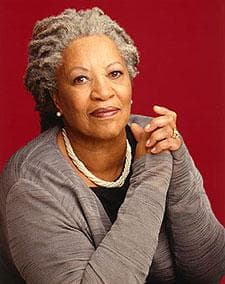
Chloe Anthony Wofford Morrison, known as Toni Morrison, was an American novelist. Her first novel, The Bluest Eye, was published in 1970. The critically acclaimed Song of Solomon (1977) brought her national attention and won the National Book Critics Circle Award. In 1988, Morrison won the Pulitzer Prize for Beloved (1987); she was awarded the Nobel Prize in Literature in 1993.
Similar books
- Beloved
Toni Morrison
3.9 (325k) average on GoodreadsLiterary FictionShares Morrison's distinctive prose, exploration of trauma, and the African American historical experience.
- The Bluest Eye
Toni Morrison
4.1 (173k) average on GoodreadsLiterary FictionFeatures Morrison's lyrical style and deep dive into the psychological impact of societal pressures on Black characters.
- Their Eyes Were Watching God
Zora Neale Hurston
3.9 (266k) average on GoodreadsReferenceOffers a rich portrayal of Black life and love in the early 20th century, with a focus on a strong female protagonist's journey.
- The Old Man and the Sea
Ernest Hemingway
3.8 (831k) average on GoodreadsLiterary FictionA Cuban fisherman's long struggle with a giant marlin becomes a story of endurance and dignity, now retold for young adults with illustrations, phonetic guides, and writing prompts in Traditional Chinese.
- One Hundred Years of Solitude
Gabriel García Márquez
4.1 (753k) average on GoodreadsLiterary FictionThrough the multi-generational story of the Buendía family, a mythical town deals with the repeating patterns of time, love, and solitude, as the extraordinary mixes with the ordinary.
- The Goldfinch
Donna Tartt
3.9 (720k) average on GoodreadsLiterary FictionHaunted by a tragic explosion and clutching a stolen Dutch masterpiece, a young orphan navigates the opulent drawing rooms of New York and the gritty underbelly of the art world, desperately seeking connection and redemption amidst a life spiraling into crime and obsession.






Enjoyed the summary?
A summary gives you the shape of the book. The book itself has the detail, the examples and the voice.
Find Jazz on AmazonAs an Amazon Associate, BookBrief earns from qualifying purchases. How we're funded