
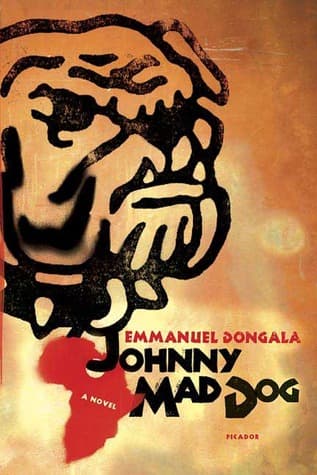
Synopsis
Covers the whole plot, including the ending.
- Difficulty
- Medium
- Pacing
- Moderate
- Mood
- Dark, Harrowing, Realistic, Intense
- Read it if
- You are looking for a raw, unflinching, and deeply impactful story about child soldiers and the human cost of civil war in Africa, told from multiple perspectives.
- Skip it if
- You prefer lighthearted narratives or are sensitive to graphic violence and descriptions of human rights abuses.
Johnny Mad Dog Plot Summary
Covers the whole plot, including the ending.
The Road to Gombe
The story opens with Johnny Mad Dog, a sixteen-year-old child soldier, leading his group of younger, heavily armed rebels, including the even younger Small Devil, No-Smile, and Young Major, on a mission through the war-torn Congolese landscape. Their objective is to reach the city of Gombe, which they believe is ripe for looting and plunder. Johnny, despite his youth, exhibits a chilling authority, often relying on his 'mad dog' persona and a mix of superstition and brutal pragmatism to control his unit. They encounter the ravaged remains of villages and the constant threat of rival factions. Their journey is marked by random acts of violence, drug use, and a complete disregard for civilian life. Johnny's primary focus is survival and the acquisition of wealth, viewing the conflict through the lens of a brutal game.
Laokolé's Flight
Simultaneously, Laokolé, a sixteen-year-old girl, narrates her harrowing escape from her burning city, which is being overrun by rebel forces. She is with her mother, her younger brother, and her disabled father, who is in a wheelchair. Their once-normal lives have been shattered, and they are forced to abandon their home and all their possessions. Laokolé's immediate concern is the safety of her family and finding a way to survive the relentless violence. She is a bright student, her mind still clinging to the idea of education and a future, even as the present offers only terror and uncertainty. They join a desperate stream of refugees, witnessing unspeakable atrocities and struggling with hunger, thirst, and the constant fear of encountering soldiers.
The Encounter at the Checkpoint
Johnny Mad Dog's unit reaches a government-controlled checkpoint, where they are initially mistaken for a different faction. The situation quickly escalates into a brutal firefight. Johnny demonstrates his tactical cunning and ruthlessness, leading his boys in a swift and devastating attack. The encounter highlights the chaotic and indiscriminate nature of the war, where loyalties are fluid and violence is the primary form of communication. After overcoming the checkpoint, they loot the fallen soldiers and civilians, reinforcing their reputation as a feared and unpredictable force. This victory further emboldens Johnny and his young soldiers, solidifying their belief in their own invincibility and the efficacy of their brutal methods.
A Moment of Respite and Danger
Laokolé's family manages to find temporary refuge in a partially abandoned village. They try to maintain a semblance of normalcy, but the constant threat of roving militias and the struggle for food weigh heavily on them. Laokolé's father, despite his disability, tries to offer words of comfort and wisdom, drawing on his past as a teacher. However, their brief peace is shattered when other refugees arrive, bringing news of further atrocities and the escalating conflict. The family is forced to make difficult decisions about their next move, torn between staying put and risking discovery, or continuing their perilous journey deeper into the unknown.
The Road to the River
Johnny Mad Dog and his boys continue their advance, their path marked by destruction and fear. They stumble upon a seemingly deserted village, but quickly discover a small group of civilians hiding. Johnny, ever the opportunist, decides to 'recruit' some of the younger boys for his unit, forcing them to join his ranks under threat of violence. This scene vividly illustrates the forced conscription of child soldiers, a tragic reality of the conflict. The unit's journey is a grim procession, fueled by drugs and the thrill of power, as they move closer to the river, a potential escape route or a new battleground.
The Paths Converge: The River Crossing
The narrative threads of Johnny and Laokolé finally converge at a chaotic river crossing. Laokolé's family, desperate to escape the fighting, arrives at the riverbank hoping to find a boat. Simultaneously, Johnny Mad Dog's unit arrives, their presence immediately instilling terror among the civilians. The river, a symbol of hope and escape for some, becomes a choke point of danger. The tension is palpable as the two groups, representing the innocent victims and the brutal perpetrators of the war, are forced into close proximity. This is the first direct, though still indirect, encounter between the two main characters, setting the stage for the book's central confrontation.
The Demand for Passage
Johnny Mad Dog, noticing Laokolé's family with their boat, approaches them with his menacing presence and demands passage across the river. Laokolé, initially trying to protect her family, bravely attempts to reason with him, but Johnny's authority is absolute and backed by his armed child soldiers. Her father, despite his disability, tries to interject, but his words are powerless against the barrel of a gun. This confrontation is a stark portrayal of the power imbalance between the armed rebels and defenseless civilians, and the arbitrary nature of their survival. Johnny's gaze lingers on Laokolé, a moment of unsettling attention amidst the chaos.
The Crossing and the Threat
Under duress, Laokolé's family is forced to ferry Johnny Mad Dog and his child soldiers across the river. The crossing is fraught with tension, as Laokolé and her family are acutely aware of the danger they are in. Johnny, seemingly intrigued by Laokolé's intelligence and resilience, engages her in fragmented, unsettling conversations. He makes veiled threats and boasts, revealing glimpses of his warped worldview and the psychological impact of the war on his young mind. The river journey becomes a microcosm of their differing realities: for Laokolé, a desperate attempt at survival; for Johnny, another conquest and a display of power.
The Aftermath and the Decision
After successfully crossing the river, Johnny Mad Dog and his unit disembark, leaving Laokolé's family to face the aftermath. They are physically safe for the moment, but deeply traumatized by the encounter. Laokolé's family debates their options: whether to continue fleeing or try to find a place to hide. The encounter with Johnny has shaken them to their core, highlighting the pervasive threat that follows them. Laokolé, despite her fear, remains resolute in her desire to protect her family and find a path to a better future, clinging to the hope of returning to school and a normal life, a stark contrast to Johnny's nihilistic existence.
Johnny's Reflection
Following the river crossing, Johnny Mad Dog and his boys continue their journey, but a subtle shift occurs within Johnny. The encounter with Laokolé, particularly her intelligence and defiance, seems to have resonated with him, albeit in a twisted way. He reflects on his life as a child soldier, the violence he has committed, and the bleak future that awaits him. He questions the purpose of the war and the endless cycle of destruction, though these thoughts are fleeting and often overshadowed by his ingrained brutality. This internal monologue provides a rare glimpse into the complex psychology of a child soldier, caught between the innocence of youth and the horrors of war.
The Search for Safety
Laokolé and her family press on, their journey becoming increasingly desperate. They encounter other refugees, some offering help, others posing new threats. The family's resources dwindle, and their spirits are tested by constant hunger, sickness, and the ever-present danger of violence. Laokolé's resilience is remarkable, as she takes on more responsibility, caring for her younger brother and supporting her parents. She continues to dream of a future beyond the war, holding onto the fragments of her education and the hope of peace, even as the world around her seems determined to crush it. They search for any sign of an organized refugee camp or international aid.
An Uncertain Future
The novel concludes without a definitive resolution for either Johnny or Laokolé, highlighting the ongoing nature of the conflict and its enduring impact. Johnny Mad Dog and his unit continue their existence as child soldiers, their future uncertain, forever marked by the war. However, the brief encounter with Laokolé seems to have planted a seed of doubt or introspection in Johnny, suggesting a faint possibility of change, though his path remains steeped in violence. Laokolé and her family, though still in peril, have survived thus far, their resilience is a testament to the human spirit. They continue their arduous journey, clinging to the hope of finding a safe place and rebuilding their lives, representing the enduring hope for peace and normalcy amidst the devastation.
Johnny Mad Dog Characters
Johnny Mad Dog
Protagonist/Antagonist
A sixteen-year-old child soldier and leader of a rebel faction.
Johnny Mad Dog is a complex and terrifying figure, a sixteen-year-old boy who has been hardened and desensitized by years of war. He leads a small unit of even younger child soldiers, whom he controls through a mix of fear, charisma, and shared trauma. He is ruthless, pragmatic, and often high on drugs, exhibiting a chilling lack of empathy for his victims. Despite his brutality, glimpses of his lost innocence and the psychological scars of his experiences occasionally surface, revealing a boy who has been forced to become a monster to survive. He views the world through the lens of power and survival.
Relationships: Small Devil (Younger child soldier in his unit, loyal and impressionable.); No-Smile (Child soldier in his unit, a silent and brutal enforcer.); Young Major (Child soldier in his unit, eager to please and emulate Johnny.); Laokolé (Captor/captive dynamic; Johnny is intrigued and slightly unsettled by her intelligence and defiance.)
Laokolé
Protagonist
A sixteen-year-old intelligent girl fleeing the war with her family.
Laokolé is a resilient and intelligent sixteen-year-old girl, whose life has been upended by the civil war. She is a former high school student, clinging to the hope of education and a normal future despite the surrounding chaos. She is resourceful, brave, and deeply devoted to her family – her mother, disabled father, and younger brother. Laokolé represents the innocent victims of the conflict, forced to confront unimaginable horrors while striving to maintain her humanity and hope. Her internal monologues reveal a sharp mind grappling with the senselessness of the violence.
Relationships: Mother (Close familial bond, mutual support in survival.); Father (Close familial bond, looks to him for wisdom and comfort.); Younger Brother (Caretaker and protector, deeply concerned for his safety.); Johnny Mad Dog (Captive/captor dynamic; she fears him but also subtly challenges him with her intellect.)
Laokolé's Father
Supporting
A disabled former teacher, providing wisdom and emotional support.
Laokolé's father is a disabled man, confined to a wheelchair, but a source of immense emotional strength and wisdom for his family. A former teacher, he often recites proverbs and philosophical insights, attempting to ground his family in humanity and hope amidst the brutality. His physical vulnerability highlights the indiscriminate nature of the war, but his mental fortitude and unwavering love for his family make him a powerful symbol of resilience. He represents the intellectual and moral voice struggling to be heard above the din of violence.
Relationships: Laokolé (Close father-daughter bond, she looks to him for guidance.); Laokolé's Mother (Supportive marital relationship, they face adversity together.)
Laokolé's Mother
Supporting
A protective and resilient mother, focused on her family's survival.
Laokolé's mother is a strong and protective figure, fiercely dedicated to the survival of her children and husband. She shoulders much of the physical burden of their flight, pushing her husband's wheelchair and foraging for food. She is pragmatic and determined, often making difficult decisions to ensure her family's safety. Her fear is palpable, but it is always channeled into action and protection. She represents the unwavering maternal instinct in the face of unimaginable hardship.
Relationships: Laokolé (Close mother-daughter bond, they share the burden of survival.); Laokolé's Father (Supportive marital relationship, they face adversity together.)
Small Devil
Supporting
A very young, impressionable child soldier in Johnny Mad Dog's unit.
Small Devil is one of the youngest and most impressionable child soldiers in Johnny Mad Dog's unit. He is a tragic figure, having been stripped of his childhood and forced into a life of violence. He looks up to Johnny, eager to prove himself and emulate his leader's brutality, yet there are moments where his true age and vulnerability peek through the hardened exterior. He represents the extreme youth of many child combatants and the devastating psychological impact of their experiences.
Relationships: Johnny Mad Dog (Subordinate and follower, looks up to Johnny with a mix of fear and admiration.)
No-Smile
Supporting
A silent and brutal child soldier in Johnny Mad Dog's unit.
No-Smile is another member of Johnny Mad Dog's unit, characterized by his almost perpetual silence and his capacity for brutal violence. He is a grim enforcer, carrying out Johnny's orders without question or apparent emotion. His lack of expression makes him particularly unsettling, suggesting a profound psychological numbing or trauma. He embodies the terrifying efficiency and dehumanization that can occur in child soldiers, acting as a shadow to Johnny's more vocal menace.
Relationships: Johnny Mad Dog (Loyal subordinate, carries out orders without question.)
Young Major
Supporting
A child soldier in Johnny Mad Dog's unit, eager for status.
Young Major is a slightly older child soldier in Johnny Mad Dog's unit, perhaps more ambitious and aware of the power dynamics. He is eager to please Johnny and rise in the ranks, often vying for his leader's attention and approval. He embodies the competitive and hierarchical nature of these rebel units, where status and perceived bravery (often through violence) are highly valued. His character further illustrates the distorted sense of normalcy and ambition that can develop in a war-torn environment.
Relationships: Johnny Mad Dog (Subordinate, seeks Johnny's approval and aims for higher status.)
The Narrator (Implied)
Mentioned
The alternating voice that provides perspective for both protagonists.
While not a character within the story's action, the narrative voice itself plays a crucial role. The story is told through alternating perspectives of Johnny Mad Dog and Laokolé, but there is an overarching, almost journalistic, tone that frames their experiences. This implied narrator provides context, often interjecting with historical details or broader observations about the conflict, grounding the personal stories within the larger socio-political reality of the war. This narrative choice emphasizes the contrast between the two protagonists' experiences and allows for a more comprehensive understanding of the conflict.
Johnny Mad Dog Themes
The Loss of Innocence
This theme is central to the novel, starkly contrasted between Johnny Mad Dog and Laokolé. Johnny, barely a teenager, has been utterly stripped of his innocence, transformed into a brutal killer. His childhood has been replaced by violence, drug use, and a complete disregard for human life, as seen in his casual execution of captives or his unit's looting of villages. Laokolé, though still innocent in her heart, is forced to witness and endure unimaginable horrors. Her dreams of education and a normal life are shattered by the war. Her journey is a constant battle to retain her humanity and hope against the encroaching darkness. The stark difference in their experiences highlights the devastating impact of war on the youth of a nation, forcing them to grow up too fast and often in the most brutal ways.
“We, the children, were the ones who had to take up arms, because the adults were too afraid.”
The Dehumanizing Effects of War
The novel vividly portrays how war strips individuals of their humanity, both perpetrators and victims. Johnny Mad Dog and his child soldiers are dehumanized by their actions, reduced to instruments of violence, their faces often masked by drugs and a 'mad dog' persona. Their victims are also dehumanized, reduced to targets, resources, or obstacles. The constant exposure to violence, death, and desperation numbs characters to suffering, blurring the lines between right and wrong. The routine nature of atrocities, such as forced conscription or random killings, shows how war can warp moral compasses and make the unthinkable commonplace. Laokolé's struggle is to resist this dehumanization, clinging to her family and her aspirations as a way to maintain her identity.
“In war, you are either a wolf or a sheep. And the sheep always get eaten.”
Resilience and Hope Amidst Despair
Despite the overwhelming brutality, the novel also explores the enduring human capacity for resilience and hope. Laokolé and her family, though facing constant danger, starvation, and loss, continue their arduous journey, driven by the hope of finding safety and rebuilding their lives. Laokolé's intellectual curiosity and her desire to return to school represent a deep hope for a future beyond the conflict. Her father's wisdom and her mother's unwavering protectiveness are anchors of humanity. Even in Johnny Mad Dog, there are fleeting, unsettling moments of introspection, suggesting that the human spirit, however buried, can still stir. This theme highlights the power of the human will to survive and to dream of a better tomorrow, even in the darkest of times.
“Even in the deepest darkness, there is always a small light, if you only know how to look for it.”
The Cycle of Violence and Retribution
The novel implicitly and explicitly addresses the perpetual cycle of violence that fuels civil wars. Johnny Mad Dog's actions are often framed as a response to past grievances or as a means of survival within a system that rewards brutality. The conflict is shown to be self-perpetuating, with each act of violence leading to further retaliation and an escalation of suffering. The lack of clear heroes or villains, and the portrayal of child soldiers as both victims and perpetrators, emphasizes the complex and tragic nature of this cycle. The novel suggests that breaking this cycle requires more than just military victory; it demands a fundamental shift in the societal conditions that breed such conflict.
“They kill our people, so we kill theirs. It’s the way of the world.”
Plot Devices & Literary Techniques
Alternating Perspectives
The story is told through the alternating viewpoints of Johnny Mad Dog and Laokolé.
This device is crucial to the novel's impact. By shifting between Johnny's brutal, desensitized perspective and Laokolé's intelligent, terrified, yet hopeful viewpoint, the author provides a multifaceted understanding of the war. Johnny's sections immerse the reader in the chilling reality of a child soldier's life, while Laokolé's narrative offers the civilian experience of flight and survival. This contrast highlights the immense human cost of conflict and prevents the reader from becoming numb to the horrors, as each perspective offers a unique emotional and moral lens through which to view the same war-torn landscape.
Symbolism of the River
The river represents both an escape route and a choke point of danger.
The river serves as a powerful symbol in the novel. For Laokolé and her family, it initially represents hope, a potential escape route from the immediate fighting, a boundary to cross towards safety. However, when their paths converge with Johnny Mad Dog's unit at the river crossing, it transforms into a choke point of extreme danger and vulnerability. It symbolizes the precariousness of life during wartime, where potential salvation can quickly turn into a trap. The act of crossing itself becomes a metaphor for navigating the treacherous landscape of conflict, where every step is fraught with peril and uncertainty.
The 'Mad Dog' Persona
Johnny's adopted identity as a ruthless, unpredictable killer.
Johnny's 'Mad Dog' persona is a significant plot device. It is both a self-defense mechanism and a tool of control. By adopting this identity, Johnny projects an image of utter ruthlessness and unpredictability, which instills fear in both his enemies and his own subordinates. This persona allows him to commit atrocities without (apparent) emotional cost and to maintain his authority. It also serves as a tragic mask, hiding the lost boy underneath. The gradual, subtle cracks in this persona, particularly after his encounter with Laokolé, hint at the possibility of his suppressed humanity, making his character more complex than a simple villain.
The Unseen Enemy
The constant, pervasive threat of unnamed or shifting rebel/government factions.
Throughout the novel, both Johnny's unit and Laokolé's family face the constant threat of an 'unseen enemy.' This refers to the myriad of rival rebel factions and government forces whose identities are often fluid, their loyalties shifting, and their presence always looming. This device effectively creates an atmosphere of pervasive fear and unpredictability. It emphasizes the chaotic nature of civil war, where danger can come from any direction and alliances are constantly in flux. The lack of a single, clearly defined antagonist (beyond the general 'war' itself) underscores the senselessness and widespread devastation of the conflict.
Johnny Mad Dog Quotes
“There are no children here. We are all soldiers.”
“The AK-47 was our father, our mother, our brother, our sister.”
“We killed to live, we lived to kill.”
“Sometimes I dream I am a child again, but the dream always ends with the smell of gunpowder.”
“God had left us. Or maybe He had never been here.”
“Blood was just another color in the landscape.”
“The adults had started the war, but we were the ones who had to finish it.”
“Our names were no longer our own. We were Johnny Mad Dog, General Never Die, Small Killer.”
“A bullet knows no age.”
“We were ghosts haunting the living, and the living were ghosts haunting themselves.”
“The jungle was our home, our hiding place, our executioner.”
“Laughter was a forgotten sound, replaced by screams and the rattle of gunfire.”
“To surrender was to die, but to fight was to die slowly, piece by piece.”
“The only thing that mattered was the next breath, the next kill, the next moment of not being dead.”
Quiz
10 questions on the plot and the characters. Each answer comes with a short explanation.
Question 1
What is Johnny Mad Dog's approximate age at the beginning of the novel?
- Thirteen
- Sixteen
- Nineteen
- Twenty-one
Show answer
B. Sixteen The book description explicitly states that Johnny Mad Dog is sixteen years old.
Question 2
What is Laokolé's primary ambition at the beginning of the story?
- To join the rebel faction
- To find her family
- To finish high school
- To escape to another country
Show answer
C. To finish high school The book description states Laokolé 'simply wants to finish high school'.
Question 3
What specific country is the setting for 'Johnny Mad Dog'?
- Sierra Leone
- Liberia
- Congo
- Rwanda
Show answer
C. Congo The description clearly states the story is set in 'war-torn Congo'.
Question 4
What is the primary motivation for Johnny Mad Dog and his rebel faction?
- To establish a democratic government
- To seize control of the war-torn country
- To protect civilians from other factions
- To gain wealth through diamond mining
Show answer
B. To seize control of the war-torn country The description states Johnny Mad Dog is 'a member of a rebel faction bent on seizing control of war-torn Congo'.
Question 5
Who are the two primary narrators of the story, as indicated in the description?
- Johnny Mad Dog and his commanding officer
- Laokolé and her younger brother
- Johnny Mad Dog and Laokolé
- An unnamed omniscient narrator and Johnny Mad Dog
Show answer
C. Johnny Mad Dog and Laokolé The description states, 'Together, they narrate a crossing of paths that has explosive results,' referring to Johnny Mad Dog and Laokolé.
Question 6
How does the author describe the result of Johnny Mad Dog and Laokolé's paths crossing?
- A peaceful resolution
- An unexpected alliance
- Explosive results
- A tentative truce
Show answer
C. Explosive results The description explicitly states their crossing of paths 'has explosive results'.
Question 7
What literary figures are mentioned as having acclaimed Emmanuel Dongala's work?
- Toni Morrison and Gabriel Garcia Marquez
- Philip Roth and Chinua Achebe
- Nadine Gordimer and Wole Soyinka
- Alice Walker and V.S. Naipaul
Show answer
B. Philip Roth and Chinua Achebe The description mentions the book was 'acclaimed by such writers as Philip Roth and Chinua Achebe'.
Question 8
What specific characteristic of the novel makes it a 'coming-of-age story like no other' according to the description?
- Its focus on romantic love amidst conflict
- Its unique blend of humor and satire
- Its setting amid the chaos of West Africa's civil wars and the protagonists' contrasting experiences
- Its use of magical realism elements
Show answer
C. Its setting amid the chaos of West Africa's civil wars and the protagonists' contrasting experiences The phrase 'coming-of-age story like no other' directly follows the context of the setting 'amid the chaos of West Africa's civil wars' and the contrasting lives of the two sixteen-year-olds.
Question 9
What is the broader regional context mentioned for the civil wars in which the story is set?
- East Africa
- North Africa
- Southern Africa
- West Africa
Show answer
D. West Africa While specifically set in Congo, the description broadens the context to 'Set amid the chaos of West Africa's civil wars'.
Question 10
Based on the description, what is a key thematic tension explored through the contrasting characters of Johnny Mad Dog and Laokolé?
- The conflict between urban and rural lifestyles
- The clash between innocence/aspiration and the brutal realities of war
- The struggle for economic prosperity versus spiritual enlightenment
- The generational divide between parents and children
Show answer
B. The clash between innocence/aspiration and the brutal realities of war Johnny Mad Dog represents the brutal reality of war as a child soldier, while Laokolé represents innocence and the aspiration for a normal life (finishing high school), creating a thematic tension between these two states.
Johnny Mad Dog FAQ
What is the central conflict in 'Johnny Mad Dog'?
The central conflict revolves around the brutal clash between the child soldiers of the rebel faction, led by figures like Johnny Mad Dog, and the civilian population, specifically highlighted through the harrowing experiences of Laokolé and her family as they try to escape the war-torn Congo. It's a struggle for survival against indiscriminate violence and the loss of innocence.
Who are the primary narrators of the story, and how do their perspectives differ?
The story is primarily narrated by Johnny Mad Dog, a sixteen-year-old rebel soldier, and Laokolé, also sixteen, a civilian girl attempting to flee the conflict with her family. Johnny's perspective offers a chilling insight into the mindset and daily life of a child soldier, while Laokolé's provides a desperate, fear-filled view from the victims' side, highlighting the human cost of the war.
What is the significance of the 'Mad Dog' moniker for Johnny?
The 'Mad Dog' moniker signifies Johnny's transformation from an ordinary boy into a ruthless, desensitized killer, a product of the brutal civil war. It reflects the animalistic savagery and lack of empathy he has adopted to survive and excel within the rebel ranks, often committing horrific acts without apparent remorse.
Where is the story primarily set, and what role does the geographical setting play?
The story is set in the war-torn Congo (though often referred to as a generic West African nation, it strongly evokes the Congolese civil wars), with the characters navigating ravaged towns and treacherous landscapes. The chaotic and dangerous environment is not merely a backdrop but an active force, shaping the characters' actions, dictating their survival strategies, and underscoring the pervasive nature of the conflict.
What is the ultimate fate of Laokolé and her family?
Laokolé and her family endure immense suffering and loss, constantly on the run from the rebels. While Laokolé herself manages to survive and escape, the journey is fraught with tragedy, including the death of her father and the separation from other family members, leaving her with deep emotional scars and an uncertain future.
Are there any specific historical events or figures that inspired the conflict depicted in the novel?
While the novel doesn't explicitly name specific historical events or figures, it draws heavily on the widespread atrocities, child soldiery, and humanitarian crises characteristic of the civil wars in countries like Liberia, Sierra Leone, and particularly the Democratic Republic of Congo during the late 20th and early 21st centuries. Dongala's portrayal is a composite, reflecting the devastating patterns of these conflicts.
What is the significance of the repeated motif of the children's games and songs among the rebel soldiers?
The children's games and songs among the rebel soldiers serve as a chilling reminder of their lost innocence and distorted childhood. These seemingly innocuous activities are juxtaposed with their brutal actions, highlighting the psychological manipulation and desensitization they've undergone, where violence has become normalized and integrated into their play.
Does Johnny ever show genuine remorse or a desire to leave the rebel life?
Johnny occasionally displays fleeting moments of introspection or a flicker of humanity, particularly in his interactions with Laokolé, but these are quickly suppressed by his ingrained conditioning and the brutal realities of his life as a child soldier. He is largely trapped by his circumstances, and any nascent remorse is overshadowed by his survival instincts and loyalty to his unit.
What role do the 'fetishes' and superstitions play among the rebel group?
The 'fetishes' and superstitions, such as wearing specific charms or believing in spiritual protection, play a significant role in bolstering the rebel soldiers' courage and sense of invincibility. They are a psychological tool used by commanders to control and motivate the young fighters, offering a false sense of security and justifying their often irrational and brutal actions.
How does the novel explore the concept of lost innocence in child soldiers?
The novel profoundly explores lost innocence by showing how young boys like Johnny are stripped of their childhoods, forced to commit unspeakable acts, and desensitized to violence. Their youthful exuberance is perverted into a capacity for cruelty, and their understanding of morality is warped by the constant exposure to war and the manipulation of their commanders, leaving them psychologically scarred.
What psychological impact does witnessing atrocities have on Laokolé?
Witnessing atrocities has a profound and traumatic psychological impact on Laokolé. She experiences intense fear, grief, and a sense of helplessness, leading to emotional numbness and a struggle to maintain her humanity amidst the horror. Her resilience is tested to its limits, and she carries the burden of survivor's guilt and the memory of profound loss.
How does the author portray the psychological manipulation of child soldiers by their commanders?
The author portrays psychological manipulation through the commanders' use of drugs, alcohol, fear, and a distorted sense of loyalty and power. They exploit the children's vulnerability, promising them status and protection while instilling a brutal ideology that justifies violence and erases their individual identities, turning them into instruments of war.
Is Johnny Mad Dog a sympathetic character, despite his actions?
Johnny Mad Dog is a complex character who elicits a conflicted response. While his actions are undeniably horrific, the novel subtly suggests that he is also a victim of circumstance, forced into a brutal life and psychologically conditioned. This nuanced portrayal encourages readers to understand the forces that shaped him, rather than simply condemning him, making him a tragic figure of the war.
What is the novel's stance on the possibility of redemption for child soldiers?
The novel offers a grim, yet perhaps subtly hopeful, perspective on redemption. While it doesn't provide easy answers or clear paths to rehabilitation, Johnny's occasional moments of introspection hint at a buried humanity. However, the novel primarily emphasizes the profound difficulty and long-term psychological damage, suggesting that true redemption would be an arduous and uncertain journey for individuals like Johnny.
How does the book challenge traditional notions of heroism and villainy?
The book challenges traditional notions by presenting a world where clear-cut heroes are absent, and villains are often victims themselves. Johnny, despite his monstrous acts, is a child molded by war, blurring the lines of culpability. Laokolé's heroism lies not in fighting, but in her resilience and desperate struggle for survival, redefining courage in a brutal context.
What is the broader message about humanity that the author conveys through the narrative?
Emmanuel Dongala conveys a powerful message about the fragility of humanity and the devastating impact of war on the human spirit, particularly on children. He highlights how easily innocence can be corrupted and how difficult it is to retain compassion and morality in extreme circumstances, yet also underscores the enduring will to survive and the search for dignity.
Does the ending offer a sense of hope or is it predominantly bleak?
The ending offers a glimmer of hope for Laokolé, as she manages to escape the immediate danger, but it is predominantly bleak concerning the overall state of the region and the psychological scars of war. Her survival is hard-won, and the future remains uncertain, reflecting the ongoing challenges faced by those affected by such conflicts.
How does the dual narration contribute to the novel's impact?
The dual narration by Johnny and Laokolé is crucial to the novel's impact, providing a harrowing 360-degree view of the conflict. Johnny's perspective offers an unvarnished, chilling insight into the perpetrators' minds, while Laokolé's conveys the terror and resilience of the victims, creating a deeply immersive and emotionally resonant experience that forces readers to confront the full spectrum of war's horror.
About the author

Emmanuel Dongala is a Congolese author known for his fiction that often explores themes of war and human experience. His notable work, "Johnny Mad Dog," delves into the impact of civil conflict on youth in the Democratic Republic of the Congo. Dongala's writing reflects his background in both literature and science, contributing to his unique narrative style.
Similar books
- A Long Way Gone: Memoirs of a Boy Soldier
Ishmael Beah
4.2 (163k) average on GoodreadsBiographyNon-fiction account of a child soldier in Sierra Leone, sharing thematic weight and perspective.
- Beasts of No Nation
Uzodinma Iweala
3.8 (5k) average on GoodreadsHistorical FictionFictional story of a child soldier in an unnamed West African country, with similar themes of loss of innocence and brutality.
- Half of a Yellow Sun
Chimamanda Ngozi Adichie
4.3 (103k) average on GoodreadsLiterary FictionHistorical fiction set during the Nigerian Civil War, exploring the human impact of conflict in West Africa.
- To Kill a Mockingbird
Harper Lee
4.3 (4.5M) average on GoodreadsHistorical FictionIn the 1930s Jim Crow South, Harper Lee writes about racial injustice, moral growth, and the quiet courage of a lawyer father, Atticus Finch, as seen through his young daughter's eyes.
- The Great Gatsby
F. Scott Fitzgerald
3.9 (3.8M) average on GoodreadsHistorical FictionIn the opulent Roaring Twenties, a mysterious millionaire's lavish parties hide his desperate, tragic pursuit of a lost love, exposing the emptiness within the American Dream.
- Pride and Prejudice
Jane Austen
4.3 (3M) average on GoodreadsHistorical FictionIn a society focused on status and money, Elizabeth Bennet navigates love and pride, challenging Mr. Darcy and social expectations to find true affection.




Enjoyed the summary?
A summary gives you the shape of the book. The book itself has the detail, the examples and the voice.
Find Johnny Mad Dog on AmazonAs an Amazon Associate, BookBrief earns from qualifying purchases. How we're funded