
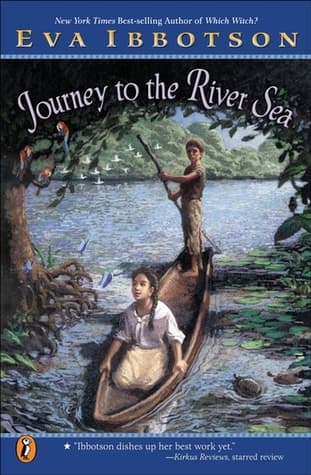
Synopsis
Covers the whole plot, including the ending.
- Difficulty
- Easy
- Pacing
- Moderate
- Mood
- Adventurous, Whimsical, Uplifting, Exotic
- Read it if
- You love classic children's adventure stories with richly drawn settings, strong female protagonists, and a touch of mystery and wonder.
- Skip it if
- You prefer fast-paced action over character-driven narratives and detailed world-building, or are sensitive to depictions of colonial attitudes common to the historical period.
Journey to the River Sea Plot Summary
Covers the whole plot, including the ending.
An Orphan's Journey to the Amazon
Maia Fielding, a ten-year-old orphan, lives at the Mayfair Academy for Young Ladies in London, dreaming of adventure. When she learns she is to live with distant relatives, the Carters, in Manaus, Brazil, she is overjoyed. Her guardians, Miss Minton and Professor Embry, prepare her for the journey. Despite warnings from her classmates about dangers like alligators and wild Indians, Maia is full of romantic ideas about the Amazon, imagining lush places and exotic animals. She goes on the long voyage by ship, with the governess Miss Minton, who will oversee her education and care in the new land.
A Disappointing Welcome
When they arrive in Manaus, Maia's romantic expectations are immediately broken. The Carters, Mrs. Carter, who is obsessed with cleanliness and English ways, and Mr. Carter, a timid man, are not the adventurous people Maia imagined. Their twin daughters, Beatrice and Gwendolyn, are spoiled, selfish, and dislike Maia's presence. The Carter house is a suffocating place, filled with bug spray, strict rules, and a fear of anything 'native.' Maia is kept inside and forbidden from exploring the world outside, leaving her disappointed and lonely.
The Discovery of Finn and Clovis
Despite the Carters' rules, Maia's adventurous spirit leads her to explore. She soon meets two boys who become her secret friends. One is Clovis King, a young English actor who came to Manaus with a traveling theater group, the Bernardo Players. Clovis desperately wants to return to England, suffering from homesickness and the fear of getting too old for his child roles. The other is Finn Taverner, a mysterious boy living in the jungle who is rumored to be a 'wild Indian.' Finn is actually the son of English parents who disappeared, and he is trying to avoid the authorities who want to send him back to England to claim his inheritance.
The Search for the Giant Sloth
Finn tells Maia and Miss Minton that he is looking for the legendary giant sloth, thought to be extinct, hoping to prove his parents were not frauds and to secure his claim to their estate. Miss Minton, interested in Finn's story and understanding his situation, agrees to help him. Meanwhile, Clovis's acting career is in trouble as he quickly outgrows his child roles. He faces being left behind by the Bernardo Players. Maia, sympathetic to both boys, tries to help them with their challenges, often relying on Miss Minton's wisdom and resourcefulness.
The Fire and the Escape
A fire starts at the Manaus opera house during a performance by the Bernardo Players. In the confusion, Clovis, who was performing, is shaken and believes his career is over. Seeing an opportunity, Maia creates a plan. She suggests that Clovis, who is about the same age and size as Finn, could pretend to be Finn and return to England to claim the Taverner inheritance. This would allow Finn to stay in the Amazon, his only home, and give Clovis a way to escape his unhappy acting life and return to England with money. Miss Minton, after thinking carefully, supports the plan.
Clovis's Impersonation and Finn's Freedom
With Maia and Miss Minton's help, Clovis changes, adopting Finn's ways and background. He successfully convinces the authorities, including the stern Mr. Murray, that he is Finn Taverner. Clovis sails back to England, where he eventually inherits the Taverner estate and starts a new life, free from the pressures of acting. The real Finn, now free from the threat of being sent to England, finds a new home and purpose with the local indigenous people, fully connecting with the Amazonian wilderness and continuing his search for the giant sloth, guided by his knowledge of the jungle.
Maia's Growing Independence
As the Carters continue their self-absorbed lives, Maia grows more independent and resourceful. She finds comfort and friendship in unexpected places, especially with Professor Neville, an eccentric but kind ethnologist who values her intelligence and curiosity. She also forms a strong bond with Miss Minton, who, despite her stern look, is a loyal and protective guardian. Maia's experiences in the Amazon, from meeting local communities to helping with the boys' plans, broaden her views and strengthen her decision to live a life of adventure and purpose, rather than give in to the Carters' dull existence.
Miss Minton's Secret Revealed
During their time together, Maia slowly finds out about Miss Minton's past. She learns that Miss Minton had a personal connection to the Amazon long before arriving with Maia. It is revealed that Miss Minton had a romantic relationship with a man named Bernard Taverner, Finn's father, many years ago. This explains Miss Minton's understanding of the jungle and her desire to help Finn. This shared history deepens the bond between Maia and Miss Minton, as Maia sees a more vulnerable and passionate side to her governess.
The Carters' Misfortune
The Carters' financial situation worsens significantly because of Mr. Carter's incompetence and bad investments. They face losing everything and returning to England in shame. Despite their unkindness, Maia, with her generous spirit, feels a sense of duty. She uses her own small inheritance, with Miss Minton's advice, to help the Carters stabilize their finances. This act of kindness, while not fully appreciated by the Carters, shows Maia's growth in compassion and her ability to handle complex situations with maturity beyond her years.
A New Beginning for Maia
As the time comes for Maia to consider her future, she makes a decision. Having experienced the life of the Amazon and formed deep connections, she chooses not to return to the restrictive life in England or stay permanently with the Carters. Instead, she decides to stay in Manaus with Miss Minton and Professor Neville, continuing her education and exploring the Amazon. She goes on a new adventure, sailing upriver with Professor Neville, eager to learn more about the natural world and the indigenous cultures, fully embracing her destiny as an independent and adventurous young woman.
Principal Figures
Maia Fielding
Protagonist
An adventurous and imaginative English orphan sent to live in the Amazon.
Maia is a ten-year-old orphan who initially lives at the Mayfair Academy for Young Ladies. She possesses a vivid imagination and a deep love for adventure and the natural world, often dreaming of exotic lands. Despite her initial naiveté, she is quick-witted, compassionate, and incredibly resilient. She adapts remarkably well to the challenges of the Amazon, finding beauty and friendship where others see only danger. Her kindness extends even to her unpleasant cousins, and she shows great loyalty to her friends, Finn and Clovis. She is driven by a desire for belonging and a life filled with purpose and exploration.
Relationships: Miss Minton (governess and surrogate mother figure); Finn Taverner (close friend and confidante); Clovis King (friend whom she helps); The Carters (Mrs. Carter, Mr. Carter, Beatrice, Gwendolyn) (distant, unpleasant relatives)
Miss Minton
Supporting
Maia's stern but secretly compassionate governess with a mysterious past.
Miss Minton is Maia's formidable governess, known for her strict demeanor, impeccable manners, and vast knowledge. She initially appears cold and unapproachable but gradually reveals a deep well of compassion, loyalty, and a surprising adventurous spirit. She is highly intelligent and resourceful, often acting as the true guardian and protector for Maia. Miss Minton has a hidden past connected to the Amazon and Finn's family, which explains her unique understanding of the jungle and her fierce protectiveness. She becomes a crucial mentor and maternal figure for Maia, encouraging her independence and critical thinking.
Relationships: Maia Fielding (charge, then close companion and surrogate daughter); Finn Taverner (son of a past love interest, whom she protects); Bernard Taverner (former romantic interest)
Finn Taverner
Supporting
A mysterious half-native boy living in the jungle, evading capture.
Finn is a spirited and elusive boy, believed to be 'wild' by some, who lives independently in the Amazonian jungle. He is half-English, half-native, the son of English naturalists who disappeared. Finn is resourceful, knowledgeable about the jungle, and deeply connected to the local indigenous communities. He is driven by a desire to remain in his true home, the Amazon, and to clear his parents' name regarding their scientific discoveries. He forms a strong bond with Maia and Miss Minton, who help him escape his predicament. His search for the giant sloth is central to his identity and his parents' legacy.
Relationships: Maia Fielding (close friend); Clovis King (boy who impersonates him)
Clovis King
Supporting
A homesick English child actor longing to escape his theatrical life.
Clovis is a young English actor with the Bernardo Players, a traveling theatrical troupe. He is homesick, timid, and increasingly anxious about his future as he quickly outgrows his child roles. He dreams of returning to England and escaping the demanding, often humiliating life of a performer. Clovis is kind-hearted but lacks confidence, making him vulnerable. Maia's plan to have him impersonate Finn provides him with a lifeline and a chance for a new, stable life, which he eagerly embraces. His transformation into 'Finn' allows him to find the security he desperately craves.
Relationships: Maia Fielding (friend and benefactor); Finn Taverner (boy he impersonates)
Mrs. Carter
Antagonist
Maia's hypochondriac, xenophobic, and self-absorbed cousin.
Mrs. Carter is Maia's distant cousin and the matriarch of the Carter household in Manaus. She is a deeply unpleasant woman, obsessed with maintaining English propriety and cleanliness in the jungle. She is a hypochondriac, constantly fearing illness and 'native' influences, and douses her home in bug spray. She is self-absorbed, neglectful of Maia, and openly resentful of her presence. Her xenophobia and inability to appreciate the Amazon's beauty make her a stark contrast to Maia. She represents the restrictive and unadventurous life Maia seeks to escape.
Relationships: Maia Fielding (unwelcome relative); Mr. Carter (ineffectual husband); Beatrice Carter (daughter); Gwendolyn Carter (daughter)
Beatrice and Gwendolyn Carter
Antagonist
Maia's spoiled and jealous twin cousins.
Beatrice and Gwendolyn are the twin daughters of the Carters. They are spoiled, selfish, and deeply resentful of Maia's arrival, viewing her as an intruder who might steal their parents' limited attention. They are portrayed as petty and cruel, constantly trying to undermine Maia and make her life miserable. They share their mother's aversion to anything 'native' and prefer to live in a bubble of English comforts. Their primary role is to highlight Maia's resilience and kindness by providing a constant source of antagonism within the household.
Relationships: Maia Fielding (unliked cousin); Mrs. Carter (mother); Mr. Carter (father)
Professor Neville
Supporting
An eccentric but kind ethnologist and friend to Maia.
Professor Neville is an ethnologist living in Manaus, dedicated to studying the indigenous cultures of the Amazon. He is portrayed as eccentric, forgetful, and often disheveled, but possesses a deep knowledge and respect for the natural world and its inhabitants. He quickly recognizes Maia's intelligence and adventurous spirit, becoming a mentor and friend to her. He offers Maia a chance to explore and learn outside the confines of the Carter household, eventually inviting her to join him on his expeditions. He represents the academic and respectful approach to the Amazon, in stark contrast to the Carters' fear.
Relationships: Maia Fielding (friend and mentor)
Mr. Murray
Supporting
The stern but fair lawyer overseeing Finn Taverner's inheritance.
Mr. Murray is the lawyer responsible for overseeing the Taverner inheritance and ensuring Finn is returned to England. He is a stern, by-the-book individual, initially appearing as an antagonist to Finn's desire for freedom. However, he is ultimately fair and reasonable. He is genuinely concerned with Finn's well-being and the proper execution of the will. He is successfully fooled by Clovis's impersonation, a testament to the cleverness of Maia's plan. His presence adds a layer of legal and bureaucratic challenge to Finn's situation.
Relationships: Finn Taverner (legal charge); Clovis King (believed to be Finn Taverner)
Themes & Insights
Identity and Self-Discovery
The novel explores self-discovery through Maia's experiences in a new, challenging environment. Maia, as an orphan, seeks to define herself beyond her circumstances, finding her true calling in the Amazon. Finn also deals with his identity, torn between his English heritage and his connection to his native roots. Clovis, too, searches for an identity beyond his child-actor role. The Amazon is a place where characters shed forced identities and embrace who they truly are. Maia's decision to stay in the Amazon at the end shows her full embrace of her adventurous and independent spirit.
“The Amazon had given her more than just a home; it had given her a self.”
The Clash of Cultures and Colonialism
The book shows the contrast between English Victorian ways and the untamed world of the Amazon. The Carters show the worst parts of colonialism: xenophobia, a desperate clinging to 'civilized' ways, and a fear of anything different. Their obsession with cleanliness and their dislike for local culture show the destructive impact of forcing foreign values. In contrast, characters like Maia, Miss Minton, and Professor Neville represent a more open-minded approach, appreciating the Amazon's natural beauty and respecting its indigenous cultures, suggesting a more harmonious existence.
“The Carters had brought England with them like a terrible, invisible disease, infecting everything they touched.”
Adventure and Freedom vs. Confinement
A main theme is the desire for adventure and freedom, set against different forms of confinement. Maia is initially confined by being an orphan and then by the Carters' restrictive household. Finn is confined by the legal system that seeks to remove him from his home. Clovis is confined by his acting career and homesickness. The Amazon itself, with its vastness and wildness, symbolizes freedom. The characters' journeys are driven by their desire to break free from these limits and pursue lives of excitement and self-determination, ending with Maia's choice to remain in the Amazon.
“Some lives are not meant to be neat and tidy. Some lives are meant to be wild and free.”
Family and Belonging
The novel explores different forms of family and the human need for belonging. Maia, an orphan, searches for a true home and a loving family. She finds it not in her blood relatives, the Carters, but in the bond she forms with Miss Minton, Finn, and Professor Neville. Finn, too, seeks to honor his lost parents' legacy and find his place among the indigenous communities. The story suggests that family is not only defined by blood, but by love, loyalty, and shared experiences, and that belonging can be found in unexpected places, even far from one's origins.
“A family wasn't just blood. It was people who cared about you, who looked out for you, who made you feel like you belonged.”
Plot Devices & Literary Techniques
The Amazon River and Jungle
A living, breathing character and symbolic setting for adventure and freedom.
The Amazon River and its surrounding jungle are more than just a setting; they act as a character in themselves. They represent wildness, danger, beauty, and freedom, contrasting sharply with the restrictive English propriety of the Carters. The river facilitates travel and discovery, while the jungle conceals secrets and offers refuge. For Maia, it's a place of wonder and self-discovery. For Finn, it's home and a source of identity. The Amazon's pervasive presence constantly challenges the characters and pushes them toward growth or reveals their inherent prejudices.
The Giant Sloth (and other exotic animals)
A symbol of wonder, mystery, and Finn's parents' legacy.
The giant sloth, a mythical creature believed to be extinct, serves as a powerful symbol. For Finn, it represents his parents' scientific legacy and his hope of proving their work was legitimate, thus securing his inheritance and freedom. Its elusive nature mirrors Finn's own desire to remain hidden. More broadly, the exotic animals and lush flora of the Amazon (macaws, butterflies, orchids) represent the wonder and beauty that Maia initially dreams of and later finds, contrasting with the Carters' fear and attempts to sanitize their environment. They highlight the richness of the natural world that Maia embraces.
Impersonation and Disguise
A key plot mechanism for resolving character conflicts and advancing the narrative.
The plot device of impersonation, specifically Clovis pretending to be Finn, is central to resolving the main conflicts for both boys. It allows Finn to remain in the Amazon, his true home, free from the English authorities, and provides Clovis with a means to escape his unhappy acting career and return to England with financial security. This device relies on the characters' resourcefulness and the dramatic irony of the situation. It highlights themes of identity and the idea that one's true self might not be what is legally or socially expected.
Letters and Correspondence
A means of conveying backstory, motivations, and plot developments.
Letters play a significant role in revealing crucial information and driving the plot. Maia's initial invitation to the Carters comes via letter. The letters from Mr. Murray regarding Finn's inheritance create urgency and conflict. More importantly, the discovery of old letters and documents related to Finn's parents and Miss Minton's past reveals their interconnected histories and deeper motivations. These written communications serve to gradually unravel mysteries, provide exposition, and connect characters across time and distance, adding depth to the narrative and explaining character actions.
Journey to the River Sea Quotes
“The world is a beautiful place and worth fighting for.”
“Adventure is worthwhile in itself.”
“It is not what you are born, but what you choose to be.”
“The river is a road that goes both ways.”
“Sometimes the most ordinary things are the most extraordinary.”
“A true friend is the greatest of all blessings.”
“Home is not a place, but a feeling.”
“The jungle teaches patience and respect.”
“Books are like ships that carry you to far-off lands.”
“Courage is not the absence of fear, but the triumph over it.”
“Every creature has its place in the great tapestry of life.”
“To be free is to be true to oneself.”
“The stars are the same everywhere, but they look different here.”
“Kindness is a language that everyone understands.”
Quiz
10 questions on the plot and the characters. Each answer comes with a short explanation.
Question 1
What year is Maia sent to live with her relatives along the Amazon River?
- 1905
- 1910
- 1915
- 1920
Show answer
B. 1910 The book is set in 1910, when Maia is sent from England to live with distant relatives on a rubber plantation in the Amazon.
Question 2
What do Maia's British classmates warn her about regarding the Amazon?
- Poisonous plants and extreme heat
- Man-eating alligators and wild, murderous Indians
- Dangerous snakes and lack of proper food
- River pirates and contagious diseases
Show answer
B. Man-eating alligators and wild, murderous Indians Her classmates' warnings focus on sensationalized dangers like man-eating alligators and 'murderous Indians,' reflecting common stereotypes of the time.
Question 3
What do Maia's cousins do to their house that shows their dislike of the Amazon environment?
- Keep all windows shut and curtains drawn
- Douse the house in bug spray
- Refuse to plant any local flowers
- Only eat imported British food
Show answer
B. Douse the house in bug spray The cousins are xenophobic and fearful of the Amazon, so they douse the house in bug spray to keep out insects, symbolizing their rejection of the natural world.
Question 4
Who is the mysterious 'Indian' that Maia encounters, who has an inheritance?
- Clovis
- Finn Taverner
- Mr. Carter
- The Professor
Show answer
B. Finn Taverner Finn Taverner is a boy with an inheritance who is hiding his identity, often referred to as the mysterious 'Indian,' and becomes a key figure in Maia's adventures.
Question 5
What is the itinerant actor dreading that Maia meets?
- Losing his acting talent
- Being forced to return to England
- His impending adolescence
- Running out of money
Show answer
C. His impending adolescence Clovis, the itinerant actor, dreads his impending adolescence because it might end his career as a child actor, adding a personal struggle to his character.
Question 6
What legendary creature do the characters journey down the Amazon in search of?
- Giant anaconda
- Pink river dolphin
- Giant sloth
- Golden monkey
Show answer
C. Giant sloth The journey centers on searching for the legendary giant sloth, which symbolizes the wonder and mystery of the Amazon that Maia seeks.
Question 7
How does Maia's initial excitement about the Amazon contrast with her cousins' attitude?
- Maia fears the wildlife, while her cousins embrace it
- Maia is excited by the natural beauty, while her cousins are xenophobic and reject it
- Maia wants to leave immediately, while her cousins enjoy the plantation life
- Maia dislikes the heat, while her cousins thrive in it
Show answer
B. Maia is excited by the natural beauty, while her cousins are xenophobic and reject it Maia dreams of macaws, butterflies, and orchids, showing her openness to adventure, whereas her cousins are nasty and xenophobic, dousing the house in bug spray and forbidding exploration.
Question 8
What major theme in the book is highlighted by Maia's journey and her interactions with characters like Finn and Clovis?
- The importance of strict discipline in childhood
- The dangers of colonial exploitation in the Amazon
- The contrast between imagination/reality and finding one's place in the world
- The superiority of British culture over indigenous ways
Show answer
C. The contrast between imagination/reality and finding one's place in the world The book explores themes of adventure versus fear, imagination versus reality, and characters like Maia, Finn, and Clovis seeking their true identities and homes in a changing world.
Question 9
Why is Finn Taverner hiding his identity as an 'Indian' in the story?
- To avoid being forced into a rubber plantation job
- To protect his inheritance from greedy relatives
- To escape punishment for a crime he didn't commit
- To join a theater group without being recognized
Show answer
B. To protect his inheritance from greedy relatives Finn is hiding because he has an inheritance that others might try to take if they discover his true identity, adding suspense and driving the plot forward.
Question 10
In what way does Maia's resourcefulness lead her into excitement beyond her initial expectations?
- She starts a successful rubber business on the plantation
- She uncovers a plot to sabotage the plantation
- She befriends key characters and embarks on a journey down the Amazon
- She teaches her cousins to appreciate the local culture
Show answer
C. She befriends key characters and embarks on a journey down the Amazon Despite her cousins' restrictions, Maia's curiosity and resourcefulness allow her to meet Finn and Clovis, leading to an adventurous journey in search of the giant sloth, far beyond her dull life at the compound.
Journey to the River Sea FAQ
What is 'Journey to the River Sea' about?
The novel follows English orphan Maia, who is sent in 1910 to live with distant relatives, the Carters, on their rubber plantation along the Amazon River. While expecting adventure in the lush rainforest, she instead faces her xenophobic cousins who confine her to their sterile compound. Through resourcefulness, Maia befriends local characters like Finn Taverner (the mysterious 'Indian' heir) and Clovis King (an itinerant child actor), embarking on a journey down the Amazon in search of a legendary giant sloth and finding true belonging.
Why should I read 'Journey to the River Sea'?
It's a richly atmospheric historical adventure that contrasts stifling colonial attitudes with the vibrant, life-affirming beauty of the Amazon. Maia's journey from loneliness to found family, combined with themes of cultural openness, resilience, and environmental wonder, makes it both heartwarming and thought-provoking for readers of all ages.
What is the background/setting of 'Journey to the River Sea'?
Set in 1910, the story unfolds primarily along the Amazon River in Brazil, contrasting the oppressive, bug-spray-drenched Carter plantation compound with the untamed rainforest. Key locations include Manaus, with its opera house symbolizing colonial excess, and the remote Xanti village, representing indigenous harmony with nature.
What are the most memorable quotes?
Notable quotes include Maia's hopeful vision: 'curtains of sweetly scented orchids trailing from the trees,' and Miss Minton's advice: 'The world is a beautiful place if you do not let fear make it ugly.' Finn's reflection, 'I am not an Indian. I am a person,' challenges colonial labels, emphasizing identity beyond stereotypes.
What writing style does the author use?
Eva Ibbotson employs vivid, sensory prose that brings the Amazon's sights, sounds, and smells to life, blending adventure with gentle humor. The narrative balances Maia's childlike wonder with subtle critiques of colonialism, using accessible language that appeals to both young and adult readers.
What minor details add significant meaning?
The Carters' constant use of bug spray symbolizes their fear of the natural world and cultural insularity. Miss Minton's hidden tattoo of a sloth hints at her past connection to the Amazon and foreshadows the quest. The opera house in Manaus represents colonial absurdity, juxtaposed with the rainforest's authenticity.
What are some subtle foreshadowing moments?
Early mentions of the 'legendary giant sloth' by characters like Professor Glastonberry set up the central quest. Finn's mysterious background and his knowledge of the jungle hint at his true identity as an heir. Maia's initial excitement about the Amazon foreshadows her eventual embrace of its dangers and wonders.
What unexpected character connections exist?
Miss Minton, Maia's governess, is revealed to have a past tied to the Amazon and Finn's family, guiding the journey secretly. Clovis King, the child actor, connects to the Carters through theatrical performances that mask his unhappiness. The twins, Beatrice and Gwendolyn, share a hidden kindness beneath their nasty exterior, influenced by their mother's fears.
What are unspoken character motivations?
Maia is driven by a deep longing for family and adventure, masking her orphan loneliness with curiosity. Finn seeks to reclaim his inheritance and identity, resisting colonial labels. The Carters' xenophobia stems from insecurity and a desire to control their environment, while Clovis fears growing up and losing his acting career.
What psychological complexities do characters exhibit?
Maia balances innocence with resilience, adapting to hostility while maintaining hope. Finn grapples with dual heritage, feeling alienated from both indigenous and colonial worlds. The Carters display a paradox of fearing the jungle while profiting from it, and Clovis shows performative happiness covering deep anxiety about adulthood.
What are the major emotional turning points?
Maia's first escape into the rainforest marks her shift from confinement to freedom. Discovering Finn's true identity deepens their bond and purpose. The journey down the Amazon, facing dangers like caimans and rapids, forges a found family. The climax at the Xanti village, where they find the sloth, brings emotional resolution and belonging.
How do relationship dynamics evolve?
Maia and the Carters move from hostile coexistence to a tense truce, with minor thawing by the end. Maia and Finn's relationship grows from cautious friendship to trusted partnership. The group including Clovis and Miss Minton transforms from disparate individuals into a supportive, adventurous family unit.
Which parts remain ambiguous or open-ended?
The ultimate fate of the Carters' plantation is left unclear, hinting at change but not resolution. Finn's future role bridging cultures is open-ended, as is Clovis's career after adolescence. The giant sloth's symbolism—whether real or mythical—invites interpretation about wonder versus reality.
What are controversial scenes or decisions?
The Carters' racist and xenophobic attitudes toward indigenous people spark debate on colonial critique. Maia's decision to defy her guardians and journey into danger raises questions about child agency. The portrayal of 'wild Indians' by Maia's classmates contrasts with Finn's nuanced identity, highlighting stereotypes.
'Journey to the River Sea' ending explained: how it ends & what it means
The story concludes with Maia, Finn, Clovis, and Miss Minton finding a new home together, symbolizing found family and cultural harmony. Finn secures his inheritance, affirming his identity, while Maia embraces the Amazon as her true home. The ending emphasizes that belonging comes from openness to people and nature, not blood ties or colonial boundaries.
About the author

Eva Ibbotson was a British author known for her children's and young adult fiction. Her notable works include "The Secret of Platform 13," a whimsical tale about a magical train platform, "Journey to the River Sea," which follows a young girl's adventure in the Amazon, "The Star of Kazan," a story of a girl discovering her true identity, and "The Dragonfly Pool," set during World War II.
Similar books
- The Secret Garden
Frances Hodgson Burnett
4.1 (891k) average on GoodreadsFantasyFeatures an orphaned protagonist discovering a new, transformative environment and forming unlikely friendships.
- A Little Princess
Frances Hodgson Burnett
4.2 (4k) average on GoodreadsFantasyExplores themes of resilience, imagination, and kindness in the face of adversity, with a strong female lead.
- Pippi Longstocking
Astrid Lindgren
4.1 (168k) average on GoodreadsFantasyShares a spirit of independent, adventurous children who challenge conventional norms.
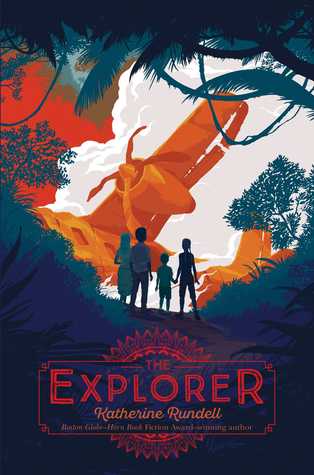
- The Explorer
Katherine Rundell
4.2 (4k) average on GoodreadsChildren'sBoth are set in the Amazon and feature children in the wilderness. Rundell's offers a more rugged, survivalist narrative with a starker portrayal of the jungle's dangers. Ibbotson maintains a more romantic, whimsical tone, emphasizing wonder and discovery over pure survival, making it a gentler adventure.
- Eat, Pray, Love
Elizabeth Gilbert
3.6 (1.5M) average on GoodreadsLifestyleA heartbroken writer leaves her conventional life for a year-long global search for pleasure in Italy, spiritual devotion in India, and unexpected love and balance in Bali.
- Wild: From Lost to Found on the Pacific Crest Trail
Cheryl Strayed
4.0 (615k) average on GoodreadsLifestyleAfter losing her mother and her marriage, a young woman impulsively hikes over a thousand miles of the Pacific Crest Trail alone, finding strength and healing in the unforgiving wilderness.


Enjoyed the summary?
A summary gives you the shape of the book. The book itself has the detail, the examples and the voice.
Find Journey to the River Sea on AmazonAs an Amazon Associate, BookBrief earns from qualifying purchases. How we're funded