
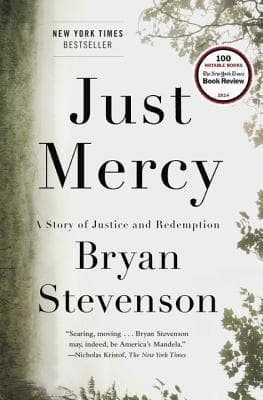
Core Idea
- Difficulty
- Medium
- Read it if
- You are interested in understanding the systemic injustices within the American criminal justice system, particularly regarding race, poverty, and capital punishment, and want to be moved by powerful human stories of resilience and redemption.
- Skip it if
- You are looking for a purely academic or policy-focused analysis without personal narratives, or you are uncomfortable with confronting difficult realities about racial inequality and human suffering.
Key Takeaways from Just Mercy
Proximity to the Condemned
True justice requires getting close to the suffering and marginalized.
Stevenson states that a basic flaw in our justice system and society is our tendency to distance ourselves from those who suffer or are condemned. This distance allows us to dehumanize them, making it easier to accept harsh, unfair outcomes. By intentionally getting 'proximate' to the poor, incarcerated, and condemned, Stevenson and his team at EJI gain insights into their humanity, the systemic problems that led to their situations, and the path to real justice. This closeness builds empathy, challenges old ideas, and shows the complex realities often hidden by legal terms and societal prejudice. Without this closeness, the abstract idea of 'justice' stays cold and ineffective, failing to address the human cost of our legal frameworks.
“Each of us is more than the worst thing we've ever done.”
In the book: Stevenson's personal experience living and working in Alabama, directly engaging with death row inmates, and establishing the Equal Justice Initiative in a community deeply affected by racial injustice and poverty. His interactions with clients like Walter McMillian, where he spent countless hours understanding their stories and building trust, exemplify this principle.
Try this: Seek out opportunities to engage with marginalized communities or individuals facing hardship. Volunteer with organizations working on social justice issues, listen actively to perspectives different from your own, and challenge the urge to judge from a distance. Read memoirs or watch documentaries that offer intimate perspectives on systemic issues.
Related ideas: empathy, dehumanization, social-justice, systemic-bias
The Legacy of Racial Terror
America's punitive justice system is deeply rooted in its history of racial violence and oppression.
Stevenson shows how the American justice system, especially in the South, cannot be understood without considering the nation's history of racial terror, slavery, and Jim Crow. He argues that practices like the death penalty and mass incarceration are modern forms of earlier racial control and oppression. The unfair application of justice, the high number of Black individuals in prisons and on death row, and the often quick legal processes for people of color reflect the violence and dehumanization of the lynching era. This historical connection is not accidental but a systemic inheritance, where fear, racial bias, and economic disadvantage continue to shape who is seen as 'criminal' and how they are punished. Recognizing this history is important for fixing current injustices.
“The death penalty in America is a direct descendant of lynching.”
In the book: The case of Walter McMillian, a Black man wrongly convicted and sentenced to death for the murder of a white woman in Alabama, despite overwhelming evidence of his innocence and a clear pattern of racial bias in his prosecution. Stevenson also details the historical context of lynching and its psychological impact on communities, directly linking it to contemporary capital punishment.
Try this: Educate yourself on the history of racial injustice in America beyond the Civil Rights Movement. Support initiatives that address systemic racism within the criminal justice system, such as bail reform, sentencing reform, and efforts to confront historical markers of racial violence. Advocate for a more equitable and historically informed approach to justice.
Related ideas: racial-bias, mass-incarceration, jim-crow, death-penalty
Hope as an Act of Resistance
Maintaining hope in the face of overwhelming injustice is essential for driving change.
Stevenson stresses that hope is not a passive feeling but an active choice, especially for those fighting against unfair systems. He defines hope as a commitment to working for change, even when things seem impossible and setbacks happen often. For Stevenson and his clients, hope fuels the difficult legal battles, repeated appeals, and long waits for justice. It is the belief that redemption is possible and that human dignity can be restored, even in the darkest parts of society. Without this strong hope, the fight against injustice would quickly give in to despair, allowing unfair systems to remain unchallenged.
“Hope is not something you have. Hope is something you create, with your actions.”
In the book: Stevenson's unwavering commitment to clients like Walter McMillian, even after years of legal defeats and threats. His ability to find glimmers of humanity and potential for change in seemingly hopeless situations, and to inspire his team to continue fighting, demonstrates this principle. The sheer longevity and persistence of EJI itself is a testament to sustained hope.
Try this: Identify an area of injustice that resonates with you and commit to taking consistent, even small, actions toward change. Understand that progress is often slow and nonlinear, and cultivate resilience by focusing on the impact of your efforts, not just immediate outcomes. Connect with others who share similar goals to reinforce collective hope.
Related ideas: resilience, activism, redemption, social-change
Challenging the 'Superpredator' Myth
The adultification of children in the justice system leads to profound and irreparable harm.
Stevenson spends much of the book exposing the cruelty of treating children as adults in the criminal justice system, especially with life sentences without parole for juvenile offenders. He points out how the 'superpredator' idea of the 1990s led to harsh policies that ignored scientific understanding of adolescent brain development and the chance for rehabilitation. Sentencing children to die in prison denies their ability to grow, make mistakes, and find redemption, often making existing trauma worse and leading to very unfair outcomes. Stevenson argues that such policies show a societal failure to protect its most vulnerable and demonstrate a desire for punishment over restoration, ultimately harming both the children and society's moral health.
“We've created a system that treats children like adults, and then punishes them for being children.”
In the book: The stories of children like Antonio Nunez, Ian Manuel, and Joe Sullivan, who were sentenced to life without parole for crimes committed as minors. Stevenson details the horrific conditions they faced in adult prisons and the long, arduous legal battles EJI waged to challenge these sentences, ultimately leading to Supreme Court victories.
Try this: Support organizations working to reform juvenile justice. Advocate for policies that prioritize rehabilitation, age-appropriate sentencing, and mental health support for young offenders. Challenge narratives that demonize children or adolescents who make mistakes, recognizing their capacity for change and growth.
Related ideas: juvenile-justice, rehabilitation, child-rights, sentencing-reform
The Power of Narrative
Stories, not just legal arguments, are crucial for shifting hearts and minds toward justice.
Beyond legal papers and courtroom arguments, Stevenson consistently emphasizes the power of storytelling. He understands that to truly change the system, one must first change the narrative that dehumanizes the incarcerated and justifies harsh punishments. By sharing the detailed stories of his clients – their backgrounds, traumas, and humanity – he forces readers and legal professionals to confront the complex realities behind their convictions. These stories break through prejudice and statistics, building empathy and showing the deep injustices that legal details alone cannot convey. This approach is not just strategic; it is fundamental to asserting the inherent dignity of every person.
“The power of just mercy is that it insists that we all have a story, and that story matters.”
In the book: The entire structure of 'Just Mercy' is a testament to this principle, weaving together individual client stories with broader legal and historical analysis. The detailed accounts of Walter McMillian's life, his family's struggle, and the blatant racial bias in his case serve as the emotional core that drives the book's arguments.
Try this: Practice active listening and seek to understand the full stories of people, especially those whose experiences differ from your own. Support and amplify voices from marginalized communities. When advocating for change, frame your arguments with compelling human stories rather than just abstract facts or statistics.
Related ideas: storytelling, empathy, advocacy, human-dignity
Mercy as an Imperative
Justice without mercy is often just vengeance, perpetuating cycles of harm.
Stevenson argues that mercy is not a weakness but an essential part of true justice. He believes that a purely punitive system, without mercy, fails to address the causes of crime, ignores the potential for rehabilitation, and ultimately lessens the state's moral authority. Mercy acknowledges the brokenness in all humanity, recognizing that everyone, including those who commit crimes, has a story, often marked by trauma, poverty, or mental illness. Embracing mercy allows for redemption, promotes healing, and breaks cycles of violence, moving society towards a more humane approach to crime and punishment. It is a commitment to restorative justice over purely retributive justice.
“We are all broken by something. We have all been hurt. We all need compassion.”
In the book: Stevenson's work with clients who have committed serious crimes but demonstrate remorse, mental health challenges, or a capacity for change. His advocacy for their release or reduced sentences, not just based on legal technicalities but on their human potential for redemption, exemplifies the call for mercy. He also highlights the societal cost of unrelenting punishment.
Try this: Reflect on situations where you might be quick to judge or condemn, and consciously seek to understand the context and potential for mercy. Support restorative justice programs in your community. Advocate for policies that prioritize rehabilitation, mental health treatment, and reintegration over solely punitive measures in the justice system.
Related ideas: redemption, restorative-justice, compassion, punishment
The Trauma of Incarceration
Mass incarceration inflicts deep psychological and emotional wounds on individuals and communities.
Beyond physical confinement, Stevenson details the psychological and emotional trauma caused by America's mass incarceration system. He highlights how isolation, constant threat, lack of human connection, and the arbitrary nature of prison life lead to severe mental health problems, even for innocent people. This trauma affects not only the incarcerated but also their families and communities, creating cycles of poverty, instability, and distrust in the justice system. The book argues that this systemic trauma is a direct result of a punitive, rather than rehabilitative, approach to crime, and it continues cycles of harm that undermine societal well-being.
“The opposite of poverty is not wealth. The opposite of poverty is justice.”
In the book: The detailed accounts of mental health crises among inmates, including those on death row, and the devastating impact of long-term solitary confinement. Stevenson describes how the families of incarcerated individuals, like Walter McMillian's, suffer social ostracism and economic hardship, illustrating the ripple effect of imprisonment.
Try this: Support initiatives that provide mental health services for incarcerated individuals and their families. Advocate for the reduction of solitary confinement and other inhumane prison practices. Educate yourself on the long-term societal costs of mass incarceration beyond simply crime rates.
Related ideas: trauma, mental-health, prison-reform, solitary-confinement
The Perils of Indifference
Societal indifference to injustice allows systemic problems to fester and grow.
Stevenson strongly condemns societal indifference as a silent helper to injustice. He argues that the justice system's ability to operate with such cruelty and bias is directly enabled by the apathy of those not directly affected. When people choose to look away, believe convenient stories, or accept 'tough on crime' talk without critical thought, they implicitly support the status quo. This indifference allows wrongful convictions, racial disparities, and inhumane punishments to continue unchecked, ultimately harming the moral fabric of society. Stevenson urges readers to recognize their role in these systems and to choose active engagement over passive acceptance.
“We are all implicated when we allow others to be mistreated.”
In the book: The widespread public acceptance of Walter McMillian's conviction despite clear evidence of his innocence and the blatant racial bias. The lack of public outcry over the sentencing of children to life without parole for decades. The general societal disinterest in the conditions and realities of prisons until EJI brought these stories to light.
Try this: Actively seek out information about injustices occurring in your community and beyond. Challenge your own biases and assumptions. Speak up against injustice, even when it's uncomfortable. Support organizations and journalists who expose systemic problems and advocate for accountability.
Related ideas: apathy, accountability, moral-responsibility, social-responsibility
The Necessity of Uncomfortable Truths
True progress requires confronting painful historical and contemporary realities.
Stevenson insists that real societal progress, especially in racial justice, requires a fearless confrontation with uncomfortable truths about our past and present. This means acknowledging the full brutality of slavery, the systemic violence of Jim Crow, and the lasting impact of these eras in today's mass incarceration and racial bias. Avoiding these difficult conversations or sanitizing history prevents true understanding and reconciliation. He argues that until America deals honestly with its history of racial terror and its impact, it cannot fully heal or dismantle the oppressive systems that still operate. This confrontation, though painful, is the only way to meaningful and lasting change.
“You can't change the world with a lie.”
In the book: EJI's creation of the National Memorial for Peace and Justice and the Legacy Museum, which are dedicated to documenting and confronting America's history of lynching and racial injustice. These projects are physical manifestations of Stevenson's belief in the power of truth-telling to drive social change.
Try this: Support educational initiatives that present a comprehensive and honest account of history, including its darker chapters. Engage in difficult conversations about race and injustice, even when they are uncomfortable. Visit historical sites or museums dedicated to confronting difficult truths, such as EJI's Legacy Museum.
Related ideas: historical-memory, reconciliation, racial-justice, truth-telling
Beyond Guilt and Innocence
The justice system often fails to address the deeper societal issues that lead to crime.
Stevenson critically examines how the legal system's narrow focus on 'guilt' or 'innocence' often hides the deeper societal issues that contribute to crime and incarceration. He shows that poverty, mental illness, lack of education, and systemic racism are often ignored or made worse by a system that prioritizes punishment over addressing root causes. The book highlights how legal outcomes are heavily influenced by wealth and access to resources, creating a two-tiered system where the poor and marginalized are punished disproportionately. This focus on individual blame, without acknowledging systemic failures, prevents real reform and continues cycles of crime and disadvantage, reinforcing the idea that justice is not blind but deeply biased.
“We have a system of justice in America that treats you much better if you're rich and guilty than if you're poor and innocent.”
In the book: The numerous cases of indigent clients receiving inadequate legal representation, leading to wrongful convictions or excessively harsh sentences. The specific example of Walter McMillian, whose poverty and race made him an easy target for a biased prosecution, illustrating how the system is rigged against the vulnerable.
Try this: Advocate for increased funding for public defenders and legal aid services. Support policies that address poverty, improve access to mental healthcare, and provide quality education in underserved communities. Challenge the notion that crime is solely an individual failing, and consider the broader societal factors at play.
Related ideas: poverty, systemic-inequality, legal-aid, root-causes
Just Mercy Quotes
“The opposite of poverty is not wealth; the opposite of poverty is justice.”
“Each of us is more than the worst thing we've ever done.”
“We are all broken by something. We have all hurt, and been hurt. We all require mercy.”
“Proximity to suffering, if we are willing to enter it, should change us.”
“The power of just mercy is that it belongs to everybody.”
“Ultimately, we've all been complicit in the creation of a system that treats you better if you're rich and guilty than if you're poor and innocent.”
“We have a system of justice in this country that treats you much better if you're rich and guilty than if you're poor and innocent.”
“We can't change the world unless we're willing to be changed by the world.”
“There is no way to talk about justice without talking about mercy.”
“Hope is our superpower. Hope is what allows us to push forward, even when the truth is difficult to bear.”
“The true measure of our character is how we treat the poor, the disfavored, the incarcerated, and the condemned.”
“Fear and anger are the greatest enemies of justice.”
“The power of identity is that it's something that we can all connect to.”
“We have to be willing to stand with the condemned, with the broken, with the marginalized.”
Quiz
10 questions on the main ideas. Each answer comes with a short explanation.
Question 1
Which organization did Bryan Stevenson found, dedicated to defending the poor, the incarcerated, and the wrongly condemned?
- Southern Poverty Law Center
- American Civil Liberties Union
- Equal Justice Initiative
- NAACP Legal Defense and Educational Fund
Show answer
C. Equal Justice Initiative Bryan Stevenson founded the Equal Justice Initiative (EJI) in Montgomery, Alabama, as described in the book's introduction.
Question 2
What was the name of EJI's first major client, a young Black man sentenced to death for a murder he did not commit?
- Anthony Ray Hinton
- Walter McMillian
- Michael Lindsey
- Joe Sullivan
Show answer
B. Walter McMillian Walter McMillian's case is a central narrative in 'Just Mercy,' highlighting the injustices faced by the poor and innocent.
Question 3
According to the book, what historical practice is the death penalty in America presented as a direct descendant of?
- Slavery
- Jim Crow laws
- Lynching
- Convict leasing
Show answer
C. Lynching The book explicitly states that 'the death penalty in America is a direct descendant of lynching,' emphasizing its roots in racial terror.
Question 4
Which of the following describes the general attitude of the local law enforcement and community in Monroeville, Alabama, towards Bryan Stevenson and EJI during Walter McMillian's case?
- They were generally supportive and cooperative with EJI's investigation.
- They were largely indifferent, viewing it as an outside matter.
- They were often hostile and resistant, viewing Stevenson as an outsider interfering with local justice.
- They were cautiously optimistic about EJI's efforts but provided little assistance.
Show answer
C. They were often hostile and resistant, viewing Stevenson as an outsider interfering with local justice. Stevenson recounts numerous instances of hostility, threats, and resistance from local authorities and residents in Monroeville, reflecting deep-seated racial biases and opposition to challenging the status quo.
Question 5
What major legal precedent did the Equal Justice Initiative successfully challenge concerning juvenile offenders?
- The use of solitary confinement for minors.
- Sentencing children to life imprisonment without parole.
- The practice of trying juveniles as adults.
- The death penalty for minors.
Show answer
B. Sentencing children to life imprisonment without parole. The book highlights EJI's successful campaign to challenge 'the cruel practice of sentencing children to die in prison,' referring to life imprisonment without parole for juveniles.
Question 6
What key argument does Stevenson make regarding 'mercy' in the context of the American justice system?
- Mercy is a sign of weakness and undermines the deterrent effect of punishment.
- Mercy is only applicable to those who have committed minor offenses.
- Mercy is a fundamental component of true justice, acknowledging shared humanity and the potential for redemption.
- Mercy should be reserved for cases where innocence is unequivocally proven.
Show answer
C. Mercy is a fundamental component of true justice, acknowledging shared humanity and the potential for redemption. Stevenson's entire work is a 'clarion call to end mass incarceration in America' through the lens of mercy, emphasizing its role in redemption and a more just society.
Question 7
Beyond individual legal cases, what broader 'revolutionary projects' did EJI undertake to confront Americans with the history of racial injustice?
- Establishing a national reparations fund for descendants of slaves.
- Lobbying Congress for stricter hate crime legislation.
- Creating the National Memorial for Peace and Justice and the Legacy Museum.
- Developing educational curricula on civil rights for public schools.
Show answer
C. Creating the National Memorial for Peace and Justice and the Legacy Museum. The book mentions EJI's 'revolutionary projects designed to confront Americans with our history of racial injustice,' which include the memorial and museum in Montgomery.
Question 8
What specific tactic did Bryan Stevenson's team use to gather crucial evidence that helped exonerate Walter McMillian, despite initial resistance?
- They exposed a coerced confession by the state's star witness, Ralph Myers, through his recantation and a recording.
- They found new DNA evidence at the crime scene that conclusively linked another suspect.
- They uncovered a confession from the actual perpetrator of the murder.
- They presented irrefutable alibi witnesses who had previously been ignored by the police.
Show answer
A. They exposed a coerced confession by the state's star witness, Ralph Myers, through his recantation and a recording. A key turning point in McMillian's case was securing the recantation of Ralph Myers, the state's primary witness, who admitted his testimony was coerced by law enforcement.
Question 9
Stevenson frequently discusses how poverty and race are inextricably linked to vulnerability in the justice system. Which of the following best exemplifies this claim through a recurring theme in the book?
- The difficulty of securing pro bono legal representation for wealthy defendants.
- The disproportionate sentencing of white-collar criminals compared to violent offenders.
- The concept that 'we are all broken' and that proximity to suffering is essential for understanding justice.
- The systemic bias where the 'rich and guilty' are treated better than the 'poor and innocent,' often due to inadequate legal counsel and racial prejudice.
Show answer
D. The systemic bias where the 'rich and guilty' are treated better than the 'poor and innocent,' often due to inadequate legal counsel and racial prejudice. The book explicitly states that the death penalty 'is a system that treats the rich and guilty better than the poor and innocent,' a theme powerfully illustrated throughout McMillian's case and others.
Question 10
What is one of the profound personal lessons Bryan Stevenson shares about working with marginalized and condemned individuals, as reflected in the book?
- That maintaining emotional distance is crucial for effective legal advocacy.
- That the legal system is inherently fair and will correct its own errors eventually.
- That proximity to suffering and understanding the humanity of those on the margins is essential for true justice and personal growth.
- That legal victories are primarily achieved through aggressive courtroom tactics and public shaming of opponents.
Show answer
C. That proximity to suffering and understanding the humanity of those on the margins is essential for true justice and personal growth. Stevenson repeatedly emphasizes the importance of 'getting proximate' to suffering, understanding the full humanity of his clients, and recognizing that 'we are all broken' as foundational to his work and his understanding of justice.
Just Mercy FAQ
What is 'Just Mercy' about?
'Just Mercy' is a powerful memoir by Bryan Stevenson, chronicling his work as a lawyer dedicated to defending the poor, the incarcerated, and the wrongly condemned through the Equal Justice Initiative (EJI). It highlights the injustices within the American criminal justice system, particularly focusing on issues like wrongful convictions, racial bias, and the death penalty.
Does the legal system truly work for everyone, according to 'Just Mercy'?
According to 'Just Mercy,' the legal system often fails to work equally for everyone, especially for the poor and people of color. Stevenson's work with EJI consistently reveals systemic biases that lead to disproportionate sentencing, wrongful convictions, and a justice system that favors the wealthy and privileged.
Who is Walter McMillian and why is his story important in the book?
Walter McMillian was one of Bryan Stevenson's first clients, a Black man wrongly convicted and sentenced to death for a murder he did not commit. His case is central to 'Just Mercy' as it starkly illustrates the racial prejudice, prosecutorial misconduct, and systemic flaws that plague the American death penalty system, drawing parallels to historical lynching.
What is the Equal Justice Initiative (EJI) and what do they do?
The Equal Justice Initiative (EJI) is a non-profit law office founded by Bryan Stevenson in Montgomery, Alabama. EJI provides legal representation to indigent defendants and prisoners denied fair treatment, challenges wrongful convictions, and advocates for criminal justice reform, including ending excessive punishment and mass incarceration.
How does 'Just Mercy' differ from other books about criminal justice reform?
'Just Mercy' distinguishes itself by blending Stevenson's personal memoir and experiences with compelling client stories, offering a deeply human perspective on systemic injustice. Unlike purely academic or policy-focused texts, it emphasizes the redemptive power of mercy and directly confronts the historical roots of racial injustice in the American legal system.
What is the book's stance on the death penalty?
The book takes a strong stance against the death penalty, arguing that it is often applied unjustly, disproportionately affects the poor and minorities, and is a direct descendant of historical lynching. Stevenson presents numerous cases of wrongful convictions and the moral implications of state-sanctioned executions.
Can 'Just Mercy' inspire real-world change?
Yes, 'Just Mercy' has significantly contributed to public discourse and awareness regarding criminal justice reform. Its powerful narratives and Stevenson's advocacy have inspired discussions, policy changes, and increased support for organizations like EJI, demonstrating its capacity to drive real-world change.
What is the concept of 'redemption' as explored in 'Just Mercy'?
In 'Just Mercy,' redemption is explored not just as a personal journey for individuals who have made mistakes, but also as a societal imperative. Stevenson argues that showing mercy and compassion, even to those society has condemned, is essential for a just society and offers the potential for both individual and collective healing and transformation.
About the author

Bryan Stevenson is a widely acclaimed lawyer, activist, and author. His impactful memoir, "Just Mercy: A Story of Justice and Redemption," details his work as founder and executive director of the Equal Justice Initiative. Stevenson is a clinical professor at New York University School of Law and a recipient of numerous awards for his tireless advocacy for the wrongly condemned and marginalized.
Similar books
- 1984
George Orwell
4.2 (3.1M) average on GoodreadsPoliticsIn a future where surveillance and thought control are absolute, a man's search for truth clashes with the Party, showing that hope can be a form of rebellion.
- Animal Farm
George Orwell
4.0 (2.7M) average on GoodreadsPoliticsA farm animals' rebellion against humans turns into a pig-led dictatorship, showing how power corrupts and revolutionary ideals are betrayed.
- Freakonomics: A Rogue Economist Explores the Hidden Side of Everything
Steven D. Levitt
4.0 (709k) average on GoodreadsBusinessThis book uses economic principles to reveal the surprising incentives behind everything from drug dealing and real estate to cheating teachers and the decline of crime.
- I Am Malala: The Story of the Girl Who Stood Up for Education and Was Shot by the Taliban
Malala Yousafzai
4.1 (419k) average on GoodreadsPoliticsA teenage girl from a Taliban-controlled valley refuses to give up her books, becoming a global voice for education even after an assassination attempt.
- Atlas Shrugged
Ayn Rand
3.7 (354k) average on GoodreadsPoliticsIn a dystopian America where innovators vanish, a brilliant heiress races to uncover the truth behind the disappearing industrialists and the enigmatic John Galt, who vows to stop the world's progress.
- The Art of War
Sun Tzu
4.0 (330k) average on GoodreadsBusinessLearn ancient strategies for outsmarting rivals, whether on the battlefield or in the boardroom.






Enjoyed the summary?
A summary gives you the shape of the book. The book itself has the detail, the examples and the voice.
Find Just Mercy on AmazonAs an Amazon Associate, BookBrief earns from qualifying purchases. How we're funded