
Synopsis
Covers the whole plot, including the ending.
- Difficulty
- Easy
- Pacing
- Fast
- Mood
- Humorous, Adventurous, Chaotic, Suspenseful
- Read it if
- You love fast-paced, witty ensemble adventures with a healthy dose of chaos and historical shenanigans.
- Skip it if
- You prefer serious, scientifically rigorous time-travel narratives or dislike British humor and frequent explosions.
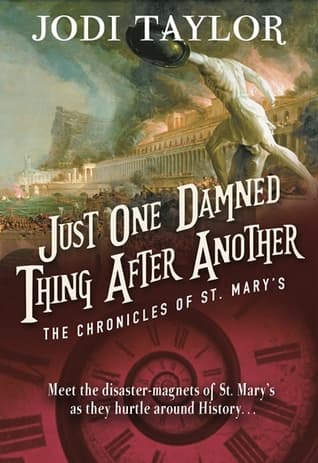
Just One Damned Thing After Another Plot Summary
Covers the whole plot, including the ending.
The Interview and Induction
Madeleine Maxwell, known as Max, is interviewed by Dr. Bairstow and Professor Rapson for a job at St Mary's Institute of Historical Research. She first thinks it's a normal academic role, but soon learns the institute's real purpose: they 'investigate major historical events in contemporary time' using time pods. Max learns about the chaotic and dangerous reality of the job, including rival groups like the Chronosync Establishment, and the constant threat of temporal paradoxes. Her start is a blur, involving meeting the unusual team, learning strict rules for historical observation, and understanding the high risks of their missions, which often result in injuries or death.
The Jurassic Period: First Jump and First Disaster
For her first jump, Max goes with Dr. Peterson, an experienced historian, and a security team to the Jurassic Period to observe a Tyrannosaurus Rex. Despite careful planning, the mission quickly turns chaotic when their pod breaks down, leaving them stranded and vulnerable. Max, still new, is thrown into a terrifying survival situation, seeing the power of dinosaurs and the harsh realities of temporal research. This first mission is a harsh awakening for Max, showing the constant danger and unpredictable nature of St Mary's work, and strengthening her resolve to survive and contribute.
The Destruction of the Library of Alexandria
Max, now part of a team, is sent to observe the destruction of the Great Library of Alexandria. The mission is meant to be simple observation, but it quickly becomes complicated. They find evidence suggesting the fire was not an accident but planned, possibly by an opposing time-travel organization. During their escape, they meet operatives from the Chronosync Establishment, leading to a tense fight. This mission marks Max's first direct encounter with the rival organization and introduces her to the idea that history is not just watched, but actively changed by others, putting St Mary's historians in greater danger.
The Battle of Hastings and a Shocking Betrayal
The team travels to 1066 to observe the Battle of Hastings. This mission is important for understanding a key moment in English history. However, during the observation, they are ambushed, and it becomes clear their movements have been compromised. Suspicion falls on a team member, Dr. Petrus, who is revealed to be a traitor working for Chronosync. The betrayal leads to a violent fight and a desperate escape, showing that St Mary's is threatened not only by outside forces but also by internal corruption, making trust difficult.
The Treachery of Dr. Petrus and the Aftermath
After the disastrous Battle of Hastings mission, the full extent of Dr. Petrus's betrayal is revealed. He had been giving information to Chronosync, endangering many missions and lives. The St Mary's team deals with the emotional and operational results of this betrayal, leading to intense scrutiny and increased security within the institute. Max, having seen the betrayal, understands more deeply the political and personal risks of their work, and the constant need for watchfulness against both known and unknown enemies.
The Cretaceous Period: A Rescue Mission
A historian, Dr. Julian, is reported missing in the Cretaceous Period after his pod breaks down. Max, now more experienced and showing leadership, volunteers to lead a rescue mission. The team faces extreme environmental hazards, including dangerous dinosaurs and the constant threat of temporal instability. Max shows her growing resourcefulness and courage under pressure, navigating difficult terrain and making critical decisions to find and rescue Dr. Julian. The mission is successful, but with significant risks and injuries, further proving Max's reputation as a capable and determined historian, willing to risk her life for her colleagues.
A Developing Romance with Leon
Through her many experiences, Max finds herself increasingly drawn to Leon Farrell, a charming and brave fellow historian. Their relationship develops in the high-stress environment of St Mary's, with shared dangers and close calls bringing them together. Their initial flirting grows into a deeper connection, offering Max emotional support and companionship in a dangerous world. Their romance adds a human element to the science-fiction story, showing that even with temporal paradoxes and dinosaur attacks, personal relationships can grow and provide strength.
The Great Fire of London and a Narrow Escape
The team travels to 1666 to observe the Great Fire of London. What starts as a historical observation quickly becomes a desperate struggle for survival as the fire spreads faster and more unpredictably than expected. The team's pod is damaged, trapping them in the fire and panicked crowds. Max, Leon, and the others must use their ingenuity and historical knowledge to navigate the burning city and find a way back to their damaged pod, facing the real threat of being burned or trampled. It is a harrowing experience that pushes them to their limits.
World War I: The Trenches
Max and her team are sent to the trenches of World War I to observe the realities of war. This mission is a sharp contrast to their previous adventures, replacing dinosaurs and ancient fires with the brutal, man-made horrors of the Western Front. They witness firsthand the devastation, constant fear, and human suffering. The mission is emotionally difficult and physically dangerous, as they must avoid being seen while navigating a landscape of constant shelling and sniper fire. It is a sobering reminder of the different forms of danger history can present, and how human conflict can be as deadly as natural disasters.
The Chronosync Threat Escalates
The interventions and attacks by the Chronosync Establishment become more frequent and bold. They are no longer just observing; they are actively trying to change historical events and eliminate St Mary's historians. This escalation suggests a deeper, more sinister goal than just rivalry. Max and St Mary's leadership, especially Dr. Bairstow and Professor Rapson, realize they are facing a full-scale temporal war. The constant threat forces St Mary's to be more active in its defense and intelligence gathering, understanding that history itself is at stake.
The Climax: A Confrontation with Chronosync
The growing conflict with Chronosync ends in a direct and violent confrontation. Max, Leon, and the main St Mary's team are involved in a critical mission that brings them face-to-face with Chronosync operatives, possibly at an important historical moment or at Chronosync's own facility. The battle is intense, involving temporal manipulation, advanced technology, and hand-to-hand combat. Max, using all her experience, plays a key role in disrupting Chronosync's plans, showing her growth from a rookie to a formidable operative. The immediate threat is stopped, but the war for history is far from over.
Aftermath and Reflection
After the intense confrontation, St Mary's evaluates its losses and successes. The immediate threat from Chronosync is contained, but the institute is left to rebuild, mourn fallen colleagues, and repair damaged equipment. Max and Leon, having survived the ordeal, strengthen their bond, acknowledging the ever-present danger but also their commitment to each other and to St Mary's mission. The ending sets the stage for future conflicts, as the threat of Chronosync still exists, and the historians understand that their work is never truly done, as history itself continues to unfold, one damned thing after another.
Just One Damned Thing After Another Characters
Madeleine Maxwell (Max)
Protagonist
The chaotic, resilient, and resourceful historian.
Max is the irreverent, quick-witted, and highly intelligent protagonist. Initially a history student looking for a job, she quickly adapts to the perilous world of St Mary's. Despite her sarcastic nature and a tendency to attract trouble, she possesses immense courage, loyalty, and a strong moral compass. She is driven by a genuine passion for history and a fierce protectiveness of her colleagues, often putting herself in harm's way. Her narrative voice is central to the book's humor and heart, making her a relatable and engaging character.
Relationships: Leon Farrell (Romantic partner and fellow historian.); Dr. Bairstow (Her direct superior and a mentor figure.); Professor Rapson (The Director of St Mary's and a complex, authoritative figure.); Dr. Peterson (Senior historian, initial mentor, and friend.)
Leon Farrell
Supporting
Max's charming and equally chaotic romantic interest and fellow historian.
Leon is a handsome, brave, and often exasperated historian who becomes Max's primary romantic interest. He's pragmatic and loyal, with a dry wit that complements Max's more boisterous personality. He is highly skilled in both historical research and survival, often acting as a grounding force for Max while also being drawn into her adventures. His commitment to St Mary's and his colleagues is unwavering, and he frequently puts himself at risk to protect others, especially Max.
Relationships: Madeleine Maxwell (Max) (Romantic partner.); Dr. Bairstow (Superior and colleague.); Professor Rapson (Director and colleague.)
Dr. Bairstow
Supporting
Max's long-suffering and highly competent direct superior.
Dr. Bairstow is the head of Max's department and her immediate superior. He is a highly intelligent, dedicated, and often stressed individual, constantly trying to manage Max's propensity for chaos. Despite his frequent exasperation with her, he deeply cares for his team and is fiercely protective of them. He is a pragmatic leader, balancing the scientific rigor of historical research with the dangerous realities of time travel. He often acts as a voice of reason, though he is not immune to St Mary's general madness.
Relationships: Madeleine Maxwell (Max) (Direct superior and mentor.); Professor Rapson (Colleague and superior.); Dr. Peterson (Colleague and friend.)
Professor Rapson
Supporting
The enigmatic and authoritative Director of St Mary's.
Professor Rapson is the formidable and somewhat mysterious Director of St Mary's. He is a brilliant but demanding leader, focused on the institute's mission and the preservation of history. Rapson maintains a strict demeanor, often appearing detached, but he possesses a deep understanding of temporal mechanics and the threats facing St Mary's. He holds the ultimate responsibility for the institute's operations and the safety of its historians, making difficult decisions and bearing the weight of their dangerous endeavors. He often speaks in riddles, but his authority is unquestioned.
Relationships: Madeleine Maxwell (Max) (Director and superior.); Dr. Bairstow (Subordinate and colleague.); Dr. Peterson (Subordinate and colleague.)
Dr. Peterson
Supporting
A seasoned and often cynical senior historian.
Dr. Peterson is one of the most experienced historians at St Mary's, known for his dry wit and pragmatic approach to dangerous missions. He serves as Max's initial mentor, guiding her through the perils of time travel and the institute's eccentricities. Despite his often-gruff exterior, he is deeply loyal to St Mary's and his colleagues, always willing to put himself on the line. He has seen much during his career and carries the weight of past losses, making him a grounded and realistic presence amidst the chaos.
Relationships: Madeleine Maxwell (Max) (Mentor and colleague.); Dr. Bairstow (Colleague and friend.); Leon Farrell (Colleague.)
Dr. Petrus
Antagonist
The traitorous historian who betrays St Mary's to Chronosync.
Dr. Petrus initially appears as a seemingly ordinary, albeit somewhat aloof, historian at St Mary's. However, he is later revealed to be a mole working for Chronosync, the rival time-travel organization. His betrayal is calculated and dangerous, leading to ambushes and compromised missions that endanger the lives of his former colleagues. His motives are driven by a desire for power or ideological alignment with Chronosync, making him a formidable and personal threat to St Mary's.
Relationships: Madeleine Maxwell (Max) (Former colleague, now adversary.); Dr. Bairstow (Former superior, now adversary.); Chronosync Establishment (His true allegiance.)
Mrs. Sally Sykes
Supporting
The formidable and maternal head of St Mary's infirmary.
Mrs. Sykes is the no-nonsense, highly competent head of St Mary's infirmary. She is a maternal figure to the historians, often patching them up after their dangerous missions with a mixture of sternness and genuine care. She is privy to the institute's secrets and understands the high risks involved, often acting as a confidante and a source of practical advice. Her presence provides a sense of stability and reassurance, despite the constant stream of injured historians she treats.
Relationships: Madeleine Maxwell (Max) (Caretaker and confidante.); All St Mary's Historians (Medical caretaker and maternal figure.)
Mr. Bashford
Supporting
The eccentric and brilliant head of the Technical Department.
Mr. Bashford is the genius but socially awkward head of the Technical Department at St Mary's, responsible for the creation and maintenance of the time pods. He is often lost in his own world of equations and machinery, preferring his devices to people. Despite his eccentricities, his technical prowess is indispensable to St Mary's operations. He is fiercely dedicated to his work, and his inventions are what make the historical investigations possible, even if they occasionally have explosive side effects.
Relationships: Professor Rapson (Colleague and superior.); All St Mary's Historians (Provides and maintains their time travel technology.)
Just One Damned Thing After Another Themes
The Allure and Peril of History
The main theme is the strong pull of witnessing history firsthand, along with the great dangers it brings. St Mary's historians are driven by a desire for truth and understanding, but this pursuit constantly puts their lives at risk, whether from prehistoric predators, ancient fires, or human conflict. The book shows that history is not a static subject but a living, often violent force that resists tampering. Max's journey, from her initial wonder at seeing a T-Rex to her terror in the trenches of WWI, clearly illustrates this dual nature of historical investigation.
“History is just one damned thing after another.”
The Nature of Time and Paradox
The novel explores the idea of time and the dangers of temporal interference. St Mary's follows strict rules to avoid paradoxes, focusing on observation over intervention. However, Chronosync actively tries to change history, introducing the terrifying possibility of catastrophic temporal shifts. The characters constantly deal with the fragility of the timeline and the huge responsibility of their actions, understanding that even a small change could unravel the past, present, and future. The constant threat of 'temporal displacement' or 'temporal distortion' highlights this theme.
“We don't do 'time-travel' - we 'investigate major historical events in contemporary time'.”
Loyalty, Trust, and Betrayal
In the high-stakes world of St Mary's, loyalty and trust are very important, especially with the constant threat of betrayal. The close bonds formed between historians, created in shared danger, are essential for their survival. However, the discovery of Dr. Petrus's betrayal shatters this trust, showing the institute's vulnerability to internal threats. Max's growing relationships, especially with Leon and her superiors, highlight the importance of steady loyalty in a world where even history itself can be an enemy. The emotional impact from betrayal is as devastating as any physical injury.
“When you're fighting history, you need to know who's got your back.”
Coping with Trauma and Loss
Given the dangerous nature of their work, St Mary's historians often face trauma, injury, and the loss of colleagues. The book shows how individuals cope with these constant stresses, often through dark humor, camaraderie, and a shared understanding of their unique circumstances. Max's initial shock at the casual mention of deaths changes to a hardened acceptance, but the emotional cost is always present. The infirmary scenes and quiet moments of reflection after a disastrous mission highlight the psychological impact of living a life constantly on the edge of history.
“I'm told the death rate for new recruits is alarmingly high.”
The Human Element Amidst Chaos
Despite the science fiction premise and grand historical settings, the novel focuses on the very human experiences of its characters. Max's humor, her developing romance with Leon, and the close-knit, often dysfunctional, family dynamic of St Mary's provide a human contrast to the explosions, dinosaurs, and temporal paradoxes. These personal connections and emotional struggles remind the reader that even with world-altering events, individual lives, loves, and losses are very significant. The human reactions to the extraordinary make the story relatable and engaging.
“We are not just observers, we are living, breathing parts of the historical tapestry.”
Plot Devices & Literary Techniques
Time Pods
The primary mode of temporal travel for St Mary's historians.
The time pods are spherical, technologically advanced vessels that allow historians to travel to specific points in history. They are designed for observation, not intervention, and are equipped with cloaking devices, defensive capabilities, and communication systems. Their reliability is often a source of tension and plot development, as malfunctions frequently lead to life-threatening situations. The pods are central to the institute's operations and represent the cutting edge of temporal technology, constantly being refined by Mr. Bashford and his team.
Chronosync Establishment
The rival time-travel organization that seeks to manipulate history.
Chronosync serves as the primary antagonistic force in the narrative. Unlike St Mary's, which adheres to strict non-intervention policies, Chronosync actively seeks to alter historical events for their own nefarious purposes, often clashing violently with St Mary's historians. Their existence introduces a layer of espionage and conflict, turning historical research into a temporal war. The constant threat posed by Chronosync drives much of the plot, escalating the stakes and forcing St Mary's to adapt and defend itself.
Historical Observation Protocols
Strict rules governing historian behavior to prevent paradoxes.
St Mary's operates under a rigid set of rules designed to prevent temporal paradoxes and minimize historical contamination. These protocols dictate that historians must observe without interfering, blend in with the period, and avoid any actions that could alter the timeline. While often a source of frustration for the characters, these rules are a crucial plot device, creating tension when they are bent or broken, and highlighting the severe consequences of temporal interference. Their existence underscores the institute's scientific and ethical commitment to preserving history as it was.
The Infirmary
A recurring location symbolizing the constant danger and human cost of the work.
The infirmary, run by Mrs. Sykes, is a frequently visited location in St Mary's. It serves as a stark reminder of the physical toll the historians' work takes on them, with characters often ending up there after missions, sometimes severely injured. It's a place of recovery, but also of shared trauma and camaraderie, where the human cost of time travel is most evident. The infirmary scenes provide moments of reflection, dark humor, and reinforce the dangerous reality that underpins the adventurous premise.
Just One Damned Thing After Another Quotes
“History is not a set of facts, it's a story. And like all stories, it can be told in many ways.”
“It's not the fall that kills you, it's the sudden stop at the end.”
“You can't change history. You can only observe it, and possibly make it worse.”
“I'm not saying I'm brave. I'm saying I'm stupid enough to keep going.”
“Tea. Because everything is better with tea.”
“For God's sake, Max, you're not a kitten, you're a fully grown woman with a penchant for blowing things up!”
“Sometimes you just have to run towards the danger, because running away is just as dangerous.”
“We are historians. We don't make history, we record it. Usually with a very large bang.”
“The past is a foreign country; they do things differently there.”
“There's always a solution. Sometimes it's just a really, really stupid one.”
“Trust me, when the world ends, it won't be with a whimper. It'll be with a very loud, very annoying bang.”
“Just one damned thing after another. That's pretty much my life story.”
“Never underestimate the power of a good cup of tea and a well-placed explosion.”
Quiz
10 questions on the plot and the characters. Each answer comes with a short explanation.
Question 1
What is the primary mission of the St Mary's Institute of Historical Research, as described in the book?
- To change historical events for the better.
- To observe and document major historical events in contemporary time.
- To collect historical artifacts for a museum.
- To prevent other time travelers from interfering with history.
Show answer
B. To observe and document major historical events in contemporary time. St Mary's primary goal is to observe and document history, not to change it, collect artifacts, or police other time travelers.
Question 2
What is the name of the main protagonist and narrator of 'Just One Damned Thing After Another'?
- Dr. Maxwell
- Dr. Peterson
- Dr. Madeleine Maxwell
- Dr. Lucy Maxwell
Show answer
C. Dr. Madeleine Maxwell The main protagonist and narrator is Dr. Madeleine Maxwell, often called Max.
Question 3
Which historical event is NOT explicitly mentioned in the book's description as a destination for St Mary's historians?
- 11th-century London
- World War II
- The Cretaceous Period
- The destruction of the Great Library at Alexandria
Show answer
B. World War II The description mentions 11th-century London, World War I, the Cretaceous Period, and the destruction of the Great Library at Alexandria, but not World War II.
Question 4
What is the term St Mary's uses for their method of historical investigation, instead of 'time-travel'?
- Temporal displacement
- Historical contemporization
- Investigating major historical events in contemporary time
- Chronological observation
Show answer
C. Investigating major historical events in contemporary time The book explicitly states they 'don't do 'time-travel' - they 'investigate major historical events in contemporary time'.
Question 5
What common consequence often follows St Mary's historians during their investigations, despite their best efforts?
- They always manage to blend in seamlessly.
- They invariably cause loud explosions and chaos.
- They frequently discover new historical documents.
- They often encounter other time-traveling organizations.
Show answer
B. They invariably cause loud explosions and chaos. The description highlights their 'propensity for causing loud explosions when things get too quiet' and that 'wherever Historians go, chaos is sure to follow in their wake'.
Question 6
Who is the Director of St Mary's, known for his stern demeanor and responsibility for the institute's operations?
- Dr. Peterson
- Dr. Bairstow
- Mr. Markham
- Dr. Travers
Show answer
D. Dr. Travers Dr. Travers is the Director of St Mary's, a key figure overseeing the institute's often chaotic operations.
Question 7
What is the primary danger or antagonist, besides historical events themselves, that the St Mary's historians must contend with?
- Rival historical societies.
- History itself fighting back.
- Other groups or individuals actively working against them.
- Their own technological failures.
Show answer
C. Other groups or individuals actively working against them. The synopsis explicitly states, 'And, as they soon discover - it's not just History they're fighting,' implying external antagonists.
Question 8
What is the significance of the phrase 'Just One Damned Thing After Another' in the context of the book's title and the institute's operations?
- It refers to the endless paperwork involved in historical research.
- It reflects the continuous series of disasters and unpredictable events the historians face.
- It describes the sequential nature of historical events they study.
- It's a direct quote from a historical figure they encounter.
Show answer
B. It reflects the continuous series of disasters and unpredictable events the historians face. The phrase encapsulates the never-ending stream of mishaps and dangerous situations that the St Mary's team encounters during their investigations.
Question 9
Which specific historical period or event is often associated with the character of Leon, one of Max's closest colleagues and eventual love interest?
- Ancient Rome
- World War I
- Victorian England
- The Cretaceous Period
Show answer
B. World War I Leon is frequently involved in missions related to World War I, and his past experiences there are a significant part of his character arc and relationship with Max.
Question 10
What is the primary danger that arises from even a 'wrong move' by a St Mary's historian during an investigation?
- They might get fired from St Mary's.
- They could be permanently trapped in the past.
- History will 'fight back - to the death'.
- They might inadvertently alter the future.
Show answer
C. History will 'fight back - to the death'. The description clearly states, 'But one wrong move and History will fight back - to the death,' emphasizing the lethal consequences of their work.
Just One Damned Thing After Another FAQ
What is the core premise of St Mary's Institute of Historical Research?
St Mary's is an institute where historians 'investigate major historical events in contemporary time,' which is their euphemism for time travel. Their primary objective is to observe and document historical events without interference, though their expeditions often devolve into chaotic, disaster-prone escapades.
Who is Max and what is her role at St Mary's?
Madeleine Maxwell, or Max, is the primary protagonist and narrator, a newly recruited historian at St Mary's. She quickly proves to be a magnet for trouble, often finding herself in life-threatening situations during historical investigations, but also demonstrates remarkable resilience and a quick wit.
What kind of historical events do the St Mary's team investigate in this book?
The team's investigations in this volume range widely, including observing the destruction of the Great Library of Alexandria, witnessing the Battle of Hastings in 1066, and experiencing the trenches of World War I. They even venture into the Cretaceous Period to study dinosaurs, showcasing the breadth of their historical reach.
What are the main rules or protocols St Mary's historians are supposed to follow?
Historians are strictly forbidden from interfering with historical events, bringing anything back from the past, or leaving anything behind. They are meant to be silent observers, though Max and her team frequently break these rules, often with explosive and humorous consequences, struggling to maintain the timeline's integrity.
Who is Leon Farrell and what is his relationship with Max?
Leon Farrell is Max's commanding officer and a senior historian at St Mary's, known for his calm demeanor and exceptional leadership skills. Their relationship develops from a professional one into a deep, complex bond, marked by mutual respect, shared trauma, and burgeoning romantic feelings, which often adds another layer of tension to their dangerous missions.
What is the significance of the destruction of the Great Library of Alexandria in Max's story?
The destruction of the Great Library of Alexandria is one of Max's earliest and most impactful missions, where she witnesses the profound loss of knowledge firsthand. This event deeply affects her, highlighting the fragility of history and the immense responsibility of St Mary's, while also setting a precedent for the dangers she will face.
What is the 'Time Police' and how do they relate to St Mary's?
While not explicitly called the 'Time Police' in this first book, there are hints of a rival organization, later revealed as the Time Police, who also possess time-travel capabilities and have a more aggressive, less ethical approach to history. Their presence foreshadows future conflicts and adds a layer of external threat beyond mere historical accidents.
How does the 'Screaming Room' function within St Mary's?
The Screaming Room is a specialized, soundproofed room within St Mary's designed for historians to vent their frustrations and trauma after particularly harrowing jumps. It serves as a vital psychological release valve, emphasizing the intense emotional toll that constant exposure to danger and historical horrors takes on the staff.
What is the true nature of Dr. Bairstow's role and his relationship with the institution's tech?
Dr. Bairstow is the brilliant but eccentric head of the Technical Department, responsible for the development and maintenance of the time-travel pods, or 'pods.' His deep, almost paternal, connection to the technology and his often-grumpy demeanor mask a fierce protectiveness of St Mary's and its personnel.
How does Max's initial naivety evolve throughout the book?
Max begins as a somewhat naive and inexperienced historian, overwhelmed by the dangers and complexities of time travel. Through repeated exposure to trauma, loss, and the harsh realities of history, she rapidly matures, developing a cynical wit, profound resilience, and a deep understanding of the sacrifices required by her job.
What psychological impact do the constant brushes with death have on the St Mary's historians?
The historians at St Mary's experience significant psychological strain due to constant exposure to danger, death, and historical atrocities. This manifests as a unique blend of dark humor, a strong sense of camaraderie, and the need for emotional outlets like the 'Screaming Room' to cope with the trauma and stress.
How does Max's coping mechanism of humor manifest in high-stress situations?
Max frequently employs sardonic wit and dark humor as a coping mechanism, even in the most dire circumstances, such as facing dinosaurs or dodging bombs. This humor serves to diffuse tension, maintain her sanity, and establish a unique narrative voice, often highlighting the absurdity of their perilous endeavors.
Discuss the psychological toll of witnessing irreversible historical tragedies, such as the destruction of the Great Library.
Witnessing irreversible historical tragedies, like the burning of the Great Library, takes a heavy psychological toll on Max and her colleagues. It instills a sense of profound helplessness and grief for lost knowledge and lives, reinforcing the weight of their mission while also highlighting the futility of their non-interference directive.
Is St Mary's truly committed to non-interference, or is their mission inherently contradictory?
St Mary's officially adheres to a strict non-interference policy, but the book consistently demonstrates the inherent difficulty and frequent failure to uphold this. The historians, especially Max, often find themselves inadvertently or deliberately altering events, leading to a philosophical debate about the true nature of their mission and the ethics of observation.
How does the book blend genres like fantasy, sci-fi, and historical fiction?
The book masterfully blends these genres by grounding its fantastical time-travel premise in meticulous historical research and real-world events. The 'sci-fi' element of time travel is the vehicle, the 'historical fiction' provides the setting and plot points, and the 'fantasy' comes from the often-magical chaos and impossible situations the characters find themselves in, creating a unique narrative tapestry.
What is the book's commentary on the nature of history itself?
The book suggests that history is not a static, neatly documented sequence of events, but a messy, chaotic, and often unpredictable force, as encapsulated by the title's phrase. It implies that even careful observation can be disruptive, and that the past is far more vibrant and dangerous than textbooks often portray.
Does the book present a hopeful or cynical view of humanity's ability to learn from the past?
The book presents a nuanced view. While the constant repetition of human folly and violence across different eras can seem cynical, the dedication of the historians to preserving and understanding history, despite the risks, suggests a hopeful undercurrent. Their efforts imply a belief that knowledge, however painful, is ultimately valuable for the future.
How does the author use humor to balance the often dark and dangerous subject matter?
Jodi Taylor uses humor, particularly Max's sarcastic narration and the absurd situations the team encounters, to provide crucial comic relief and prevent the story from becoming overly grim. This dark humor acts as a coping mechanism for both the characters and the reader, making the intense historical tragedies and personal losses more palatable.
Similar books
- 11/22/63
Stephen King
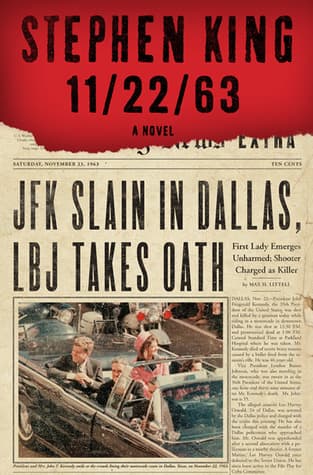
4.3 (420k) average on GoodreadsThrillerStephen King's 11/22/63 provides another compelling contrast. King's novel is a meticulously researched historical fiction with a single, clear objective for its time-traveling protagonist: prevent the assassination of JFK. The narrative is driven by a strong sense of purpose, deep character development, and a profound exploration of fate versus free will, and the potential catastrophic consequences of altering pivotal historical events. The time travel mechanism itself is simple and fixed, allowing King to focus on the human element and the intricate details of the late 1950s and early 1960s. Taylor's Just One Damned Thing After Another, on the other hand, is characterized by multiple, often unplanned, historical jumps and a more reactive, chaotic plot. While King presents a single, significant historical intervention with profound personal and global stakes, Taylor offers a series of smaller, though equally perilous, 'jumps' that emphasize the sheer unpredictability and humor of dealing with history. King's tone is serious and contemplative, building slow-burn suspense and emotional investment, whereas Taylor's is brisk, irreverent, and primarily focused on immediate action and comedic relief, often treating historical consequences with a lighter touch.
- Harry Potter and the Sorcerer's Stone
J.K. Rowling
4.5 (7M) average on GoodreadsFantasyRescued from a miserable life under the stairs, an orphaned boy discovers he's a wizard destined for a magical school, where he uncovers a dangerous secret tied to the dark wizard who murdered his parents.
- The Hunger Games
Suzanne Collins
4.3 (6.4M) average on GoodreadsFantasyIn a future where children fight to the death on live television, Katniss Everdeen volunteers for the arena, turning a death sentence into a fight for survival and a spark of rebellion.
- 1984
George Orwell
4.2 (3.1M) average on GoodreadsPoliticsIn a future where surveillance and thought control are absolute, a man's search for truth clashes with the Party, showing that hope can be a form of rebellion.
- Divergent
Veronica Roth
4.2 (2.9M) average on GoodreadsFantasyIn a society divided by virtues, a sixteen-year-old's difference from the norm starts a rebellion that threatens her world.
- The Hobbit, or There and Back Again
J.R.R. Tolkien
4.3 (2.9M) average on GoodreadsFantasyA comfort-loving hobbit named Bilbo Baggins is whisked away by a mischievous wizard and a band of dwarves on an unexpected journey to reclaim stolen treasure from a fearsome dragon, discovering courage and a magical ring along the way.





Enjoyed the summary?
A summary gives you the shape of the book. The book itself has the detail, the examples and the voice.
Find Just One Damned Thing After Another on AmazonAs an Amazon Associate, BookBrief earns from qualifying purchases. How we're funded