

Synopsis
Covers the whole plot, including the ending.
- Difficulty
- Medium
- Pacing
- Moderate
- Mood
- Thought-provoking, Hopeful, Educational, Resilient
- Read it if
- You enjoy historical fiction set in unique cultural contexts, stories about female empowerment and coming-of-age, or narratives that blend personal struggle with broader social and political change.
- Skip it if
- You prefer fast-paced action or stories without significant cultural or historical elements.
Keeping Corner Plot Summary
Covers the whole plot, including the ending.
A Life Interrupted
Twelve-year-old Leela, from a comfortable Hindu family in India during the British Raj, lives an easy life, largely unconcerned with her studies or the independence movement. Her future seems set: married at nine to a boy she barely knew, she anticipates a traditional life. This existence shatters when news arrives that her young husband has died from a snakebite. This tragedy immediately thrusts Leela into the strict customs of widowhood. Her family, particularly her mother, is distraught, and Leela herself is bewildered by the sudden shift in her status and the expectations now placed upon her.
Entering 'Keeping Corner'
Following her husband's death, Leela is forced to undergo the traditional rituals of a Hindu widow. This includes having her head shaved and exchanging her bright, silk saris for plain, earth-toned ones, symbolizing her mourning and new status as an 'unlucky' woman. The most significant change is her confinement to the family home for a full year, a practice known as 'keeping corner.' Leela, accustomed to freedom and play, finds this isolation stifling. She is no longer allowed to attend school or participate in many family activities, marking a stark contrast to her previous life and leaving her feeling lost and resentful.
A Beacon of Learning
During her confinement, Leela's former schoolteacher, Mrs. Joshi, hears of her situation. Showing compassion and recognizing Leela's intelligence, Mrs. Joshi offers to continue Leela's lessons privately at home. This offer is a turning point for Leela, providing her with a much-needed connection to the outside world and a purpose beyond her mourning. Though initially hesitant and still grieving, Leela gradually embraces this opportunity, finding solace and intellectual stimulation in her studies, which include English, history, and current events. Mrs. Joshi's visits become a highlight of Leela's otherwise monotonous existence.
The World Beyond the Walls
As Leela studies with Mrs. Joshi, her awareness of the world beyond her immediate home expands dramatically. Mrs. Joshi introduces her to the political situation in India under British rule, discussing the injustices faced by her countrymen, the severe drought impacting farmers, and the heavy taxes imposed by the British. Leela, who previously paid little attention to such matters, begins to grasp the struggles of her people. She learns about the growing nationalist movement and the emergence of new leaders advocating for India's independence, stirring a new sense of curiosity and concern within her.
The Arrival of Gandhi
A part of Leela's education with Mrs. Joshi involves learning about Mahatma Gandhi. Mrs. Joshi explains Gandhi's philosophy of *satyagraha*, or non-violent civil disobedience, as a powerful tool against British oppression and social injustices like the caste system. Leela is fascinated by Gandhi's teachings, which emphasize truth, love, and peaceful protest. She begins to see how these principles offer a path to liberation, not just for her country but potentially for individuals like herself who are bound by restrictive traditions. Gandhi's message resonates deeply with her desire for personal freedom and justice.
A Glimmer of Hope
Inspired by Gandhi's ideals and the knowledge she gains from Mrs. Joshi, Leela begins to question the rigid societal norms that dictate her life as a widow. She starts to envision a future for herself that is not solely defined by mourning or isolation. The possibility of continued education, perhaps even becoming a teacher like Mrs. Joshi, begins to take shape in her mind. This newfound hope gives her strength to endure her confinement and challenges her to think critically about her place in the world. She realizes that her mind, unlike her body, is not confined.
Family Conflict and Support
While Mrs. Joshi's visits are a blessing, they are not without challenges. Leela's mother, still deeply traditional and grieving, sometimes struggles to understand Leela's intellectual curiosity, fearing it might defy custom. However, Leela's father, a more progressive thinker, quietly supports her lessons, understanding the value of education. Even her grandmother, initially strict, shows moments of unexpected understanding and comfort. Leela navigates these family dynamics, learning to assert her quiet determination while respecting the concerns of her elders, particularly her mother's grief and adherence to tradition.
The End of Confinement, A New Beginning
As the year of 'keeping corner' draws to a close, Leela has changed. She has not only gained academic knowledge but has also developed a strong sense of self, an understanding of social justice, and a quiet resilience. The confinement, initially a burden, has become a period of personal growth and reflection. She emerges from her isolation with a clear vision for her future, determined to continue her education and contribute to society, rather than merely accepting the traditional fate of a child widow. Her newfound strength is a result of knowledge and self-discovery.
Choosing Her Path
Upon the completion of her year of mourning, the topic of Leela's future arises, with some family members suggesting a potential remarriage, as was common for child widows. However, Leela, now armed with knowledge, a clear sense of purpose, and the quiet strength she cultivated during her confinement, firmly expresses her desire to continue her education. She articulates her aspirations to her family, stating her wish to become a teacher and contribute to the independence movement in her own way. This decision is a significant act of self-determination, challenging deeply ingrained societal expectations for women in her position.
A Quiet Revolution
Leela's story concludes with her stepping onto a path of self-liberation, mirroring the larger struggle for India's independence. Her choice to pursue education and an independent life, rather than succumbing to the traditional fate of a child widow, is a quiet but powerful act of defiance. She understands that personal freedom is intertwined with national freedom, and that education is a key to both. Her journey from a spoiled, unconcerned girl to a thoughtful, determined young woman embodies the spirit of change and the hope for a more just and equitable future for India and its women, aligning her personal *satyagraha* with Gandhi's national movement.
Principal Figures
Leela
Protagonist
A young girl who transforms from a spoiled child to a determined, educated young woman.
Leela is initially a carefree, somewhat self-centered twelve-year-old, more interested in pretty saris than her studies or the political unrest in India. Her world is turned upside down by the death of her child-husband, forcing her into the restrictive customs of widowhood. Through her year of 'keeping corner' and the lessons from Mrs. Joshi, Leela develops a profound intellectual curiosity, a strong sense of justice, and an understanding of her own agency. She becomes a quiet but firm advocate for her own future.
Relationships: Mrs. Joshi (Mentor and teacher); Leela's Mother (Traditional, loving, but initially resistant to Leela's modern aspirations); Leela's Father (Supportive and progressive, encouraging Leela's education); Leela's Grandmother (Initially strict, but shows moments of understanding and comfort)
Mrs. Joshi
Supporting
Leela's compassionate and progressive teacher who inspires her intellectual and personal growth.
Mrs. Joshi is Leela's former schoolteacher, a progressive and empathetic woman who recognizes Leela's potential despite her circumstances. She defies social norms by offering Leela private lessons during her 'keeping corner,' becoming a crucial mentor. Mrs. Joshi not only imparts academic knowledge but also introduces Leela to the political realities of India and the philosophies of Mahatma Gandhi, effectively opening Leela's mind to a world of possibilities beyond traditional expectations. Her quiet strength and dedication to education are instrumental in Leela's transformation.
Relationships: Leela (Mentor and teacher); Leela's Father (Shares a mutual respect for education and progress)
Leela's Mother
Supporting
A traditional, loving mother who struggles with the changing world and her daughter's evolving aspirations.
Leela's mother is a deeply traditional woman who adheres strictly to Hindu customs, especially regarding widowhood. She loves Leela fiercely but is also bound by societal expectations and her own grief over Leela's husband's death. She initially struggles to understand Leela's desire for continued education, fearing it goes against tradition and might bring further misfortune. Her character represents the entrenched societal norms that Leela must navigate, but she ultimately shows love and a gradual, if hesitant, acceptance of Leela's choices.
Relationships: Leela (Mother-daughter; loving but with generational and cultural friction); Leela's Father (Husband-wife; traditional partnership)
Leela's Father
Supporting
A progressive and supportive father who quietly encourages Leela's education and independence.
Leela's father is a more progressive figure than his wife, valuing education and subtly supporting Leela's lessons with Mrs. Joshi. He often acts as a quiet mediator between Leela and her mother, understanding Leela's intellectual needs and the changing times. He represents a more forward-thinking perspective within the family, recognizing the importance of modern education even while respecting tradition. His quiet support provides Leela with the foundation and permission she needs to pursue her unconventional path.
Relationships: Leela (Father-daughter; supportive and understanding); Leela's Mother (Husband-wife; traditional partnership with differing views on modernity)
Leela's Grandmother (Dadi)
Supporting
The matriarch of the family, embodying tradition but capable of unexpected empathy.
Leela's Dadi (grandmother) is the family matriarch, a figure of strong traditional values. She initially enforces the customs of widowhood strictly, but as Leela's confinement progresses, Dadi shows moments of unexpected tenderness and understanding. Her character highlights the complexities of tradition, demonstrating that even those who uphold strict customs can possess deep empathy and love. She provides Leela with comfort and a sense of continuity, even as Leela seeks to break from some of those traditions.
Relationships: Leela (Grandmother-granddaughter; traditional bond with moments of unexpected empathy); Leela's Mother (Mother-daughter; shared adherence to tradition)
Mahatma Gandhi
Mentioned
The iconic leader of India's independence movement, whose philosophy profoundly influences Leela.
Though not a direct character in the book, Mahatma Gandhi's philosophy and leadership are central to Leela's intellectual and personal awakening. Mrs. Joshi introduces Leela to Gandhi's concept of *satyagraha* – non-violent resistance – which inspires Leela to find her own inner strength and challenge societal norms. Gandhi represents the larger movement for freedom and justice, both national and personal, providing Leela with a framework for understanding her own potential for liberation. His ideals empower Leela to seek a life of purpose and dignity.
Relationships: Leela (Inspirational figure and ideological mentor); Mrs. Joshi (Admirer and disseminator of his philosophy)
Themes & Insights
The Power of Education and Knowledge
Education is the primary vehicle for Leela's transformation and liberation. Confined to her home, her lessons with Mrs. Joshi become her window to the world, opening her eyes to political realities, social injustices, and philosophical ideas like *satyagraha*. This knowledge empowers her to question restrictive traditions and envision a future beyond the expectations for a child widow. For instance, learning about Gandhi's non-violent resistance gives Leela the intellectual tools to conceptualize her own peaceful defiance of societal norms, proving that while her body is confined, her mind is free and expanding.
“My mind, at least, was not confined. It could travel anywhere, learn anything.”
Challenging Traditional Gender Roles and Societal Expectations
The novel examines the restrictive roles imposed on women, particularly child widows, in early 20th-century India. Leela's forced 'keeping corner,' head shaving, and plain saris symbolize the erasure of her identity and personal agency. Her journey is one of quiet rebellion against these expectations. By choosing to continue her education and aspire to become a teacher, Leela defies the prescribed path of remarriage or a life of mourning, asserting her right to self-determination. Her decision represents a broader struggle for women to define their own lives and contribute to society beyond domestic confines.
“I was unlucky, they said. But I didn't feel unlucky when I was learning.”
Personal Liberation and National Independence
Leela's personal struggle for freedom from the confines of widowhood mirrors India's larger fight for independence from British colonial rule. The principles of *satyagraha* taught by Mrs. Joshi apply equally to both contexts: non-violent resistance against oppression. Leela's quiet determination to educate herself and choose her own path is a form of personal *satyagraha*, demonstrating that individual agency and national liberation are intertwined. Her awakening to the injustices faced by her country parallels her own realization of the injustices in her personal life, showing how individual and collective freedom are mutually reinforcing.
“If Gandhi could fight for India's freedom with truth and love, maybe I could fight for my own freedom too.”
Grief, Resilience, and Hope
The novel explores Leela's journey through grief following the unexpected death of her child-husband. Initially, she experiences confusion, resentment, and sadness at her changed circumstances. However, through the support of Mrs. Joshi and her own growing intellect, Leela shows remarkable resilience. Her confinement, rather than breaking her spirit, becomes a period of self-discovery. She transforms her period of mourning into a time of personal growth, ultimately finding hope for a purposeful future despite her tragic past. Her ability to adapt and find meaning in adversity is a central message.
“The corner was supposed to be a place of sorrow, but for me, it became a place of awakening.”
Plot Devices & Literary Techniques
The 'Keeping Corner' Confinement
A physical and symbolic space of isolation and transformation.
The 'keeping corner' is the central plot device, forcing Leela into a year-long physical confinement within her home as per the tradition for child widows. This isolation, initially a punishment and a source of despair, paradoxically becomes a catalyst for her intellectual and personal growth. It symbolizes the societal restrictions placed upon women, but also creates a space for introspection, study, and the quiet development of her inner strength. The physical constraint highlights the liberation of her mind through education.
Mrs. Joshi's Home Lessons
A lifeline of knowledge and connection to the outside world.
Mrs. Joshi's decision to provide Leela with private lessons at home serves as the primary narrative engine for Leela's development. These lessons are not just about academic subjects but are a crucial source of external information, progressive ideas, and emotional support. They break the monotony and despair of Leela's confinement, connecting her to the broader world of politics and philosophy (Gandhi). This device facilitates Leela's intellectual awakening and provides her with the tools to question her predetermined fate.
Mahatma Gandhi's Philosophy (Satyagraha)
An ideological framework for both national and personal liberation.
Gandhi's philosophy of *satyagraha*, or non-violent resistance, is a powerful ideological device introduced through Mrs. Joshi's lessons. It provides Leela with a conceptual framework for understanding justice, freedom, and peaceful defiance. This philosophy inspires her to apply the principles of truth and non-violence to her own personal struggle against restrictive traditions, transforming her passive acceptance into active, though quiet, self-assertion. It links Leela's individual journey to the larger national movement for independence.
Symbolism of Saris and Hair
Visual representations of status, identity, and transformation.
The changing appearance of Leela's saris (from vibrant silks to plain, earth-toned cloth) and the shaving of her head are potent symbolic devices. These visual changes mark her transition from a carefree child to a widow, signifying her loss of status, beauty, and individual identity as dictated by tradition. However, as Leela grows internally, these external markers become less defining, highlighting her journey to reclaim her inner self despite outward appearances, ultimately choosing an identity based on intellect and purpose rather than societal dictate.
Keeping Corner Quotes
“Perhaps I could not bring back my mother, but I could still bring honor to her name.”
“A widow's life is like a lamp with no oil. It burns for a little while, but then it goes out.”
“My mind was not a cage. It was a garden, and I could plant whatever seeds I wished.”
“Sometimes, the hardest thing to do is to simply keep going, even when you don't know where you are going.”
“A woman's strength is not always in her voice, but sometimes in her silence.”
“The past is like a river; it flows, but it also leaves things behind on the banks.”
“Hope is a small bird that sings in the darkness.”
“Learning was not just about books; it was about seeing the world with new eyes.”
“Even a small act of kindness can cast a long shadow of light.”
“My mother always said that a heart full of love can never be truly empty.”
“To keep corner was not to hide, but to find a new way to stand.”
“The world outside my window was calling, even if I couldn't yet answer.”
“Sometimes, the greatest battles are fought within the quiet chambers of one's own heart.”
Quiz
10 questions on the plot and the characters. Each answer comes with a short explanation.
Question 1
What is Leela's initial marital status described in the book's summary?
- She is engaged to be married at twelve.
- She has been married since she was nine years old.
- She is a young widow at the beginning of the story.
- She is not yet engaged or married.
Show answer
B. She has been married since she was nine years old. The summary states Leela's future was planned since her engagement at two and marriage at nine, indicating she was already married at the story's outset.
Question 2
What is the primary reason Leela is expected to 'keep corner'?
- She is being punished for not caring about school.
- She is preparing for a new engagement.
- Her husband has died, and she is expected to mourn him.
- She is ill and requires confinement for recovery.
Show answer
C. Her husband has died, and she is expected to mourn him. Leela's confinement, or 'keeping corner,' is a direct consequence of her husband's death, as she is expected to behave like a proper widow and mourn.
Question 3
What is Leela's attitude towards the growing unrest between the British colonists and her countrymen initially?
- She is actively involved in the protest movements.
- She is indifferent and barely notices it.
- She is worried about its impact on her family's wealth.
- She strongly supports the British colonists.
Show answer
B. She is indifferent and barely notices it. The summary explicitly states that Leela 'barely marks the growing unrest between the British colonists and her own countrymen,' indicating her initial indifference.
Question 4
What specific change in attire is Leela expected to adopt as a widow?
- Trading rough, earth-colored saris for jewel-toned ones.
- Wearing only white saris and no jewelry.
- Shaving her head and wearing rough, earth-colored saris.
- Adorning herself with more elaborate jewelry.
Show answer
C. Shaving her head and wearing rough, earth-colored saris. As a widow, Leela is expected to shave her head and trade her jewel-toned saris for rough, earth-colored ones, symbolizing mourning.
Question 5
Who offers Leela lessons at home during her confinement?
- Her mother
- A new tutor hired by her family
- Her schoolteacher
- A village elder
Show answer
C. Her schoolteacher It is Leela's schoolteacher who hears of her fate and offers her lessons at home, providing her with a new perspective.
Question 6
What major environmental crisis is affecting India during the story?
- A severe flood
- A widespread famine due to pest infestations
- A severe drought
- A series of devastating earthquakes
Show answer
C. A severe drought The summary mentions that 'India is suffering from a severe drought, and farmers are unable to pay taxes to the British,' highlighting a key environmental issue.
Question 7
What is 'satyagraha' as practiced by Gandhi, according to the summary?
- A form of armed rebellion against the British.
- A non-violent protest against colonists and the caste system.
- A system of paying taxes to the British government.
- A religious fasting ritual.
Show answer
B. A non-violent protest against colonists and the caste system. The summary defines satyagraha as 'non-violent protest against the colonists as well as the caste system,' led by Gandhi.
Question 8
What is the central internal conflict Leela faces regarding her personal liberation?
- Whether to remarry or remain a widow.
- How to use the principles of satyagraha to free herself from societal expectations.
- If she should run away from her family to join Gandhi's movement.
- Whether to prioritize her education over her household duties.
Show answer
B. How to use the principles of satyagraha to free herself from societal expectations. The concluding sentence, 'Could she use the same path to liberate herself?', directly poses Leela's internal conflict about applying satyagraha to her personal situation.
Question 9
How does Leela's perception of the world change during her confinement?
- She becomes more self-centered and focused on her own grief.
- She develops a deeper understanding of the political and social issues facing India.
- She grows increasingly resentful of her schoolteacher.
- She loses interest in learning and prefers to stay isolated.
Show answer
B. She develops a deeper understanding of the political and social issues facing India. Despite her confinement, the summary states that 'Leela opens her eyes to the changing world around her,' indicating a shift towards awareness of broader societal issues.
Question 10
What is the significance of Leela being considered 'unlucky' after her husband's death?
- It means she will never find another husband.
- It reflects the societal stigma and reduced status of widows in that cultural context.
- It prevents her from receiving an inheritance.
- It is a temporary condition that passes after her mourning period.
Show answer
B. It reflects the societal stigma and reduced status of widows in that cultural context. Being considered 'unlucky' as a widow signifies the profound societal devaluation and stigma attached to women in her position, leading to her confinement and altered life expectations.
Keeping Corner FAQ
What is the central conflict Leela faces at the beginning of 'Keeping Corner'?
At the outset, Leela, a twelve-year-old, is forced to confront the sudden death of her nine-year-old husband, which immediately thrusts her into the rigid traditions of widowhood in 1918 India. She must shave her head, wear drab saris, and endure a year of confinement, known as 'keeping corner,' for a boy she barely knew.
How does Leela's initial personality contrast with the expectations placed upon her as a widow?
Initially, Leela is depicted as a spoiled and carefree girl, likened to a peacock, who enjoys her colorful saris and pays little attention to schooling or political unrest. This starkly contrasts with the somber, confined, and ritually austere life of mourning and self-denial expected of her as a child widow.
Who is Gandhi, and what role does his philosophy play in Leela's awakening?
Gandhi is introduced as a new leader promoting satyagraha, a philosophy of non-violent protest against British colonists and the caste system. Leela learns about his movement through her teacher, and his ideas of peaceful resistance and liberation begin to inspire her to consider how she might apply similar principles to her own personal struggle for freedom from restrictive traditions.
What is the significance of the title 'Keeping Corner'?
'Keeping corner' refers to the year-long confinement that Leela must endure as a widow, a period of isolation and mourning in preparation for a life without her husband. This physical confinement ironically becomes a catalyst for her intellectual and emotional liberation as she begins to learn and observe the world more deeply.
How does the external political unrest in India parallel Leela's internal struggles?
The widespread suffering due to drought and the farmers' inability to pay taxes to the British mirror Leela's personal feeling of being trapped and burdened by societal expectations. Just as India seeks liberation from colonial rule, Leela seeks personal liberation from the oppressive traditions of widowhood, drawing parallels between national and individual freedom.
What specific details highlight Leela's initial resistance to her new circumstances?
Leela's initial resistance is shown through her deep attachment to her 'jewel-toned saris' and her aversion to the 'rough, earth-colored ones' she is forced to wear. Her reluctance to shave her head and her feelings of being 'unlucky' rather than pious also underscore her struggle against the prescribed role.
How does the schoolteacher's offer of home lessons subtly challenge societal norms?
The schoolteacher's offer directly defies the expectation that a widow should remain uneducated and solely focused on mourning, especially when Leela is confined. By bringing education into Leela's home, the teacher provides a lifeline to the outside world and empowers Leela intellectually, subtly undermining traditional restrictions.
Beyond Gandhi, are there other figures or events that contribute to Leela's evolving worldview?
While Gandhi is central, the broader context of the severe drought and the farmers' plight against British taxes also significantly shapes Leela's worldview, making her aware of collective suffering and injustice. Her interactions with her family, particularly those who support or resist her education, also play a role in her development.
What is the psychological impact of 'keeping corner' on Leela?
Initially, 'keeping corner' likely leads to feelings of isolation, resentment, and perhaps depression, as Leela is stripped of her identity and confined. However, it also paradoxically provides the solitude and time for reflection necessary for her intellectual awakening and the development of her inner strength and resolve.
How does Leela's perception of herself change from being 'pretty as a peacock' to a 'proper widow' and beyond?
Leela transitions from a superficial self-image tied to external beauty and social standing to an enforced identity as an 'unlucky' widow, marked by austerity. Her journey then evolves as she cultivates an internal sense of worth and purpose through education and social awareness, moving beyond both initial extremes.
In what ways does Leela's emotional maturity develop throughout the narrative?
Leela's emotional maturity grows from childish self-absorption and frustration with her circumstances to a deeper empathy for others' suffering, particularly the farmers. She learns to channel her personal grief and anger into a desire for knowledge and a quiet resolve to seek personal and societal change, mirroring the principles of satyagraha.
How does the book explore the theme of agency for women in a restrictive society?
The book explores female agency by showing Leela's journey from being a passive recipient of societal dictates to actively seeking knowledge and challenging her prescribed fate. Her education, though initially offered, becomes her tool for self-liberation, demonstrating that even within confinement, women can find paths to empowerment and influence.
Could Leela's eventual liberation be considered a form of satyagraha in her personal life?
Yes, Leela's personal liberation can be seen as a form of satyagraha. By quietly and persistently pursuing education and understanding, she non-violently resists the oppressive traditions imposed upon her. Her inner strength and quest for knowledge, rather than outward rebellion, embody the peaceful yet powerful resistance advocated by Gandhi.
To what extent does 'Keeping Corner' advocate for social reform beyond individual empowerment?
The book strongly advocates for social reform by explicitly linking Leela's personal struggle to broader national issues like colonial oppression, poverty due to drought, and the caste system. Through Leela's growing awareness of Gandhi's movement, the narrative suggests that individual transformation is intrinsically tied to, and can contribute to, larger societal change and justice.
What message does the ending convey about hope and the future for Leela and India?
The ending conveys a message of hope, suggesting that even in the face of profound personal and national challenges, quiet strength and education can pave the way for a more just future. Leela's journey implies that individual awakening, inspired by principles like satyagraha, can contribute to the eventual liberation of both the self and the nation.
How does the book portray the conflicting generational views on tradition and change within Leela's family?
The book likely portrays a generational divide, with older family members adhering strictly to traditional widowhood customs, while perhaps younger or more progressive relatives, like the schoolteacher, represent a desire for change and education. This internal family conflict reflects the broader societal tension between preserving tradition and embracing modernity.
What specific details reveal the economic hardship faced by Indian farmers under British rule?
The narrative explicitly mentions a 'severe drought' and the farmers' 'inability to pay taxes to the British.' These details underscore the harsh economic realities and exploitation faced by the Indian populace, highlighting the injustice that fueled the independence movement and deepened Leela's understanding of her country's plight.
How does Leela's initial disinterest in politics evolve into a deeper understanding and potential engagement?
Leela's initial disinterest stems from her sheltered and privileged upbringing. Her understanding evolves through her lessons with the schoolteacher, who connects her personal confinement to the broader national struggle. Learning about Gandhi and satyagraha transforms her passive awareness into a potential for active, informed engagement with the political landscape.
Similar books
- Homeless Bird
Gloria Whelan
4.0 (12k) average on GoodreadsChildren'sExplores the life of a young girl in India facing traditional challenges and finding her own way.
- A Little Princess
Frances Hodgson Burnett
4.2 (4k) average on GoodreadsFantasyFeatures a young girl enduring hardship and confinement, using inner strength and learning to adapt.
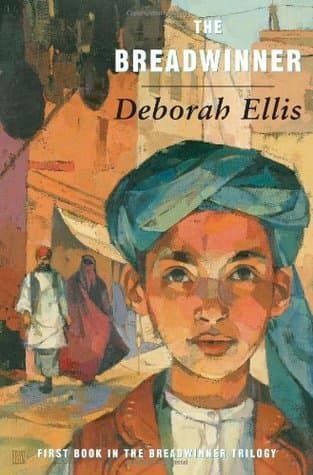
- The Breadwinner
Deborah Ellis
4.0 (20k) average on GoodreadsChildren'sFollows a young girl in a restrictive society who defies expectations to help her family and herself.
- Harry Potter and the Sorcerer's Stone
J.K. Rowling
4.5 (7M) average on GoodreadsFantasyRescued from a miserable life under the stairs, an orphaned boy discovers he's a wizard destined for a magical school, where he uncovers a dangerous secret tied to the dark wizard who murdered his parents.
- The Hobbit, or There and Back Again
J.R.R. Tolkien
4.3 (2.9M) average on GoodreadsFantasyA comfort-loving hobbit named Bilbo Baggins is whisked away by a mischievous wizard and a band of dwarves on an unexpected journey to reclaim stolen treasure from a fearsome dragon, discovering courage and a magical ring along the way.
- Harry Potter and the Goblet of Fire
J.K. Rowling
4.6 (2.6M) average on GoodreadsFantasyA bewildered Harry Potter, underage and thrust into a deadly Triwizard Tournament, must brave dragons, mermaids, and a resurgent dark magic to survive a year that will forever alter the wizarding world.





Enjoyed the summary?
A summary gives you the shape of the book. The book itself has the detail, the examples and the voice.
Find Keeping Corner on AmazonAs an Amazon Associate, BookBrief earns from qualifying purchases. How we're funded