
Core Idea
- Difficulty
- Easy
Key Takeaways from Kitchen Confidential
The Brutal Ballet of the Professional Kitchen
Beyond the pristine dining room lies a chaotic, high-pressure world fueled by adrenaline and often, illicit substances.
Bourdain's strongest insight is his direct look at the professional kitchen as a high-stakes, high-stress place. He details the fast pace, the constant pressure under heat and tight deadlines, and the culture of machismo and instant gratification. This setting often leads to substance abuse, especially cocaine and alcohol, used as a way to cope and socialize among cooks, dishwashers, and chefs who work with little sleep and constant demands. The book destroys any romantic ideas of culinary work, showing it as a physically and mentally tough job where only the strongest survive, often by living on the edge.
“Your body is an amusement park, and the kitchen is where all the rides are broken and the carny is a meth-addicted ex-con.”
In the book: Bourdain recounts numerous personal anecdotes of drug use among kitchen staff, working 16-hour shifts, and the intense verbal abuse commonplace in many kitchens, particularly under demanding head chefs.
Try this: For aspiring chefs, understanding this reality is crucial; it's not just about cooking skill, but about mental fortitude and resilience. For diners, it offers a deeper appreciation for the effort and often, personal sacrifice, behind every plate.
The Unsung Heroes: Dishwashers and Prep Cooks
The foundational roles in a kitchen are often filled by immigrants, providing the essential, thankless labor that keeps the operation running.
Bourdain consistently highlights the essential role of immigrant labor in American restaurants, especially in the most difficult and least glamorous jobs: dishwashers, prep cooks, and line cooks. He calls them the 'engine room' of the kitchen, noting their strong work ethic, dedication, and often, their cleverness and quiet self-respect. This point offers important social commentary, as Bourdain shows these individuals not as interchangeable workers, but as vital, skilled people whose often-unseen efforts support the entire dining experience. He asks readers to recognize and respect the people behind the scenes, many of whom are undocumented, who do the actual hard work.
“They are the backbone, the essential workers, the ones who make it all possible. Without them, we are nothing.”
In the book: He dedicates significant passages to describing the lives and contributions of his Mexican and Salvadoran kitchen staff, detailing their long hours and crucial roles in maintaining kitchen hygiene and preparing ingredients.
Try this: This takeaway encourages a more empathetic and informed view of the service industry's labor force. It prompts consumers to consider the human cost and often-exploited labor that enables affordable dining experiences.
The Chef's Code: Loyalty, Honor, and Obsession
Professional kitchens are governed by an unwritten code of conduct, emphasizing loyalty, respect, and an almost religious devotion to food and craft.
Bourdain reveals that despite the chaos and harsh realities, a strong sense of teamwork, loyalty, and an almost tribal honor exists within kitchen teams. This loyalty extends to fellow cooks, the chef, and, importantly, to the food itself. Chefs appear as obsessive perfectionists, driven by a commitment to quality and a desire to create memorable dishes. This professional standard guides everything from how ingredients are handled to how colleagues are treated, creating a unique subculture separate from the outside world. This point shows the mix of professionalism and primal instinct that defines the culinary world.
“We were a family, a unit, a dysfunctional, drug-addled, knife-wielding family, but a family nonetheless.”
In the book: Bourdain recounts instances of cooks defending each other, sharing resources, and displaying intense dedication to their craft, often working without complaint through injuries or personal hardships.
Try this: Understanding this code can help anyone working in a high-pressure team environment appreciate the value of shared purpose and mutual respect, even when conditions are challenging.
The Dark Side of Restaurant Economics
Restaurants are precarious businesses, often cutting corners in ways diners rarely suspect to survive.
This is one of the book's most impactful and useful insights for the average diner. Bourdain explains the economic pressures that cause restaurants to make questionable choices about food handling, freshness, and menu prices. He famously advises against ordering fish on Mondays (because it usually comes from Friday's delivery), and warns that 'specials' might be a way to sell ingredients nearing their expiration date. This argument exposes the tension between making money and ensuring food safety/quality, reminding us that not all restaurant practices are solely for the diner's benefit. It's a cynical but realistic view of a competitive industry.
“Never eat fish on a Monday. Never order the special on a Saturday night. And for God's sake, don't ask for 'well done'.”
In the book: Bourdain details how kitchens manage inventory, the practice of repurposing ingredients, and the economic necessity of moving product before it spoils, leading to specific menu recommendations/warnings.
Try this: This takeaway empowers diners to make more informed choices, encouraging them to be discerning and questioning about what they order and when they dine.
The Evolution of a Chef: From Dishwasher to Dragon
Bourdain's personal journey illustrates the transformative power of the kitchen, shaping identity and ambition through relentless trial by fire.
The book is a memoir, tracing Bourdain's journey from a young, rebellious dishwasher to a seasoned, world-weary chef. His story shows how the intense professional kitchen environment can both build and break people. He describes his early struggles with drugs and lack of direction, and how the kitchen's discipline, hierarchy, and demands gave him a structure and purpose he lacked. This personal growth is engaging, showing the kitchen as a place where character is tested and refined, often through hard lessons and personal change. It suggests that passion, even for something as demanding as cooking, can be redemptive.
“I was a punk, a screw-up, a lost soul. The kitchen saved me, then devoured me, then spit me out, slightly better, slightly worse.”
In the book: He meticulously details his rise through the ranks, from low-level prep work to sous chef and eventually head chef, including the mistakes, triumphs, and profound personal changes he experienced at each stage.
Try this: This offers a powerful lesson on perseverance and finding one's calling, even if that path is unconventional and fraught with challenges.
The Cult of the Celebrity Chef
Bourdain critiques the rise of the 'rock star chef,' arguing it often distracts from the true craft and reality of kitchen work.
While Bourdain himself became a celebrity chef, in 'Kitchen Confidential,' he expresses a nuanced doubt about the rising phenomenon. He subtly criticizes the commercialization of the chef, arguing that focusing on media presence and brand building can distract from the essential, often tough, work of cooking. This point is a limitation of the book in hindsight, as Bourdain became a prime example of what he discussed. However, when he wrote it, it was a warning about the potential gap between culinary art and media spectacle, suggesting that the true heroes remain in the kitchen's heat, not on television screens.
“The ones you see on TV, with their perfect hair and their perfect smiles, they're not the ones actually cooking your food, not anymore.”
In the book: He contrasts the romanticized image of chefs with the reality of their daily grind, and implicitly critiques the emerging trend of chefs leaving the kitchen for media opportunities.
Try this: This takeaway encourages a critical perspective on media portrayals of any profession, reminding us that public image often differs significantly from lived reality.
The Power of Fear and Respect in Management
Effective kitchen leadership often relies on a potent blend of intimidation, skill, and earning unwavering respect.
Bourdain illustrates that the traditional kitchen hierarchy is often maintained through a mix of fear and deep respect. Chefs, especially the 'dragon' figures he admires, command loyalty not just through authority, but through proven skill, strong work ethic, and an uncompromising demand for perfection. While he acknowledges the often-abusive language and high-pressure tactics, he also suggests that in this environment, such methods can sometimes create stronger teams and higher standards. This argument is controversial, as it implies that harsh leadership, when combined with competence, can be effective, challenging modern management theories that prioritize softer skills. It reflects a specific, old-school culinary culture.
“You lead by example, by showing them you can do it better, faster, and cleaner. And sometimes, you lead with a well-placed obscenity.”
In the book: He describes numerous chefs who ruled their kitchens with an iron fist, yet were revered by their staff for their talent and dedication, such as the legendary 'Bigfoot' from his early career.
Try this: This takeaway prompts reflection on different leadership styles and their effectiveness in various high-stakes, high-pressure environments, without necessarily endorsing the more extreme examples.
The Allure and Danger of the Fast Lane
The culinary world offers intense highs and lows, attracting individuals drawn to its dangerous, exhilarating pace.
Bourdain conveys that the restaurant industry, especially its high-end parts, attracts a certain type of person: thrill-seekers, outsiders, and those who thrive on instant gratification and intense pressure. The long hours, constant demands, access to substances, and the immediate reward of a perfect plate create an intoxicating, almost addictive, lifestyle. This is the book's strongest insight into the psychology of those who choose this demanding career. It's a world where work and life blend, and where the constant pursuit of perfection is tied to personal excess. He describes a subculture that, despite its dangers, offers a sense of belonging and purpose to its members.
“We were pirates, outlaws, adrenaline junkies, all of us drawn to the flame, knowing it might burn us.”
In the book: Bourdain's own narrative is replete with examples of his and his colleagues' hedonistic lifestyles, drug use, and the intense, almost spiritual satisfaction derived from a successful service.
Try this: This takeaway helps understand the unique motivations and challenges faced by individuals in high-octane, high-pressure professions, and the potential for both profound satisfaction and self-destruction.
The Art of the 'Mise en Place'
Beyond cooking, the meticulous organization and preparation ('mise en place') is the fundamental discipline of the professional kitchen.
Bourdain consistently highlights the importance of 'mise en place'—the French culinary term for 'everything in its place.' This concept is more than just having ingredients prepped; it's a philosophy of careful organization, foresight, and readiness that supports all successful kitchen operations. Without a perfectly executed mise en place, a kitchen falls into chaos, unable to handle a busy service. This emphasis on preparation is a basic discipline, showing that cooking is not just about creativity, but also about careful planning and execution. It's a powerful metaphor for success in any complex effort.
“Mise en place is the religion of the professional kitchen. If you don't have it, you're dead.”
In the book: He describes the daily ritual of setting up one's station, the consequences of poor preparation during service, and the almost sacred respect given to a well-organized workspace.
Try this: This principle can be applied to any aspect of life or work: thorough preparation and organization are essential for managing stress and achieving efficiency and success.
The Enduring Romance with Food
Despite the grime and grit, an undeniable passion for food and the act of cooking remains at the heart of the culinary world.
Even amidst the shocking revelations about drug use, abuse, and the industry's cutthroat nature, Bourdain's deep, lasting love for food and the craft of cooking shines through. His descriptions of ingredients, techniques, and the joy of creating a perfect dish show a deep respect. This underlying passion sustains chefs through the grueling hours and intense pressure. It's the ultimate paradox of the book: the brutal honesty about the industry's flaws is always balanced by an almost poetic appreciation for culinary art itself. This is the book's most hopeful and lasting message, reminding readers why people endure such hardship for their passion.
“For all the ugliness, the noise, the madness, there was always the food. And that was enough.”
In the book: His vivid descriptions of the sensory experience of food, from the smell of frying garlic to the taste of perfectly seared scallops, convey a genuine, deep-seated passion.
Try this: This takeaway inspires readers to reconnect with their own passions and appreciate the dedication required to excel in any craft, regardless of the challenges.
Quiz
10 questions on the main ideas. Each answer comes with a short explanation.
Question 1
What is the primary genre of "Kitchen Confidential"?
- Cookbook
- Travelogue
- Memoir/Exposé
- Historical Fiction
Show answer
C. Memoir/Exposé The book is described as a memoir and exposé, detailing Anthony Bourdain's personal experiences in the culinary world.
Question 2
Who is the author of "Kitchen Confidential"?
- Gordon Ramsay
- Anthony Bourdain
- Julia Child
- Heston Blumenthal
Show answer
B. Anthony Bourdain The book is written by Chef Anthony Bourdain.
Question 3
What kind of stories does Bourdain promise in "Kitchen Confidential"?
- Wholesome family recipes
- Elegant dining etiquette
- Wild-but-true tales of life in the culinary trade
- The history of Michelin stars
Show answer
C. Wild-but-true tales of life in the culinary trade The book is described as a "banquet of wild-but-true tales of life in the culinary trade."
Question 4
According to the description, how long has Bourdain been involved in the culinary world?
- A decade
- A quarter-century
- Fifty years
- A few years
Show answer
B. A quarter-century The text mentions "more than a quarter-century" and "twenty-five years" of his experience.
Question 5
What are some of the elements Bourdain claims to reveal about his experiences in the culinary trade?
- Only the glamorous aspects
- Secrets of successful restaurant management
- Drugs, sex, and haute cuisine
- The best wine pairings
Show answer
C. Drugs, sex, and haute cuisine The description explicitly states Bourdain lays out his "drugs, sex, and haute cuisine" and reveals "twenty-five years of sex, drugs, bad behavior and haute cuisine."
Question 6
The description calls Bourdain's memoir/exposé "wickedly funny". What does this suggest about the tone of the book?
- It is overly serious and academic.
- It is lighthearted and humorous, possibly with a dark or edgy twist.
- It is purely informative and lacks any personality.
- It is sentimental and nostalgic.
Show answer
B. It is lighthearted and humorous, possibly with a dark or edgy twist. The term "wickedly funny" implies a humorous tone that might be a bit mischievous or daring, suggesting a lively and engaging narrative.
Question 7
What does the phrase "culinary underbelly" likely refer to in the context of the book's title?
- The backstage operations of a kitchen, often unseen by customers.
- The financial aspects of running a restaurant.
- The history of underground food movements.
- The science behind food preparation.
Show answer
A. The backstage operations of a kitchen, often unseen by customers. The "underbelly" suggests the less glamorous, often hidden, and sometimes chaotic aspects of working in a professional kitchen environment.
Question 8
The description mentions "all-new, never-before-published material" in the book. What does this imply about the version of the book being described?
- It is the original, first edition.
- It is a revised or updated edition.
- It is a translation into another language.
- It is a summary of the original work.
Show answer
B. It is a revised or updated edition. The inclusion of "all-new, never-before-published material" indicates that this is not the original publication but a later version that has been expanded.
Question 9
Bourdain calls his memoir/exposé a "banquet". What literary device is he employing here, and what does it suggest about the content?
- Metaphor; suggesting the book is rich, satisfying, and perhaps indulgent.
- Simile; comparing his stories to a formal meal.
- Personification; giving human qualities to his experiences.
- Irony; implying the content is actually sparse and disappointing.
Show answer
A. Metaphor; suggesting the book is rich, satisfying, and perhaps indulgent. Calling the book a "banquet" is a metaphor. A banquet is a large, elaborate meal, suggesting the book is full of rich, perhaps excessive, and satisfying content related to food and the culinary world.
Question 10
Considering the description of "drugs, sex, and haute cuisine" and "bad behavior", what is the likely overall *attitude* Bourdain conveys towards the professional kitchen environment?
- A purely critical and condemnatory one.
- A detached and objective observation.
- A complex mix of intense experience, harsh realities, and perhaps a grudging affection.
- A romanticized and idealized view.
Show answer
C. A complex mix of intense experience, harsh realities, and perhaps a grudging affection. While detailing the "drugs, sex, bad behavior," the description also calls it "adventures" and "haute cuisine," suggesting a nuanced perspective that acknowledges the harshness but also the allure and intensity of the culinary world, rather than just outright condemnation or romanticization.
Kitchen Confidential FAQ
What is Kitchen Confidential about?
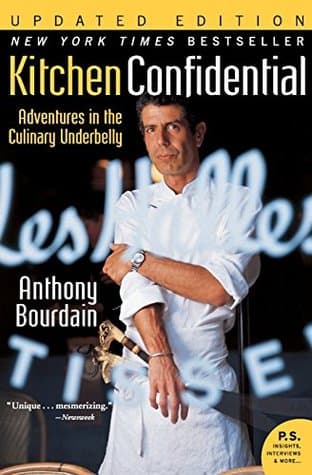
Kitchen Confidential is a memoir by Anthony Bourdain that offers a raw and often humorous look into the realities of working in professional kitchens. It details his experiences with drugs, sex, and the intense pressures of the culinary world over his career.
Is Kitchen Confidential a cookbook?
No, Kitchen Confidential is not a cookbook. It is a memoir and an exposé of the restaurant industry, filled with personal anecdotes and behind-the-scenes stories rather than recipes.
Who is Anthony Bourdain?
Anthony Bourdain was a renowned American chef, author, and television personality. He was known for his adventurous spirit and his insightful explorations of food and culture around the world.
What kind of tone does Kitchen Confidential have?
The book is characterized by its deliciously funny, delectably shocking, and often irreverent tone. Bourdain uses vivid language and a no-holds-barred approach to tell his stories.
What are some of the 'secrets' Bourdain reveals?
Bourdain reveals many secrets of the culinary trade, including the often-unpleasant truths about food preparation, the demanding lifestyle of chefs, and the less glamorous aspects of restaurant life that diners rarely see.
Is Kitchen Confidential suitable for aspiring chefs?
Yes, it can be very insightful for aspiring chefs, as it provides a realistic, albeit often harsh, portrayal of the dedication and sacrifices required in the culinary profession. It's a cautionary tale as much as it is an inspiring one.
Does Kitchen Confidential focus on fine dining?
While Bourdain worked in haute cuisine, the book covers a broad spectrum of the culinary world, including the intense, fast-paced environments of various restaurants. It's more about the people and the lifestyle than just fine dining.
What makes Kitchen Confidential a 'memoir/expose'?
It's a memoir because it's Bourdain's personal story and reflections. It's an exposé because he pulls back the curtain on the restaurant industry, revealing aspects that are often hidden from the public.
Are the stories in Kitchen Confidential true?
Yes, Bourdain consistently states that the stories within Kitchen Confidential are wild-but-true tales based on his extensive experience in the culinary world. He doesn't shy away from the often shocking realities.
What is the 'culinary underbelly' mentioned in the title?
The 'culinary underbelly' refers to the less glamorous, often hidden, and sometimes chaotic world behind the scenes of professional kitchens. It encompasses the hard work, stress, and personal lives of those who work in the industry.
About the author

Anthony Bourdain was a renowned chef, author, and television personality. His breakout book, Kitchen Confidential: Adventures in the Culinary Underbelly, offered a no-holds-barred look into the restaurant industry. Through his popular shows like No Reservations and Parts Unknown, Bourdain explored global cuisine and cultures, becoming a celebrated voice for adventurous eaters and travelers.
Similar books
- Eat, Pray, Love
Elizabeth Gilbert
3.6 (1.5M) average on GoodreadsLifestyleA heartbroken writer leaves her conventional life for a year-long global search for pleasure in Italy, spiritual devotion in India, and unexpected love and balance in Bali.
- Wild: From Lost to Found on the Pacific Crest Trail
Cheryl Strayed
4.0 (615k) average on GoodreadsLifestyleAfter losing her mother and her marriage, a young woman impulsively hikes over a thousand miles of the Pacific Crest Trail alone, finding strength and healing in the unforgiving wilderness.
- Into Thin Air: A Personal Account of the Mount Everest Disaster
Jon Krakauer
4.2 (395k) average on GoodreadsLifestyleOn May 10, 1996, ambition and a sudden, violent storm turned Mount Everest into a deadly trap, leaving Jon Krakauer to tell the harrowing story of a disaster that took lives and shattered climbers' dreams.
- On The Road
Jack Kerouac
3.6 (349k) average on GoodreadsLifestyleDean Moriarty and Sal Paradise go on a wild, cross-country trip with jazz, drugs, and a desperate search for meaning on America's post-war roads.
- A Walk in the Woods: Rediscovering America on the Appalachian Trail
Bill Bryson
4.1 (346k) average on GoodreadsLifestyleBill Bryson humorously describes his ill-prepared yet insightful attempt to hike the Appalachian Trail, meeting unique characters and the raw beauty of the wilderness.
- Three Cups of Tea: One Man's Mission to Promote Peace ... One School at a Time
Greg Mortenson
3.6 (326k) average on GoodreadsLifestyleA lost mountaineer's promise to build a school for impoverished villagers grows into a decade-long, dangerous effort to educate girls in Taliban territory, showing one person's dedication can build peace.






Enjoyed the summary?
A summary gives you the shape of the book. The book itself has the detail, the examples and the voice.
Find Kitchen Confidential on AmazonAs an Amazon Associate, BookBrief earns from qualifying purchases. How we're funded