
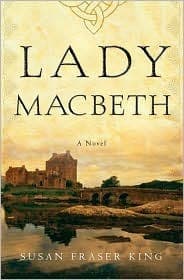
Synopsis
Covers the whole plot, including the ending.
- Difficulty
- Medium
- Pacing
- Moderate
- Mood
- Intriguing, atmospheric, empowering, historical
Lady Macbeth Plot Summary
Covers the whole plot, including the ending.
Childhood in Atholl
Gruadh, or Rue, grows up in Atholl, in the household of her grandfather, the King of Scots. She is the last female descendant of Kenneth mac Alpin, a significant royal line, which makes her a valuable part of the political landscape. Her childhood includes her strong mother and the early loss of her father. Rue learns about her heritage and her people's warrior ways, including archery, from a young age. She understands the constant feuds and power struggles among Scottish lords and the threats from Vikings and Saxons; these experiences shape her view of survival and leadership.
First Marriage to Gillacomgain
Rue marries Gillacomgain, the powerful Mormaer of Moray. This is a strategic alliance meant to solidify power and prevent more feuds. Despite the political nature of their union, Rue and Gillacomgain grow to like and respect each other. They have a son, Lulach. However, their happiness is brief. Gillacomgain is a strong warrior but also a target for rivals. The constant threat of betrayal and violence is a backdrop to their lives, and Rue, though a wife and mother, knows how uncertain their position and her son's future are.
Gillacomgain's Death and Forced Remarriage
Tragedy happens when Gillacomgain is ambushed and killed by his cousin, Macbeth. Rue is left a widow, pregnant with her second child, and vulnerable. To secure her position and her son's safety, she makes a swift and difficult decision. To consolidate power and prevent more bloodshed, Rue is forced to marry Macbeth, the man who killed her husband. This union starts with resentment and a deep sense of injustice for Rue, but also a practical understanding of survival in a harsh world. She must navigate her new role as wife to her enemy, all while protecting her unborn child and Lulach.
Life with Macbeth in Moray
Living in Macbeth's stronghold in Moray, Rue initially sees him with suspicion and hatred. However, as she observes him, she begins to see a complex man: a skilled warrior, a shrewd leader, and surprisingly, a man capable of kindness and justice. Macbeth, for his part, respects Rue's intelligence, strength, and royal lineage. They face external threats together, including Viking raids and Scottish feuds. Through shared challenges and the demands of governance, a grudging respect slowly develops between them, gradually becoming a deeper, more complicated bond. Rue gives birth to her second child, a stillborn daughter, deepening her sorrow but also strengthening her resolve.
Macbeth's Ambition and the Path to Kingship
Macbeth's ambitions extend beyond Moray; he wants a united Scotland, free from internal strife and outside threats. He recognizes that Rue's royal bloodline is important to making his claim to the throne legitimate. Together, they navigate the dangerous political landscape, forming alliances and confronting rivals. Macbeth's strategic mind and military skill, combined with Rue's lineage and influence, make them a strong force. Rue, initially resistant, comes to understand Macbeth's vision for Scotland's stability and her son Lulach's future, who is still a potential heir. The idea of kingship for Macbeth, and queen-ship for her, becomes a real goal.
The Death of King Duncan
The path to the throne is dangerous. King Duncan, Macbeth's cousin, is seen as a weak ruler by many. After a battle where Macbeth is victorious, an opportunity arises. Duncan, wounded, seeks refuge. In a controversial act, Macbeth decides to kill King Duncan, either directly or through his men, to take the crown. Rue knows about the political plans and the grim need for such an act in their world, though the exact details of her involvement or knowledge are not clear. This event marks their definite turn towards the throne, solidifying their reputation and setting them on a dangerous new course.
Coronation and Reign as King and Queen
Macbeth is crowned King of Scots, and Rue becomes his Queen. Their reign is a time of relative stability and prosperity for Scotland. Macbeth is a capable and just ruler, and Rue, as Queen, actively participates in governance, using her influence and intelligence to advise her husband. They work to unite Scotland's different groups and protect its borders from invaders. However, their position is never truly secure. Duncan's death, the lingering resentments of rival lords, and the constant threat of betrayal mean they must always be watchful, fighting to keep their hard-won power and legacy.
The Threat of Malcolm Canmore
Duncan's son, Malcolm Canmore, has fled to England and is gathering support from the English king, Edward the Confessor. He is a significant and growing threat to Macbeth's reign, a direct challenge to their legitimacy. Rue and Macbeth know how determined Malcolm is to reclaim his father's throne and the powerful forces he is gathering. This outside pressure forces them to strengthen their defenses and alliances, but the threat is constant. The story moves towards a confrontation, showing how uncertain their rule is and the inevitable results of their rise to power.
The Battle of Dunsinane
Malcolm Canmore, supported by English forces and unhappy Scottish lords, invades Scotland. The decisive confrontation happens at Dunsinane, where Macbeth and his loyalists make their stand. Rue, though not on the battlefield, is deeply involved in the preparations and feels the emotional toll of the war. The battle is fierce, and despite Macbeth's initial strength and the loyalty of some, the superior numbers and the betrayal of others begin to turn the tide against them. This battle is the culmination of all the political and military struggles they have faced, a desperate fight for their kingdom and their lives.
Macbeth's Fall and Rue's Legacy
Macbeth is defeated and killed in battle, traditionally by Macduff. His reign, and with it, the last of Celtic kingship, ends. Rue is left a widow once more, but her story does not end with Macbeth's death. She must now navigate the aftermath, ensuring the safety of her son, Lulach, who briefly succeeds Macbeth, and trying to preserve what she can of their legacy. Rue's resilience and determination are tested as she faces the new political order. Her life continues, showing her strength and her lasting connection to Scotland's ancient royal lines.
Lady Macbeth Characters
Gruadh (Rue)
Protagonist
The last Celtic Queen of Scotland
Rue is a fierce, intelligent, and resilient woman, descended from a powerful royal line. She is practical, deeply connected to her heritage, and possesses a strong will to survive and protect her family. Initially driven by duty and a desire for stability, she evolves into a formidable queen who actively participates in governance and strategy. She is capable of both deep love and fierce hatred, and her actions are often dictated by the harsh realities of eleventh-century Scotland. Her connection to ancient Scottish traditions and her understanding of power dynamics make her a compelling figure.
Relationships: Gillacomgain (First husband); Macbeth (Second husband, co-ruler); Lulach (Son); King Malcolm II (Grandfather)
Macbeth
Protagonist/Supporting
The ambitious Mormaer who becomes King of Scots
Macbeth is portrayed as a complex and formidable warrior and leader. He is ambitious, strategic, and initially ruthless, as evidenced by his killing of Gillacomgain. However, he also demonstrates justice, a vision for a united Scotland, and a growing affection and respect for Rue. He is a man of action, capable of both great violence and insightful governance. His ambition is tempered by a desire for stability and a genuine belief in his ability to rule effectively. He represents the blend of traditional warrior culture and emerging political acumen in a turbulent era.
Relationships: Gruadh (Rue) (Wife, co-ruler); Gillacomgain (Cousin, rival (killed by Macbeth)); King Duncan (Cousin, king (killed by Macbeth)); Malcolm Canmore (Rival, Duncan's son)
Gillacomgain
Supporting
Rue's first husband and Mormaer of Moray
Gillacomgain is a powerful and respected lord, the Mormaer of Moray, and Rue's first husband. He is a skilled warrior and a strong leader who provides Rue with a sense of security and stability during their marriage. He is affectionate towards Rue and a loving father to Lulach. His death at the hands of Macbeth is a pivotal event that forces Rue into her second, politically charged marriage and sets the stage for Macbeth's rise. His character primarily serves to establish Rue's early life and the harsh realities of Scottish power struggles.
Relationships: Gruadh (Rue) (First husband); Lulach (Son); Macbeth (Cousin, murderer)
Lulach
Supporting
Rue's son and a claimant to the throne
Lulach is Rue's son from her first marriage to Gillacomgain. He is a significant figure due to his royal lineage, which makes him a potential heir to the throne and a constant concern for Rue. His safety and future are a primary motivation for many of Rue's decisions, particularly her alliance with Macbeth. While still a child for much of the narrative, his existence underscores the dynastic struggles and the importance of bloodlines in securing power in Scotland. He represents the continuation of Rue's royal heritage.
Relationships: Gruadh (Rue) (Mother); Gillacomgain (Father); Macbeth (Stepfather)
King Duncan
Antagonist/Supporting
The King of Scots, overthrown by Macbeth
King Duncan is portrayed as a well-meaning but ultimately ineffectual ruler, struggling to maintain control over a fractured Scotland. He is Macbeth's cousin and the legitimate king, but his perceived weakness and inability to curb internal feuds make him vulnerable. His assassination by Macbeth is a pivotal event that allows Macbeth to seize the throne but also plants the seeds for future conflict. Duncan represents the older, less stable order that Macbeth seeks to replace with a stronger, more unified kingdom.
Relationships: Macbeth (Cousin, killer); Malcolm Canmore (Son)
Malcolm Canmore
Antagonist
Duncan's son and Macbeth's ultimate rival
Malcolm Canmore is the son of King Duncan and the rightful heir to the Scottish throne. After his father's murder, he flees to England, where he gathers support and plans his revenge. He is a determined and ultimately successful adversary to Macbeth, representing the forces of retribution and the re-establishment of the traditional royal line. His character embodies the persistent threat to Macbeth and Rue's reign, highlighting the cyclical nature of violence and power struggles in this historical period.
Relationships: King Duncan (Father); Macbeth (Rival, father's murderer)
Donalbane
Supporting
Duncan's younger son and Malcolm's brother
Donalbane is King Duncan's younger son and Malcolm's brother. Like Malcolm, he is displaced by Macbeth's usurpation of the throne. While less prominent than Malcolm, his existence underscores the threat of the deposed royal line. He often remains in the background, a potential claimant or ally, representing another facet of the dynastic struggles that plague Scotland. His role emphasizes the multiple lines of succession and the constant jockeying for power.
Relationships: King Duncan (Father); Malcolm Canmore (Brother)
King Malcolm II
Supporting
Rue's powerful grandfather and a former King of Scots
King Malcolm II is Rue's grandfather and a powerful, respected King of Scots who ruled before the events of the novel. Though he dies early in Rue's life, his influence looms large. He represents the strong, traditional kingship that Rue remembers and aspires to, and his lineage gives Rue her significant political weight. His memory and legacy serve as a benchmark for leadership and a source of pride for Rue, shaping her understanding of duty and royal responsibility.
Relationships: Gruadh (Rue) (Granddaughter)
Lady Macbeth Themes
The Nature of Power and Kingship
The novel explores the harsh realities of gaining and keeping power in eleventh-century Scotland. It shows the constant struggle between competing lords, the need for strategic marriages, and the violence often required to seize the throne. It compares different forms of leadership, from Duncan's perceived weakness to Macbeth's ambition and vision for a united Scotland. The theme also examines the legitimacy of power, whether through bloodline, conquest, or good governance, and the sacrifices the crown demands from both the ruler and their family.
“In this land, a crown is not given, it is taken. And once taken, it must be held with iron and blood.”
Survival and Resilience in a Harsh World
Rue's story is about human resilience in the face of constant danger, loss, and political upheaval. From losing her first husband and being forced to marry his killer, to navigating the difficult court and facing the downfall of her reign, Rue consistently adapts and fights for her survival and her son's future. The theme highlights the mental and emotional strength needed to survive in a society defined by warfare, betrayal, and life's uncertainties, especially for women in positions of influence.
“I had learned early that grief was a luxury I could ill afford. Survival demanded all of me.”
Love, Duty, and Betrayal
The complex interaction between personal feelings and political need is a central theme. Rue's marriages, first to Gillacomgain and then to Macbeth, are initially driven by duty and strategy, yet they grow to include affection and respect. The novel explores how love can grow in unexpected circumstances, even between former enemies, but also how it can be overshadowed by ambition and the demands of power. Betrayal, both personal and political, is a constant threat, shaping relationships and leading to devastating consequences, from Gillacomgain's murder to Macbeth's eventual downfall.
“Our marriage was forged in blood and necessity, yet from those harsh beginnings, something unexpected grew.”
The Role of Women in a Warrior Society
The novel challenges common ideas of women in eleventh-century Scotland by showing Rue as a powerful and influential figure. Despite living in a male-dominated warrior society, Rue uses her intelligence, lineage, and understanding of ancient traditions to have significant influence. She is not just a pawn but an active participant in political strategy, an advisor, and a protector of her family and legacy. The theme highlights the strength and agency of women who, though they may not fight on the battlefield, shape history through their cunning, resilience, and connection to cultural heritage.
“A queen's power lies not in the sword she carries, but in the wisdom she holds and the blood that flows in her veins.”
Plot Devices & Literary Techniques
The Royal Bloodline of Kenneth mac Alpin
Rue's lineage as a key to legitimacy
Rue's direct descent from Kenneth mac Alpin, the first King of Scots, is a crucial plot device. It provides her with immense political value and legitimacy, making her a desirable wife for powerful lords and ultimately essential for Macbeth's claim to the throne. This lineage underpins many of the political alliances and conflicts in the story, driving characters' actions and motivations as they seek to either control or leverage this powerful heritage. It is the very reason Rue finds herself in the center of the dynastic struggles.
Forced Marriage as a Political Tool
Unions dictated by power and survival
The forced marriage between Rue and Macbeth, following the murder of her first husband, is a central plot device. It immediately creates high stakes, personal conflict, and a complex dynamic between the protagonists. This device highlights the brutal realities of political alliances in the era, where personal feelings were secondary to consolidating power and preventing further feuds. It forces Rue to confront her enemy daily, leading to the gradual development of their complex relationship and setting the stage for their shared destiny as king and queen.
Prophecy and Omens
Foreshadowing and the influence of the supernatural
While not as overtly supernatural as Shakespeare's version, the novel incorporates elements of prophecy and omens, often through Rue's connection to ancient Celtic traditions and her 'sight.' These subtle hints and premonitions foreshadow significant events, such as Macbeth's rise to power or impending dangers, adding a layer of mysticism and inevitability to the narrative. They serve to deepen the Celtic atmosphere and suggest that destiny, or at least powerful unseen forces, play a role in the characters' lives and the unfolding of history.
The Threat of External Invasion (Vikings/Saxons)
A unifying external enemy
The constant presence of external threats from Viking raiders and Anglo-Saxon forces serves as a significant plot device. It not only provides recurring action and danger but also acts as a catalyst for Scottish lords to consider unity. Macbeth's vision of a strong, united Scotland is often framed in response to these external pressures. This device underscores the need for effective leadership and a centralized kingdom, justifying Macbeth's ambitions and providing a common enemy against which Scottish factions can (or should) unite.
Quiz
10 questions on the plot and the characters. Each answer comes with a short explanation.
Question 1
What is the title of the book?
- Lady Macbeth
- The Warrior Queen
- Gruadh's Legacy
- Macbeth's Wife
Show answer
A. Lady Macbeth The title of the book is explicitly stated as 'Lady Macbeth'.
Question 2
Who is the author of 'Lady Macbeth'?
- William Shakespeare
- Susan Fraser King
- Walter Scott
- Jane Austen
Show answer
B. Susan Fraser King The author is identified as Susan Fraser King in the provided text.
Question 3
What is Lady Gruadh's nickname?
- Maud
- Morag
- Rue
- Grizelda
Show answer
C. Rue The text states that Lady Gruadh is 'called Rue'.
Question 4
Who is Lady Gruadh forced to marry after her first husband's death?
- A Viking Chieftain
- Her husband's murderer, Macbeth
- A Scottish Lord from the North
- A Saxon Prince
Show answer
B. Her husband's murderer, Macbeth The text clearly states she is 'forced to marry her husband’s murderer: a rising war-lord named Macbeth'.
Question 5
What is Macbeth's ambition according to the book description?
- To conquer England
- To unite Scotland
- To defeat the Vikings
- To reclaim ancestral lands
Show answer
B. To unite Scotland The description mentions 'Macbeth’s complex ambitions extend beyond the borders of the vast northern region' and 'only Macbeth can unite Scotland'.
Question 6
What does Lady Gruadh invoke to protect her son and legacy?
- The power of the Church
- The strength of her royal lineage
- Ancient wisdom and secret practices of her female ancestors
- The military might of her northern lord husband
Show answer
C. Ancient wisdom and secret practices of her female ancestors The text states she 'invokes the ancient wisdom and secret practices of her female ancestors'.
Question 7
What is Lady Gruadh's primary motivation for her actions?
- Personal ambition and power
- Revenge against Macbeth
- To protect her small son and a proud legacy
- To secure alliances with other kingdoms
Show answer
C. To protect her small son and a proud legacy The book description states she is 'Determined to protect her small son and a proud legacy of warrior kings and strong women'.
Question 8
What historical period and location does the book primarily focus on?
- Ninth-century Norway
- Twelfth-century England
- Eleventh-century Scotland
- Tenth-century Ireland
Show answer
C. Eleventh-century Scotland The text explicitly mentions 'eleventh-century Scotland'.
Question 9
What does the book suggest about Lady Gruadh's historical reputation?
- She was celebrated as a hero
- She was a wise and just ruler
- She was much maligned by history
- She was largely forgotten by history
Show answer
C. She was much maligned by history The description concludes by stating it paints 'a bold, vivid portrait of a woman much maligned by history'.
Question 10
Besides Macbeth, who else poses a danger to Lady Gruadh?
- The Roman Empire
- Vikings, Saxons, and treacherous Scottish lords
- The Church and the Pope
- French invaders
Show answer
B. Vikings, Saxons, and treacherous Scottish lords The text mentions encountering 'danger from Vikings, Saxons, and treacherous Scottish lords'.
Lady Macbeth FAQ
Who is Lady Gruadh (Rue) in the book 'Lady Macbeth'?
Lady Gruadh, also known as Rue, is the protagonist of the novel. She is the last female descendant of Scotland's royal line, a warrior, a mother, and a queen who must navigate a dangerous political landscape.
What is the historical setting of 'Lady Macbeth' by Susan Fraser King?
The novel is set in eleventh-century Scotland, a time of conflict involving Vikings, Saxons, and various Scottish lords vying for power.
What is the central conflict for Lady Gruadh (Rue)?
Rue is forced to marry Macbeth, her first husband's murderer, while carrying his child. She must protect her son and her legacy in a male-dominated warrior society.
Does 'Lady Macbeth' focus on the Shakespearean character?
While inspired by the historical figures behind Shakespeare's play, this novel focuses on the life and perspective of Lady Gruadh, the historical woman often depicted as Lady Macbeth, offering a different interpretation.
What role does Macbeth play in the story?
Macbeth is a rising war-lord who becomes Rue's second husband. He is ambitious and seeks to unite Scotland, with Rue's royal blood being crucial to his success.
What themes are explored in 'Lady Macbeth'?
The book explores themes of power, ambition, love, hate, survival, legacy, and the strength of women in a warrior society, as well as the clash of ancient traditions with political maneuvering.
What makes Lady Gruadh (Rue) a unique character?
Rue is depicted as a strong, multifaceted woman who has fought in battles, endured childbirth, loved deeply, and relies on ancient wisdom to protect her family and legacy.
Is 'Lady Macbeth' a romance novel?
Yes, the book is described as historical fiction with a romance element. It explores the complex relationship that develops between Rue and Macbeth.
How does the book portray the historical period?
Susan Fraser King paints a vivid portrait of eleventh-century Scotland, detailing its landscapes, social structures, and the constant threat of conflict from various factions.
What is the significance of Rue's royal blood?
Rue's royal blood is essential for Macbeth's claim to the throne and his ambition to unite Scotland. It makes her a valuable asset and a target in the political landscape.
About the author

Susan Fraser King is a fiction author known for her historical novels. One of her notable works is "Lady Macbeth," which explores the life and motivations of the iconic Shakespearean character. Her writing often delves into the complexities of women's roles in history.
Similar books
- The Forest of Hands and Teeth
Carrie Ryan
3.6 (81k) average on GoodreadsFantasyWhile seemingly disparate genres (historical fiction vs. dystopian horror), a comparison can be drawn in the female protagonist's journey of survival and questioning societal norms. Ryan's Mary navigates a world overrun by 'unconsecrated,' questioning the dogma of her enclosed village. Similarly, King's Gruoch constantly questions the established power structures and the validity of prophecies in her violent world, making difficult decisions for survival and the protection of her lineage. Both protagonists are driven by a fierce will to survive and protect, albeit in vastly different historical and fantastical contexts, and both challenge the reader to reconsider preconceived notions of their respective worlds.
- To Kill a Mockingbird
Harper Lee
4.3 (4.5M) average on GoodreadsHistorical FictionIn the 1930s Jim Crow South, Harper Lee writes about racial injustice, moral growth, and the quiet courage of a lawyer father, Atticus Finch, as seen through his young daughter's eyes.
- The Great Gatsby
F. Scott Fitzgerald
3.9 (3.8M) average on GoodreadsHistorical FictionIn the opulent Roaring Twenties, a mysterious millionaire's lavish parties hide his desperate, tragic pursuit of a lost love, exposing the emptiness within the American Dream.
- Pride and Prejudice
Jane Austen
4.3 (3M) average on GoodreadsHistorical FictionIn a society focused on status and money, Elizabeth Bennet navigates love and pride, challenging Mr. Darcy and social expectations to find true affection.
- Angels & Demons
Dan Brown
3.9 (2.7M) average on GoodreadsThrillerA Harvard symbologist races through Rome's ancient sites, deciphering cryptic clues to unmask the Illuminati and stop a vengeful plot to destroy the Vatican with a stolen antimatter weapon.
- The Kite Runner
Khaled Hosseini
4.3 (2.4M) average on GoodreadsHistorical FictionIn pre-Taliban Afghanistan, a wealthy boy's betrayal of his servant's son during a kite-running tournament starts a lifelong journey for amends as his country collapses.






Enjoyed the summary?
A summary gives you the shape of the book. The book itself has the detail, the examples and the voice.
Find Lady Macbeth on AmazonAs an Amazon Associate, BookBrief earns from qualifying purchases. How we're funded