
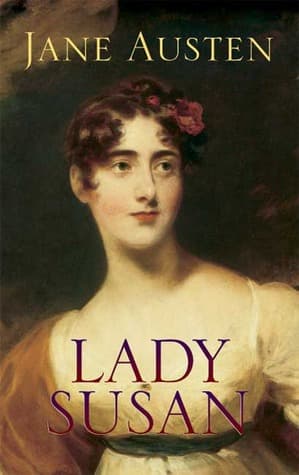
Synopsis
Covers the whole plot, including the ending.
- Difficulty
- Medium
- Pacing
- Moderate
- Mood
- Witty, Satirical, Cynical, Observational
- Read it if
- You enjoy Jane Austen's sharp wit and social commentary, and prefer a more cynical and satirical take on Regency romance.
- Skip it if
- You are looking for a traditional Austen heroine or a heartwarming love story.
Lady Susan Plot Summary
Covers the whole plot, including the ending.
Lady Susan's Arrival at Churchill
Lady Susan Vernon, a widowed and flirtatious woman, writes to her brother-in-law, Charles Vernon, asking to stay at his country estate, Churchill. She has overstayed her welcome with the Manwaring family, where rumors of an affair with Mr. Manwaring circulated, so she seeks a temporary refuge. Mrs. Catherine Vernon, Charles's wife, worries about Lady Susan's visit, knowing her reputation for charming men and causing trouble. She tells her brother, Reginald De Courcy, who at first dismisses her concerns, believing Lady Susan cannot be as bad as described. Lady Susan arrives at Churchill, immediately charming Charles and beginning to subtly manipulate the household.
Reginald De Courcy's Initial Impression
Reginald De Courcy, initially doubtful of his sister Catherine's warnings, meets Lady Susan. To Catherine's dismay and Reginald's surprise, he is quickly charmed by Lady Susan's beauty, wit, and apparent vulnerability. Lady Susan uses all her charm, presenting herself as a wronged woman, a devoted mother, and a person of good taste. She skillfully downplays her past scandals and speaks with such honesty that Reginald finds himself defending her against Catherine's accusations. Catherine is frustrated by Reginald's naivety, recognizing Lady Susan's act and lamenting her brother's weakness for such pretense. Reginald, despite his initial doubts, spends more and more time with Lady Susan, alarming his family.
Federica's Escape and Predicament
Lady Susan's shy and unhappy fifteen-year-old daughter, Frederica Vernon, runs away from school and arrives unexpectedly at Churchill. Frederica is very different from her mother: shy, gentle, and without social pretense. She fears her mother and is deeply upset by Lady Susan's plan to force her into marriage with Sir James Martin, a wealthy but foolish baronet whom Frederica dislikes. Frederica's arrival creates a problem for Lady Susan, as it reveals her daughter's unhappiness and makes it harder to maintain her image of a devoted mother. Catherine Vernon and Reginald De Courcy immediately sympathize with Frederica, seeing her distress and the unfairness of her situation. Frederica confides in Catherine, further confirming Catherine's belief in Lady Susan's cruelty.
Lady Susan's Manipulation of Reginald
Lady Susan skillfully keeps Reginald De Courcy under her spell, despite Frederica's presence and the growing evidence of her manipulative nature. She describes Frederica's distress as childish stubbornness and her refusal of Sir James Martin as ingratitude. While appearing concerned for Frederica, Lady Susan secretly continues to push for the marriage to Sir James, seeing it as a way to get rid of her daughter and secure Frederica's fortune. Reginald, still largely swayed by Lady Susan's charm, struggles to reconcile her seemingly kind manner with Frederica's obvious unhappiness. He becomes more involved in the family drama, often acting as an unwitting pawn in Lady Susan's plans, to Catherine's ongoing frustration.
Sir James Martin's Arrival and Frederica's Distress
Sir James Martin, Lady Susan's chosen suitor for Frederica, arrives at Churchill. He is an unintelligent, easily manipulated man, whose only appeal is his wealth. His presence causes Frederica great distress, making her even more withdrawn and fearful. Lady Susan, however, is pleased by his arrival, seeing it as a step closer to securing Frederica's future (and her own financial security). She continues to present the match as good and suitable, ignoring Frederica's feelings. Catherine Vernon and Reginald De Courcy see Frederica's misery and Sir James's foolishness, which strengthens their belief that Lady Susan is acting cruelly. Reginald is increasingly conflicted, torn between his admiration for Lady Susan and his growing pity for Frederica.
Reginald's Growing Doubts and Frederica's Plea
Reginald De Courcy's attraction to Lady Susan begins to lessen as he sees her coldness towards Frederica and Sir James Martin's foolishness. Frederica, encouraged by Catherine's kindness, directly asks Reginald not to let her be forced into marriage with Sir James. Her genuine distress and honesty deeply affect Reginald, leading him to confront Lady Susan more directly about her treatment of her daughter. Lady Susan tries to dismiss Frederica's plea as childish whim, but Reginald's trust in her is now significantly shaken. He starts to remember Catherine's earlier warnings and the rumors about Lady Susan's past, leading to a growing disappointment with the woman he had admired so much.
The Manwaring Scandal Resurfaces
Just as Reginald's doubts about Lady Susan are strongest, scandalous letters arrive at Churchill from Lady Manwaring, detailing Lady Susan's affair with Mr. Manwaring. These letters, meant for Catherine and Reginald, expose Lady Susan's true character and confirm all the rumors about her. The news is a devastating blow to Lady Susan's carefully built image and shatters Reginald's remaining illusions. He is shocked and disgusted by her deception and confronts her with the evidence. Lady Susan, though initially flustered, tries to deny or downplay the accusations, but her efforts fail. This revelation is a turning point, as Reginald finally sees Lady Susan for the manipulative and immoral woman she is.
Reginald's Disillusionment and Departure
After the Manwaring scandal, Reginald De Courcy is completely disillusioned with Lady Susan. He confronts her, expressing his disgust and withdrawing his affection and any implied offer of marriage. He states that he can no longer tolerate her deceit and manipulation. Lady Susan tries to regain her influence, using tears and feigned remorse, but her efforts are useless. Reginald is now immune to her charms and sees through her act. He makes it clear that their connection is over and that he will no longer be part of her schemes. With his eyes fully opened to her true character, Reginald leaves Churchill, vowing never to be swayed by her again. This marks a significant defeat for Lady Susan's immediate romantic ambitions.
Lady Susan's Retreat and New Plans
After Reginald's departure and her plans at Churchill failing, Lady Susan Vernon leaves the estate. Despite her setbacks, Lady Susan remains undeterred and quickly plans her next moves. She is determined to secure a comfortable future for herself, even if it means further manipulation. Her immediate goal remains a financially good marriage for herself and a suitable (and convenient) match for Frederica. She reflects on her recent failures but sees them as temporary problems rather than permanent defeats. Her letters show her continued self-interest and her belief in her ability to charm and control others, demonstrating her resilience and lack of true remorse.
Frederica's Happy Resolution
Frederica Vernon, now free from the threat of marriage to Sir James Martin, finds a more suitable and loving partner in Reginald De Courcy's younger brother, Charles De Courcy. Charles, a man of good character and fortune, truly admires Frederica's gentle nature and kindness. Their connection grows, leading to an engagement that promises Frederica happiness and stability, far from her mother's influence. This match is supported by Catherine and Reginald Vernon, who are relieved to see Frederica finally find peace. Frederica's story ends well, showing that genuine goodness and sincerity can overcome deceit and manipulation, at least for her.
Lady Susan's Ultimate Fate
In the end, Lady Susan Vernon, always an opportunist, successfully marries the wealthy but foolish Sir James Martin. This ironic twist sees her marry the very man she had intended for her daughter, securing her own financial future and social standing. Her marriage to Sir James ensures she maintains a comfortable lifestyle, but it also highlights her willingness to compromise her principles for money. The story implies that Lady Susan will continue her manipulative and flirtatious behavior, even in marriage. She remains unrepentant and true to her self-serving nature, always seeking advantage and amusement, confirming her status as a cunning and unchangeable character.
Principal Figures
Lady Susan Vernon
Protagonist/Antagonist
A beautiful, intelligent, and utterly manipulative widow who prioritizes her own pleasure and financial security.
Lady Susan is a fascinating blend of charm and ruthlessness. Recently widowed, she is renowned for her beauty, wit, and scandalous flirtations. She is an expert manipulator, using her intelligence and social graces to control those around her, especially men. Her primary motivations are self-preservation, financial security, and maintaining her elevated social status, often at the expense of others, including her own daughter. She lacks genuine affection or moral compunction, viewing people as pawns in her schemes. She is a survivor, always finding a way to land on her feet, even after public disgrace.
Relationships: Frederica Vernon (Mother-daughter, but Lady Susan treats Frederica as a burden and a tool for social climbing.); Charles Vernon (Brother-in-law, whom she easily charms and manipulates.); Catherine Vernon (Sister-in-law, her primary antagonist, who sees through her.); Reginald De Courcy (Potential suitor, whom she attempts to ensnare and almost marries.); Mr. Johnson (Confidant and recipient of her revealing letters.); Mrs. Manwaring (Rival, whose letters expose Lady Susan's affair with Mr. Manwaring.); Sir James Martin (Intended husband for Frederica, who eventually becomes Lady Susan's own husband.)
Frederica Vernon
Supporting
Lady Susan's timid, innocent, and kind daughter, who suffers under her mother's manipulative schemes.
Frederica is the antithesis of her mother – shy, sweet, and lacking in any artifice. She is deeply unhappy and fearful, particularly of her mother's attempts to force her into an unwanted marriage. She represents innocence and vulnerability in a world of social maneuvering. Her gentle nature and genuine distress evoke sympathy from those who encounter her, especially Catherine and Reginald. She longs for affection and stability, a stark contrast to her mother's pursuit of excitement and power. She is honest and straightforward, unable to comprehend or participate in her mother's deceit.
Relationships: Lady Susan Vernon (Mother-daughter, a deeply strained and unhappy relationship due to Lady Susan's cruelty.); Catherine Vernon (Aunt by marriage, who becomes her protector and confidante.); Reginald De Courcy (Initially a sympathetic listener, later a friend and ally.); Sir James Martin (Unwanted suitor, whom she vehemently rejects.); Charles De Courcy (Her eventual loving husband.)
Catherine Vernon
Supporting
Lady Susan's astute and morally upright sister-in-law, who sees through her manipulations.
Catherine Vernon is the moral compass of the story and Lady Susan's primary antagonist. She is a sensible, discerning, and kind woman who possesses a strong sense of propriety and family duty. From the outset, she mistrusts Lady Susan, recognizing her manipulative nature and warning others against her. She is protective of Frederica and deeply concerned about the negative influence Lady Susan has on her brother, Reginald. Catherine's letters provide a clear-eyed perspective on Lady Susan's actions and serve as a crucial counterpoint to Lady Susan's self-serving narrative. She is unwavering in her judgment and her commitment to truth and decency.
Relationships: Lady Susan Vernon (Sister-in-law and antagonist, Catherine despises her manipulative nature.); Charles Vernon (Husband, whom she loves but is frustrated by his susceptibility to Lady Susan's charm.); Reginald De Courcy (Brother, whom she tries to warn and protect from Lady Susan.); Frederica Vernon (Niece by marriage, whom she protects and cares for deeply.)
Reginald De Courcy
Supporting
Catherine's intelligent but initially naive brother, who falls under Lady Susan's spell before seeing her true nature.
Reginald is a young, intelligent, and generally well-meaning gentleman. Initially, he is skeptical of his sister Catherine's warnings about Lady Susan and quickly falls prey to Lady Susan's charms, admiring her wit and beauty. He represents the susceptibility of even discerning individuals to Lady Susan's practiced performance. As the story progresses, his infatuation gives way to doubt and eventually disgust as he witnesses Lady Susan's cruelty towards Frederica and learns of her scandalous past. He is a man of honor, and once he fully comprehends Lady Susan's deceit, he unequivocally breaks ties with her.
Relationships: Lady Susan Vernon (Object of his infatuation, then his fiancée, and finally, the target of his disgust.); Catherine Vernon (Sister, whose warnings he initially dismisses but later validates.); Frederica Vernon (A young lady he initially pities and later befriends and protects.); Charles De Courcy (Younger brother.)
Charles Vernon
Supporting
Catherine's good-natured but easily charmed husband, who is oblivious to Lady Susan's true intentions.
Charles Vernon is a kind and hospitable country gentleman. He is good-natured and means well, but he is easily swayed by charm and superficial pleasantries. He readily welcomes Lady Susan into his home, largely oblivious to her manipulative nature and his wife's concerns. He finds Lady Susan amusing and agreeable, representing the type of man Lady Susan effortlessly controls. His blindness to her true character highlights her skill as a manipulator and the societal tendency to overlook unpleasant truths when presented with a charming facade. He is a loving husband and brother, but lacks Catherine's sharp discernment.
Relationships: Lady Susan Vernon (Sister-in-law, whom he finds charming and agreeable.); Catherine Vernon (Wife, whom he loves and respects, but whose anxieties about Lady Susan he initially dismisses.); Frederica Vernon (Niece by marriage.)
Sir James Martin
Supporting
A wealthy but incredibly foolish baronet, intended as a husband for Frederica, who eventually marries Lady Susan.
Sir James Martin is a caricature of a wealthy, unintelligent gentleman. He is described as foolish, easily led, and completely devoid of wit or insight. His primary appeal is his considerable fortune, which makes him a desirable match in Lady Susan's eyes. He is easily manipulated by Lady Susan and utterly fails to understand Frederica's distress or her rejection of him. His lack of character and intelligence makes him a perfect pawn for Lady Susan's schemes, and his ultimate marriage to Lady Susan serves as a fitting, if ironic, end for both characters, highlighting the transactional nature of some Regency marriages.
Relationships: Lady Susan Vernon (Initially his prospective mother-in-law, then his wife.); Frederica Vernon (His unwanted fiancée.)
Mrs. Johnson
Supporting
Lady Susan's confidante and correspondent, to whom she reveals her true intentions and schemes.
Mrs. Johnson is Lady Susan's closest friend and the primary recipient of her revealing letters. Though she does not appear directly in the narrative, her existence is crucial as her correspondence with Lady Susan forms a significant portion of the novel's epistolary format. She is portrayed as a woman of similar moral laxity and social ambition, who understands and even encourages Lady Susan's manipulative tactics. Through these letters, the reader gains direct insight into Lady Susan's cunning mind, her unvarnished opinions of others, and her true, self-serving motives. Mrs. Johnson serves as a sounding board and a mirror for Lady Susan's unscrupulous character.
Relationships: Lady Susan Vernon (Confidante and friend, sharing similar moral outlooks.)
Lady Manwaring
Mentioned
The wronged wife whose letters expose Lady Susan's affair with Mr. Manwaring.
Lady Manwaring never appears directly in the story but plays a crucial role through her letters. She is the wife of Mr. Manwaring, with whom Lady Susan had an affair, causing a scandal. Her furious and accusatory letters, sent to Catherine Vernon and Reginald De Courcy, serve as the undeniable proof of Lady Susan's immoral conduct and ultimately lead to Reginald's complete disillusionment. She represents the collateral damage of Lady Susan's flirtations and the societal consequences that Lady Susan often manages to evade. Her intervention is key to breaking Lady Susan's spell over Reginald.
Relationships: Lady Susan Vernon (Rival and antagonist, whose affair with her husband she exposes.)
Themes & Insights
Manipulation and Deception
Lady Susan's every action shows her skill at manipulation. She uses flattery, false vulnerability, and calculated charm to get what she wants. She lies easily, presenting different personalities to different people—a devoted mother to Reginald, a wronged woman to her brother-in-law, and a cynical schemer in her letters to Mrs. Johnson. Her ability to manipulate is so great that she almost convinces Reginald of her innocence, despite much evidence. The novel explores the power of social performance and how easily appearances can deceive, showing how a charming exterior can hide a ruthless interior, as when she tries to force Frederica into a bad marriage while pretending to be a caring mother.
“I have made him my friend, and that, you know, is a great step. He is a charming young man, and I have no doubt of being able to attach him to me, if I think it worth while.”
Reputation vs. Reality
The novel constantly contrasts Lady Susan's public image with her true, immoral character, which her private letters reveal. Her reputation as a flirt and a schemer precedes her, yet she is remarkably good at using her charm to temporarily change these perceptions, especially with men like Charles Vernon and Reginald De Courcy. Catherine Vernon, however, sees past the facade. The story explores how easily society can be swayed by appearances and how difficult it is for truth to emerge when faced with strong social performance. The arrival of Lady Manwaring's letters finally breaks Lady Susan's carefully kept public image, showing the stark reality behind her polished persona.
“I have always found a little spirit of rivalry a very good thing. It adds to the ardour of men, and the triumph of women.”
The Plight of Women in Regency Society
While Lady Susan is a villain, the novel subtly shows the limited choices available to women, especially widows, in Regency society. Lady Susan's constant pursuit of good marriages for herself and Frederica comes from a society where women's financial security and status depend mainly on marriage. Frederica's vulnerability to being forced into an unwanted match highlights the lack of power young women had. Lady Susan, in her own way, navigates these limits with cunning, using her only available 'tools'—her beauty, wit, and manipulative skills—to gain power and security in a system that offers few other ways for women to succeed independently. Her desperate actions reflect the pressures of a patriarchal society.
“I confess I am not a great advocate for the tender mercies of a mother, who, when she is tired of her child, packs her off to a boarding-school, and takes no further trouble about her.”
Mother-Daughter Relationships
The novel shows a very troubled mother-daughter relationship between Lady Susan and Frederica. Lady Susan sees Frederica not as a child to care for, but as an obstacle to her own freedom and a pawn in her social games. She is cold, unfeeling, and actively tries to force Frederica into a marriage she hates, showing complete disregard for her daughter's happiness. This relationship contrasts sharply with the affectionate bonds one might expect. Frederica's fear of her mother and her desperate pleas for help highlight the emotional abuse she suffers, serving as a strong indictment of Lady Susan's selfishness and lack of maternal instinct.
“Frederica is a mere child, and I have no notion of letting a child make me uneasy.”
Plot Devices & Literary Techniques
Epistolary Format
The novel is told entirely through letters exchanged between characters.
This format is crucial to the narrative, providing direct insight into the characters' thoughts, motives, and private schemes. It allows Lady Susan to reveal her true, manipulative nature in her letters to Mrs. Johnson, a stark contrast to the charming persona she presents in person. Conversely, the letters from Catherine Vernon and Reginald De Courcy offer a more objective and critical perspective on Lady Susan's actions, creating dramatic irony and allowing the reader to piece together the truth. This device builds suspense as information is gradually revealed through different viewpoints, making the reader an active participant in uncovering the plot.
Dramatic Irony
The audience is privy to information that certain characters in the story are not.
Dramatic irony is prevalent, primarily through the epistolary format. The reader is aware of Lady Susan's manipulative intentions and cynical thoughts (through her letters to Mrs. Johnson) while characters like Charles Vernon and, for a significant portion, Reginald De Courcy, remain charmed and deceived by her public persona. This creates tension and anticipation, as the reader waits for the truth to be revealed to the unsuspecting characters. For example, when Lady Susan praises Frederica's supposed gratitude in a letter to Reginald, the reader knows from her private letters that she actually despises her daughter's defiance, highlighting her duplicity.
The Unreliable Narrator (Lady Susan's letters)
Lady Susan's letters present a biased, self-serving, and often untruthful account of events.
While the entire novel is epistolary, Lady Susan herself acts as an unreliable narrator within her own correspondence. Her letters to Mrs. Johnson, while revealing her true intentions, are still filtered through her self-aggrandizing and manipulative perspective. Her letters to other characters are outright deceptive, designed to present a false image of herself. The reader must constantly compare her accounts with those of more trustworthy characters like Catherine Vernon and Frederica to discern the truth. This device forces the reader to critically evaluate the information presented and to understand the depth of Lady Susan's deceit.
The Foil Character
Catherine Vernon acts as a moral and perceptive contrast to Lady Susan.
Catherine Vernon serves as a direct foil to Lady Susan. Where Lady Susan is deceptive, immoral, and self-serving, Catherine is honest, principled, and genuinely concerned for others. Catherine's clear-sightedness and unwavering moral compass highlight Lady Susan's depravity and manipulation. Her warnings about Lady Susan's character, initially dismissed, are consistently proven true, establishing her as the voice of reason and integrity. This contrast amplifies the thematic exploration of truth versus deception and virtue versus vice, making Lady Susan's manipulative nature even more pronounced against Catherine's forthrightness.
Lady Susan Quotes
“I have made him very much in love with me, and that is all I can do at present.”
“Facts are such horrid things!”
“A woman, especially if she have the misfortune of knowing anything, should conceal it as well as she can.”
“I am not fond of your sex, and I have good reason to be very much otherwise.”
“She has more beauty than good nature, and more good nature than sense.”
“There are few people whom I really love, and still fewer of whom I think quite as well as I do of myself.”
“I confess myself to be a great advocate for the advantages of early marriages, and I am convinced that, with proper management, they are generally very happy.”
“What a pity that you are not a woman, to be more sensible of the delights of a flirtation!”
“To be the object of every man's admiration is a pleasure which no woman can deny herself, if she can obtain it.”
“I would rather have a man of sense for my husband, than a man of fortune.”
“She is a creature of art and affectation, and has not a genuine feeling in her composition.”
“It is not every man who has such an understanding as Reginald.”
“My dearest girl, you must not expect to be without enemies.”
“I have no taste for matrimony.”
“One cannot be always in the right.”
Quiz
10 questions on the plot and the characters. Each answer comes with a short explanation.
Question 1
What is Lady Susan Vernon's primary goal at the beginning of the novel, following her husband's death?
- To find a quiet country estate to raise her daughter Frederica.
- To secure advantageous marriages for herself and her daughter.
- To write a memoir of her late husband.
- To reconcile with her estranged brother.
Show answer
B. To secure advantageous marriages for herself and her daughter. Lady Susan's main objective throughout the novel is to secure financially beneficial marriages, both for herself and her daughter, Frederica.
Question 2
To whose country estate does Lady Susan first retreat after leaving Churchill, causing a stir among the Manwaring family?
- The Johnson's, at Langford
- The De Courcy's, at Churchill
- The Mainwaring's, at Mainwaring Park
- The Manwaring's, at Manwaring Park
Show answer
D. The Manwaring's, at Manwaring Park Lady Susan initially retreats to the Manwaring's estate, where her flirtatious behavior with Mr. Manwaring causes scandal.
Question 3
Which character serves as Lady Susan's primary confidante and correspondent for much of the novel?
- Mrs. Johnson
- Catherine Vernon
- Alicia Johnson
- Lady De Courcy
Show answer
A. Mrs. Johnson Lady Susan's extensive correspondence with Mrs. Johnson reveals much of her true character and machinations.
Question 4
What is Frederica Vernon's primary objection to marrying Sir James Martin?
- She is secretly in love with Reginald De Courcy.
- She finds him unintelligent and disagreeable.
- She believes he is too old for her.
- She is determined to become a governess instead.
Show answer
B. She finds him unintelligent and disagreeable. Frederica consistently expresses her dislike for Sir James Martin's character and lack of intelligence, making her vehemently oppose the match.
Question 5
What literary device does Jane Austen primarily use to tell the story in 'Lady Susan'?
- Third-person omniscient narration
- First-person narration from Lady Susan's perspective
- Epistolary format (letters)
- A series of diary entries
Show answer
C. Epistolary format (letters) 'Lady Susan' is an epistolary novel, told entirely through the exchange of letters between various characters.
Question 6
How does Lady Susan manipulate Reginald De Courcy into falling in love with her, despite his initial prejudices?
- By feigning illness and helplessness.
- By presenting herself as a misunderstood, delicate woman in need of protection.
- By openly discussing her scandalous past to shock him.
- By arranging secret meetings away from Churchill.
Show answer
B. By presenting herself as a misunderstood, delicate woman in need of protection. Lady Susan masterfully employs her charm and cunning, portraying herself as a victim of slander and a woman of delicate sensibility, which appeals to Reginald's chivalrous nature.
Question 7
What is the primary thematic concern explored through Lady Susan's character and actions?
- The importance of true love over social status.
- The constraints placed upon women in Regency society and their use of manipulation for survival.
- The conflict between urban sophistication and rural simplicity.
- The moral decay of the aristocracy.
Show answer
B. The constraints placed upon women in Regency society and their use of manipulation for survival. Lady Susan embodies the lengths to which a clever woman, lacking independent means, might go to secure her position and that of her daughter in a society that offered few other avenues for female agency.
Question 8
Who is Catherine Vernon, and what is her relationship to Lady Susan?
- Lady Susan's older sister, residing at Langford.
- Lady Susan's daughter, Frederica's, closest friend.
- Reginald De Courcy's sister and the wife of Charles Vernon (Lady Susan's brother-in-law).
- The local gossipmonger who spreads rumors about Lady Susan.
Show answer
C. Reginald De Courcy's sister and the wife of Charles Vernon (Lady Susan's brother-in-law). Catherine Vernon is Reginald's sister and Charles Vernon's wife, making her Lady Susan's sister-in-law. She is highly suspicious of Lady Susan's character.
Question 9
What is the ultimate resolution for Lady Susan's daughter, Frederica, at the end of the novel?
- She elopes with Sir James Martin.
- She is forced into a convent.
- She marries Reginald De Courcy.
- She remains unmarried and becomes a companion to her aunt.
Show answer
C. She marries Reginald De Courcy. Despite Lady Susan's machinations, the novel concludes with Frederica marrying Reginald De Courcy, much to the satisfaction of the Vernon family.
Question 10
How does Lady Susan ultimately secure her own future at the conclusion of the novel?
- She marries Reginald De Courcy.
- She retires to a small cottage with her daughter.
- She marries the wealthy Mr. Mainwaring.
- She marries Sir James Martin, Frederica's rejected suitor.
Show answer
D. She marries Sir James Martin, Frederica's rejected suitor. In a final act of strategic maneuvering, Lady Susan secures her financial future by marrying Sir James Martin, whom she had previously tried to force upon Frederica.
Lady Susan FAQ
What is the central conflict driving Lady Susan's actions throughout the novel?
Lady Susan's central conflict stems from her precarious financial situation as a widow and her desire to maintain her social standing and luxurious lifestyle. She actively seeks an advantageous second marriage for herself while simultaneously maneuvering her daughter, Frederica, into a marriage with the wealthy but unintelligent Sir James Martin, despite Frederica's strong aversion to him, all to secure their future and her own comfort.
Who is Frederica Vernon, and what is her role in the story?
Frederica Vernon is Lady Susan's sixteen-year-old daughter, a shy, timid, and generally ill-treated girl who is the antithesis of her manipulative mother. Her role is primarily as a pawn in Lady Susan's schemes, particularly regarding the proposed marriage to Sir James Martin, and her silent suffering and eventual defiance highlight Lady Susan's ruthlessness and the societal pressures on young women.
How does Lady Susan manipulate her brother-in-law, Charles Vernon, and his wife, Catherine?
Lady Susan manipulates the Vernons by exploiting their sense of family duty and their good nature. She feigns distress and seeks refuge at Churchill, their estate, using her charm and wit to disarm Catherine and secure their hospitality while secretly pursuing her own agenda, particularly her flirtation with Reginald De Courcy, Catherine's brother.
Who is Reginald De Courcy, and what is his initial impression of Lady Susan?
Reginald De Courcy is Catherine Vernon's intelligent and principled younger brother, initially prejudiced against Lady Susan due to his sister's warnings about her character. Despite his initial skepticism, Lady Susan's charm and apparent candour quickly captivate him, leading him to defend her against his family's accusations and fall under her spell.
What is the significance of the epistolary format in 'Lady Susan'?
The epistolary format, composed entirely of letters, allows readers direct access to the characters' private thoughts and schemes, particularly Lady Susan's cynical self-awareness and manipulative strategies. This format creates dramatic irony as the reader often knows more than the characters receiving the letters, enhancing the book's wit and revealing the true nature of the characters through their unvarnished communications.
What is the true nature of Lady Susan's relationship with Mr. Manwaring?
Lady Susan's relationship with Mr. Manwaring is a scandalous affair that precedes the novel's main events and contributes to her social notoriety. He is a married man whose wife, Mrs. Manwaring, actively complains about Lady Susan's inappropriate conduct, forcing Lady Susan to temporarily leave London and seek refuge at Churchill to escape the ensuing gossip.
How does Mrs. Johnson serve as Lady Susan's confidante and accomplice?
Mrs. Johnson is Lady Susan's primary confidante and an active accomplice in her schemes, receiving most of Lady Susan's unvarnished letters. She offers advice, relays gossip, and helps Lady Susan navigate the social world, serving as a mirror for Lady Susan's cynical worldview and reinforcing her manipulative tendencies.
Are there any subtle hints about Lady Susan's financial precarity beyond her explicit statements?
Subtle hints about Lady Susan's financial precarity include her frequent need to stay with relatives like the Vernons and the Manwarings, her intense focus on marrying off Frederica to a wealthy man, and her own pursuit of a rich husband. Her constant maneuvering for advantageous social positions implicitly reveals an underlying economic insecurity that drives her relentless ambition.
What does Lady Susan's treatment of Frederica reveal about her maternal instincts?
Lady Susan's treatment of Frederica reveals a profound lack of genuine maternal instinct, as she views her daughter primarily as a tool for social and financial advancement. She is indifferent to Frederica's happiness, health, or emotional well-being, prioritizing her own schemes and reputation above any true parental care, even resorting to emotional abuse and neglect.
How does Reginald De Courcy's gradual disillusionment with Lady Susan demonstrate psychological manipulation?
Reginald's disillusionment demonstrates psychological manipulation as Lady Susan masterfully crafts a facade of innocence and vulnerability, appealing to his sense of chivalry and intelligence. She strategically reveals partial truths and feigns distress, causing him to doubt his family's judgment and become her ardent defender, only for her true character to be exposed by undeniable evidence like the letter to Mrs. Johnson.
What is Catherine Vernon's psychological journey throughout Lady Susan's visit?
Catherine Vernon experiences a journey from initial apprehension and strong dislike of Lady Susan to a period of doubt and frustration as she witnesses Reginald falling under Lady Susan's spell. Despite her sister-in-law's charm, Catherine remains steadfast in her assessment of Lady Susan's character, ultimately feeling vindicated when Lady Susan's duplicity is exposed, solidifying her own moral compass.
How does Lady Susan maintain her composure and charm despite her morally questionable actions?
Lady Susan maintains her composure and charm through an exceptional degree of self-awareness, social intelligence, and a complete lack of genuine shame or remorse. She possesses a remarkable ability to compartmentalize her actions, project an image of elegance and innocence, and adapt her performance to suit her audience, making her a formidable social actress.
Is Lady Susan a purely villainous character, or are there any redeeming qualities or sympathetic interpretations?
While Lady Susan is undeniably manipulative and selfish, some interpretations might view her as a product of her restrictive era, forced to rely on her wit and beauty to secure her position in a society that offered few options for women without independent means. Her intelligence and resourcefulness, though misapplied, can be seen as admirable traits, even if her moral compass is deeply flawed.
What does the ending suggest about the consequences of Lady Susan's actions and her ultimate fate?
The ending suggests that while Lady Susan's most audacious schemes are thwarted, she ultimately achieves a degree of success by marrying Mr. Mainwaring (Sir James's brother-in-law) and securing a comfortable, if not grand, position. Her ability to manipulate circumstances to her advantage, even after being exposed, implies that her cunning nature will continue to serve her, highlighting the ambiguous morality of her world.
How does 'Lady Susan' comment on the societal constraints placed upon women in Regency England?
'Lady Susan' profoundly comments on societal constraints by depicting Lady Susan's relentless pursuit of advantageous marriages as a primary means of survival and status for women. The limited options for widows and unmarried daughters, particularly those without significant fortunes, forced women like Lady Susan to rely on their charm, beauty, and strategic marriages, often at the expense of genuine affection or personal autonomy.
Is Lady Susan's eventual marriage to Mr. Mainwaring a true happy ending for her, or a compromise?
Lady Susan's marriage to Mr. Mainwaring is best interpreted as a compromise, albeit one she skillfully orchestrates to her advantage. While it secures her financial stability and a comfortable social position, it's not a grand match and she has to settle for a lesser prize after her more ambitious plans fail. However, for Lady Susan, securing a position of influence and comfort, even if not ideal, constitutes a victory in her cynical worldview.
How does the novel's portrayal of Frederica's eventual happiness serve as a contrast to Lady Susan's life?
Frederica's eventual happiness, marrying Charles Vernon's brother and finding a loving home, serves as a stark contrast to Lady Susan's life of constant manipulation and emotional detachment. Frederica's quiet virtue and genuine affections are ultimately rewarded, suggesting that integrity and kindness, rather than cunning and artifice, lead to true contentment, a subtle moral commentary within the narrative.
What is the significance of the 'conclusion' provided by the narrator at the end of the epistolary novel?
The narrator's 'conclusion' is significant because it provides a definitive resolution to the various plot threads and character fates that the letters alone might leave ambiguous. It neatly ties up loose ends, clarifies motivations, and explicitly states the final outcomes, ensuring that the reader understands the ultimate consequences of the characters' actions and completing the narrative arc outside of the subjective letter format.
About the author

Jane Austen was an English novelist known primarily for her six major novels, which implicitly interpret, critique, and comment upon the British landed gentry at the end of the 18th century. Austen's plots often explore the dependence of women on marriage for the pursuit of favourable social standing and economic security. Her works are an implicit critique of the novels of sensibility of the second half of the 18th century and are part of the transition to 19th-century literary realism. Her deft use of social commentary, realism and biting irony have earned her acclaim among critics and scholars.
Similar books
- Northanger Abbey
Jane Austen
3.8 (298k) average on GoodreadsHistorical FictionFeatures Austen's characteristic wit and a young woman navigating society, though with a different thematic focus.
- Vanity Fair
William Makepeace Thackeray
3.8 (118k) average on GoodreadsHistorical FictionExplores the social climbing and manipulation of a charming but amoral female protagonist.
- Pride and Prejudice
Jane Austen
4.3 (3M) average on GoodreadsHistorical FictionWhile both explore marriage and social standing, Lady Susan presents a cynical view of calculated self-interest and manipulation, with its protagonist largely unpunished, contrasting sharply with Pride and Prejudice's celebration of virtue, wit, and genuine affection leading to morally satisfying unions. Pride and Prejudice focuses on character development and overcoming prejudice, whereas Lady Susan revels in the unrepentant nature of its central figure.
- To Kill a Mockingbird
Harper Lee
4.3 (4.5M) average on GoodreadsHistorical FictionIn the 1930s Jim Crow South, Harper Lee writes about racial injustice, moral growth, and the quiet courage of a lawyer father, Atticus Finch, as seen through his young daughter's eyes.
- The Great Gatsby
F. Scott Fitzgerald
3.9 (3.8M) average on GoodreadsHistorical FictionIn the opulent Roaring Twenties, a mysterious millionaire's lavish parties hide his desperate, tragic pursuit of a lost love, exposing the emptiness within the American Dream.
- Angels & Demons
Dan Brown
3.9 (2.7M) average on GoodreadsThrillerA Harvard symbologist races through Rome's ancient sites, deciphering cryptic clues to unmask the Illuminati and stop a vengeful plot to destroy the Vatican with a stolen antimatter weapon.




Enjoyed the summary?
A summary gives you the shape of the book. The book itself has the detail, the examples and the voice.
Find Lady Susan on AmazonAs an Amazon Associate, BookBrief earns from qualifying purchases. How we're funded