
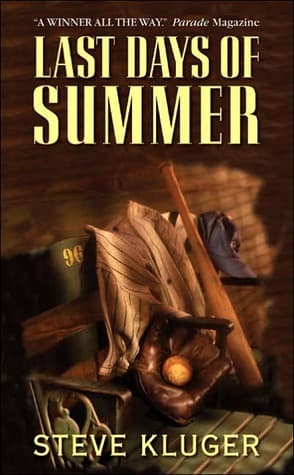
Synopsis
Covers the whole plot, including the ending.
- Difficulty
- Easy
- Pacing
- Moderate
- Mood
- Heartwarming, Humorous, Poignant, Nostalgic
- Read it if
- You love heartwarming stories about unlikely friendships, baseball, and the resilience of the human spirit during wartime, told through an epistolary format.
- Skip it if
- You dislike historical fiction, epistolary novels, or stories with a strong focus on baseball.
Last Days of Summer Plot Summary
Covers the whole plot, including the ending.
An Unlikely Pen Pal Begins
In the summer of 1940, ten-year-old Joey Margolis, a Jewish boy in Brooklyn, often faces bullying. He wants a father figure, as his own father died when Joey was young. Inspired by a radio broadcast, Joey chooses New York Giants third baseman Charlie Banks as his hero. He starts writing letters to Charlie, first asking for an autographed baseball, then asking more imaginatively and persistently for friendship and attention. Joey's letters describe his daily struggles, his mother's overprotective nature, and his strong desire for a male role model. He even invents a fictional illness for himself to get sympathy, not knowing how much his relentless letters will change Charlie's life.
Charlie's Grudging Response
Charlie Banks first ignores Joey's many letters, finding them annoying and overwhelming. However, Joey's creativity, his made-up ailments, and his persistence eventually wear Charlie down. Charlie, a gruff and somewhat solitary man, is recovering from an injury and dealing with his own issues, including a difficult relationship with his estranged father. He eventually sends a short, typed letter to Joey, mostly to make him stop writing. This first, reluctant response only makes Joey bolder, who sees it as a sign of a growing friendship. Their correspondence, initially one-sided, slowly becomes a back-and-forth exchange, with Charlie's letters becoming a little less formal and more engaged, despite his outward gruffness.
The War and Growing Bonds
As the United States enters World War II, the conflict starts to affect Joey's letters, which include his fears about the war and his mother's worries. Charlie, too, is affected, as many of his teammates enlist. Through their continued letters, the two begin to share more personal details. Joey talks about his struggles with bullies like Frankie the Goat and his wish for a father. Charlie, in turn, subtly mentions his own family issues, particularly his difficult relationship with his father, and his thoughts on the war's effects on baseball and his future. The letters become a safe place for both to say things they might not tell others, making their unlikely friendship stronger.
Meeting the Family
Joey, always a planner, arranges a meeting between Charlie and his family. He convinces his mother, Mrs. Margolis, and his eccentric Aunt Carrie to invite Charlie to their home for dinner. Charlie, despite his initial reluctance and discomfort with social situations, eventually agrees. The dinner is a mix of awkwardness and charm, with Mrs. Margolis's doting nature and Aunt Carrie's flamboyant personality creating a lively atmosphere. This meeting is a turning point, moving their relationship beyond just letters. Charlie begins to see Joey not just as a fan, but as a boy who needs guidance, and he starts to appreciate the warmth of Joey's family, a contrast to his own.
A Trip to Ebbets Field
Charlie, acting on an impulse and seeing Joey's deep love for baseball, takes Joey to Ebbets Field for a New York Giants game. This is a dream come true for Joey, who is excited to be in the dugout and experience professional baseball firsthand. During the game, Charlie gives Joey insights into the sport and his life as a player. This outing further strengthens their bond, as Charlie shows real affection and a protective instinct towards Joey. It is a rare moment of joy for both, giving Joey a sense of belonging and Charlie a taste of the simple, pure hero-worship he rarely gets off the field.
The Draft Notice
The war, which had been a distant threat, becomes a reality when Charlie Banks receives his draft notice for military service. This news affects both Charlie and Joey deeply. Charlie, despite his athletic skill, is not exempt from the call of duty and faces the uncertainty of leaving his baseball career. Joey, who idolizes Charlie, is devastated that his hero is going to war, fearing for his safety and the end of their growing friendship. The letters between them take on a more somber tone, showing their shared worry and the coming separation, and the personal cost of the global conflict.
A Difficult Goodbye
As Charlie's deployment date gets closer, he spends more time with Joey and his family. These moments are filled with a bittersweet mix of camaraderie and unspoken sadness. Joey, struggling with the coming separation, tries to be brave but is clearly heartbroken. Charlie, in his gruff way, offers Joey advice and reassurance, solidifying his role as a surrogate father figure. The farewell is emotional, especially for Joey, who gives Charlie a small, personal token to remember him by. Charlie's departure leaves a big void in Joey's life, and in the lives of Mrs. Margolis and Aunt Carrie, who have also grown fond of the baseball star.
Letters from the Front
While Charlie serves overseas, he and Joey keep writing letters. Charlie's letters from the front lines are short, often censored, but they give Joey a vital connection to his hero. Joey's letters, in turn, are full of news from home, his school activities, and his continued struggles with bullies, giving Charlie a glimpse of normalcy amid the horrors of war. This ongoing correspondence becomes a lifeline for both of them – for Joey, it is a source of comfort and a reminder that his hero is still alive; for Charlie, it is a link to the life he left behind and a reminder of the boy who believes in him, giving a needed morale boost.
The News of Charlie's Injury
The Margolis family receives terrible news: Charlie Banks has been severely wounded in combat. The details are vague, but his injuries are serious and life-altering. This news shatters Joey's world, bringing the harsh realities of war directly to his home. He is consumed by worry and grief, fearing for Charlie's life and the potential end of his baseball career and their friendship. Mrs. Margolis and Aunt Carrie comfort Joey, but the weight of the news is great. The future of their unique bond becomes uncertain, casting a dark shadow over their lives.
Charlie's Return and Recovery
Charlie Banks eventually returns home, having lost an arm in the war. His once-promising baseball career is over, and he faces a difficult future. Joey and his family welcome him back, offering unconditional support and a place to stay during his recovery. Charlie, initially withdrawn and struggling with his new reality, finds comfort in Joey's unwavering friendship and his family's warmth. Joey's youthful optimism and persistent belief in Charlie help him slowly accept his injuries and start to rebuild his life, showing the strong impact of their bond.
A New Beginning
Despite his injury, Charlie Banks starts to find a new path. With encouragement and support from Joey and his family, he explores opportunities beyond baseball. He decides to pursue a career in teaching and coaching, using his deep knowledge of the game and his leadership skills in a new way. Joey remains a constant presence, his unwavering admiration and friendship a source of strength for Charlie. The book ends with Charlie having found a new purpose and belonging, forever connected with the Margolis family, showing the lasting strength of their unique and unexpected friendship that went beyond age, background, and the horrors of war.
Principal Figures
Joey Margolis
Protagonist
A tenacious and imaginative ten-year-old boy seeking a father figure and hero.
Joey is a bright, often mischievous, and deeply lonely ten-year-old boy living in Brooklyn during the early 1940s. Having lost his father young, he yearns for a male role model and finds one in baseball star Charlie Banks. Joey is persistent, imaginative, and a master of emotional manipulation through his letters, often fabricating illnesses or dramatic situations to gain attention. He is also incredibly loyal and possesses a deep capacity for love and admiration. His innocence and unwavering belief in Charlie are central to the story, driving the plot and ultimately transforming Charlie's life.
Relationships: Charlie Banks (Surrogate father figure and idol); Mrs. Margolis (Overprotective but loving mother); Aunt Carrie (Eccentric and supportive aunt); Frankie the Goat (Neighborhood bully and rival)
Charlie Banks
Protagonist/Supporting
A gruff but ultimately kind-hearted professional baseball player for the New York Giants.
Charlie Banks is an all-star third baseman for the New York Giants, known for his gruff exterior and solitary nature. He initially finds Joey's letters annoying and intrusive but gradually softens, revealing a compassionate heart beneath his tough facade. Charlie struggles with his own personal demons, including a strained relationship with his father and the pressures of his career. The war profoundly impacts him, leading to a life-altering injury. He is a man of few words but deep integrity, who finds unexpected fulfillment and purpose through his bond with Joey.
Relationships: Joey Margolis (Unexpected friend and surrogate son); Mrs. Margolis (Caretaker and maternal figure); Aunt Carrie (Eccentric but kind friend); His Father (Estranged and complicated relationship)
Mrs. Margolis
Supporting
Joey's overprotective but deeply loving mother.
Mrs. Margolis is Joey's widowed mother, a kind, doting, and somewhat anxious woman who tries her best to raise Joey in Brooklyn. She is initially wary of Joey's obsession with Charlie Banks but eventually welcomes Charlie into their home, recognizing the positive influence he has on her son. She provides a warm, stable, and nurturing environment for Joey and later for Charlie, embodying the strength and resilience of a single mother during wartime.
Relationships: Joey Margolis (Loving mother); Charlie Banks (Maternal figure and friend); Aunt Carrie (Sister and confidante)
Aunt Carrie
Supporting
Joey's flamboyant and eccentric aunt, a source of comic relief and wisdom.
Aunt Carrie is Mrs. Margolis's sister and Joey's aunt, a flamboyant and somewhat eccentric character who adds humor and warmth to the Margolis household. She is a sharp observer of human nature and often offers witty commentary or surprisingly profound advice. Aunt Carrie is supportive of Joey's friendship with Charlie and plays a role in making Charlie feel welcome and comfortable within the family. Her dramatic flair and loving nature make her a memorable and endearing figure.
Relationships: Joey Margolis (Loving aunt and confidante); Mrs. Margolis (Sister and close friend); Charlie Banks (Friend and supporter)
Frankie the Goat
Supporting
Joey's primary bully and neighborhood antagonist.
Frankie the Goat is one of Joey Margolis's main tormentors in the neighborhood. He represents the everyday challenges and cruelty Joey faces, highlighting Joey's vulnerability and his need for a hero. Frankie's bullying contributes to Joey's desire for Charlie's protection and friendship. Though a minor character, he serves as a significant catalyst for Joey's actions and his yearning for strength and belonging.
Relationships: Joey Margolis (Bully and tormentor)
Mr. Margolis (Joey's Father)
Mentioned
Joey's deceased father, whose absence drives Joey's search for a male role model.
Joey's father is never seen in the book as he died when Joey was very young. His absence is a foundational element of Joey's character and motivation. Joey's longing for a father figure, his desire for protection, and his need for a strong male influence all stem from this loss. He is a constant, unspoken presence, shaping Joey's emotional landscape and his relentless pursuit of Charlie Banks.
Relationships: Joey Margolis (Deceased father); Mrs. Margolis (Deceased husband)
Charlie Banks's Father
Mentioned
Charlie's estranged father, whose difficult relationship shaped Charlie's guarded personality.
Charlie Banks's father is a largely unseen character, but his strained relationship with Charlie is a significant undercurrent in Charlie's personal life. Their difficult history contributes to Charlie's gruff demeanor and his reluctance to form close bonds. Through his letters, Charlie subtly reveals the emotional wounds from this relationship, offering insight into his character and explaining some of his initial resistance to Joey's overtures of friendship. This relationship highlights Charlie's own need for connection and emotional healing.
Relationships: Charlie Banks (Estranged father)
Themes & Insights
Unlikely Friendship and Found Family
The main theme is the deep and unexpected bond that grows between a lonely ten-year-old boy, Joey Margolis, and a gruff professional baseball player, Charlie Banks. Despite their age difference, social standing, and Charlie's initial resistance, their letters turn into a deep, supportive friendship. This theme includes Joey's mother and aunt, who accept Charlie as part of their family, giving him the warmth and connection he lacked. The story shows how love and support can be found in unexpected places, creating a 'found family' that goes beyond traditional blood ties, especially during wartime.
“You know, Margolis, you're a real pain in the neck. But I guess you're my pain in the neck now.”
Hero Worship and Identity
Joey Margolis's character journey is driven by his strong hero worship of Charlie Banks. Having lost his father, Joey looks for a strong male role model, placing all his hopes and ideals onto the baseball star. This theme explores how people, especially children, build their identities and find strength through the figures they admire. For Joey, Charlie is not just a baseball player but a symbol of courage, protection, and belonging. On the other hand, Charlie's realization of Joey's unwavering belief in him helps Charlie see himself in a different, more positive way, especially after his serious injury. The hero-worship becomes a mutual force for personal growth.
“I need you, Charlie Banks. I need you to be my hero.”
The Impact of War on the Home Front
Set during World War II, the novel explores the war's effects on ordinary American lives. While it is not a battlefield story, the conflict is always present, influencing the characters' worries, decisions, and ultimately, their fates. Joey's fears for Charlie, the rationing, the enlistment of players, and Charlie's serious injury all show how far-reaching the war was, even for those not directly on the front lines. The theme emphasizes the sacrifices made, the uncertainty faced, and the resilience of families and communities in supporting loved ones and rebuilding lives after global conflict.
“The war's getting to everyone, Charlie. Mom cries sometimes when she thinks I'm not looking.”
Loss, Grief, and Healing
Loss is a common theme, from Joey's early loss of his father to Charlie's career-ending injury and the broader losses of the war. Joey's initial loneliness and search for a father figure come from his grief. Charlie, too, carries the emotional wounds of a difficult past and the great loss of his baseball career. The novel shows the complex process of grieving and finding ways to heal and adapt. The characters find comfort and strength in their mutual support, showing that companionship and love can help with sorrow, helping people find new purpose and peace after experiencing big setbacks and pain.
“Sometimes you lose something important, and you just gotta figure out what to do next. It ain't easy, but you gotta do it.”
Plot Devices & Literary Techniques
Epistolary Format
The entire novel is told through letters, telegrams, and official documents.
The novel's unique structure, presented entirely through letters, telegrams, and occasional official documents (like draft notices), is its primary plot device. This format allows for an intimate and direct insight into the characters' thoughts, feelings, and the progression of their relationship without an omniscient narrator. It highlights Joey's imaginative and often manipulative voice, and Charlie's initially gruff, then increasingly tender, responses. The gaps between letters force the reader to infer events and emotions, creating suspense and allowing for character development to unfold organically through their personal communications.
Dramatic Irony
Joey's innocent fabrications and exaggerated claims create humorous and poignant dramatic irony.
Dramatic irony is frequently used, particularly through Joey's letters. Joey often fabricates illnesses, invents dramatic scenarios, or misunderstands situations, which the reader, and eventually Charlie, can see through. For example, Joey's claims of being gravely ill are clearly exaggerated for sympathy. This device creates humor and highlights Joey's childlike perspective, while also underscoring his deep need for attention and connection. It allows the reader to appreciate the genuine affection growing between the characters even as Joey's methods are comically transparent.
Baseball as Metaphor
Baseball symbolizes heroism, American identity, and a simpler time.
Baseball is more than just a setting; it functions as a powerful metaphor throughout the novel. For Joey, it represents heroism, a path to masculinity, and a source of hope and distraction during wartime. Charlie Banks, as a baseball star, embodies the ideal American hero. The game itself symbolizes a sense of normalcy, tradition, and shared national identity, especially as the country grapples with the anxieties of World War II. Charlie's career-ending injury therefore becomes a metaphor for the loss of innocence and the personal sacrifices demanded by the war, and his eventual shift to coaching represents finding a new purpose.
The Absence of a Father Figure
Joey's lack of a father drives the central relationship.
The absence of Joey's biological father is a fundamental driving force for the entire narrative. It creates a void in Joey's life that he desperately tries to fill by latching onto Charlie Banks. This device establishes Joey's primary motivation for initiating the correspondence and shapes his emotional needs. It explains his persistence, his hero-worship, and his deep craving for male guidance and protection, ultimately setting the stage for Charlie to step into a surrogate fatherly role, providing the emotional core of their evolving relationship.
Last Days of Summer Quotes
“I'm not a kid anymore, and I'm not going to be treated like one. I'm going to be a man, and I'm going to play baseball.”
“It's a funny thing about life, isn't it? You never know what's going to happen next. You just have to keep going.”
“The world needs dreamers. And the world needs doers. But above all, the world needs dreamers who do.”
“Sometimes the best way to solve a problem is to just go right through it.”
“You can't let fear stop you from doing what you know is right.”
“Baseball is more than just a game. It's a way of life.”
“Letters are like time capsules, aren't they? They hold moments, feelings, and sometimes even a little bit of magic.”
“Even in the darkest times, there's always a little bit of light, if you know where to look for it.”
“Family isn't always blood. It's the people who stand by you when no one else will.”
“Growing up means learning to live with the things you can't change, and changing the things you can.”
“A good story can make you forget your troubles, even if it's just for a little while.”
“Sometimes the biggest victories are the ones that no one else sees.”
“You gotta have heart. And a little bit of crazy doesn't hurt either.”
“The best way to predict the future is to create it.”
Quiz
10 questions on the plot and the characters. Each answer comes with a short explanation.
Question 1
In what borough of New York City does Joey Margolis live during the early 1940s?
- Manhattan
- The Bronx
- Brooklyn
- Queens
Show answer
C. Brooklyn The book explicitly states that Joey Margolis is 'growing up goofy and mostly fatherless in Brooklyn in the early 1940s.'
Question 2
Who is the baseball player Joey Margolis chooses as his hero?
- Babe Ruth
- Charlie Banks
- Joe DiMaggio
- Lou Gehrig
Show answer
B. Charlie Banks Joey decides to latch on to Charlie Banks, described as the all-star third baseman for the New York Giants.
Question 3
What is Charlie Banks's position for the New York Giants?
- Pitcher
- Catcher
- First Baseman
- Third Baseman
Show answer
D. Third Baseman Charlie Banks is identified as the 'all-star third baseman for the New York Giants' in the book's description.
Question 4
What initial reaction does Charlie Banks have to Joey Margolis's extreme attention?
- He immediately welcomes it.
- He is indifferent to it.
- He doesn't exactly welcome it.
- He finds it amusing from the start.
Show answer
C. He doesn't exactly welcome it. The description states that 'Joey's chosen champion doesn't exactly welcome the extreme attention of a persistent young fan.' This indicates initial reluctance or annoyance.
Question 5
What primary personal characteristic is used to describe Joey Margolis at the beginning of the story?
- Wealthy and privileged
- Quiet and reserved
- Goofy and mostly fatherless
- Athletic and popular
Show answer
C. Goofy and mostly fatherless Joey is described as 'growing up goofy and mostly fatherless in Brooklyn,' which are key elements of his character at the story's outset.
Question 6
What is a central theme explored through the relationship between Joey and Charlie?
- The fleeting nature of fame
- The challenges of professional sports
- The power of unlikely friendship and hero worship
- The economic struggles during wartime
Show answer
C. The power of unlikely friendship and hero worship The book is described as 'a poignant and hilarious tale of baseball, hero worship, eccentric behavior, and unlikely friendship,' directly pointing to these themes through the central relationship.
Question 7
Why might Charlie Banks eventually need Joey Margolis, despite his initial reluctance?
- Joey's family has connections that can help Charlie's career.
- Joey's youthful enthusiasm provides a much-needed emotional connection or distraction.
- Joey is a talented baseball player who can help Charlie practice.
- Charlie needs Joey's help to write fan mail responses.
Show answer
B. Joey's youthful enthusiasm provides a much-needed emotional connection or distraction. The text hints that 'this strange, needy kid might be exactly what Banks needs,' suggesting that Joey's unique personality and persistent admiration could fill a void in Charlie's life, aligning with the theme of unlikely friendship.
Question 8
What historical period serves as the backdrop for Joey Margolis's coming-of-age story?
- The Roaring Twenties
- The Great Depression
- The early 1940s (World War II era)
- The post-war boom of the 1950s
Show answer
C. The early 1940s (World War II era) The book is set in 'the early 1940s,' which places it squarely during the period of World War II, influencing the context of the characters' lives.
Question 9
How is Joey Margolis portrayed in his neighborhood before he latches onto Charlie Banks?
- As a popular and respected leader
- As a quiet observer who keeps to himself
- As the neighborhood punching bag
- As a budding baseball prodigy
Show answer
C. As the neighborhood punching bag The description explicitly calls Joey Margolis the 'neighborhood punching bag,' indicating his vulnerability and lack of social standing before finding a hero.
Question 10
The book is categorized as 'Young Adult' and 'Historical Fiction.' Which element primarily contributes to its 'Historical Fiction' categorization?
- The focus on a child's perspective.
- The use of baseball as a central plot device.
- Its setting in Brooklyn during the early 1940s.
- The exploration of themes like friendship.
Show answer
C. Its setting in Brooklyn during the early 1940s. Historical fiction is defined by its setting in a specific, recognizable historical period. The book's setting in 'Brooklyn in the early 1940s' is the primary element that makes it historical fiction.
Last Days of Summer FAQ
What is 'Last Days of Summer' about?
'Last Days of Summer' is about 12-year-old Joey Margolis, a fatherless, often-bullied Jewish boy from Brooklyn in the 1940s, who latches onto New York Giants third baseman Charlie Banks as a surrogate father figure. The story unfolds through a series of letters, telegrams, and other documents, chronicling their unlikely friendship amidst the backdrop of World War II and professional baseball.
Why should I read 'Last Days of Summer'?
You should read it for its unique epistolary format, which makes for a fast-paced, engaging, and often hilarious read. It offers a poignant exploration of hero worship, the search for identity, and the power of unlikely friendships, all set against the nostalgic backdrop of 1940s baseball and wartime America.
What is the background/setting of 'Last Days of Summer'?
The story is set primarily in Brooklyn, New York, during the early 1940s, spanning the years of World War II. The backdrop includes professional baseball, particularly the New York Giants, and the societal atmosphere of wartime America, with its ration books, anxieties, and the draft.
What are the most memorable quotes?
One memorable quote is Joey's persistent sign-off, 'Your pal and future teammate, Joey Margolis,' which perfectly encapsulates his unwavering determination. Another is Charlie's gruff but ultimately caring advice, often hidden within his exasperated replies, revealing his evolving affection for Joey.
What writing style does the author use?
Steve Kluger employs an epistolary style, telling the entire story through letters, telegrams, newspaper clippings, psychiatric reports, and even baseball cards. This unique format allows for multiple perspectives and infuses the narrative with humor, immediacy, and a strong sense of character voice.
What minor details add significant meaning?
The inclusion of ration book details and war bond drives subtly grounds the story in its historical context, emphasizing the sacrifices and anxieties of the era. Also, the gradual shift in Charlie Banks's letter closings, from terse to more affectionate, speaks volumes about his growing bond with Joey.
What are some subtle foreshadowing moments?
Joey's constant mention of his father's absence and his desire for a strong male figure subtly foreshadows the depth of his eventual attachment to Charlie. Also, Charlie's initial resistance to Joey, while seemingly dismissive, hints at his own emotional guardedness, which the friendship will eventually break down.
What unexpected character connections exist?
Beyond Joey and Charlie, there's an unexpected connection between Charlie and Joey's mother, which, while not romantic, deepens the family dynamic Joey craves. Additionally, the brief but impactful interactions Joey has with other Giants players show the ripple effect of his unique personality within the team.
What are unspoken character motivations?
Charlie Banks's unspoken motivation for eventually embracing Joey is his own loneliness and perhaps a lingering guilt or void from past relationships, which Joey's persistent innocence helps to fill. Joey's deepest unspoken motivation is simply the desperate need for a father figure and a sense of belonging in a world where he often feels an outsider.
What psychological complexities do characters exhibit?
Charlie Banks exhibits a complex mix of gruffness and underlying tenderness, struggling with his own emotional scars while learning to accept unconditional affection. Joey displays an intricate blend of precocious intelligence, profound insecurity, and unwavering optimism, using his imagination as a shield and a weapon.
What are the major emotional turning points?
A major emotional turning point is when Charlie Banks, initially dismissive, starts responding to Joey's letters with genuine concern and affection, signaling the shift from annoyance to a burgeoning friendship. Another is when Joey faces significant bullying or personal loss, and Charlie steps up as a true protector and mentor.
How do relationship dynamics evolve?
The relationship between Joey and Charlie evolves from a one-sided fan obsession to a reluctant mentorship, then to a deep, platonic father-son bond. Initially, Charlie sees Joey as a nuisance, but over time, he becomes a cherished confidante and a source of unexpected joy and purpose.
Which parts remain ambiguous or open-ended?
While the main narrative concludes, the long-term future of Charlie Banks's baseball career post-war, and the exact nature of Joey's adult relationship with Charlie's family, are left somewhat open-ended. The story focuses more on the formative years of their bond rather than their entire lives.
What are controversial scenes or decisions?
One potentially controversial element is Joey's initial, almost stalker-like persistence, which in a modern context might be viewed differently. However, within the book's narrative and the context of a lonely child in the 1940s, it's portrayed as endearing and ultimately harmless.
'Last Days of Summer' ending explained: how it ends & what it means
The book ends with Joey and Charlie's bond firmly established, transcending the baseball field and the war. Charlie goes off to serve in the war, but their correspondence continues, solidifying their status as chosen family. It signifies that their friendship is not just a summer fling but a lasting connection that will endure life's greatest challenges, highlighting the power of love and loyalty.
About the author

Steve Kluger is an author known for his works of fiction, including "My Most Excellent Year" and "Last Days of Summer." His writing often explores themes of friendship and coming-of-age experiences, appealing to both young adult and adult audiences. Kluger's storytelling is characterized by humor and heartfelt moments.
Similar books
- A Tree Grows in Brooklyn
Betty Smith
4.3 (388k) average on GoodreadsHistorical FictionCaptures the essence of growing up in early 20th-century Brooklyn with a strong, memorable protagonist.
- The Art of Fielding
Chad Harbach
4.0 (105k) average on GoodreadsLiterary FictionExplores themes of baseball, hero worship, and character development in a compelling narrative.
- Major Pettigrew's Last Stand
Helen Simonson
3.9 (132k) average on GoodreadsLiterary FictionFeatures an endearing, gruff protagonist and an unexpected, charming friendship.
- The Book Thief
Markus Zusak
4.4 (1.8M) average on GoodreadsHistorical FictionWhile both are set during WWII and feature young protagonists, The Book Thief offers a much grittier and more somber exploration of war, loss, and the Holocaust, narrated by Death. Last Days of Summer maintains a more hopeful and intimate focus on individual relationships, with the war serving more as a backdrop than a central, devastating force. Zusak delves deeper into the horrors and systemic violence, whereas Kluger focuses on the resilience of personal connection amidst adversity.
- Milkweed
Jerry Spinelli
4.0 (25k) average on GoodreadsChildren'sMilkweed also features a young protagonist navigating WWII-era Europe, but Spinelli's novel is a much more direct and harrowing account of the Holocaust and the struggle for survival in the Warsaw Ghetto. The tone is starker, the experiences more brutal, and the themes focus heavily on identity, humanity, and the loss of innocence in extreme circumstances. Last Days of Summer, in contrast, offers a more comforting narrative centered on the development of a supportive relationship from a distance, with the war's impact filtered through personal correspondence rather than direct experience of atrocities.
- To Kill a Mockingbird
Harper Lee
4.3 (4.5M) average on GoodreadsHistorical FictionIn the 1930s Jim Crow South, Harper Lee writes about racial injustice, moral growth, and the quiet courage of a lawyer father, Atticus Finch, as seen through his young daughter's eyes.



Enjoyed the summary?
A summary gives you the shape of the book. The book itself has the detail, the examples and the voice.
Find Last Days of Summer on AmazonAs an Amazon Associate, BookBrief earns from qualifying purchases. How we're funded