

Synopsis
Covers the whole plot, including the ending.
- Difficulty
- Medium
- Pacing
- Moderate
- Mood
- Thought-provoking, Melancholy, Hopeful, Introspective
- Read it if
- You enjoy character-driven literary fiction with a strong sense of place, complex relationships, and a blend of humor and pathos, especially if you appreciate baseball as a backdrop for deeper human drama.
- Skip it if
- You prefer fast-paced plot-driven thrillers or have no interest in stories that delve deeply into the psychological struggles of characters, or if you dislike open-ended resolutions.
The Art of Fielding Plot Summary
Covers the whole plot, including the ending.
The Arrival of Henry Skrimshander
Henry Skrimshander, a small, quiet young man, comes to Westish College as a walk-on for the baseball team, the Harpooners. His unusual talent as a shortstop stands out, especially to team captain Mike Schwartz, who sees Henry's potential to lead the team to a championship. Schwartz takes Henry under his wing, coaching him carefully and setting up a strict training plan. Henry's precise and almost magical ability to field ground balls and throw accurately becomes famous on campus, earning him the name 'the Natural'. His focus is almost entirely on baseball, a trait Schwartz supports.
The Fateful Throw
During a normal game, Henry Skrimshander makes a routine throw from shortstop to first base. But the ball goes off course, hitting his teammate and roommate, Owen Dunne, in the head. Owen collapses, getting a severe concussion that puts him out of the game. This single, uncharacteristic mistake breaks Henry's confidence. The 'yips,' a psychological condition causing involuntary muscle spasms and fear of throwing, start to appear. Henry's perfect throws become wild, risking his baseball future and messing up the Harpooners' season. The incident casts a long shadow over Westish College.
Owen's Recovery and New Relationship
Owen Dunne, after his concussion from Henry's throw, starts to recover slowly. During this time, he becomes interested in Westish College's intellectual pursuits, especially Herman Melville's works. At the same time, Westish President Guert Affenlight, a quiet and scholarly man, unexpectedly falls in love with Owen. Their relationship, at first based on a shared interest in Melville and intellectual curiosity, grows into a secret affair. This relationship is a big change for Guert, who has been a bachelor, and a complex look at identity and desire for Owen, who is openly gay.
Pella's Return to Westish
Pella Affenlight, President Guert Affenlight's daughter, unexpectedly returns to Westish College. She comes back to town after leaving her husband in New York, looking for a fresh start. Pella is unhappy with her old life and wants to make her own way, separate from her father's expectations or her past mistakes. Her return changes the dynamic in the Affenlight household and at Westish. She at first struggles to define herself, finding comfort in the familiar campus but also dealing with her past decisions and uncertain future.
Henry's Struggle with the Yips
After the throw that injured Owen, Henry Skrimshander's baseball career falls into crisis. The 'yips' appear as uncontrolled anxiety and a physical inability to throw accurately, especially under pressure. His once natural movements become hard and unsure. Henry spends hours practicing, trying to overcome the mental block, but his efforts often fail. His self-doubt grows, threatening his dreams of playing in the major leagues. Mike Schwartz, his mentor, tries different ways to help him, but Henry's internal struggle is deeply personal and seems impossible to fix, affecting his performance and relationships.
Mike Schwartz's Sacrifice
Mike Schwartz, the driven and loyal captain of the Harpooners, becomes consumed by Henry Skrimshander's problem. He sees Henry's success as linked to the team's success and his own legacy. Schwartz dedicates himself to helping Henry overcome the yips, creating new training methods, offering encouragement, and even taking on a protective role. This focus on Henry costs Schwartz personally, as he neglects his own studies and his own baseball future, showing the depth of his friendship and commitment to the team.
Pella and Henry's Budding Connection
As Pella Affenlight adjusts to her new life at Westish, she finds herself drawn to Henry Skrimshander, who is struggling greatly with his baseball crisis. Pella, having faced her own failures, recognizes a similar spirit in Henry's vulnerability. Their relationship begins slowly, often through quiet talks and shared understanding. Pella offers Henry a view beyond baseball, helping him see himself as more than an athlete. Their growing affection provides a gentle contrast to the intense pressures Henry faces on the field, offering him comfort.
Guert's Love and Public Scrutiny
President Guert Affenlight's secret relationship with Owen Dunne deepens, bringing him unexpected joy. However, Guert, a man of public standing, becomes aware of the potential for scandal if their affair is found out. He struggles with the conflict between his personal happiness and his professional duties and reputation. The fear of public judgment and potential harm to Westish College weighs on him. This internal struggle shows his vulnerability and Owen's deep impact on his previously solitary life, forcing him to confront societal expectations and his own desires.
The Last Game
Despite Henry's struggles, the Harpooners, boosted by Mike Schwartz's leadership and Owen Dunne's return to the lineup, make it to the championship game. The season has led to this moment, and the pressure on Henry is huge. His yips have continued to bother him, making every throw a risk. The final game becomes a test for Henry, of his resolve, talent, and ability to overcome his psychological issues. The championship's fate, and to some extent, the emotional journeys of all the main characters, depend on his performance.
A Tragic End and New Beginnings
In a sad turn, President Guert Affenlight dies suddenly, a shock to the Westish community, especially Owen and Pella. His death reveals their secret relationship to Pella, creating complex emotions. In the championship game, Henry Skrimshander, despite moments of brilliance, still struggles with his throwing, ultimately costing the Harpooners the game. However, the experience, with Pella's support, leads him to a new understanding of himself beyond baseball. The characters, though hurt by loss and disappointment, begin new paths, understanding that life's real victories are beyond the baseball field.
Principal Figures
Henry Skrimshander
Protagonist
A preternaturally gifted shortstop whose career is jeopardized by a single errant throw and the ensuing 'yips.'
Henry is a quiet, unassuming young man whose entire identity is wrapped up in his extraordinary baseball talent. He possesses a near-perfect fielding ability, an almost mystical connection to the game. His focus is singular, bordering on obsessive, leaving little room for other aspects of life. After his disastrous throw, Henry becomes crippled by self-doubt and the 'yips,' a psychological block that makes throwing impossible. He is initially naive and emotionally stunted, but his struggles force him to confront his limitations and explore who he is beyond the baseball diamond.
Relationships: Mike Schwartz (Mentor and best friend; Schwartz is fiercely protective and dedicated to Henry's success.); Owen Dunne (Roommate and teammate; Henry's accidental injury of Owen triggers his crisis.); Pella Affenlight (Love interest; Pella offers Henry an outside perspective and emotional support.)
Mike Schwartz
Supporting
The Harpooners' intense, loyal captain and Henry's mentor, who sacrifices his own future for Henry's potential.
Mike Schwartz is a driven, intense, and deeply loyal baseball captain. He is a natural leader, fiercely dedicated to the Harpooners and to Henry Skrimshander's success, which he sees as intertwined with his own. Schwartz is a meticulous strategist and coach, almost a father figure to Henry, meticulously crafting his development. He is a man of strong convictions and a profound sense of responsibility. His ambition for Henry, however, leads him to neglect his own academic and personal future, highlighting his selflessness and the depth of his commitment.
Relationships: Henry Skrimshander (Mentor and best friend; Schwartz is Henry's biggest champion and protector.); Owen Dunne (Teammate; Schwartz is concerned for Owen's recovery and contribution to the team.)
Owen Dunne
Supporting
Henry's openly gay roommate and teammate, who forms an unexpected and transformative relationship with President Affenlight.
Owen Dunne is Henry's intelligent, introspective, and openly gay roommate and teammate. He is a skilled but less obsessive baseball player, with a keen intellect and a passion for literature, particularly Herman Melville. After being struck by Henry's throw, Owen's injury forces him to step back from baseball and explore other facets of his identity. His relationship with President Affenlight is a pivotal experience, allowing him to explore love, intellect, and vulnerability in a profound way. Owen is thoughtful and observant, often providing a philosophical counterpoint to the more pragmatic characters.
Relationships: Henry Skrimshander (Roommate and teammate; Owen is the accidental victim of Henry's throw, but they share a bond.); Guert Affenlight (Lover and intellectual companion; their relationship is central to Owen's emotional growth.)
Guert Affenlight
Supporting
The scholarly, reserved President of Westish College, who unexpectedly falls in love with Owen Dunne.
Guert Affenlight is the erudite and somewhat melancholic President of Westish College. A lifelong bachelor and a scholar of Herman Melville, he is a man of routines and intellectual pursuits, seemingly detached from the messy realities of life. His unexpected love affair with Owen Dunne shatters his carefully constructed world, bringing him an intensity of emotion and vulnerability he had never experienced. Guert grapples with the societal implications of their secret relationship and the profound shift in his personal identity. He represents the intellectual and traditional heart of Westish, forced to confront his own desires.
Relationships: Owen Dunne (Lover and intellectual companion; Owen brings Guert immense joy and challenges his worldview.); Pella Affenlight (Daughter; their relationship is complex, marked by Pella's past rebellion and Guert's quiet love.)
Pella Affenlight
Supporting
President Affenlight's daughter, who returns to Westish after a failed marriage, seeking a new life.
Pella Affenlight is a bright, independent, and somewhat adrift young woman. She returns to Westish College after a failed marriage, seeking to escape her past and redefine herself. Pella is intelligent and observant, but initially lacks direction. Her journey is one of self-discovery, as she grapples with her identity, her relationship with her father, and her own desires. She provides an external perspective on the insular world of Westish baseball and becomes a vital source of emotional support and understanding for Henry Skrimshander, helping him to see beyond his baseball identity.
Relationships: Guert Affenlight (Father; their relationship is loving but sometimes strained by Pella's independence.); Henry Skrimshander (Love interest; Pella offers Henry a connection beyond baseball and helps him process his struggles.)
Coach Alter
Supporting
The Harpooners' baseball coach, a pragmatic and superstitious figure.
Coach Alter is the head coach of the Westish Harpooners, a seasoned and somewhat superstitious baseball veteran. He is less concerned with the psychological nuances of his players and more focused on winning games and adhering to the traditions of baseball. Alter values discipline and hard work, and while he recognizes Henry's talent, he struggles to understand the 'yips' and often relies on Mike Schwartz to manage Henry's issues. He represents the practical, results-oriented side of the sport, sometimes clashing with the more emotional or intellectual concerns of other characters.
Relationships: Mike Schwartz (Player/Coach; Alter relies on Schwartz's leadership and understanding of Henry.); Henry Skrimshander (Player/Coach; Alter is frustrated by Henry's yips but recognizes his talent.)
Fisk
Supporting
A minor league scout who closely watches Henry Skrimshander.
Fisk is a persistent and observant scout for the Chicago Cubs. He represents the professional baseball world that Henry Skrimshander aspires to join. Fisk is a quiet but keen observer, present at many of Henry's games, meticulously evaluating his talent. His presence is a constant reminder of the high stakes and the potential future that awaits Henry, adding to the pressure on the young shortstop. Fisk's role is primarily to embody the external judgment and opportunity that Henry faces, both before and during his struggle with the yips.
Relationships: Henry Skrimshander (Observer/Evaluator; Fisk is a potential gatekeeper to Henry's professional career.)
Joe
Mentioned
Pella's ex-husband.
Joe is Pella Affenlight's ex-husband, a figure from her past in New York whom she abruptly left. He represents the life Pella is trying to escape and the mistakes she feels she made. While not appearing directly in the narrative, his presence is felt through Pella's reflections and her determination to forge a new, independent identity away from him and their failed marriage.
Relationships: Pella Affenlight (Ex-husband; their failed marriage prompts Pella's return to Westish.)
Themes & Insights
The Nature of Talent and Pressure
The novel explores how natural talent can be both a gift and a problem, especially under great pressure. Henry Skrimshander's fielding ability defines him, but when one error shatters his confidence, his talent becomes a source of anxiety. The 'yips' show the psychological weakness even of the most gifted. Mike Schwartz's focus on Henry's talent also creates pressure, showing how outside expectations can twist a person's self-worth. The book suggests that true happiness is beyond just seeking perfection.
“Baseball was a religion in their family. Henry was their chosen son.”
Identity Beyond Achievement
A main theme is how characters struggle to define themselves outside their main roles or achievements. Henry Skrimshander, whose identity is entirely tied to being a baseball prodigy, must learn who he is when that identity is threatened by the yips. Mike Schwartz, focused on his role as captain and Henry's mentor, eventually faces the cost of neglecting his own life. Owen Dunne, at first defined by baseball and his sexuality, broadens his identity through intellectual pursuits and his relationship with President Affenlight. Pella Affenlight actively seeks a new identity after a failed marriage, showing the human need for self-definition beyond outside labels.
“There was a world outside baseball, Henry was learning. A world of fear and confusion and beauty.”
Love in Unexpected Forms
The novel shows love in its various, often surprising, forms. Guert Affenlight, a lifelong bachelor, experiences a deep and changing love with Owen Dunne, challenging norms and his own ideas. This love is intellectual, passionate, and personal. The growing affection between Henry Skrimshander and Pella Affenlight is a quieter love, offering comfort and understanding during Henry's crisis. Mike Schwartz's strong loyalty and dedication to Henry, though not romantic, is a powerful expression of platonic love and mentorship. The book suggests that love can appear at any age and in any form, often when least expected.
“Love was not a feeling, Guert realized. It was a choice.”
The Weight of the Past and the Promise of the Future
Characters in the novel constantly deal with their pasts while looking toward an uncertain future. Pella Affenlight returns to Westish to escape her past marriage and start fresh. Guert Affenlight's past as a solitary academic is turned upside down by his present love for Owen. Henry Skrimshander's past perfection on the field haunts his present struggles, making his baseball future unsure. The novel explores how past events and expectations shape present decisions and future goals, but also how characters can break free from those limits to create new possibilities. The repeating nature of baseball seasons further supports this theme.
“The past was not a thing to be escaped, but a thing to be understood.”
The Small World of Westish College
Westish College acts as a character, a small world where the main characters' lives cross and affect each other. The campus, with its traditions, studies, and focus on baseball, creates a close yet active environment. The tight-knit community means that personal triumphs and struggles quickly become known, increasing the stakes for individuals like Henry and Guert. The small college setting highlights themes of community, mentorship, and the intense relationships that form in such a confined world.
“Westish College was a place where things mattered, where the small things could feel large.”
Plot Devices & Literary Techniques
The 'Yips'
A psychological condition causing involuntary muscle spasms and fear of throwing, crippling Henry Skrimshander.
The 'yips' serve as the central inciting incident and ongoing conflict for Henry Skrimshander. It's a psychological manifestation of extreme pressure and self-doubt, transforming Henry's most natural talent into an insurmountable obstacle. This device externalizes Henry's internal struggle, making his crisis tangible and observable. It also acts as a metaphor for the fragility of perfection and the unpredictability of human performance, even for the most gifted. The yips force Henry to confront his identity beyond baseball and provide a catalyst for the other characters' arcs as they react to his struggle.
Herman Melville's 'Moby Dick'
A recurring literary motif, serving as a philosophical backdrop and a point of connection between characters.
Herman Melville's 'Moby Dick' is a significant literary allusion and plot device. President Guert Affenlight is a Melville scholar, and his shared passion for the novel with Owen Dunne is what initially draws them together, providing a framework for their intellectual and romantic connection. The themes of obsession, fate, the pursuit of the unattainable, and the search for meaning within 'Moby Dick' parallel the characters' own struggles. The novel within the novel enriches the narrative, offering a layer of literary depth and insight into the characters' internal worlds and the broader philosophical questions explored in 'The Art of Fielding'.
The Westish Harpooners Baseball Season
The progression of the baseball season provides the narrative structure and heightened stakes for the characters.
The baseball season itself functions as a crucial structural device, providing a clear timeline and escalating tension for the narrative. Each game, each win or loss, impacts Henry's struggle, Mike's dedication, and the overall mood of the college. The impending championship game serves as a climactic deadline, intensifying the personal stakes for all five main characters. The cyclical nature of the season also reflects the themes of hope, despair, and renewal. The outcome of the season, particularly the final game, mirrors the personal triumphs and failures of the characters, even if their ultimate resolutions extend beyond the field.
The Westish College Setting
The small, insular liberal arts college acts as a contained environment where characters' lives intensely intertwine.
Westish College is more than just a backdrop; it's a character in itself. Its small, intimate nature ensures that the lives of Henry, Mike, Owen, Guert, and Pella are constantly intersecting and influencing one another. The college's traditions, its academic focus, and its dedication to baseball create a unique ecosystem where personal dramas are amplified. This contained setting allows for intense character development and complex relational dynamics, highlighting how a seemingly minor event (Henry's throw) can ripple through an entire community. It emphasizes themes of community, mentorship, and the pressures of living under a microscope.
The Art of Fielding Quotes
“Every player had a theory, a set of habits and superstitions that formed a kind of private religion.”
“The greatest players were the ones who could forget the last play and move on to the next, unburdened by past mistakes.”
“You could measure a man's life by the number of times he'd been thrown out trying to steal second.”
“A good shortstop was a kind of conduit, a channel through which the game flowed.”
“The ball, in flight, seemed to carry all the weight of the world, all the hopes and fears.”
“It was one thing to dream of greatness, another to actually achieve it, and an entirely different thing to live with it once you had.”
“He understood then that true talent wasn't just about what you could do, but about what you could endure.”
“The game was a series of small, perfect moments, strung together by long stretches of waiting.”
“Love was not a feeling, but a decision, a constant act of will.”
“Sometimes the biggest victories were the ones no one else saw.”
“He had always believed that if you worked hard enough, the universe would eventually reward you. He was beginning to doubt it.”
“The past was not a place to live, but a place to learn.”
“In baseball, as in life, the unexpected was always lurking, ready to change everything in an instant.”
“The true art of fielding was not just catching the ball, but knowing where it was going before it even left the bat.”
Quiz
10 questions on the plot and the characters. Each answer comes with a short explanation.
Question 1
What is the name of the college where Henry Skrimshander plays baseball?
- Lake Michigan University
- Westish College
- Harpooners Academy
- Wisconsin State
Show answer
B. Westish College The story is set at Westish College, a small school on the shore of Lake Michigan.
Question 2
What position does Henry Skrimshander play for the Westish Harpooners?
- Pitcher
- Catcher
- Shortstop
- First Baseman
Show answer
C. Shortstop Henry Skrimshander is a shortstop, known for his exceptional fielding skills before his error.
Question 3
Which character is the college president and falls unexpectedly in love?
- Mike Schwartz
- Owen Dunne
- Guert Affenlight
- Henry Skrimshander
Show answer
C. Guert Affenlight Guert Affenlight is the college president and a longtime bachelor who falls in love.
Question 4
What event triggers the 'tailspin' for the five main characters?
- A major injury to the team's star pitcher
- Henry Skrimshander's disastrous throwing error
- The college facing financial collapse
- A scandal involving the baseball coach
Show answer
B. Henry Skrimshander's disastrous throwing error The narrative begins with Henry Skrimshander's routine throw going disastrously off course, impacting several lives.
Question 5
Who is Pella Affenlight?
- Henry Skrimshander's girlfriend
- Guert Affenlight's daughter
- A new student at Westish College
- The team's athletic trainer
Show answer
B. Guert Affenlight's daughter Pella Affenlight is Guert Affenlight's daughter, who returns to Westish after an ill-fated marriage.
Question 6
What is Mike Schwartz's role on the baseball team and in Henry's life?
- He is the team's rival coach and Henry's competitor.
- He is the team captain and Henry's best friend, guiding his career.
- He is a scout from a major league team interested in Henry.
- He is a professor who mentors Henry academically.
Show answer
B. He is the team captain and Henry's best friend, guiding his career. Mike Schwartz is the Harpooners' team captain and Henry's best friend, who has heavily invested in Henry's baseball future.
Question 7
What literary work does Guert Affenlight frequently reference and teach?
- Moby-Dick
- The Great Gatsby
- Hamlet
- Leaves of Grass
Show answer
A. Moby-Dick Guert Affenlight is a Melville scholar and his infatuation with Owen Dunne is often framed through his academic lens on Moby-Dick.
Question 8
What is the central theme explored through Henry Skrimshander's struggle after his error?
- The corrupting influence of fame and fortune.
- The conflict between academic pursuits and athletic ambition.
- Self-doubt, the fragility of talent, and the pressure of expectations.
- The importance of teamwork over individual achievement.
Show answer
C. Self-doubt, the fragility of talent, and the pressure of expectations. Henry's fight against self-doubt after his error is a central focus, exploring the psychological toll of high expectations and the fragility of talent.
Question 9
How does Owen Dunne's storyline intertwine with the other characters, particularly Guert Affenlight?
- Owen is Henry's rival for a scholarship, creating tension.
- Owen is Guert's student and the object of Guert's unexpected affection.
- Owen is Pella's long-lost brother, leading to a family reunion.
- Owen is the baseball team's coach who helps Henry overcome his yips.
Show answer
B. Owen is Guert's student and the object of Guert's unexpected affection. Owen Dunne, Henry's roommate and teammate, becomes caught up in an affair, specifically with college president Guert Affenlight.
Question 10
What is the significance of the title, 'The Art of Fielding'?
- It refers to a literal instruction manual for playing baseball that Henry studies.
- It symbolizes the pursuit of perfection and mastery not just in baseball, but in life and relationships.
- It is the name of the Westish College baseball stadium.
- It describes the specific fielding technique Henry uses to avoid errors.
Show answer
B. It symbolizes the pursuit of perfection and mastery not just in baseball, but in life and relationships. The title extends beyond literal baseball, representing the striving for excellence, control, and grace in handling the unpredictable 'pitches' of life, love, and human connection.
The Art of Fielding FAQ
What is the central inciting incident that sets the plot in motion for the main characters?
The central inciting incident is when Henry Skrimshander, during a routine play, throws a baseball wildly off course, striking his teammate Owen Dunne in the head. This single disastrous error not only jeopardizes Henry's promising baseball career due to overwhelming self-doubt but also triggers a cascade of events affecting Owen, Guert Affenlight, Mike Schwartz, and Pella Affenlight.
Who are the five main characters whose lives are intertwined in the novel?
The five main characters are Henry Skrimshander, a talented but insecure shortstop; Owen Dunne, Henry's intellectually curious and gay roommate; Mike Schwartz, the team captain and Henry's mentor; Guert Affenlight, the Westish College president; and Pella Affenlight, Guert's estranged daughter who returns to Westish.
What role does baseball play in the lives of the characters, particularly Henry and Mike?
Baseball is central to Henry's identity and future aspirations, as he is a prodigious talent destined for the pros. For Mike Schwartz, baseball represents his passion and a means of guiding Henry, often at the expense of his own academic and personal development. The sport serves as a metaphor for life's challenges, discipline, and the pursuit of perfection.
What brings Pella Affenlight back to Westish College, and how does her return impact her father, Guert?
Pella returns to Westish after leaving an ill-fated and brief marriage, seeking refuge and a new direction in life. Her unexpected presence significantly impacts her father, Guert, as it forces him to confront his long-standing loneliness and deepens his emotional vulnerability, especially as he navigates his burgeoning feelings for Owen Dunne.
How does Owen Dunne's injury affect his relationships and his personal journey?
Owen's injury, while initially severe, becomes a catalyst for significant personal growth and romantic entanglement. It brings him closer to Guert Affenlight, leading to a complex and ultimately tragic affair. The incident also shifts Henry's focus, forcing him to confront the real-world consequences of his actions beyond the baseball field.
What is the significance of 'The Art of Fielding' manuscript within the story?
The eponymous 'The Art of Fielding' is a fictional, revered baseball instruction manual written by Aparicio Rodriguez, which Henry Skrimshander meticulously studies and attempts to live by. It represents Henry's idealized pursuit of perfection and control, but also symbolizes the limitations of rigid adherence to any doctrine when faced with human error and unpredictable life events.
Are there any subtle foreshadowing elements regarding Guert Affenlight's fate or his relationship with Owen?
Yes, there are subtle hints, particularly regarding Guert's intense emotional vulnerability and his almost childlike infatuation with Owen, which readers might interpret as a precursor to his eventual tragic end. His long-standing loneliness and the sudden, overwhelming nature of his love for Owen suggest a precarious emotional state that struggles to cope with the complexities of the affair.
How does the novel subtly comment on the nature of mentorship, particularly between Mike and Henry?
The novel subtly explores both the positive and negative aspects of mentorship through Mike and Henry's relationship. While Mike's guidance initially fosters Henry's talent, his obsessive dedication to Henry's career, and Henry's over-reliance on Mike, ultimately hinder their individual growth and force Mike to neglect his own future, revealing the potential for both nurturing and stifling dynamics in such bonds.
What psychological impact does Henry's throwing error have on his identity and self-perception?
Henry's error shatters his carefully constructed identity as a flawless baseball player, plunging him into profound self-doubt and performance anxiety, known as 'the yips.' This psychological crisis forces him to confront his over-reliance on baseball for self-worth and challenges his perception of himself as inherently perfect and in control.
How does Guert Affenlight's sudden love for Owen Dunne reflect on his past psychological state?
Guert's sudden, overwhelming love for Owen, after a lifetime of bachelorhood and emotional guardedness, suggests a profound psychological loneliness and a delayed emotional awakening. His intense infatuation and lack of experience in navigating such deep feelings contribute to his vulnerability and ultimately his tragic demise, highlighting the dangers of suppressed emotions finally erupting.
Explore the psychological complexities of Owen Dunne's relationship with Guert Affenlight.
Owen's relationship with Guert is psychologically complex, driven partly by a genuine intellectual and emotional connection, but also by Owen's own vulnerabilities and perhaps a subconscious desire for a father figure or mentor, especially after his injury. The power imbalance due to Guert's position and age adds layers of complexity, making their affair fraught with both tenderness and tension.
What role does 'perfectionism' play in the lives of characters like Henry and Mike, and how does it affect their well-being?
Perfectionism profoundly affects both Henry and Mike. Henry's pursuit of perfect fielding leads to his breakdown when he fails, illustrating the fragility of an identity built solely on flawless performance. Mike's perfectionism manifests in his obsessive dedication to Henry's success, causing him to neglect his own life and well-being, demonstrating how striving for an ideal can be both motivating and destructive.
Is the novel ultimately optimistic or pessimistic about the ability of individuals to overcome their flaws and find happiness?
The novel presents a nuanced view, leaning towards cautious optimism. While characters like Guert Affenlight face tragic ends, others like Henry, Mike, Pella, and Owen demonstrate resilience, growth, and the capacity for forging new paths and finding love or acceptance. It suggests that while life can be profoundly challenging, human connection and self-acceptance offer routes to healing and future happiness.
How does the ending of the novel resolve the individual journeys of the characters, particularly Henry and Mike?
The ending provides a sense of resolution and new beginnings. Henry, having confronted his yips, ultimately leaves baseball behind for a different kind of fulfillment, finding peace outside the sport. Mike Schwartz, finally released from his obsessive mentorship of Henry, begins to reclaim his own life and academic pursuits, suggesting a future where he can pursue his own passions.
What is the broader message about ambition and its limits that the novel conveys?
The novel powerfully conveys that while ambition can drive extraordinary achievement, unchecked ambition or ambition placed on a single, narrow path can lead to profound suffering and limit one's potential for a well-rounded life. It suggests that true fulfillment often lies in adapting, finding new passions, and valuing human connection over singular, external success.
How does the novel use the setting of Westish College to enhance its themes?
Westish College, a small, insular academic community on the shore of Lake Michigan, serves as a microcosm where the characters' lives intensely intertwine. Its isolated nature amplifies the internal and interpersonal dramas, while its academic environment provides a backdrop for intellectual pursuits that contrast with the athletic focus, highlighting themes of intellectual curiosity versus physical prowess.
In what ways does 'The Art of Fielding' explore different facets of love—familial, romantic, and platonic?
The novel explores various forms of love: the complex familial love between Guert and Pella, the intense and ultimately tragic romantic love between Guert and Owen, the evolving romantic love between Pella and Mike, and the deep, platonic friendship and mentorship between Mike and Henry. It showcases love's capacity for both profound joy and immense pain, and its power to shape individual destinies.
About the author

Chad Harbach is an American writer. An editor at the journal n + 1, he is the author of the 2011 novel The Art of Fielding.
Similar books
- Middlesex
Jeffrey Eugenides
4.0 (581k) average on GoodreadsLiterary FictionFeatures expansive character development, a rich setting, and a blend of humor and serious themes over an extended narrative.
- Freedom
Jonathan Franzen
3.8 (150k) average on GoodreadsLiterary FictionOffers a multi-perspective family saga with complex characters grappling with love, ambition, and disillusionment.
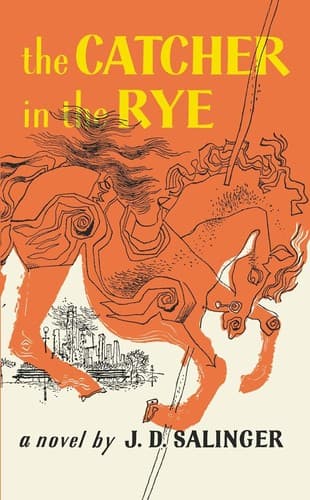
- The Catcher in the Rye
J.D. Salinger
3.8 (2.7M) average on GoodreadsYoung AdultBoth novels delve into the anxieties and disillusionment of youth, but The Art of Fielding provides a much wider lens, featuring a collegiate setting and multiple adult protagonists struggling with their own existential crises alongside the younger characters. Salinger's novel is a first-person, stream-of-consciousness narrative solely focused on Holden Caulfield's internal world and his rejection of 'phoniness,' whereas Harbach constructs an intricate, omniscient narrative exploring a community's shared experiences, ambitions, and psychological vulnerabilities, with a specific focus on the pressures of performance and public life.
- The Old Man and the Sea
Ernest Hemingway
3.8 (831k) average on GoodreadsLiterary FictionA Cuban fisherman's long struggle with a giant marlin becomes a story of endurance and dignity, now retold for young adults with illustrations, phonetic guides, and writing prompts in Traditional Chinese.
- One Hundred Years of Solitude
Gabriel García Márquez
4.1 (753k) average on GoodreadsLiterary FictionThrough the multi-generational story of the Buendía family, a mythical town deals with the repeating patterns of time, love, and solitude, as the extraordinary mixes with the ordinary.
- The Goldfinch
Donna Tartt
3.9 (720k) average on GoodreadsLiterary FictionHaunted by a tragic explosion and clutching a stolen Dutch masterpiece, a young orphan navigates the opulent drawing rooms of New York and the gritty underbelly of the art world, desperately seeking connection and redemption amidst a life spiraling into crime and obsession.





Enjoyed the summary?
A summary gives you the shape of the book. The book itself has the detail, the examples and the voice.
Find The Art of Fielding on AmazonAs an Amazon Associate, BookBrief earns from qualifying purchases. How we're funded