

Synopsis
Covers the whole plot, including the ending.
- Difficulty
- Medium
- Pacing
- Variable
- Mood
- Optimistic, Expansive, Reflective, Celebratory, Spiritual
- Read it if
- You appreciate foundational American poetry, free verse, and philosophical explorations of identity, nature, and democracy.
- Skip it if
- You prefer structured narratives, rhyming verse, or a more direct, less expansive poetic style.
Song of Myself Plot Summary
Covers the whole plot, including the ending.
The Self and its Celebrations
The poem begins with the speaker, Walt Whitman, stating that he celebrates himself, and what he believes, the reader will also believe. He stresses his individual identity, saying he is thirty-seven, healthy, and will continue his journey until death. He clearly connects his individual self to the universal, claiming that every atom belonging to him also belongs to the reader. He asks his soul to relax with him, watching a blade of summer grass, letting go of social rules and focusing on nature and his own thoughts. This prepares for a journey of self-discovery and a deep connection with the natural and human world, free from doctrines.
Embracing the Sensual and the Natural
The speaker explores rich sensory experiences, describing the smell of grass, the feel of air, and the sounds of nature. He praises the 'perfume of the grass' and the 'sound of the belch'd words of my voice,' showing a deep appreciation for both subtle and raw parts of life. He dismisses traditional beliefs and institutions, finding truth in the immediate, tangible world. He feels a strong connection to the earth, calling it 'the great mother' and wanting to become one with its elements. This part shows the poem's basis in physical sensation and an almost spiritual respect for the natural world, seeing holiness in every particle.
The Unity of All Beings
Whitman moves beyond his individual self, imagining himself as part of everything and everyone. He states that he is 'of every hue and caste,' identifying with all races, social classes, and jobs. He describes seeing God in every man and woman, and in his own face in the mirror. He embraces both good and bad, beauty and ugliness, as essential parts of the whole. He feels empathy for the oppressed, the suffering, and the marginalized, living their experiences as his own. This section powerfully expresses the poem's main idea of interconnectedness, blurring the lines between the individual and the group, and stating that all life and experience are equally democratic.
The Body Electric and the Soul's Journey
The poem then celebrates the human body in detail and sensually, seeing it as sacred and holy, not something to be ashamed of. He praises all its parts and functions, from the most visible to the most private, stating that 'the body is as real as the soul.' He connects the physical body to the spiritual, suggesting that the soul shows itself through the body. He also explores death not as an end, but as a change, a 'birth' into another state. The soul, he suggests, is immortal and constantly journeys through different forms and experiences, gaining wisdom. This section highlights Whitman's complete view of life, where body and soul are linked and eternal.
Observing and Empathizing
Whitman acts as a cosmic observer, seeing a vast range of human life across America and beyond. He describes everyday scenes: farmers working, mothers rocking babies, mechanics toiling, enslaved people suffering, and lovers embracing. He does not just watch; he actively empathizes, feeling the joys and sorrows of those he sees. He stands with the 'runaway slave,' feels the 'agony of the wounded,' and shares the 'delight of the bridegroom.' This broad empathy allows him to embody the shared human experience, making him a vessel for humanity's collective consciousness. His view includes both the ordinary and the extraordinary, honoring all parts of life.
The Paradox of Life and Death
The speaker deals with the mysteries of life and death, seeing them not as opposites but as natural, continuous parts of an eternal cycle. He views death as a natural process, the self returning to the elements, from which new life emerges. He assures the reader that 'there is no death,' only a change of form, a constant flow of being. The grass, a repeated image, symbolizes this cycle, growing from the dust of the dead. He finds comfort and continuity in this idea, suggesting that even in apparent endings, there is a promise of renewal. This view offers a deep sense of hope about the ultimate fate of the individual and the universe.
The Voice of the Poet as a Universal Medium
Whitman states his unique role as a poet who speaks not only for himself but for all humanity and the cosmos. He sees his voice as a way for the unspoken cries of the world to be heard. He declares that he is 'the poet of the Body and the poet of the Soul,' covering all parts of existence. He rejects traditional poetic forms and rules, choosing free verse that reflects the fluidity and expansiveness of his thought. His words are meant to be direct, easy to understand, and inclusive, inviting the reader into a shared experience of consciousness. He aims to awaken the reader to their own inner divinity and connection to the universe.
Challenging Conventional Wisdom
Whitman consistently challenges established norms, beliefs, and intellectual systems. He dismisses the need for formal education or religious dogma to understand truth, instead supporting direct experience and intuitive understanding. He finds more wisdom in the 'loose drift of the air' and the 'whispers of the leaves' than in books or sermons. He encourages the reader to let go of their own assumptions and to trust their inner voice and senses. This section reinforces the poem's anti-establishment stance and its focus on individual freedom in seeking truth, promoting a radical self-reliance and learning through experience.
The Democratic Spirit of America
Throughout the poem, Whitman includes references to the American landscape, its people, and its growing democratic spirit. He sees America as a grand experiment, a mix of cultures and individuals, all united by a shared human experience. He celebrates the common man and woman, the workers, the pioneers, and the everyday citizens who show the nation's energy. He imagines a future where all people are treated with equality and respect, regardless of background. His poem itself embodies this democratic ideal, accessible to all and celebrating the inherent worth of every individual within the wide American society.
The Ineffable and the Spiritual
Whitman often touches on the spiritual parts of life that cannot be explained by reason. He speaks of 'currents of the air' and 'whispers of the soul' that reveal deeper truths than logic can grasp. He describes moments of deep mystical connection, where the individual self merges with universal consciousness. He acknowledges that some truths can only be felt, not spoken, and that language itself is often not enough to capture the full scope of reality. This section highlights the poem's spiritual depth, asking the reader to look beyond the surface and embrace the mysterious, transcendent parts of life that connect all beings.
The Call to the Reader
The speaker often breaks the fourth wall, directly speaking to the reader and asking them to join in the poem's broad vision. He challenges the reader to question, to feel, and to embrace their own unique self. He promises that by following him, or rather, by following their own inner feelings, they too can reach a similar state of enlightened consciousness. He does not offer answers but a path to self-discovery, a way of seeing the world with new wonder and connection. This direct address creates a close bond between the poet and the audience, making the poem an interactive experience rather than a passive reading.
Dispersion and Rebirth
In the final sections, Whitman anticipates his own death and dispersal, not with fear, but with peace and a sense of continuity. He states that he will depart 'as the air, I shake my white locks at the runaway sun.' He imagines his body returning to the earth, becoming part of the grass, the soil, and the wind. He promises that he will always be present, waiting for the reader, embedded in the natural world. He encourages the reader to seek him in the grass beneath their boots, suggesting that his spirit, and the spirit of the poem, will always reside within existence, forever calling to those who listen. This ending reinforces life's cyclical nature and the self's lasting presence within the universe.
Song of Myself Characters
The Speaker (Walt Whitman)
Protagonist
A universal and empathetic voice, embodying the spirit of humanity and nature.
The speaker is a persona deeply intertwined with Walt Whitman himself, presenting as a robust, sensual, and profoundly empathetic individual. He is a keen observer of the world, a democratic spirit who embraces all facets of life – good and bad, beautiful and ugly. He is a mystic, seeing divinity in the mundane, and a prophet, challenging societal norms and advocating for radical self-acceptance and interconnectedness. His primary drive is to celebrate life in its entirety, to break down barriers between individuals, and to articulate the shared human experience and its place within the cosmos.
Relationships: The Reader (Direct, intimate, and invitational; he seeks to guide and inspire.)
The Soul
Supporting
The speaker's inner spiritual essence, a companion and guide.
The Soul is presented as the speaker's internal, eternal companion, often addressed directly. It represents the spiritual, intuitive, and immortal aspect of the self, distinct yet inseparable from the physical body. The speaker invites his soul to 'loaf' with him, suggesting a relaxed, unburdened exploration of existence. The soul is a source of inner wisdom and a conduit to universal truths, guiding the speaker's expansive consciousness and his understanding of life, death, and interconnectedness. It is the part of him that transcends the physical and connects to the divine.
Relationships: The Speaker (Integral and symbiotic; the soul is an essential part of the speaker's identity.)
The Body
Supporting
The speaker's physical form, celebrated as sacred and essential.
The Body is celebrated as a divine, beautiful, and essential component of the self, often referred to as 'the body electric.' Whitman sees the body not as something to be ashamed of or transcended, but as a sacred vessel through which the soul experiences the world. Every part of the body, from its most visible to its most intimate functions, is lauded as perfect and meaningful. It is the physical manifestation of the self, allowing for sensory experience, connection, and the expression of life. The body is presented as co-equal with the soul in its importance.
Relationships: The Soul (Intertwined and co-equal; body and soul are two aspects of a single reality.)
The Grass
Supporting/Symbolic
A recurring symbol of life, death, rebirth, and universal equality.
The grass is a central and recurring motif, representing the cyclical nature of life and death, the democratic equality of all beings, and the interconnectedness of existence. It grows from the dust of the dead, symbolizing rebirth and the transformation of matter. It is common and ubiquitous, accessible to everyone, thus embodying Whitman's democratic ideals. The speaker often identifies with the grass, seeing himself as part of its continuous growth and decay. It serves as a tangible link between the individual and the cosmic, the past and the future, and the living and the dead.
Relationships: The Speaker (Deeply symbolic; the speaker sees himself and humanity reflected in the grass.)
The Common Man/Woman
Mentioned/Collective
The diverse, everyday people of America, whose lives are celebrated.
This collective character represents the vast array of ordinary individuals across America – farmers, mechanics, mothers, slaves, laborers, and lovers. Whitman frequently observes and empathizes with their experiences, elevating their mundane lives to a sacred status. They embody the democratic spirit and the inherent worth of every individual, regardless of social standing or profession. Through their varied lives, Whitman illustrates the richness and diversity of human experience, which he absorbs and celebrates as part of his own expansive self. They are the fabric of the nation and the world.
Relationships: The Speaker (The speaker identifies with and absorbs the experiences of all common people.)
Song of Myself Themes
The Unity of Self and Universe
This theme is central, stating that the individual self is not alone but deeply connected with all of life. Whitman constantly expands his 'I' to include the entire cosmos, blurring the lines between the individual, humanity, nature, and the divine. He declares, 'I celebrate myself, and sing myself, / And what I assume you shall assume, / For every atom belonging to me as good belongs to you.' This shows when he identifies with all people ('of every hue and caste'), with animals, and even with objects. The poem argues that true understanding comes from recognizing this basic unity, where differences are ultimately illusions, and all life comes from and returns to a single, universal source.
“I celebrate myself, and sing myself, / And what I assume you shall assume, / For every atom belonging to me as good belongs to you.”
The Sacredness of the Body and Material World
Whitman greatly elevates the physical body and the material world to a sacred level, challenging traditional spiritual views that often devalued the flesh. He sees holiness in every part of physical life, from the 'perfume of the grass' to the 'body electric.' This theme appears in his detailed and sensual descriptions of the human form, which he calls 'perfect' and 'divine,' and his reverence for nature. He argues that the soul is not separate from the body but closely linked with it, and that true spiritual experience is found through engaging with the tangible world. This complete view celebrates life fully, embracing both the physical and the spiritual as equally holy.
“I sing the body electric, / The armies of those I love engirth me, and I engirth them, / They will not let me off till I go with them, respond to them, / And discorrupt them, and charge them full with the charge of the soul.”
Democracy and Equality
A deep democratic spirit runs through "Song of Myself." Whitman champions the common person, seeing inherent worth and holiness in every individual regardless of their social status, job, race, or gender. He identifies with 'the runaway slave,' 'the prostitute,' 'the President,' and 'the farmer,' stating that all are equally valuable and connected. This theme shows in his inclusive language and his rejection of class structures. He sees America as a place where all can thrive and be celebrated, and his poem itself acts as a democratic text, open to all and speaking for humanity's collective voice. His free verse style reflects this democratic idea, breaking from traditional, aristocratic poetic forms.
“I am of old and young, of the foolish as much as the wise, / Regardless of others, ever regardful of others, / Maternal as well as paternal, a child as well as a man, / Stuff'd with the stuff that is coarse and stuff'd with the stuff that is fine, / One of the great American people, and one of the great people of the whole earth.”
The Cyclical Nature of Life and Death
Whitman presents death not as an end, but as a natural and continuous part of life's cycle, a transformation rather than destruction. The repeated image of the grass, growing from the graves of the dead, strongly symbolizes this idea of eternal return. He finds comfort in the idea that 'there is no death,' only a change of form, a return to the elements that will eventually form new life. This theme offers a deeply hopeful view of mortality, suggesting that individual existence adds to a larger, unending flow of being, where nothing is truly lost but merely changed.
“And to die is different from what any one supposed, and luckier.”
The Power of Intuition and Experience over Dogma
Throughout the poem, Whitman consistently prioritizes direct experience, sensory perception, and intuitive understanding over formal education, religious beliefs, or social customs. He dismisses 'creeds and schools,' finding truth in directly observing nature and the unfiltered impulses of his own soul. He encourages the reader to 'loaf and invite your soul,' to let go of intellectual constructs and embrace a more primal, instinctive way of knowing. This theme highlights a strong individualism and a deep trust in one's inner wisdom, suggesting that the deepest truths are found through personal engagement with the world rather than through established doctrines.
“You shall no longer take things at second or third hand, nor look through the eyes of the dead, nor feed on the spectres in books, / You shall not look through my eyes either, nor take things from me, / You shall listen to all sides and filter them from yourself.”
Plot Devices & Literary Techniques
Free Verse
Unrhymed and unmetered lines, mimicking natural speech.
Whitman's pioneering use of free verse is perhaps the most defining plot device. It breaks from traditional poetic forms, allowing for a fluid, expansive, and democratic expression. The long, rambling lines and lack of strict meter or rhyme scheme mirror the speaker's boundless consciousness and his embrace of all aspects of life without artificial constraints. This device enables the poem to feel conversational, direct, and inclusive, reflecting the democratic ideals Whitman champions and inviting the reader into a more intimate, unmediated experience of the speaker's thoughts and observations.
Anaphora
Repetition of a word or phrase at the beginning of successive clauses.
Anaphora is frequently employed by Whitman to create a sense of incantation, build momentum, and emphasize the expansive nature of his vision. Phrases like 'I believe,' 'I am,' or 'And I know' are repeated to underscore the speaker's convictions and his identification with myriad experiences. This device creates a rhythmic, almost chant-like quality, drawing the reader into the speaker's sweeping affirmations and declarations. It reinforces the theme of interconnectedness by linking diverse elements under a common introductory phrase, creating a powerful cumulative effect.
Cataloging
Long lists of people, places, objects, or ideas.
Whitman's extensive use of catalogs is a key device for demonstrating his comprehensive embrace of life and his democratic vision. He lists countless professions, landscapes, human types, and natural phenomena, often without explicit connection beyond their inclusion in his vast panorama. This technique serves to illustrate the sheer diversity and richness of existence that the speaker absorbs and celebrates, reinforcing the idea that all things, no matter how disparate, are equally valuable and interconnected within the universal fabric. The catalogs create a sense of abundance and inclusivity, reflecting America's burgeoning diversity.
First-Person Omniscience/Universal 'I'
The speaker uses 'I' but embodies a universal consciousness.
While the poem is written in the first person ('I'), the speaker's 'I' quickly transcends individual identity to become a universal voice, embodying the collective human experience and even the consciousness of nature itself. This device allows Whitman to shift seamlessly between personal observation and cosmic identification, making his individual self a conduit for broader truths. The 'I' is both Walt Whitman and every man and woman, enabling the poem to be deeply personal yet universally resonant, inviting the reader to find their own 'I' within its expansive declarations.
Apostrophe
Direct address to an absent person, abstract entity, or inanimate object.
Whitman frequently uses apostrophe to address his soul, the earth, death, or the reader directly. This device creates a sense of immediacy and intimacy, making the poem feel like a direct conversation or an urgent proclamation. By speaking to these entities as if they can respond, Whitman imbues them with a living presence and elevates their significance within his philosophical framework. It also helps to draw the reader into the poem's immersive experience, making them feel personally addressed and engaged in the speaker's journey of discovery.
Song of Myself Quotes
“I celebrate myself, and sing myself, And what I assume you shall assume, For every atom belonging to me as good belongs to you.”
“Do I contradict myself? Very well then I contradict myself, (I am large, I contain multitudes.)”
“A child said What is the grass? fetching it to me with full hands; How could I answer the child? I do not know what it is any more than he.”
“The past and present wilt—I have fill’d them, emptied them, And in endless content I identify myself with the future.”
“And I know that the hand of God is the promise of my own, And I know that the spirit of God is the brother of my own, And that all the men ever born are also my brothers, and the women my sisters and lovers,”
“Not words only—not words of the lips, not words of the voice only, But the voice of the body and of the soul, and of all that belongs to the body and soul.”
“I believe in you my soul, the other I am must not abase itself to you, And you must not abase yourself to the other.”
“No array of terms can say how much I am at peace with myself, and with all I see and hear.”
“My voice goes after what my eyes cannot reach, With the twirl of my tongue I encompass worlds and volumes of worlds.”
“To me the converging objects of the universe perpetually flow, All are written to me, and I must get what the writing means.”
“I too am not a bit tamed, I too am untranslatable, I sound my barbaric yawp over the roofs of the world.”
“The runaway slave came to my house and stopp’d outside, I heard his motions crackling the twigs of the woodpile, Through the swung half-door of the kitchen I saw him pale and trembling.”
“Failing to fetch me at first keep encouraged, Missing me one place search another, I stop somewhere waiting for you.”
“Only the lull I like, the hum of your valvèd voice.”
“And to feel the sky now, that is enough.”
Quiz
10 questions on the plot and the characters. Each answer comes with a short explanation.
Question 1
Which collection of poems was "Song of Myself" originally published in?
- Drum-Taps
- Leaves of Grass
- Salut au Monde!
- Crossing Brooklyn Ferry
Show answer
B. Leaves of Grass "Song of Myself" first appeared in the inaugural 1855 edition of Walt Whitman's seminal work, 'Leaves of Grass.'
Question 2
What is the primary theme celebrated in the opening lines of "Song of Myself"?
- The beauty of nature's solitude
- The interconnectedness of all individuals
- The struggle for personal freedom
- The pursuit of intellectual knowledge
Show answer
B. The interconnectedness of all individuals The poem opens with 'I celebrate myself, and sing myself, / And what I assume you shall assume, / For every atom belonging to me as good belongs to you,' immediately establishing a theme of shared humanity and interconnectedness.
Question 3
Which of the following poetic devices is most characteristic of Whitman's style in "Song of Myself"?
- Strict adherence to rhyme and meter
- Extensive use of alliteration and assonance within structured stanzas
- Free verse and long, catalog-like lines
- Sonnet form with a clear volta
Show answer
C. Free verse and long, catalog-like lines Whitman famously pioneered free verse, breaking away from traditional poetic forms. His long, sprawling lines and catalogs of observations are hallmarks of "Song of Myself."
Question 4
In Section 6, the speaker famously contemplates the meaning of 'grass.' What does the grass ultimately represent for him?
- The fleeting nature of human life
- The cycle of life, death, and resurrection, and the democratic spread of life
- A symbol of American agricultural prosperity
- The wild, untamed aspects of nature
Show answer
B. The cycle of life, death, and resurrection, and the democratic spread of life In Section 6, the grass becomes a profound symbol, representing the 'handkerchief of the Lord,' the 'babe of the vegetation,' and a 'uniform hieroglyphic,' suggesting the equality of all life and its continuous cycle.
Question 5
Which of the following best describes the speaker's relationship with his own body and senses in the poem?
- He views the body as a temporary vessel for the soul, to be transcended.
- He embraces the physical self and its sensual experiences as integral to his being and connection to the world.
- He often expresses disdain for physical limitations and imperfections.
- He treats the body as a tool for labor and productivity.
Show answer
B. He embraces the physical self and its sensual experiences as integral to his being and connection to the world. Whitman famously celebrates the physical body and its senses throughout the poem, seeing them as essential avenues for experiencing and understanding the world, as in 'The scent of these arm-pits aroma finer than prayer.'
Question 6
In Section 24, the speaker declares, 'Walt Whitman, a kosmos, of Manhattan the son, / Turbulent, fleshy, sensual, eating, drinking and breeding.' What does this self-description emphasize?
- His intellectual superiority and detached observation.
- His embrace of his physical, earthly existence and his connection to the urban environment.
- His desire to escape the mundane aspects of life.
- His role as a prophet guiding humanity towards spiritual enlightenment.
Show answer
B. His embrace of his physical, earthly existence and his connection to the urban environment. This vivid self-portrait highlights Whitman's embrace of his full, sensuous, and human identity, grounding him in the physical world and his specific New York origins.
Question 7
The poem frequently employs catalogs, listing diverse people, places, and occupations. What is the primary artistic purpose of these catalogs?
- To demonstrate the speaker's extensive travel experiences.
- To overwhelm the reader with excessive detail.
- To emphasize the vastness and diversity of the American experience and the democratic inclusion of all.
- To create a sense of chaos and disunity.
Show answer
C. To emphasize the vastness and diversity of the American experience and the democratic inclusion of all. Whitman's catalogs serve to illustrate the breadth and variety of life, particularly American life, and to underscore the poem's democratic impulse by giving voice and presence to countless individuals and experiences.
Question 8
In the latter sections of the poem, the speaker often takes on the suffering of others, stating 'I am the man, I suffer’d, I was there.' What literary concept does this embody?
- Dramatic irony
- Empathetic identification and universal consciousness
- Stoicism
- Solipsism
Show answer
B. Empathetic identification and universal consciousness This declaration signifies the speaker's profound empathy and his ability to imaginatively inhabit the experiences of others, suggesting a universal consciousness where individual suffering is shared.
Question 9
The poem concludes with the speaker inviting the reader to 'Look for me under your boot-soles.' What does this final image suggest about his legacy and presence?
- He wishes to be forgotten and disappear completely.
- His spirit or essence will merge with the earth and continue to exist in the natural world and in the common experience of humanity.
- He is literally buried beneath the ground where the reader stands.
- He wants readers to physically search for his grave.
Show answer
B. His spirit or essence will merge with the earth and continue to exist in the natural world and in the common experience of humanity. This poignant ending suggests that the speaker, or his poetic spirit, will dissolve into the fundamental elements of the earth and the everyday experiences of life, making him perpetually present and accessible.
Question 10
What is the overall tone of "Song of Myself" as described in the provided text?
- Melancholy and reflective
- Cynical and critical
- Optimistic and inspirational
- Detached and academic
Show answer
C. Optimistic and inspirational The introductory text explicitly states that "Song of Myself" is 'an optimistic and inspirational look at the world.'
Song of Myself FAQ
What is the central theme of 'Song of Myself'?
'Song of Myself' centrally explores the interconnectedness of all life and the individual's place within the vast, democratic tapestry of existence. Whitman celebrates the self not as isolated, but as a microcosm reflecting and containing the entirety of humanity and nature, advocating for an inclusive embrace of all experiences.
Who is the 'I' that speaks throughout the poem?
The 'I' in 'Song of Myself' is multifaceted: it is Walt Whitman the poet, a representative American citizen, and ultimately, a universalized human consciousness. This 'I' invites readers to identify with its experiences, making the journey of self-discovery and celebration a shared one.
What role does nature play in the poem?
Nature is a profound source of inspiration and spiritual insight in the poem, serving as a direct conduit to the divine and a mirror for the self. Whitman frequently merges with natural elements like grass, air, and sea, seeing them as embodiments of life's continuous cycle and democratic equality.
How does Whitman address death in 'Song of Myself'?
Whitman views death not as an end but as a transition or transformation, a natural part of the eternal cycle of life and regeneration. He often likens it to going 'somewhere to join the others,' suggesting a continuity of being and a peaceful absorption back into the universal whole.
What is the significance of the grass imagery?
The grass is a central, recurring symbol representing the democratic commonality of all life, death, and resurrection. Whitman sees it as a 'uniform hieroglyphic,' growing equally for everyone, embodying the cyclical nature of existence and the continuous renewal of the world.
Are there specific historical events or figures subtly referenced in the poem?
While not explicitly named, the poem subtly reflects the burgeoning American democracy and its diverse populace in the mid-19th century. Whitman's celebration of common laborers, diverse races, and varied experiences implicitly references the social landscape of his time and his democratic ideals.
How does Whitman's use of anaphora contribute to the poem's effect?
Whitman's extensive use of anaphora, the repetition of words or phrases at the beginning of successive clauses, creates a rhythmic, incantatory effect that builds momentum and emphasizes the universality of his observations. This rhetorical device enhances the poem's cumulative power and sense of interconnectedness.
What is the implied relationship between the speaker and the reader?
The speaker actively invites the reader to participate in the poetic experience, often using direct address ('You'). This creates an intimate, democratic bond, implying that the reader's self is just as vital and celebrated as the speaker's, encouraging personal identification and shared discovery.
How does the poem reflect Whitman's Transcendentalist leanings?
The poem deeply embodies Transcendentalist ideas through its emphasis on the individual's intuition, the inherent divinity of nature, and the belief in an Oversoul connecting all beings. Whitman's quest for spiritual truth outside conventional dogma aligns perfectly with Transcendentalist philosophy.
What psychological journey does the 'I' undergo in the poem?
The 'I' undergoes a journey of expansive self-discovery and integration, moving from individual contemplation to a profound identification with all humanity and the cosmos. This psychological arc involves shedding egoistic boundaries and embracing a universal consciousness, leading to a sense of joyous belonging.
How does Whitman address the concept of duality or contradictions within the self?
Whitman famously embraces contradictions, stating, 'Do I contradict myself? Very well then I contradict myself, (I am large, I contain multitudes.)' This acknowledges the complexity and vastness of the human psyche, suggesting that embracing opposing facets is essential for a complete self.
What is the psychological impact of the poem's free verse structure?
The free verse structure, lacking conventional meter and rhyme, mirrors the poem's themes of liberation, expansiveness, and democratic freedom. Psychologically, it creates a sense of uninhibited flow, allowing thoughts and emotions to unfold naturally, inviting the reader into an unconstrained mental landscape.
How does the poem relate to modern concepts of mindfulness and presence?
'Song of Myself' profoundly resonates with modern mindfulness through its emphasis on present moment awareness and sensory experience. Whitman's detailed observations of the everyday and his call to 'loafe with me on the grass' encourage a deep, non-judgmental engagement with the immediate environment.
Is 'Song of Myself' primarily a celebration of individualism or collectivism?
This is a key debate, as the poem celebrates both. It champions the unique, divine individual, yet simultaneously asserts that the self is inextricably linked to and contains the collective. Whitman argues for an individualism that broadens into universal empathy, transcending the usual dichotomy.
How should one interpret the poem's often explicit references to the body and sexuality?
Whitman's frank celebration of the body and sexuality should be interpreted as a revolutionary act of inclusivity, elevating physical existence to the same spiritual plane as intellectual or emotional life. He sees the body as sacred and an integral part of the divine, challenging Victorian prudishness.
What is the significance of the poem's open-ended conclusion, where the speaker 'depart[s] as air'?
The open-ended conclusion signifies the speaker's transformation and continued presence in the world, even after physical departure. By becoming 'air' or 'the dirt,' the speaker suggests a merging with the natural elements and a perpetual, unseen influence, inviting the reader to continue the journey.
Does the poem suggest a specific religious or spiritual path?
No, 'Song of Myself' does not prescribe a specific religious path. Instead, it advocates for a broad, inclusive spirituality that finds divinity in all aspects of life, nature, and humanity, transcending organized religion. It emphasizes direct, personal experience as the primary source of spiritual truth.
About the author
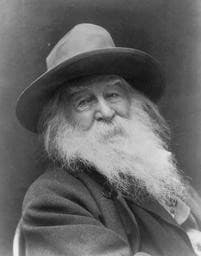
Walter Whitman Jr. was an American poet, essayist, and journalist. He is considered one of the most influential poets in American history. Whitman incorporated both transcendentalism and realism in his writings and is often called the father of free verse. His work was controversial in his time, particularly his 1855 poetry collection Leaves of Grass, which was described by some as obscene for its overt sensuality.
Similar books
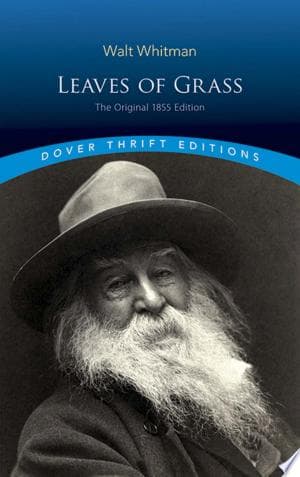
- Leaves of Grass
Walt Whitman
4.1 (90k) average on GoodreadsPhilosophyIt is the larger collection "Song of Myself" is from, sharing the same author, style, and themes.
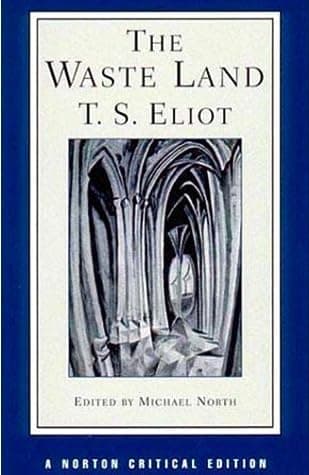
- The Waste Land
T.S. Eliot
4.1 (43k) average on GoodreadsFictionA similarly ambitious, sprawling, and influential long poem, though with a different mood and theme.
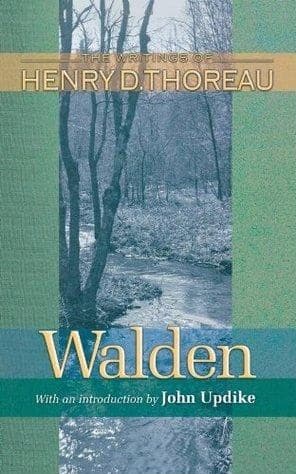
- Walden
Henry David Thoreau
3.8 (158k) average on GoodreadsBiographyExplores themes of nature, self-reliance, and transcendentalism, resonating with Whitman's philosophy.
- The Raven
Edgar Allan Poe
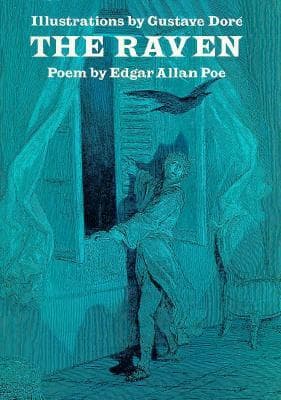
4.0 (8k) average on GoodreadsFantasyPoe's "The Raven" (1845) stands in stark contrast to "Song of Myself" in terms of creative approach. Poe meticulously crafts a tightly structured, rhyming, and metrical poem focused on a singular, morbid mood and psychological descent. His creativity lies in his mastery of sound devices, atmospheric construction, and Gothic symbolism to evoke a specific, intense emotional state. Whitman, conversely, embraces expansive free verse, celebrates life in all its messy totality, and aims for an inclusive, optimistic vision. Poe's creativity is about controlled intensity and formal perfection, while Whitman's is about unbridled expansion and democratic embrace.
- The Prelude
William Wordsworth
3.9 (4k) average on GoodreadsWordsworth's The Prelude (published posthumously in 1850) shares with "Song of Myself" a focus on the self and its development, exploring the growth of the poet's mind. Both are ambitious, lengthy poems. However, Wordsworth's creativity is rooted in Romantic introspection, using blank verse to explore memory, nature's influence, and the spiritual development of the individual within a more traditional narrative and philosophical framework. Whitman, while also introspective, is far more outward-looking, democratic, and revolutionary in his form and subject matter, celebrating the physical body and the collective American experience in a way Wordsworth, confined to a more European Romantic sensibility, does not. Whitman's creativity is less about the sublime in nature and more about the sublime in humanity and everyday life.
- The Goldfinch
Donna Tartt
3.9 (720k) average on GoodreadsLiterary FictionHaunted by a tragic explosion and clutching a stolen Dutch masterpiece, a young orphan navigates the opulent drawing rooms of New York and the gritty underbelly of the art world, desperately seeking connection and redemption amidst a life spiraling into crime and obsession.

Enjoyed the summary?
A summary gives you the shape of the book. The book itself has the detail, the examples and the voice.
Find Song of Myself on AmazonAs an Amazon Associate, BookBrief earns from qualifying purchases. How we're funded