

Synopsis
Covers the whole plot, including the ending.
- Difficulty
- Medium
- Pacing
- Moderate
- Mood
- Atmospheric, Reflective, Poignant, Interconnected
- Read it if
- You enjoy richly detailed literary fiction that explores the human condition through multiple, interconnected perspectives against a vivid historical backdrop.
- Skip it if
- You prefer fast-paced, plot-driven narratives with a single protagonist and clear-cut resolutions.
Let the Great World Spin Plot Summary
Covers the whole plot, including the ending.
The Walk: Philippe Petit's Aerial Ballet
In August 1974, New York City wakes up to an amazing sight: Philippe Petit, a French aerialist, is walking a tightrope between the new Twin Towers of the World Trade Center. This bold, unapproved act happens high above lower Manhattan, attracting a huge crowd. Police are called, and efforts are made to catch him, but for almost an hour, Petit performs on the wire. His daring act becomes a symbol of beauty and defiance against the background of a tough, struggling city, briefly uniting its people in shared awe before his arrest.
Corrigan's Bronx Ministry
Corrigan, a young, idealist Irish monk, lives and works in a run-down part of the Bronx, helping the community's poor, especially prostitutes. He shares an apartment with his friend, Ciaran, another monk. Corrigan struggles with his faith, his past, and the despair he sees every day. He offers comfort, food, and a listening ear, often feeling his own efforts are not enough. His kindness is deep, but his methods are unusual, sometimes leading him into morally unclear situations, reflecting the complex and often harsh lives he tries to help.
Tillie and Jazzlyn: A Mother's Sacrifice
Tillie, a thirty-eight-year-old grandmother, works as a prostitute in the Bronx, trying to support her two daughters and grandchildren. Her youngest daughter, Jazzlyn, has also started working the streets, a choice that pains but also connects them. Tillie is very protective and determined to ensure her family's survival, even through great hardship. She dreams of a better life for her grandchildren, especially the smart Lara. Their lives are linked with Corrigan's, as he often helps them and gives them a sense of respect in their difficult lives.
Claire and the Vietnam Mothers
Claire, a wealthy Park Avenue socialite, hosts a support group for mothers who lost sons in the Vietnam War. Her own son, Richard, died in the war, and she deals with her grief and the political questions about the war. The group includes women from different social classes, showing the large class divides in New York City even in shared sorrow. While they first seek comfort in common experience, their different views on class, privilege, and sacrifice often cause tension, showing that grief itself does not make everyone equal.
Solomon and the Art World
Solomon, a young hacker and artist, tries to find his place in New York City's growing art scene. He likes the city's energy and anonymity, using his skills to explore and create. One night, while driving, Solomon is in a hit-and-run accident, hitting a woman later identified as a prostitute. The incident deeply affects him, sending his life into guilt and fear. He struggles with the moral consequences of his actions and the anonymity of city life, which both helps his art and lets him avoid immediate responsibility.
Corrigan's Final Act of Compassion
Corrigan's strong commitment to the poor in the Bronx leads to his death. While trying to help a young, drug-addicted prostitute named Adelita, he is in a car accident. The details are not clear at first, but it is suggested he was driving Adelita, who was injured, to safety or medical care. Corrigan dies in the accident, leaving behind his friend Ciaran and the community he served. His death deeply affects those he helped, especially Tillie and Jazzlyn, who feel a great loss for the monk who offered them kindness and hope.
The Aftermath of the Accident
After Corrigan's death, the lives of several characters start to come together, in subtle and obvious ways. Jazzlyn and Tillie are heartbroken, feeling his absence. Jazzlyn, especially, struggles with guilt and grief, believing she could have done more. Solomon, haunted by his hit-and-run, learns that the woman he hit was Adelita, the same woman Corrigan was helping. This realization deepens his despair and begins to connect him to the tragic events in the Bronx, though he does not know of Corrigan's direct role in Adelita's final moments.
The Trial and Its Ripples
Solomon is eventually found and arrested for the hit-and-run that killed Adelita. The trial brings some of the story threads closer. Jazzlyn, as Adelita's friend, is called to testify, forcing her to face the harsh realities of her life and the loss of her friend. Claire, through her work with the Vietnam mothers, becomes aware of the social unfairness in such cases. The trial highlights responsibility, justice, and the often unequal application of the law, while Solomon deals with his guilt and the lasting results of his actions.
Lara's Awakening
Lara, Tillie's granddaughter, becomes a source of hope amid the despair. She is bright, observant, and artistic. Inspired by stories of Philippe Petit's walk and the art she sees, Lara begins to draw. She attends Solomon's trial, seeing the complexities of justice and human connection. Her growing artistic talent and her ability to find beauty even in hardship represent New York's enduring spirit and the chance for a future beyond her family's struggles, like the power of art.
Convergence and Reflection
As the story continues, the characters, though mostly unaware of their full connections, think about their shared experiences in the city. Claire continues her work, finding new ways to connect with others. Tillie and Jazzlyn work for a better life for Lara, remembering Corrigan's kindness. Solomon seeks forgiveness, dealing with the weight of his choices. The memory of Philippe Petit's walk, a moment of impossible beauty, is a repeated idea, symbolizing human strength, vulnerability, and connection in the vast, indifferent, yet vibrant city of New York.
The Legacy of Corrigan
Even after his death, Corrigan's impact continues to shape the lives of those he met. His selflessness and kindness leave a lasting impression on Tillie and Jazzlyn, who often recall his gentle presence and the support he offered. Ciaran, his fellow monk, struggles with his grief but also finds new purpose in continuing their shared mission. Corrigan's story shows the quiet heroism of everyday kindness and the deep impact one person can have, even in a city as large and anonymous as New York, showing the novel's exploration of faith and human connection.
Tillie's Enduring Strength
Despite constant struggles and tragic losses, Tillie remains strong. She continues to navigate the harsh realities of her life, driven by a fierce love for her grandchildren, especially Lara. Her determination to provide for them, to give them a chance at a life beyond the streets, shows her lasting strength and maternal instinct. Tillie embodies survival and the sacrifices made by many in the city's poor areas, always seeking a bit of hope and respect amid overwhelming difficulty.
Principal Figures
Corrigan
Supporting
An idealistic Irish monk ministering to the poor in the Bronx.
Corrigan is a young, radical Irish monk who has come to New York to work among the most marginalized in the Bronx. He is deeply compassionate but also tormented by his own past, including a traumatic experience as a child and a crisis of faith. He is self-sacrificing to a fault, often putting himself in danger to help others, particularly prostitutes and drug addicts. His idealism is often at odds with the harsh realities he faces, leading to profound internal struggles and a sense of helplessness, yet he remains a beacon of kindness.
Relationships: Ciaran (fellow monk and friend); Tillie (recipient of his compassion and spiritual guidance); Jazzlyn (recipient of his compassion and spiritual guidance); Adelita (young prostitute he tries to help, leading to his death)
Tillie
Supporting
A resilient grandmother working as a prostitute to support her family.
Tillie is a thirty-eight-year-old African American grandmother living in the Bronx. She works as a prostitute, alongside her daughter Jazzlyn, out of necessity to support her family, particularly her grandchildren. Tillie is fiercely protective, pragmatic, and possesses an incredible inner strength and dignity despite her difficult circumstances. She is a survivor who refuses to be broken by her environment, holding onto dreams of a better future for her offspring, especially her bright granddaughter Lara. Her experiences have made her wary but not entirely cynical.
Relationships: Jazzlyn (daughter, also a prostitute, complex and strained but loving); Lara (granddaughter, her primary motivation and hope); Corrigan (a source of non-judgmental support and kindness)
Jazzlyn
Supporting
Tillie's teenage daughter, following her mother into prostitution.
Jazzlyn is Tillie's teenage daughter, who has, out of desperation and perhaps a lack of alternatives, followed her mother into prostitution. She is younger, more vulnerable, and often more impulsive than Tillie, struggling with the emotional and physical toll of her life. She has a strong bond with her mother and her daughter, Lara, but also feels the weight of her choices. Jazzlyn is deeply affected by Corrigan's kindness and later by his tragic death, which forces her to confront her own life and the possibility of change.
Relationships: Tillie (mother, complex and strained but loving); Lara (daughter, a source of love and concern); Corrigan (a source of kindness and understanding); Adelita (friend and fellow prostitute)
Claire
Supporting
A wealthy Park Avenue socialite mourning her son lost in Vietnam.
Claire is a sophisticated, privileged woman from Park Avenue, still deeply grieving the loss of her son, Richard, in the Vietnam War. She hosts a support group for other mothers who have lost sons, seeking solace and understanding. Claire is intelligent and well-meaning but often struggles to bridge the class divide between herself and other members of her group. She represents a segment of New York society grappling with national tragedy and personal loss, striving to find meaning and connection beyond her insulated world. Her journey involves confronting her own biases and privilege.
Relationships: Richard (deceased son, primary source of grief); Gloria (member of her support group, often represents a working-class perspective); Karen (member of her support group)
Solomon
Supporting
A young, aspiring artist involved in a tragic hit-and-run.
Solomon is a young, intellectually curious artist and hacker, drawn to the anonymity and creative energy of New York City. He is intelligent and observant, but also somewhat socially awkward and prone to introspection. His life takes a dramatic turn when he is involved in a hit-and-run accident that kills a young woman. This event plunges him into a deep crisis of guilt, fear, and moral reckoning. Solomon struggles with his conscience, the consequences of his actions, and the impersonal nature of urban life that both enables and complicates his existence.
Relationships: Adelita (victim of his hit-and-run); Lara (indirectly connected through the trial)
Philippe Petit
Mentioned
The real-life French tightrope walker who walked between the Twin Towers.
Philippe Petit is the audacious French aerialist whose unauthorized tightrope walk between the Twin Towers in August 1974 serves as the novel's framing device and central metaphor. Though not a character in the traditional sense, his presence is felt throughout the book. He embodies artistic daring, defiance, and the pursuit of impossible beauty. His act is a moment of shared wonder for the city, cutting across class and race, symbolizing hope, transcendence, and the possibility of magic amidst urban grit. His walk encapsulates the novel's themes of connection and aspiration.
Lara
Supporting
Tillie's bright and artistic granddaughter, a symbol of hope.
Lara is Tillie's granddaughter and Jazzlyn's daughter, a young girl whose innocence and artistic spirit offer a glimmer of hope amidst the harsh realities of her family's life in the Bronx. She is observant, imaginative, and deeply loved by her mother and grandmother. Lara's fascination with drawing and her budding artistic talent suggest a future beyond the cycle of poverty and struggle that has defined her family. She represents the potential for beauty, creativity, and a brighter future, embodying the novel's underlying optimism.
Relationships: Tillie (grandmother, primary caregiver and source of love); Jazzlyn (mother, complex but loving relationship)
Ciaran
Supporting
Corrigan's fellow Irish monk and friend.
Ciaran is Corrigan's friend and fellow Irish monk, sharing an apartment and a commitment to their ministry in the Bronx. He is a quieter, more grounded presence than Corrigan, often acting as a sounding board and practical support. Ciaran shares Corrigan's ideals but perhaps approaches the work with a slightly more cautious or pragmatic outlook. He is deeply affected by Corrigan's death, which forces him to confront his own faith and the future of their mission. He carries on Corrigan's legacy of compassion.
Relationships: Corrigan (close friend and fellow monk)
Adelita
Mentioned
A young, drug-addicted prostitute whose death connects several characters.
Adelita is a young, drug-addicted prostitute in the Bronx. Her tragic life and death serve as a crucial connecting point for several characters. She is the woman Corrigan is trying to help when he dies in a car accident, and she is also the victim of Solomon's hit-and-run. Though she has little direct agency in the narrative, her story highlights the vulnerability of the marginalized and the devastating impact of poverty and addiction. Her death catalyzes events and brings various storylines into tragic convergence.
Relationships: Corrigan (object of his compassion); Solomon (victim of his hit-and-run); Jazzlyn (friend and fellow prostitute)
Themes & Insights
Connection and Interconnectedness
The novel shows how seemingly separate lives in a large city are connected, often by chance or tragedy. Philippe Petit's walk briefly unites the entire city in shared wonder. Later, Corrigan's death and Adelita's fate link Tillie, Jazzlyn, Solomon, and even Claire indirectly. These connections show that no one lives alone, and every action, no matter how small, can affect others, creating a complex web of human experience.
“And there, in the space between the two towers, it was as if he had created a bridge for all of them, a connection they hadn’t known they needed.”
The Search for Beauty and Transcendence
Amidst the harshness, poverty, and despair of 1970s New York, characters constantly look for moments of beauty, grace, and something beyond the ordinary. Philippe Petit's walk is the clearest example, a moment of impossible beauty that lifts the city's spirit. Corrigan finds beauty in his selfless acts of kindness, and Lara finds it in her art. This theme suggests that even in the toughest places, people desire and can create moments of deep beauty and spiritual uplift, offering relief and hope.
“The walk was an impossible thing, a defiance of gravity and reason, and yet it was happening, right there, above their heads, a thread of hope against the sky.”
Class and Social Inequality
McCann clearly shows the strong class differences in New York City. The novel contrasts the wealthy lives of characters like Claire on Park Avenue with the desperate struggles of Tillie and Jazzlyn in the Bronx. The Vietnam mothers' support group reveals how even shared grief can be felt and processed differently across social classes. This theme highlights the unfair systems and the vastly different opportunities and challenges people face based on their economic status, shaping their lives and choices.
“The city was a million stories, and some of them were told from penthouse windows, and some from the gutters, and they were all true.”
Redemption and Forgiveness
Many characters deal with guilt, regret, and the chance for redemption. Solomon is troubled by his hit-and-run, seeking a way to make up for his actions. Corrigan, despite his outward religious devotion, struggles with his own past and sense of failure, always trying for personal redemption through service. Tillie and Jazzlyn, living lives society judges, seek dignity and a form of redemption through their love for Lara. The novel explores the complex process of finding forgiveness, both from others and from oneself, after making mistakes and facing difficult situations.
“Maybe the only way to forgive yourself was to keep going, to keep trying to make things right, even when you knew you couldn't.”
The Power of Storytelling and Art
The novel itself shows the power of storytelling, combining different narratives to create a larger, unified picture of humanity. Within the story, Philippe Petit's 'artistic crime' becomes a famous tale. Lara's growing artistic talent gives her a way to understand and express her world. The characters' individual stories, when combined, create a collective narrative that reflects the city's spirit and its people, showing how art, in its various forms, can provide meaning, connection, and a way to understand the world.
“He understood then that the wire was not just a wire, but a story, a line drawn between two impossible points, and everyone below was reading it.”
Plot Devices & Literary Techniques
Framing Device: Philippe Petit's Walk
The tightrope walk serves as a unifying metaphor and opening event.
Philippe Petit's audacious tightrope walk between the Twin Towers in 1974 acts as the novel's central framing device. It opens the narrative, capturing the imagination of the city and the reader, and recurs as a symbol throughout. This single, extraordinary event serves as a metaphor for the precariousness of life, the pursuit of beauty, and the unexpected moments of human connection that can arise in a vast, fragmented city. It sets a tone of wonder and defiance against the backdrop of urban struggle, creating a moment of shared experience that transcends individual narratives.
Interwoven Narratives
Multiple, seemingly disparate storylines converge and intertwine.
McCann employs a narrative structure that weaves together the stories of numerous characters, initially presenting them as separate threads. These individual stories, set across different social strata of 1970s New York, gradually begin to intersect and impact one another, often through chance encounters, shared tragedies, or subtle connections. This device emphasizes the interconnectedness of human lives in a large city, creating a rich tapestry of experiences and demonstrating how personal choices can have far-reaching, unforeseen consequences across diverse communities.
Symbolism of the Twin Towers
The World Trade Center represents aspiration, vulnerability, and connection.
The Twin Towers, both as the site of Petit's walk and as a looming presence in the city, serve as a powerful symbol. They represent human aspiration, architectural ambition, and the pinnacle of urban modernity. However, they also symbolize vulnerability, as demonstrated by the precariousness of Petit's act and, implicitly for readers, the future tragedy of 9/11. The space between them, bridged by Petit, symbolizes the potential for connection, beauty, and defiance in a world that often feels divided. They are a constant reminder of both human achievement and fragility.
Juxtaposition
Contrasting elements highlight themes of inequality and human experience.
The novel frequently uses juxtaposition to highlight its central themes. It contrasts the wealth and privilege of characters like Claire with the poverty and desperation of Tillie and Jazzlyn. The transcendent beauty of Petit's walk is set against the grim realities of the Bronx. These sharp contrasts underscore the vast social inequalities within New York City and emphasize the diverse ways in which individuals experience life, grief, and hope. This technique deepens the reader's understanding of the complexities and contradictions inherent in urban existence.
Let the Great World Spin Quotes
“The thing about falling is that it is a journey. It is a journey of gravity. It is a journey of trust. It is a journey of fear. It is a journey of joy. It is a journey of surrender. It is a journey of self. It is a journey of God.”
“There are times when you want to give up, and times when you want to lie down and let the world just pass over you, and times when you want to just run away from it all.”
“It was not a metaphor. It was real. It was a man walking on a wire between two towers, and it was a city looking up, and it was a moment, and it was forever.”
“Sometimes the world is a terrible place. Sometimes it's a beautiful place. Sometimes it's both.”
“We are all just trying to make sense of something that makes no sense.”
“The past is not a story to be told, but a story to be lived.”
“This is what it means to be alive: to be able to look up and see the impossible, and to know that it is possible.”
“Grief is a ghost. It lingers. It haunts. It whispers.”
“There are moments when you just want to reach out and touch something, anything, just to know that you're real.”
“The city was a million stories, all happening at once, all interconnected, all oblivious to each other.”
“It was a beautiful day to be alive, even if it was a terrible day to be a human being.”
“We carry our histories with us, whether we want to or not. They are woven into the fabric of who we are.”
“The ordinary became extraordinary, just for a moment.”
“Sometimes the greatest acts of courage are the quietest ones.”
Quiz
10 questions on the plot and the characters. Each answer comes with a short explanation.
Question 1
What year does the novel 'Let the Great World Spin' primarily take place, marked by the tightrope walk between the Twin Towers?
- 1969
- 1974
- 1980
- 1977
Show answer
B. 1974 The novel is set in August 1974, when the tightrope walker crosses between the Twin Towers.
Question 2
Which character is described as a 'radical young Irish monk' who lives among prostitutes in the Bronx?
- Tillie
- Claire
- Corrigan
- Lara
Show answer
C. Corrigan Corrigan is the radical young Irish monk struggling with his demons in the Bronx.
Question 3
What significant event brings together a group of mothers in a Park Avenue apartment?
- A charity fundraiser for local artists
- A protest against urban decay
- Mourning their sons who died in Vietnam
- Celebrating the tightrope walker's achievement
Show answer
C. Mourning their sons who died in Vietnam A group of mothers gathers to mourn their sons who died in the Vietnam War.
Question 4
What is the primary motivation for Tillie, the thirty-eight-year-old grandmother, to work as a prostitute alongside her teenage daughter?
- To experience a different lifestyle
- To fund her own artistic endeavors
- To care for her family and prove her worth
- To escape a troubled past
Show answer
C. To care for her family and prove her worth Tillie's motivation is to take care of her family and prove her own worth.
Question 5
How does the tightrope walk between the Twin Towers function within the novel's structure?
- It is a standalone historical event that provides a backdrop but is not directly connected to the characters' lives.
- It serves as a symbolic event that unexpectedly draws together the seemingly disparate lives of the city's people.
- It is the central conflict around which all the characters' personal struggles revolve.
- It represents a challenge for one specific character to overcome.
Show answer
B. It serves as a symbolic event that unexpectedly draws together the seemingly disparate lives of the city's people. The tightrope walk is described as an 'artistic crime of the century' that unexpectedly draws together the city's people, symbolizing connection amidst disparate lives.
Question 6
What specific urban area is Corrigan, the Irish monk, associated with in the novel?
- Lower Manhattan
- Park Avenue
- The Bronx
- Greenwich Village
Show answer
C. The Bronx Corrigan lives among the prostitutes in the 'burning Bronx'.
Question 7
The novel is described as a 'sweeping and radical social novel' that captures the spirit of America during what kind of period?
- A time of great economic prosperity and stability
- A period of isolationism and cultural decline
- A time of transition, extraordinary promise, and heartbreaking innocence
- A post-war boom focused on suburban expansion
Show answer
C. A time of transition, extraordinary promise, and heartbreaking innocence The novel captures the spirit of America 'in a time of transition, extraordinary promise, and, in hindsight, heartbreaking innocence'.
Question 8
How do the mothers mourning their sons in Vietnam discover that 'much divides them even in grief'?
- They argue over the details of the funeral arrangements.
- Their differing social classes, races, and political views create rifts despite their shared loss.
- They disagree on the exact circumstances of their sons' deaths.
- One of the mothers reveals she never truly loved her son.
Show answer
B. Their differing social classes, races, and political views create rifts despite their shared loss. The description highlights that even in shared grief, the mothers discover 'just how much divides them', implying differences beyond their loss, such as social standing or background, are significant themes.
Question 9
The novel's intricate structure, weaving together 'seemingly disparate lives,' primarily serves to illustrate what about New York City?
- The strict social hierarchy that prevents interaction between different groups.
- The isolation and loneliness experienced by its inhabitants despite proximity.
- The interconnectedness and shared human experience beneath the surface of urban chaos.
- The distinct and unbridgeable divides between its various neighborhoods.
Show answer
C. The interconnectedness and shared human experience beneath the surface of urban chaos. The novel 'elegantly weaving together these and other seemingly disparate lives' suggests a theme of interconnectedness and shared experience within the city.
Question 10
What specific incident sends a young artist's life 'careening sideways'?
- A severe art critic's negative review of her work.
- Her studio being destroyed in a fire.
- Being at the scene of a hit-and-run accident.
- A personal betrayal by a close friend.
Show answer
C. Being at the scene of a hit-and-run accident. A young artist finds herself 'at the scene of a hit-and-run that sends her own life careening sideways'.
Let the Great World Spin FAQ
What is the central event that loosely connects the various characters in 'Let the Great World Spin'?
The novel's central event is Philippe Petit's audacious tightrope walk between the Twin Towers in August 1974. This 'artistic crime of the century' serves as a backdrop, creating a moment of shared wonder and disbelief that subtly influences the lives of many characters, even if they aren't directly involved.
Who is Corrigan and what is his role in the narrative?
Corrigan is a radical young Irish monk living and working among sex workers and drug addicts in the impoverished and crime-ridden Bronx. He is a deeply spiritual and compassionate character who grapples with his own faith and the harsh realities of urban poverty, often providing solace and support to those marginalized by society.
Describe the storyline involving the mothers mourning their sons from Vietnam.
A group of wealthy mothers gathers in a Park Avenue apartment, united by the shared tragedy of losing their sons in the Vietnam War. However, their collective grief soon exposes deep class divisions and differing perspectives on the war and their sons' sacrifices, highlighting the complex social fabric of the era.
What challenges does Tillie face, and how does she navigate them?
Tillie is a 38-year-old grandmother who works as a prostitute alongside her teenage daughter, Jazzlyn, in the Bronx. She is fiercely determined to provide for her family and maintain a sense of dignity, even in her difficult circumstances, constantly striving to prove her worth and protect her loved ones.
How does the artist, Claire, become entangled in the novel's events?
Claire is a young artist who witnesses a hit-and-run accident, an event that profoundly impacts her life and leads her down an unexpected path. This incident forces her to confront moral dilemmas and the consequences of her choices, sending her own life careening sideways.
How does the novel subtly connect the character of Jazzlyn to the tightrope walker?
Jazzlyn, Tillie's daughter, is one of the onlookers who witnesses Philippe Petit's walk. The spectacle of the man dancing between the towers leaves a lasting impression on her, offering a brief moment of transcendent beauty amidst her harsh reality and symbolizing a sense of possibility or escape.
What is the significance of the character of Gloria, and how does she relate to Corrigan?
Gloria is one of the sex workers in the Bronx whom Corrigan ministers to. She represents the profound struggles and resilience of the marginalized individuals Corrigan works with, and their relationship highlights his compassion and the challenges of his mission to offer spiritual and practical aid.
Are there any direct interactions between the wealthy Park Avenue mothers and the characters from the Bronx?
While there isn't a direct meeting or conversation between the two groups, their narratives are juxtaposed to highlight the vast social and economic disparities in 1970s New York City. The novel uses their separate stories to illustrate the different realities coexisting within the same city.
How does the novel use the character of Corrigan to explore themes of faith and doubt?
Corrigan, despite his devout faith and dedication to helping others, frequently struggles with doubt, anger, and the overwhelming nature of the suffering he witnesses. His internal conflicts reveal the human side of spirituality and the difficulty of maintaining hope in the face of profound despair and injustice.
What psychological impact does the Vietnam War have on the characters, particularly the mothers?
The Vietnam War leaves a deep psychological scar on the mothers, manifesting as profound grief, anger, and a sense of betrayal. Their differing reactions to their sons' deaths reveal the complex emotional toll of war, not just on soldiers but on their families, and how it can both unite and divide individuals.
How does the novel explore the psychology of survival through characters like Tillie and Jazzlyn?
Tillie and Jazzlyn embody the fierce will to survive and protect family in dire circumstances. Their choices, though morally ambiguous, stem from a deep-seated need for security and belonging, showcasing the psychological resilience and resourcefulness required to navigate extreme poverty and social marginalization.
What is the psychological significance of Philippe Petit's tightrope walk for the city of New York?
Petit's walk offers a moment of collective awe and unity, a psychological respite from the city's turmoil and anxieties. It represents a fleeting triumph of art and human daring over the mundane, providing a shared experience of wonder that temporarily transcends social divides and offers a sense of possibility.
Is the novel suggesting that New York City in the 1970s was a place of despair or hidden beauty?
McCann's novel suggests it was both. While depicting the gritty realities of poverty, crime, and social unrest, it also highlights moments of profound human connection, resilience, and unexpected beauty. The tightrope walk itself serves as a metaphor for finding moments of grace and wonder amidst chaos.
How does the author use the structure of the novel to convey its themes?
The novel employs a fragmented, multi-perspective structure, weaving together seemingly disparate lives. This allows McCann to present a panoramic view of New York City, demonstrating how individual experiences, though separate, are all part of a larger, interconnected urban tapestry, emphasizing shared humanity and the impact of collective events.
What is the 'artistic crime of the century' and why is it important to the novel's allegory?
The 'artistic crime of the century' refers to Philippe Petit's unauthorized tightrope walk. It's allegorically important because it represents an act of audacious beauty and defiance against gravity and convention, symbolizing hope, human aspiration, and the power of art to momentarily unite and uplift people amidst a city grappling with its own struggles.
Does the novel offer any definitive solutions or hope for its characters, particularly those in difficult circumstances?
The novel offers nuanced hope rather than definitive solutions. While many characters face ongoing struggles, their stories often conclude with moments of resilience, small acts of kindness, or a renewed sense of purpose. It suggests that hope often resides in human connection and the enduring spirit, even if circumstances remain challenging.
How does the novel's ending tie together the various narrative threads?
The novel's ending doesn't neatly resolve every plotline but rather brings the characters' individual journeys to a point of reflection or continuation. It often circles back to the enduring presence of New York City itself and the subtle, lingering impact of shared experiences, leaving the reader with a sense of the interconnectedness of lives.
What is the significance of the title, 'Let the Great World Spin'?
The title, taken from Tennyson's 'Ulysses,' suggests a continuous, unstoppable flow of life, despite individual joys and sorrows. It implies that the world, with all its complexities and contradictions, keeps moving forward, and that human lives, though seemingly small, are part of this grand, ongoing narrative.
About the author

Colum McCann is an Irish-born novelist known for his critically acclaimed works that often explore themes of connection and displacement. His novel "Let the Great World Spin" won the National Book Award for Fiction, and "This Side of Brightness" was a New York Times Notable Book. McCann's writing is celebrated for its lyrical prose and ambitious scope.
Similar books
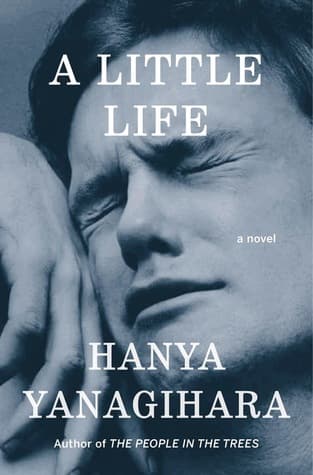
- A Little Life
Hanya Yanagihara
4.3 (212k) average on GoodreadsLiterary FictionExplores deep human connections and struggles in New York City over time, with a focus on character development and emotional depth.
- Underworld
Don DeLillo
4.1 (2k) average on GoodreadsFantasyWhile both novels are sprawling and examine American history through multiple perspectives, McCann's Let the Great World Spin is more intimate and character-driven, focusing on the emotional core of individuals, whereas DeLillo often maintains a more detached, observational tone.
- A Visit From the Goon Squad
Jennifer Egan
3.7 (175k) average on GoodreadsLiterary FictionBoth utilize non-linear, multi-perspective structures. However, McCann's novel is more explicitly historical and less experimental in its narrative fragmentation, adhering more closely to traditional literary fiction in character development and thematic exploration, while Egan often plays with form and genre.
- The Old Man and the Sea
Ernest Hemingway
3.8 (831k) average on GoodreadsLiterary FictionA Cuban fisherman's long struggle with a giant marlin becomes a story of endurance and dignity, now retold for young adults with illustrations, phonetic guides, and writing prompts in Traditional Chinese.
- One Hundred Years of Solitude
Gabriel García Márquez
4.1 (753k) average on GoodreadsLiterary FictionThrough the multi-generational story of the Buendía family, a mythical town deals with the repeating patterns of time, love, and solitude, as the extraordinary mixes with the ordinary.
- The Goldfinch
Donna Tartt
3.9 (720k) average on GoodreadsLiterary FictionHaunted by a tragic explosion and clutching a stolen Dutch masterpiece, a young orphan navigates the opulent drawing rooms of New York and the gritty underbelly of the art world, desperately seeking connection and redemption amidst a life spiraling into crime and obsession.



Enjoyed the summary?
A summary gives you the shape of the book. The book itself has the detail, the examples and the voice.
Find Let the Great World Spin on AmazonAs an Amazon Associate, BookBrief earns from qualifying purchases. How we're funded