
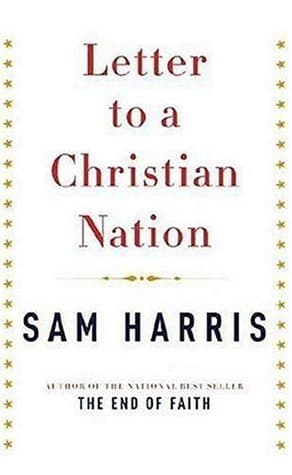
Core Idea
- Difficulty
- Easy
- Read it if
- You are a Christian questioning your faith, an atheist seeking concise arguments against religious dogma, or someone interested in a direct, confrontational critique of religious influence in modern society.
- Skip it if
- You are easily offended by direct challenges to religious beliefs, are looking for a nuanced theological discussion, or prefer a less polemical approach to the topic of religion and secularism.
Key Takeaways from Letter to a Christian Nation
Faith Undermines Morality
Moral reasoning based on dogma is inherently flawed and dangerous.
Harris argues that faith—believing things without evidence or despite it—is a poor basis for morality. When moral judgments come from old texts or divine commands, they become rigid, often cruel, and resistant to reason or correction. This leads to a fixed moral system where old rules, like those about homosexuality or women's roles, are defended not by their value but by their supposed divine origin. True morality, Harris says, should be based on human well-being and suffering, open to change through reason and empathy, not unchanging dogma. Insisting on faith as a virtue stops real ethical progress and critical thinking about societal problems, replacing thoughtful consideration with unquestioning obedience.
“Faith is nothing more than the license religious people give one another to believe things for which there is no evidence.”
In the book: Harris points to biblical commands for stoning disobedient children or the sanctioning of slavery, arguing that if these are taken as divine commands, they either expose God as immoral or require contorted justifications that undermine moral clarity. He also highlights the Christian notion of 'original sin' and vicarious redemption as morally unintuitive.
Try this: Evaluate moral claims not by their source (e.g., 'God said it') but by their consequences for human well-being and their logical coherence. Engage in ethical discussions by appealing to reason, empathy, and evidence rather than scriptural authority. Challenge the assumption that faith is a necessary prerequisite for moral behavior.
Related ideas: moral-relativism, secular-ethics, dogma
The Absurdity of Biblical Literalism
Interpreting ancient texts literally leads to intellectual and moral incoherence.
Harris examines the mental effort needed for contemporary Christians to believe the Bible is literally true. He points out many scientific, historical, and logical problems in biblical texts. From the creation story contradicting modern science to inconsistencies in the Gospels about Jesus's life, death, and resurrection, Harris argues that literal interpretation leads to intellectual dishonesty. He also notes the moral horrors allowed or commanded in the Old Testament, which fundamentalists must either ignore, selectively interpret, or defend with twisted logic. This selective literalism—accepting some parts while rejecting others—shows the arbitrary nature of faith-based reasoning, ultimately weakening any claim to objective truth.
“The Bible is a chaos of contradictory rules and moral injunctions.”
In the book: Harris cites the creation story (Genesis) versus evolution, the global flood narrative (Noah's Ark) versus geology, and the numerous discrepancies between the Gospels concerning key events in Jesus's life. He also brings up explicit Old Testament commands for genocide and slavery.
Try this: When encountering religious texts, apply critical thinking and historical context. Question claims of divine inspiration or inerrancy by comparing them against scientific understanding, historical fact, and internal consistency. Recognize that selective interpretation is a common tactic to preserve belief in the face of contradictory evidence.
Related ideas: biblical-criticism, scientific-literacy, hermeneutics
Religion's Link to Violence
Faith, particularly its absolute certainty, fuels conflict and hinders peace.
Harris directly challenges the common idea that religion brings peace. He argues that while many religious people are peaceful, the core ideas of faith—especially belief in exclusive divine truth and the promise of eternal reward or punishment—strongly motivate violence. When followers believe they have absolute truth, revealed by God, and that those who disagree are not just wrong but condemned, compromise becomes impossible. The 'us vs. them' mindset grows, and even small theological differences can cause deadly conflicts. Harris says that religion uniquely justifies hatred and violence, allowing people to commit atrocities for a higher power, bypassing normal moral limits. This ideological certainty, not any specific religion, is the dangerous common factor.
“The problem with religion, as with other ideologies, is that it can make otherwise sane people do insane things.”
In the book: Harris points to the history of religious wars (Crusades, Thirty Years' War), ongoing conflicts in the Middle East, and religiously motivated terrorism (9/11) as examples where faith provided the primary justification for violence. He also discusses how religious certainty prevents rational resolution of conflicts.
Try this: Analyze conflicts not just for political or economic roots, but for underlying ideological certainties, especially religious ones. Challenge claims that a particular religion is inherently peaceful by examining its historical record and foundational texts. Advocate for a secular framework in international relations and conflict resolution that prioritizes shared humanity over sectarian dogma.
Related ideas: religious-extremism, interfaith-dialogue, secularism
The Folly of Intelligent Design
Creationism disguised as science is intellectually bankrupt and anti-scientific.
Harris dismisses Intelligent Design (ID) as a clear attempt to bring creationism into science education under a new name. He argues that ID offers no testable ideas, makes no predictions, and provides no way for its proposed 'designer' to work. Instead, it relies on 'irreducible complexity' arguments, which evolutionary biology has disproven. Harris emphasizes that ID is a 'god of the gaps' argument, giving credit to a designer for whatever science has not yet fully explained, instead of engaging in real scientific inquiry. He highlights the dangers of teaching ID in schools, as it harms scientific literacy, critical thinking, and the scientific method itself, replacing empirical investigation with a pre-set theological conclusion. This intellectual dishonesty threatens education and rational discussion.
“Intelligent design is not science; it is a religious doctrine that has been dressed up in a lab coat.”
In the book: Harris references the concept of 'irreducible complexity' (e.g., bacterial flagellum) as presented by ID proponents and explains how evolutionary mechanisms (like co-option of parts) provide naturalistic explanations. He also touches on the legal rulings against teaching ID in public schools.
Try this: Identify and critique 'god of the gaps' arguments wherever they appear. Defend the integrity of scientific education by advocating for the exclusive teaching of evidence-based theories like evolution. Understand that science is a process of inquiry, not a collection of immutable facts, and that ID fundamentally misunderstands this process.
Related ideas: creationism, evolutionary-biology, scientific-method
The Myth of Religious Moderation
Moderate faith inadvertently enables fundamentalism by validating its core assumptions.
Harris argues that religious moderates, though often well-meaning, contribute to the problem. By saying their milder interpretations of scripture are the 'true' meaning of their faith, they unintentionally give legitimacy to the dogmatic framework that fundamentalists take literally. Moderates often pick and choose which parts of their holy texts to follow, creating their own religion, yet they still defend faith as a virtue and these texts as divinely inspired. This selective adherence, Harris believes, gives cover to extremists, letting them claim a more authentic connection to the faith's core ideas. He thinks true progress requires giving up the idea that faith is a reliable path to truth, rather than just softening its most extreme parts.
“Religious moderation is the product of secular thinking and scriptural ignorance.”
In the book: Harris points out that moderates rarely condemn the more violent or absurd passages in their holy books outright, but rather allegorize them or simply ignore them, while still defending the book's overall divine origin. He argues that this 'polite hypocrisy' validates the entire enterprise of faith.
Try this: Challenge the notion that 'moderate' religion is inherently harmless. Engage with religious moderates by asking them to account for the more problematic aspects of their faith's scripture. Advocate for openly admitting that certain aspects of religious traditions are outdated or morally repugnant, rather than trying to reinterpret them into benign forms.
Related ideas: fundamentalism, religious-pluralism, secular-humanism
The Illusion of Free Will (and its Moral Implications)
Our actions are determined by prior causes, challenging traditional notions of blame and punishment.
While not the main point of Letter to a Christian Nation, Harris often discusses his view that free will, as commonly understood, is an illusion. He argues that our thoughts, intentions, and actions come from earlier causes—a complex mix of genetics, environment, and brain activity—over which we have no ultimate control. This view challenges traditional religious ideas of sin, punishment, and personal responsibility. If we are not truly free to choose our actions, then the idea of a just God condemning people to eternal damnation for 'choices' they could not have made differently becomes morally indefensible. Harris suggests that understanding the determined nature of our minds could lead to a more compassionate and effective approach to justice, focusing on prevention and rehabilitation instead of punishment, and encouraging greater empathy for those who act in ways we consider immoral.
“Free will is an illusion. Our wills are simply not of our own making.”
In the book: Harris references neuroscientific findings that show brain activity preceding conscious decisions, suggesting our 'choices' are made before we are aware of them. He also uses thought experiments about how different initial conditions would lead to different outcomes, regardless of a person's 'will'.
Try this: Re-evaluate concepts of personal blame and moral responsibility in light of the determined nature of our actions. Cultivate greater empathy for others by recognizing the vast array of factors influencing their behavior. Advocate for justice systems that prioritize rehabilitation and societal safety over punitive retribution, acknowledging the limited role of 'free will' in criminal behavior.
Related ideas: determinism, compatibilism, neuroscience
The Superiority of Secular Ethics
A morality based on human well-being is more robust and adaptable than faith-based ethics.
Harris advocates for a secular, utilitarian ethical system based on the well-being of conscious beings. He argues that morality is not arbitrary or subjective, but can be objectively discussed and improved based on what causes suffering and what promotes flourishing. Unlike religious ethics, which are often rigid and tied to old, sometimes harsh, texts, secular ethics can change with new knowledge and societal conditions. This approach allows for a universal morality that crosses cultural and religious boundaries, as all humans share a basic interest in avoiding suffering and seeking happiness. By leaving behind divine command theory, humanity can build a more compassionate, rational, and effective moral system that is open to scientific inquiry and informed by empathy, rather than blind adherence to dogma.
“The only thing that ultimately matters is the well-being of conscious creatures.”
In the book: Harris contrasts the moral progress on issues like slavery, women's rights, and LGBTQ+ rights in secular societies with the often-regressive stances taken by religiously conservative groups who appeal to scripture.
Try this: Approach ethical dilemmas by asking: 'What course of action will minimize suffering and maximize well-being for all involved?' Engage in interdisciplinary study, drawing on psychology, neuroscience, and sociology, to better understand the conditions for human flourishing. Advocate for public policies based on empirical evidence and a commitment to universal human rights, rather than religious doctrine.
Related ideas: utilitarianism, humanism, moral-philosophy
Religion as a Barrier to Scientific Progress
Faith-based opposition to scientific inquiry obstructs critical advancements for humanity.
Harris highlights how religious dogma actively slows scientific progress, especially in areas seen as challenging religious stories. The most obvious example is opposition to stem-cell research, where possible cures for serious diseases are sacrificed for theological objections about the 'soul' or the sacredness of early embryonic life. He argues that such religiously motivated stances are not only irrational but morally wrong, actively choosing suffering over the pursuit of knowledge and relief. Furthermore, the push for Intelligent Design over evolution harms biological education, hindering future scientific literacy and innovation. By prioritizing old beliefs over evidence and human well-being, religion becomes a backward force, holding back humanity's ability to understand the world and solve its most urgent problems.
“To believe that the Bible contains a perfect description of the cosmos is to take a position that can only be defended by willfully ignoring a mountain of evidence.”
In the book: Harris specifically discusses the political and religious opposition to embryonic stem-cell research in the US, citing it as an example of faith directly obstructing medical progress. He also mentions the ongoing battle over evolution in schools.
Try this: Advocate for public policy decisions to be based on scientific evidence and expert consensus, free from religious interference. Support funding for scientific research, especially in areas that challenge religious dogma. Educate others on the importance of scientific literacy and critical thinking as essential tools for societal progress.
Related ideas: science-denial, bioethics, public-policy
The Dangers of Religious Certainty
Absolute conviction in unproven beliefs is intellectually dangerous and socially corrosive.
A repeated idea in Harris's work is the danger of religious certainty. He believes that the conviction of having absolute, divinely revealed truth, without needing evidence or critical review, leads to intolerance, conflict, and intellectual stagnation. When people are certain they are right because God told them so, they become immune to reasoned argument, evidence, and empathetic persuasion. This certainty fuels tribalism, demonizes outsiders, and makes compromise impossible. Harris argues that this mental attitude, far from being a virtue, is a serious intellectual flaw that has caused countless atrocities throughout history. He calls for humility in belief, where convictions match the evidence, and an openness to changing one's views with new information, which goes against the core nature of faith.
“A world of people who are certain of their beliefs, without evidence, is a world of conflict.”
In the book: Harris refers to the 'certainty' of suicide bombers, religious inquisitors, and those who condemn others based on scriptural interpretations. He contrasts this with the scientific method, which embraces doubt and revision.
Try this: Cultivate intellectual humility, recognizing that all beliefs, especially those without empirical support, are open to revision. Challenge claims of absolute certainty by asking for evidence and logical justification. Foster environments where skepticism and critical inquiry are valued, rather than suppressed by dogmatic pronouncements.
Related ideas: epistemology, critical-thinking, dogmatism
The Need for Rationality in Public Life
Societal progress demands decisions based on reason and evidence, not religious conviction.
Harris concludes with a strong call for rationality to guide public discussion and policy. He argues that issues like climate change, poverty, disease, and international conflict cannot be effectively solved when many people base their understanding of the world on old myths and unproven beliefs. When politicians and public figures appeal to faith rather than facts, it lowers the quality of debate and leads to poor, often harmful, results. Harris asserts that a healthy society needs citizens who can think critically, are willing to update their beliefs based on evidence, and are committed to finding common ground through reason. This means actively pushing back against religious dogma in areas where rational inquiry and evidence should rule, ensuring that collective decisions serve the clear well-being of all.
“The problem with religion is that it allows people to believe things that are not true, and then to act on them.”
In the book: Harris points to the political influence of religious conservatives on issues like climate change denial, stem cell research, and sex education, arguing these are examples where faith trumps evidence to society's detriment.
Try this: Demand that public officials base their decisions on evidence and expert consensus, not religious beliefs. Engage in and support secular advocacy groups that promote reason and science in public policy. Encourage critical thinking and media literacy to discern facts from faith-based claims in public discourse.
Related ideas: secular-government, evidence-based-policy, public-discourse
Letter to a Christian Nation Quotes
“The problem with religion, then, is not that it is a bad answer to the meaning of life, but that it is a bad question.”
“The idea that there is a Christian way to build a bridge, or a Christian way to fly an airplane, is simply a category error.”
“To say that a man is a Christian is not to say that he is a good man, or a bad man, but merely that he is deluded.”
“The faithful have been encouraged to believe that the very possibility of morality depends upon the truth of their preposterous myths.”
“The only thing more dangerous than an ignorant man is an ignorant man who is also religious.”
“Science, in the broadest sense, is the pursuit of truth.”
“If it is true that a Christian's faith makes him a moral person, then it is also true that the absence of such faith makes him an immoral one.”
“The Bible is a chaos of contradictory rules and archaic pronouncements.”
“The problem with faith is that it is a conversation in which the words 'truth' and 'falsehood' have lost their meaning.”
“We have a moral obligation to reject faith and embrace reason.”
“Religious moderation is the product of secular reason and scientific understanding.”
“The fact that a person is religious does not mean that he is not a good person. It merely means that he has embraced some ideas that are not true.”
“The future of civilization depends on our ability to unbind ourselves from the shackles of religious dogma.”
“If we want to build a truly moral society, we must do so on a foundation of reason, compassion, and an honest understanding of the human condition.”
Quiz
10 questions on the main ideas. Each answer comes with a short explanation.
Question 1
Sam Harris argues that the idea of 'faith' as a virtue often leads to what specific problem in public discourse?
- Increased interfaith dialogue and understanding.
- A willingness to believe propositions without sufficient evidence, thereby hindering rational debate.
- A greater appreciation for the historical roots of religious traditions.
- The development of more sophisticated theological arguments.
Show answer
B. A willingness to believe propositions without sufficient evidence, thereby hindering rational debate. Harris consistently criticizes faith for being 'belief without evidence,' which he argues allows people to hold irrational beliefs without scrutiny, thereby impeding rational discourse on critical issues.
Question 2
According to Harris, what is a primary reason why religious fundamentalism poses a threat to society?
- It discourages charitable giving.
- It promotes a literal interpretation of ancient texts that often clash with modern ethical and scientific understanding, leading to harmful policies.
- It leads to a decline in artistic expression.
- It encourages excessive individualism.
Show answer
B. It promotes a literal interpretation of ancient texts that often clash with modern ethical and scientific understanding, leading to harmful policies. Harris explicitly links fundamentalist adherence to ancient texts with the promotion of unscientific views (like creationism) and ethically problematic stances, arguing this impacts public policy negatively.
Question 3
Harris argues that the problem with religious morality is that it is often based on what principle?
- Universal human rights.
- The arbitrary dictates of an ancient text or deity, rather than a reasoned understanding of human well-being.
- Empirical observation of societal consequences.
- Philosophical utilitarianism.
Show answer
B. The arbitrary dictates of an ancient text or deity, rather than a reasoned understanding of human well-being. A central argument in the book is that religious morality derives from arbitrary divine commands, which can be cruel or irrational, rather than an objective assessment of what genuinely promotes human flourishing.
Question 4
When discussing intelligent design, Harris points out that if one attributes complexity to a designer, this inevitably leads to what further question?
- What is the purpose of the design?
- Who designed the designer?
- How long did the design process take?
- What materials were used in the design?
Show answer
B. Who designed the designer? Harris uses this classic 'regress argument' against intelligent design, highlighting that positing a designer for complexity simply pushes the question of complexity's origin back one step, rather than solving it.
Question 5
Harris contends that many Christians claim to believe in specific biblical passages (e.g., about hell or the efficacy of prayer) but their actions often reveal a lack of genuine conviction. What example does he use to illustrate this point regarding prayer?
- They pray for trivial matters rather than serious ones.
- They still take their sick children to doctors rather than solely relying on prayer for healing.
- They don't pray often enough throughout the day.
- They pray only in church, not in private.
Show answer
B. They still take their sick children to doctors rather than solely relying on prayer for healing. Harris points out the hypocrisy of believers who claim to trust God completely for healing, yet still resort to medical science when their loved ones are gravely ill, suggesting their actions betray their stated beliefs.
Question 6
Regarding the connection between religion and violence, Harris argues that the problem is not merely extremists misinterpreting their faith, but rather that:
- Religion is never a motive for violence.
- The texts themselves, when interpreted literally, contain explicit justifications for violence and intolerance.
- Secular ideologies are far more violent than religious ones.
- Violence is solely a product of economic inequality, not religion.
Show answer
B. The texts themselves, when interpreted literally, contain explicit justifications for violence and intolerance. A core argument of Harris is that the problem isn't just 'bad apples' or misinterpretation; the sacred texts themselves, especially when taken literally, often prescribe violence, intolerance, and subjugation.
Question 7
Harris suggests that if Christians truly believed in the literal teachings of the Bible regarding salvation and damnation, their ethical imperative would be to:
- Focus on personal spiritual growth and contemplation.
- Spend every waking moment attempting to convert non-believers, even at the expense of their own lives and the lives of their families.
- Prioritize social justice causes above all else.
- Withdraw from society to live a monastic life.
Show answer
B. Spend every waking moment attempting to convert non-believers, even at the expense of their own lives and the lives of their families. Harris argues that if hell is real and eternal, and salvation is through Christ alone, then the only truly moral action for a Christian would be to relentlessly proselytize, even to extreme lengths, which few actually do.
Question 8
Harris criticizes the concept of 'original sin' as philosophically and ethically problematic for what specific reason?
- It promotes excessive guilt in adults.
- It unfairly condemns innocent children for the actions of their distant ancestors, creating a moral debt that is impossible to logically justify.
- It discourages personal responsibility.
- It leads to a belief in reincarnation.
Show answer
B. It unfairly condemns innocent children for the actions of their distant ancestors, creating a moral debt that is impossible to logically justify. Harris finds the idea of being born inherently sinful due to Adam and Eve's actions to be morally repugnant and irrational, particularly because it condemns individuals for deeds they did not commit.
Question 9
What is Harris's primary argument against the claim that religion is necessary for morality?
- Moral behavior only exists in secular societies.
- Morality can and should be based on a rational understanding of human well-being, suffering, and the consequences of actions, independent of divine commands.
- Science has proven that morality is an illusion.
- Religious people are inherently less moral than atheists.
Show answer
B. Morality can and should be based on a rational understanding of human well-being, suffering, and the consequences of actions, independent of divine commands. A central theme is that morality can be a rational project aimed at maximizing well-being and minimizing suffering, without recourse to arbitrary religious doctrines. He argues this secular approach is superior.
Question 10
Harris critiques the Christian claim that Jesus's resurrection is a historical fact by pointing out that:
- Archaeological evidence disproves it.
- The only evidence consists of ancient, contradictory, and uncorroborated accounts from texts written by believers, which falls short of the standard of evidence required for such an extraordinary claim.
- Other religions have more convincing resurrection stories.
- Modern science has definitively proven that resurrections are impossible.
Show answer
B. The only evidence consists of ancient, contradictory, and uncorroborated accounts from texts written by believers, which falls short of the standard of evidence required for such an extraordinary claim. Harris emphasizes the lack of independent, verifiable, and consistent evidence for the resurrection, arguing that the accounts are exclusively from biased sources within the faith, which is insufficient for a historical claim of this magnitude.
Letter to a Christian Nation FAQ
What is the main argument of 'Letter to a Christian Nation'?
Sam Harris's main argument is a rational refutation of fundamentalist Christian beliefs, challenging the influence of faith on public life. He contends that many core tenets of Christianity are not supported by reason or evidence and pose risks to societal progress and ethical discourse.
Does Sam Harris believe in God or any form of spirituality?
In 'Letter to a Christian Nation,' Sam Harris explicitly argues against the existence of the Abrahamic God and criticizes religious dogma. While he is known for exploring consciousness and secular spirituality in other works, this book focuses on a direct critique of Christian faith.
How does 'Letter to a Christian Nation' differ from 'The End of Faith'?
'Letter to a Christian Nation' serves as a direct, concise response to the criticism Harris received from Christians following 'The End of Faith.' While 'The End of Faith' broadly critiques religion, this book specifically targets fundamentalist Christianity and its impact on American society.
What topics related to science does the book address?
The book delves into scientific topics such as intelligent design, stem-cell research, and the general conflict between scientific understanding and religious dogma. Harris uses scientific evidence and reasoning to counter religious claims and highlight the importance of an evidence-based worldview.
Does Sam Harris advocate for the complete eradication of religion?
Sam Harris advocates for a society where public policy and ethical decisions are based on reason, evidence, and human well-being, rather than religious dogma. He challenges the privileged position of faith in public discourse but does not explicitly call for the eradication of private religious practice.
What is Sam Harris's view on the connection between religion and violence?
Harris argues that religious beliefs, particularly dogmatic and fundamentalist interpretations, can directly contribute to violence and intolerance. He highlights instances where faith has been used to justify conflict and criticizes the moral framework that can arise from absolute religious convictions.
Is 'Letter to a Christian Nation' suitable for readers of all backgrounds?
The book is written for a broad audience interested in the intersection of religion, politics, and science, but its direct challenge to Christian beliefs may be provocative for some. It is particularly relevant for those seeking a rational critique of fundamentalist Christianity and its societal influence.
How does Harris address the concept of intelligent design?
Harris directly refutes intelligent design as a scientifically unfounded attempt to insert creationism into science education. He aligns with the scientific consensus, presenting evolutionary theory as the robust explanation for life's diversity and complexity, contrasting it with the lack of empirical support for intelligent design.
Does the book offer an alternative moral framework to religious morality?
While the book primarily focuses on critiquing religious morality, Harris implicitly advocates for a secular moral framework grounded in reason, empathy, and the well-being of conscious creatures. He suggests that ethical decisions should derive from an understanding of human and animal suffering and flourishing, rather than divine command.
About the author
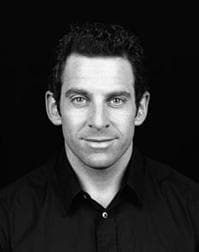
Sam Harris is an American author and philosopher known for his writings on religion, morality, and free will. His notable works include "Letter to a Christian Nation," which critiques religious belief, and "Free Will," where he argues against the concept of free will. Harris's books primarily focus on non-fiction themes related to ethics and human consciousness.
Similar books
- The God Delusion
Richard Dawkins
3.9 (231k) average on GoodreadsPsychologyOffers a comprehensive scientific and philosophical argument against the existence of God and the harms of religion.
- 1984
George Orwell
4.2 (3.1M) average on GoodreadsPoliticsIn a future where surveillance and thought control are absolute, a man's search for truth clashes with the Party, showing that hope can be a form of rebellion.
- Animal Farm
George Orwell
4.0 (2.7M) average on GoodreadsPoliticsA farm animals' rebellion against humans turns into a pig-led dictatorship, showing how power corrupts and revolutionary ideals are betrayed.
- Freakonomics: A Rogue Economist Explores the Hidden Side of Everything
Steven D. Levitt
4.0 (709k) average on GoodreadsBusinessThis book uses economic principles to reveal the surprising incentives behind everything from drug dealing and real estate to cheating teachers and the decline of crime.
- I Am Malala: The Story of the Girl Who Stood Up for Education and Was Shot by the Taliban
Malala Yousafzai
4.1 (419k) average on GoodreadsPoliticsA teenage girl from a Taliban-controlled valley refuses to give up her books, becoming a global voice for education even after an assassination attempt.
- Atlas Shrugged
Ayn Rand
3.7 (354k) average on GoodreadsPoliticsIn a dystopian America where innovators vanish, a brilliant heiress races to uncover the truth behind the disappearing industrialists and the enigmatic John Galt, who vows to stop the world's progress.





Enjoyed the summary?
A summary gives you the shape of the book. The book itself has the detail, the examples and the voice.
Find Letter to a Christian Nation on AmazonAs an Amazon Associate, BookBrief earns from qualifying purchases. How we're funded