

Core Idea
- Difficulty
- Medium
- Read it if
- You are an aspiring artist, performer, or writer seeking profound, humanistic guidance on creativity, identity, and social engagement, presented in an intimate, epistolary style.
- Skip it if
- You are looking for a highly structured, step-by-step guide to a specific artistic discipline, or prefer a more academic and less personal exploration of artistic philosophy.
Key Takeaways from Letters to a Young Artist
Embrace the 'Both/And' of Identity
Your multi-faceted self is your greatest artistic asset.
Smith advises against simplifying or labeling one's identity, especially as an artist. She suggests that true artistic depth comes from embracing the 'both/and' — the simultaneous existence of seemingly conflicting traits, backgrounds, or goals. This inner complexity reflects the human condition and lets an artist inhabit a wider range of characters or explore more ideas. Trying to fit into a neat box limits potential and reduces the unique voice only you can offer. Your art will be more impactful when it comes from an authentic, complex self, acknowledging all the layers and contradictions that make you who you are.
“Your identity is not a single, fixed thing. It is a constellation of experiences, contradictions, and evolving perspectives.”
In the book: Smith frequently refers to her own experiences navigating racial and gender identity in the performing arts, and how these perceived 'conflicts' became sources of strength and insight in her solo performances.
Try this: Instead of trying to resolve perceived contradictions in your background or personality, explore how these elements can inform and enrich your artistic work. Journal about your 'both/and' qualities and consider how they might manifest in your creative output.
Related ideas: identity-complexity, authentic-voice, self-acceptance
The Discipline of Listening
Deep listening is the bedrock of profound art and social connection.
Smith stresses that listening is not just hearing but an active, disciplined practice essential for artists, especially those working with human stories. It means setting aside your own plans, biases, and judgments to truly take in the details of another's speech, body language, and underlying feelings. This deep listening builds empathy, helps develop characters, and lets an artist capture the real rhythms and views of the world. For Smith, listening is a political act, creating understanding across differences and forming the base for art that can truly reflect and affect society. It is about opening yourself to be changed by what you hear.
“The greatest gift you can give as an artist, and as a person, is to truly hear another.”
In the book: Her entire performance methodology for 'documentary theater' involves extensive interviews, where she meticulously records and then embodies the speech patterns and gestures of real people. She recounts specific instances where a subtle vocal inflection or pause revealed profound character insight during an interview.
Try this: Practice active listening in your daily interactions. Try to paraphrase what others have said to ensure you've understood. In your artistic work, focus on capturing the authentic voices and perspectives of your subjects or inspirations, rather than imposing your own preconceived notions.
Related ideas: active-listening, empathy-building, documentary-theater
Cultivate Radical Empathy
Step into the shoes of others, even those you disagree with.
Smith challenges artists to go beyond surface understanding and develop a 'radical empathy' — the ability to deeply understand and even take on the perspectives of people who might be very different from, or even against, oneself. This does not mean excusing harmful actions, but rather seeking the human reasons, fears, and complexities that drive them. This empathetic immersion helps create characters and stories that have a deep, unsettling truth, going beyond simple stereotypes. It is a demanding, often uncomfortable process that ultimately improves the art and pushes the audience to see beyond easy judgments.
“To truly portray someone, you must find a way to love them, even if you hate their actions.”
In the book: Smith discusses the challenge of portraying figures involved in controversial events, like those in the Los Angeles riots, and the necessity of finding the 'humanity' in every voice, regardless of their role or viewpoint, to create a truthful composite.
Try this: When developing characters or exploring themes, intentionally seek out perspectives that challenge your own. Read or listen to interviews with people you disagree with, trying to understand their underlying worldview without judgment. Practice embodying different viewpoints physically and vocally.
Related ideas: radical-empathy, character-development, human-condition
The Artist as Social Witness
Your art can illuminate and provoke societal dialogue.
Smith believes artists have an important role as 'social witnesses' — observers and interpreters of human experience, especially during conflict or social change. She encourages artists to engage directly with real-world issues, using their chosen medium to capture, reflect, and start conversations about complex social realities. This is not about creating propaganda, but about presenting detailed views and untold stories that can build greater understanding and inspire action. Your art, she suggests, can be a powerful tool for social change, not by giving answers, but by asking the right questions and showing the human impact of larger forces.
“Art is not just about beauty; it is about bearing witness, giving voice, and stirring the collective conscience.”
In the book: Her groundbreaking works like 'Fires in the Mirror' (on the Crown Heights riot) and 'Twilight: Los Angeles, 1992' (on the Rodney King riots) exemplify this, where she performed multiple verbatim accounts from diverse individuals involved in these events, offering a multi-faceted, human perspective on conflict.
Try this: Identify a social issue you care deeply about. Research it extensively, seeking out diverse voices and personal stories. Consider how your artistic practice could be used to illuminate aspects of this issue, not to preach, but to foster understanding and dialogue.
Related ideas: social-impact-art, art-as-activism, documentary-art
Embrace Failure as Fuel
Setbacks are not endings, but essential detours on your artistic journey.
Smith normalizes failure, seeing it not as a personal fault but as an unavoidable and even necessary part of the artistic process. She argues that artists must develop resilience and toughness, learning to gain lessons from rejection, criticism, and projects that do not work out. Each 'failure' provides valuable information, showing what does not work, refining one's approach, and deepening one's understanding of the craft and oneself. The fear of failure, she argues, is far more harmful than failure itself, often stopping artists from taking necessary risks and truly pushing their creative limits. Real growth happens outside the comfort zone, often after a mistake.
“Failure is not the opposite of success; it is a part of success. It is the raw material from which growth emerges.”
In the book: She shares anecdotes of her own early struggles, rejections, and performances that didn't land, emphasizing how these experiences forced her to re-evaluate, refine her technique, and ultimately led to breakthroughs in her unique performance style.
Try this: When facing a setback, consciously analyze what went wrong without self-blame. Identify specific lessons learned and how you can apply them to your next project. Cultivate a mindset where 'failure' is simply data for improvement, not a judgment of your worth.
Related ideas: resilience, growth-mindset, overcoming-rejection
The Necessity of Ritual and Discipline
Consistency, not just inspiration, sustains the artistic life.
Smith emphasizes that art is not just the result of occasional inspiration but of consistent, disciplined effort. She advocates for setting up daily routines that create space for creative work, even when motivation is low. This discipline includes not just creating, but also research, practice, and self-care. It is about building a sustainable artistic life rather than waiting for inspiration. This structure provides a psychological container for the often chaotic creative process, fostering focus, building momentum, and ensuring the artist stays engaged with their craft long-term. Without discipline, even great talent can fade.
“Talent is not enough. The daily grind, the commitment to showing up, is what separates the dreamers from the doers.”
In the book: She describes her rigorous schedule of interviews, transcriptions, vocal exercises, and physical training that underpins her solo performances, highlighting how this daily commitment is non-negotiable for her work.
Try this: Identify a consistent time each day or week that you dedicate solely to your art, even if it's just 30 minutes. Create a small ritual around starting your work (e.g., making tea, listening to a specific piece of music). Treat this time as sacred and non-negotiable.
Related ideas: artistic-discipline, creative-rituals, consistent-practice
Build Your 'Company of Allies'
Surround yourself with a diverse, supportive network.
Smith advises young artists to actively build a diverse network she calls their 'company of allies.' This is not just about professional contacts, but about forming real relationships with mentors, peers, and even those outside the arts who can offer different views. This network provides emotional support, critical feedback, opportunities, and a sense of belonging in what can often be a solitary and competitive field. The variety of this 'company' is key, ensuring you are exposed to a wide range of ideas and challenges, preventing isolation, and fostering growth. These allies are your sounding board, your supporters, and those who tell you the truth.
“No artist thrives in isolation. You need a constellation of individuals who challenge, support, and inspire you.”
In the book: She recounts how specific individuals – teachers, fellow actors, community organizers, and even non-artists – played pivotal roles in her development, offering guidance, opening doors, and providing essential perspective during challenging times.
Try this: Identify 3-5 people who could be part of your 'company of allies' (e.g., a mentor, a peer, someone from a different field). Schedule regular check-ins or conversations with them. Actively seek out opportunities to connect with new people in and outside your artistic community.
Related ideas: networking, mentorship, artistic-community
The Art of 'Being Present'
True connection and authenticity stem from radical presence.
Smith highlights the importance of 'being present' — a state of heightened awareness and engagement that lets an artist truly connect with their material, fellow performers, and audience. This means letting go of distractions, worries about the past or future, and self-consciousness, to fully live in the 'now.' For Smith, presence is not just a performance technique but a way of being that unlocks authenticity and allows for real human connection. It is in these moments of strong presence that magic happens, where the artist becomes a clear channel for the story or emotion, and the audience feels truly seen and engaged.
“To truly connect, whether with an audience or an individual, you must be fully, utterly present in the moment.”
In the book: She describes techniques actors use to achieve presence, such as focusing on breath, sensory details, and the immediate environment, and how this translates into compelling, authentic performances that transcend mere acting.
Try this: Before engaging in creative work or important conversations, take a few minutes to practice mindfulness: focus on your breath, notice your surroundings, and consciously bring your attention to the present moment. Minimize distractions during your creative time.
Related ideas: mindfulness, authenticity, performance-technique
Find Your 'American Character'
Explore the unique cultural tapestry that shapes your artistic voice.
Smith challenges artists to explore their unique 'American Character' — not in a nationalistic way, but as a recognition of the specific cultural, historical, and personal influences that have shaped their identity and perspective within America's diverse landscape. This involves deep self-reflection on one's heritage, experiences, language, and the social forces that have molded them. Understanding this distinct 'character' lets an artist tap into a source of authenticity and originality, offering a perspective that is deeply personal yet widely relatable. It is about owning your specific view of the world and using it to enrich your art, rather than trying to imitate others.
“What is the particularity of your voice, your experience, your 'American Character' that only you can bring to the world?”
In the book: She frequently discusses how her own background as an African American woman from Baltimore, with specific linguistic patterns and social observations, formed the unique foundation for her artistic exploration of identity and American society.
Try this: Reflect on your personal history, family stories, regional influences, and significant cultural experiences. How have these shaped your way of seeing, speaking, and feeling? Consider how these unique elements could be woven into your artistic themes, characters, or style.
Related ideas: cultural-identity, personal-narrative, artistic-voice
The Art of Reinvention
Stay curious and evolve; your artistic journey is never static.
Smith advocates for continuous learning and regular change as vital for an artist's long-term health. She warns against becoming too comfortable or holding too tightly to a successful method. The world changes, and artists must remain curious, flexible, and willing to explore new forms, subjects, and even personal identities to keep their work fresh and relevant. This does not mean abandoning one's core artistic truth, but rather finding new ways to express it, taking risks, and embracing the discomfort of the unknown. Change shows an artist's growth, courage, and commitment to lifelong inquiry.
“The greatest artists are those who are not afraid to shed old skins and reinvent themselves, even many times over.”
In the book: Smith herself has consistently evolved her performance style and subject matter, moving from earlier works to exploring themes of healthcare and justice in later projects, demonstrating a willingness to challenge her own artistic boundaries.
Try this: Identify an area in your artistic practice where you feel stagnant or comfortable. Challenge yourself to learn a new skill, explore a different medium, or tackle a subject outside your usual comfort zone. Seek out new influences and perspectives regularly.
Related ideas: artistic-evolution, lifelong-learning, creative-growth
Letters to a Young Artist Quotes
“The thing about being an artist is that you are always in the process of becoming.”
“Your voice is not just what you say, but how you say it, where you say it, and to whom.”
“Don't just observe the world; interrogate it. Ask it questions it doesn't want to answer.”
“The work of an artist is to make the invisible visible, the inaudible audible.”
“Failure is not the opposite of success; it's part of success.”
“Listen more than you speak. Absorb more than you project.”
“Art is not a luxury; it's a necessity for understanding ourselves and our world.”
“Your greatest asset is your curiosity. Nurture it, feed it, let it lead you.”
“The stage is not just a place for performance; it's a laboratory for human behavior.”
“Don't just tell a story; embody it. Let it live in your bones.”
“The work of art is to hold a mirror up to nature, but also to hold a lamp.”
“Embrace ambiguity. Life, and art, are rarely black and white.”
“Find your own language, even if it's a language nobody else speaks yet.”
“Your body is your instrument. Learn its music.”
“Art is not about answers; it's about asking better questions.”
Quiz
10 questions on the main ideas. Each answer comes with a short explanation.
Question 1
In 'Letters to a Young Artist,' what is the primary format Anna Deavere Smith uses to dispense her advice to BZ?
- A series of transcribed interviews
- A collection of personal essays
- Fictional dialogues between a mentor and protégé
- A series of letters
Show answer
D. A series of letters The book is structured as a series of 'vividly anecdotal letters' from Anna Deavere Smith to the young artist BZ.
Question 2
Which of the following is NOT explicitly mentioned in the book's description as a topic Anna Deavere Smith addresses in her letters?
- Financial investment strategies for artists
- Building a diverse social and professional network
- Using art to promote social change
- Questions of confidence and self-esteem
Show answer
A. Financial investment strategies for artists While practical advice is given, the description does not list 'financial investment strategies' as a specific topic, unlike networking, social change, and self-esteem.
Question 3
Anna Deavere Smith is described by Newsweek as 'the most exciting individual in American theater.' This background primarily informs her advice by emphasizing what aspect of an artist's journey?
- The importance of solely focusing on commercial success.
- The value of performance, presence, and engagement in a public sphere.
- The necessity of formal academic training above all else.
- The exclusive pursuit of fine art over applied art.
Show answer
B. The value of performance, presence, and engagement in a public sphere. Her background in theater, especially known for her unique performance style and social commentary, suggests her advice would emphasize the performative and engaging aspects of an artist's life and work.
Question 4
The book is characterized as 'at once inspiring and no-nonsense.' This dual nature suggests that Smith's advice likely includes:
- Only abstract philosophical discussions without practical steps.
- Both encouragement for artistic dreams and pragmatic, sometimes challenging, realities of an artist's life.
- Primarily anecdotal stories without drawing clear lessons.
- A focus solely on the emotional well-being of the artist, neglecting professional aspects.
Show answer
B. Both encouragement for artistic dreams and pragmatic, sometimes challenging, realities of an artist's life. The phrase 'inspiring and no-nonsense' implies a balance between motivational encouragement and direct, practical, and sometimes tough advice about the realities of being an artist.
Question 5
When the book mentions addressing 'the full spectrum of issues that people starting out will face,' it highlights Smith's intention to provide guidance that is:
- Limited to a specific artistic medium.
- Comprehensive and holistic for emerging artists.
- Focused exclusively on the technical skills of art-making.
- Primarily historical in its perspective, rather than contemporary.
Show answer
B. Comprehensive and holistic for emerging artists. 'Full spectrum' implies a broad and inclusive approach to the challenges and opportunities an emerging artist might encounter, covering various facets of their life and career.
Question 6
The advice to 'pursue your art without compromise' suggests that Smith encourages artists to prioritize what above external pressures or fleeting trends?
- The opinions of critics and gallerists.
- The integrity of their artistic vision and personal truth.
- Maximizing profit from their artistic endeavors.
- Adapting their style to whatever is currently popular.
Show answer
B. The integrity of their artistic vision and personal truth. 'Without compromise' implies maintaining one's artistic integrity and vision, resisting pressures that might dilute or alter one's authentic artistic expression.
Question 7
How does Smith's use of 'vividly anecdotal letters' as a format likely influence the reader's reception of her advice?
- It makes the advice feel overly academic and detached.
- It grounds the advice in personal experience, making it relatable and memorable.
- It limits the applicability of the advice to only those in the theater arts.
- It implies the advice is purely theoretical and untested.
Show answer
B. It grounds the advice in personal experience, making it relatable and memorable. Anecdotes draw on personal stories and experiences, which typically make advice more engaging, relatable, and easier to understand and remember for the reader.
Question 8
The book aims to 'challenge you, motivate you, and set you on a course.' This suggests that the ultimate goal of Smith's advice is to:
- Provide a definitive, step-by-step guide to guaranteed success.
- Equip artists with the mindset and tools for a sustained, authentic artistic journey.
- Convince all readers to pursue a career in performance art.
- Offer comfort and reassurance without pushing for personal growth.
Show answer
B. Equip artists with the mindset and tools for a sustained, authentic artistic journey. The terms 'challenge,' 'motivate,' and 'set you on a course' imply fostering a proactive, reflective, and committed approach to one's artistic path rather than just offering easy answers or simple comfort.
Question 9
Given Smith's focus on 'using your art to promote social change,' what kind of artistic practice does she implicitly advocate for?
- Art that is primarily decorative and aesthetically pleasing.
- Art that is introspective and detached from public discourse.
- Art that engages with societal issues and has a transformative potential.
- Art that is created solely for personal therapeutic benefits.
Show answer
C. Art that engages with societal issues and has a transformative potential. Promoting social change through art suggests an advocacy for art that is engaged with the world, addresses societal issues, and aims to provoke thought or action, rather than being purely aesthetic or personal.
Question 10
The book's target audience, 'aspiring artists of all stripes,' implies that Smith's advice is crafted to be:
- Highly specialized for a niche group of avant-garde performers.
- Universally applicable to various artistic disciplines and stages of development.
- Relevant only to those seeking fame and commercial success.
- Focused on the historical context of art rather than contemporary practice.
Show answer
B. Universally applicable to various artistic disciplines and stages of development. 'All stripes' suggests inclusivity across different artistic forms and levels of experience, indicating that the core principles of her advice are designed to be broadly useful.
Letters to a Young Artist FAQ
What is 'Letters to a Young Artist' about?
'Letters to a Young Artist' is a non-fiction book by Anna Deavere Smith offering practical and philosophical advice to aspiring artists. Through anecdotal letters to a fictional mentee, BZ, Smith covers a wide range of topics pertinent to starting a career in the arts, from personal challenges like confidence and fear to professional aspects like networking and social impact.
Who is the target audience for this book?
The book is primarily aimed at young, aspiring artists across all disciplines who are grappling with the initial stages of their creative journey. However, its insights on discipline, resilience, networking, and personal well-being can benefit anyone pursuing a challenging career or creative endeavor.
Does 'Letters to a Young Artist' offer practical advice for building a career?
Yes, absolutely. Anna Deavere Smith provides brass tacks advice on practical aspects such as building a diverse professional network, presenting oneself effectively, managing fame and failure, and maintaining health. It goes beyond mere inspiration to offer actionable guidance.
What is Anna Deavere Smith's concept of 'social change' through art?
Smith emphasizes using art as a powerful tool for promoting social change and engaging with contemporary issues. While not explicitly defining a 'concept,' her work and advice suggest art can illuminate societal problems, foster empathy, and provoke dialogue, thereby contributing to a more just and understanding world.
How different is this book from other 'advice to artists' books?
Unlike some generic advice books, 'Letters to a Young Artist' is deeply personal and anecdotal, drawing directly from Anna Deavere Smith's extensive and unique experiences in American theater. Its focus on the intersection of art, social commentary, and personal well-being, delivered in a direct, epistolary style, sets it apart from more purely technical or purely motivational guides.
Does the book only apply to theater artists?
While Anna Deavere Smith is a renowned theater artist, the advice in 'Letters to a Young Artist' is intentionally broad and applicable to artists of all stripes, including writers, visual artists, musicians, and performers. The fundamental challenges and principles discussed are universal to the creative process and artistic careers.
Will 'Letters to a Young Artist' help with self-doubt and confidence?
Yes, a significant portion of the book addresses internal struggles like confidence, self-esteem, and fear of failure. Smith shares her insights and strategies for navigating these common challenges, offering both encouragement and practical approaches to building resilience and belief in one's artistic path.
What role does 'discipline' play in Smith's advice?
Discipline is a core theme throughout the book, presented as essential for artistic growth and sustained creativity. Smith underscores the importance of consistent effort, focused practice, and a rigorous approach to one's craft, viewing it as fundamental to achieving artistic excellence and navigating challenges.
Does 'Letters to a Young Artist' offer guidance on networking and collaboration?
Yes, the book provides insights into building a diverse social and professional network. Smith emphasizes the value of connections, mentorship, and collaborative relationships, offering advice on how to effectively engage with the artistic community and present oneself professionally.
About the author

Anna Deavere Smith is an acclaimed actress, playwright, and professor whose work often explores issues of race, class, and identity in America. Her notable works include the groundbreaking one-woman plays 'Fires in the Mirror' and 'Twilight: Los Angeles, 1992,' which are compiled in her book 'Letters to a Young Artist.' Smith's unique documentary theater style, drawing from extensive interviews, has earned her numerous awards and recognition.
Similar books
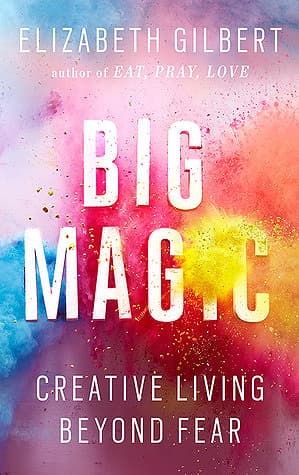
- Big Magic: Creative Living Beyond Fear
Elizabeth Gilbert
3.9 (150k) average on GoodreadsBusinessGilbert's "Big Magic" advocates for a joyful, less tortured approach to creativity, viewing ideas as entities seeking human collaboration. She encourages embracing curiosity over fear and detaching from outcomes. Smith, while acknowledging the joy, places a heavier emphasis on discipline, rigorous listening, and the artist's often-uncomfortable responsibility to bear witness to social realities. Gilbert offers liberation from creative anxieties; Smith calls for a deeper, more disciplined engagement with the world through art.
- The Diary of a Young Girl
Anne Frank
4.2 (2.7M) average on GoodreadsBiographyDuring the Nazi occupation, a teenage girl's diary, written from a secret annex, shares observations on humanity, hope, and the wait for freedom.
- Eat, Pray, Love
Elizabeth Gilbert
3.6 (1.5M) average on GoodreadsLifestyleA heartbroken writer leaves her conventional life for a year-long global search for pleasure in Italy, spiritual devotion in India, and unexpected love and balance in Bali.
- Night
Elie Wiesel
4.3 (970k) average on GoodreadsBiographyIn the darkness of Auschwitz and Buchenwald, a teenage Elie Wiesel faces the extermination of his family, the loss of his faith, and the lasting scars of humanity's deepest cruelty.
- The Glass Castle
Jeannette Walls
4.3 (903k) average on GoodreadsBiographyJeannette Walls's memoir describes her unusual childhood with brilliant, free-spirited parents whose poverty-stricken life shaped her independence and love despite family problems.
- Bossypants
Tina Fey
4.0 (848k) average on GoodreadsBiographyFrom a 'vicious nerd' with stress dreams to the comedic force behind Liz Lemon and 'Weekend Update,' Tina Fey chronicles her journey to proving that 'you're no one until someone calls you bossy.'





Enjoyed the summary?
A summary gives you the shape of the book. The book itself has the detail, the examples and the voice.
Find Letters to a Young Artist on AmazonAs an Amazon Associate, BookBrief earns from qualifying purchases. How we're funded