

Synopsis
Covers the whole plot, including the ending.
- Difficulty
- Medium
- Pacing
- Variable
- Mood
- Epic, Satirical, Historical, Darkly Humorous, Philosophical, Earthy
- Read it if
- You want an epic, satirical, and deeply imaginative journey through modern Chinese history told from a uniquely non-human perspective, with a blend of historical detail, folklore, and dark humor.
- Skip it if
- You prefer straightforward historical accounts, are sensitive to animal perspectives involving hardship, or dislike extensive allegorical storytelling.
Life and Death are Wearing Me Out Plot Summary
Covers the whole plot, including the ending.
The Execution of Ximen Nao
In 1948, during Mao's Land Reform Movement, Ximen Nao, a wealthy and kind landlord in Gaomi County, Shandong Province, is arrested and unfairly accused of being an exploiter. Despite his consistent kindness to his peasants, including his chief overseer, Lan Lian, and his refusal to flee, he is sentenced to death. At the execution grounds, Ximen Nao protests his innocence, even as he is paraded through the village and shot. His last thoughts are of his family – his concubines, his eldest son Jintong, and his loyal farmhands – and the injustice of his fate. This brutal end begins his extraordinary journey.
Lord Yama's Tribunal and Rebirth as a Donkey
After his death, Ximen Nao finds himself in the underworld, facing Lord Yama, the King of Hell. Lord Yama, angry at Ximen Nao's refusal to admit guilt for his 'crimes' as a landlord, tortures him. Ximen Nao insists he was a good employer. Tired of his defiance, Lord Yama, in a fit of anger, sends him back to the human world, not as a man, but as a donkey. Ximen Nao is reborn on his former estate, now controlled by Lan Lian, his former overseer, and begins his new life observing the radical changes happening.
Life as a Donkey: The Collectivization Era
Reborn as a donkey named 'Blacky,' Ximen Nao is owned by his former chief overseer, Lan Lian, who is now a hard-working peasant farmer under the new collective system. Through Blacky's eyes, Ximen Nao sees the early excitement for collectivization, the difficulties of communal farming, and the slow loss of individual effort. He sees his former wives, now working in the fields, and his children struggling. Blacky endures hard labor, the tough rural life, and the changing relationships among the villagers, all while keeping his human mind and memories of his past life as Ximen Nao.
Rebirth as an Ox: The Great Leap Forward
After a life of hard work, Blacky the donkey dies, and Ximen Nao is reborn as an ox, named 'Big Golden,' still on the same land and still owned by Lan Lian. This period is the Great Leap Forward. As an ox, Ximen Nao experiences the extreme demands placed on animals for farming, the unreasonable policies, and the terrible famine that sweeps the countryside. He sees widespread starvation, the desperate things people do to survive, and the tragic loss of life, including members of his own former family. The ox's view shows the human cost of political passion and bad policies.
Life as a Pig: The Cultural Revolution
When the ox dies, Ximen Nao is reborn as a pig, 'Pigsy,' again belonging to Lan Lian. This life places him in the middle of the Cultural Revolution. From his pigsty, Ximen Nao observes the intense ideology, the public accusations, the Red Guards' violence, and the breakdown of traditional society. He sees his former family members and other villagers caught in the political storm, some supporting the revolution, others suffering greatly. Pigsy's sharp senses and closeness to human activity allow Ximen Nao to record the absurdity and brutality of this chaotic decade, often with dark humor and sadness.
Rebirth as a Dog: Post-Cultural Revolution Reforms
After his life as a pig, Ximen Nao is reborn as a dog, 'Little White,' still tied to the Lan family. This period is after the Cultural Revolution and the start of Deng Xiaoping's economic reforms. As a dog, Ximen Nao sees the gradual move towards individual business, the return of private property, and the growing differences in wealth. He sees Lan Lian, still believing in collective ideals, struggling against the changes, while others quickly adapt. Little White's loyalty and keen observation allow Ximen Nao to comment on the complex social changes and the lasting effects of past political movements.
Life as a Monkey: The Rise of Materialism
Following his life as a dog, Ximen Nao is reborn as a monkey, 'King of Monkeys,' a smart and playful creature. This life happens during China's fast economic growth and the acceptance of market forces. From his high spot, the monkey observes the building booms, the arrival of consumer goods, and the growing focus on wealth. He witnesses the change of the rural landscape and the changing values of the villagers, including the younger generations. The monkey's view offers a critical, often satirical, look at the unexpected results of modernization and the loss of traditional values.
Rebirth as Lan Qiansui: A Human Perspective
Finally, after five animal lives, Ximen Nao is reborn as a human child, Lan Qiansui, a boy with an unusually large head, born to Lan Lian's son, Lan Jiefang. As Lan Qiansui, Ximen Nao remembers all his past lives and his human consciousness. This human form allows him to interact directly with the world he has observed for fifty years. He deals with his identity, his past, and his unique ability to understand animals. His rebirth as a human child adds a new layer of complexity, allowing him to directly experience the human condition in the rapidly changing China of the late 20th century.
Lan Qiansui's Childhood and Encounters
As Lan Qiansui, the big-headed boy, Ximen Nao experiences childhood in a rural Chinese village, now heavily influenced by market reforms. He struggles with his physical difference and the teasing of other children, but his inner wisdom from his past lives gives him a unique view. He often talks to animals, understanding their thoughts and feelings, and sometimes even speaking their languages, confusing his family. His interactions with his 'grandfather' Lan Lian, his 'father' Lan Jiefang, and other villagers are shaped by his deep historical memory and his understanding of their individual histories.
Confronting the Past and Present
As Lan Qiansui grows up, he continues to observe and think about the past fifty years of Chinese history, from the Land Reform to the start of the new millennium. His unique perspective, having lived through these eras as both human and various animals, allows him to give a full and often critical commentary on the political upsets, economic changes, and social shifts. He deals with the lasting effects of the past, the fast pace of modernization, and the moral questions of a society in flux, all while trying to connect his identity as the reborn Ximen Nao with his current life as Lan Qiansui.
The Enduring Spirit of the Land
Throughout his many reincarnations, Ximen Nao's story always returns to the land and the people of Gaomi County. Whether as a donkey plowing fields, an ox enduring famine, a pig observing political struggles, a dog navigating economic reforms, a monkey seeing materialism, or finally as the human boy Lan Qiansui, his connection to the soil and the lives of the peasants is most important. He chronicles the resilience, suffering, and lasting spirit of the rural Chinese people, showing their deep bond with the land despite the dramatic changes in political and economic systems. His story is ultimately about the lasting life force of the earth and its inhabitants.
Life and Death are Wearing Me Out Characters
Ximen Nao / Blacky / Big Golden / Pigsy / Little White / King of Monkeys / Lan Qiansui
Protagonist
A benevolent landlord unjustly executed, reborn through six animal lives and finally as a human boy.
Ximen Nao begins as a wealthy, kind, and hardworking landlord, deeply connected to his land and peasants. After his unjust execution, he maintains his human consciousness and memories through five animal reincarnations (donkey, ox, pig, dog, monkey) and finally as a human boy, Lan Qiansui. He is observant, stubborn in his convictions of innocence, and possesses an encyclopedic memory of fifty years of Chinese history. His animal perspectives are earthy, humorous, and often critical, while his final human form allows him to directly engage with the world he has long observed.
Relationships: Lord Yama (antagonistic, judicial relationship in the underworld); Lan Lian (former chief overseer, later his 'owner' in multiple animal lives, complex relationship of resentment and dependence); His former family (wives, children) (observes their struggles and fates from afar, with longing and sorrow); Lan Jiefang (his 'father' in his final human incarnation, a simple farmer); All animals (deep understanding and empathy, able to communicate with them as Lan Qiansui)
Lan Lian
Supporting
Ximen Nao's former chief overseer, who becomes a diligent peasant and owner of Ximen Nao's animal forms.
Lan Lian is a hardworking, honest, and somewhat stubborn peasant. Initially Ximen Nao's chief overseer, he embraces the Land Reform and collectivization with genuine belief in its ideals. He is consistently portrayed as a diligent worker, dedicated to the collective and later to his family's farm. Despite his initial role in Ximen Nao's downfall, he treats his animals (Ximen Nao's reincarnations) with a mixture of care and pragmatic utility. He represents the steadfast, traditional peasant who strives to do right by the changing political tides, often struggling against the current.
Relationships: Ximen Nao (former employee, later unwitting 'owner' of Ximen Nao in animal forms; a complex bond of shared history and contrasting ideologies); Lan Jiefang (his son, who later becomes Lan Qiansui's father); The Land (deep, lifelong connection and dedication to farming)
Lord Yama
Mentioned
The King of Hell who judges Ximen Nao and orchestrates his reincarnations.
Lord Yama is depicted as a powerful, exasperated, and somewhat petulant deity. He presides over the underworld, judging the souls of the dead. His frustration with Ximen Nao's unwavering insistence on his innocence leads him to decree the unusual punishment of serial animal reincarnations. He embodies a higher, albeit flawed, authority that sets the protagonist's extraordinary journey in motion. His character serves as a catalyst for the entire narrative, representing the ultimate, inescapable judgment.
Relationships: Ximen Nao (judge and judged, antagonistic due to Ximen Nao's defiance)
Lan Jiefang
Supporting
Lan Lian's son and the biological father of Lan Qiansui (Ximen Nao's final incarnation).
Lan Jiefang is a more modern, pragmatic character compared to his father, Lan Lian. He is less ideologically driven and more focused on practical matters and economic advancement in the post-reform era. He represents the generation that embraces the market economy and new opportunities, sometimes clashing with his father's more traditional views. As Lan Qiansui's father, he is bewildered by his son's unusual abilities and large head, yet loves him. He embodies the changing face of rural China as it moves away from collectivism towards individual enterprise.
Relationships: Lan Lian (son and father, often with differing views on progress and tradition); Lan Qiansui (father and son, loving but often confused by his son's peculiarities)
Huang Tong
Supporting
A village cadre and opportunist who benefits from the political shifts.
Huang Tong is a recurring figure who represents opportunism and the abuse of power during the various political movements. He is often depicted as self-serving, quick to adapt to new ideologies, and willing to exploit others for personal gain. He rises in prominence during the Land Reform and subsequent campaigns, benefiting from the downfall of landlords like Ximen Nao. His character provides a stark contrast to the integrity of Lan Lian and the benevolent nature of Ximen Nao, highlighting the moral compromises made during tumultuous times.
Relationships: Ximen Nao (antagonistic, directly involved in Ximen Nao's downfall); Lan Lian (rivalry and occasional conflict over village affairs)
Ximen Jintong
Supporting
Ximen Nao's eldest son, who struggles through the political upheavals.
Ximen Jintong is Ximen Nao's eldest son, a gentle and somewhat melancholic character. He endures significant hardship after his father's execution, stripped of his family's wealth and status. He represents the suffering of the former landlord class and their descendants during the Land Reform and subsequent political movements. Ximen Nao, in his animal forms, often observes Jintong's struggles with a deep sense of paternal grief and helplessness. Jintong embodies the tragic fate of individuals caught in the crosscurrents of history.
Relationships: Ximen Nao (son of the protagonist, observed with love and pity from afar); His family (struggles to care for them amidst poverty)
Pang Chunmiao
Supporting
Ximen Nao's second concubine, who adapts to the new society.
Pang Chunmiao is Ximen Nao's beautiful second concubine, known for her strong will and adaptability. After Ximen Nao's death, she navigates the new social landscape, eventually marrying Lan Jiefang's uncle. She represents the resilience and pragmatism of women forced to adapt to drastically changed circumstances. Ximen Nao, in his animal forms, often observes her with a mix of longing, admiration, and sometimes jealousy, as she builds a new life for herself. Her character highlights the personal transformations alongside the societal ones.
Relationships: Ximen Nao (former concubine, observed with lingering affection and complex emotions); Lan Lian's family (marries into their extended family)
Life and Death are Wearing Me Out Themes
The Absurdity and Cruelty of Ideology
The novel shows how strict political ideologies, especially during the Land Reform, Great Leap Forward, and Cultural Revolution, cause great suffering and absurd, often conflicting, actions. Ximen Nao's unfair execution despite his kindness, the famine caused by the Great Leap Forward's unreasonable policies, and the senseless violence of the Cultural Revolution are all shown through the detached yet deeply felt views of the animals. The constant change in 'correct' ideology and its terrible human cost is a main criticism, with characters like Lan Lian trying to stay honest amid the chaos.
“In the human world, the most frightening thing wasn't the famine, but the madness. The madness of the Great Leap Forward was like a plague, infecting every corner of the land.”
The Enduring Spirit of the Land and Peasants
Despite the political upheavals and human suffering, the novel highlights the timeless connection between the Chinese people, especially the peasants, and their land. Ximen Nao, in all his animal forms, stays linked to his former estate, observing the continuous cycle of planting, harvesting, and survival. Characters like Lan Lian show this deep, almost spiritual, bond with the soil, working tirelessly no matter who 'owns' it. The land itself is a constant, watching all the human foolishness and resilience, suggesting that the basic rhythms of life continue beyond passing political systems.
“The land was a kind and patient mother, silently enduring all the human stupidity and cruelty.”
Karma, Reincarnation, and Justice
The novel's main idea of Ximen Nao's reincarnation explores karma and the unclear nature of justice. Ximen Nao's punishment in Hell and his later animal lives are presented as a response to his 'sins' as a landlord, though he strongly denies them. His journey becomes a search for understanding and a re-evaluation of what is 'good' and 'evil' in a quickly changing society. The story questions the fairness of his initial judgment, suggesting that true justice is complex and may take many lifetimes to appear or even to be understood.
“I was Ximen Nao, a man wronged by the world, but reborn into the world to witness its wrongs.”
The Power of Memory and Perspective
Ximen Nao's continuous consciousness and memory across his many lives are a key theme. His ability to recall fifty years of history from different perspectives—human and animal—creates a unique, multi-layered story. Each animal form offers a distinct viewpoint, showing different aspects of human behavior and societal change. This continuous memory allows for a deep commentary on the passage of time, the development of society, and the subjective nature of truth. It shows how different viewpoints can reveal a more complete, though often contradictory, picture of reality.
“My memory was a vast, overflowing river, carrying the debris of fifty years of human history.”
Humanity's Relationship with Animals
Through Ximen Nao's animal reincarnations, the novel looks at the complex and often brutal relationship between humans and animals. It shows the animals' suffering at human hands, their exploitation, and their unique views on human matters. The story often uses animal suffering as a metaphor for human suffering under oppressive systems. When Ximen Nao is finally reborn as Lan Qiansui, his ability to talk with animals bridges this gap, arguing for more empathy and understanding between species, and suggesting that animals hold a silent wisdom about the human condition.
“Animals are often wiser than men, for they know how to live without the need for grand ideologies.”
Plot Devices & Literary Techniques
Reincarnation
The central narrative device, allowing the protagonist to observe fifty years of history from multiple perspectives.
Reincarnation is the primary plot device, enabling Ximen Nao to experience fifty years of modern Chinese history from unique, non-human viewpoints. This allows the author to critique societal changes, political movements, and human nature with a detached yet deeply personal lens. Each animal form provides a fresh perspective, highlighting different aspects of rural life and human folly, while Ximen Nao's continuous memory links these disparate experiences into a cohesive, epic narrative. It also serves as a metaphor for the cyclical nature of history and the enduring spirit of life.
Animal Narration
The use of animal consciousness to narrate complex human events and emotions.
The novel employs animal narration, giving voice to Ximen Nao's consciousness within the bodies of a donkey, ox, pig, dog, and monkey. This device provides a raw, earthy, and often humorous perspective on human society. Animals, being closer to basic instincts and less swayed by ideology, offer a clear-eyed critique of human behavior, political absurdities, and the impact of modernization. Their sensory experiences and limited understanding of complex human motives create a unique blend of innocent observation and profound insight, making the narrative both engaging and deeply critical.
Historical Allegory
Using individual and animal experiences to represent broader historical and political events in China.
The entire narrative functions as a historical allegory, with Ximen Nao's journey mirroring China's tumultuous fifty years. Each reincarnation corresponds to a significant historical period—Land Reform, Great Leap Forward, Cultural Revolution, and the economic reforms. The personal struggles of Ximen Nao and the Lan family are microcosms of the national experience. This device allows Mo Yan to comment on the devastating impact of political movements on ordinary lives, the cyclical nature of history, and the enduring resilience of the Chinese people, often through satire and dark humor.
Symbolism of the Land
The physical land and farm serve as a constant, unchanging backdrop and a symbol of endurance.
The land, specifically Ximen Nao's former estate, acts as a powerful symbolic device. It is the constant element throughout all of Ximen Nao's reincarnations, witnessing every political upheaval and personal tragedy. The land symbolizes endurance, the source of life, and the ultimate truth that transcends human ideologies and conflicts. It represents the deep roots of Chinese culture and the indomitable spirit of the peasantry, suggesting that while governments and systems may change, the fundamental relationship between people and the earth remains eternal.
Life and Death are Wearing Me Out Quotes
“Only when one has suffered all the sufferings in the world can one understand the suffering of others.”
“A man's life is like a dog's, full of hunger and cold, and then a good beating.”
“The world keeps changing, and the only thing that doesn't change is change itself.”
“To die is easy, to live is hard.”
“No matter how many times you are reborn, you can't escape your fate.”
“The human heart is the most complicated thing in the world.”
“History is not a straight line, but a winding path, full of twists and turns.”
“Even a dog has its dignity.”
“Love is a kind of suffering, and suffering is a kind of love.”
“The greatest joy is to be alive, no matter how hard life is.”
“Power corrupts, and absolute power corrupts absolutely. But what if you have no power at all?”
“The world is a stage, and all the men and women merely players.”
“To forget is to betray.”
“Sometimes, the most important things are invisible to the eye.”
Quiz
10 questions on the plot and the characters. Each answer comes with a short explanation.
Question 1
Which animal is Ximen Nao *first* reborn as after his time in Hell?
- An ox
- A donkey
- A pig
- A dog
Show answer
B. A donkey Ximen Nao is reborn as a donkey first, then an ox, pig, dog, monkey, and finally the boy Lan Qiansui.
Question 2
What is the primary historical event that leads to Ximen Nao's execution and loss of land?
- The Cultural Revolution
- The Great Leap Forward
- Mao's Land Reform Movement of 1948
- The Sino-Japanese War
Show answer
C. Mao's Land Reform Movement of 1948 Ximen Nao is executed during Mao's Land Reform Movement of 1948, which stripped landowners of their property.
Question 3
Who is Lord Yama in the context of Ximen Nao's journey?
- The local party official who ordered Ximen Nao's execution
- The king of the underworld who tortures Ximen Nao
- Ximen Nao's most loyal peasant
- The leader of the rebel forces
Show answer
B. The king of the underworld who tortures Ximen Nao Lord Yama is the king of the underworld who subjects Ximen Nao to endless torture in Hell.
Question 4
What quality is Ximen Nao known for among his peasants before his execution?
- Strictness and austerity
- Generosity and kindness
- Ruthlessness and ambition
- Indifference and aloofness
Show answer
B. Generosity and kindness The text states Ximen Nao was 'known for his generosity and kindness to his peasants.'
Question 5
What is the final form Ximen Nao takes before the narrative ends on the eve of the new millennium?
- A monkey
- A dog
- The big-headed boy Lan Qiansui
- An old man
Show answer
C. The big-headed boy Lan Qiansui After his animal reincarnations, Ximen Nao is finally reborn as 'the big-headed boy Lan Qiansui.'
Question 6
Through whose 'perspectives' does Ximen Nao narrate fifty years of modern Chinese history?
- His former peasant tenants
- The various animals he is reincarnated as
- Lord Yama and other denizens of Hell
- Government officials and party members
Show answer
B. The various animals he is reincarnated as The story is narrated 'Through the earthy and hugely entertaining perspectives of these animals,' referring to his reincarnated forms.
Question 7
What is the overarching time span of modern Chinese history covered by Ximen Nao's narrations?
- Approximately 20 years
- Approximately 50 years
- Approximately 100 years
- Approximately 5 years
Show answer
B. Approximately 50 years Ximen Nao 'narrates fifty years of modern Chinese history,' ending on the eve of the new millennium.
Question 8
Despite being tortured in Hell, what does Ximen Nao consistently refuse to do?
- Reveal the location of hidden treasure
- Name his accomplices
- Admit his guilt
- Plead for mercy
Show answer
C. Admit his guilt Lord Yama tries to make him 'admit his guilt, to no avail,' indicating his steadfast refusal.
Question 9
What does the author reveal through this 'absolutely spellbinding tale,' according to the description?
- A critique of traditional Chinese farming methods
- A deep love of the land, despite its many ills
- A preference for urban development over rural life
- The superiority of modern political systems
Show answer
B. A deep love of the land, despite its many ills The description states the tale 'reveals the author's love of the land, beset by so many ills, traditional and modern.'
Question 10
What is a central irony of Ximen Nao's initial execution in relation to his character?
- He was executed for being too lazy, despite being hardworking.
- He was executed for being a cruel landlord, despite being generous and kind.
- He was executed for supporting the Communist party, despite opposing it.
- He was executed for being a foreigner, despite being a native Chinese.
Show answer
B. He was executed for being a cruel landlord, despite being generous and kind. The irony lies in his execution as a 'landowner' during the Land Reform, despite being 'known for his generosity and kindness to his peasants,' making his punishment seem unjust.
Life and Death are Wearing Me Out FAQ
What is the central premise of 'Life and Death are Wearing Me Out'?
The novel centers on Ximen Nao, a benevolent landlord executed during Mao's Land Reform. After a period of torture in Hell, he is repeatedly reincarnated as various farm animals and finally a human boy, observing and narrating fifty years of tumultuous Chinese history from the perspective of his former estate.
Who is Ximen Nao and what is his initial fate?
Ximen Nao is a kind and generous landowner in Gaomi County, Shandong province, who is unfairly accused and executed by the Communist regime in 1948. Despite his innocence and good deeds, his land is confiscated, and he faces a brutal death, protesting his innocence to the very end.
What role does Lord Yama play in Ximen Nao's journey?
Lord Yama, the king of the underworld, is initially Ximen Nao's tormentor, subjecting him to endless tortures to extract a confession of guilt. When Ximen Nao refuses to break, Lord Yama, in frustration, grants him permission to return to the mortal world, albeit in non-human forms.
What animal forms does Ximen Nao take, and in what order?
Ximen Nao undergoes six animal reincarnations before becoming human. He is first reborn as a donkey, then an ox, followed by a pig, a dog, a monkey, and finally, he is reincarnated as the human boy Lan Qiansui, observing the changes on his former land.
How does the narrative structure allow for a broad historical sweep?
The unique narrative structure, with Ximen Nao experiencing multiple reincarnations as different animals and a human, allows him to observe and comment on fifty years of Chinese history. Each animal's perspective offers a distinct, often earthy and critical, view of the political and social transformations from the ground level.
Are there any recurring human characters besides Ximen Nao/Lan Qiansui?
Yes, several characters from Ximen Nao's original life, such as his former servant Huang Tong and his family, and his concubine, appear throughout the novel. Their evolving fates and interactions with Ximen Nao's animal forms provide continuity and highlight the long-term impact of the historical changes on individuals.
What is the significance of Ximen Nao's farm and Gaomi County?
Ximen Nao's farm and Gaomi County serve as a microcosm of China, a specific location through which the grand historical narratives are filtered and experienced. The land itself is almost a character, enduring and reflecting the ideological shifts and human struggles over decades.
Does the novel feature any magical realism beyond reincarnation?
While the core premise of reincarnation is fantastic, the narrative is imbued with elements of magical realism. The animals often possess human-like thoughts and memories, and their observations blend the mundane with the miraculous, allowing for a unique blend of fantasy and gritty realism in their interactions with humans.
How does Ximen Nao's repeated suffering affect his worldview?
Ximen Nao's repeated suffering, both in Hell and through his animal lives, hardens his spirit but also deepens his empathy for the plight of the common people and animals. It fosters a profound detachment from human power struggles and a growing appreciation for the simple act of living and enduring.
What psychological impact do the animal perspectives have on the reader's understanding of humanity?
The animal perspectives offer a raw, unvarnished view of human nature, stripping away societal pretenses. By observing humans from a non-human viewpoint, the novel critiques human greed, cruelty, and folly, while also highlighting moments of kindness and resilience, forcing readers to re-evaluate their own species.
How does Ximen Nao cope with the loss of his human identity and agency?
Ximen Nao struggles initially with the loss of his human identity and agency, especially as a donkey, but gradually adapts to each animal form. He finds agency in observation, memory, and an internal commentary, eventually embracing the unique freedoms and limitations of each reincarnation, which allows him to endure.
What psychological insights does the novel offer into the nature of guilt and innocence?
The novel profoundly explores guilt and innocence through Ximen Nao's initial execution and his refusal to confess in Hell. It suggests that institutional power can arbitrarily assign guilt, and true innocence lies in one's conscience, even when facing extreme pressure and punishment, highlighting the arbitrary nature of justice.
Is the novel primarily a critique of communism, or a broader commentary on human nature?
While the novel explicitly critiques the excesses and injustices of Mao's Land Reform and subsequent Communist policies through Ximen Nao's initial fate and observations, it ultimately offers a broader, more nuanced commentary on human nature. It examines universal themes of power, greed, suffering, resilience, and the enduring human spirit beyond specific political ideologies.
How does the ending, with Lan Qiansui, resolve or conclude the narrative arc?
The ending, with Ximen Nao as the big-headed boy Lan Qiansui, brings the narrative to the eve of the new millennium, offering a sense of cyclical return and partial closure. While not a complete 'resolution,' it signifies Ximen Nao's return to humanity and a future full of both challenges and potential, hinting at the ongoing evolution of China.
What is the significance of the title, 'Life and Death are Wearing Me Out'?
The title poignantly reflects Ximen Nao's exhausting journey through multiple lives and deaths, enduring immense suffering and witnessing profound historical changes. It encapsulates his weariness from the relentless cycle of existence and the burdens of memory, while also hinting at the resilience required to persist.
How does Mo Yan use humor and satire in such a tragic and historically dense novel?
Mo Yan masterfully employs dark humor and biting satire, often through the earthy, unfiltered perspectives of the animals, to lighten the heavy historical narrative and critique societal absurdities. This blend of tragedy and comedy makes the profound suffering and political commentary more accessible and impactful, preventing the story from becoming overly bleak.
What is the author's overall message about the relationship between humans and the land?
The author conveys a deep, almost spiritual love for the land, portraying it as an enduring entity that witnesses and outlasts human conflicts and political shifts. The animals' connection to the soil and their struggles highlight the fundamental dependence of humans on the land, and the devastating consequences when it is exploited or misused for ideological purposes.
How does the novel explore the concept of justice, both earthly and divine?
The novel presents a stark contrast between arbitrary earthly justice, which condemns Ximen Nao despite his innocence, and a more complex, albeit frustrating, divine justice. Lord Yama's initial torture and subsequent release of Ximen Nao suggest a higher, perhaps indifferent, power at play, forcing Ximen Nao to find his own meaning and 'justice' through endurance and witness.
About the author
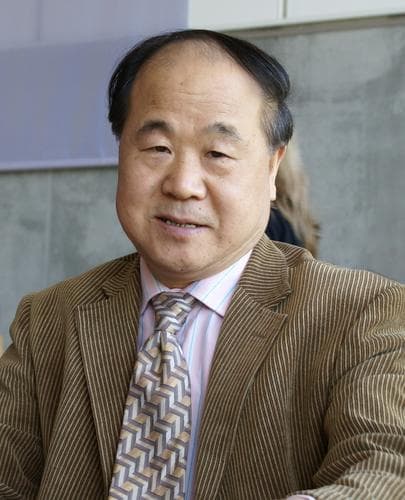
Mo Yan is a Chinese author known for his works of fiction that often explore themes of rural life and the complexities of Chinese society. His notable books include "Red Sorghum," "Life and Death are Wearing Me Out," "Frog," and "The Garlic Ballads." He was awarded the Nobel Prize in Literature in 2012 for his writing, which blends magical realism with historical narratives.
Similar books
- One Hundred Years of Solitude
Gabriel García Márquez
4.1 (753k) average on GoodreadsLiterary FictionShares an epic scope, multi-generational saga, and magical realism intertwined with historical events.
- Animal Farm
George Orwell
4.0 (2.7M) average on GoodreadsPoliticsUses animal allegories to critique political systems and historical events, though 'Life and Death' is far more expansive.
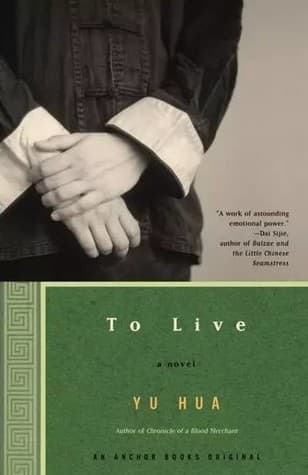
- To Live
Yu Hua
4.3 (8k) average on GoodreadsHistorical FictionWhile both novels chronicle individual suffering through similar historical periods in China, Yu Hua's 'To Live' maintains a consistently human perspective, offering a more grounded and realistic, though equally tragic, narrative. Mo Yan's work, through its animal reincarnations, offers a more detached, absurd, and encompassing critique of human folly and historical events.
- Harry Potter and the Sorcerer's Stone
J.K. Rowling
4.5 (7M) average on GoodreadsFantasyRescued from a miserable life under the stairs, an orphaned boy discovers he's a wizard destined for a magical school, where he uncovers a dangerous secret tied to the dark wizard who murdered his parents.
- The Hunger Games
Suzanne Collins
4.3 (6.4M) average on GoodreadsFantasyIn a future where children fight to the death on live television, Katniss Everdeen volunteers for the arena, turning a death sentence into a fight for survival and a spark of rebellion.
- 1984
George Orwell
4.2 (3.1M) average on GoodreadsPoliticsIn a future where surveillance and thought control are absolute, a man's search for truth clashes with the Party, showing that hope can be a form of rebellion.





Enjoyed the summary?
A summary gives you the shape of the book. The book itself has the detail, the examples and the voice.
Find Life and Death are Wearing Me Out on AmazonAs an Amazon Associate, BookBrief earns from qualifying purchases. How we're funded