
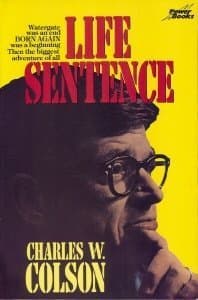
Core Idea
- Difficulty
- Medium
- Read it if
- You are interested in true stories of radical personal transformation, the intersection of faith and social justice, or a firsthand account of the challenges and redemptive possibilities within the American prison system. Also, if you appreciate memoirs from influential political figures who undergo significant moral and spiritual shifts.
- Skip it if
- You are averse to narratives with strong Christian evangelical themes or are looking for a purely political analysis of the Nixon era without a significant focus on personal spiritual journey and prison ministry.
Key Takeaways from Life Sentence
From Power Broker to Prisoner's Advocate
Colson's radical shift from political strategist to champion for the incarcerated.
Charles Colson's change, which started in 'Born Again,' becomes solid in 'Life Sentence' as he deals with the aftermath of Watergate and his own imprisonment. This time was not just about personal redemption; it shaped his new calling. Without his former power, Colson found a deep sense of purpose in helping prisoners, a group he had previously ignored. His prison experiences, especially the harsh realities and spiritual despair he saw, sparked a desire to not only minister to inmates but to change the justice system. This shows a key shift from self-preservation and political ambition to a selfless dedication to the marginalized. It demonstrates how deep personal suffering can lead to an unexpected and important life's work.
“I had been a lawyer, a politician, a White House aide. Now I was a prisoner, and soon I would be a voice for those whom society had forgotten.”
In the book: Colson's detailed accounts of his time in Maxwell Federal Prison Camp, his interactions with fellow inmates, and the systemic issues he observed firsthand, which profoundly impacted his understanding of the justice system and the spiritual needs within it.
Try this: Reflect on personal adversity not as an end, but as a potential catalyst for discovering a new, unexpected, and profoundly meaningful purpose, especially in service to others.
Related ideas: redemption, prison-reform, advocacy
The Burden of a New Calling
Starting a ministry from scratch while still under the shadow of scandal.
'Life Sentence' vividly shows the huge challenges Colson faced in starting Prison Fellowship. It was not an easy path; he met skepticism, financial problems, and the lasting stigma of his past. People questioned his motives, and potential supporters were hesitant to work with a former Watergate conspirator. This period was about grit, perseverance, and a firm belief that his calling was divine. The book highlights the often-overlooked difficulties of starting something new, especially one based on deep personal change, against public distrust. It shows that a true calling often requires enduring significant opposition and self-doubt.
“The hardest part wasn't going to prison; it was trying to start a ministry when everyone still saw me as a criminal.”
In the book: Colson's candid descriptions of fundraising struggles, initial rejections from churches and organizations, and the constant battle to overcome the public's perception of him as 'Nixon's hatchet man' rather than a born-again Christian minister.
Try this: When pursuing a new, purpose-driven path, anticipate and prepare for significant resistance and skepticism, especially if your past is controversial. Focus on the mission and build a core group of believers.
Related ideas: ministry-development, overcoming-stigma, perseverance
Faith in the Face of Skepticism
How Colson's authenticity slowly won over doubters and built trust.
A main idea in 'Life Sentence' is Colson's effort to rebuild trust, not with big statements, but through consistent, humble actions. Many, understandably, saw his conversion as a ploy to reduce his sentence or improve his image. Colson did not hide his past; instead, he used it as proof of God's power to change lives. His willingness to speak openly about his failures, along with his strong dedication to helping prisoners, slowly broke down the skepticism. This process shows the power of real change over mere talk. It demonstrates that genuine change is proven not by words, but by sustained, self-sacrificing behavior. It is a strong lesson in how to gain credibility when starting with little trust.
“My credibility wasn't in my past achievements, but in my present brokenness and my future commitment to Christ.”
In the book: His willingness to speak at churches, prisons, and public forums, often facing hostile questions, and his consistent message of personal accountability and God's grace. The slow but steady growth of Prison Fellowship's volunteer base and financial support.
Try this: To overcome skepticism, especially after past mistakes, focus on consistent, humble service and transparent communication. Let actions, not just words, demonstrate your sincerity and commitment.
Related ideas: authenticity, trust-building, spiritual-growth
The Spiritual Desolation of Incarceration
Beyond physical confinement, the deep emotional and spiritual wounds of prison life.
Colson's direct experience in prison revealed a truth often missed by society: incarceration causes deep spiritual and emotional harm, often worse than physical deprivation. He saw men stripped of their dignity, falling into despair, bitterness, and a sense of worthlessness. This insight became a core of his ministry, stressing that true rehabilitation must address the spiritual void in inmates. 'Life Sentence' argues that a justice system focused only on punishment, without offering ways for spiritual renewal and personal change, continues a cycle of crime and despair. This challenges traditional views of imprisonment, advocating for a complete approach that recognizes the human spirit's need for redemption and purpose.
“The greatest prison isn't the one with bars, but the one in the human heart, trapped by despair and hopelessness.”
In the book: Colson's detailed observations of the psychological impact of prison on inmates, their expressions of hopelessness, and the pervasive sense of abandonment. He recounts specific stories of men whose spirits were broken, even after their sentences were served.
Try this: When addressing societal problems, look beyond the surface-level issues to understand and address the underlying spiritual and emotional needs of individuals. Advocate for solutions that offer hope and holistic restoration.
Related ideas: prison-ministry, spiritual-healing, rehabilitation
The Power of Lay Ministry
Ordinary people making an extraordinary difference in the lives of prisoners.
A key part of Prison Fellowship's success, as detailed in 'Life Sentence,' was its use of lay volunteers. Colson understood that the large number of prisoners needed more than just a few dedicated leaders. He mobilized thousands of ordinary Christians — homemakers, businesspeople, retirees — to enter prisons, build relationships with inmates, and offer spiritual guidance and practical support. This showed the immense power of decentralized, grassroots ministry. It confirmed that one does not need formal theological training or official titles to make a deep difference; a willing heart and a commitment to serve are most important. This highlights the democratic nature of Christian service, empowering everyday believers to engage in significant social and spiritual work.
“It wasn't just me; it was the ordinary men and women, driven by Christ's love, who were willing to step inside those walls.”
In the book: The rapid expansion of Prison Fellowship chapters across the U.S., driven by volunteers who dedicated their time to visiting prisons, leading Bible studies, and mentoring inmates, often with little initial guidance beyond Colson's vision.
Try this: Recognize and empower the potential for impact within your community. Don't wait for 'experts'; equip and mobilize passionate individuals to address needs where they see them.
Related ideas: volunteerism, community-engagement, christian-service
From 'Doing Time' to 'Redeeming Time'
Transforming prison from a place of waste to a place of spiritual growth.
Colson's ministry aimed to change the experience of incarceration. Instead of just serving their sentences, inmates were encouraged to use their time in prison for spiritual reflection, learning, and personal growth. Prison Fellowship programs offered Bible studies, counseling, and chances for inmates to develop a sense of purpose and community. This was not about excusing past crimes but about creating an environment where repentance and change could happen. 'Life Sentence' illustrates how even in the most restrictive settings, people can find spiritual freedom and start rebuilding their lives, showing that true change comes from within and can grow even in harsh conditions. It is a powerful message of hope against despair.
“Prison can be a place where life is wasted, or it can be a crucible where character is forged and souls are reborn. The choice is ours, and God's grace is always available.”
In the book: Examples of inmates who, through Prison Fellowship programs, committed their lives to Christ, pursued education, reconciled with families, and emerged from prison with a renewed sense of purpose, actively seeking to live productive, law-abiding lives.
Try this: In any challenging or restrictive situation, seek opportunities for personal and spiritual growth. Don't just endure; actively look for ways to learn, reflect, and transform your circumstances into a period of positive development.
Related ideas: spiritual-transformation, personal-growth, hope-in-adversity
The Imperative of Reconciliation
Bridging the gap between prisoners, victims, and society.
Beyond helping inmates, 'Life Sentence' quietly sets the stage for a broader idea of restorative justice. Colson saw that the cycle of crime and punishment often leaves victims unhealed and offenders unrehabilitated. While not explicitly detailing restorative justice programs as they exist today, his story emphasizes addressing the brokenness on all sides. His work implicitly argued for a process where offenders take responsibility, seek forgiveness, and make amends, and where society, including victims, can find ways to healing and reconciliation. This highlights Colson's early understanding that true societal healing needs more than just punishment; it requires a deeper look at the human impact of crime and a commitment to repairing relationships.
“True justice is not just about punishment; it is about restoring what was broken, beginning with the human heart.”
In the book: Colson's constant emphasis on personal responsibility and repentance for inmates, and his efforts to educate the public about the needs of both prisoners and their families, implicitly bridging the gap that often alienates these groups from society.
Try this: In conflict or broken relationships, prioritize reconciliation and restoration over mere blame or punishment. Seek ways to involve all parties in a process of healing and making amends.
Related ideas: restorative-justice, forgiveness, community-healing
The Ongoing Battle for Justice
Colson's realization that prison reform is a continuous, uphill struggle.
'Life Sentence' is not a story of immediate victory but of the difficult start of a lifelong mission. Colson quickly understood that changing the justice system and rehabilitating prisoners was not a one-time event but an ongoing, generational struggle. The book conveys a sense of realism about the deep problems within the penal system, from overcrowding and repeat offenses to the spiritual indifference he observed. This emphasizes the importance of sustained commitment and long-term vision in tackling complex social problems. It is a reminder that meaningful change often requires relentless effort, patience, and an understanding that progress is gradual, not instant. Colson's dedication to this difficult, often thankless work shows his deep conviction.
“The work would never be finished. The problems of crime and justice were too deeply rooted, too complex for any quick fix.”
In the book: His descriptions of the systemic challenges he encountered in prisons, the slow pace of change, and the ongoing need for advocacy and education to shift public perception and policy regarding crime and punishment.
Try this: When engaging in long-term social or systemic change, adopt a mindset of sustained effort and patience. Celebrate small victories, but prepare for a continuous struggle, understanding that deep-seated problems require persistent commitment.
Related ideas: systemic-change, social-justice, long-term-commitment
The Paradox of Freedom in Confinement
Finding true liberation through spiritual surrender, even behind bars.
Perhaps the most important personal lesson Colson shares in 'Life Sentence' is the surprising nature of his freedom. While physically confined, he found a spiritual liberation far greater than any he knew during his days of political power. His time in prison, without worldly comforts and status, forced him to face his own spiritual emptiness and fully surrender to God. This surrender, he argues, brought a sense of peace and purpose that had escaped him during his outwardly successful career. This challenges the common idea of freedom, suggesting that true liberty is an internal state, possible even in the most restrictive external circumstances, through spiritual transformation and alignment with a higher purpose. It is a strong testament to the human spirit's ability for resilience and spiritual growth under hardship.
“I lost my freedom, but I found true liberty. It was in the surrender of my will that I discovered the purpose I had always sought.”
In the book: Colson's personal reflections on his changing priorities and values during and after prison, contrasting his former ambition-driven life with the peace and fulfillment he found in serving God and others, despite his ongoing challenges.
Try this: Seek inner freedom and purpose through spiritual reflection and surrender, regardless of external circumstances. Recognize that true liberation often comes from letting go of control and aligning with a greater calling.
Related ideas: spiritual-liberation, inner-peace, purpose-driven-life
Life Sentence Quotes
“Being released from prison is not freedom. Freedom is knowing Christ.”
“We are not just called to believe, but to live out our belief.”
“The greatest prison is not behind bars, but in the human heart enslaved by sin.”
“Grace is not opposed to effort, it is opposed to earning. Earning is an attitude. Grace is a heart attitude.”
“God uses broken people. He doesn't need perfect people; He needs surrendered people.”
“True justice is not merely punitive, but restorative.”
“My greatest fear was not prison itself, but that I would lose my faith in prison.”
“The gospel is not just good news for individuals; it is good news for society.”
“Suffering is not the absence of God, but often the very presence of God drawing us closer to Him.”
“The greatest joy in life is to be used by God for His purposes.”
“Humility is not thinking less of yourself, but thinking of yourself less.”
“Watergate was God's instrument to bring me to my knees.”
“The church must be the church, not merely a social club or a political action committee.”
“It is not enough to simply avoid evil; we must actively pursue good.”
Quiz
10 questions on the main ideas. Each answer comes with a short explanation.
Question 1
What was the primary focus of Charles Colson's initial work immediately following his release from prison, as detailed in 'Life Sentence'?
- Establishing a political lobbying group for prison reform.
- Writing a series of articles exposing corruption in the government.
- Working with prisoners and their families through a new ministry.
- Pursuing a career as a motivational speaker on personal redemption.
Show answer
C. Working with prisoners and their families through a new ministry. Colson's 'life sentence' became a commitment to serving prisoners. The book details the very beginnings of what would become Prison Fellowship, focusing on direct outreach to inmates and their families.
Question 2
Which specific legal restriction did Colson face immediately after his release that complicated his ability to begin his ministry work?
- A prohibition against interstate travel for two years.
- A ban on associating with convicted felons.
- A requirement to report all income to a federal monitoring agency.
- A restriction on public speaking engagements.
Show answer
B. A ban on associating with convicted felons. A significant challenge Colson faced was the condition of his parole, which initially prohibited him from associating with felons—a direct conflict with his desire to minister to prisoners. This is a key early struggle described in the book.
Question 3
What theological concept, often discussed in 'Life Sentence,' became central to Colson's understanding of his new mission?
- Pre-destination and divine election.
- The mandate to care for the 'least of these' (Matthew 25).
- The prosperity gospel and financial blessings.
- The inherent goodness of humanity.
Show answer
B. The mandate to care for the 'least of these' (Matthew 25). Colson frequently refers to the biblical mandate to minister to the 'least of these,' particularly the imprisoned, as the foundational call for his new life and ministry. This concept profoundly shaped his vision.
Question 4
Beyond direct ministry, what other crucial aspect did Colson realize was necessary for lasting change in the criminal justice system, as explored in the book?
- Strictly punitive measures to deter crime.
- Secular rehabilitation programs without religious components.
- Advocacy for policy reform and public education about prison issues.
- Focusing solely on the spiritual conversion of individual inmates.
Show answer
C. Advocacy for policy reform and public education about prison issues. Colson quickly recognized that while individual spiritual transformation was vital, systemic change also required addressing the root causes and societal approaches to crime and punishment through advocacy and informing the public.
Question 5
What was one of the significant personal struggles Colson faced in transitioning from a powerful political figure to a humble servant, as described in 'Life Sentence'?
- A desire to return to political office.
- Overcoming the stigma of his past and the temptation to leverage old connections for personal gain.
- Difficulty in adapting to a simpler, less affluent lifestyle.
- A struggle with public speaking and communicating his message.
Show answer
B. Overcoming the stigma of his past and the temptation to leverage old connections for personal gain. Colson candidly discusses the challenge of shedding his former identity and resisting the temptation to use his past influence for anything other than his new calling, focusing instead on humility and service.
Question 6
Colson describes the early days of his ministry as being characterized by a significant lack of which resource, requiring immense faith?
- Volunteers.
- Access to prisons.
- Financial funding.
- Media attention.
Show answer
C. Financial funding. The book highlights the significant financial struggles Colson faced in the very early stages of establishing Prison Fellowship, often relying on small donations and personal sacrifices, testing his faith and resolve.
Question 7
Colson argues that a key flaw in the secular approach to crime and punishment is its failure to address what fundamental aspect of human nature?
- The need for economic stability.
- The spiritual dimension and the problem of sin.
- The importance of vocational training.
- The necessity of family support.
Show answer
B. The spiritual dimension and the problem of sin. A central argument in 'Life Sentence' is Colson's belief that purely secular reforms often fail because they do not acknowledge or address the spiritual brokenness and sin that he believes are at the root of criminal behavior.
Question 8
What specific incident or realization helped solidify Colson's resolve to focus on prison ministry despite the immense obstacles?
- A lucrative offer to write a political memoir.
- Receiving a letter from a former inmate expressing profound gratitude.
- A personal invitation from a high-ranking government official to advise on policy.
- A vision or dream directly instructing him to continue.
Show answer
B. Receiving a letter from a former inmate expressing profound gratitude. The book mentions how letters and personal testimonies from prisoners deeply impacted Colson, serving as powerful affirmations of his calling and reinforcing his commitment to the ministry despite the difficulties.
Question 9
Colson grapples with the tension between two forms of 'justice' in the book. Which pair best represents this tension?
- Economic justice vs. social justice.
- Retributive justice vs. restorative justice.
- Legal justice vs. emotional justice.
- Individual justice vs. collective justice.
Show answer
B. Retributive justice vs. restorative justice. Colson's narrative often explores the conflict between the prevailing system of retributive justice (punishment) and his emerging vision for restorative justice, which emphasizes healing, reconciliation, and transformation for both victims and offenders.
Question 10
In 'Life Sentence,' Colson reflects on the nature of true freedom. He concludes that true freedom is ultimately found in what?
- Financial independence and security.
- Being absolved of all past crimes and public condemnation.
- Submission to God's will and service to others.
- Achieving personal fame and recognition for good deeds.
Show answer
C. Submission to God's will and service to others. A core theme of the book is Colson's realization that true freedom transcends physical incarceration and is found in spiritual liberation through Christ and a life dedicated to serving God and others, particularly the marginalized.
Life Sentence FAQ
What is 'Life Sentence' about?
'Life Sentence' by Charles W. Colson is the sequel to his best-selling memoir 'Born Again'. It details his journey after his release from prison, his struggles to establish a new life, and the challenging beginnings of his influential ministry.
Does 'Life Sentence' require reading 'Born Again' first?
While 'Life Sentence' can be read independently, it is highly recommended to read 'Born Again' first. 'Born Again' provides essential context about Colson's pre-prison life, his involvement in the Watergate scandal, and his spiritual conversion, which are foundational to understanding the events in 'Life Sentence'.
What kind of ministry did Charles Colson start after his release?
After his release, Charles Colson founded Prison Fellowship, a ministry dedicated to serving prisoners, ex-prisoners, and their families. It focuses on evangelism, discipleship, and advocating for criminal justice reform based on Christian principles.
How does 'Life Sentence' portray Colson's transition from politics to ministry?
'Life Sentence' vividly portrays Colson's often difficult transition, highlighting his personal struggles with public perception, financial instability, and the immense challenges of starting a new, unconventional ministry from scratch, all while navigating his newfound faith.
Does 'Life Sentence' delve into the practical challenges of establishing a non-profit organization?
Yes, the book provides a candid look at the practical challenges Colson faced in establishing Prison Fellowship. It covers everything from securing funding and recruiting volunteers to gaining credibility and navigating legal and bureaucratic hurdles in the early days of the ministry.
What is the significance of the title 'Life Sentence'?
The title 'Life Sentence' carries a dual meaning. It refers to Colson's past criminal conviction and the societal judgment he faced, but more profoundly, it alludes to his new 'life sentence' of devoted service and ministry to prisoners, a calling he embraced for the rest of his life.
How different is 'Life Sentence' from other memoirs about post-prison life?
'Life Sentence' stands out by focusing not just on personal rehabilitation but on the unique calling to minister to the very population from which Colson came. Unlike many post-prison narratives, it emphasizes the founding and growth of a major Christian ministry and its broader impact on society.
Does Colson share his personal struggles with faith in 'Life Sentence'?
Yes, Colson is very open about his ongoing personal struggles with faith, doubt, and the immense pressures of his new ministry. The book details his reliance on prayer and his deepening spiritual journey amidst adversity, making it a powerful testament to his commitment.
What impact did 'Life Sentence' have on the Christian community?
'Life Sentence' further solidified Charles Colson's reputation as a powerful voice in evangelical Christianity, inspiring many to consider prison ministry and social justice from a faith perspective. It helped to launch Prison Fellowship into a globally recognized organization and influenced countless individuals.
About the author

Charles W. Colson was a prominent evangelical author and public speaker, best known for his autobiographical work "Born Again." A former special counsel to President Richard Nixon, Colson's own experiences with faith and redemption deeply informed his writing, which focused on Christian living and social justice. His other notable book, "Life Sentence," explored themes of forgiveness and second chances.
Similar books
- Born Again
Charles W. Colson
4.3 (5k) average on GoodreadsPoliticsColson's earlier memoir detailing his conversion and initial incarceration, providing context for 'Life Sentence'.
- The Hiding Place: The Triumphant True Story of Corrie Ten Boom
Corrie ten Boom
4.4 (257k) average on GoodreadsBiographyA powerful memoir of faith, forgiveness, and suffering in confinement, leading to a life of ministry and advocacy.
- Just Mercy: A Story of Justice and Redemption
Bryan Stevenson
4.6 (143k) average on GoodreadsPoliticsExplores the injustices within the American criminal justice system and the work of advocacy, though from a legal rather than a direct prisoner's perspective.
- The Diary of a Young Girl
Anne Frank
4.2 (2.7M) average on GoodreadsBiographyDuring the Nazi occupation, a teenage girl's diary, written from a secret annex, shares observations on humanity, hope, and the wait for freedom.
- Eat, Pray, Love
Elizabeth Gilbert
3.6 (1.5M) average on GoodreadsLifestyleA heartbroken writer leaves her conventional life for a year-long global search for pleasure in Italy, spiritual devotion in India, and unexpected love and balance in Bali.
- Night
Elie Wiesel
4.3 (970k) average on GoodreadsBiographyIn the darkness of Auschwitz and Buchenwald, a teenage Elie Wiesel faces the extermination of his family, the loss of his faith, and the lasting scars of humanity's deepest cruelty.




Enjoyed the summary?
A summary gives you the shape of the book. The book itself has the detail, the examples and the voice.
Find Life Sentence on AmazonAs an Amazon Associate, BookBrief earns from qualifying purchases. How we're funded