
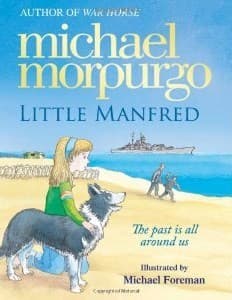
Synopsis
Covers the whole plot, including the ending.
- Difficulty
- Easy
- Pacing
- Moderate
- Mood
- Heartwarming, Reflective, Hopeful, Historical
- Read it if
- You enjoy heartwarming historical fiction about unlikely friendships and the human side of war, suitable for young readers.
- Skip it if
- You prefer fast-paced adventure stories or highly complex narratives.
Little Manfred Plot Summary
Covers the whole plot, including the ending.
A Museum Discovery
The story begins with young Manfred and his grandfather at the Imperial War Museum in London. Manfred is bored until he sees a small, hand-carved wooden dachshund in a display case. He feels a connection to the dog, named 'Little Manfred,' and asks his grandfather about it. His grandfather, whose name is not yet known, starts telling him a story, hinting he knows the history behind the artifact. This introduction sets up the main narrative, which goes back to World War II and its aftermath, explaining how 'Little Manfred' came to be in the museum.
Walter's Ordeal at Sea
The story moves to World War II. Walter, a young German sailor, is on the battleship Bismarck when the British Royal Navy sinks it in the Atlantic. Walter is one of the few survivors picked up by a British destroyer. Wounded and confused, he becomes a prisoner of war. This experience changes Walter's life, taking him from the battlefield to an unknown future in an enemy country, setting up his time in Britain.
Arrival at the Farm
After some time in a prisoner of war camp, Walter is sent to work on a farm in rural England, a common practice during the war to help with labor shortages. He arrives at the farm of Mr. and Mrs. Miller, a British couple, and their young daughter, Grace. Walter is cautious and worried, aware of his status as an enemy soldier. The Millers are also hesitant, dealing with a German in their home. This scene shows the initial tension and awkwardness of their living together, highlighting the cultural and wartime divisions they must overcome.
First Encounters with Grace
Grace, a ten-year-old girl, is at first scared and suspicious of Walter, having been taught that Germans were the enemy. She avoids him and watches him with fear and curiosity. Walter, for his part, stays quiet and reserved, focusing on his work. However, Grace's natural curiosity and Walter's gentle nature slowly start to close the gap. Small, quiet interactions happen as Grace watches Walter work and notices his kindness towards the farm animals. This slow warming of their relationship is important for the story.
The Gift of Carving
Walter, missing his family and needing a creative outlet, starts carving small wooden animals from wood scraps. He secretly leaves one for Grace, a small bird. Grace is happy and surprised by the gift, and this act of kindness becomes a turning point. It breaks down more barriers between them, and Grace starts seeking out Walter, watching him carve. He eventually carves a wooden dachshund, 'Little Manfred,' specifically for her. This shared activity and the carvings strengthen their friendship, overcoming the language barrier and wartime animosity.
Growing Friendship
Over time, Walter and Grace become close friends. Grace spends her days with Walter on the farm, helping him and enjoying his company. They communicate through gestures, smiles, and kindness. Walter teaches Grace about the farm animals and shares stories, even with the language barrier. Mr. and Mrs. Miller, initially cautious, accept Walter as part of their household, seeing his good influence on Grace. This period shows unexpected peace and connection during the war, highlighting human empathy.
The War Ends and Departure
As World War II ends, German prisoners of war must return home. Walter's departure is sad for both him and Grace. Despite the initial animosity, he has become like family. Grace is upset at losing her friend. As a final, cherished gift and a symbol of their lasting friendship, Walter gives Grace the carved wooden dachshund, 'Little Manfred.' Their goodbyes are emotional, with an unspoken promise to remember each other, leaving Grace with a reminder of their unique bond and the hope of one day meeting again.
Life After the War
Years pass, and Grace grows up, but she never forgets Walter or the wooden dog. 'Little Manfred' stays a treasured possession, a constant reminder of her childhood friendship and the kindness she found during wartime. She keeps Walter's memory alive, wondering about him and if he ever thought of her. This section briefly covers Grace's life, showing Walter's lasting impact on her and her hope for a reunion, setting up the story's later events.
The World Cup 1966
It is 1966, and England hosts the FIFA World Cup. Grace, now an adult, watches the news and sees that the German national football team will play in England. A spark of hope ignites in her. She realizes this might be her only chance to find Walter. The idea seems unlikely, but the possibility of him being among the visitors, or at least being reachable through official channels, gives her new determination. The World Cup, a symbol of international competition, becomes a reason for a deeply personal reunion.
A Fateful Encounter
Grace, holding 'Little Manfred,' travels to Wembley, hoping to find Walter among the German spectators. She holds up the wooden dog, a clear identifier. A man in the crowd spots it, his eyes widening in recognition. It is Walter, now older, but still recognizable to Grace. Their reunion is emotional and moving, showing the lasting power of their friendship across decades and international divides. The wooden dog, a simple wartime carving, brings them back together, fulfilling the unspoken promise from their parting years ago.
The Grandfather's Identity Revealed
The story returns to the present day in the Imperial War Museum. Manfred's grandfather finishes the story, revealing he is Walter. He explains that Grace eventually gave 'Little Manfred' to the museum, with his permission, as a symbol of their friendship and a message of peace. Manfred, now understanding the history behind the wooden dog, looks at his grandfather with new eyes, comprehending his past. The story ends with a message about memory, reconciliation, and the lasting impact of human connection.
Little Manfred Characters
Walter
Protagonist
A German sailor turned prisoner of war, who carves wooden figures.
Walter is a young German sailor at the beginning of the story, serving aboard the Bismarck. He is a quiet, gentle soul, forced into the harsh realities of war. After being captured, he maintains a reserved demeanor, but his inner kindness shines through, particularly in his interactions with Grace and his creative outlet of carving. He is resourceful, patient, and possesses a deep capacity for empathy, finding common ground with an 'enemy' child. His longing for home and family is subtly conveyed through his actions and his bond with Grace.
Relationships: Grace (Deep, platonic friendship, almost like an older brother/father figure); Mr. and Mrs. Miller (Host family, initially wary but eventually accepting and kind); Manfred (His grandson, to whom he recounts his life story)
Grace Miller
Protagonist
A curious and compassionate British girl who befriends Walter.
Grace is a ten-year-old British girl living on a farm during WWII. Initially fearful and suspicious of Walter due to wartime propaganda, she possesses an innate curiosity and open-mindedness that allows her to look beyond his uniform. She is observant, empathetic, and develops a deep, unspoken bond with Walter. Her innocence and capacity for unconditional friendship are pivotal in breaking down the barriers between them. As an adult, she remains steadfast in her memories and her hope for reunion.
Relationships: Walter (Deep, platonic friendship, almost like a younger sister/daughter figure); Mr. and Mrs. Miller (Her loving parents)
Manfred
Supporting
Walter's grandson, who prompts the telling of the story.
Manfred is a young boy in the present day, visiting the Imperial War Museum with his grandfather. He represents the younger generation, initially detached from the historical significance of artifacts but open to learning. His curiosity about 'Little Manfred' acts as the narrative device that allows the main story to unfold. He is observant and receptive, absorbing his grandfather's experiences and gaining a deeper understanding of history and family.
Relationships: Walter (His grandfather)
Mr. Miller
Supporting
Grace's father and Walter's host farmer.
Mr. Miller is a hardworking British farmer, pragmatic and initially cautious about hosting a German prisoner of war. He represents the common British sentiment during the war – a natural distrust of the enemy. However, he is also fair-minded and eventually comes to appreciate Walter's work ethic and his positive influence on Grace. His acceptance of Walter reflects a broader theme of human connection transcending national animosities.
Relationships: Grace (His daughter); Mrs. Miller (His wife); Walter (His farmhand and eventual friend)
Mrs. Miller
Supporting
Grace's mother and Walter's host.
Mrs. Miller is Grace's mother, a kind and nurturing woman, though initially apprehensive about Walter's presence. She embodies the domestic aspect of wartime life and the challenges of hosting an 'enemy' in one's home. Her warmth and gradual softening towards Walter contribute to the welcoming atmosphere on the farm. She observes the growing bond between Grace and Walter with understanding, ultimately accepting Walter as a part of their temporary family.
Relationships: Grace (Her daughter); Mr. Miller (Her husband); Walter (Her guest and eventual friend)
Little Manfred Themes
Friendship Transcending Conflict
The main theme explores how deep human connections can form even during war and national animosity. Walter, a German POW, and Grace, a British child, overcome language barriers and anti-German feelings to build a real bond. Their friendship shows that individuals are not defined only by nationality or wartime allegiances, as Grace's initial fear of Walter turns to affection after he carves her a wooden bird and later 'Little Manfred.' Their reunion decades later reinforces the lasting nature of their connection.
“Sometimes, the biggest wars are fought in our hearts, but the greatest victories are won by kindness.”
The Power of Memory and Storytelling
The novel uses a framing device where Walter, as Manfred's grandfather, tells his past. This highlights the importance of remembering history, both personal and global, and passing it down. The wooden dog, 'Little Manfred,' is a physical link to the past, a silent witness to a remarkable friendship. Storytelling allows Manfred to connect with his grandfather's experiences and understand the deeper meaning behind a simple museum artifact, showing how stories keep history alive and build empathy across time.
“Every object has a story, Manfred. And some stories are worth remembering more than others.”
Reconciliation and Forgiveness
The story quietly supports reconciliation after conflict. The Millers, despite their country being at war with Germany, eventually open their home and hearts to Walter. Grace's innocent acceptance of Walter shows that children often see beyond political divides. The reunion between Grace and Walter, decades after the war, symbolizes the healing power of forgiveness and the possibility of renewed connection between former adversaries. 'Little Manfred' is a symbol not just of their friendship, but of the broader hope for peace and understanding between nations.
“War makes enemies, but kindness can make friends, even across the deepest divides.”
The Innocence of Childhood
Grace's character shows the innocence of childhood, which lets her see Walter as a person, not an 'enemy.' Her lack of prejudice helps her form a bond that adults might find hard. Her curiosity and simple desire for connection cut through the complexities of wartime animosity. This theme shows how children can often lead in showing empathy and breaking down social barriers, seeing the humanity in others before judgment. Her joy in Walter's carvings and their quiet companionship are pure and untouched by the surrounding conflict.
“She saw not a uniform, but a man with kind eyes and clever hands.”
Plot Devices & Literary Techniques
Framing Device (Story-within-a-story)
A present-day museum visit initiates a flashback to a wartime narrative.
The story begins and ends in the present day with young Manfred and his grandfather at the Imperial War Museum. Manfred's curiosity about the wooden dog, 'Little Manfred,' prompts his grandfather to narrate the events of his past during WWII. This structure allows the author to present a historical narrative through a personal lens, making the history more accessible and emotionally resonant for a younger audience. It also creates a sense of mystery and anticipation, as the reader learns the significance of the artifact alongside Manfred.
Symbolism (The Wooden Dog, 'Little Manfred')
A hand-carved toy represents enduring friendship, memory, and reconciliation.
The wooden dachshund, 'Little Manfred,' is the most significant symbol in the novel. It represents the unique and enduring friendship between Walter and Grace, bridging their cultural and wartime divides. It also symbolizes memory, as Grace keeps it for decades, and reconciliation, as it ultimately brings Walter and Grace back together. Its presence in the Imperial War Museum at the story's beginning and end elevates it to a symbol of peace and the human spirit's capacity for kindness, even in the darkest of times.
Foreshadowing (The Grandfather's Knowledge)
The grandfather's intimate knowledge of the wooden dog hints at his connection to the story.
From the very beginning, Manfred's grandfather displays an unusually deep and personal understanding of 'Little Manfred' and its history in the museum. He doesn't just know facts; he speaks with an emotional resonance that suggests personal involvement. This subtly foreshadows the revelation at the end of the story that he is, in fact, Walter, the German prisoner of war who carved the dog. This technique builds suspense and encourages the reader to piece together clues throughout the narrative.
Flashback
The bulk of the story is told as a recollection of past events.
The primary narrative mode of 'Little Manfred' is a prolonged flashback. Triggered by Manfred's question in the museum, the story transports the reader back to World War II and the immediate post-war period. This allows the author to fully immerse the reader in the historical context and the emotional journey of Walter and Grace, providing a detailed account of their friendship's development without breaking the present-day framing device too frequently.
Little Manfred Quotes
“There was a war on, a big war, a war that had been going on for years. We knew that.”
“He was just a boy, a boy like me, only German.”
“The sea was always there, an unchanging, comforting presence.”
“Sometimes, the best stories are the ones you live.”
“We were all just trying to get by, to survive.”
“The war took so much, but it couldn't take everything.”
“Friendship doesn't care about flags or borders.”
“He was a stranger, but he wasn't a monster.”
“The sand dunes were our kingdom, our secret world.”
“Even in the darkest times, there can be light.”
“Sometimes, you have to be brave for others.”
“The sound of the waves, a constant reminder of home.”
“We didn't understand the grown-ups' war, but we understood kindness.”
“Every life has a story, and every story matters.”
Quiz
10 questions on the plot and the characters. Each answer comes with a short explanation.
Question 1
What is the primary historical event that leads to Walter becoming a prisoner of war?
- The Battle of Britain
- The sinking of the Bismarck
- The D-Day landings
- The fall of Berlin
Show answer
B. The sinking of the Bismarck Walter becomes a prisoner of war after his ship, the Bismarck, is sunk, and he is one of the few German survivors taken aboard a British ship.
Question 2
What object does Walter carve and leave for Grace as a memento when he returns to Germany?
- A wooden horse
- A clay bird
- A wooden Dachshund
- A painted stone
Show answer
C. A wooden Dachshund Walter carves a wooden Dachshund for Grace, which serves as a lasting reminder of their friendship.
Question 3
In what year does the opportunity for Walter and Grace to potentially meet again arise?
- 1945
- 1958
- 1966
- 1972
Show answer
C. 1966 The story mentions that the opportunity for Walter and Grace to reunite comes in 1966, coinciding with the World Cup in Britain.
Question 4
How old is Grace when she first befriends Walter?
- Eight years old
- Ten years old
- Twelve years old
- Seven years old
Show answer
B. Ten years old The story states that Walter finds a friend in 'ten-year-old Grace'.
Question 5
What is the initial setting for Walter after being taken prisoner?
- A military prison camp
- A neutral country's internment camp
- A British host family's home
- Onboard the British ship indefinitely
Show answer
C. A British host family's home After being taken prisoner, Walter is 'sent to live with a host family', allowing him to adapt to a new way of life.
Question 6
What is the significance of the wooden Dachshund being displayed in the Imperial War Museum?
- It symbolizes the end of World War I.
- It represents the reconciliation and unexpected friendships formed during wartime.
- It was a gift from a British soldier to a German child.
- It signifies the German victory in a minor battle.
Show answer
B. It represents the reconciliation and unexpected friendships formed during wartime. The Dachshund, carved by a German POW for British children, symbolizes the unlikely bond and humanity that can transcend wartime hostilities, leading to its display in the museum.
Question 7
What emotion is primarily associated with Walter and Grace's parting when he returns to Germany?
- Relief
- Indifference
- Excitement
- Emotional
Show answer
D. Emotional The text explicitly states that 'it's an emotional parting' when Walter finally goes back to Germany, highlighting the strong bond he formed with Grace.
Question 8
What broader theme does Walter's experience of living with an 'enemy' family primarily explore?
- The strictness of military protocols during wartime.
- The challenges of adapting to new culinary traditions.
- The human capacity for empathy and friendship across national divides, even in conflict.
- The economic impact of war on civilian families.
Show answer
C. The human capacity for empathy and friendship across national divides, even in conflict. Walter, a German POW, finding friendship with Grace in an 'enemy country' highlights the theme of human connection and empathy transcending conflict, a core message of the story.
Question 9
What specific event in 1966 provides the context for Walter and Grace's potential reunion?
- The Olympic Games
- A major art exhibition
- The World Cup coming to Britain
- A royal jubilee celebration
Show answer
C. The World Cup coming to Britain The narrative states, 'In 1966, with the World Cup coming to Britain, that opportunity may just have come along!', directly linking the event to their potential reunion.
Question 10
The story is presented as an origin story for what specific item found in the Imperial War Museum?
- A soldier's uniform
- A propaganda poster
- A wooden Dachshund
- A collection of wartime letters
Show answer
C. A wooden Dachshund The very first sentence of the description states: 'In the Imperial War Museum is a wooden Dachshund... This is the story of how it got there!' establishing the story as its origin.
Little Manfred FAQ
What is the central premise of 'Little Manfred'?
'Little Manfred' tells the story of Walter, a German prisoner of war who survives the sinking of the Bismarck and is then housed with a British family during WWII. He forms an unexpected friendship with ten-year-old Grace, leaving her a carved wooden dog as a memento when he returns to Germany.
Who are the main characters in the story?
The main characters are Walter, a German sailor turned POW, and Grace, a young British girl from the family hosting him. The story also features Grace's family, particularly her parents, who initially struggle with hosting an 'enemy'.
What significant historical event kickstarts Walter's journey in the story?
Walter's journey begins with the sinking of the German battleship Bismarck during World War II. He is one of the few survivors rescued by a British ship, leading to his capture and subsequent placement as a prisoner of war in Britain.
What is the significance of the carved wooden dog, 'Little Manfred'?
The carved wooden dog, named 'Little Manfred' by Grace, is a symbol of the unlikely friendship between Walter and Grace. It's the only tangible reminder Walter leaves Grace, representing their bond and the hope of future connection despite the wartime circumstances.
How does the 1966 World Cup connect to the story's resolution?
The 1966 World Cup, hosted in Britain and featuring a match between England and West Germany, provides the backdrop for a potential reunion between Walter and Grace. It offers a unique opportunity for them to reconnect decades after their initial parting, bringing their story full circle.
How does Walter end up living with Grace's family, given he's a POW?
Walter, as a German prisoner of war, is assigned to live with Grace's family as part of a program where POWs were often deployed for labor, particularly in agriculture, and housed with local families. This arrangement, though initially met with apprehension, facilitates his integration into their community.
What specific details about Walter's background or skills are revealed through his interaction with Grace?
Walter's skill in carving, specifically creating the wooden dachshund, reveals a hidden talent and provides a means for him to express himself and connect with Grace. This artistic ability transcends language barriers and wartime animosity, creating a lasting legacy.
Are there any subtle hints about the future or Walter's past before they are explicitly stated?
The initial descriptions of Walter's quiet demeanor and his meticulous work, even when performing mundane tasks, hint at a deeper character capable of thoughtful creation. His careful carving of the dog also subtly foreshadows the lasting impact he will have on Grace's life.
What role does the Imperial War Museum play in the overarching narrative?
The Imperial War Museum serves as the ultimate destination for 'Little Manfred,' the carved wooden dog, implying its historical significance. The story is framed as an explanation of how this artifact, a testament to a unique human connection during wartime, came to be housed in such a prestigious institution.
How does Grace's initial perception of Walter evolve throughout their time together?
Grace initially views Walter with curiosity and perhaps a touch of fear, influenced by wartime propaganda. However, as they spend time together, sharing small moments and as he carves the dog for her, her perception shifts to one of genuine friendship and affection, seeing him as a person rather than an 'enemy'.
What psychological impact does being a POW have on Walter, and how does his friendship with Grace mitigate this?
Being a POW likely causes Walter feelings of displacement, loss, and the psychological burden of war. His friendship with Grace offers a sense of normalcy, connection, and purpose, providing emotional solace and a temporary escape from the harsh realities of his captivity.
How do Grace's parents' attitudes towards Walter change, reflecting broader societal shifts?
Grace's parents likely harbor initial resentment or suspicion towards Walter as a German POW, reflecting the prevailing wartime sentiment. Their gradual acceptance and eventual warmth towards him demonstrate a human capacity for empathy and the breaking down of nationalistic barriers, mirroring a hope for post-war reconciliation.
What emotional challenges do both Walter and Grace face during their parting?
Both Walter and Grace face profound emotional challenges during their parting, characterized by sadness and uncertainty. Grace loses a dear friend, while Walter leaves behind a brief period of peace and connection, returning to a war-torn home, making their farewell particularly poignant.
What is the primary message or theme Michael Morpurgo conveys through the story of Walter and Grace?
Morpurgo primarily conveys themes of human connection transcending conflict, the power of friendship, and the potential for reconciliation even amidst the deepest divides of war. The story highlights how individual acts of kindness can bridge national animosities.
How does the ending, with the 1966 World Cup, contribute to the book's overall message about peace and reconciliation?
The ending with the 1966 World Cup, particularly the England vs. West Germany match, acts as a powerful symbol of post-war reconciliation and renewed international relations. It suggests that even after profound conflict, nations and individuals can come together, offering a hopeful message of unity and forgiveness.
Is 'Little Manfred' more about the historical context or the personal human story?
'Little Manfred' masterfully balances both, using the historical context of WWII and its aftermath as a backdrop for a deeply personal human story. While the historical events are crucial, the emotional core lies in the unique bond formed between Walter and Grace, emphasizing individual experiences within larger conflicts.
What might be the symbolic significance of Walter carving a dachshund, a German breed, for Grace?
The dachshund, a distinctly German breed, being carved by Walter for Grace, a British girl, symbolizes the bridging of cultures and the softening of national identities through personal connection. It represents a piece of Walter's heritage shared as a gift of friendship, transcending wartime animosity.
How does the author use the passage of time between WWII and 1966 to impact the narrative's emotional depth?
The significant passage of time between WWII and 1966 amplifies the emotional depth by creating a long-held hope for reunion and demonstrating the lasting impact of early connections. It underscores how memories and relationships can endure decades, making the potential reunion even more poignant and meaningful.
About the author

Michael Morpurgo is a British author known for his children's fiction, often exploring themes of war and nature. His notable works include "War Horse," "Private Peaceful," "The Butterfly Lion," "An Elephant in the Garden," "The Amazing Story of Adolphus Tips," and "Born to Run." Morpurgo's storytelling often combines historical events with imaginative narratives.
Similar books
- War Horse
Michael Morpurgo
4.1 (42k) average on GoodreadsChildren'sShares a similar author and themes of friendship, war, and resilience from a unique perspective.
- When Hitler Stole Pink Rabbit
Judith Kerr
4.0 (14k) average on GoodreadsChildren'sWhile both books deal with the impact of World War II on children, Kerr's novel focuses on the experience of Jewish refugees fleeing Nazi Germany, providing an internal perspective of displacement and loss. Morpurgo, conversely, examines the 'enemy' perspective within Britain, exploring themes of internment and unlikely friendship. Kerr's work offers a more direct, autobiographical account of persecution and adaptation, whereas Morpurgo leans into a more fictionalized, redemptive narrative of cross-cultural connection. Both are excellent for YA audiences, but Kerr's often feels more grounded in the harsh realities of exile.
- Harry Potter and the Sorcerer's Stone
J.K. Rowling
4.5 (7M) average on GoodreadsFantasyRescued from a miserable life under the stairs, an orphaned boy discovers he's a wizard destined for a magical school, where he uncovers a dangerous secret tied to the dark wizard who murdered his parents.
- The Hobbit, or There and Back Again
J.R.R. Tolkien
4.3 (2.9M) average on GoodreadsFantasyA comfort-loving hobbit named Bilbo Baggins is whisked away by a mischievous wizard and a band of dwarves on an unexpected journey to reclaim stolen treasure from a fearsome dragon, discovering courage and a magical ring along the way.
- Harry Potter and the Goblet of Fire
J.K. Rowling
4.6 (2.6M) average on GoodreadsFantasyA bewildered Harry Potter, underage and thrust into a deadly Triwizard Tournament, must brave dragons, mermaids, and a resurgent dark magic to survive a year that will forever alter the wizarding world.
- Harry Potter and the Order of the Phoenix
J.K. Rowling
4.5 (2.5M) average on GoodreadsFantasyIn a year of oppressive secrets and the threat of Voldemort, Harry Potter and Dumbledore's Army secretly train for war, shown through Jim Kay and Neil Packer's dark illustrations.





Enjoyed the summary?
A summary gives you the shape of the book. The book itself has the detail, the examples and the voice.
Find Little Manfred on AmazonAs an Amazon Associate, BookBrief earns from qualifying purchases. How we're funded