
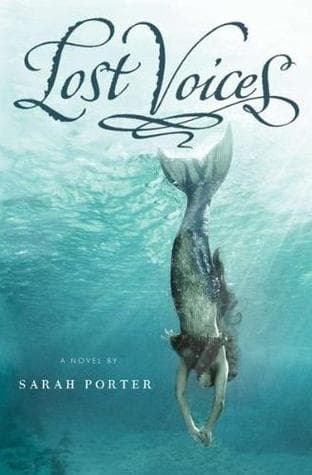
Synopsis
Covers the whole plot, including the ending.
- Difficulty
- Medium
- Pacing
- Moderate
- Mood
- Dark, Atmospheric, Haunting, Emotional
- Read it if
- You enjoy dark, atmospheric retellings of mermaid lore with themes of trauma, survival, and finding your voice.
- Skip it if
- You prefer lighthearted fantasy or are sensitive to themes of abuse and murder.
Lost Voices Plot Summary
Covers the whole plot, including the ending.
A Life Unraveling
Fourteen-year-old Luce lives a desolate life in a remote, gray Alaskan fishing village. Her father, a fisherman, vanished at sea during a storm, leaving her an orphan. She lives with her alcoholic uncle, who is abusive and neglectful. Luce is deeply unhappy and feels invisible, a 'lost girl' in every sense. She often seeks comfort by the sea, the only place where she feels a connection to her lost father. The village offers little comfort, filled with hard, unsympathetic people, and Luce struggles to find any warmth or kindness in her daily life. Her uncle's increasing cruelty pushes her to a breaking point, making her question her will to live.
The Unspeakable Act and the Fall
One night, Luce's uncle crosses an unforgivable line, physically and emotionally traumatizing her. In her deepest despair, feeling utterly broken and abandoned, Luce flees to the cliffs overlooking the churning ocean. With no hope left, she decides to end her suffering, believing death is her only escape. She throws herself into the icy, turbulent waves below, expecting to drown. This act is not a traditional suicide, but a surrender to the overwhelming pain and a belief that she has no other choice, a final, desperate cry for release from her torment.
Transformation and Rebirth
Against all odds, Luce does not die. Instead, as she sinks into the cold, dark water, she undergoes a miraculous and terrifying change. Her legs fuse into a powerful, shimmering tail, and she gains the ability to breathe underwater. She is no longer human but a mermaid. Disoriented and overwhelmed, she is soon discovered by a tribe of mermaids. They are all beautiful, ethereal beings, and they welcome her, explaining that they, too, were once 'lost girls' who changed at their lowest points. Luce finds herself in a new world, surrounded by others who understand her pain.
A New Life and a Dark Secret
Luce is initially enchanted by her new life. She is free from her past, beautiful, and powerful. The mermaids teach her to navigate the ocean, to sing with an otherworldly clarity, and to enjoy their ageless forms. She befriends the other mermaids, especially the kind-hearted Ylva. However, the initial happiness soon gives way to unease as Luce discovers the dark truth about her new tribe. The mermaids are driven by an uncontrollable, ancient urge to lure human seafarers to their deaths, using their enchanting voices to cause shipwrecks and drown sailors. This revelation deeply disturbs Luce, as it clashes with her remaining human morality.
Catarina's Influence and Luce's Gift
The tribe is led by the powerful and elegant Queen Catarina, a mermaid of immense power and ancient wisdom. Catarina is both a protector and a stern ruler, embodying the mermaids' predatory nature. Luce's own voice, enhanced by her transformation, proves to be exceptionally beautiful and potent, catching Catarina's attention. Catarina sees great potential in Luce and begins to mentor her, pushing her to embrace her power and her role within the tribe. Luce feels a strange mix of fear and admiration for Catarina, recognizing the queen's strength but also fearing her ruthlessness and the dark path she expects Luce to follow.
The Siren's Call and Moral Conflict
As Luce's voice grows stronger, she is increasingly pressured to join the other mermaids in their hunts, using her siren song to lure ships to their doom. She witnesses the gruesome reality of their actions, the terror of the sailors, and the cold satisfaction of her new sisters. This creates a deep internal conflict for Luce. While she has been granted a new life and freedom, she cannot reconcile the mermaids' murderous nature with her own lingering humanity. She resists participating fully, often finding ways to avoid directly causing harm, which puts her at odds with some of the more zealous mermaids and, subtly, with Catarina.
The Arrival of a New Threat
The delicate balance within the tribe is disrupted by the arrival of a new mermaid named Mara. Unlike the other mermaids who transformed out of despair, Mara seems to possess a cunning and malevolent spirit from the outset. She is exceptionally beautiful and charismatic, but also deeply manipulative and ambitious. Mara quickly begins to cause discord among the mermaids, openly challenging Catarina's authority and questioning her methods. Her presence creates a clear tension within the tribe, as she seeks to gain power and influence, threatening to destabilize the very existence of their community and its established hierarchy.
Mara's Devious Plans
Mara's ambition is not merely to challenge Catarina but to completely take her place. She begins to actively undermine Catarina's leadership, spreading dissent and advocating for more extreme and reckless actions against humans. Mara's plans are far more destructive and less strategic than Catarina's, threatening to expose the mermaids to human retribution and ultimately endanger the entire tribe. Luce observes Mara's actions with growing alarm, realizing that Mara's cruelty is different, more calculated and self-serving, than the mermaids' instinctual need to drown. She recognizes Mara as a truly dangerous force.
Luce's Choice and Courage
As Mara's influence grows and her schemes become more perilous, Luce faces a difficult choice. To remain silent is to allow Mara to destroy the tribe and lead them to ruin. To speak out is to risk everything: her new home, her friends, and potentially her life, as Mara is ruthless. Luce, who once felt utterly voiceless, must now find the courage to challenge a powerful and manipulative adversary. This decision forces her to confront her own fears of abandonment and rejection, reminding her of her past as a lost girl, but also highlighting how much she has grown.
The Confrontation and Resolution
Drawing upon newfound strength and the support of loyal mermaids like Ylva, Luce confronts Mara. This confrontation is not just a physical struggle but a battle of wills and voices, as Luce uses her unique singing ability to counter Mara's manipulation. Through her actions, Luce proves her loyalty to the tribe and demonstrates a leadership quality that respects life, even human life, more than Mara's destructive ambition. The conflict ends in Mara's defeat, solidifying Catarina's rightful place as queen and re-establishing a more stable, though still dangerous, order within the mermaid community. Luce's bravery helps her find her true voice and place.
Reconciliation and Forgiveness
After the conflict, Luce begins to come to terms with her past and her new identity. She learns to forgive herself for her despair and to understand the complexities of her transformation. While she remains a mermaid, she finds a balance between her human empathy and her new, powerful nature. She also finds a form of peace with her past, realizing that her transformation, though born of tragedy, ultimately gave her strength and a voice she never had as a human. This reconciliation allows her to fully embrace her new life without entirely losing her humanity.
Principal Figures
Luce
Protagonist
A lost human girl transformed into a mermaid, struggling with her new identity and purpose.
Luce is a fourteen-year-old girl who begins the story as a forgotten and abused orphan in a grim Alaskan fishing village. She is quiet, sensitive, and deeply scarred by the loss of her father and the cruelty of her uncle. Her despair leads to her transformation into a mermaid. As a mermaid, she is initially overwhelmed but gradually discovers an inner strength and a powerful, enchanting voice. She grapples with the mermaids' predatory nature, fiercely holding onto her humanity and empathy, even as she embraces her new abilities.
Relationships: Her Father (Lost, deeply missed, source of her initial connection to the sea.); Her Uncle (Abusive guardian, the catalyst for her transformation.); Catarina (Mentor and queen, a complex relationship of admiration, fear, and eventual mutual respect.); Ylva (Close friend and confidante among the mermaids.); Mara (Antagonist, a rival whose destructive ambition Luce must oppose.)
Catarina
Supporting/Antagonist (initially)
The powerful and ancient queen of the mermaid tribe.
Catarina is the elegant, formidable, and ancient queen of the mermaid tribe. She embodies the raw power and predatory nature of the mermaids, driven by an ancient hunger to lure seafarers to their doom. She is a survivor, a protector of her tribe, and a stern leader who demands loyalty and adherence to their ways. While initially appearing ruthless, she possesses a complex wisdom and a deep understanding of the mermaids' existence. She sees potential in Luce and pushes her to embrace her power, though she is wary of Luce's lingering human empathy.
Relationships: Luce (Mentor to Luce, initially a figure of fear and authority, later a respected ally.); Mara (Her leadership is challenged by Mara, leading to a direct conflict.)
Mara
Antagonist
A manipulative and ambitious new mermaid who seeks to usurp power.
Mara is a beautiful, charismatic, and deeply manipulative mermaid who joins the tribe later in the story. Unlike the other mermaids, she seems to possess an inherent cruelty and a thirst for power rather than transforming purely out of despair. She is cunning and devious, quickly sowing discord and challenging Catarina's authority. Mara represents a more destructive and self-serving form of evil, threatening the stability and very existence of the mermaid tribe with her reckless ambition and disregard for consequences.
Relationships: Catarina (Rival for leadership, seeks to usurp her power.); Luce (Her primary opponent, as Luce stands against her destructive plans.)
Ylva
Supporting
A kind and loyal mermaid who befriends Luce.
Ylva is one of the mermaids who welcomes Luce into the tribe. She is depicted as kinder and more understanding than some of the other, more hardened mermaids. Ylva becomes Luce's closest friend and confidante, offering support and guidance as Luce navigates her new life and struggles with the mermaids' dark nature. She represents the potential for compassion and loyalty within the tribe, proving to be a steadfast ally when Luce faces challenges, particularly from Mara.
Relationships: Luce (Close friend and confidante.)
Luce's Uncle
Mentioned/Catalyst
Luce's abusive, alcoholic guardian whose actions lead to her transformation.
Luce's uncle is a peripheral but crucial character, an alcoholic and abusive man who takes Luce in after her father's disappearance. He is depicted as neglectful and cruel, eventually committing an unspeakable act that pushes Luce to the brink of despair. His actions are the direct catalyst for Luce's transformation into a mermaid. He represents the human cruelty and abandonment that many of the 'lost girls' experienced before their change. He is not seen after Luce's transformation, existing primarily as a dark memory.
Relationships: Luce (Abusive guardian.)
Themes & Insights
Finding One's Voice and Identity
This theme is central to Luce's journey. As a human, she is voiceless, ignored and abused. Her transformation into a mermaid gives her not only an enchanting voice but also the courage to use it. She struggles to define who she is – human or mermaid – and ultimately finds an identity that integrates both. This shows when she refuses to participate in the mermaids' hunts, using her voice to assert her morality, and culminates in her confrontation with Mara, where she verbally challenges the antagonist, speaking up for the tribe's true survival and her own values.
“I was a lost girl, and then I was found by other lost girls, and we made a home in the sea. But I couldn't be like them, not entirely. Not if it meant losing the last piece of myself.”
The Healing Power of Friendship
Luce's interactions with other mermaids, particularly Ylva, highlight the comfort and strength found in companionship. The mermaids, all having suffered similar human traumas, form a unique bond. Ylva's unwavering support helps Luce navigate the challenges of her new life and resist the darker aspects of the mermaid existence. This friendship gives Luce the emotional grounding she needs to confront Mara and stand up for what she believes in. It shows that even in a predatory world, connection and loyalty can offer healing and empowerment.
“You don't have to carry it alone, Luce. We're sisters, aren't we? We help each other.”
Humanity vs. Monstrosity
This theme explores the fine line between human empathy and monstrous instinct. The mermaids are beautiful and free, but also driven by an uncontrollable urge to drown humans. Luce constantly battles to keep her human morality and compassion, refusing to succumb entirely to the siren's call. Her struggle contrasts with the other mermaids, who have largely embraced their predatory nature, and especially with Mara, who embodies a more calculated, malevolent monstrosity. Luce's journey questions what it truly means to be human, even when transformed into something else, and whether compassion can coexist with primal urges.
“They called it 'the hunger,' but I knew it was more than just a need. It was a choice, one I wasn't sure I could ever make.”
Forgiveness and Redemption
While not explicitly about forgiving her abusers, the theme of forgiveness shows in Luce's journey to forgive herself for her past despair and to accept her new self. She must reconcile her trauma with her transformation, finding a way to move forward without being consumed by bitterness or guilt. Her choice to protect the tribe from Mara, even risking her own safety, is a form of redemption, proving that her past suffering has forged her into a compassionate and courageous leader. This theme emphasizes moving beyond past wounds to embrace a hopeful future.
“The pain of my old life was a part of me, but it didn't have to define me anymore. I could be more than just a lost girl.”
Plot Devices & Literary Techniques
The Transformation
Luce's metamorphosis into a mermaid, triggered by extreme despair.
The central plot device is Luce's transformation into a mermaid. This magical event serves as the ultimate escape from her human suffering and the catalyst for the entire story. It allows her to shed her 'lost girl' identity, granting her power, beauty, and a new community. However, it also introduces a new set of moral dilemmas, as her new form comes with a predatory instinct. The transformation functions as a symbolic rebirth, but one that forces Luce to confront what it means to be human and what it means to be a monster.
The Enchanted Voice
Mermaids' ability to lure humans with their captivating songs.
The mermaids' enchanted voices are a key plot device, serving as both a source of power and a moral burden. Their songs are irresistibly beautiful to humans, compelling them to sail towards dangerous rocks and inevitable doom. For Luce, her developing vocal talent is a double-edged sword: it marks her as special within the tribe and gives her influence, but it also ties her directly to the mermaids' murderous purpose. It becomes a symbol of her internal conflict, as she must learn to control and utilize this power without succumbing to its destructive potential, ultimately using it to save rather than destroy.
The 'Lost Girls' Origin
The shared backstory of the mermaids, all having been abandoned or abused as humans.
The shared origin story of the mermaid tribe – that they were all 'lost girls' who transformed at their lowest point of human despair – is a significant plot device. It creates a deep bond and understanding among the mermaids, explaining their collective trauma and their fierce loyalty to each other. This shared past allows Luce to feel a sense of belonging she never experienced as a human. It also provides a thematic foundation for understanding the mermaids' complex nature, as their predatory instincts can be seen as a twisted response to their past suffering, a form of revenge against the human world that failed them.
Lost Voices Quotes
“The ocean is a monster, but it is also a mother.”
“We are not just pretty faces and pretty songs. We are the storm.”
“Love is a dangerous thing, especially when you're made of salt and longing.”
“Every wave is a whisper, every tide a memory.”
“Our voices are our power, our curse, and our only truth.”
“To be human is to be broken and beautiful all at once.”
“There are some things the sea will never give back.”
“He saw the monster in me, and he loved her anyway.”
“The shore is a lie. The deep is where we truly belong.”
“Silence is a weapon, but a song can be a war.”
“We are the echoes of drowned sailors, the nightmares of the living.”
“To live is to be pulled by conflicting tides.”
“Some secrets are meant to stay buried, even in the deepest trenches.”
“He tasted of salt and longing, like the sea itself.”
Quiz
10 questions on the plot and the characters. Each answer comes with a short explanation.
Question 1
What event immediately precedes Luce's transformation into a mermaid?
- She is rescued by a passing ship after falling from the cliffs.
- She willingly jumps into the sea to escape her uncle.
- She tumbles into the icy waves from the cliffs after being abandoned.
- She is thrown into the sea by her alcoholic uncle.
Show answer
C. She tumbles into the icy waves from the cliffs after being abandoned. Luce tumbles to the icy, churning waves below after being abandoned on the cliffs, expecting to die, which instead leads to her transformation.
Question 2
What is the primary 'catch' or downside Luce discovers about her new life as a mermaid?
- They must constantly search for new tribes of lost girls.
- They feel an uncontrollable desire to drown seafarers.
- They are forced to live in constant fear of human fishermen.
- They are unable to return to their human forms.
Show answer
B. They feel an uncontrollable desire to drown seafarers. Luce discovers the catch is that the mermaids feel an uncontrollable desire to drown seafarers, using their enchanted voices to lure ships into the rocks.
Question 3
What specific talent of Luce's captures the attention of the mermaid queen, Catarina?
- Her ability to navigate complex underwater currents.
- Her skill in crafting intricate shell jewelry.
- Her talent at singing.
- Her bravery in confronting human ships.
Show answer
C. Her talent at singing. Luce's own talent at singing captures the attention of the tribe's queen, the fierce and elegant Catarina, leading to pressure for Luce to join in their murderous activities.
Question 4
What is the shared origin story of all the mermaids in Luce's tribe?
- They were all born mermaids in ancient times.
- They were lost girls who surrendered their humanity in their darkest moments.
- They were sailors who were cursed by a sea witch.
- They were chosen by the ocean spirits for their purity.
Show answer
B. They were lost girls who surrendered their humanity in their darkest moments. The mermaids who find Luce all share the common origin of being 'lost girls who surrendered their humanity in the darkest moments of their lives'.
Question 5
What is Catarina's initial perception of Luce, beyond her singing talent?
- She sees Luce as a potential ally against a rival tribe.
- She regards Luce as a potential rival to her leadership.
- She views Luce as a naive child who needs protection.
- She believes Luce is destined to become her successor.
Show answer
B. She regards Luce as a potential rival to her leadership. The text states that 'Catarina seems to regard Luce as a potential rival', indicating a deeper, more complex dynamic than just mentorship.
Question 6
What is the primary internal conflict Luce faces as a mermaid?
- Her struggle to learn how to swim and survive in the ocean.
- Her struggle to retain her inner humanity despite the mermaids' urges.
- Her struggle to adapt to the ageless existence of mermaids.
- Her struggle to find her lost father in the vast ocean.
Show answer
B. Her struggle to retain her inner humanity despite the mermaids' urges. Luce's 'struggle to retain her inner humanity' is explicitly mentioned as putting her at odds with her friends and the tribe's practices.
Question 7
What external threat emerges that endangers the very existence of the mermaid tribe?
- A massive storm that threatens to destroy their underwater home.
- A new, powerful species of sea monster.
- The appearance of a devious new mermaid.
- Increased human fishing activity in their territory.
Show answer
C. The appearance of a devious new mermaid. A 'devious new mermaid brings a real threat to Catarina’s leadership and endangers the very existence of the tribe', shifting the focus from internal conflict to an external one.
Question 8
What is the core dilemma Luce faces regarding the new mermaid who poses a threat to the tribe?
- Whether to help the new mermaid escape the tribe's control.
- Whether to reveal the new mermaid's true identity to Catarina.
- Whether to challenge the newcomer, even at the risk of being rejected and alone again.
- Whether to join forces with the new mermaid against Catarina.
Show answer
C. Whether to challenge the newcomer, even at the risk of being rejected and alone again. The ultimate question posed is whether Luce can 'find the courage to challenge the newcomer, even at the risk of becoming rejected and alone once again'.
Question 9
Beyond the literal transformation, what does Luce's journey metaphorically represent according to the summary?
- The challenges of adapting to a new environment.
- Finding a voice, the healing power of friendship, and the strength to forgive.
- The dangers of unchecked power and leadership.
- The inevitable loss of innocence in adolescence.
Show answer
B. Finding a voice, the healing power of friendship, and the strength to forgive. The summary explicitly states that 'Lost Voices is a captivating and wildly original tale about finding a voice, the healing power of friendship, and the strength it takes to forgive'.
Question 10
Before her transformation, what was Luce's living situation like in the Alaskan fishing village?
- She lived with her loving mother and father.
- She lived happily with her uncle after her parents moved away.
- She was stuck in a grim village with her alcoholic uncle after her father vanished.
- She was an orphan living in a local community home.
Show answer
C. She was stuck in a grim village with her alcoholic uncle after her father vanished. After her father vanishes, Luce is 'stuck in a grim, gray Alaskan fishing village with her alcoholic uncle', indicating a very difficult pre-mermaid existence.
Lost Voices FAQ
What is the core premise of 'Lost Voices'?
The book follows fourteen-year-old Luce, a 'lost girl' from a grim Alaskan village, who transforms into a mermaid after a traumatic event. She joins a tribe of mermaids, all formerly human girls who found solace in this new existence, but soon discovers their dark compulsion to drown seafarers.
Who is Luce and what is her background before becoming a mermaid?
Luce is a fourteen-year-old girl living in a desolate Alaskan fishing village. After her father disappears at sea, she is left with her abusive, alcoholic uncle, experiencing profound neglect and despair before her transformation.
How does Luce become a mermaid?
After her uncle's abuse reaches an 'unspeakable line' and she is abandoned, Luce falls from the cliffs into the icy ocean, expecting to die. Instead of perishing, she undergoes a magical transformation into a mermaid.
What is the 'catch' of being a mermaid in this story?
The mermaids, though beautiful and free, are cursed with an uncontrollable desire to drown seafarers. They use their enchanted voices to lure ships onto rocks, committing mass murder, which challenges Luce's humanity.
Who is Catarina and what is her role within the mermaid tribe?
Catarina is the fierce and elegant queen of the mermaid tribe. She leads the mermaids and takes particular notice of Luce's singing talent, initially seeing her as a valuable asset but later as a potential rival.
What specific 'unspeakable line' does Luce's uncle cross that leads to her transformation?
The book implies the uncle's abuse escalates to a point of extreme violation and despair, pushing Luce to the brink of suicide. While not explicitly detailed, it's clear the act is a profound betrayal that strips her of hope and drives her to the cliffs.
Are there any other human-turned-mermaids in the tribe besides Luce, and do they share similar backstories?
Yes, all the mermaids in the tribe are explicitly stated to be 'lost girls' like Luce, who surrendered their humanity in their darkest moments. This suggests a shared history of neglect, abuse, or profound despair before their transformation.
How does Luce's unique singing talent manifest or differ from other mermaids' voices?
Luce's singing talent is exceptional, capturing Catarina's attention specifically. While all mermaids possess enchanted voices to lure ships, Luce's voice is implied to be particularly powerful or beautiful, making her a significant asset and later, a perceived threat.
What is the true origin of the mermaids' compulsion to drown sailors? Is it a curse or an inherent part of their transformation?
The text states they 'feel an uncontrollable desire to drown seafarers.' It's presented as an intrinsic part of their mermaid existence, possibly a dark consequence of their transformation or a curse tied to their new form, rather than a choice.
How does Luce's struggle to retain her inner humanity manifest in her actions?
Luce's struggle involves resisting the mermaids' compulsion to murder seafarers. This puts her at odds with her new friends and Catarina, as she seeks alternative ways to exist without succumbing to the violent nature of her new tribe.
How does Catarina's perception of Luce evolve throughout the story?
Initially, Catarina recognizes Luce's singing talent as an asset, pressuring her to join in the tribe's destructive acts. However, as Luce resists and possibly displays her own leadership qualities, Catarina begins to view her as a potential rival to her authority.
What psychological impact does the transformation have on the girls who become mermaids?
The transformation offers freedom and agelessness, but at the cost of their humanity and agency, as they become bound by the compulsion to kill. It suggests a trade-off where escaping one form of suffering leads to another, albeit powerful, existence.
How does the theme of 'finding a voice' apply to Luce specifically?
For Luce, 'finding a voice' means not only developing her powerful singing ability but also gaining the courage to speak up against the mermaids' violent practices and challenge injustice, even when it means risking isolation.
What role does the 'devious new mermaid' play in the story's conflict?
This newcomer poses a direct threat to Catarina's leadership, creating internal strife within the tribe. Her appearance forces Luce into a difficult position, requiring her to choose sides and potentially challenge this new threat to protect her new home.
Is the 'healing power of friendship' explored within the mermaid tribe, despite their dark activities?
Yes, the mermaids welcome Luce, implying a form of camaraderie and shared experience among them as 'lost girls.' However, Luce's resistance to their violent ways likely tests these bonds, highlighting the complexities of friendship in a morally compromised setting.
What does 'the strength it takes to forgive' refer to in the context of the book?
This theme could refer to Luce forgiving herself for past helplessness, forgiving others who wronged her (like her uncle), or perhaps forgiving the mermaids for their destructive nature while still striving for change within the tribe.
Does the book explore whether the mermaids could ever be free from their compulsion to drown seafarers?
The synopsis focuses on Luce's struggle against the compulsion, suggesting the possibility of challenging or changing this aspect of mermaid existence. Her journey might involve seeking a way to break the curse or find an alternative path for the tribe.
How does the setting of a 'grim, gray Alaskan fishing village' contribute to Luce's initial despair?
The harsh, isolated environment reinforces Luce's feelings of being lost and ignored. The bleakness mirrors her internal state and amplifies the impact of her father's disappearance and her uncle's abuse, making her transformation a stark escape.
About the author
Sarah Porter is an author known for her fiction, including the novel "Lost Voices." Her work often explores themes of identity and transformation, particularly in fantastical settings. Porter's writing has garnered attention for its lyrical prose and emotional depth.
Similar books
- Harry Potter and the Sorcerer's Stone
J.K. Rowling
4.5 (7M) average on GoodreadsFantasyRescued from a miserable life under the stairs, an orphaned boy discovers he's a wizard destined for a magical school, where he uncovers a dangerous secret tied to the dark wizard who murdered his parents.
- The Hunger Games
Suzanne Collins
4.3 (6.4M) average on GoodreadsFantasyIn a future where children fight to the death on live television, Katniss Everdeen volunteers for the arena, turning a death sentence into a fight for survival and a spark of rebellion.
- 1984
George Orwell
4.2 (3.1M) average on GoodreadsPoliticsIn a future where surveillance and thought control are absolute, a man's search for truth clashes with the Party, showing that hope can be a form of rebellion.
- Divergent
Veronica Roth
4.2 (2.9M) average on GoodreadsFantasyIn a society divided by virtues, a sixteen-year-old's difference from the norm starts a rebellion that threatens her world.
- The Hobbit, or There and Back Again
J.R.R. Tolkien
4.3 (2.9M) average on GoodreadsFantasyA comfort-loving hobbit named Bilbo Baggins is whisked away by a mischievous wizard and a band of dwarves on an unexpected journey to reclaim stolen treasure from a fearsome dragon, discovering courage and a magical ring along the way.
- Animal Farm
George Orwell
4.0 (2.7M) average on GoodreadsPoliticsA farm animals' rebellion against humans turns into a pig-led dictatorship, showing how power corrupts and revolutionary ideals are betrayed.






Enjoyed the summary?
A summary gives you the shape of the book. The book itself has the detail, the examples and the voice.
Find Lost Voices on AmazonAs an Amazon Associate, BookBrief earns from qualifying purchases. How we're funded