

Synopsis
Covers the whole plot, including the ending.
- Difficulty
- Medium
- Pacing
- Moderate
- Mood
- Whimsical, Adventurous, Heartwarming, Thought-provoking
- Read it if
- You enjoy whimsical, wordplay-rich fantasy adventures with a strong emotional core, especially if you liked 'Haroun and the Sea of Stories'.
- Skip it if
- You prefer gritty, realistic fiction or dislike allegorical tales with philosophical undertones.
Luka and the Fire of Life Plot Summary
Covers the whole plot, including the ending.
The Sleep of Rashid Khalifa
Ten-year-old Luka, the younger son of the storyteller Rashid Khalifa, lives a seemingly ordinary life in the city of Kahani. His father, known as the Shah of Blah, is renowned for his captivating tales. One day, however, Rashid suddenly falls into an unnatural sleep, from which no doctor or cure can rouse him. The family is devastated, and the doctors declare that Rashid is rapidly losing his 'life-force' and will soon fade away completely. Luka, heartbroken and desperate, overhears a mysterious voice emanating from his father's room, hinting at a solution in the 'Magic World' – a place of stories and myths.
The Call to the Magic World
The mysterious voice, revealed to be a talking bear named Bear and a dog named Dog, explains to Luka the true nature of his father's predicament. Rashid, in his storytelling journeys, had visited the Magic World and, in a moment of hubris, stolen the 'Fire of Life' – a vital energy source for storytellers. Now, the Fire is depleting, causing Rashid's life-force to ebb away. To save his father, Luka must embark on a perilous quest into the Magic World, a realm where stories become reality, and steal back the Fire of Life before it's too late. He is warned that he only has a limited number of 'Lives' for his journey.
Entering the Magic World and Acquiring Companions
Luka, armed with his father's old, dusty game console and the guidance of Bear and Dog, enters the Magic World through a portal. This world is a fantastical land where the rules of reality are fluid. His first encounter is with a magical flying carpet named 'The Flying Carpet of Averroes,' which becomes his primary mode of transport. Bear and Dog, revealed to be projections of his father's storytelling companions, provide counsel and comic relief. They encounter the first of many strange creatures and challenges, establishing the adventurous tone of Luka's quest and the unique physics of the Magic World.
The City of If and the Old Man of the Sea
Luka, Bear, Dog, and the Flying Carpet arrive in the labyrinthine City of If, a place where possibilities and hypotheticals take physical form. The city is full of 'Ifs' and 'Buts' that can lead to endless diversions. Here, they seek the guidance of the Old Man of the Sea, a powerful and ancient figure known for his wisdom. The Old Man, after testing Luka's resolve and understanding of the Magic World, provides crucial information about the path to the Fire of Life, warning him of the dangers ahead, particularly the land of the Badly Behaved Gods.
The Land of the Badly Behaved Gods
The journey leads Luka and his companions into the Land of the Badly Behaved Gods, a chaotic and unpredictable realm ruled by deities who are powerful, but also childish, vain, and prone to mischief. They encounter various gods, each with their own peculiar demands and challenges. Luka must use his wit and courage to outsmart them, often by appealing to their vanity or exploiting their squabbles. This section highlights the arbitrary nature of power and the importance of cleverness over brute force in the Magic World, as Luka gradually loses some of his precious 'Lives' in these encounters.
The River of Time and the Bridge of Sighs
To reach the ultimate destination, Luka must cross the River of Time, a flowing body of water where past, present, and future mingle. The river is treacherous, filled with currents that can sweep one into different eras or possibilities. They also encounter the Bridge of Sighs, a place of melancholy where lost opportunities and regrets reside. Luka must confront his own fears and the potential for loss, understanding the gravity of his quest and the preciousness of time, before continuing his journey towards the Fire of Life, now with fewer 'Lives' remaining.
The Palace of the Fire of Life
After many trials, Luka and his dwindling 'Lives' finally arrive at the grand Palace of the Fire of Life. The palace is heavily guarded by powerful entities, including a fearsome dragon and other mythical creatures, all designed to protect the Fire from being stolen. Luka realizes that brute force is not the answer and must rely on his intelligence, the unique abilities of his companions, and the lessons learned throughout his journey to bypass these guardians and reach the heart of the palace where the Fire of Life burns.
The Confrontation and the Nature of the Fire
Inside the Palace, Luka confronts the ultimate guardian of the Fire of Life, a powerful and ancient being. This guardian reveals the true nature of the Fire: it is not merely an energy source, but the very essence of storytelling, imagination, and the spark of creation. The guardian challenges Luka to prove his worthiness, not through battle, but through understanding and demonstrating his own capacity for imagination and love. Luka, now down to his last few 'Lives', must articulate why he deserves to take the Fire, not for himself, but for his father.
Luka's Sacrifice and Victory
In a climactic moment, Luka realizes that merely stealing the Fire is not enough. To truly save his father, he must make a sacrifice. He understands that his father's life-force is intertwined with the Fire, and he must become a part of it. Using his last 'Life,' Luka merges with the Fire of Life, not taking it, but becoming its conduit. This act of selfless love and imagination allows the Fire to flow back to Rashid, slowly restoring his life-force and consciousness. Luka's journey culminates in a spiritual victory, where he transcends the simple act of theft.
Return to Kahani and Rashid's Awakening
Luka, transformed by his experience, returns to Kahani. He finds his father, Rashid Khalifa, slowly beginning to stir from his deep sleep. As Rashid awakens, he is not only restored but also imbued with a renewed sense of wonder and storytelling. The experience has changed both father and son. Luka, having faced mortality and the power of creation, is no longer just a boy but a hero in his own right, forever connected to the Magic World and the Fire of Life. The family is reunited, and Rashid's storytelling takes on a new depth.
Principal Figures
Luka Khalifa
Protagonist
A brave and resourceful ten-year-old boy on a quest to save his father.
Luka is the younger son of Rashid Khalifa, initially feeling overshadowed by his famous storyteller father and his older brother, Haroun. He is observant, intelligent, and possesses a quiet determination. When his father falls into a coma, Luka displays immense courage and filial love, embarking on a perilous journey into the Magic World. He is empathetic and quick-witted, often relying on cleverness and understanding rather than brute force.
Relationships: Rashid Khalifa (Father; Luka undertakes a perilous quest to save him.); Bear (Companion and guide in the Magic World.); Dog (Companion and guide in the Magic World.); Haroun Khalifa (Older brother; mentioned as a point of comparison.)
Rashid Khalifa
Supporting
Luka's famous storyteller father, whose life-force is fading.
Known as the 'Shah of Blah' and the 'Ocean of Notions,' Rashid is a renowned storyteller whose tales captivate audiences. He is imaginative and adventurous, having visited the Magic World in the past. His illness is the catalyst for Luka's journey, making him a central figure even in his unconscious state. He represents the creative spark and the power of narrative, but also the vulnerability of human life.
Relationships: Luka Khalifa (Son; his life is saved by Luka's quest.); Haroun Khalifa (Older son.); Soraya Khalifa (Wife.)
Bear
Supporting
A talking bear, originally a character from Rashid's stories, who guides Luka.
Bear is one of the two animal companions who emerge from Rashid's stories to guide Luka. He is gruff but loyal, often providing practical advice and a sense of grounding. Bear is a manifestation of Rashid's creative energy and serves as a mentor figure, helping Luka navigate the complexities and dangers of the Magic World. He represents experience and a slightly cynical wisdom.
Relationships: Luka Khalifa (Guide and companion.); Dog (Fellow companion and often bickers with.)
Dog
Supporting
A talking dog, also from Rashid's stories, who accompanies Luka.
Dog is the other animal companion, often more excitable and prone to emotional outbursts than Bear. He is fiercely loyal to Luka and provides comic relief with his antics and interjections. Dog, like Bear, is a projection of Rashid's creative spirit and acts as an emotional support for Luka, balancing Bear's more pragmatic approach. He embodies enthusiasm and unwavering devotion.
Relationships: Luka Khalifa (Guide and companion.); Bear (Fellow companion and often bickers with.)
The Flying Carpet of Averroes
Supporting
A sentient magical carpet that serves as Luka's primary transport.
This magical carpet is Luka's faithful steed throughout the Magic World. It is sentient, capable of thought and emotion, and often offers witty commentary or practical assistance in navigating the fantastical landscapes. The carpet represents the power of imagination to transport and transcend boundaries, and its loyalty is unwavering, proving to be an indispensable asset.
Relationships: Luka Khalifa (Rider and companion.); Bear (Carries him.); Dog (Carries him.)
The Old Man of the Sea
Supporting
An ancient, wise figure in the City of If who provides guidance.
The Old Man of the Sea is a mysterious and powerful character who resides in the City of If. He possesses vast knowledge of the Magic World and its intricacies. He tests Luka's understanding and resolve before imparting crucial information about the path to the Fire of Life and the dangers that lie ahead, particularly concerning the Badly Behaved Gods. He represents ancient wisdom and the enigmatic nature of profound knowledge.
Relationships: Luka Khalifa (Gives Luka crucial advice and warnings.)
The Badly Behaved Gods
Antagonists/Supporting
A pantheon of capricious and powerful deities in the Magic World.
These gods are numerous and varied, each with their own unique powers, domains, and often, childish or vain personalities. They are formidable obstacles in Luka's path, demanding tribute, solving riddles, or navigating their petty squabbles. They embody the arbitrary nature of power and the challenges posed by unpredictable authority, forcing Luka to use diplomacy and wit rather than direct confrontation.
Relationships: Luka Khalifa (Present obstacles and challenges to his journey.)
The Guardian of the Fire of Life
Antagonist/Supporting
The powerful entity protecting the Fire of Life in its palace.
This enigmatic guardian is the final obstacle Luka faces before reaching the Fire of Life. They are a powerful, ancient being who tests Luka's understanding of the Fire's true nature and his worthiness to claim it. The guardian is not inherently evil, but rather a protector of a sacred force, demanding that Luka prove his profound love and imaginative spirit rather than just his courage.
Relationships: Luka Khalifa (Tests Luka's worthiness to acquire the Fire of Life.)
Haroun Khalifa
Mentioned
Luka's older brother, protagonist of 'Haroun and the Sea of Stories'.
Haroun is Luka's older brother, who is mentioned occasionally throughout the story. He is implicitly a source of Luka's feelings of being overshadowed, as Haroun had his own grand adventure. While not physically present, his past heroism sets a precedent that Luka must either live up to or forge his own path beyond.
Relationships: Luka Khalifa (Younger brother.); Rashid Khalifa (Son.)
Themes & Insights
The Power of Storytelling and Imagination
The entire narrative is steeped in the idea that stories create and sustain worlds. The Magic World itself is a manifestation of stories, and the Fire of Life is explicitly linked to the spark of imagination. Rashid's storytelling is his life-force, and Luka's ability to navigate the Magic World often depends on his own imaginative problem-solving and understanding of narrative logic. The book suggests that imagination is not merely escapism but a vital force that shapes reality and sustains life. For example, Bear and Dog are literally brought to life from Rashid's tales.
“The greatest gift we have is the ability to imagine things as they are not.”
Filial Love and Sacrifice
Luka's entire quest is driven by his love for his father, Rashid. He willingly faces dangers and makes personal sacrifices, including risking his own 'Lives,' to save his father from fading away. This theme explores the depth of the parent-child bond and the selfless acts it can inspire. Luka's ultimate act of merging with the Fire of Life to become its conduit for his father is the pinnacle of this theme, demonstrating that true love involves giving of oneself.
“Love, like a story, is a thing that must be made, and remade, every day.”
Mortality and the Cycle of Life
The central conflict revolves around Rashid's fading life-force, directly addressing themes of death and the fragility of life. Luka's journey through the Magic World, particularly his encounters with the River of Time and the concept of 'Lives,' forces him to confront mortality. The Fire of Life itself is a symbol of life's preciousness and its connection to creativity. The story ultimately offers a hopeful perspective, suggesting that while individual lives may end, the essence of life, creativity, and love can be sustained and renewed through connection and sacrifice.
“To live is to lose Lives, but to live well is to gain meaning.”
The Hero's Journey and Self-Discovery
Luka embarks on a classic hero's journey, leaving his ordinary world to enter a magical one, facing trials, gaining allies, and undergoing a transformation. Initially feeling ordinary, Luka discovers his own courage, resourcefulness, and strengths throughout his quest. His journey is not just about saving his father, but also about understanding his place in the world and realizing his own potential. He grows from a boy into a hero, not by becoming someone else, but by embracing who he truly is.
“Every story is also the story of the one who tells it, and the one who hears it.”
Plot Devices & Literary Techniques
The Magic World
A fantastical realm where stories and imagination manifest as reality.
The Magic World serves as the primary setting for Luka's quest. It is a highly imaginative and surreal landscape where the laws of physics are fluid, and mythical creatures, talking animals, and personified concepts (like 'Ifs' and 'Buts') exist. This device allows for endless creative possibilities and provides the challenging, unpredictable environment necessary for Luka's growth. It is where the abstract power of storytelling becomes tangible, making the stakes of Rashid's fading life-force all the more real.
The Fire of Life
A mystical energy source representing life, creativity, and storytelling.
The Fire of Life is the MacGuffin of the story, the object Luka must retrieve to save his father. However, it is more than just a plot driver; it is a symbolic representation of the essence of life itself, intertwined with imagination and the creative spark of storytelling. Its depletion directly causes Rashid's illness, and its ultimate restoration through Luka's sacrifice signifies the renewal of life and the enduring power of narrative. It gives the quest a profound, metaphorical layer beyond simple recovery.
The Lives
A finite number of chances Luka has in the Magic World, represented by a video game mechanic.
Luka is granted a limited number of 'Lives' for his journey, much like in a video game. This device serves multiple functions: it creates immediate tension and stakes for every challenge Luka faces, forcing him to be careful and strategic. It also metaphorically represents the fragility of life and the consequences of actions, grounding the fantastical journey with a tangible sense of risk and loss. Losing a 'Life' is a real setback, emphasizing the gravity of his quest and the preciousness of his own existence.
Personification
Giving human characteristics and sentience to inanimate objects and abstract concepts.
This device is pervasive throughout the Magic World. From talking animals (Bear, Dog) and a sentient flying carpet (Averroes) to the personified 'Ifs' and 'Buts' in the City of If, and even the 'Badly Behaved Gods' who act with very human flaws, personification brings the abstract to life. It enriches the fantastical setting, provides comedic elements, and allows for deeper thematic exploration by giving voice to elements that might otherwise be passive backdrop. It makes the Magic World feel truly alive and interactive.
Luka and the Fire of Life Quotes
“To conquer fear, you must become fear.”
“The world is full of stories, and some of them are true.”
“Every journey begins with a single step, but sometimes that step is into a void.”
“Even the smallest light can banish the greatest darkness, if it shines with enough conviction.”
“Time is not a river, it's a sea. And we are all just tiny boats upon it.”
“Sometimes the only way to save someone is to leave them.”
“Magic is just science we don't understand yet.”
“The greatest treasure is not what you find, but who you become in the finding.”
“Words are powerful. They can build worlds, or burn them down.”
“Never underestimate the power of a good story to change things.”
“Laughter is the shortest distance between two people.”
“To be truly alive, you must embrace the possibility of dying.”
“The world doesn't owe you anything, but you owe the world your best.”
“Even heroes get scared. The trick is to do it anyway.”
Quiz
10 questions on the plot and the characters. Each answer comes with a short explanation.
Question 1
What is the name of Luka's father, who falls into a deep sleep?
- Haroun Khalifa
- Rashid Khalifa
- Nohbody
- Captain Vil
Show answer
B. Rashid Khalifa Luka's father, the legendary storyteller, is Rashid Khalifa. His illness is the catalyst for Luka's quest.
Question 2
What object must Luka obtain from the Magic World to save his father?
- The River of Time
- The Fountain of Youth
- The Fire of Life
- The Well of Wisdom
Show answer
C. The Fire of Life To keep his father from slipping away entirely, Luka must travel to the Magic World and steal the ever-burning Fire of Life.
Question 3
What is the name of Luka's older brother, who previously had his own adventure?
- Rashid
- Haroun
- Nohbody
- Captain Vil
Show answer
B. Haroun The book explicitly states that Luka is Haroun’s younger brother, referencing the previous novel 'Haroun and the Sea of Stories'.
Question 4
What peculiar condition does Luka acquire in the Magic World that allows him to understand animals?
- He gains the ability to fly.
- He becomes a 'Nohbody' and understands the language of animals.
- He gets a magic amulet that translates animal speech.
- He transforms into an animal himself.
Show answer
B. He becomes a 'Nohbody' and understands the language of animals. Upon entering the Magic World, Luka becomes a 'Nohbody' and gains the ability to understand animals, which is crucial for his interactions with Bear and Dog.
Question 5
Which of these is NOT one of Luka's initial companions on his quest?
- Bear, a talking bear
- Dog, a talking dog
- Captain Vil, the elephant
- Nobodaddy, a sort of alter ego or guide
Show answer
C. Captain Vil, the elephant Luka's initial companions are Bear, Dog, and his alter ego, Nobodaddy. Captain Vil, the elephant, is encountered later in the journey.
Question 6
What is the primary danger associated with the 'Game of Life' that Luka must play?
- Winning requires sacrificing one of his companions.
- Losing means his father will die instantly.
- It traps him in a time loop forever.
- It forces him to forget his past.
Show answer
B. Losing means his father will die instantly. The stakes of the 'Game of Life' are incredibly high; if Luka loses, his father's life will be extinguished immediately.
Question 7
What is the 'Game of Life' ultimately revealed to be a metaphor for?
- The power of storytelling
- The human journey through life, full of choices and consequences
- The struggle between good and evil
- The importance of family loyalty
Show answer
B. The human journey through life, full of choices and consequences The 'Game of Life' is a central allegorical element, representing the complex journey of existence, where every choice has a consequence, and the 'score' is one's accumulated experiences and actions.
Question 8
In the land of the Badly Behaved Gods, what specific challenge or characteristic do these deities present?
- They constantly demand sacrifices and tributes.
- They are childish, quarrelsome, and prone to unpredictable whims, making them difficult to navigate.
- They try to trick Luka into giving up his quest.
- They force Luka to solve complex riddles.
Show answer
B. They are childish, quarrelsome, and prone to unpredictable whims, making them difficult to navigate. The Badly Behaved Gods are characterized by their immaturity and capricious nature, often bickering and making decisions based on their own petty desires, which poses a unique challenge for Luka.
Question 9
What major theme is explored through Rashid Khalifa's deep sleep and Luka's quest to save him?
- The corruption of power
- The meaning of mortality and filial love
- The dangers of technology
- The importance of imagination over reality
Show answer
B. The meaning of mortality and filial love The summary explicitly states that the novel delves into themes as universal as the power of filial love and the meaning of mortality, directly tied to Rashid's condition and Luka's efforts.
Question 10
What is the significance of Luka becoming a 'Nohbody' in the Magic World?
- It makes him invisible to all dangers.
- It represents a state of being where he can interact with the magical elements and understand previously incomprehensible things.
- It curses him to have no memory of his past.
- It turns him into a spirit unable to touch physical objects.
Show answer
B. It represents a state of being where he can interact with the magical elements and understand previously incomprehensible things. Being a 'Nohbody' is not a weakness but an empowerment in the Magic World, allowing Luka to transcend normal human limitations and engage with the magical realm on its own terms, including understanding animals and the rules of the Game of Life.
Luka and the Fire of Life FAQ
What is the central premise of 'Luka and the Fire of Life'?
The story centers on Luka, the younger son of the storyteller Rashid Khalifa, who embarks on a perilous quest to the Magic World. His mission is to steal the Fire of Life to save his father, who has fallen into an irreversible sleep, from succumbing to a fatal 'Quantity of Life' depletion.
Who is Rashid Khalifa, and what role does he play in the story's inciting incident?
Rashid Khalifa is Luka's father, a renowned storyteller from the fictional land of Kahani, known for his ability to weave captivating narratives. His sudden, inexplicable deep sleep, caused by his 'Quantity of Life' running out, is the catalyst for Luka's entire adventure to the Magic World.
What kind of companions does Luka gather for his journey to the Magic World?
Luka's companions include his dog, Bear, who gains the power of speech, and his bear, named Dog, who becomes a giant. He also travels with Nobodaddy, a resentful 'Lost and Found' character, and other magical beings he encounters, forming an unlikely but essential team for his quest.
What is the 'Magic World' and what makes it dangerous for Luka?
The Magic World is a fantastical realm where stories and myths come to life, filled with impossible landscapes and sentient creatures. It is dangerous due to its unpredictable nature, the presence of various hostile entities like the Old Man of the River of Time, and the inherent perils of navigating a world governed by ancient, often mischievous, gods.
What is the 'Fire of Life' and why is it crucial for Luka's mission?
The Fire of Life is an ever-burning, powerful source of vitality located in the Magic World, essential for sustaining life itself. Luka must steal it because it is the only known way to replenish his father Rashid's diminishing 'Quantity of Life' and awaken him from his fatal slumber.
How does the 'Magic World' in this book connect to the setting of 'Haroun and the Sea of Stories'?
The Magic World in 'Luka and the Fire of Life' is the same fantastical dimension explored in 'Haroun and the Sea of Stories,' featuring many of the same magical principles and the overarching concept of stories and life being intertwined. It expands upon the established mythology, revisiting familiar elements through Luka's new adventure.
Are there any subtle references or cameos from 'Haroun and the Sea of Stories' that readers might miss?
While Haroun himself is mentioned as Luka's older brother, the book also subtly references the Gup and Chup dichotomy, the nature of storytelling, and the overarching themes of narrative control. The 'Land of the Badly Behaved Gods' also echoes the whimsical yet powerful entities from the previous book.
What is the significance of Luka's ability to 'play' the Magic World like a video game?
Luka's perception of the Magic World as a video game is a unique narrative device that allows him to navigate challenges with a gamer's logic, understanding levels, power-ups, and boss battles. This meta-narrative perspective subtly comments on storytelling structures and the way modern children engage with fantastical realms.
How does Luka's journey reflect a coming-of-age narrative?
Luka's journey forces him to confront his fears, make difficult decisions, and take responsibility for his father's life, transforming him from a seemingly ordinary boy into a hero. He develops courage, resourcefulness, and a deeper understanding of love and sacrifice, marking a significant personal maturation.
What psychological impact does Rashid's 'Quantity of Life' depletion have on Luka?
Rashid's impending death creates immense psychological pressure on Luka, driving his desperate quest and fueling his determination. It forces him to confront mortality and the potential loss of a parent, pushing him beyond his comfort zone and into a world of immense peril.
How does the concept of 'Quantity of Life' relate to human mortality and the fear of death?
The 'Quantity of Life' is a literal representation of a finite lifespan, directly addressing the universal human fear of death and the passage of time. It externalizes the abstract concept of mortality, making it a tangible threat that Luka must actively fight against to save his father.
What is the psychological significance of Luka's animal companions, Bear and Dog, gaining human speech?
Bear and Dog gaining human speech symbolizes Luka's growing maturity and his need for companionship and counsel during his arduous quest. It also reflects the idea that even the most unexpected allies can offer profound support and wisdom when faced with overwhelming challenges, representing different facets of his own developing inner world.
What deeper message about storytelling is embedded in Luka's quest?
The book suggests that stories are not just entertainment but are fundamental to life itself, capable of shaping reality and even sustaining existence. Luka's quest to save his storyteller father by interacting with a world born of stories emphasizes the power and necessity of narrative in human experience.
How does the novel explore the theme of filial love and its power?
Filial love is the driving force behind Luka's entire adventure, as he undertakes incredible risks purely out of devotion to his father. The book portrays this love as a powerful, transformative emotion capable of inspiring immense courage and self-sacrifice, highlighting its central role in the narrative's emotional core.
What is the symbolic meaning of the 'Badly Behaved Gods' and their role in Luka's journey?
The 'Badly Behaved Gods' represent the chaotic, unpredictable, and sometimes arbitrary nature of power and authority, even in a magical realm. Their capriciousness forces Luka to rely on his wit and resourcefulness, symbolizing the need to navigate and sometimes outsmart systems that are not always just or benevolent.
How does Rushdie use wordplay and puns to enhance the novel's themes or humor?
Rushdie employs extensive wordplay and puns, such as 'Nobodaddy' and the names of various creatures and places, to create a whimsical and often humorous tone. This linguistic playfulness not only entertains but also subtly underscores the idea that language itself is a magical, malleable tool, reflecting the book's larger themes about the power of stories.
Is the ending of 'Luka and the Fire of Life' definitive, or does it leave room for further interpretation or sequels?
The ending provides a resolution for Rashid's immediate predicament, but the nature of the Magic World and the continued existence of Luka's powers could suggest possibilities for future adventures. While the primary quest is concluded, the magical universe Rushdie created remains open to further exploration and interpretation.
About the author
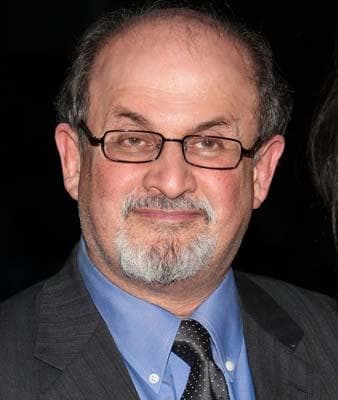
Sir Ahmed Salman Rushdie is an Indian-born British-American novelist. His work often combines magic realism with historical fiction and primarily deals with connections, disruptions, and migrations between Eastern and Western civilizations, typically set on the Indian subcontinent. Rushdie's second novel, Midnight's Children (1981), won the Booker Prize in 1981 and was deemed to be "the best novel of all winners" on two occasions, marking the 25th and the 40th anniversary of the prize.
Similar books
- The Phantom Tollbooth
Norton Juster
4.2 (242k) average on GoodreadsFantasyFeatures a young protagonist on a quest through a world rich with wordplay and abstract concepts.
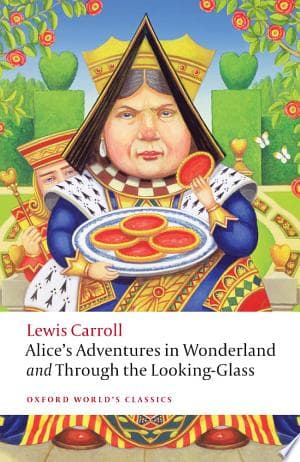
- Alice's Adventures in Wonderland
Lewis Carroll
4.0 (245k) average on GoodreadsFantasyA classic children's fantasy with surreal landscapes, quirky characters, and a focus on language.
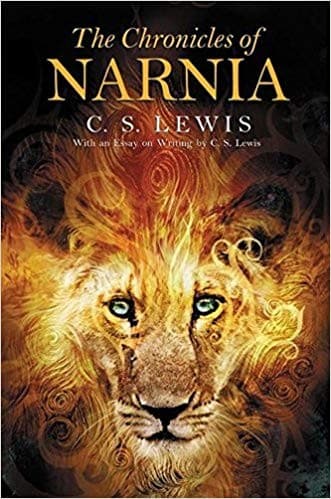
- The Chronicles of Narnia
C.S. Lewis
4.3 (518k) average on GoodreadsFantasyUnlike the more straightforward moral allegories and Christian symbolism in Narnia, Luka employs a broader, more eclectic range of mythological and philosophical allusions. While both feature journeys to magical worlds, Luka's quest is explicitly about saving a storyteller and the act of storytelling itself, a meta-narrative layer largely absent from Narnia's direct good-vs-evil conflicts. Lewis's work tends to have clearer moral lessons, whereas Rushdie's explores more complex, nuanced themes of creativity and mortality.
- Harry Potter and the Sorcerer's Stone
J.K. Rowling
4.5 (7M) average on GoodreadsFantasyWhile both Luka and Harry Potter feature young protagonists entering magical worlds and acquiring companions, Luka is less focused on character development and world-building through consistent magical rules. Rowling's series excels in creating a deeply immersive, internally consistent magical society and a strong emotional connection to its characters. Rushdie's novel, conversely, is more episodic, driven by philosophical concepts and wordplay rather than the detailed social structures and character arcs that define the Harry Potter universe. Luka is arguably more experimental in its narrative form and thematic depth.
- The Hunger Games
Suzanne Collins
4.3 (6.4M) average on GoodreadsFantasyIn a future where children fight to the death on live television, Katniss Everdeen volunteers for the arena, turning a death sentence into a fight for survival and a spark of rebellion.
- 1984
George Orwell
4.2 (3.1M) average on GoodreadsPoliticsIn a future where surveillance and thought control are absolute, a man's search for truth clashes with the Party, showing that hope can be a form of rebellion.



Enjoyed the summary?
A summary gives you the shape of the book. The book itself has the detail, the examples and the voice.
Find Luka and the Fire of Life on AmazonAs an Amazon Associate, BookBrief earns from qualifying purchases. How we're funded