
Synopsis
Covers the whole plot, including the ending.
- Difficulty
- Medium
- Pacing
- Moderate
- Mood
- Gritty, Melancholy, Poignant, Dark
- Read it if
- You enjoy gritty, realistic coming-of-age stories about resilience in the face of extreme hardship, with a focus on character and atmosphere.
- Skip it if
- You prefer light-hearted reads or are sensitive to themes of child exploitation, drug addiction, and sexual abuse.
Lullabies for Little Criminals Plot Summary
Covers the whole plot, including the ending.
A Transient Life with Jules
Baby, a thirteen-year-old girl, lives with her father, Jules, in a series of rundown hotels and rooming houses across Montreal. Jules is a heroin addict who often prioritizes his next fix over his daughter's well-being, though he possesses a certain charm and a knack for storytelling. Baby is motherless and has little stability, frequently missing school and learning to fend for herself in the city's grittier neighborhoods. She carries a suitcase with her dolls and treasures, a symbol of her clinging to childhood amidst a prematurely adult existence. Their life is a cycle of Jules getting money, using it on drugs, and then moving to a new, equally squalid place, always just on the edge of homelessness and danger.
Meeting Alphonse and the 'Girls'
While Jules is away on one of his drug-related errands, Baby meets Alphonse, a charismatic but dangerous pimp who operates in their neighborhood. Alphonse is initially kind and attentive to Baby, offering her food and a place to stay when Jules is absent. She is drawn into his orbit and meets the other 'girls' who live under his control, including the hardened but protective Wendy and the younger, more innocent Rosie. These girls, despite their difficult circumstances, provide Baby with a semblance of a social group and a sense of belonging she rarely experiences with her father. She begins to spend more time with them, slowly becoming desensitized to their lifestyle.
The Lodge and a Glimpse of Stability
Due to Jules's continued neglect and the intervention of social services, Baby is eventually placed in a children's lodge. This period marks a significant shift in her life, as she experiences regular meals, a stable bed, and attends school consistently for the first time in a long while. She forms friendships with other children at the lodge and, for a brief time, enjoys a semblance of a normal childhood. However, Baby struggles to adapt fully to the structured environment, still longing for the unpredictable freedom, and complicated affection, of her father. She also carries the secrets of her life on the streets, making it difficult to fully connect with her new peers.
Return to Jules and Alphonse's Influence
Despite the stability offered by the lodge, Baby eventually leaves to return to Jules, who makes a fleeting attempt to be a better father. However, Jules quickly reverts to his old habits, and Baby finds herself back in the familiar, dangerous environment of the streets. Alphonse's influence grows stronger. He continues to shower her with attention and gifts, slowly grooming her and subtly pushing her towards prostitution. Baby, craving affection and a sense of family, becomes increasingly entangled in his web, seeing him as a protector and provider, even as the true nature of his intentions becomes clearer to the reader.
The Growing Danger
As Baby spends more time with Alphonse and his girls, she witnesses the darker aspects of their lives: the violence, the drug use, and the constant fear. She sees how the girls are exploited and abused, and the innocence she still possesses begins to erode. Alphonse's manipulation intensifies, as he isolates her from Jules and others, making her increasingly dependent on him. He pressures her to dress more provocatively and to participate in his illicit activities, blurring the lines between childhood and the harsh adult world he inhabits. Jules, in his drug-addled state, is largely oblivious or unable to protect her from the escalating danger.
Wendy's Betrayal and Baby's Desperation
Wendy, one of Alphonse's older girls, attempts to run away, seeking to escape his control. Her escape is short-lived, as Alphonse brutally punishes her, making an example of her to the other girls. This event deeply traumatizes Baby, showing her the severe consequences of defiance and solidifying her fear of Alphonse. She feels more trapped than ever, realizing the grim reality of her situation and the limited options available to her. The incident crushes any lingering hope she had of a simple escape and highlights the pervasive power Alphonse holds over their lives, forcing Baby to confront the bleakness of her future.
A Brief Escape to the Countryside
In a desperate, drug-fueled attempt to protect Baby from Alphonse's clutches, Jules takes her away from Montreal to a secluded cabin in the countryside. This brief period offers Baby a temporary respite from the dangers of the city and Alphonse's influence. It's a rare moment of paternal care from Jules, where he tries to reconnect with her and shield her from harm. However, the isolation and lack of drugs soon take their toll on Jules, and his resolve weakens. Baby, despite the peace, feels a lingering unease, knowing this escape is likely temporary and that the city's dangers still loom.
The Inevitable Return
Jules's heroin addiction proves too strong to overcome in the isolation of the countryside. He becomes restless and desperate for a fix, ultimately forcing them to return to Montreal. Upon their return, Baby is immediately drawn back into Alphonse's orbit, who has been patiently waiting. Her brief taste of freedom and Jules's protection is shattered, and she feels the full weight of her vulnerability. Alphonse's grip on her tightens further, as he exploits her dependence and her father's inability to provide a safe haven, pushing her closer to a life she fears but sees no escape from.
The Point of No Return
The manipulation and pressure from Alphonse culminate in Baby being forced into prostitution. This event is a pivotal and devastating moment in the novel, signifying the complete loss of her childhood innocence and her entry into the harsh realities of street life. Baby experiences deep trauma and despair, feeling utterly betrayed and abandoned. This act cements her status as one of Alphonse's 'girls' and leaves her with a profound sense of hopelessness. Despite the horror, Baby's inner resilience, though bruised, begins to stir, hinting at a future struggle for survival and self-preservation.
A Glimmer of Hope and an Act of Survival
Despite the overwhelming despair, Baby begins to find small ways to assert her agency. She clings to her storytelling, her vivid imagination, and the crumbs of affection she receives from unexpected sources. She observes the world around her with a keen, if often disillusioned, eye. In a final, desperate act of self-preservation, Baby makes a choice that allows her to break free from Alphonse's control. This act is not without its own moral complexities, but it demonstrates her inner strength and her refusal to be completely consumed by the predatory world she inhabates. It is a testament to her will to survive and reclaim some semblance of her own life, however fractured.
Principal Figures
Baby
Protagonist
A thirteen-year-old girl navigating a dangerous life on the streets of Montreal.
Baby is the resilient and imaginative protagonist, a motherless thirteen-year-old thrust into an adult world. She possesses a keen observational sense and a vivid inner life, often escaping into her stories and fantasies. Despite her dire circumstances, she clings to remnants of childhood, carrying her dolls and dreaming of stability. Her desire for love and belonging makes her vulnerable to manipulation, particularly by Alphonse, but also fuels her resilience. She is an expert at survival, learning to read people and situations quickly, even as her innocence is steadily eroded by the harsh realities of her life with Jules and on the streets.
Relationships: Jules (addicted father, both a source of love and neglect); Alphonse (manipulative pimp, preys on her vulnerability); Wendy (fellow 'girl' under Alphonse, a complex mix of protector and victim); Rosie (younger 'girl' under Alphonse, represents lost innocence)
Jules
Supporting
Baby's charming but heroin-addicted father, torn between love for his daughter and his addiction.
Jules is Baby's father, a charismatic but deeply flawed man whose life is dominated by heroin addiction. He loves Baby in his own way, often telling her elaborate stories and providing fleeting moments of affection, but his addiction consistently overrides his paternal responsibilities. He struggles with guilt and a desire to protect Baby, occasionally making genuine attempts to care for her, such as taking her to the countryside. However, his weakness and self-absorption ultimately leave Baby vulnerable to the dangers of the street. He embodies the tragic figure of a parent unable to overcome his demons.
Relationships: Baby (daughter, whom he loves but consistently neglects due to addiction); Alphonse (antagonistic, as Alphonse threatens his daughter)
Alphonse
Antagonist
A charismatic and dangerous pimp who preys on vulnerable young girls.
Alphonse is the primary antagonist, a cunning and manipulative pimp who controls a group of young girls. He is initially charming and appears benevolent, offering food, shelter, and attention to Baby, which she desperately craves. However, his kindness is a facade for his predatory nature, as he systematically grooms and exploits his girls, using psychological and physical abuse to maintain control. He represents the darkest dangers of the street, embodying the loss of innocence and the brutal realities of exploitation. His influence over Baby is insidious and pervasive, slowly eroding her sense of self and safety.
Relationships: Baby (victim of his manipulation and exploitation); Wendy (one of his exploited 'girls'); Rosie (one of his exploited 'girls')
Wendy
Supporting
One of Alphonse's older, hardened girls, who serves as both a warning and a complex mentor to Baby.
Wendy is one of Alphonse's 'girls,' older and more experienced in the harsh realities of their life. She is a complex character, hardened by her circumstances but still possessing flashes of protectiveness towards Baby. She understands the dangers of Alphonse better than anyone and her attempts to escape highlight the brutality of his control. Her fate serves as a grim warning to Baby, showing her the consequences of defiance. Despite her own suffering, she offers Baby some guidance and a sense of camaraderie, however fleeting, within their shared prison.
Relationships: Baby (peer and reluctant mentor, fellow victim of Alphonse); Alphonse (her exploiter and abuser)
Rosie
Supporting
A younger, more innocent girl under Alphonse's control, representing the fragility of childhood.
Rosie is another of Alphonse's girls, younger and more overtly innocent than Wendy. She is often seen with a doll, mirroring Baby's own attempts to cling to childhood. Rosie's presence underscores the tragic reality of young lives destroyed by exploitation. Her vulnerability and quiet suffering serve as a stark reminder to Baby of the fate that awaits her if she succumbs completely to Alphonse's influence. She represents the fragile beauty and crushing loss of childhood innocence in their brutal world, a silent testament to the damage inflicted upon them.
Relationships: Baby (fellow victim and peer); Alphonse (her exploiter)
Mr. Bernard
Mentioned
A kind social worker who attempts to provide stability for Baby.
Mr. Bernard is the social worker who tries to intervene in Baby's life, placing her in the children's lodge. He represents the outside world's attempts to provide structure and safety, albeit often unsuccessfully. While his intentions are good, he is ultimately unable to fully comprehend or counteract the deep-seated issues in Baby's life or the powerful pull of her father and Alphonse. He offers Baby a brief glimpse of a different, more stable life, but his influence is limited by the system and Baby's own complex loyalties and experiences.
Relationships: Baby (social worker and ward)
The Landlady (at the lodge)
Supporting
A stern but ultimately caring figure at the children's lodge.
The landlady at the children's lodge provides a structured, if somewhat rigid, environment for Baby. She represents authority and an attempt at normalcy, offering a stark contrast to Baby's chaotic life with Jules. While she can be stern, she also provides Baby with consistent meals, a warm bed, and a safe space, however temporary. She is a figure of adult responsibility, trying to instill discipline and care into the lives of the children under her watch, even if Baby struggles to fully embrace her rules.
Relationships: Baby (caregiver at the lodge)
The 'Doll'
Supporting
Baby's beloved doll, a symbol of her clinging to childhood and innocence.
The 'Doll' (often referred to simply as the doll or one of her dolls) is Baby's constant companion, carried in her vinyl suitcase. It is a powerful symbol of Baby's lost and clinging innocence, her desire for comfort, and her connection to the childhood she is rapidly losing. She talks to it, confides in it, and treats it as a repository of her dreams and fears. The doll represents her inner world and her desperate attempts to preserve a part of herself that the streets and Alphonse are trying to strip away.
Relationships: Baby (cherished possession and confidante)
Themes & Insights
Loss of Innocence
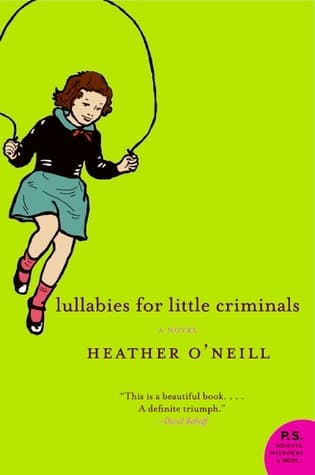
The novel charts Baby's brutal journey from a vulnerable child to a prematurely hardened young woman. Her experiences with Jules's addiction, the predatory Alphonse, and the harsh realities of street life systematically strip away her childhood. This theme is evident in her exposure to prostitution, drug use, and violence, forcing her to confront adult cruelties far too young. The image of Baby carrying her dolls while navigating dangerous streets poignantly captures this central theme, highlighting the conflict between her internal desire for childhood and the external pressures demanding her maturity.
“I was thirteen, but I understood the world as if I were a hundred. I had seen everything. I had seen too much.”
Survival and Resilience
Despite the relentless adversity, Baby demonstrates remarkable resilience and an innate will to survive. She adapts to her transient lifestyle, learns to read people, and develops coping mechanisms like storytelling and imagination to endure her trauma. Her ability to find 'crumbs of happiness' and her eventual act of self-preservation underscore her strength. This theme is not about escaping unscathed, but about finding the internal fortitude to persist and reclaim agency in the face of overwhelming odds, even when deeply scarred. Her survival is a testament to the human spirit's capacity for endurance.
“I was like a little weed that would grow anywhere, no matter how much you tried to stomp it down.”
The Nature of Love and Family
The novel explores the complex and often twisted forms of love and family in Baby's life. Her relationship with Jules is characterized by a deep, albeit dysfunctional, love mixed with profound neglect. She craves his affection but suffers from his addiction. Alphonse offers a manipulative 'love' that preys on her need for belonging, creating a perverse sense of family among his exploited girls. This theme questions what constitutes love and care when basic needs are unmet and boundaries are blurred, showing how vulnerable individuals can mistake exploitation for affection when genuine love is scarce.
“He loved me like a drowning man loves air, desperately and without any thought of how he would get it.”
Addiction and its Consequences
Jules's heroin addiction is a central driving force in the narrative, directly shaping Baby's transient and dangerous life. The theme explores not only the addict's struggle but, more importantly, the devastating ripple effect on those around them, particularly children. Jules's addiction dictates their living conditions, his ability to protect Baby, and his overall reliability as a parent. It illustrates how addiction can warp a parent's priorities, rendering them incapable of providing the stability and care their child desperately needs, thus perpetuating a cycle of instability and vulnerability for Baby.
“Jules was like a cloud that moved through the city, always changing shape, always drifting, never quite settling.”
Storytelling and Imagination as Escape
Baby uses her vivid imagination and gift for storytelling as a crucial coping mechanism and a means of escape from her harsh reality. She creates elaborate fantasies and narratives, both for herself and for Jules, to make sense of her world or to simply survive it. These stories allow her to process trauma, maintain a sense of self, and inject beauty or meaning into an otherwise bleak existence. This theme highlights the power of the human mind to find refuge and preserve its integrity through creativity, even when external circumstances are unbearable.
“I made up stories in my head, stories where I was a princess or a queen, or a girl who lived in a house with a garden and a dog.”
Plot Devices & Literary Techniques
First-Person Narrative (Child's Perspective)
Allows intimate access to Baby's thoughts and experiences, filtered through her innocent yet knowing eyes.
The novel is told entirely from Baby's perspective, providing an intimate and often heartbreaking view of her world. This device allows the reader to experience events through her unique lens – a blend of childlike innocence, vivid imagination, and premature understanding of adult cruelties. The language reflects her age and limited vocabulary, yet conveys profound emotional depth. This perspective creates empathy, making the reader a direct witness to her trauma and resilience, while also highlighting the unreliable nature of a child's understanding of complex adult situations.
Symbolism of the Doll/Suitcase
Represents Baby's clinging to childhood and lost innocence.
Baby's vinyl suitcase, containing her dolls and cherished trinkets, serves as a powerful symbol throughout the novel. The dolls represent her lingering childhood innocence, her desire for comfort, and her attempts to maintain a semblance of normalcy amidst chaos. The suitcase itself symbolizes her transient life, always packed and ready to move, yet also holding the precious fragments of her identity. As her innocence is eroded, the doll becomes a poignant reminder of what she is losing, a silent witness to her trauma.
Foreshadowing (Subtle Warnings)
Hints at impending danger and the gradual erosion of Baby's innocence.
The novel employs subtle foreshadowing to build tension and indicate the escalating dangers Baby faces, particularly from Alphonse. Early descriptions of Alphonse's charm, the 'girls' living with him, and Baby's growing fascination with their world, all hint at her impending exploitation. These hints are often filtered through Baby's innocent perspective, where she misinterprets the danger or sees it as a form of care. This technique creates a sense of dread for the reader, who can often see the peril before Baby fully grasps its implications, making her eventual trauma all the more devastating.
Setting as Character (Montreal's Underbelly)
The city's gritty streets and hotels reflect Baby's chaotic and dangerous inner world.
The city of Montreal, particularly its rundown hotels, seedy streets, and neglected neighborhoods, functions almost as a character in itself. It is a harsh, unforgiving landscape that mirrors Baby's internal state and external circumstances. The transient nature of their living situations, the constant movement between squalid rooms, and the ever-present threat of the streets contribute to Baby's instability and vulnerability. The setting is not merely a backdrop but an active force shaping her experiences and limiting her options, becoming synonymous with her struggle for survival.
Lullabies for Little Criminals Quotes
“I was a child who was always waiting for something to happen. I was waiting for my life to begin.”
“My father was a junkie, and that meant that he was the king of the world and I was his princess.”
“I was like a little animal that had been raised in a cage and then let out into the world.”
“The world is a terrible place, and the only way to survive is to be terrible too.”
“I wanted to be a good girl, but I didn't know how.”
“Love is a strange thing. It makes you do things you never thought you would.”
“Sometimes I felt like I was made of glass and everyone could see right through me.”
“I had a map of the world in my head, but all the roads led to nowhere.”
“The sky was the color of a dirty dishrag, and I felt like I was the dirt on it.”
“I was a criminal because I was born into a world that didn't want me.”
“My heart was a little bird that kept trying to fly away, but it didn't know where to go.”
“I learned that the only thing worse than being alone is being with someone who makes you feel alone.”
“I was a story that nobody wanted to read, but I kept writing myself anyway.”
“The city was a monster that ate little girls like me for breakfast.”
Quiz
10 questions on the plot and the characters. Each answer comes with a short explanation.
Question 1
What is the name of the protagonist in 'Lullabies for Little Criminals'?
- Jules
- Baby
- Heather
- Lullaby
Show answer
B. Baby The protagonist is a 13-year-old girl named Baby, who navigates life on Montreal's streets with her heroin-addicted father Jules.
Question 2
What does Baby often carry around in a vinyl suitcase, symbolizing her lingering childhood?
- Her father's heroin
- Her dolls
- Stolen goods
- School books
Show answer
B. Her dolls Despite her harsh environment, Baby clings to childhood by dragging her dolls in a vinyl suitcase, representing her conflicted transition between innocence and adult realities.
Question 3
What is Jules' primary struggle that affects his ability to care for Baby?
- Alcoholism
- Gambling addiction
- Heroin addiction
- Unemployment
Show answer
C. Heroin addiction Jules is a heroin addict who prioritizes his habit over his daughter's well-being, leading to neglect and instability in Baby's life.
Question 4
What talent does Baby possess that helps her cope with her difficult circumstances?
- Singing lullabies
- Drawing pictures
- Spinning stories
- Playing musical instruments
Show answer
C. Spinning stories Baby has a 'genius for spinning stories,' using her imagination to create narratives that provide escape and meaning amidst urban cruelties.
Question 5
Who becomes a dangerous threat to Baby due to her blossoming beauty?
- A school bully
- A police officer
- A local pimp
- A social worker
Show answer
C. A local pimp A charismatic and dangerous local pimp takes notice of Baby, posing a significant threat as he recruits vulnerable girls into his control.
Question 6
What major theme does Baby's relationship with her dolls versus the pimp's attention highlight?
- The corruption of authority
- Bruised innocence and lost childhood
- The importance of education
- Urban vs. rural life
Show answer
B. Bruised innocence and lost childhood The contrast between Baby's childish attachment to dolls and the adult danger of the pimp underscores the novel's central theme of innocence being threatened and eroded by harsh realities.
Question 7
How does Jules react when he becomes aware of the pimp's interest in Baby?
- He ignores it completely
- He encourages Baby to stay away
- He cannot ignore it despite his usual obliviousness
- He reports it to the police
Show answer
C. He cannot ignore it despite his usual obliviousness Although Jules is typically neglectful due to his addiction, the pimp's threat is so volatile that even he recognizes the danger and cannot ignore it.
Question 8
What does Baby ultimately realize about her salvation towards the end of the novel?
- It depends on her father's recovery
- It rests in her hands alone
- It requires leaving the city forever
- It is impossible due to her circumstances
Show answer
B. It rests in her hands alone After facing betrayal and hardship, Baby learns that her survival and redemption depend on her own strength, wits, and resilience, not on others.
Question 9
What is described as 'an escape disguised as betrayal' that threatens to crush Baby's spirit?
- Jules abandoning her for heroin
- Baby running away from home
- A friend or ally betraying her trust
- The pimp offering her protection
Show answer
C. A friend or ally betraying her trust This refers to a pivotal plot event where someone Baby trusts betrays her, presenting it as a way out but actually endangering her further, testing her emotional resilience.
Question 10
Which literary device is prominently used through Baby's 'genius for spinning stories' to contrast her inner world with external reality?
- Irony
- Foreshadowing
- Metaphor
- Imagination as a coping mechanism
Show answer
D. Imagination as a coping mechanism Baby's storytelling acts as a coping mechanism, using imagination to create a safer, more meaningful inner world that starkly contrasts with the gritty, dangerous streets of Montreal she inhabits.
Lullabies for Little Criminals FAQ
What is 'Lullabies for Little Criminals' about?
The novel follows 13-year-old Baby, a motherless girl living in Montreal's gritty streets with her heroin-addicted father Jules. It chronicles her struggle to maintain childhood innocence while navigating urban cruelties, including her dangerous entanglement with a local pimp named Alphonse who recruits vulnerable girls into prostitution.
Why should I read 'Lullabies for Little Criminals'?
Heather O'Neill's debut offers a searing yet poetic portrayal of childhood resilience in extreme circumstances. Through Baby's unique voice and imaginative storytelling, the novel explores themes of survival, lost innocence, and the complex bonds between damaged people with extraordinary emotional depth.
What is the background/setting of 'Lullabies for Little Criminals'?
The story unfolds in Montreal's impoverished neighborhoods during the 1980s, specifically in rundown apartments, seedy hotels, and dangerous streets where drugs and prostitution are commonplace. This urban landscape serves as both a physical and psychological environment that shapes Baby's precarious existence.
What are the most memorable quotes from the book?
Notable quotes include Baby's observation that 'I was like a little animal that had been raised in captivity and then released into the wild' and her reflection on storytelling: 'I made up stories about everything. It was the only way I knew how to make sense of things.' These capture her survival mechanisms and fractured perspective.
What writing style does Heather O'Neill use?
O'Neill employs lyrical, first-person narration from Baby's perspective, blending childlike wonder with stark realism. The prose is poetic yet unflinching, using vivid metaphors and imaginative descriptions to contrast Baby's inner world with the harsh external reality she inhabits.
What minor details add significant meaning to the story?
Baby's vinyl suitcase containing her dolls symbolizes her clinging to childhood amid trauma. The lullabies she creates represent makeshift comfort in absence of parental care. Jules's sporadic attempts at parenting, like buying her a winter coat, highlight moments of fractured love amidst neglect.
What are some subtle foreshadowing moments?
Early descriptions of Baby's blossoming beauty and men's attention hint at her vulnerability to exploitation. Jules's increasing heroin use foreshadows his eventual inability to protect her. Baby's storytelling habit subtly prepares readers for her ultimate reliance on imagination as a survival tool.
What unexpected character connections exist?
The pimp Alphonse initially appears as a charming protector before revealing his predatory nature. Baby's friend Xavier, another marginalized youth, provides unexpected solidarity. Even Jules's drug dealer becomes a twisted paternal figure in Baby's fragmented world of relationships.
What are Baby's unspoken motivations throughout the story?
Beneath her survival instincts, Baby desperately seeks stability and parental love she never receives. Her attraction to dangerous situations stems from craving attention and validation. Her storytelling serves as both escape mechanism and attempt to reconstruct a coherent identity from trauma.
What psychological complexities do Jules and Baby exhibit?
Jules demonstrates contradictory parenting—moments of genuine care undermined by addiction's priority. Baby develops complex coping mechanisms: dissociation through imagination, premature sexualization for survival, and attachment to damaging figures who offer fleeting security.
What are the major emotional turning points?
Key moments include Baby's first encounter with Alphonse, Jules's hospitalization from overdose, Baby's descent into prostitution, and her final realization that salvation must come from within. Each represents escalating losses of innocence and shifting survival strategies.
How do Baby's relationship dynamics evolve?
Her bond with Jules deteriorates as his addiction worsens, forcing her to parent herself. Relationships with other marginalized youth provide temporary solidarity. Her connection with Alphonse shifts from perceived rescue to explicit exploitation, mirroring her deteriorating agency.
Which parts of the ending remain ambiguous or open-ended?
The novel concludes with Baby's determination to save herself, but doesn't specify her future path. Whether she escapes prostitution permanently or reconciles with Jules remains uncertain. Her ultimate fate is left to interpretation, emphasizing the ongoing nature of her struggle.
What are controversial scenes or decisions in the book?
Baby's descent into child prostitution under Alphonse's manipulation is graphically portrayed. Jules's neglect due to heroin addiction raises questions about parental responsibility. Some readers debate whether Baby's resilience romanticizes trauma or authentically depicts survival psychology.
How does 'Lullabies for Little Criminals' end and what does it mean?
The ending shows Baby recognizing that no external savior will rescue her—salvation rests in her own hands. This represents both devastating abandonment and empowering self-reliance. Her storytelling ability transforms from escapism to a tool for crafting her own narrative future.
What is the significance of Baby's storytelling throughout the novel?
Her imaginative narratives serve as psychological armor against trauma, allowing her to reframe painful experiences. This creativity ultimately becomes her primary survival skill—the means through which she maintains identity and envisions possibilities beyond her immediate circumstances.
How does the novel portray institutional failures?
Social services, schools, and healthcare systems appear intermittently but fail to provide meaningful intervention. This systemic neglect forces Baby to navigate dangers alone, highlighting how marginalized children fall through societal cracks despite visible signs of distress.
What role does Montreal's urban environment play?
The city functions as both prison and playground—its decaying spaces mirror Baby's internal fragmentation while also containing moments of unexpected beauty. Specific locations like the hotel where Alphonse keeps girls become psychological landscapes representing different stages of her exploitation.
About the author

Heather O'Neill is a Canadian author known for her fiction that often explores themes of childhood and resilience. Her notable works include "Lullabies for Little Criminals," which tells the story of a young girl navigating a troubled upbringing, and "The Lonely Hearts Hotel," a tale of love and ambition set in a fantastical version of 1930s Montreal.
Similar books
- A Tree Grows in Brooklyn
Betty Smith
4.3 (388k) average on GoodreadsHistorical FictionExplores the harsh realities of poverty and a young girl's resilience and coming-of-age.
- Room
Emma Donoghue
4.1 (714k) average on GoodreadsThrillerFeatures a young protagonist navigating a confined and dangerous world, with a unique narrative voice.
- The Glass Castle
Jeannette Walls
4.3 (903k) average on GoodreadsBiographyA memoir about growing up with eccentric and neglectful parents, focusing on survival and resilience.
- The Old Man and the Sea
Ernest Hemingway
3.8 (831k) average on GoodreadsLiterary FictionA Cuban fisherman's long struggle with a giant marlin becomes a story of endurance and dignity, now retold for young adults with illustrations, phonetic guides, and writing prompts in Traditional Chinese.
- One Hundred Years of Solitude
Gabriel García Márquez
4.1 (753k) average on GoodreadsLiterary FictionThrough the multi-generational story of the Buendía family, a mythical town deals with the repeating patterns of time, love, and solitude, as the extraordinary mixes with the ordinary.
- The Goldfinch
Donna Tartt
3.9 (720k) average on GoodreadsLiterary FictionHaunted by a tragic explosion and clutching a stolen Dutch masterpiece, a young orphan navigates the opulent drawing rooms of New York and the gritty underbelly of the art world, desperately seeking connection and redemption amidst a life spiraling into crime and obsession.






Enjoyed the summary?
A summary gives you the shape of the book. The book itself has the detail, the examples and the voice.
Find Lullabies for Little Criminals on AmazonAs an Amazon Associate, BookBrief earns from qualifying purchases. How we're funded