
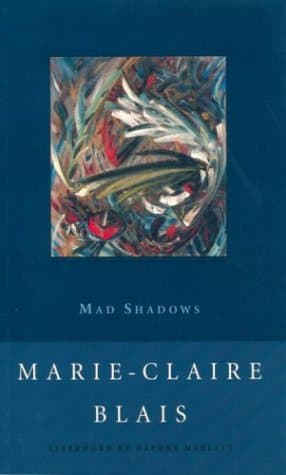
Synopsis
Covers the whole plot, including the ending.
- Difficulty
- Medium
- Pacing
- Slow
- Mood
- Dark, Gothic, Bleak, Psychological, Disturbing
- Read it if
- You are looking for a dark, poetic, and unflinching exploration of human depravity, narcissism, and the destructive nature of obsession within a dysfunctional family.
- Skip it if
- You prefer optimistic stories, clear moral frameworks, or are sensitive to themes of cruelty, physical disfigurement, and psychological horror.
Mad Shadows Plot Summary
Covers the whole plot, including the ending.
The House of Narcissus
The novel opens by introducing Louise, a woman consumed by her own fading beauty, and her son, Patrice, who shares her narcissism with his striking good looks. They live in a world of mirrors, constantly admiring themselves and each other, unaware of the world outside their opulent, if decaying, estate. Isabelle-Marie, Louise's daughter and Patrice's sister, is exceptionally ugly, constantly overshadowed and ignored by her mother and brother. Her deep isolation and the cruel indifference she experiences from her family begin to grow, setting the stage for her future malice. Their home, a symbol of their inward-looking existence, becomes a stage for their self-obsessed drama.
The Arrival of the Blind Grandfather
Antoine, Louise's blind father, arrives at the estate. His blindness prevents him from seeing the family's physical beauty, making him immune to their superficial charm. Isabelle-Marie, seeing a chance for attention and power, begins to manipulate him. She describes the world to him, but her descriptions are twisted and malicious, reflecting her inner darkness. She finds a perverse pleasure in controlling his perceptions, a stark contrast to her powerlessness in the eyes of Louise and Patrice. This relationship, though based on deception, gives Isabelle-Marie a sense of control she has never known.
Patrice's First Fall
Patrice, used to adoration, experiences his first genuine rejection when a young woman, for reasons not explicitly stated but implied to be beyond his superficial charm, spurns his advances. This unexpected blow shatters his carefully built world of self-admiration. He becomes deeply despondent, unable to accept this rejection with his belief in his own irresistible beauty. His mother, Louise, also struggles to understand this, as she has always seen his beauty as an unassailable shield. This incident marks the beginning of Patrice's slow, agonizing fall from his pedestal.
Isabelle-Marie's Revenge
Driven by years of neglect and her growing resentment, Isabelle-Marie's cruelty grows. She sees Patrice's vulnerability as an opportunity for revenge. In a particularly disturbing act, she leads Patrice, who is now emotionally distraught and aimless, to a place where he encounters a group of men who brutally assault him. Her intention is not just to harm him, but to destroy the very beauty that she envies and that has been the source of her suffering. This act shows her complete embrace of her own darkness and her desire to inflict pain on those who have hurt her.
The Disfigurement of Patrice
The assault leaves Patrice physically disfigured, his once-perfect face now irrevocably marred. This disfigurement is not just physical; it is a deep blow to his identity, which has always been linked to his beauty. He can no longer recognize himself in the mirror, and the world no longer reflects the image he cherished. Louise, horrified, tries to deny the change, clinging to the memory of his former beauty. Isabelle-Marie, however, enjoys his suffering, seeing it as a twisted form of justice for her own perceived ugliness and years of being overlooked.
Louise's Denial and Antoine's End
Louise, unable to accept Patrice's disfigurement, retreats further into her self-delusion, trying to convince herself and others that his beauty remains. She tries to mask his scars, both literally and figuratively. Meanwhile, Isabelle-Marie's manipulations of Antoine reach their peak. She leads him to believe he is witnessing beautiful scenes, but these are fabrications. When Antoine eventually realizes he has been deceived and that his granddaughter's heart is filled with malice, he is overcome with despair. He dies, his death a quiet tragedy amidst the family's escalating turmoil, unmourned by Louise or Patrice.
Patrice's Transformation and Despair
With his beauty gone, Patrice is forced to confront the shallowness of his existence. He realizes that his identity was based solely on his physical appearance, and without it, he is nothing. He struggles with deep despair and a sense of meaninglessness. He attempts to find solace in other ways, but his past life has left him unprepared for genuine connection or introspection. His journey becomes one of internal decay, mirroring the external decay of his once-perfect face. He is a ghost of his former self, haunted by the loss of his defining attribute.
Isabelle-Marie's Brief Triumph
For a brief period, Isabelle-Marie enjoys her revenge. With Patrice disfigured and Louise lost in denial, she feels a sense of triumph. The power balance in the household has shifted, and she is no longer the ignored, ugly sister. She continues to exert her manipulative influence, finding pleasure in the suffering of others. However, her triumph is short-lived. Her malice is a consuming fire, and her actions have isolated her further, even as she desired connection. Her victory is hollow, leaving her ultimately unfulfilled and still consumed by her own bitterness.
Louise's Final Delusion
Louise's grip on reality completely unravels. She becomes utterly consumed by her memories of Patrice's beauty, constantly talking to his past image as if it were still present. She dresses him in fine clothes, applies makeup to his disfigured face, and praises his former perfection, completely ignoring his current state. Her madness is a tragic culmination of her lifelong vanity, a refusal to acknowledge the harsh truths of aging and loss. She lives in a world of her own making, where beauty is eternal and suffering is merely an illusion to be ignored.
The Ultimate Annihilation
The novel concludes with the complete dissolution of the family. Patrice, unable to live with his disfigurement and the emptiness of his life, commits suicide. Louise, already lost in her madness, soon follows, unable to survive without her beautiful son to mirror her own vanity. Isabelle-Marie, having achieved her destructive goals, is left alone, consumed by her own malice and the emptiness of her victory. The house, once a symbol of their gilded cage, becomes a tomb. Each character is ultimately destroyed by their own obsessions, leaving behind only the shadows of their self-inflicted tragedies.
Mad Shadows Characters
Louise
Protagonist/Antagonist
A vain and self-absorbed mother obsessed with her own beauty and that of her son, Patrice.
Louise is the matriarch of the family, a woman whose entire identity is wrapped up in her physical appearance. She lives in a constant state of self-admiration, projecting her own vanity onto her beautiful son, Patrice, and completely ignoring her 'ugly' daughter, Isabelle-Marie. She is incapable of genuine love or empathy, viewing others primarily as reflections or extensions of her own beauty. Her world is superficial, and she actively denies any reality that challenges her self-image or her son's perfection. She is emotionally stunted, unable to cope with loss or ugliness.
Relationships: Patrice (Obsessive, narcissistic love, sees him as an extension of her own beauty.); Isabelle-Marie (Neglectful, disdainful, views her as an ugly blight.); Antoine (Indifferent, ignores her father's presence.)
Patrice
Protagonist
Louise's beautiful and equally narcissistic son, whose identity is solely defined by his physical attractiveness.
Patrice is a young man whose existence is entirely predicated on his extraordinary beauty. He is the mirror image of his mother's vanity, constantly admiring himself and basking in the adoration he receives. He is charming on the surface but lacks depth, empathy, or genuine understanding of the world beyond his own reflection. His beauty is his shield and his identity, making him utterly unprepared for any challenge to his physical perfection. He is a passive figure, reacting to events rather than initiating them, until his world shatters.
Relationships: Louise (Recipient of her obsessive love, mirrors her narcissism.); Isabelle-Marie (Ignorant and dismissive, later becomes her victim.)
Isabelle-Marie
Antagonist
Louise's ugly and malevolent daughter, driven by resentment and a desire for revenge.
Isabelle-Marie is the antithesis of her mother and brother's beauty, depicted as inherently ugly and neglected from birth. This lifelong neglect and the constant comparison to Patrice's beauty fester into profound bitterness, jealousy, and a desire for revenge. She is intelligent and cunning, using her perceived ugliness as a weapon and her isolation as a forge for her malice. She actively seeks to destroy the beauty she envies, finding a perverse satisfaction in the suffering of others. She embodies the dark side of human nature, a product of extreme emotional deprivation.
Relationships: Louise (Hates her for neglect and preference for Patrice.); Patrice (Deeply jealous of his beauty, seeks to destroy him.); Antoine (Manipulative, uses his blindness for her own twisted amusement and power.)
Antoine
Supporting
Louise's blind father, a figure of innocence and vulnerability in the family's twisted dynamic.
Antoine is Louise's elderly, blind father, who comes to live with the family. His blindness makes him unique in this household, as he cannot perceive the physical beauty that defines Louise and Patrice. This makes him initially immune to their superficial charms. He is a vulnerable and trusting figure, easily manipulated by Isabelle-Marie, who uses his blindness for her own cruel amusement. He represents a fleeting moment of potential connection, but his innocence is ultimately crushed by the family's inherent malice. He is a victim of their emotional pathology.
Relationships: Louise (Daughter, but she is indifferent to him.); Isabelle-Marie (Granddaughter, who manipulates and deceives him.)
The Young Woman
Mentioned
A brief love interest who rejects Patrice, initiating his downfall.
This unnamed young woman appears briefly but plays a pivotal role in Patrice's narrative. Her rejection of his advances is the first significant blow to his self-image and the catalyst for his subsequent despair and vulnerability. Her reasons for rejection are not explicitly detailed, but her action punctures the illusion of Patrice's irresistible charm, revealing the fragility of his beauty-based existence. She represents an external reality that does not conform to the family's internal, narcissistic rules.
Relationships: Patrice (Brief, unrequited romantic interest.)
Mad Shadows Themes
The Destructive Nature of Narcissism
Narcissism is the central, pervasive theme. It appears as an all-consuming self-love that blinds characters to reality and leads to their destruction. Louise and Patrice are trapped in a cycle of mutual admiration, incapable of genuine connection or empathy. Their obsession with physical beauty makes them emotionally sterile and unable to cope with imperfection or loss. Patrice's disfigurement, a direct attack on his narcissistic core, plunges him into despair, while Louise's denial of it leads to madness. The theme shows how an excessive focus on self-image destroys the soul and prevents any meaningful existence. The entire family unit collapses under the weight of this collective self-obsession, demonstrating its corrosive power.
“She was a woman who had never loved anything but her own image, and in her son, she loved herself again.”
The Corrupting Power of Neglect and Ugliness
Isabelle-Marie's character shows how deep neglect and perceived ugliness can corrupt the soul. Ignored and reviled by her family, her initial suffering turns into bitter resentment and active malice. Her 'ugliness' is not just physical but becomes a metaphor for her internal state, shaped by the cruel indifference of her mother and brother. Her acts of revenge, particularly against Patrice, are a direct result of her emotional starvation and the constant devaluation she experiences. This theme explores the psychological damage caused by a lack of love and acceptance, demonstrating how it can breed destructive hatred and a desire to inflict pain.
“Her ugliness was a shield, a weapon, a silent scream against the beauty that had excluded her.”
The Illusion of Beauty vs. Reality
The novel constantly contrasts the superficiality of physical beauty with the harshness of reality. Louise and Patrice live in a delusional world where beauty is most important, and ugliness, suffering, or old age are denied. Mirrors are a recurring symbol, reflecting their self-obsession but never revealing the truth of their inner decay. Patrice's disfigurement is the ultimate shattering of this illusion, forcing him to confront a reality he cannot escape. Louise's subsequent madness is her final retreat into a world where the illusion of beauty remains unbroken, even as reality crumbles around her. The theme suggests that relying solely on outward appearance leads to a deep disconnect from genuine human experience.
“The mirror was their only truth, and it lied beautifully.”
The Absence of Love and Empathy
A striking absence of genuine love and empathy characterizes the family's relationships. Louise's 'love' for Patrice is a narcissistic projection, and she shows no true affection for Isabelle-Marie or Antoine. Patrice, in turn, is incapable of loving anyone but himself. This emotional emptiness creates a sterile and cruel environment where characters are isolated despite their closeness. Isabelle-Marie's malice is a twisted cry for attention, born from this deep lack. The novel portrays a world where human connection is replaced by self-interest and indifference, leading to an inevitable breakdown of the family unit and individual souls. This theme highlights the devastating consequences when love is absent.
“There was no tenderness in that house, only reflections and shadows.”
Plot Devices & Literary Techniques
The Mirror Motif
Mirrors symbolize narcissism, self-delusion, and the superficiality of beauty.
Mirrors are a pervasive and crucial motif throughout the novel. They are constantly present in Louise and Patrice's lives, serving as extensions of their self-obsession. They reflect only what the characters wish to see – their own flawless beauty – reinforcing their narcissism and blinding them to reality. The mirrors represent the characters' inability to look inward or outward with genuine perception. When Patrice is disfigured, the mirror becomes an instrument of horror, reflecting a truth he cannot bear, ultimately leading to the shattering of his identity. For Louise, the mirror eventually reflects only her madness, as she projects her delusional image onto her disfigured son.
Isabelle-Marie's Ugliness
Her physical unattractiveness serves as a catalyst for her malice and a symbol of internal decay.
Isabelle-Marie's profound ugliness is more than a physical attribute; it is a central plot device that drives much of the narrative's conflict. It is the direct cause of her neglect by Louise and Patrice, fueling her resentment and desire for revenge. Her ugliness becomes a symbol of her internal state – the bitterness, jealousy, and malevolence that grow within her. It also serves as a stark contrast to the superficial beauty of her family, highlighting the novel's critique of outward appearances. Her ugliness empowers her in a twisted way, making her immune to the charms that captivate her family and allowing her to see their vulnerabilities.
Antoine's Blindness
His lack of sight provides a unique perspective and allows for manipulation, symbolizing a different kind of perception.
Antoine's blindness is a significant plot device. Because he cannot see, he is initially immune to the physical beauty that obsesses Louise and Patrice. This makes him a blank slate for Isabelle-Marie's manipulations. His blindness symbolizes a different mode of perception, one that is not reliant on superficial appearance. However, it also makes him vulnerable to deception, as Isabelle-Marie exploits his trust by painting false pictures with her words. His eventual realization of her malice, despite his physical blindness, signifies a moment of moral clarity, contrasting with the sighted characters' inability to see truth.
Patrice's Disfigurement
The physical scarring of Patrice symbolizes the destruction of identity and the shattering of illusion.
Patrice's disfigurement is the pivotal turning point in the plot. It is a violent, external manifestation of the internal decay and hollowness that define his character. By stripping him of his defining attribute – his beauty – it forces him to confront the emptiness of his existence. This act, orchestrated by Isabelle-Marie, shatters the illusion of his invincibility and the family's self-contained world of superficiality. It serves as a catalyst for his despair and Louise's descent into madness, directly leading to the tragic climax of the story. It is a brutal assertion of reality against the family's persistent denial.
Mad Shadows Quotes
“The wind was blowing from the sea, a cold wind that lifted the skirts of the women and made them shiver, even in the bright sunlight.”
“Isabelle, with her face like a white flower, and Louise, with her hair like dark seaweed, were two sisters who lived in a house by the sea.”
“She was a woman who always wore black, as if she were in perpetual mourning for a life she had never lived.”
“The house itself seemed to breathe with a sigh, a long, drawn-out sigh that spoke of forgotten dreams and whispered secrets.”
“Love was a fragile thing, easily broken, like a glass bird falling from a great height.”
“They danced in the moonlight, their shadows long and grotesque, like creatures from another world.”
“The mirror, reflecting only her own despair, was her only confidante.”
“Beauty was a curse, a magnet for envy and destruction.”
“The sea, indifferent to their human struggles, continued its relentless rhythm.”
“He was a man haunted by the ghosts of his own desires, forever chasing what he could never truly possess.”
“The silence in the house was not peaceful, but heavy, pregnant with unspoken words and festering resentments.”
“Their lives were a tapestry woven with threads of deceit and illusion, a beautiful lie.”
“The night held its breath, waiting for the inevitable tragedy to unfold.”
“To be loved was to be vulnerable, to expose one's heart to the sharpest knives.”
Quiz
10 questions on the plot and the characters. Each answer comes with a short explanation.
Question 1
Which character is described as beautiful and narcissistic?
- Isabelle-Marie
- Patrice
- Louise
- The Grandmother
Show answer
B. Patrice The book description explicitly states Patrice is the beautiful and narcissistic son.
Question 2
What is Isabelle-Marie's defining characteristic?
- Her innocence
- Her beauty
- Her ugliness and maliciousness
- Her compassion
Show answer
C. Her ugliness and maliciousness The book description identifies Isabelle-Marie as the ugly and malicious sister.
Question 3
What is the primary theme regarding beauty in the world of 'Mad Shadows'?
- Beauty is always a reflection of inner truth.
- Beauty is a fleeting and superficial quality.
- Beauty reflects no truth.
- Beauty is a source of universal joy.
Show answer
C. Beauty reflects no truth. The synopsis states that in this amoral universe, 'beauty reflects no truth'.
Question 4
What happens to each character in 'Mad Shadows' as a result of their obsessions?
- They find enlightenment.
- They achieve their desires.
- They are ultimately annihilated.
- They form stronger family bonds.
Show answer
C. They are ultimately annihilated. The synopsis explicitly states, 'Each character is ultimately annihilated by their own obsessions.'
Question 5
How is the mother, Louise, characterized in the family group?
- As wise and nurturing.
- As vain and uncomprehending.
- As selfless and sacrificing.
- As powerful and controlling.
Show answer
B. As vain and uncomprehending. The book description identifies Louise as the 'vain and uncomprehending mother'.
Question 6
What is the nature of 'love' within the universe of 'Mad Shadows'?
- It is a powerful redemptive force.
- It is a source of true connection.
- It is an empty delusion.
- It is a foundation for happiness.
Show answer
C. It is an empty delusion. The synopsis states that in this universe, 'love is an empty delusion'.
Question 7
What impact did 'Mad Shadows' have on the Quebec literary scene in 1959?
- It was largely ignored.
- It was universally praised.
- It was acclaimed and reviled, initiating a new era in Quebec fiction.
- It caused a brief scandal but had no lasting impact.
Show answer
C. It was acclaimed and reviled, initiating a new era in Quebec fiction. The text states it was 'Acclaimed and reviled when it exploded on the Quebec literary scene in 1959, Mad Shadows initiated a new era in Quebec fiction.'
Question 8
Which literary genre best describes 'Mad Shadows'?
- Romantic Comedy
- Science Fiction
- Fantasy (with a focus on psychological pathology)
- Historical Drama
Show answer
C. Fantasy (with a focus on psychological pathology) The prompt explicitly states the book is 'Fantasy' and the description details it as 'A harrowing pathology of the soul'.
Question 9
What kind of universe do the characters of 'Mad Shadows' inhabit?
- A world governed by strict moral codes.
- A universe where justice always prevails.
- An amoral universe.
- A realm of pure innocence.
Show answer
C. An amoral universe. The synopsis describes their environment as an 'amoral universe'.
Question 10
The phrase 'harrowing pathology of the soul' suggests a deep exploration of what aspect of the characters?
- Their physical ailments and diseases.
- Their spiritual and psychological suffering and dysfunction.
- Their economic struggles and social status.
- Their intellectual pursuits and philosophical debates.
Show answer
B. Their spiritual and psychological suffering and dysfunction. A 'pathology of the soul' refers to the diseased or dysfunctional aspects of a person's inner self, implying deep psychological and spiritual distress.
Mad Shadows FAQ
What is the central conflict driving the narrative in 'Mad Shadows'?
The central conflict revolves around the family's destructive obsession with beauty and self-image, particularly Louise's narcissistic adoration of Patrice and Isabelle-Marie's bitter resentment over her own perceived ugliness. This creates a toxic dynamic where love is conditional on superficiality, leading to a profound lack of genuine connection and empathy among them.
Describe the character of Patrice and his role in the family dynamic.
Patrice is the beautiful, narcissistic son, adored by his mother Louise, who sees him as a reflection of her own vanity. He embodies the family's superficial values, benefiting from his beauty but ultimately remaining emotionally shallow and self-absorbed. His existence fuels Isabelle-Marie's jealousy and Louise's delusion, making him a catalyst for much of the family's pathology.
How does Isabelle-Marie's physical appearance shape her character and actions?
Isabelle-Marie is described as ugly, a stark contrast to her beautiful brother Patrice, and this physical difference fuels her profound bitterness and malice. Her perceived ugliness isolates her and makes her a target of her mother's neglect, leading her to commit cruel acts as a means of asserting power and seeking attention, however negative.
What is Louise's primary motivation and how does it affect her children?
Louise's primary motivation is her own vanity and an obsessive love for Patrice, who she sees as an extension of her youthful beauty. This leads her to neglect Isabelle-Marie, fostering deep resentment, and to spoil Patrice, preventing him from developing genuine character. Her self-absorption creates an emotionally barren environment for her children.
What is the significance of the 'shadows' mentioned in the title?
The 'shadows' in the title symbolize the pervasive darkness, delusion, and moral void that envelop the characters and their world. They represent the unacknowledged ugliness beneath the beautiful facade, the hidden malice, and the eventual annihilation of their souls. This also hints at the psychological depths and the lack of clarity in their motivations.
Are there any symbolic objects or recurring motifs that subtly underscore the family's pathology?
Mirrors are a significant motif, reflecting the characters' obsession with superficial beauty and their distorted self-perceptions, particularly for Louise and Patrice. The recurring imagery of decaying nature or sterile environments also subtly emphasizes the moral and emotional decay within the family, contrasting with their outward appearance of beauty.
Does the novel hint at any external influences or societal pressures contributing to the family's warped values?
While the novel primarily focuses on the internal family dynamic, the pervasive emphasis on physical beauty and the lack of deeper moral frameworks suggest a societal context where superficiality is valued. The absence of a strong father figure or community also implies a vacuum that allows their pathologies to flourish unchecked.
Is there any indication of a past event or trauma that might have initiated Louise's extreme narcissism?
The novel doesn't explicitly detail a specific past trauma for Louise, but her intense clinging to Patrice and her youthful beauty suggests a deep-seated insecurity or fear of aging and losing her perceived value. This could stem from societal pressures or personal experiences not fully revealed, making her current behavior a coping mechanism.
How does the author use the setting to reflect the characters' inner states?
The setting, often described as isolated, opulent yet sterile, and sometimes decaying, mirrors the characters' internal desolation. The grandeur of their home is a facade, much like their beauty, concealing emotional emptiness and moral decay. The lack of vibrant external life reinforces their self-contained, destructive world.
Analyze the psychological basis of Louise's 'love' for Patrice. Is it truly love?
Louise's 'love' for Patrice is not genuine, empathetic love but rather a narcissistic extension of herself. She adores his beauty because it reflects her own youth and vanity, seeing him as an object rather than an individual. This self-serving affection prevents her from truly understanding or nurturing him, ultimately contributing to his emptiness.
How does Isabelle-Marie's malice function psychologically? Is it purely evil, or a distorted cry for attention?
Isabelle-Marie's malice is a complex psychological response to profound neglect and emotional deprivation. While her actions are undeniably cruel, they can be interpreted as a desperate, albeit distorted, cry for attention and recognition from her mother. Her 'evil' is rooted in her pain and feeling unloved, rather than inherent depravity.
Discuss the psychological impact of living in an 'amoral universe' on the characters' development.
Living in an 'amoral universe' where beauty reflects no truth and love is an empty delusion profoundly stunts the characters' psychological and moral development. They lack a framework for empathy, self-awareness, or genuine connection, leading them to pursue superficial desires and engage in destructive behaviors without remorse or understanding of consequences.
What is the psychological significance of Patrice's ultimate fate?
Patrice's ultimate annihilation, often interpreted as self-destruction or a profound loss of self, signifies the psychological hollowness that results from a life built solely on superficiality. Lacking internal substance or genuine connections, his beauty becomes a trap, leaving him vulnerable to emotional collapse when his external validation falters.
Does the novel offer any hope for redemption or escape from this cycle of obsession?
'Mad Shadows' offers little to no hope for redemption or escape; it presents a bleak, deterministic view of its characters' fates. Their obsessions are self-fulfilling prophecies that lead inexorably to their destruction. The narrative emphasizes the inescapable nature of their pathology once it has taken root.
How does 'Mad Shadows' challenge traditional notions of family love and maternal bonds?
The novel radically challenges traditional notions of family love by portraying it as conditional, self-serving, and ultimately destructive. Louise's maternal bond with Patrice is possessive and narcissistic, while Isabelle-Marie suffers profound maternal neglect. This subverts the idea of family as a source of unconditional love and support, showing it as a breeding ground for pathology.
What is the broader philosophical statement Blais is making about human nature through this extreme portrayal?
Blais seems to be making a profound philosophical statement about the destructive potential of unchecked narcissism, vanity, and the human capacity for cruelty when devoid of empathy and moral grounding. The novel suggests that without genuine connection and intrinsic worth, human existence can devolve into a self-annihilating pursuit of superficiality.
In what ways can the ending be seen as a form of poetic justice for each character?
The ending delivers a form of poetic justice as each character is annihilated by their own defining obsession: Louise by her vanity and obsession with Patrice, Isabelle-Marie by her malice and envy, and Patrice by his own superficial beauty and emptiness. Their fates are direct consequences of the pathologies they cultivated throughout their lives.
Why was 'Mad Shadows' considered so groundbreaking and controversial in Quebec literature in 1959?
'Mad Shadows' was groundbreaking because of its raw, unflinching portrayal of psychological pathology, its dark and amoral universe, and its challenge to traditional Catholic and idyllic representations of Quebecois family life. Its stark realism and disturbing themes initiated a new, more modern and often darker era in Quebec fiction, shocking many at the time.
About the author
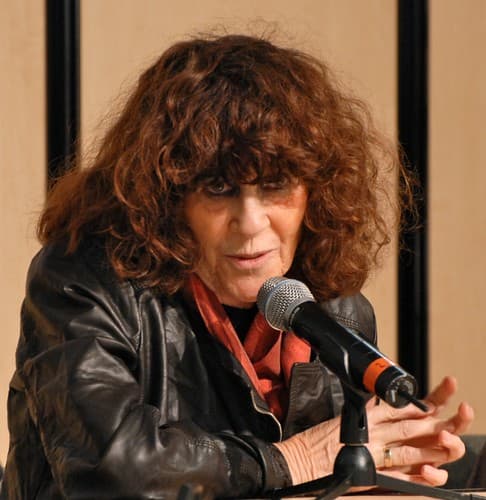
Marie-Claire Blais was a Canadian author known for her contributions to fiction. Her notable work, "Mad Shadows," explores complex themes and characters, showcasing her distinctive narrative style. Blais's writing has garnered significant attention in literary circles, marking her as an important figure in contemporary literature.
Similar books
- Wuthering Heights
Emily Brontë
3.9 (1.3M) average on GoodreadsHistorical FictionExplores intense, destructive family dynamics and dark passions within an isolated setting.
- The Picture of Dorian Gray
Oscar Wilde
4.1 (966k) average on GoodreadsFantasyDeals with themes of beauty, narcissism, moral decay, and a character's physical transformation reflecting inner corruption.
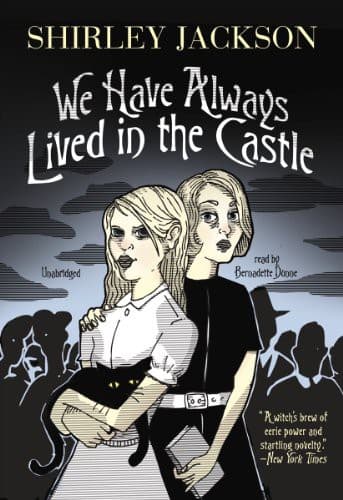
- We Have Always Lived in the Castle
Shirley Jackson
4.0 (118k) average on GoodreadsThrillerFeatures an isolated, eccentric family with dark secrets and a pervasive sense of unease.
- Lord of the Flies
William Golding
3.7 (2.3M) average on GoodreadsYoung AdultBoth explore innate human evil, but Blais focuses on familial and psychological decay driven by narcissism, whereas Golding examines the collapse of societal order among children. Golding's allegory is more direct and societal; Blais's is intensely internal and familial.
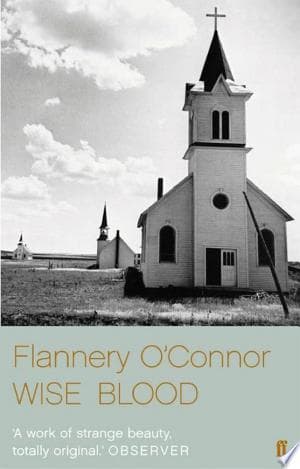
- Wise Blood
Flannery O'Connor
3.9 (26k) average on GoodreadsLiterary FictionBoth feature grotesque characters and bleak worldviews. However, O'Connor's work, though dark, often possesses an underlying, albeit twisted, theological framework exploring spiritual truth. Blais's Mad Shadows is largely nihilistic, devoid of a spiritual dimension or the pursuit of grace.
- Harry Potter and the Sorcerer's Stone
J.K. Rowling
4.5 (7M) average on GoodreadsFantasyRescued from a miserable life under the stairs, an orphaned boy discovers he's a wizard destined for a magical school, where he uncovers a dangerous secret tied to the dark wizard who murdered his parents.




Enjoyed the summary?
A summary gives you the shape of the book. The book itself has the detail, the examples and the voice.
Find Mad Shadows on AmazonAs an Amazon Associate, BookBrief earns from qualifying purchases. How we're funded