
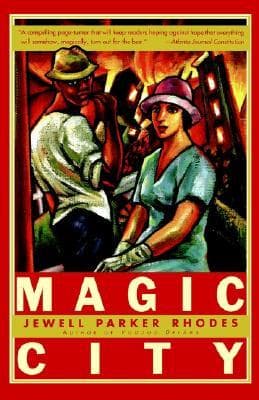
Synopsis
Covers the whole plot, including the ending.
- Difficulty
- Medium
- Pacing
- Fast
- Mood
- Intense, Tragic, Historical, Suspenseful, Thought-provoking
- Read it if
- You are interested in a powerful, character-driven historical novel based on the Tulsa Race Massacre of 1921.
- Skip it if
- You prefer light-hearted reads or are sensitive to graphic depictions of racial violence and injustice.
Magic City Plot Summary
Covers the whole plot, including the ending.
The Elevator Incident
In Tulsa, Oklahoma, 1921, Joe, a young Black man who wants to be a magician, finds himself alone in an elevator with a white woman, Mary. Joe accidentally brushes against Mary while trying to exit, causing her to scream. Startled and fearing the consequences of being alone with a white woman during that time, Joe panics and flees. His hurried escape is seen as an admission of guilt, and Mary's cry is taken as an accusation of rape. This incident immediately ignites racial animosity, starting a chain of events that will engulf the city.
The Arrest and Initial Fury
After Mary's accusation and Joe's flight, authorities quickly arrest Joe. He is taken to the Tulsa County Courthouse. News of the alleged assault spreads quickly through the white community, fueled by racial prejudice and exaggerated reports. A large and increasingly angry white mob gathers outside the courthouse, demanding Joe's immediate lynching. The mob's intentions are clear, and the sheriff struggles to maintain control, understanding the threat to Joe's life.
Mary's Dilemma and Confession
Mary, a young woman from a rural background, feels guilt and fear. She knows her scream was from fright, not an actual assault, but the accusation has gained its own momentum. Her family and community pressure her to maintain the story of an attack. However, the image of Joe's terrified face and the growing violence against him weigh on her conscience. She eventually confesses to her father that Joe did not assault her, explaining that her initial panic caused her scream.
The Black Community Mobilizes
As the white mob grows in size and aggression, news reaches Tulsa's prosperous Black community, Greenwood, known as 'Black Wall Street.' Black World War I veterans, led by figures like O.W. Gurley and J.B. Stradford, are aware of the history of lynchings and racial violence. They arm themselves and organize, determined to prevent Joe from being lynched and to defend their community. They march to the courthouse, offering to help the sheriff protect Joe, but the white mob sees their presence as defiance, further increasing tensions.
Confrontation at the Courthouse
The armed Black men arrive at the courthouse, creating a tense standoff with the white mob and authorities. A scuffle occurs, and a shot is fired, though its origin is unclear. This shot breaks the fragile peace and starts a full riot. Gunfire erupts between the two groups, and the situation quickly becomes chaotic. The sheriff's attempts to control the situation are overwhelmed, and the conflict shifts from protecting Joe to a broader racial conflict in the city center.
The Attack on Greenwood
Following the courthouse confrontation, the white mob, now inflamed and largely unchecked, turns its destructive attention toward Greenwood. They invade the district, looting businesses, burning homes, and attacking residents without distinction. The once-thriving 'Black Wall Street' becomes a war zone, with Black families fighting for their lives and property against overwhelming odds. The destruction is systematic and brutal, aimed at destroying the economic and social heart of the Black community.
Joe's Escape Attempt
While the riot rages, Joe, still imprisoned, recognizes his dangerous situation. The courthouse is no longer safe but a potential death trap. He uses his emerging magical skills and quick thinking to attempt an escape from his cell. His desire to be a magician, to perform the ultimate escape, now becomes a desperate fight for survival. He manages to slip away amidst the pandemonium, hoping to disappear into the burning city and evade both the mob and authorities.
Mary's Desperate Act
Driven by overwhelming guilt and the horrifying reality of the destruction she inadvertently helped start, Mary, despite the danger, tries to publicly retract her accusation. She tries to make her confession known, risking her own safety and social standing in a community unwilling to hear it. Her efforts are met with hostility and disbelief, as the mob is too consumed by hatred and violence to listen to reason or truth. Her journey from victim to reluctant truth-teller is full of peril.
The National Guard's Intervention
As the riot escalates and the destruction of Greenwood becomes clear, the Oklahoma National Guard is eventually called in. However, their intervention is not always a force for justice. While they eventually restore order, their initial actions sometimes involve complicity in the violence, disarming Black residents while allowing white rioters to continue. The Guard's arrival marks the beginning of the end of the active violence, but not before immense damage has been done and many lives lost.
Aftermath and Reckoning
The Tulsa Race Massacre finally ends, leaving Greenwood in ruins. The destruction is immense, with hundreds of homes and businesses destroyed, and an unknown number of lives lost. Joe's fate remains uncertain, as does Mary's. The city tries to hide what happened, with official reports downplaying the violence and blaming the Black community. Survivors are left to deal with the trauma, loss, and systemic injustices that allowed such an atrocity to occur, forever changing the place and its residents' lives.
Principal Figures
Joe
Protagonist
A young black man falsely accused, aspiring to be a magician.
Joe is a young, ambitious black man in Tulsa, 1921, with a deep fascination for magic, particularly the escape artistry of Houdini. He is gentle, observant, and somewhat naive to the full extent of racial tensions until he becomes their direct victim. His dream of becoming a magician is not just entertainment; it represents a desire for control, for escaping limitations, and for creating wonder in a world that often denies it to him. His quick thinking and resourcefulness are tested to their limits during his ordeal.
Relationships: Mary (Accused of assaulting her, though innocent; their lives become intertwined by the incident.); O.W. Gurley (Respected elder in Greenwood, a figure of potential mentorship and community protection.)
Mary
Supporting
A white woman whose panicked scream falsely accuses Joe, leading to the riot.
Mary is a young, motherless white woman from a rural background, brought to Tulsa by her father. She is initially fearful and unworldly, easily overwhelmed by unfamiliar situations and the expectations placed upon her. Her scream in the elevator is a genuine reaction of panic, not malice, but it sets off a catastrophic chain of events. Throughout the story, she grapples with immense guilt and a dawning understanding of the devastating consequences of her actions and the racial prejudice that fuels the city's reaction.
Relationships: Joe (The object of her false accusation; she later feels profound guilt and tries to help him.); Her Father (Her protective but also controlling parent, whose expectations influence her initial silence.)
O.W. Gurley
Supporting
A prominent black businessman and leader in Greenwood.
O.W. Gurley is a respected and influential figure in Tulsa's Greenwood district, a successful entrepreneur who helped build 'Black Wall Street.' He is a pragmatic and courageous leader, deeply committed to the prosperity and protection of his community. Gurley represents the strength, resilience, and organized resistance within the black community. He understands the precarious position of black success in a racially hostile environment and is instrumental in mobilizing black veterans for defense.
Relationships: J.B. Stradford (Fellow prominent black businessman and community leader, co-organizer of defense efforts.)
Sheriff
Supporting
The local law enforcement officer who tries to prevent a lynching.
The Sheriff is a figure caught between his duty to uphold the law and the overwhelming pressure of a racist mob. He initially tries to protect Joe from lynching, understanding the injustice and potential for widespread violence. However, he is ultimately outmatched and overwhelmed by the sheer number and ferocity of the white rioters. His character highlights the limitations of official authority in the face of deeply entrenched racial hatred and mob rule.
Relationships: Joe (His prisoner, whom he tries to protect from the mob.); The White Mob (Antagonistic force he attempts to control, largely unsuccessfully.)
Mary's Father
Supporting
A protective but traditional farmer, initially pressuring Mary to maintain the false accusation.
Mary's Father is a traditional, somewhat stern farmer who is deeply concerned with his daughter's honor and future. He is quick to believe the worst about Joe and initially pressures Mary to stick to the story of assault, influenced by societal prejudices and a desire to protect his family's reputation. He represents the ingrained racial biases of many white individuals of the era, though his love for his daughter is genuine. He struggles to reconcile his beliefs with Mary's eventual confession.
Relationships: Mary (His daughter, whose honor he seeks to protect, but whose truth he initially resists.)
J.B. Stradford
Supporting
Another wealthy black businessman and community pillar in Greenwood.
J.B. Stradford, like O.W. Gurley, is a successful black entrepreneur and a key figure in the prosperity of Greenwood. He is a symbol of black achievement and resilience, having built significant wealth and property despite systemic racism. He works alongside Gurley to organize the defense of their community, demonstrating courage and a deep commitment to his people. His character underscores the scale of what was lost during the massacre.
Relationships: O.W. Gurley (Fellow leader and partner in defending Greenwood.)
The White Mob
Antagonist
A collective force of white citizens driven by racial hatred and the desire for violence.
The White Mob is not a single character but a collective antagonist, representing the pervasive racism and mob mentality of the era. Composed of various white citizens, from working-class to seemingly respectable individuals, they are fueled by rumors, prejudice, and a desire to assert racial dominance. They are a destructive, irrational force, capable of extreme violence and cruelty, demanding Joe's lynching and ultimately orchestrating the destruction of Greenwood. They embody the darkest aspects of human nature when unchecked by law or morality.
Relationships: Joe (Their intended victim.); Greenwood Residents (Targets of their violence and destruction.)
Themes & Insights
Racial Injustice and Violence
The main theme is the brutal reality of racial injustice and the devastating effects of systemic racism. The novel shows how a false accusation against a Black man can ignite racial hatred, leading to widespread violence and the destruction of an entire community. The disproportionate response to Joe's accidental touch, the immediate assumption of guilt, and the targeting of Greenwood show the deep prejudice and constant threat of violence faced by African Americans in the early 20th century. The massacre itself illustrates racial terror.
“Magic City was a place where black people could be free, could be rich. But the white folks saw it, and they couldn’t stand it.”
The Power of Truth vs. Prejudice
The novel explores the struggle between an individual's truth and the overwhelming force of societal prejudice. Mary's initial scream is a moment of panic, not an accusation of rape, but racial bias immediately twists it into a story of Black male aggression against white female purity. Despite Mary's later attempts to confess the truth, the mob will not hear it, preferring the convenient lie that justifies their hatred and violence. This theme highlights how prejudice can blind people to facts and perpetuate injustice, making it difficult for truth to prevail.
“Her scream had started it. A tiny seed of fear, blooming into a forest of hatred.”
Resilience and Community
Despite the horrific violence and injustice, the novel also shows the resilience and strength of the Black community in Greenwood. The residents, especially the Black veterans, organize and arm themselves not just to protect Joe, but to defend their homes, businesses, and way of life. This theme emphasizes the power of collective identity, mutual support, and the determination to thrive even in extreme adversity. The initial prosperity of 'Black Wall Street' itself shows this resilience, built through hard work and community solidarity.
“They called it Black Wall Street, and it was. A city built on dreams and sweat and hope, strong as any white man’s.”
The Illusion of Safety
The novel powerfully conveys the illusion of safety that can exist for minority communities, especially when economic success is achieved within a racially hostile society. Greenwood, a thriving Black district, felt like a safe haven where Black people could prosper. However, the elevator incident shatters this illusion, revealing how precarious their safety was and the constant threat of white supremacist violence. The swift and brutal destruction of Greenwood shows that no amount of success or self-sufficiency could truly protect them from the ingrained prejudice of the time.
“No matter how high you built your walls, hate could always find a way to climb over them.”
Plot Devices & Literary Techniques
The Elevator Incident
A seemingly minor accident that acts as the inciting incident for the entire plot.
The accidental brush between Joe and Mary in the elevator serves as the pivotal inciting incident. It's a seemingly innocuous moment, but its interpretation is immediately filtered through the lens of deep-seated racial prejudice. This device is crucial because it highlights how easily racial tensions can escalate, turning a misunderstanding into a catalyst for widespread violence. It sets the entire narrative in motion, showcasing the fragility of peace and the explosive potential of racial animosity in 1920s Tulsa.
Joe's Magic Aspirations
Joe's dream of becoming a magician, particularly an escape artist.
Joe's ambition to be a magician, specifically an escape artist like Houdini, functions as a powerful symbolic plot device. Initially, it represents his desire for wonder and control, a way to transcend his circumstances. However, as the plot unfolds, his magical skills transform into a literal means of survival, forcing him to perform the 'greatest escape' from actual imprisonment and a lynch mob. This device underscores the theme of freedom and constraint, and how an innocent dream can become a desperate reality.
Black Wall Street (Greenwood District)
The prosperous black community as both a setting and a symbol.
The Greenwood District, known as 'Black Wall Street,' functions as more than just a setting; it is a powerful symbolic plot device. It represents black achievement, self-sufficiency, and community building in the face of systemic racism. Its existence challenges white supremacist narratives and fuels the resentment that ultimately leads to its destruction. The vibrant life and subsequent devastation of Greenwood serve to highlight the injustice of the massacre and the immense cultural and economic loss inflicted upon the black community.
Mary's Guilt and Confession
Mary's internal struggle and attempts to reveal the truth.
Mary's evolving guilt and her desperate attempts to confess the truth about the elevator incident serve as a crucial plot device. Her internal conflict provides a moral counterpoint to the mob's unchecked hatred and highlights the human cost of racial prejudice. Her confession, though initially unheard, represents the novel's exploration of truth versus convenient lies, and the personal courage required to challenge a dominant, oppressive narrative. It underscores the theme of individual responsibility within a collective tragedy.
Magic City Quotes
“The blues ain't nothin' but a good woman feelin' bad.”
“History is a story, and sometimes the truth in a story is more important than the facts.”
“Sometimes you gotta make your own magic.”
“Grief is a ghost that haunts the living.”
“The past ain't never really past, not as long as folks remember it.”
“A good song can heal a broken heart, even if it just for a little while.”
“Fear is a powerful master, but hope, that's a stronger one.”
“You can't outrun your shadow, but you can learn to dance with it.”
“The world ain't always fair, but that don't mean you gotta give up.”
“Every person got a story, and every story deserves to be heard.”
“Sometimes, the only way to get through the darkness is to find your own light.”
“Love ain't always easy, but it's always worth fighting for.”
“The land remembers what the people forget.”
Quiz
10 questions on the plot and the characters. Each answer comes with a short explanation.
Question 1
What is Joe's primary aspiration at the beginning of the novel?
- To become a successful farmer
- To be the next Houdini
- To open a magic shop in Tulsa
- To join the National Guard
Show answer
B. To be the next Houdini Joe is introduced as a young man deeply interested in magic and illusion, specifically aspiring to follow in Houdini's footsteps.
Question 2
What event immediately precedes Joe's accusation and the start of the chase?
- A fire breaking out in downtown Tulsa
- Mary's father announcing her engagement
- Mary screaming while alone with Joe in an elevator
- A public magic performance by Joe
Show answer
C. Mary screaming while alone with Joe in an elevator The inciting incident of the novel is Mary's panicked scream while alone with Joe in an elevator, which is misinterpreted as an assault.
Question 3
What is the nickname given to the prosperous black community in Tulsa that is central to the story?
- Black Wall Street
- Magic City Square
- The Greenwood District
- The Negro Renaissance
Show answer
A. Black Wall Street The novel explicitly refers to the affluent black community in Tulsa as 'Negro Wall Street' (or 'Black Wall Street'), highlighting its economic success.
Question 4
Why does Mary initially accuse Joe with her panicked cry?
- She recognized him as a man who had previously harassed her.
- She was startled and overwhelmed, leading to a misinterpretation of the situation.
- Joe had actually assaulted her in the elevator.
- She was pressured by her father to make the accusation.
Show answer
B. She was startled and overwhelmed, leading to a misinterpretation of the situation. Mary's scream is described as a 'panicked cry,' implying a reaction of fear or shock rather than a deliberate false accusation based on an actual assault by Joe.
Question 5
Who is the 'farmhand who viciously raped' Mary, and what does her father try to do with him?
- Joe, and her father tries to help him escape.
- An unnamed farmhand, and her father tries to marry Mary off to him.
- A local sheriff, and her father tries to report him.
- A member of the National Guard, and her father tries to get him arrested.
Show answer
B. An unnamed farmhand, and her father tries to marry Mary off to him. The synopsis states that Mary's father 'tries to marry her off to the farmhand who viciously raped her,' revealing a dark aspect of Mary's past and her father's character.
Question 6
What is the broader historical context that the novel is 'based on true events' and climaxes in?
- The Great Migration of African Americans to northern cities.
- The women's suffrage movement gaining momentum in the 1920s.
- The Tulsa Race Massacre of 1921, where the National Guard confronted black residents.
- The rise of organized crime during the Prohibition era.
Show answer
C. The Tulsa Race Massacre of 1921, where the National Guard confronted black residents. The description explicitly mentions the 'heroic but doomed stand that pitted the National Guard against a small band of black men determined to defend the town they had built,' directly referencing the historical Tulsa Race Massacre of 1921.
Question 7
What is the primary motivation for the 'bloodthirsty lynch mob' pursuing Joe?
- Their desire to reclaim stolen goods from Joe.
- Racial prejudice and the false accusation of rape against a black man by a white woman.
- Joe's reputation as a troublemaker in the community.
- A reward offered for Joe's capture.
Show answer
B. Racial prejudice and the false accusation of rape against a black man by a white woman. The context of 'a white woman and a black man are alone in an elevator. Suddenly, the woman screams, the man runs out, and the chase to capture and lynch him begins' strongly indicates that racial prejudice fuels the mob's desire for a lynching.
Question 8
What is the significance of the title 'Magic City' in relation to the novel's themes and plot?
- It refers to a specific magical trick Joe performs to escape the mob.
- It symbolizes the illusion of safety and prosperity in a racially charged environment, and Joe's aspirations for magic.
- It is the name of the entertainment venue where Joe performs.
- It describes the advanced technology present in Tulsa at the time.
Show answer
B. It symbolizes the illusion of safety and prosperity in a racially charged environment, and Joe's aspirations for magic. The title likely alludes to Joe's dream of becoming a magician (Houdini) and the seemingly 'magical' prosperity of Black Wall Street, which ultimately proves to be a vulnerable illusion in the face of racial violence.
Question 9
How does Mary's personal experience with rape by the farmhand inform her decision to help exonerate Joe?
- Her past trauma makes her more likely to believe Joe is guilty.
- Her knowledge of actual sexual violence helps her discern that Joe did not commit the act he's accused of, motivating her to seek justice.
- She wants to use Joe's case to expose her own attacker.
- It makes her indifferent to Joe's plight.
Show answer
B. Her knowledge of actual sexual violence helps her discern that Joe did not commit the act he's accused of, motivating her to seek justice. The synopsis states Mary 'must find the courage to help exonerate the man she had accused with her panicked cry.' Her personal experience with actual sexual violence would give her a unique perspective to understand the difference between a real assault and a panicked reaction, driving her to correct the injustice.
Question 10
The novel is described as 'a portrait of an era.' What specific aspects of the era does it primarily aim to portray through its narrative?
- The economic boom and cultural changes across all of America in the 1920s.
- The stark racial inequalities, racial violence, and the vulnerability of black prosperity in the early 20th century American South.
- The challenges faced by women in seeking independence and career opportunities.
- The rise of new artistic movements and intellectual thought in urban centers.
Show answer
B. The stark racial inequalities, racial violence, and the vulnerability of black prosperity in the early 20th century American South. Given the focus on the Tulsa Race Massacre, a black man being falsely accused by a white woman, and the defense of 'Negro Wall Street,' the novel clearly aims to portray the racial tensions, violence, and the precariousness of black success during that period.
Magic City FAQ
What is the central conflict that ignites the plot of 'Magic City'?
The central conflict begins when Sarah Page, a white elevator operator, screams after being alone in an elevator with Joe, a young Black man. Joe then flees, leading to his false accusation of rape and the subsequent pursuit by a white lynch mob, setting the stage for the Tulsa Race Massacre.
Who is Joe and what are his aspirations at the beginning of the novel?
Joe is a young Black man living in Tulsa, Oklahoma, in 1921. He is an aspiring magician, deeply inspired by Harry Houdini, and dreams of becoming a master escape artist. His magical aspirations become tragically ironic when he is forced to perform a real-life 'escape' from a lynch mob.
Who is Mary and what is her personal struggle early in the story?
Mary is a young white woman, the motherless daughter of a farmer. She is struggling with the trauma of having been raped by a farmhand named Jed. Her father, unaware of the rape, attempts to force her into marriage with Jed, adding to her profound distress and lack of agency.
How does the novel connect Joe and Mary's individual stories?
Joe and Mary's stories become intertwined when Mary, initially panicking and screaming in the elevator, inadvertently implicates Joe. Later, driven by her conscience and understanding of false accusations due to her own trauma, she must find the courage to help exonerate him, forming a crucial moral bridge between their experiences.
What historical event serves as the climax for 'Magic City'?
The climax of 'Magic City' is the Tulsa Race Massacre of 1921. This event depicts the heroic but ultimately doomed stand of Black residents defending their community, 'Negro Wall Street,' against the National Guard and white mobs, leading to widespread destruction and loss of life.
What is the significance of Joe's 'Houdini' aspirations in the context of the racial tensions?
Joe's desire to be a Houdini is a poignant metaphor for the impossible escapes Black men had to make from systemic racism and violence. His magical training, meant for entertainment, becomes a desperate survival skill, highlighting the stark reality that for Black individuals in 1921 Tulsa, freedom itself was the greatest escape act.
How does Mary's experience with Jed inform her eventual decision to help Joe?
Mary's rape by Jed gives her a profound, albeit painful, understanding of false accusations and the vulnerability of victims. This trauma allows her to empathize with Joe's predicament and recognize the injustice of the situation, empowering her to speak out despite the societal pressures against her.
What role do the 'magic city' and 'Negro Wall Street' concepts play beyond their literal descriptions?
The 'magic city' refers to the prosperous Black community of Greenwood, known as 'Negro Wall Street,' which was a testament to Black resilience and self-sufficiency. This prosperity itself became a source of white resentment, making its destruction not just an act of racial violence but an attack on Black economic and social progress, mirroring a 'magic' that was envied and feared.
How does the novel explore the concept of performativity in both magic and racial identity?
The novel explores performativity through Joe's magic acts, which are about illusion and control, contrasting sharply with the 'performance' of racial identity enforced by society. Black characters are constantly 'performing' for white society to navigate dangerous situations, while white characters 'perform' their perceived dominance. Joe's true 'performance' becomes his fight for survival, stripping away the illusions of justice.
Discuss the psychological impact of the accusation on Joe, even before the physical chase begins.
Psychologically, the accusation immediately strips Joe of his agency and humanity, reducing him to a stereotype. The sudden shift from an aspiring magician to a hunted man creates intense fear, paranoia, and a profound sense of injustice, forcing him into a survival mindset where his dreams are secondary to his very existence.
Analyze Mary's internal conflict and transformation from a victim to an advocate.
Mary's internal conflict stems from her own trauma and the societal pressure to maintain a false narrative. Initially a victim of Jed's violence and her father's ignorance, she transforms by confronting her fear and guilt. Her decision to advocate for Joe signifies her reclaiming agency and finding her voice, moving beyond her personal suffering to challenge a larger injustice.
How does the novel portray the mob mentality and its psychological underpinnings?
The novel portrays mob mentality as a terrifying force driven by fear, racial prejudice, and a desire for collective vengeance, often fueled by rumors and a lack of critical thinking. Individuals within the mob lose their personal accountability, becoming part of a larger, dehumanizing entity that justifies extreme violence, showcasing the psychological erosion of individual conscience.
What psychological toll does living under constant racial threat take on the Black community in Tulsa?
Living under constant racial threat imposes immense psychological stress, including chronic fear, hypervigilance, and a pervasive sense of injustice. It fosters a collective trauma where safety is precarious, and self-worth is constantly challenged, leading to resilience but also deep-seated emotional wounds and a sense of being perpetually 'on guard.'
Does 'Magic City' offer any hope or redemption amidst its tragic narrative?
While the novel culminates in the tragic Tulsa Race Massacre, it offers hope and redemption through individual acts of courage and moral clarity. Mary's decision to speak the truth, and the unwavering defense of Greenwood by its residents, highlight human resilience, the power of conscience, and the enduring fight for justice, even in the face of overwhelming odds.
How does the ending of the book, particularly the fate of 'Negro Wall Street,' reflect on the American Dream for Black citizens?
The destruction of 'Negro Wall Street' at the book's climax starkly illustrates the fragility and often violent denial of the American Dream for Black citizens. It shows that even immense success and self-sufficiency could not protect them from racial hatred, suggesting that the dream was conditional and easily shattered by systemic white supremacy.
What is the novel's commentary on the role of gender and race in perceived truth and justice in 1921 America?
The novel powerfully comments on how gender and race dictated truth and justice. A white woman's panicked scream, even if mistaken, was immediately believed over a Black man's innocence. This highlights the double standard where white female vulnerability was weaponized against Black men, denying them due process and perpetuating racial violence under the guise of protecting white womanhood.
In what ways does 'Magic City' challenge or affirm traditional historical narratives of the Tulsa Race Massacre?
'Magic City' affirms the historical facts of the massacre while challenging traditional narratives by centering the individual experiences and psychological toll on both Black and white characters. It humanizes the victims and perpetrators, moving beyond dry historical accounts to explore the emotional and moral complexities, particularly highlighting the role of individual conscience and the insidious nature of systemic racism.
How does the symbolism of magic and illusion resonate throughout the story beyond Joe's personal ambitions?
The symbolism of magic extends beyond Joe to represent the illusions of justice and equality in America. The idea of a 'magic city' built by Black prosperity was itself an illusion of safety, shattered by violence. The entire societal structure was built on the illusion of white superiority and the 'magic' of making Black lives disappear or be deemed less worthy, making the search for truth an act of 'seeing through' these illusions.
About the author

Jewell Parker Rhodes is an American author known for her contributions to contemporary fiction. Her notable works include "Ninth Ward," which explores themes of resilience in the face of adversity, and "Magic City," a story that delves into the complexities of race and identity. Rhodes' writing often reflects her experiences and insights into African American culture.
Similar books
- The Nickel Boys
Colson Whitehead
4.3 (123k) average on GoodreadsLiterary FictionExplores racial injustice and historical trauma in a compelling, character-focused narrative.
- The Water Dancer
Ta-Nehisi Coates
4.1 (64k) average on GoodreadsFantasyCombines historical fiction with elements of magical realism to explore themes of freedom and oppression.
- To Kill a Mockingbird
Harper Lee
4.3 (4.5M) average on GoodreadsHistorical FictionIn the 1930s Jim Crow South, Harper Lee writes about racial injustice, moral growth, and the quiet courage of a lawyer father, Atticus Finch, as seen through his young daughter's eyes.
- The Great Gatsby
F. Scott Fitzgerald
3.9 (3.8M) average on GoodreadsHistorical FictionIn the opulent Roaring Twenties, a mysterious millionaire's lavish parties hide his desperate, tragic pursuit of a lost love, exposing the emptiness within the American Dream.
- Pride and Prejudice
Jane Austen
4.3 (3M) average on GoodreadsHistorical FictionIn a society focused on status and money, Elizabeth Bennet navigates love and pride, challenging Mr. Darcy and social expectations to find true affection.
- Angels & Demons
Dan Brown
3.9 (2.7M) average on GoodreadsThrillerA Harvard symbologist races through Rome's ancient sites, deciphering cryptic clues to unmask the Illuminati and stop a vengeful plot to destroy the Vatican with a stolen antimatter weapon.




Enjoyed the summary?
A summary gives you the shape of the book. The book itself has the detail, the examples and the voice.
Find Magic City on AmazonAs an Amazon Associate, BookBrief earns from qualifying purchases. How we're funded