
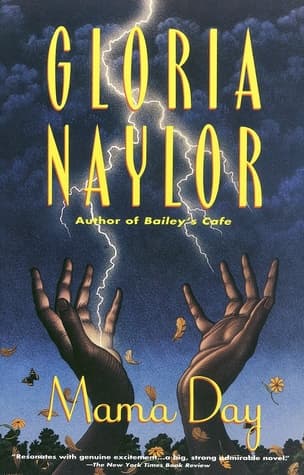
Synopsis
Covers the whole plot, including the ending.
- Difficulty
- Medium
- Pacing
- Moderate
- Mood
- Atmospheric, Mystical, Profound, Heartbreaking, Empowering
- Read it if
- You enjoy rich, character-driven literary fiction with elements of magical realism, exploring themes of family, heritage, and the clash between tradition and modernity. Perfect for those who appreciate a unique blend of folklore, love story, and a touch of the supernatural.
- Skip it if
- You prefer fast-paced thrillers or hard realism without any mystical elements. Also, if you dislike non-linear narratives or stories that prioritize atmosphere and character over strict plot progression.
Mama Day Plot Summary
Covers the whole plot, including the ending.
Introduction to Willow Springs and the Legacy of Bascombe Wade
The novel opens with an unconventional, collective narrative voice introducing Willow Springs, an island off the coast of Georgia and South Carolina. It is unique for its self-governance and its history rooted in the legacy of Bascombe Wade. Wade, an enslaver, lost the island in a card game to his enslaved woman, Sapphira, in 1823. Sapphira then divided the land among her descendants, establishing a community independent and connected to its ancestral roots. The narrative highlights the island's magical and spiritual essence, where the boundary between the living and the dead, the natural and the supernatural, is fluid. This introduction sets the stage for the stories of Mama Day and her great-niece, Cocoa, establishing the deep historical and mystical context that shapes their lives.
Cocoa's City Life and Mama Day's Island Wisdom
Ophelia, known as Cocoa, recounts her life in New York City, working in an office and navigating modern urban existence. She often thinks about her childhood in Willow Springs, raised by her great-aunt, Miranda Day, and her grandmother, Abigail. Cocoa's narrative shows her deep affection for Mama Day, who embodies the island's ancient wisdom and healing powers. Despite her love for her family and the island, Cocoa has embraced a more conventional, city-dweller's life, often finding herself at odds with the mystical and communal ways of Willow Springs. Her memories show the contrast between her current reality and the magical, tradition-bound world she left behind, setting up her eventual return.
The Arrival of George and His Relationship with Cocoa
Cocoa meets George Andrews, a kind and somewhat naive man, in New York City. George, having grown up in an orphanage, lacks a deep connection to family or a sense of place, making him a contrast to Cocoa's rooted background. Their relationship develops steadily, built on mutual affection and a shared desire for stability. George, a dedicated and practical man, is bewildered by Cocoa's stories of Willow Springs and its mystical inhabitants, unable to fully grasp the spiritual dimensions she describes. Despite their differences, they fall in love and eventually marry, creating a life together in the city. Their bond is strong, but George's rational worldview will soon be tested by the supernatural realities of Willow Springs.
Cocoa's Illness and the Call to Willow Springs
Cocoa experiences a mysterious and debilitating illness in New York, characterized by extreme fatigue, hallucinations, and a sense of spiritual decay. Modern medicine does not work, and her condition worsens rapidly. Sensing a spiritual attack, Mama Day, from Willow Springs, uses her powers to discern that Cocoa is in danger and needs to return to the island. Mama Day sends word for Cocoa and George to come to Willow Springs, believing that the illness is rooted in the island's spiritual forces and can only be cured there. This urgent call marks a turning point, forcing Cocoa and George to confront the realities of a world beyond their urban experiences.
George and Cocoa's Arrival on Willow Springs
George and Cocoa arrive on Willow Springs, a place that immediately challenges George's rational understanding of the world. The islanders greet them with warmth and subtle scrutiny, accustomed to outsiders. George is struck by the island's isolation, its reliance on communal customs, and the pervasive sense of history and spirituality that is part of daily life. He struggles to adapt to the lack of modern conveniences, the superstitions, and the traditions that govern the community. Cocoa, though ill, feels a pull back to her roots, while George remains an outsider, his skepticism and urban sensibilities clashing with the island's ancient ways. Mama Day observes them both, understanding the spiritual battle unfolding.
The Unveiling of Ruby and Her Malice
As Cocoa's condition deteriorates further on Willow Springs, Mama Day works to diagnose the spiritual cause of her illness. She discovers that Ruby, an envious islander, is behind Cocoa's affliction. Ruby, a practitioner of dark magic, is using 'roots' (folk magic) to harm Cocoa, driven by resentment and perhaps a desire for George. Mama Day understands that this is not a physical ailment but a spiritual attack, requiring traditional island remedies and a confrontation with Ruby's forces. The revelation of Ruby's involvement escalates the conflict, making it clear that Cocoa's survival depends on Mama Day's spiritual prowess and the island's ancient magic.
Mama Day's Efforts to Heal Cocoa
Mama Day uses a range of traditional healing practices to combat Ruby's magic and save Cocoa. She uses herbs, incantations, and spiritual rituals, drawing upon generations of ancestral knowledge. Despite her efforts, Ruby's 'roots' are strong, and Cocoa's health continues to wane. Mama Day realizes that the situation requires a deeper intervention, a symbolic 'sacrifice' or offering to appease the forces at play and break Ruby's spell. She understands that the solution is not just in physical remedies but in a spiritual exchange, one that involves George, the outsider, and his willingness to embrace the island's unseen realities. This realization sets the stage for the confrontation.
The Confrontation and George's Sacrifice
Mama Day instructs George to retrieve a specific object from the ancestral chicken coop, believing it is essential for breaking Ruby's spell. She gives him very specific, seemingly nonsensical instructions, including bringing her 'the hand.' George, still a skeptic and struggling to understand the island's ways, misinterprets her instructions. Driven by his love for Cocoa and a desperate desire to save her, he attempts to chop off his own hand, believing it to be the 'hand' Mama Day requested. In his weakened state from a storm and his own internal conflict, George accidentally falls and strikes his head, dying from the injury. His death is a tragic misunderstanding, a sacrifice born of love but hindered by his inability to fully comprehend the spiritual language of Willow Springs.
The Aftermath and Ruby's Demise
George's death, though accidental, fulfills the necessary 'sacrifice' to appease the spiritual forces and break Ruby's hold over Cocoa. Immediately following his death, Ruby's magic collapses, and her own life force is drained. The islanders discover Ruby's body, showing the full extent of her malevolence and the power of the 'roots' she wielded. With Ruby's power gone, Cocoa begins a slow but steady recovery, though deeply traumatized by George's death. Mama Day, heartbroken by the loss of George, understands the complex interplay of love, sacrifice, and spiritual forces that led to this tragic outcome, recognizing that George's love ultimately saved Cocoa, even at the cost of his own life.
Cocoa's Mourning and Return to Willow Springs
Devastated by George's death, Cocoa enters a period of mourning. She struggles to reconcile her love for George with the strange, mystical circumstances of his passing and the island's role in it. Mama Day supports her through her grief, helping her understand the spiritual complexities of Willow Springs and the nature of George's sacrifice. Over time, Cocoa begins to heal, finding solace in the island's community and her ancestral heritage. She decides to remain on Willow Springs, embracing her roots and the unique connection to the land and its people. This decision means she accepts the spiritual world and her role within the Day family legacy, bringing her journey full circle from urban independence to rooted belonging.
Mama Day Characters
Mama Day (Miranda Day)
Protagonist/Matriarch
The powerful matriarch and spiritual healer of Willow Springs, embodying the island's ancient wisdom.
Mama Day is the wise, powerful, and ancient matriarch of the Day family and the spiritual center of Willow Springs. She is a revered conjure woman, healer, and a direct descendant of Sapphira, the enslaved woman who founded the island. Mama Day possesses profound knowledge of herbs, 'roots' (folk magic), and the spiritual world, acting as both a protector and a guide for her community. She is deeply connected to the land and its history, often communicating with ancestors and interpreting signs from nature. Her love for Cocoa is immense, driving her to extreme lengths to save her great-niece from spiritual attack. Mama Day represents the enduring power of tradition, family, and the mystical elements of Willow Springs.
Relationships: Cocoa (Ophelia) (great-aunt and guardian; deep, loving, and protective bond); George Andrews (respectful but often bewildered by his skepticism, ultimately recognizing his love and sacrifice); Abigail (sister-in-law and fellow matriarch; close, supportive relationship); Ruby (spiritual adversary; conflict rooted in opposing magical forces)
Cocoa (Ophelia Day)
Protagonist
Mama Day's great-niece, a modern city woman whose life is intertwined with Willow Springs' mystical forces.
Ophelia, known as Cocoa, is a young black woman living and working in New York City. She is intelligent, independent, and initially skeptical of the supernatural aspects of her Willow Springs upbringing, preferring a rational, urban existence. Despite her city life, she maintains a deep, if sometimes complicated, love for Mama Day and her island home. Cocoa's journey is one of rediscovering and ultimately embracing her heritage. Her illness and near-death experience force her to confront the spiritual realities she once dismissed, leading to a profound transformation. She represents the tension between modern individualism and ancestral community, eventually finding peace by integrating both.
Relationships: Mama Day (great-aunt and guardian; deep, loving, and complex bond); George Andrews (husband; loving and supportive relationship, but challenged by his inability to understand her world); Abigail (grandmother; raised her with Mama Day, loving bond); Ruby (spiritual victim; target of Ruby's malevolent magic)
George Andrews
Supporting/Love Interest
Cocoa's rational, city-dwelling husband, an orphan whose love leads him to an unexpected sacrifice.
George Andrews is Cocoa's husband, a practical and kind-hearted man who grew up in an orphanage, giving him a strong desire for stability and a family. He is a rationalist, initially unable to comprehend or believe in the spiritual and magical world of Willow Springs. His love for Cocoa is profound and drives his actions, particularly when she falls ill. George represents the outsider's perspective, struggling to reconcile his logical worldview with the island's ancient, mystical realities. His ultimate sacrifice, though born of misunderstanding, is a testament to his love and his transformation from skeptic to unwitting participant in the island's spiritual drama. His death is central to breaking Ruby's spell.
Relationships: Cocoa (Ophelia) (husband; deep, loving, and supportive, despite cultural differences); Mama Day (respectful but unable to fully understand her instructions or the island's magic)
Ruby
Antagonist
A malevolent islander who uses dark magic to harm Cocoa, driven by envy and ill will.
Ruby is a vindictive and jealous woman from Willow Springs who practices dark 'roots' magic. She is driven by envy and a history of ill will, possibly stemming from past grievances or a desire for George. Ruby embodies the darker side of human nature and the potential for magic to be used for destructive purposes. Her malevolence is the direct cause of Cocoa's mysterious illness, making her the primary antagonist. Ruby's character highlights the balance between good and evil, healing and harm, within the spiritual landscape of Willow Springs. Her ultimate demise is a consequence of her own dark practices and the power of ancestral forces.
Relationships: Cocoa (Ophelia) (spiritual victim; target of her dark magic); Mama Day (spiritual adversary; pitted against Mama Day's healing powers)
Abigail
Supporting
Mama Day's sister-in-law and Cocoa's grandmother, a steady presence in the Day household.
Abigail is Mama Day's sister-in-law and Cocoa's grandmother. She is a kind, nurturing, and steadfast presence in the Day household, providing a loving and stable environment for Cocoa during her childhood. While not possessing Mama Day's overt magical powers, Abigail is deeply rooted in the island's traditions and provides practical wisdom and emotional support. She represents the more grounded, everyday aspects of island life and the importance of familial love and care. Her relationship with Mama Day is one of deep respect and companionship, as they navigate the complexities of raising Cocoa and maintaining the family's legacy.
Relationships: Mama Day (sister-in-law; close, supportive, and understanding bond); Cocoa (Ophelia) (grandmother; loving and nurturing guardian)
Bascombe Wade
Mentioned/Ancestral Figure
The historical figure who lost Willow Springs to Sapphira, establishing the island's unique legacy.
Bascombe Wade is a foundational, historical figure in the lore of Willow Springs. He was an enslaver who, according to island legend, lost the entire island to his enslaved woman, Sapphira, in a card game in 1823. His name is inextricably linked to the island's origin story, representing the initial injustice of slavery but also the subsequent act of reclamation and self-determination that established Willow Springs as a free black community. Though long dead, his story underpins the island's unique social structure, its independence, and the deep connection to its past. He is a symbol of both oppression and the triumph over it, setting the stage for the Day family's legacy.
Relationships: Sapphira (enslaver; lost the island to her); Day family (ancestral figure whose actions directly led to their settlement)
Sapphira
Mentioned/Ancestral Figure
The enslaved woman who won Willow Springs from Bascombe Wade and founded the Day family legacy.
Sapphira is the revered matriarch and founder of the Day family line on Willow Springs. According to legend, she won the island from Bascombe Wade in a card game, securing freedom and land for her descendants. She is the 'original' Mama Day, possessing powerful magical abilities and a fierce spirit that established the independent, self-sufficient community of Willow Springs. All subsequent Day women, especially Mama Day, trace their lineage and their powers back to her. Sapphira represents strength, resilience, and the triumph over oppression, embodying the deep spiritual connection between the Day family and the land.
Relationships: Bascombe Wade (enslaved by him, then won the island from him); Day family (founding ancestor and source of their spiritual power)
Dr. Buzzard
Supporting/Foil
A local 'root doctor' and rival of Mama Day, representing a different aspect of island magic.
Dr. Buzzard is another practitioner of 'roots' magic on Willow Springs, often presented as a foil or rival to Mama Day. While Mama Day uses her powers for healing and protection, Dr. Buzzard's methods are sometimes more ambiguous, and he is associated with the darker, more manipulative aspects of conjure. He is a known figure in the community, and his presence highlights the varied and sometimes dangerous nature of spiritual practices on the island. His interaction with Mama Day underscores the different ethical approaches to wielding supernatural power within the community, though he ultimately respects Mama Day's greater authority.
Relationships: Mama Day (colleague and rival in conjure; respectful of her ultimate power)
Mama Day Themes
Identity and Belonging
The novel explores what it means to belong, both to a physical place and a heritage. Cocoa's journey from urban independence to embracing her ancestral roots on Willow Springs shows this theme. Her struggle to reconcile her modern identity with the mystical traditions of her family highlights the tension between individual autonomy and communal connection. George, as an orphan, wants a sense of belonging, which he finds with Cocoa, but struggles to connect with the island itself. Ultimately, the book suggests that true identity is linked to one's past and the community that shapes it, especially within the context of Willow Springs.
“Just like your mama and her mama and her mama before her, they all come back to Willow Springs, one way or another.”
The Power of Ancestry and History
The history of Willow Springs, founded by Sapphira after winning the island from Bascombe Wade, is central to the novel. This foundational story, passed down through generations, shapes the islanders' identity, their independence, and their deep connection to the land. Mama Day, as a direct descendant, is a living embodiment of this ancestral power, drawing strength and wisdom from those who came before. The past is not just remembered; it actively influences the present, manifesting in spiritual forces, healing traditions, and the community's collective consciousness. The novel emphasizes that understanding and honoring one's ancestry is important for navigating life's challenges.
“We were a family then, and we're a family now. And there's some things that you can't outrun, not even in New York City.”
The Supernatural and Folk Magic ('Roots')
'Mama Day' is steeped in the supernatural, particularly the folk magic known as 'roots' or conjure. Mama Day's healing powers, Ruby's destructive spells, and the pervasive spiritual presence on Willow Springs show the reality of magic within the narrative. The island itself is a magical entity, where the veil between the living and the dead is thin, and natural elements hold spiritual significance. The conflict between Mama Day and Ruby highlights the dual nature of this magic – its potential for both healing and destruction. The theme challenges Western rationalism, asserting the validity and power of spiritual belief systems.
“There are some things that can't be explained away by what they teach you in them city schools.”
Love and Sacrifice
The novel explores various forms of love—familial, romantic, and communal—and the sacrifices made in their name. Mama Day's unconditional love for Cocoa drives her to confront powerful spiritual forces. George's deep love for Cocoa compels him, a rational outsider, to enter a world he doesn't understand, ultimately leading to his accidental, yet profound, sacrifice. His death, born of a desperate attempt to save his beloved, shows that love can transcend understanding and even lead to the ultimate self-giving. The theme highlights the transformative and redemptive power of love, even in the face of tragedy.
“He loved her so much, he would have done anything.”
The Conflict Between Modernity and Tradition
Cocoa's character embodies the tension between the modern, urban world and the traditional, mystical life of Willow Springs. Her initial skepticism and preference for city life contrast with Mama Day's wisdom and the island's ancient customs. George, representing modernity and rationalism, is bewildered by Willow Springs. The novel suggests that while modernity offers progress, it often comes at the cost of spiritual connection and communal understanding. Ultimately, the story advocates for a synthesis, where the strength of tradition can enrich and ground the individual, rather than being discarded for modern advancements.
“She had to choose between the world they taught her and the world she knew.”
Plot Devices & Literary Techniques
Collective/Plural Narrative Voice
An 'us' narrative that speaks for the community of Willow Springs, blurring individual perspectives.
The novel often employs a unique collective narrative voice, using 'we' or 'us' to represent the shared consciousness and oral tradition of the Willow Springs community. This device blurs the lines between individual storytellers and the island's collective memory, emphasizing the communal nature of their history and identity. It allows for a multifaceted perspective, conveying the island's legends, beliefs, and judgments, while also providing a sense of intimacy and authenticity to the island's unique culture. This 'us' voice reinforces the idea that the island itself is a character, a living entity with its own stories and perspectives, distinct from the individual character narratives.
Folk Magic / Conjure ('Roots')
The system of traditional African American folk magic used by Mama Day and Ruby.
Folk magic, or 'roots' and conjure, is a central plot device, driving much of the supernatural conflict and resolution. Mama Day's healing powers, her ability to communicate with ancestors, and her use of herbs and rituals are all manifestations of this system. Conversely, Ruby's malevolent spells and the 'roots' she uses to afflict Cocoa demonstrate the destructive potential of conjure. This device grounds the fantastical elements of the story in a specific cultural tradition, making the magic feel authentic and deeply intertwined with the characters' heritage and the island's spiritual landscape. It serves as both a source of power and a source of danger.
The Island of Willow Springs
The physical setting functions as a character, imbued with its own history, spirit, and influence.
Willow Springs is more than just a setting; it is a character in itself. The island possesses a distinct personality, a deep historical memory, and its own spiritual forces that actively influence the lives of its inhabitants. It is a place of both profound healing and potential danger, where the past is ever-present and the natural world is imbued with magic. The island's isolation and self-governance contribute to its unique culture, making it a crucible for the conflicts between tradition and modernity, and the natural and supernatural. Its 'soul' is intricately linked to the Day family, especially Mama Day, and its well-being directly impacts the characters.
The Bascombe Wade Legend
The foundational myth of how Sapphira won the island, shaping its history and identity.
The legend of Bascombe Wade losing Willow Springs to his enslaved woman, Sapphira, in a card game in 1823, is a pivotal plot device. This origin myth establishes the island's unique history of self-determination and freedom, making it a powerful symbol of black autonomy. It underpins the Day family's deep connection to the land and their ancestral heritage, providing a historical context for Mama Day's powers and the community's fierce independence. The legend is passed down orally, reinforcing the importance of storytelling and collective memory in shaping the islanders' identity and their understanding of their place in the world.
Shakespearean Allusions (The Tempest)
Subtle parallels to Shakespeare's 'The Tempest' in characters and plot elements.
The novel draws subtle parallels to Shakespeare's 'The Tempest,' enriching its thematic depth without being an overt retelling. Mama Day can be seen as a Prospero figure, a powerful, wise magician governing her island domain, protecting her 'Miranda' (Cocoa) from external threats and internal malevolence (Ruby as a Caliban-like figure, George as Ferdinand). The island's isolation, its magical atmosphere, and the themes of power, exile, and reconciliation echo Shakespeare's play. This device invites readers to consider the novel within a broader literary tradition, highlighting its exploration of universal human experiences through a distinctly African American lens.
Mama Day Quotes
“The only way you can get the truth is to cross that bridge and ask the dead.”
“You got to be still enough to hear the grass grow.”
“Willow Springs ain't in no state. It never has been, never will be.”
“A man ain't nothing but a man. But a son of the soil is a different thing.”
“The past is a ladder that can help you climb into the future.”
“Love don't always come in the package you expect.”
“Every generation has to find its own way to remember.”
“The wind here tells stories if you know how to listen.”
“You can't heal a body without tending to the spirit.”
“Some things are too deep for words; they live in the silence between.”
“A woman's power is in knowing when to act and when to wait.”
“The island remembers what the mainland forgets.”
“Magic is just another word for what we don't understand yet.”
“Home isn't a place you find; it's a truth you carry inside.”
Quiz
10 questions on the plot and the characters. Each answer comes with a short explanation.
Question 1
What is the primary setting of 'Mama Day'?
- A plantation in South Carolina
- The island of Willow Springs off Georgia
- A bustling city in New York
- A rural town in Alabama
Show answer
B. The island of Willow Springs off Georgia The novel is set primarily on Willow Springs, a fictional island off the coast of Georgia, which serves as a central location for the story's magical and cultural elements.
Question 2
Who is Mama Day's great niece?
- Ophelia
- Cocoa
- Miranda
- Desdemona
Show answer
B. Cocoa Cocoa, whose real name is Ophelia, is Mama Day's great niece. She is a key character who returns to Willow Springs and becomes entangled in the island's mystical forces.
Question 3
Which Shakespeare play does 'Mama Day' rework elements from?
- Macbeth
- Othello
- The Tempest
- King Lear
Show answer
C. The Tempest The novel reworks elements from Shakespeare's 'The Tempest', incorporating themes of magic, isolation, and power dynamics, with Mama Day paralleling Prospero in some ways.
Question 4
What role does Mama Day primarily serve in Willow Springs?
- A schoolteacher
- A healer and midwife
- A shopkeeper
- A fisherman
Show answer
B. A healer and midwife Mama Day is a respected healer and midwife on Willow Springs, using her knowledge of herbal medicine and spiritual practices to help the community.
Question 5
Why does Cocoa return to Willow Springs?
- To escape a failed marriage
- To seek Mama Day's help after falling ill
- To claim an inheritance
- To write a book about the island
Show answer
B. To seek Mama Day's help after falling ill Cocoa returns to Willow Springs after falling seriously ill, seeking the healing powers of Mama Day to save her from the island's darker forces.
Question 6
What is a key theme explored in 'Mama Day'?
- The clash between modernity and tradition
- The rise of industrial capitalism
- The futility of war
- The importance of scientific progress
Show answer
A. The clash between modernity and tradition The novel explores the tension between modernity and tradition, as seen in Cocoa's urban life versus the ancestral, magical practices of Willow Springs.
Question 7
How does the novel incorporate magical realism?
- Through time travel elements
- By blending supernatural events with everyday life
- With alien encounters
- Through futuristic technology
Show answer
B. By blending supernatural events with everyday life Magical realism is used in the novel by seamlessly integrating supernatural occurrences, such as Mama Day's healing powers and the island's mystical forces, into the realistic setting of Willow Springs.
Question 8
What significant event tests Mama Day's powers in the novel?
- A hurricane that destroys the island
- Cocoa's illness and near-death experience
- A rebellion by the island's youth
- The discovery of a hidden treasure
Show answer
B. Cocoa's illness and near-death experience Mama Day's powers are tested when Cocoa falls gravely ill due to the island's darker forces, requiring Mama Day to use all her healing and spiritual abilities to save her.
Question 9
Which character represents the 'darker forces' of Willow Springs?
- George Andrews, Cocoa's husband
- Ruby, a jealous woman with malicious intent
- Dr. Buzzard, a local con artist
- Bascombe Wade, the island's founder
Show answer
B. Ruby, a jealous woman with malicious intent Ruby is a character who embodies the darker forces on Willow Springs, using witchcraft and jealousy to harm Cocoa, which drives much of the conflict in the story.
Question 10
How does the novel address the legacy of slavery in Willow Springs?
- Through direct historical accounts of slave revolts
- By depicting the island as a place founded by freed slaves with its own unique culture
- With characters who are actively fighting for abolition
- Through a focus on plantation economics
Show answer
B. By depicting the island as a place founded by freed slaves with its own unique culture Willow Springs is portrayed as an island founded by freed slaves, with a distinct culture and history that shapes its community and mystical elements, reflecting the enduring legacy of slavery.
Mama Day FAQ
What is 'Mama Day' about?
'Mama Day' follows the story of Cocoa, a young woman who leaves the mystical island of Willow Springs for New York City, where she meets and marries George. When Cocoa returns to Willow Springs with George, they confront the island's supernatural forces, testing the healing powers of Cocoa's great-aunt, Mama Day, and exploring themes of love, tradition, and cultural identity.
Why should I read 'Mama Day'?
You should read 'Mama Day' for its rich blend of magical realism, deep exploration of African American folklore, and its powerful reimagining of Shakespeare's 'The Tempest'. The novel offers profound insights into family legacy, the clash between modernity and tradition, and the resilience of love against supernatural and societal forces.
What is the background/setting of 'Mama Day'?
The novel is primarily set on Willow Springs, a fictional island off the coast of Georgia, inhabited by descendants of enslaved Africans. The island operates under its own laws and traditions, with a history tied to the legendary slave woman Sapphira Wade, who secured the land for her people. The setting blends rural Southern life with magical elements.
What are the most memorable quotes?
Memorable quotes include Mama Day's wisdom: 'The only thing you can believe in is what you can touch,' and George's reflection: 'Love is a risk, but it's the only thing worth risking everything for.' These lines highlight the novel's themes of faith, love, and the tangible versus the supernatural.
What writing style does the author use?
Gloria Naylor uses a lyrical, multi-perspective narrative style, blending first-person accounts from Cocoa and George with third-person omniscient sections focused on Mama Day. The prose incorporates African American vernacular, magical realism, and rich symbolism to weave a tale that feels both grounded and fantastical.
What minor details add significant meaning?
Minor details like the recurring motif of the 'other place'—Mama Day's secluded home—symbolize ancestral wisdom and isolation. The character of Dr. Buzzard, a local conman, represents the commodification of tradition, contrasting with Mama Day's genuine spiritual power and adding layers to the island's social dynamics.
What are some subtle foreshadowing moments?
Early in the novel, Mama Day's warnings about Cocoa's stubbornness and George's rational skepticism foreshadow their eventual clash with the island's darker forces. The storm that hits Willow Springs mirrors the tempest in Shakespeare's 'The Tempest', hinting at the supernatural turmoil to come and the characters' internal conflicts.
What unexpected character connections exist?
An unexpected connection is revealed through the lineage of Sapphira Wade, the enslaved ancestor whose legacy ties all characters to Willow Springs. Mama Day and Cocoa are direct descendants, and this ancestral link underscores the novel's themes of inheritance and the enduring impact of history on present-day lives.
What are unspoken character motivations?
Cocoa's unspoken motivation is her desire to prove her independence from Willow Springs' traditions, yet she secretly yearns for its spiritual grounding. George, though logical and city-bred, is driven by a deep need to protect Cocoa, which blinds him to the island's mystical realities until it's too late.
What psychological complexities do characters exhibit?
Mama Day exhibits complexity as a healer who wields great power but grapples with loneliness and the burden of her legacy. Cocoa struggles with identity, torn between her modern life and ancestral roots, while George's rational worldview is psychologically challenged by the supernatural, leading to his tragic downfall.
What are the major emotional turning points?
Key emotional turning points include Cocoa and George's marriage, which symbolizes hope but also cultural clash; Cocoa's illness from supernatural forces, testing George's faith; and George's sacrificial death to save Cocoa, which resolves their love story but leaves Mama Day to mourn and carry on the island's legacy.
How do relationship dynamics evolve?
Cocoa and George's relationship evolves from romantic idealism to strained by cultural differences, then to a tragic bond solidified by sacrifice. Mama Day's relationship with Cocoa shifts from distant guidance to active protection, highlighting generational ties. The community's dynamics reveal tensions between tradition and modernity throughout.
Which parts remain ambiguous or open-ended?
The novel leaves ambiguous the exact nature of the supernatural forces on Willow Springs, such as whether Cocoa's illness is purely magical or psychological. The ending, with Mama Day reflecting on George's death and Cocoa's future, is open-ended, suggesting ongoing cycles of life and legacy without definitive closure.
What are controversial scenes or decisions?
Controversial scenes include George's decision to confront the supernatural storm alone, leading to his death, which some readers see as heroic and others as foolish. Mama Day's use of traditional healing over modern medicine for Cocoa's illness sparks debate on faith versus science, reflecting broader cultural conflicts.
'Mama Day' ending explained: how it ends & what it means
The novel ends with George's death after he sacrifices himself to save Cocoa from the island's dark forces, and Cocoa recovering but leaving Willow Springs. Mama Day is left to preserve the island's traditions. This ending symbolizes the cost of love and the enduring power of ancestral legacy, suggesting that some truths are beyond rational understanding.
About the author
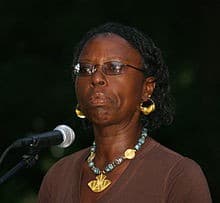
Gloria Naylor was an American author known for her contributions to contemporary fiction. Her notable works include "The Women of Brewster Place," which explores the lives of African American women in a housing project, "Mama Day," a novel that intertwines magic and realism, and "Linden Hills," which examines issues of race and class. Naylor's writing often addresses themes of identity and community.
Similar books
- Beloved
Toni Morrison
3.9 (325k) average on GoodreadsLiterary FictionExplores African American history, trauma, and magical realism with powerful prose.
- The House of the Spirits
Isabel Allende
4.2 (190k) average on GoodreadsFantasyFeatures a multi-generational family saga with strong female characters and magical realism.
- Their Eyes Were Watching God
Zora Neale Hurston
3.9 (266k) average on GoodreadsReferenceBoth novels feature strong Black female protagonists and are deeply rooted in Southern Black vernacular and culture. However, 'Mama Day' integrates the fantastic more deeply into its world, challenging the reader to accept a different epistemological framework where the supernatural is inherent, whereas Hurston's novel, while rich in folklore, largely remains within a realistic framework.
- The Old Man and the Sea
Ernest Hemingway
3.8 (831k) average on GoodreadsLiterary FictionA Cuban fisherman's long struggle with a giant marlin becomes a story of endurance and dignity, now retold for young adults with illustrations, phonetic guides, and writing prompts in Traditional Chinese.
- One Hundred Years of Solitude
Gabriel García Márquez
4.1 (753k) average on GoodreadsLiterary FictionThrough the multi-generational story of the Buendía family, a mythical town deals with the repeating patterns of time, love, and solitude, as the extraordinary mixes with the ordinary.
- The Goldfinch
Donna Tartt
3.9 (720k) average on GoodreadsLiterary FictionHaunted by a tragic explosion and clutching a stolen Dutch masterpiece, a young orphan navigates the opulent drawing rooms of New York and the gritty underbelly of the art world, desperately seeking connection and redemption amidst a life spiraling into crime and obsession.






Enjoyed the summary?
A summary gives you the shape of the book. The book itself has the detail, the examples and the voice.
Find Mama Day on AmazonAs an Amazon Associate, BookBrief earns from qualifying purchases. How we're funded