
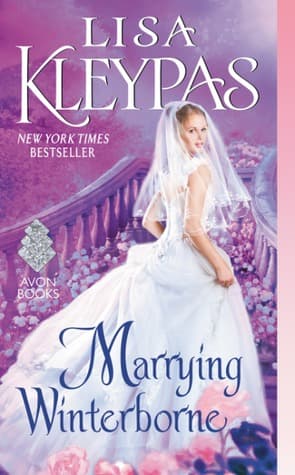
Synopsis
Covers the whole plot, including the ending.
- Difficulty
- Easy
- Pacing
- Moderate
- Mood
- Passionate, Romantic, Intense, Empowering
- Read it if
- You enjoy passionate historical romances with a 'beauty and the beast' dynamic, a strong alpha hero, and a shy heroine who finds her voice.
- Skip it if
- You dislike power imbalances in relationships or heroes who use blackmail, even if redeemed.
Marrying Winterborne Plot Summary
Covers the whole plot, including the ending.
A Compromising Encounter
The story begins with Lady Helen Ravenel, a shy aristocrat, visiting Winterborne's department store in London with her cousin, Lady Pandora Ravenel. Helen accidentally enters Rhys Winterborne's private office. Rhys, the store's owner, is immediately taken by her. A sudden kiss between them is seen by several society members, including Helen's brother, Devon, Earl of Ravenel, and his wife, Kathleen. To protect Helen's reputation, Rhys proposes marriage, and Helen accepts, knowing her family expects it.
The First Engagement and Its Aftermath
After the public proposal, Helen and Rhys are officially engaged. Helen returns to Eversby Priory, her family estate, to prepare for the wedding. She struggles with the quick engagement and her growing feelings for Rhys. However, a secret from her past—a traumatic event that has left her scarred and convinced she cannot marry—begins to return, causing her great anxiety about her future with Rhys. She fears he will discover her secret and reject her.
Rhys's Relentless Pursuit
Rhys, wanting to move forward with the marriage, visits Eversby Priory. He is determined to win Helen's affection and make her his wife, despite her reserved nature. During his stay, he shows both his business skills and a surprising tenderness towards Helen, which further complicates her feelings. He tries to get her to open up, but Helen remains guarded, her secret weighing on her. The difference between Rhys's open desire and Helen's hidden fears creates tension.
A Scandalous Revelation and a Broken Engagement
Overwhelmed by guilt and fear, Helen finally tells Rhys her secret: she was abducted and held captive in her youth. This left her with deep trauma and the belief that she is no longer innocent or worthy of marriage. Rhys is shocked and hurt by her deception, reacting with anger because she withheld such a significant part of her past. Misinterpreting his anger as rejection, Helen believes their engagement is broken and falls into despair.
Rhys's Reconsideration and Renewed Determination
After the initial shock and anger pass, Rhys thinks about Helen's confession. He talks with his friend and doctor, Dr. Gibson, who helps him understand the psychological impact of trauma. Rhys realizes that Helen's past does not lessen his love for her. His possessiveness, at first driven by ambition, becomes a fierce protectiveness. He decides he will marry Helen regardless of her past, determined to heal her and give her the love and security she deserves.
A Second Proposal and Wedding Preparations
Rhys returns to Eversby Priory and, with new conviction, proposes to Helen again, this time with a deeper understanding and acceptance of her past. He assures her that her secret changes nothing for him. Relieved and touched by his devotion, Helen accepts. Wedding preparations begin, with Helen slowly starting to open up to Rhys, finding comfort in his steady affection. Their wedding takes place, a quiet event, symbolizing their renewed commitment.
Marital Bliss and Lingering Shadows
Helen and Rhys settle into their married life in London. Their physical intimacy is passionate, and Helen slowly begins to heal from her past trauma through Rhys's patience and love. However, psychological scars remain. She sometimes has nightmares and flashbacks, and her self-doubt continues. Rhys, always watchful, continues to offer support, reassuring her of his love and helping her through these difficult moments, strengthening their bond.
The Threat of Lord Radnor
A figure from Rhys's past, Lord Radnor, a powerful and vengeful nobleman, reappears. Radnor holds a grudge against Rhys from a past business rivalry where Rhys outmaneuvered him. Radnor begins to plot against Rhys, trying to ruin his business and reputation. His actions create a dangerous outside threat that forces Rhys to be constantly on guard, adding stress to their new marriage and affecting Helen.
Helen's Courage and Rhys's Protection
Lord Radnor's plans escalate, directly endangering Helen. He tries to use her past against Rhys, subtly spreading rumors and exploiting her weaknesses. Helen, though still fragile, shows courage against these threats. Rhys, angered by Radnor's attacks on his wife, acts to protect Helen and his business. He uses his influence and ruthless tactics to stop Radnor, showing the depth of his protective instincts.
Confronting the Past and Securing the Future
Rhys arranges a confrontation with Lord Radnor, exposing his corrupt dealings and removing him as a threat. With Radnor defeated, the immediate danger to their family and business is gone. Helen, having seen Rhys's strength and love, finally finds peace about her past. She fully accepts her role as Rhys's wife, confident in their future together. The couple looks forward to building their life, stronger and more united.
Principal Figures
Rhys Winterborne
Protagonist
A ruthless Welsh tycoon with a hidden tenderness.
Rhys Winterborne is a self-made Welsh businessman who has risen from poverty to become one of London's wealthiest and most powerful department store owners. He is known for his ruthless ambition, sharp intellect, and commanding presence. Beneath his formidable exterior, Rhys possesses a fierce loyalty and a surprising capacity for tenderness and deep affection, especially towards Helen. His past experiences have made him pragmatic and unsentimental, but his love for Helen awakens a more vulnerable side.
Relationships: Lady Helen Ravenel (Husband, protector, and devoted lover.); Lord Radnor (Business rival and bitter enemy.); Dr. Gibson (Trusted friend and physician.)
Lady Helen Ravenel
Protagonist
A sheltered aristocrat with a traumatic past seeking acceptance and love.
Lady Helen Ravenel is a beautiful, shy, and introverted aristocrat from a respectable family. Her gentle demeanor hides a deep emotional wound stemming from a traumatic abduction in her youth, which has left her with severe anxiety and a profound sense of unworthiness. She is intelligent and observant but struggles with self-doubt and social interactions. Helen longs for genuine connection and understanding, believing her past makes her unmarriageable and undeserving of love.
Relationships: Rhys Winterborne (Wife, eventually finding healing and confidence through his love.); Devon Ravenel (Brother, protective and concerned.); Kathleen Ravenel (Sister-in-law, supportive and understanding.)
Devon Ravenel
Supporting
Helen's protective brother and head of the Ravenel family.
Devon Ravenel is the Earl of Ravenel and Helen's elder brother. Having inherited the title and its responsibilities unexpectedly, he is still adjusting to his role as head of the family. He is protective of his sisters and initially wary of Rhys Winterborne's common origins and ruthless reputation. Devon is a man of honor and duty, concerned with maintaining the family's standing and ensuring his sisters' happiness and security. He eventually comes to respect Rhys.
Relationships: Lady Helen Ravenel (Brother, protective and concerned for her well-being.); Kathleen Ravenel (Wife, a loving and supportive partner.); Rhys Winterborne (Brother-in-law, initially skeptical but eventually accepting.)
Kathleen Ravenel
Supporting
Helen's understanding and supportive sister-in-law.
Kathleen Ravenel is Devon's wife and Helen's sister-in-law. She is kind, intelligent, and perceptive, often serving as a calming and rational influence within the Ravenel family. Kathleen is particularly empathetic towards Helen, understanding her shyness and providing emotional support. She sees the genuine goodness in both Helen and Rhys and encourages their match, believing they are well-suited despite their differences.
Relationships: Lady Helen Ravenel (Sister-in-law, supportive and understanding.); Devon Ravenel (Husband, a loving and committed partner.)
Lady Pandora Ravenel
Supporting
Helen's lively and unconventional cousin.
Lady Pandora Ravenel is Helen's younger cousin, known for her spirited personality, independent streak, and unconventional interests. She is curious, adventurous, and often speaks her mind, providing a contrast to Helen's reserved nature. Pandora's presence often lightens the mood and offers moments of levity. She is supportive of Helen, though sometimes unaware of the depth of Helen's struggles.
Relationships: Lady Helen Ravenel (Cousin, close and supportive.); Devon Ravenel (Brother, often exasperated by her antics.)
Dr. Gibson
Supporting
Rhys's trusted friend and physician.
Dr. Gibson is a respected physician and a long-time friend of Rhys Winterborne. He is a pragmatic and observant man who understands human nature, particularly the psychological aspects of trauma. Rhys trusts Dr. Gibson implicitly, relying on his medical expertise and sound advice. He plays a crucial role in helping Rhys understand Helen's past and the nature of her trauma, enabling Rhys to approach her with greater empathy and patience.
Relationships: Rhys Winterborne (Trusted friend and medical advisor.); Lady Helen Ravenel (Physician, though indirectly through Rhys.)
Lord Radnor
Antagonist
A vindictive nobleman and Rhys's bitter enemy.
Lord Radnor is a powerful, arrogant, and vindictive nobleman who harbors a deep-seated grudge against Rhys Winterborne. He represents the entrenched aristocracy that resents Rhys's common birth and his success in business. Radnor is ruthless and manipulative, seeking to destroy Rhys's reputation and empire through any means necessary, including attempting to exploit Helen's vulnerabilities. He is driven by envy and a desire for revenge.
Relationships: Rhys Winterborne (Bitter enemy and business rival.); Lady Helen Ravenel (Target of his machinations to hurt Rhys.)
Themes & Insights
Healing from Trauma
The novel explores the lasting effects of trauma and the difficult path to healing. Helen's past abduction leaves her with psychological scars, causing anxiety, nightmares, and a feeling of being unworthy. Her belief that she is 'damaged' and cannot marry is a main conflict. Rhys's love, patience, and acceptance, especially after he learns her secret, help her recover. Scenes like their intimate moments and Rhys comforting her after a nightmare show how love and understanding can aid emotional healing.
“I'm afraid I'm not good enough for you,” she whispered. “I'm broken.” He kissed her temple. “You are perfect. And you are mine.”
Love Transcending Social Barriers
The difference between Rhys's common, self-made background and Helen's aristocratic family highlights the theme of love overcoming social expectations. Rhys, seen as a 'savage' Welshman by some, is considered an unsuitable match for a Lady. However, their connection is built on strong mutual attraction and a deep emotional bond. Rhys's protectiveness and Helen's quiet strength show that character and true affection are more powerful than class differences. Their marriage challenges Victorian England's strict social hierarchy.
“He was a rough, unpolished man, with a formidable will and a past she couldn't imagine. And he was the only man who had ever made her feel entirely safe.”
The Nature of Possession and Protection
Rhys Winterborne's character shows a mix of possessiveness and protection. At first, his desire for Helen comes from a drive to 'possess' what he wants, like his business acquisitions. This possessiveness changes into a deep and tender protection. When he learns of her trauma, his desire to 'own' her becomes a commitment to safeguard her physical and emotional well-being. This theme is clear in his dealings with Lord Radnor and his gentle patience with Helen, showing that true possession in love is about safeguarding, not controlling.
“You are mine, Helen. Every inch of you. Every thought, every feeling, every fear. I will keep you safe.”
Identity and Self-Worth
Helen's journey is about regaining her identity and self-worth after her traumatic experience. She believes her past has defined her as 'damaged' and unworthy of love or a normal life. Through Rhys's unconditional acceptance and love, she slowly sheds this internalized shame. His belief in her, combined with her growing courage, allows her to define herself not by her past trauma, but by her current strength and capacity for love. This theme is central to her character arc, as she moves from a fragile, self-doubting woman to a confident wife.
“She had always felt like a ghost, a shadow of the girl she might have been. But with Rhys, she felt real.”
Plot Devices & Literary Techniques
The Forced Proximity / Compromising Situation
A public incident forces Helen and Rhys into an engagement.
This device is immediately established in the opening chapter when Helen is found alone with Rhys in his private office, leading to a witnessed kiss. This public 'compromise' forces an engagement between them, which serves as the inciting incident for the entire plot. It bypasses conventional courtship and thrusts the two vastly different protagonists into a binding relationship, creating immediate tension and the necessity for them to truly get to know each other under unusual circumstances.
The Hidden Secret
Helen's traumatic past is concealed, driving internal and external conflict.
Helen's traumatic abduction and her subsequent belief in her own 'unworthiness' form the central hidden secret of the novel. This device generates significant internal conflict for Helen, as she grapples with guilt and fear of exposure. It also creates external conflict, first in her reluctance to fully engage with Rhys, and later in Rhys's initial anger and sense of betrayal. The eventual revelation and Rhys's acceptance are pivotal to the story's emotional resolution and Helen's healing.
The Antagonist's Scheme
Lord Radnor's vendetta against Rhys creates external danger.
The character of Lord Radnor and his ongoing attempts to undermine Rhys Winterborne's business and reputation serve as the primary external plot device. Radnor's vindictive nature and his willingness to exploit Helen's vulnerabilities add significant stakes to the narrative, providing an external threat that forces Rhys to act decisively and further demonstrates his protective instincts towards Helen. This external conflict allows Rhys to prove his devotion and strength to Helen, solidifying their bond against a common enemy.
Marrying Winterborne Quotes
“I don’t want to be anyone’s first,” she said, her voice soft. “I want to be someone’s last.”
“If I had my way, I’d have you in my bed every night, and every morning too. And if I could, I’d keep you there all day.”
“You’re a clever little thing, aren’t you? I like that. I like everything about you.”
“You are not a mistake, Helen. You are a miracle.”
“I’ve never met anyone like you. You make me feel… alive.”
“She was a quiet storm, a gentle hurricane, and he was caught in her beautiful, destructive path.”
“I want to be worthy of you. I want to be the kind of man you deserve.”
“He had never wanted anything so much in his life as he wanted her, plain and shy and utterly captivating.”
“Love wasn’t a choice. It was a compulsion. A need. An ache that could only be satisfied by one person.”
“I wasn’t looking for a wife, Helen. I was looking for you.”
“Sometimes, the quietest people have the loudest minds.”
“He was a man who knew what he wanted, and he was going to get it. And what he wanted was her.”
“Her shyness was a shield, but beneath it was a will of iron.”
“To love someone was to give them the power to break your heart.”
Quiz
10 questions on the plot and the characters. Each answer comes with a short explanation.
Question 1
What is Rhys Winterborne's social standing at the beginning of the novel?
- He is an impoverished nobleman trying to regain his family's fortune.
- He is a common-born, self-made tycoon with vast wealth.
- He is a respected member of the landed gentry, though not titled.
- He is a prominent barrister from a long line of legal professionals.
Show answer
B. He is a common-born, self-made tycoon with vast wealth. The book description explicitly states Rhys Winterborne is 'common-born' and has achieved 'vast wealth and success' through 'savage ambition'.
Question 2
What is Lady Helen Ravenel's initial demeanor when she first meets Rhys Winterborne?
- Bold and flirtatious, immediately drawn to his power.
- Aloof and disdainful, viewing him as beneath her.
- Shy and sheltered, with little experience of society.
- Practical and calculating, assessing his financial prospects.
Show answer
C. Shy and sheltered, with little experience of society. The synopsis describes Helen as a 'shy, aristocratic Lady Helen Ravenel' who 'has had little contact with the glittering, cynical world of London society'.
Question 3
What significant event occurs between Rhys and Helen that necessitates their marriage?
- They are caught in a compromising position at a public ball.
- Rhys compromises Helen's virtue, making marriage imperative.
- Helen is discovered in Rhys's private study late at night.
- They elope, shocking society and forcing their families to accept it.
Show answer
B. Rhys compromises Helen's virtue, making marriage imperative. The description states, 'If he must take her virtue to ensure she marries him, so much the better . . .'
Question 4
What is one of Rhys Winterborne's primary motivations mentioned in the blurb for pursuing Helen?
- To gain access to her family's vast land holdings.
- To secure a title and elevate his social standing.
- His determination to possess her from the moment he meets her.
- To form a business alliance with her father.
Show answer
C. His determination to possess her from the moment he meets her. The text states, 'from the moment he meets the shy, aristocratic Lady Helen Ravenel, he is determined to possess her.'
Question 5
Despite her gentle upbringing, what quality does Helen possess that is highlighted in the synopsis regarding her relationship with Rhys?
- A talent for managing his business affairs.
- A stubborn conviction that only she can tame her unruly husband.
- An ambition to become a socialite and lead society.
- A secret desire to escape her marriage and find true love elsewhere.
Show answer
B. A stubborn conviction that only she can tame her unruly husband. The description notes, 'Helen’s gentle upbringing belies a stubborn conviction that only she can tame her unruly husband.'
Question 6
What type of conflict is hinted at beyond the romance between Rhys and Helen?
- A struggle against a rival suitor for Helen's hand.
- A political conspiracy threatening the British monarchy.
- Rhys's business enemies conspiring against them.
- A family feud between the Winterbornes and the Ravenels.
Show answer
C. Rhys's business enemies conspiring against them. The text mentions, 'As Rhys’s enemies conspire against them, Helen must trust him with her darkest secret.'
Question 7
What is the 'darkest secret' Helen must trust Rhys with, as mentioned in the synopsis?
- Her past involvement in a scandalous affair.
- Her true parentage, which is not what it seems.
- The synopsis does not reveal the specific nature of the secret.
- Her hidden financial debts that threaten her family.
Show answer
C. The synopsis does not reveal the specific nature of the secret. While the synopsis mentions 'Helen must trust him with her darkest secret,' it does not provide any specific details about what that secret entails.
Question 8
What does Rhys's 'savage ambition' primarily bring him, according to the synopsis?
- A respected position in the peerage.
- Vast wealth and success.
- Political power and influence.
- Social acceptance among the aristocracy.
Show answer
B. Vast wealth and success. The text states, 'Savage ambition has brought common-born Rhys Winterborne vast wealth and success.'
Question 9
The synopsis implies a significant theme of the novel is the contrast and eventual blending of what two social classes?
- The rural gentry and urban working class.
- The old aristocracy and the newly wealthy commoners.
- The intellectual elite and the artistic community.
- The military establishment and the civilian population.
Show answer
B. The old aristocracy and the newly wealthy commoners. Rhys is a 'common-born' tycoon, while Helen is 'shy, aristocratic.' Their marriage brings together these contrasting social backgrounds, a common theme in historical romance.
Question 10
What is the ultimate 'reward' promised at the end of the synopsis for Helen trusting Rhys with her secret and overcoming their challenges?
- A lifetime of unparalleled social prominence.
- The defeat of all of Rhys's business rivals.
- A lifetime of incomparable bliss.
- The restoration of her family's ancient title.
Show answer
C. A lifetime of incomparable bliss. The final line of the synopsis states, 'The risks are unthinkable . . . the reward, a lifetime of incomparable bliss.'
Marrying Winterborne FAQ
What is the central conflict Lady Helen Ravenel faces regarding her past and her marriage to Rhys Winterborne?
Lady Helen secretly carries the trauma of having been drugged and raped at a young age, resulting in a pregnancy and a stillborn child. This hidden history creates immense anxiety and fear about intimacy, particularly with Rhys, and she worries it will irrevocably damage her marriage if discovered.
How does Rhys Winterborne's social standing and ambition influence his pursuit of Lady Helen?
Rhys is a self-made Welsh department store magnate, viewed as 'new money' and common by the aristocracy. Marrying Lady Helen, an earl's daughter, represents a significant social climb and a symbolic conquest, solidifying his status and demonstrating his ability to acquire anything he desires, even a high-born lady.
What role does the department store, Winterborne's, play in the story beyond being Rhys's business?
Winterborne's is more than just Rhys's business; it's a symbol of his ambition, his origins, and his modern vision. It also serves as a setting for key interactions, such as Helen's visits and her growing understanding of Rhys's world, and ultimately becomes a place where she finds a sense of belonging and purpose.
Describe the initial dynamic between Rhys and Helen, especially concerning their engagement.
Rhys orchestrates an engagement by compromising Helen, taking her virtue to ensure she has no other option but to marry him. Helen, initially shy and overwhelmed, is drawn to Rhys's intensity but also intimidated by his forceful nature, leading to a complex mix of fear and burgeoning attraction.
How does Lady Helen's secret past impact her physical and emotional intimacy with Rhys?
Her past trauma causes her to freeze and dissociate during intimate moments, making physical intimacy extremely difficult and emotionally painful. This leads to misunderstandings with Rhys, who perceives her reluctance as a lack of desire or a sign of her aristocratic disdain, causing tension in their new marriage.
What is the significance of the letters and the locket Helen possesses?
The letters are from her former governess, providing crucial evidence and context regarding the circumstances of her assault and the subsequent stillbirth. The locket contains a lock of her baby's hair, serving as a tangible, heartbreaking reminder of her lost child and her deepest secret.
How does Lady Pandora Ravenel's presence influence Helen's journey?
Pandora, Helen's twin sister, provides unwavering emotional support and sisterly loyalty. Her outspoken nature and independent spirit encourage Helen to be more assertive and to confide in her, ultimately helping Helen gather the courage to reveal her past to Rhys and seek justice.
Are there any subtle foreshadowing elements regarding Helen's secret before its full reveal?
Yes, Helen's extreme shyness, her aversion to touch, her panic attacks related to intimacy, and her profound anxiety whenever the topic of her past or her 'delicacy' arises, all subtly hint at a deeper, more traumatic secret than mere aristocratic reserve.
How does Rhys's perception of love and marriage evolve throughout the book?
Initially, Rhys views marriage as a strategic acquisition and Helen as a beautiful prize. As he spends more time with her and witnesses her quiet strength, his possessiveness transforms into genuine affection, respect, and deep love, leading him to prioritize her well-being and happiness above all else.
Analyze Lady Helen's internal struggle between her societal upbringing and her desires.
Helen is raised to be a proper, obedient aristocratic lady, which clashes with her yearning for genuine connection and her growing desire for Rhys. Her trauma further complicates this, as she battles societal expectations of purity while harboring a secret that she fears will make her an outcast, even to her husband.
How does Rhys's 'savage ambition' manifest in his personal relationships, particularly with Helen?
His ambition initially manifests as a ruthless determination to possess Helen, viewing her as an object of desire and a means to social advancement. This drive is tempered by his growing love, transforming into a fierce protectiveness and a relentless pursuit of her happiness and safety, even against her will at times.
Discuss the psychological impact of Helen's trauma on her self-worth and identity.
Helen's trauma severely diminishes her self-worth, making her feel 'damaged' and unworthy of love or happiness. She constructs an identity around her secret, believing it defines her and that its discovery will lead to utter ruin, leading to profound anxiety and a fear of genuine connection.
Is Rhys's initial act of compromising Helen justifiable within the context of the story's historical setting and his character?
This is debatable. While Rhys's actions reflect the patriarchal norms and limited options for women in the Victorian era, and align with his 'get what I want' ambition, many readers find it morally questionable. It establishes his ruthlessness but also highlights the power imbalance and Helen's initial lack of agency.
How does the book challenge or uphold traditional gender roles of the Victorian era?
The book both challenges and upholds. Rhys embodies a powerful, dominant male, but Helen, despite her initial shyness, demonstrates quiet strength and agency in confronting her past. Her eventual professional involvement with Winterborne's also challenges strict domestic roles, while the overall societal structure remains firmly Victorian.
What is the thematic significance of Helen's slow healing process rather than an instant resolution to her trauma?
The slow healing process emphasizes the realistic and profound impact of trauma. It highlights that emotional wounds are not instantly cured by love but require time, understanding, and active effort from both parties. This realism deepens the emotional weight of their journey and makes their eventual bond more earned.
Some readers might argue that Rhys's protectiveness borders on controlling. How does the narrative address this tension?
The narrative acknowledges Rhys's controlling tendencies, often showing Helen's discomfort or quiet resistance. However, it frames his actions increasingly as stemming from deep love and a fierce desire to protect her from further harm, especially after learning her secret. The tension between his possessiveness and her need for agency is a recurring theme that they navigate together.
How does the author use the contrast between Rhys's common background and Helen's aristocratic one to explore themes of class and social mobility?
The contrast highlights the rigid class distinctions of the era, where birth determined status more than wealth. Rhys's relentless drive to bridge this gap through marriage and business challenges these norms, while Helen's initial discomfort with his world and his eventual acceptance by her family illustrate the complexities and gradual shifts in social perceptions.
What message does the ending convey about love, acceptance, and overcoming past trauma?
The ending conveys a powerful message that true love involves unconditional acceptance, forgiveness, and unwavering support, especially when confronting deep-seated trauma. It suggests that healing is possible through open communication, mutual trust, and the courage to confront one's past, leading to a stronger, more profound connection.
About the author

Lisa Kleypas is an American author known for her historical and contemporary romance novels. Her notable works include "Devil in Winter," "Mine Till Midnight," "Secrets of a Summer Night," "It Happened One Autumn," and "Marrying Winterborne." Kleypas's writing often features strong character development and intricate plots, appealing to fans of the romance genre.
Similar books
- The Duke and I
Julia Quinn
4.0 (87k) average on GoodreadsHistorical FictionFeatures a strong-willed duke and a determined heroine in a Regency setting.
- Devil in Winter
Lisa Kleypas
4.3 (58k) average on GoodreadsHistorical FictionAnother Kleypas novel with a complex, powerful hero and a sweet, intelligent heroine finding love.
- To Kill a Mockingbird
Harper Lee
4.3 (4.5M) average on GoodreadsHistorical FictionIn the 1930s Jim Crow South, Harper Lee writes about racial injustice, moral growth, and the quiet courage of a lawyer father, Atticus Finch, as seen through his young daughter's eyes.
- The Great Gatsby
F. Scott Fitzgerald
3.9 (3.8M) average on GoodreadsHistorical FictionIn the opulent Roaring Twenties, a mysterious millionaire's lavish parties hide his desperate, tragic pursuit of a lost love, exposing the emptiness within the American Dream.
- Pride and Prejudice
Jane Austen
4.3 (3M) average on GoodreadsHistorical FictionIn a society focused on status and money, Elizabeth Bennet navigates love and pride, challenging Mr. Darcy and social expectations to find true affection.
- Angels & Demons
Dan Brown
3.9 (2.7M) average on GoodreadsThrillerA Harvard symbologist races through Rome's ancient sites, deciphering cryptic clues to unmask the Illuminati and stop a vengeful plot to destroy the Vatican with a stolen antimatter weapon.





Enjoyed the summary?
A summary gives you the shape of the book. The book itself has the detail, the examples and the voice.
Find Marrying Winterborne on AmazonAs an Amazon Associate, BookBrief earns from qualifying purchases. How we're funded