
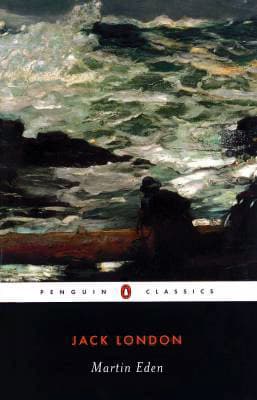
Synopsis
Covers the whole plot, including the ending.
- Difficulty
- Medium
- Pacing
- Moderate
- Mood
- Introspective, Melancholy, Ambitious, Disillusioned
- Read it if
- You enjoy powerful character studies, explorations of class struggle and the pursuit of knowledge, and critiques of societal values.
- Skip it if
- You prefer lighthearted stories or are sensitive to themes of existential despair and a tragic ending.
Martin Eden Plot Summary
Covers the whole plot, including the ending.
A Sailor's Awakening: Martin Meets Ruth
Martin Eden, a strong, uneducated sailor from Oakland's working class, enters the refined world of the Morse family after saving their son, Arthur, from a street fight. He is immediately taken with Ruth Morse, a beautiful, educated young woman from a wealthy background. Her delicate features, cultured speech, and intellectual interests show Martin a new and fascinating world. This meeting starts a strong desire in him to educate himself, to become worthy of Ruth, and to close the large social and intellectual gap between them. He starts to read many books, driven by a fierce will to understand her world and express his own developing thoughts.
The Arduous Path of Self-Education
Inspired by Ruth, Martin starts a hard self-education program. He spends all his time in public libraries, reading widely from philosophy to science, literature to history. He tries to learn grammar and rhetoric, carefully working to improve his rough language. His working-class friends and family are skeptical and do not understand his efforts, seeing his intellectual pursuits as impractical and strange. Even Ruth, though she first encourages him, struggles to fully grasp his deep ambition and intense struggle. She often tries to guide him toward more conventional, less ambitious jobs, like becoming a clerk.
Discovering His Literary Voice
Through his reading and the awakening of his own mind, Martin finds a strong desire to write. He sees the world with new eyes, feeling a powerful urge to capture the beauty, harshness, and truth of life as he has known it, from the sea to the poor areas. He starts to write constantly, producing stories, poems, and essays that use his own life and the philosophical ideas he encounters. He believes his unique view and raw power of expression will connect with the world, sure of his own talent.
Rejection and Financial Desperation
Martin's writing goals clash sharply with the reality of publishing. He sends out many manuscripts but receives a steady stream of rejection letters. Publishers find his work too raw, too unusual, or not profitable. His bad financial situation adds to his frustration. He pawns his clothes, works odd jobs like laundry, and often goes hungry, all while trying to keep up his strict writing schedule. Ruth, increasingly worried by his lack of money and his unusual life, urges him to stop writing and find a steady job, which further strains their relationship.
Ruth's Wavering Loyalty and Martin's Steadfast Belief
Despite being poor and unrecognized, Martin remains confident in his talent. He sees himself as an artist meant for greatness and ignores the business demands of the literary market. Ruth, however, is increasingly influenced by her family's disapproval of Martin's bohemian life and his inability to support her. Her parents, especially her father, openly mock his writing ambitions and see him as unsuitable. Ruth, torn between her feelings for Martin and her ingrained wealthy values, eventually ends their engagement, unable to handle the social pressure and his continued failure to achieve conventional success.
Meeting Lizzie Connolly and the Socialist Circle
During his struggles, Martin meets Lizzie Connolly, a factory girl from his own background, who loves and cares for him without judgment. He also joins a socialist intellectual group, where he discusses philosophy and economics. While he respects their intelligence and sincerity, Martin, a strong individualist, ultimately rejects socialism. He believes in the power of the individual and the 'superman' idea, greatly influenced by Herbert Spencer and Friedrich Nietzsche. He supports the fight for individual achievement, viewing society as a battleground where the strongest succeed, a philosophy that separates him from the socialists.
The Tide Turns: Martin's Sudden Success
Suddenly, the literary world discovers Martin Eden. A few of his long-rejected manuscripts are finally accepted, and then, his work is published quickly. His unique voice, powerful style, and unusual themes, once thought unsuitable, are now praised as new. He becomes famous overnight, achieving the literary recognition and money he had wanted. Articles are written about him, critics praise him, and his books become bestsellers. The very publishers who had rejected him now want his work.
The Bitter Taste of Triumph
Success brings a deep and unexpected disappointment. Martin finds that the fame and wealth he had desired are empty. The people who once scorned him, including the Morse family, now flatter him, eager to be associated with him. Ruth, seeing his success, tries to restart their romance, but Martin sees her as shallow and society as fake. He realizes that they never truly valued him for his art or his mind, but only for his material achievements. This discovery leaves him feeling alone and disgusted, convinced that the world is a fraud and that true beauty and sincerity are rare.
Escaping the Emptiness
Overwhelmed by his empty success and the hypocrisy of those around him, Martin starts to get rid of his possessions. He gives away most of his money, helping his working-class friends and family live comfortably, though they often misunderstand why he does it. He buys a yacht and tries to escape society's constant demands and superficiality, seeking peace in solitude and nature's simplicity. He feels a deep tiredness, a spiritual exhaustion that no amount of fame or money can fix. His great intellectual and artistic journey ends in a devastating sense of meaninglessness.
The Final Descent into the Abyss
Despite trying to escape, Martin finds no peace. The deep disappointment has taken away his will to live. He feels a great boredom, a spiritual fatigue that no longer lets him find joy or purpose in anything. He tries to find meaning in the sea, the one constant in his life, but even that fails him. During a voyage on his yacht, he goes into the ocean, fully aware, letting the water cover him. He fights the instinct to survive for a moment, then gives up, finding a final, dark peace in the depths, ending his life by suicide. His journey from an uneducated sailor to a celebrated intellectual ends with a tragic rejection of life itself.
Principal Figures
Martin Eden
Protagonist
An uneducated sailor who transforms into a brilliant writer, only to be disillusioned by success.
Martin Eden is a powerful, self-made man driven by an insatiable hunger for knowledge and a passionate desire to rise above his working-class origins. Initially, his motivation is to win Ruth Morse, but it quickly evolves into a profound intellectual and artistic quest. He possesses immense physical strength, an intuitive mind, and an uncompromising individualism. His journey is marked by relentless self-education, artistic struggle, and a fierce belief in his own genius. Despite achieving immense literary success, he finds it hollow and ultimately succumbs to a profound disillusionment with humanity and life itself.
Relationships: Ruth Morse (Fiancée, intellectual inspiration, symbol of bourgeois society); Lizzie Connolly (Unconditional admirer, symbol of working-class love); Arthur Morse (Ruth's brother, initial connection to the Morse family); Joe Dawson (Working-class friend, laundry boss); Professor Caldwell (Intellectual mentor, though often misunderstood by Martin)
Ruth Morse
Supporting
Martin's first love and a symbol of the refined, yet ultimately superficial, bourgeois world.
Ruth Morse is a beautiful and educated young woman from a wealthy, conservative family. She initially inspires Martin to pursue self-education and is fascinated by his raw power and unconventional mind. However, her love for him is conditional, heavily influenced by her family's social standing and her own ingrained bourgeois values. She struggles to understand Martin's artistic temperament and his unwavering individualism, constantly urging him towards conventional success. Her loyalty wavers under social pressure, and she ultimately rejects him when he is poor, only to return when he is famous, revealing her superficiality.
Relationships: Martin Eden (Love interest, fiancée); Arthur Morse (Brother); Mr. and Mrs. Morse (Parents)
Lizzie Connolly
Supporting
A factory girl who offers Martin unconditional love and acceptance.
Lizzie Connolly is a working-class factory girl who genuinely loves Martin Eden without judgment or expectation of material success. She is simple, unassuming, and deeply devoted to him, offering a stark contrast to Ruth's conditional affection. Lizzie represents true, selfless love and the uncorrupted heart of the working class. Despite Martin's occasional harshness and his inability to fully reciprocate her romantic feelings, he recognizes her purity and kindness. She is one of the few characters who consistently believes in him as a person, even when he has nothing.
Relationships: Martin Eden (Unrequited love interest, friend)
Joe Dawson
Supporting
A working-class laundry owner and Martin's friend, representing the practical working world.
Joe Dawson is a fellow working-class man who runs a laundry business. He is a good-natured, practical, and somewhat simple character who offers Martin employment and friendship during his periods of extreme poverty. Joe represents the honest, hardworking, but unaspiring segment of the working class. He is baffled by Martin's intellectual pursuits and literary ambitions, viewing them as impractical and even foolish. Despite his lack of understanding, Joe is kind and generous in his own way, offering Martin a bed and food when he is desperate.
Relationships: Martin Eden (Friend, employer)
Arthur Morse
Supporting
Ruth's brother, whose rescue introduces Martin to the Morse family.
Arthur Morse is Ruth's younger brother, a college student whose rescue by Martin Eden initiates the novel's central plot. He is well-meaning but somewhat naive and lacks the intellectual depth of his sister or the raw power of Martin. Arthur serves as the initial bridge between Martin's working-class world and the refined society of the Morses. He is generally polite and provides Martin with some initial guidance in his studies, but ultimately shares his family's class prejudices and inability to fully comprehend Martin's genius.
Relationships: Martin Eden (Acquaintance, rescued by Martin); Ruth Morse (Sister); Mr. and Mrs. Morse (Parents)
Mr. and Mrs. Morse
Supporting
Ruth's parents, embodying the rigid social conventions and class prejudices of the bourgeoisie.
Mr. and Mrs. Morse represent the entrenched values and prejudices of the upper-middle class. Mr. Morse is a successful businessman, concerned primarily with social standing and financial security. Mrs. Morse is equally conservative, obsessed with appearances and propriety. They are deeply disapproving of Martin's working-class background, his lack of conventional employment, and his literary aspirations, viewing him as a threat to their family's reputation and Ruth's future. They actively work to break up Ruth and Martin's engagement, only to embrace him hypocritically once he achieves fame and wealth.
Relationships: Ruth Morse (Parents); Arthur Morse (Parents); Martin Eden (Ruth's suitor, later famous writer)
Russ Brissenden
Supporting
A dying, cynical poet who becomes Martin's intellectual confidant and socialist friend.
Russ Brissenden is a consumptive, brilliant, and deeply cynical poet and socialist whom Martin meets among the intellectual circles. Brissenden is one of the few characters who truly understands and appreciates Martin's genius and artistic vision, recognizing the 'superman' quality in him. He is a disillusioned idealist, critical of bourgeois society and commercial art. He introduces Martin to his socialist friends and serves as a mentor and intellectual companion, though Martin ultimately rejects his socialist ideology. Brissenden's premature death deeply affects Martin, as he loses his only true intellectual peer.
Relationships: Martin Eden (Intellectual confidant, friend)
Maria Silva
Mentioned
Martin's landlady, a kind and motherly figure.
Maria Silva is Martin's Portuguese landlady during his period of intense study and poverty. She is a simple, kind-hearted woman who often worries about Martin's health due to his relentless work and poor diet. She represents the unassuming goodness and maternal care found in the working class. While she doesn't understand his intellectual pursuits, she provides him with a stable, albeit humble, home and a measure of comfort, often allowing him to defer rent payments.
Relationships: Martin Eden (Landlady)
Themes & Insights
Individualism vs. Socialism
The novel explores the conflict between strong individualism and socialist ideas. Martin Eden, despite his working-class background, becomes a fierce individualist, believing in the power of the 'superman' and rejecting group ideologies. His philosophy is heavily influenced by Herbert Spencer and Nietzsche, leading him to believe that society is a struggle where the strong succeed. This theme is clear in his discussions with socialist intellectuals like Russ Brissenden. While Brissenden understands Martin's talent, Martin cannot combine his belief in individual achievement with the socialist call for group equality. This tension contributes to his isolation and disappointment, as his individual triumph feels empty without a group purpose.
“'I am an individualist. I believe the world is run by individuals. I believe in the survival of the fittest. I believe in the race being to the swift.”
The Corrupting Nature of Success and Fame
A main theme is that success and fame, once achieved, can be deeply disappointing and corrupting. Martin Eden works for years for literary recognition and money, believing it will show his worth and allow him to be with Ruth. However, when success finally arrives, he finds it empty and degrading. People who once scorned him now flatter him, not for his art, but for his celebrity and money. This sudden praise shows society's hypocrisy and superficiality, making Martin dislike the very world he fought to join. His triumph becomes his greatest pain, taking away life's meaning and leading to his despair.
“'He had found the world a sham, a catchpenny, a braggart. It was not worth while to live in such a world.”
Class Divide and Social Mobility
The novel shows the strict class structure of early 20th-century America and the great difficulties of moving up socially. Martin's journey is an attempt to close the gap between his working-class background and the wealthy world of the Morses. His struggles with grammar, manners, and traditional education show the barriers he faces. The Morse family's disdain for his origins and their conditional acceptance of him based on his money rather than his intelligence highlight the widespread class prejudice. Even after becoming successful, Martin remains an outsider, unable to truly belong to either world, showing the lasting power of class divisions.
“'He was an alien, a trespasser, an intruder, in the high, clean world of Ruth and her family.”
The Nature of Art and Artistic Integrity
Martin Eden deals with the tension between artistic honesty and commercial success. He believes in art for its own sake, putting his raw experiences and deep thoughts on paper without compromise. Publishers consistently reject him because they find his work too unusual or unsellable. This struggle shows the commercial pressures artists face and the difficulty of keeping an authentic voice in a market-driven world. When he finally succeeds, it is often for reasons he dislikes, further showing the compromise involved in commercial recognition. His ultimate disappointment is partly because the world cannot appreciate his art on its own terms.
“'He wrote for the sake of the writing, for the sake of the expression, because he could not help it.”
The Pursuit of Knowledge and Self-Education
Martin's pursuit of knowledge and his self-education program are central to his change. From his first wish to impress Ruth, his intellectual hunger quickly becomes a goal in itself. He reads many books in libraries, studying everything from philosophy to science, driven by a strong desire to understand the world and express his own experiences. This theme celebrates education's power to change lives, especially self-directed learning, but also questions its ultimate value when it lacks purpose. Martin's vast knowledge contributes to his deep disappointment, as he sees humanity's flaws and hypocrisies too clearly.
“'He was a 'book-worm,' a 'grind,' a 'high-brow,' and he was proud of it.”
Plot Devices & Literary Techniques
Bildungsroman (Coming-of-Age Story)
Traces Martin's psychological and moral growth from youth to maturity and disillusionment.
The novel functions as a Bildungsroman, chronicling Martin Eden's development from an uneducated, rough sailor into a sophisticated intellectual and acclaimed writer. It meticulously details his self-education, his artistic awakening, his romantic entanglements, and his philosophical evolution. Unlike traditional Bildungsromans that often end with the protagonist's successful integration into society, 'Martin Eden' subverts this, ending in profound disillusionment and self-destruction, suggesting that true growth can lead to an alienation from a flawed society rather than harmonious integration.
Social Realism
Depicts the harsh realities of working-class life and the detailed struggles of a struggling artist.
Jack London employs social realism to portray the gritty details of Martin Eden's working-class existence, his struggles with poverty, hunger, and physical labor (like working in a laundry). The narrative doesn't shy away from the economic hardships and social prejudices faced by those outside the privileged class. This realism extends to the depiction of the publishing world, highlighting the commercial constraints and rejections a struggling writer faces, grounding Martin's extraordinary journey in a believable, often brutal, social context.
Irony
The central irony is Martin achieving everything he desired, only to find it meaningless.
Irony is a pervasive device, most notably in Martin's eventual success. He dedicates years to achieving literary fame and wealth, believing it will bring him happiness and acceptance, particularly from Ruth and her family. The bitter irony is that when success finally arrives, it brings only profound disillusionment, emptiness, and a deeper sense of isolation. The very people who rejected him now embrace him for superficial reasons, exposing the hypocrisy of society and making his triumph a source of torment rather than joy. His greatest victory becomes the catalyst for his ultimate defeat.
Symbolism of the Sea
Represents freedom, raw nature, and ultimately, an escape from the corrupting world.
The sea serves as a powerful symbol throughout the novel. Initially, it represents Martin's past life of freedom, physical strength, and unrefined experience, a stark contrast to the stifling bourgeois world. As he becomes disillusioned with society, the sea also symbolizes a return to a simpler, more authentic existence, a refuge from the superficiality of land-bound civilization. Ultimately, the sea becomes the instrument of his final escape and self-annihilation, representing a return to primal oblivion, a final release from the torment of consciousness and the corrupting influence of human society.
Martin Eden Quotes
“I'd rather be ashes than dust! I would rather that my spark should burn out in a brilliant blaze than it should be stifled by dry-rot. I would rather be a superb meteor, every atom of me in magnificent glow, than a sleepy and permanent planet.”
“He was a master of language, a great artist with words, but he had discovered the significant thing, namely, that the mastery of language was not the mastery of life.”
“The function of man is to live, not to exist. I shall not waste my days in trying to prolong them. I shall use my time.”
“Beneath the ink that scrawled the poems, he was a savage, with all the savage's terrible primal impulses.”
“He had been obsessed with the idea of self-expression, and he had expressed himself, and now he was through.”
“The books were like so many prisons, incarcerating the human spirit.”
“Love is a very unstable thing. It is like quicksilver, slipping through the fingers.”
“He had fought his way up from the bottom, and nothing could ever take that away from him.”
“The world was full of people who were afraid to live, who were content to be fed and clothed and amused.”
“He had learned to see, and he could never go back to blindness.”
“Work was the only thing that saved him, the only thing that made life endurable.”
“There was no place for him in this world of ordered, conventional lives.”
“He had sold his birthright for a mess of pottage, and the pottage was ashes in his mouth.”
“The artist's life is a lonely one, and the price of creation is often despair.”
Quiz
10 questions on the plot and the characters. Each answer comes with a short explanation.
Question 1
What is Martin Eden's initial occupation at the beginning of the novel?
- Factory worker
- Seaman
- Journalist
- Teacher
Show answer
B. Seaman Martin Eden begins as an impoverished seaman in San Francisco, which sets the stage for his journey from manual labor to intellectual and literary pursuits.
Question 2
What motivates Martin Eden to pursue education and literary fame?
- A desire to escape poverty and gain social acceptance
- Pressure from his family to succeed
- A government scholarship opportunity
- Inheritance from a relative
Show answer
A. A desire to escape poverty and gain social acceptance Martin is driven by his obsession to rise from his working-class roots, partly inspired by his love for Ruth Morse and the upper-class world she represents, leading him to aggressively seek education and literary success.
Question 3
Who is Ruth Morse in relation to Martin Eden?
- His sister
- A literary critic who helps him
- The upper-class woman he falls in love with
- A fellow seaman who encourages his writing
Show answer
C. The upper-class woman he falls in love with Ruth Morse is a young woman from a wealthy family whom Martin meets and becomes infatuated with. Her influence pushes him to improve himself socially and intellectually, though their relationship faces challenges due to class differences.
Question 4
How does Jack London's own life parallel that of Martin Eden?
- Both were born into wealthy families and rejected their inheritance
- Both started as seamen and became successful writers through self-education
- Both died young from illness while traveling abroad
- Both were politicians who advocated for socialism
Show answer
B. Both started as seamen and became successful writers through self-education The novel is semiautobiographical; like Martin, Jack London worked as a seaman and educated himself to become a writer. This parallel highlights London's personal experiences with ambition and class struggle.
Question 5
What major theme does Jack London intend to criticize through Martin Eden's story?
- The importance of family loyalty
- The dangers of excessive individualism and ambition
- The benefits of technological progress
- The inevitability of war
Show answer
B. The dangers of excessive individualism and ambition London, dissatisfied with his own success, wrote the novel as an attack on individualism and a critique of ambition, showing how Martin's relentless pursuit leads to disillusionment and tragedy.
Question 6
Why does Martin Eden become disillusioned after achieving literary success?
- He loses all his money in bad investments
- He realizes that success does not bring the fulfillment he expected
- He is betrayed by his closest friends
- He is forced into a marriage he does not want
Show answer
B. He realizes that success does not bring the fulfillment he expected Martin's hard-won success feels hollow because the upper-class society he sought to join seems superficial, and his personal relationships suffer, leading to a deep sense of emptiness and existential crisis.
Question 7
What role does socialism play in the novel, according to Andrew Sinclair's introduction?
- It is the main solution proposed for Martin's problems
- It highlights a conflict with London's own strong self-will
- It is portrayed as a failed political movement in San Francisco
- It serves as a backdrop for Martin's romantic adventures
Show answer
B. It highlights a conflict with London's own strong self-will Sinclair notes that London supported socialism but also had a powerful individualistic drive, creating tension in the novel's themes. This reflects the broader critique of ambition versus collective ideals.
Question 8
How does the novel's setting in San Francisco influence the story?
- It provides a tropical backdrop for Martin's seafaring adventures
- It emphasizes the contrast between working-class docks and upper-class neighborhoods
- It focuses on the gold rush era and its economic opportunities
- It serves as a neutral location with little impact on the plot
Show answer
B. It emphasizes the contrast between working-class docks and upper-class neighborhoods San Francisco's diverse social landscape, from maritime communities to affluent areas, mirrors Martin's journey across class lines and highlights the societal barriers he faces.
Question 9
What is a key divergence between Jack London's life and Martin Eden's story?
- London never achieved literary fame, unlike Martin
- London did not struggle with mental depression as Martin does
- London's success brought him satisfaction, while Martin's does not
- London was born into wealth, unlike Martin
Show answer
C. London's success brought him satisfaction, while Martin's does not While both faced similar struggles, London found some fulfillment in his writing career, whereas Martin's story ends in tragedy due to his disillusionment, reflecting London's critical view of unchecked ambition.
Question 10
Which aspect of Martin Eden's character makes him a 'vital and original' creation, as described in the book summary?
- His ability to effortlessly charm everyone he meets
- His obsessive and aggressive pursuit of self-improvement against all odds
- His talent for painting and visual arts alongside writing
- His commitment to socialist activism from the start
Show answer
B. His obsessive and aggressive pursuit of self-improvement against all odds Martin's relentless drive to educate himself and achieve literary fame, despite poverty and rejection, makes him a compelling and unique protagonist, embodying both the virtues and pitfalls of ambition.
Martin Eden FAQ
What is 'Martin Eden' about?
'Martin Eden' follows the journey of Martin Eden, an uneducated but intelligent sailor from San Francisco who becomes obsessed with self-education and literary success after falling in love with Ruth Morse, a woman from a wealthy family. The novel chronicles his brutal struggle against poverty and rejection as he teaches himself to write, eventually achieving fame and fortune, only to become disillusioned with the very society he sought to join.
Why should I read 'Martin Eden'?
You should read 'Martin Eden' for its powerful critique of American individualism and the pursuit of success, its intense psychological portrait of ambition and disillusionment, and its semi-autobiographical insights into Jack London's own struggles with fame. The novel's exploration of class barriers, artistic integrity, and the emptiness of material achievement remains strikingly relevant over a century after its publication.
What is the background/setting of 'Martin Eden'?
The novel is set primarily in early 20th-century San Francisco and Oakland, California, during a period of stark class divisions and rapid industrialization. Martin navigates between the gritty waterfront world of sailors and laborers and the refined bourgeois drawing rooms of the Morse family, with London vividly depicting the physical and social landscapes that shape Eden's journey.
What are the most memorable quotes from 'Martin Eden'?
Key quotes include Martin's declaration 'I would rather be ashes than dust!' reflecting his passionate intensity, and his later realization 'The only way to get rid of a temptation is to yield to it,' showing his descent into nihilism. Another significant line is 'I had no time to waste on you,' which he delivers to Ruth after achieving success, highlighting his complete disillusionment with her and her world.
What writing style does Jack London use in 'Martin Eden'?
London employs a naturalistic, gritty prose style that blends vivid physical descriptions with intense psychological introspection. The narrative shifts between external action—like Martin's manual labor and literary rejections—and internal monologues detailing his intellectual awakening, socialist readings, and growing despair, creating a powerful, immersive character study.
What minor details add significant meaning to 'Martin Eden'?
Small details like Martin's meticulously kept notebook of new words, his worn-out clothes that mark his poverty, and the physical toll of his manual labor (such as calloused hands) underscore his relentless self-improvement and suffering. The recurring imagery of the sea—both as a source of freedom and a symbol of oblivion—subtly foreshadows his ultimate fate.
What are some subtle foreshadowing moments in 'Martin Eden'?
Early scenes where Martin nearly drowns while swimming foreshadow his eventual suicide by drowning. His initial awe at Ruth's refined world is undercut by hints of its superficiality, like her family's focus on appearances, predicting his later disillusionment. Martin's socialist friend Brissenden's cynical view of success also foreshadows Martin's own crisis after achieving fame.
What unexpected character connections exist in 'Martin Eden'?
Martin's connection to the socialist poet Brissenden, who becomes his only true intellectual equal, contrasts sharply with his strained relationship with Ruth's family. Additionally, Lizzie Connolly, a working-class woman who genuinely loves Martin, highlights the class hypocrisy he faces, as he rejects her for Ruth despite their shared background, only to later see Ruth's love as equally conditional.
What are unspoken character motivations in 'Martin Eden'?
Ruth Morse is motivated not just by love but by a desire to 'improve' Martin into a respectable bourgeois figure, reflecting her own class anxieties. Martin's obsession with education and writing is driven not only by ambition but by a deep-seated need to prove his worth to Ruth and himself, masking underlying insecurities about his origins and intelligence.
What psychological complexities do characters exhibit in 'Martin Eden'?
Martin exhibits a complex mix of raw ambition, intellectual curiosity, and profound nihilism, struggling with impostor syndrome even after success. Ruth embodies the conflict between genuine affection and social conformity, ultimately choosing security over love. Brissenden represents a cynical, disillusioned intellectualism that both attracts and warns Martin.
What are the major emotional turning points in 'Martin Eden'?
Key turning points include Martin's first rejection by a publisher, which hardens his resolve; Ruth breaking off their engagement due to his poverty, crushing his romantic ideals; the death of Brissenden, which isolates him intellectually; and his sudden literary success, which brings not joy but emptiness and disgust with the society that now celebrates him.
How do relationship dynamics evolve in 'Martin Eden'?
Martin and Ruth's relationship shifts from idealistic infatuation to strained practicality as his failures mount, ending in her rejection and his later cold dismissal after success. His bond with Brissenden deepens from mentorship to a rare genuine connection, cut short by death. Relationships with his working-class origins, like with Lizzie, become sources of guilt and alienation as he ascends socially.
Which parts of 'Martin Eden' remain ambiguous or open-ended?
The novel leaves ambiguous whether Martin's suicide is a final act of nihilistic despair or a transcendent escape from a meaningless world. It also doesn't fully resolve if his socialist ideals were sincere or merely a phase in his ambition. The fate of characters like Ruth after Martin's death is left unexplored, emphasizing the focus on his solitary struggle.
What are controversial scenes or decisions in 'Martin Eden'?
Martin's brutal rejection of Ruth after gaining success is controversial for its coldness, challenging romantic conventions. His suicide ending sparked debate, with some seeing it as a powerful critique of individualism and others as overly pessimistic. His treatment of Lizzie Connolly, whom he uses emotionally while pursuing Ruth, also raises ethical questions about his character.
'Martin Eden' ending explained: how it ends & what it means
The novel ends with Martin Eden, having achieved fame and wealth, feeling utterly disconnected and disillusioned. He sails out to sea and drowns himself, a final rejection of the society that now admires him. This ending is interpreted as London's critique of the emptiness of material success and the destructive nature of unchecked individualism, reflecting the author's own struggles with depression and ideological conflict.
How does 'Martin Eden' reflect Jack London's own life?
The novel is semi-autobiographical, mirroring London's rise from poverty to literary fame, his self-education, and his bouts of depression. Like Martin, London experienced class barriers and artistic rejection, though he diverged by embracing socialism more actively. The mental anguish depicted in Eden parallels London's own psychological struggles, making the book a deeply personal exploration of success and despair.
About the author
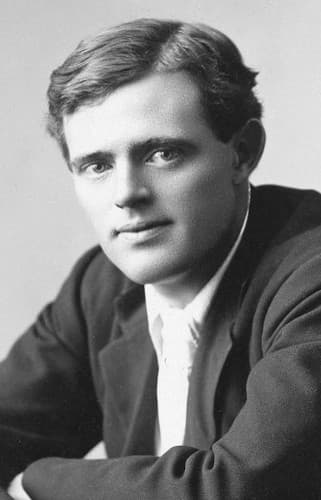
John Griffith Chaney, better known as Jack London, was an American novelist, journalist and activist. A pioneer of commercial fiction and American magazines, he was one of the first American authors to become an international celebrity and earn a large fortune from writing. He was also an innovator in the genre that would later become known as science fiction.
Similar books
- The Call of the Wild
Jack London
3.9 (341k) average on GoodreadsChildren'sExplores themes of nature, struggle, and the human (or animal) spirit against harsh realities, with London's distinctive prose.
- Great Expectations
Charles Dickens
3.8 (652k) average on GoodreadsHistorical FictionFeatures a protagonist from humble beginnings striving for social elevation and love, only to find disillusionment with his aspirations.
- Of Human Bondage
W. Somerset Maugham
4.1 (50k) average on GoodreadsLiterary FictionA semi-autobiographical bildungsroman detailing a young man's challenging journey through education, love, and self-discovery, often marked by hardship.
- To Kill a Mockingbird
Harper Lee
4.3 (4.5M) average on GoodreadsHistorical FictionIn the 1930s Jim Crow South, Harper Lee writes about racial injustice, moral growth, and the quiet courage of a lawyer father, Atticus Finch, as seen through his young daughter's eyes.
- The Great Gatsby
F. Scott Fitzgerald
3.9 (3.8M) average on GoodreadsHistorical FictionIn the opulent Roaring Twenties, a mysterious millionaire's lavish parties hide his desperate, tragic pursuit of a lost love, exposing the emptiness within the American Dream.
- Pride and Prejudice
Jane Austen
4.3 (3M) average on GoodreadsHistorical FictionIn a society focused on status and money, Elizabeth Bennet navigates love and pride, challenging Mr. Darcy and social expectations to find true affection.





Enjoyed the summary?
A summary gives you the shape of the book. The book itself has the detail, the examples and the voice.
Find Martin Eden on AmazonAs an Amazon Associate, BookBrief earns from qualifying purchases. How we're funded