

Core Idea
- Difficulty
- Medium
- Read it if
- You want a deeply personal and unflinching exploration of systemic racism, poverty, and the impact of place on the lives and deaths of Black men in the American South, told through the raw intimacy of memoir.
- Skip it if
- You prefer a detached, academic analysis of social issues, or are not prepared for a book that delves into profound grief, death, and the harsh realities of rural poverty and racial injustice without offering easy solutions.
Key Takeaways from Men We Reaped
The Weight of Place
Geography and race are destiny in rural Mississippi, shaping lives and premature deaths.
Ward's memoir argues that the deaths of the men in her life resulted from their environment. Growing up in impoverished, racially segregated rural Mississippi, these men were born into a system designed for their failure. Lack of economic opportunity, racism, poor education, and systemic neglect created a place where despair, drug addiction, violence, and reckless behavior were common. This highlights how structural inequalities, not just individual choices, determine life outcomes and mortality rates for marginalized communities. It shows that 'place' can be a death sentence.
“They died because of who they were and where they were from, because they lived with a history of racism and economic struggle that fostered drug addiction and the dissolution of family and relationships.”
In the book: The repeated narrative of young Black men in DeLisle, Mississippi, falling victim to drug overdoses (like Demond), car accidents (like Ward's brother, Joshua), and violence, all exacerbated by a lack of resources, jobs, and a sense of future.
Try this: To understand systemic injustice, one must look beyond individual actions and examine the broader environmental and historical contexts that funnel individuals into tragic circumstances. Support community development initiatives in underserved areas.
Related ideas: systemic-racism, poverty-trap, rural-disadvantage
Masculinity Under Siege
Black men in the South face an impossible bind: provide for family with no opportunities, or succumb to destructive coping mechanisms.
Ward describes the pressures on Black men in her community. Denied good employment because of racism, they are still expected to be providers and protectors. This contradiction causes frustration, a sense of powerlessness, and a search for validation through risky behaviors, drug dealing, or escapism. The book shows how this societal pressure, with limited healthy ways to express themselves or succeed, often pushes men toward self-destruction, continuing cycles of absence and grief in families. It criticizes how society criminalizes and then abandons these men.
“How do you raise a man in a place that is determined to break him?”
In the book: Ward's father's struggles with infidelity and absenteeism, driven by his inability to secure stable employment and provide for his family, despite his efforts. The friends who turn to drug dealing as the only viable economic option.
Try this: Recognize the complex socio-economic factors that contribute to the challenges faced by men in marginalized communities. Advocate for policies that create genuine economic opportunities and support mental health resources for men.
Related ideas: toxic-masculinity, economic-disparity, intergenerational-trauma
The Burden of Black Womanhood
Black women in Ward's world are the resilient, often solitary, anchors of family and community amidst profound loss.
While the book mourns the lost men, it also celebrates the strength of the women who hold the community together. Ward's mother, grandmother, and other women are shown as pillars, dealing with poverty, racism, and the constant threat of losing loved ones. They are caregivers, breadwinners (often in low-wage jobs), emotional support, and preservers of memory. This highlights the burden on Black women to maintain family structures and emotional well-being where men are often incarcerated, absent, or dead, often at great personal cost.
“We are the mothers, sisters, daughters, who stand in for family in a society where the men are often absent.”
In the book: Ward's mother working multiple jobs to keep the family afloat, her grandmother's unwavering presence, and Ward's own struggle to process grief while also being a source of strength for her remaining family.
Try this: Acknowledge and support the critical, often unrecognized, labor of Black women in sustaining families and communities. Invest in resources that alleviate their burdens, such as affordable childcare, healthcare, and equitable pay.
Related ideas: matriarchy, resilience, caregiving-burden
The Intimacy of Grief
Grief in a close-knit, marginalized community is a collective, compounding weight, not just an individual experience.
Ward's journey through the deaths of five men in five years shows the cumulative, suffocating nature of grief. In a small, interconnected community like DeLisle, each death affects many families and friendships, creating shared sorrow. This is not just about individual loss; it is about the gradual erosion of a community's spirit and future. The book shows how the constant presence of death, especially among the young, normalizes tragedy and forces people to find ways to cope (or unhealthy ones) to survive the emotional pain. It argues that grief is a communal, not just individual, phenomenon in some contexts.
“Dealing with these losses, one after another, made Jesmyn ask the question: why? And as she began to write about the experience of living through all the dying, she realized the truth—and it took her breath away.”
In the book: The recurring funerals, the way news of death travels quickly through the community, and the shared memories and stories of the deceased among Ward's friends and family.
Try this: When addressing trauma in marginalized communities, consider the collective and historical dimensions of grief. Provide community-based grief counseling and support networks, rather than just individual therapy.
Related ideas: collective-trauma, cumulative-grief, community-healing
Education as Escape and Alienation
Higher education offers a path out of poverty but creates a profound disconnect from home and family.
Ward's path to higher education is both a lifeline and a source of internal conflict. While it offered her an escape from the cycle of poverty and early death that claimed her loved ones, it also created a gap between her and her origins. The 'objectivity distance provides' allows her to analyze her community's struggles, but it also means she lives in a 'parallel American universe' that her family and friends could not access. This highlights the isolating experience of social mobility for first-generation college students, who often feel caught between two worlds, struggling to reconcile their past with their present. It explores the cost of 'making it out.'
“As the sole member of her family to leave home and pursue high education, she writes about this parallel American universe with the objectivity distance provides and the intimacy of utter familiarity.”
In the book: Ward's descriptions of returning home from college, feeling both an intense love for her family and a growing inability to fully relate to their daily struggles and limited horizons.
Try this: Support programs that help first-generation college students navigate not only academic challenges but also the emotional and social disjuncture they experience when leaving their home communities. Foster mentorship that acknowledges this duality.
Related ideas: social-mobility, first-generation-college, cultural-dissonance
The Echoes of History
The past isn't past; historical racism and economic exploitation continue to dictate present-day suffering.
Ward connects her community's struggles to the legacy of slavery, Jim Crow, and ongoing systemic racism. Lack of land ownership, educational differences, limited healthcare access, and unemployment are not accidental; they are direct results of historical oppression. The book argues that the 'bad luck' affecting Black men in DeLisle is the expected outcome of generations of disempowerment. This emphasizes understanding historical context to grasp current social problems, revealing how deeply rooted racial inequality shapes destinies in America, especially in the South.
“They lived with a history of racism and economic struggle that fostered drug addiction and the dissolution of family and relationships.”
In the book: The pervasive poverty in DeLisle, the limited economic opportunities for Black residents compared to white residents, and the constant awareness of racial boundaries and expectations that echo past eras.
Try this: When analyzing social issues, always consider the historical roots of inequality. Advocate for reparations and policies that actively dismantle the lingering effects of historical injustices, such as targeted investment in historically disadvantaged communities.
Related ideas: historical-trauma, racial-inequality, jim-crow-legacy
The Power of Narrative
Writing becomes an act of remembrance, resistance, and a quest for truth in the face of erasure.
Ward's memoir shows the power of storytelling. Faced with unbearable loss and society's indifference to the lives of those she loved, writing helps her process grief, seek answers, and ensure these lives are not forgotten or reduced to statistics. By detailing the lives, struggles, and deaths of her brother and friends, Ward reclaims their stories from society's dismissive view. This highlights the role of memoir and literature in giving voice to the marginalized, challenging narratives, and fostering empathy. It is an act of love and defiance.
“But it nagged at her until she knew she had to write about her community, to write their stories and her own.”
In the book: The very existence of the book, which meticulously reconstructs the lives and circumstances of Joshua, Demond, and others, giving them dignity and complexity.
Try this: Support and amplify the voices of marginalized writers. Engage with literature that challenges your worldview and offers intimate perspectives on experiences different from your own. Encourage personal narrative as a tool for healing and social change.
Related ideas: counter-narrative, literary-activism, memory-work
The Illusion of Choice
In environments of extreme deprivation, what appear as choices are often forced reactions to systemic constraints.
The book challenges the American idea of individual choice and meritocracy. While it might seem that the men in Ward's life 'chose' drugs, reckless driving, or dangerous paths, the memoir argues that their options were so limited by their circumstances that these 'choices' were often the only ways to find dignity, escape, or even survival. When legitimate paths to success are blocked, people find alternative, often self-destructive, ways to assert agency. This forces readers to confront the structural causes of behavior and question simple judgments about personal responsibility when facing deep systemic injustice.
“Her brother and her friends all died because of who they were and where they were from...”
In the book: The limited job market for Black men in DeLisle, leading to desperate measures like drug dealing; the allure of fast cars and risky behavior as a form of freedom or status in a world that offers little else.
Try this: Critically examine narratives of individual failure and consider the systemic factors that constrain choices. Advocate for policies that expand genuine opportunities and dismantle barriers, rather than simply punishing 'bad choices.'
Related ideas: structural-violence, agency-limitation, meritocracy-myth
Unseen Lives, Unheard Grief
The deaths of young Black men in impoverished communities often go unacknowledged by broader society.
The epigraph from Harriet Tubman sets a tone: the constant, unacknowledged loss of Black lives. Ward's memoir responds to this historical silence. The deaths of her brother and friends, while devastating to their community, largely go unnoticed in the wider world. Their lives are seen as less valuable, their struggles less worthy of attention, and their grief less deserving of empathy. This highlights how structural racism leads to early death and ensures that these deaths are invisible, and their impact on surviving communities remains unheard. The book demands that we pay attention.
“And then we heard the rain falling, and that was the drops of blood falling; and when we came to get the crops, it was dead men that we reaped.”
In the book: The contrast between the intimate, profound grief experienced by Ward's family and friends, and the lack of external recognition or concern for the systemic issues contributing to these deaths.
Try this: Actively seek out and listen to the stories of marginalized communities. Challenge media narratives that ignore or sensationalize the struggles of Black individuals, and advocate for more comprehensive reporting on systemic issues.
Related ideas: epistemic-injustice, social-invisibility, empathy-gap
Men We Reaped Quotes
“Living in the rural South, you're not just fighting to make your way in the world. You're fighting against the world itself.”
“The past is a living thing. It's not something that happened and then went away. It's still happening.”
“I was always trying to be someone else, someone better, someone less burdened by the weight of my family's tragedies.”
“We were always trying to outrun something: poverty, death, the specter of what we might become.”
“There are some things that even love can't fix. Some wounds are too deep to ever truly heal.”
“Our bodies remember what our minds try to forget.”
“In the South, we learn to carry our dead with us, like a second skin.”
“Sometimes, the only way to survive is to be harder than the world that tries to break you.”
“We were fighting for a little bit of dignity, a little bit of peace, a little bit of space to breathe.”
“The weight of expectation can be as heavy as the weight of grief.”
“Death was a constant companion, a silent observer in our lives.”
“There are so many ways to be poor, and each one is its own kind of hell.”
“To be Black in America is to be constantly aware of your own vulnerability.”
“We were always looking for a way out, a door to somewhere better, but sometimes, there was no door.”
Quiz
10 questions on the main ideas. Each answer comes with a short explanation.
Question 1
Which of the following best describes the central question Jesmyn Ward grapples with in 'Men We Reaped'?
- How can individuals escape the cycle of poverty through education?
- Why did she lose five men in her life in such a short period?
- What strategies can be employed to combat drug addiction in rural communities?
- How does the justice system fail black men in the American South?
Show answer
B. Why did she lose five men in her life in such a short period? The core of Ward's memoir is her attempt to understand the 'why' behind the rapid succession of deaths among the men she loved, leading her to uncover systemic issues.
Question 2
The title 'Men We Reaped' is a direct allusion to a quote from which historical figure?
- Frederick Douglass
- Martin Luther King Jr.
- Harriet Tubman
- Sojourner Truth
Show answer
C. Harriet Tubman The book's description explicitly states the title's origin: '...And then we heard the rain falling, and that was the drops of blood falling; and when we came to get the crops, it was dead men that we reaped.' Harriet Tubman.
Question 3
According to the description, what did Jesmyn Ward realize was the underlying cause of the deaths of her brother and friends?
- A series of unfortunate individual choices and personal failings.
- The pervasive influence of gang violence in their community.
- A history of racism and economic struggle fostering drug addiction and family dissolution.
- Lack of access to proper medical care and mental health services.
Show answer
C. A history of racism and economic struggle fostering drug addiction and family dissolution. The description states: 'Her brother and her friends all died because of who they were and where they were from, because they lived with a history of racism and economic struggle that fostered drug addiction and the dissolution of family and relationships.'
Question 4
Jesmyn Ward describes her community as being located in which specific region?
- Urban Louisiana
- Rural Mississippi
- Suburban Georgia
- Coastal Alabama
Show answer
B. Rural Mississippi The summary clearly states, 'Jesmyn grew up in poverty in rural Mississippi.'
Question 5
What unique perspective does Jesmyn Ward bring to her narrative, as highlighted in the description?
- As an investigative journalist who meticulously researched her community's history.
- As the sole family member to leave home for higher education, offering both distance and intimacy.
- As a community organizer who actively worked to prevent such tragedies.
- As a medical professional who witnessed the health disparities firsthand.
Show answer
B. As the sole family member to leave home for higher education, offering both distance and intimacy. The text notes: 'As the sole member of her family to leave home and pursue high education, she writes about this parallel American universe with the objectivity distance provides and the intimacy of utter familiarity.'
Question 6
The memoir addresses the specific pressures faced by men and women in Ward's community. How does it characterize the role of women?
- As primary breadwinners in the absence of men.
- As figures who stand in for family in a society where men are often absent.
- As advocates for political change and social justice.
- As victims who are unable to influence their circumstances.
Show answer
B. As figures who stand in for family in a society where men are often absent. The description states Ward 'writes powerfully about the pressures this brings, on the men who can do no right and the women who stand in for family in a society where the men are often absent.'
Question 7
The 'five men' Ward lost included individuals to which of the following causes?
- Illness, old age, and natural disasters.
- Drugs, accidents, and suicide.
- War, gang violence, and chronic disease.
- Imprisonment, emigration, and unsolved disappearances.
Show answer
B. Drugs, accidents, and suicide. The summary explicitly lists: 'In five years, Jesmyn Ward lost five men in her life, to drugs, accidents, suicide, and the bad luck that can follow people who live in poverty, particularly black men.'
Question 8
Jesmyn Ward's initial reaction to understanding the systemic causes of death in her community is described as what?
- Relief at finding a clear answer.
- Anger at the injustices she uncovered.
- Feeling 'stupid' for not seeing the obvious truth earlier.
- Overwhelmed by the complexity of the problem.
Show answer
C. Feeling 'stupid' for not seeing the obvious truth earlier. The text states: 'Jesmyn says the answer was so obvious she felt stupid for not seeing it.'
Question 9
How does Ward's decision to write her memoir function as a response to the 'truth' she uncovered?
- To advocate for specific legislative changes in Mississippi.
- To document her community's stories and her own, compelled by the nagging truth.
- To serve as a warning to others considering leaving their rural homes.
- To establish herself as an expert on poverty and racial inequality.
Show answer
B. To document her community's stories and her own, compelled by the nagging truth. The summary explains: 'But it nagged at her until she knew she had to write about her community, to write their stories and her own.'
Question 10
The phrase 'parallel American universe' is used to describe Ward's community. What does this phrase imply about the experience of living there?
- That it is entirely disconnected from the broader American society.
- That it exists within America but operates under fundamentally different social and economic realities.
- That it is a fictional construct created for the narrative.
- That it is a utopian society untouched by modern problems.
Show answer
B. That it exists within America but operates under fundamentally different social and economic realities. The phrase suggests that while physically located in America, the community experiences a distinct reality, shaped by unique historical and economic struggles, making it feel like a separate world.
Men We Reaped FAQ
What is the central theme of 'Men We Reaped'?
'Men We Reaped' explores the devastating impact of systemic racism, poverty, and historical injustices on the lives of Black men in rural Mississippi. Jesmyn Ward delves into the reasons behind the premature deaths of five significant men in her life, linking their fates to broader societal issues.
Does 'Men We Reaped' offer solutions to the issues it raises?
While 'Men We Reaped' primarily serves as a powerful memoir and social commentary, it implicitly calls for greater awareness and understanding of the forces that perpetuate cycles of poverty and violence in marginalized communities. It doesn't offer explicit policy solutions but highlights the urgent need for change.
What is the significance of the title 'Men We Reaped'?
The title 'Men We Reaped' is a poignant reference to a quote from Harriet Tubman, suggesting a tragic harvest of lives lost due to harsh circumstances. It symbolizes how societal neglect and systemic failures lead to the premature deaths of young Black men, likening them to crops cut down before their time.
How does Jesmyn Ward's personal experience shape the narrative?
Jesmyn Ward's deeply personal experience of losing her brother and four friends forms the emotional core of the book. Her grief and quest for understanding provide an intimate lens through which she examines the broader social and economic factors affecting her community, blending memoir with sociological insight.
What is the role of poverty in the lives depicted in the book?
Poverty is a pervasive and destructive force in 'Men We Reaped,' exacerbating issues like drug addiction, lack of opportunity, and the breakdown of family structures. Ward illustrates how economic hardship traps individuals and communities in cycles of struggle, making escape incredibly difficult.
How different is 'Men We Reaped' from a typical autobiography?
While 'Men We Reaped' is autobiographical in its recounting of Ward's life and losses, it transcends a typical autobiography by intertwining her personal narrative with a broader social critique. It uses her individual experiences to illuminate systemic issues of race, class, and injustice in America, making it both a memoir and a profound work of social commentary.
Does the book focus solely on the negative aspects of rural Mississippi life?
While the book unflinchingly portrays the harsh realities and tragedies faced by her community, Ward also subtly weaves in elements of resilience, familial love, and the enduring spirit of the people. Her writing, though often somber, carries a deep affection for her roots and the individuals she memorializes.
What kind of impact does Ward hope to achieve with this book?
Jesmyn Ward aims to bear witness to the lives and deaths of the men she lost, giving voice to often-ignored experiences. She hopes to foster a deeper understanding of the complex socio-economic and racial issues that contribute to such tragedies, prompting readers to confront uncomfortable truths about American society.
About the author

Jesmyn Ward is an American novelist and a Professor of English at Tulane University, where she holds the Andrew W. Mellon Professorship in the Humanities. She won the 2011 National Book Award for Fiction for her second novel Salvage the Bones and won the 2017 National Book Award for Fiction for her novel Sing, Unburied, Sing. She also received a 2012 Alex Award for the story about familial love and community in facing Hurricane Katrina. She is the only woman and only African American to win the National Book Award for Fiction twice. All three of Ward's novels are set in the fictitious Mississippi town of Bois Sauvage.
Similar books
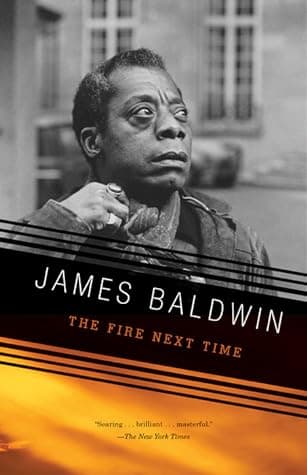
- The Fire Next Time
James Baldwin
4.5 (58k) average on GoodreadsPoliticsExplores the psychological and societal pressures of being Black in America with profound insight and personal urgency.
- Between the World and Me
Ta-Nehisi Coates
4.4 (235k) average on GoodreadsPoliticsA powerful epistolary memoir reflecting on race, violence, and the physical vulnerability of Black bodies in America.
- Educated
Tara Westover
4.5 (796k) average on GoodreadsBiographyBoth memoirs explore the theme of 'education as escape and alienation,' but the contexts are vastly different. Westover's narrative focuses on escaping a fundamentalist, isolated upbringing in rural Idaho, where the challenges are primarily cultural and familial. Ward's experience of education as escape is complicated by racial dynamics, systemic poverty, and the inescapable pull of a home community where loved ones are dying. While Westover grapples with intellectual independence, Ward grapples with the guilt and alienation of leaving a community that is literally dying around her, and the profound sadness of returning only to bury more men.
- The Diary of a Young Girl
Anne Frank
4.2 (2.7M) average on GoodreadsBiographyDuring the Nazi occupation, a teenage girl's diary, written from a secret annex, shares observations on humanity, hope, and the wait for freedom.
- Eat, Pray, Love
Elizabeth Gilbert
3.6 (1.5M) average on GoodreadsLifestyleA heartbroken writer leaves her conventional life for a year-long global search for pleasure in Italy, spiritual devotion in India, and unexpected love and balance in Bali.
- Night
Elie Wiesel
4.3 (970k) average on GoodreadsBiographyIn the darkness of Auschwitz and Buchenwald, a teenage Elie Wiesel faces the extermination of his family, the loss of his faith, and the lasting scars of humanity's deepest cruelty.





Enjoyed the summary?
A summary gives you the shape of the book. The book itself has the detail, the examples and the voice.
Find Men We Reaped on AmazonAs an Amazon Associate, BookBrief earns from qualifying purchases. How we're funded