
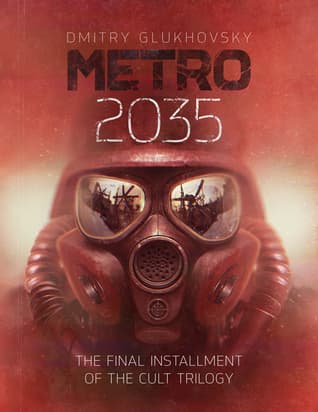
Synopsis
Covers the whole plot, including the ending.
- Difficulty
- Medium
- Pacing
- Moderate
- Mood
- Bleak, Desperate, Philosophical, Suspenseful, Hopeful (at times)
- Read it if
- You enjoy post-apocalyptic stories with a strong philosophical bent, political intrigue, and a desperate search for truth amidst a dying world.
- Skip it if
- You prefer lighthearted stories, or are looking for a purely action-driven narrative without deep introspection and moral dilemmas.
Metro 2035 Plot Summary
Covers the whole plot, including the ending.
The Obsession of Artyom
Two years after 'Metro 2033', Artyom lives at VDNKh station with his wife, Anna. He believes humanity still exists outside the Moscow Metro. Artyom spends his days making dangerous expeditions to the surface, maintaining a radio antenna in a ruined building, and listening for signals. These solo ventures are fruitless, often resulting in radiation sickness. They drive a wedge between him and Anna, who wants a normal life and a child. His fellow VDNKh residents, including his stepfather Sukhoi, see his obsession as a dangerous delusion. They prefer to believe the Metro is all that remains of humanity. Artyom's determination remains unshaken, fueled by hope and a refusal to accept the Metro as mankind's final frontier.
The Arrival of Homer
Artyom's routine is interrupted by Homer, an elderly historian and chronicler of the Metro. Homer, having heard of Artyom's exploits and surface expeditions, seeks him out at VDNKh. He proposes to write Artyom's biography, believing his story is important for future generations. Homer's presence offers Artyom a rare chance to share his experiences and beliefs with someone who, while not fully understanding, is willing to listen. Homer's questions about Artyom's past and motivations reinforce Artyom's conviction that his surface search is valid and vital, giving him a renewed sense of purpose despite Anna's growing despair.
The Signal and the Stranger
During one of his surface excursions, Artyom picks up a faint, distorted radio signal. Though unintelligible, it confirms his belief that others exist. Shortly after, a mysterious man named Savelii appears at VDNKh. He claims to be a scout from the Hansa and offers Artyom a deal: help Hansa with a task, and they will provide him with better equipment and information about other survivors. Savelii's proposition tempts Artyom, offering a potential breakthrough. He agrees to accompany Savelii, seeing this as his best chance yet to prove his theories and fulfill his mission, despite Anna's pleas to stay and Sukhoi's warnings.
Journey to Hansa and the Deception
Artyom's journey with Savelii takes them through the bustling, well-lit stations of Hansa, a wealthy and powerful faction. However, Artyom soon realizes Savelii's promises are hollow. Savelii, a former S.T.A.L.K.E.R. named Lyokha, is not interested in helping Artyom find survivors. He wants to use Artyom for his knowledge of the surface and his fearlessness. Artyom is forced to participate in a dangerous mission to retrieve valuable items from a surface location. He realizes he has been manipulated. This experience confirms the duplicity of the Metro's factions and provides Artyom with insights into the political machinations that control information flow underground.
The Red Line and the Propaganda
Escaping Hansa, Artyom finds himself traversing the territory of the Red Line, the communist faction. He is appalled by the oppressive propaganda, the harsh living conditions, and the fervent indoctrination of its citizens. He observes the Red Line's brutal methods, including public executions and the suppression of dissent. Artyom's experiences here solidify his understanding that the factions within the Metro are not simply struggling for survival but are engaged in ideological warfare, manipulating their populations and hoarding resources. He becomes disillusioned with the Metro's political landscape, realizing that the quest for truth is more complex than just finding other survivors.
Reunion and a New Mission
After his journey through the Red Line, Artyom is reunited with Anna and Homer, who have followed his trail. Anna, desperate to bring Artyom home, reveals she is pregnant, adding urgency and responsibility to Artyom's quest. Homer, meanwhile, has gathered more information about Artyom's past and a potential larger conspiracy. Together, they decide their best course of action is to seek answers at Polis, the intellectual and political heart of the Metro, where the most knowledgeable and powerful figures reside. This reunion transforms Artyom's solitary mission into a shared one, with higher stakes than ever before.
Polis and the Great Lie
At Polis, Artyom confronts Melnik, the former leader of the S.T.A.L.K.E.R.s and a high-ranking figure in the Metro. Melnik reveals the truth: for decades, the Metro's leaders, including himself, have jammed all radio frequencies, preventing outside communication. This was done to maintain control over the populace, convincing them that they are the last remnants of humanity. The revelation shatters Artyom's world, confirming his intuition but exposing the profound betrayal of his own people. He realizes the Metro's factions are not just fighting for survival, but actively suppressing hope and truth for political gain, making their world a prison built on lies.
The Journey to Yamantau
Devastated but resolute, Artyom, Anna, Homer, and a small group of S.T.A.L.K.E.R.s led by Melnik's daughter, Alyosha, decide to travel to Yamantau. Yamantau is a legendary, supposedly intact government bunker complex far outside Moscow, rumored to house genuine survivors and a functioning communication center. The journey is dangerous, taking them through uncharted, highly radioactive tunnels and across the hostile surface. Along the way, they face mutated creatures, environmental hazards, and the constant threat of radiation poisoning. This expedition represents their last desperate hope to find uncorrupted humanity and broadcast a message to the wider world.
The Cannibals of Yamantau
Upon reaching the colossal Yamantau bunker, Artyom and his group initially believe they have found a haven. However, their hope quickly turns to horror as they discover the bunker is not a sanctuary of survivors but a lair of a deranged, cannibalistic cult. The inhabitants, led by a mad doctor, lure unsuspecting travelers with false radio signals, then capture, butcher, and consume them. The group fights for their lives against these monstrous people, barely escaping the complex. This gruesome encounter strips away any remaining illusions Artyom might have had about finding pristine humanity, showing the darkest depths of post-apocalyptic desperation.
The Search for the Ark
After the nightmare of Yamantau, the group receives a new, cryptic lead: a rumor of a secret, heavily armored train known as 'The Ark' that is said to be traveling across Russia, carrying vital supplies and potentially other survivors. Artyom, renewed with purpose, takes command. Their journey becomes a desperate race against time, as they scavenge for fuel, repair the train, and navigate the treacherous, irradiated landscape of post-apocalyptic Russia. This long trek takes them far beyond the familiar confines of the Metro, forcing them to confront the vastness and desolation of the outside world, pushing their limits of endurance and hope.
The Caspian Sea and the Cult of the Sun
The Ark's journey leads them to the desolate shores of the Caspian Sea, now a toxic desert. Here, they encounter a fanatical cult known as the 'Children of the Sun,' led by a charismatic but dangerous figure. The cult believes the sun is a divine entity and that all outsiders are impure. Artyom and his companions must navigate this hostile environment, dealing with the cult's aggression and strange rituals, all while searching for a crucial component for their radio equipment. This encounter highlights the diverse and often disturbing ways humanity has adapted and fractured in the wasteland. Not all survivors are allies.
The Taiga and the Hermits
The Ark ventures into the vast, untouched wilderness of the Taiga forest. Here, they discover a secluded community of hermits who have rejected technology and urban life, choosing to live in harmony with nature. These people, though initially wary, are peaceful and self-sufficient. Artyom learns about their simple way of life and their deep connection to the land, offering a stark contrast to the warring factions of the Metro and the depravity of Yamantau. This encounter provides a moment of peace and reflection for Artyom, offering a glimpse of an alternative, more harmonious existence outside human conflict.
The Final Broadcast
After countless trials, Artyom and his remaining companions finally reach a fully operational, powerful radio antenna in a miraculously preserved communication complex. With immense effort and Melnik's sacrifice, Artyom broadcasts a message to the outside world, revealing the truth about the Moscow Metro and calling for any surviving communities to respond. This moment is the culmination of his life's quest, a desperate plea for connection and a beacon of hope against the overwhelming darkness. The broadcast is a final, defiant act against the lies and control of the Metro's leaders.
The Cost of Truth
Against all odds, Artyom receives a faint, yet clear, response to his broadcast. Other survivors exist, scattered across Russia and potentially beyond. The joy of this discovery is immense, but it comes at a terrible cost. Melnik succumbs to radiation poisoning, a consequence of their arduous journey and his final efforts. Anna, too, is gravely ill from radiation exposure, her pregnancy now in jeopardy. Artyom is left with the bittersweet realization that while he has proven his truth, the price paid by those he loves is devastating. He confronts the moral complexities of his unwavering pursuit.
A New Beginning
With the knowledge that humanity endures, Artyom, a gravely ill Anna, and their loyal companions, including Alyosha and Homer, decide to leave the Metro permanently. They gather the remaining survivors from their journey and, aboard 'The Ark,' set off to find the source of the radio response and build a new future on the surface. Artyom, now a recognized leader and a symbol of hope, carries the burden of his past actions and the responsibility for those who follow him. The ending is not a perfect resolution, but a new beginning, a testament to resilience and the enduring human spirit in the face of unimaginable adversity.
Metro 2035 Characters
Artyom
Protagonist
A relentless idealist obsessed with finding life outside the Metro.
Artyom is a young man haunted by the belief that humanity exists beyond the Moscow Metro. Introverted and driven, he is willing to risk everything, including his life and his marriage, to prove his conviction. His experiences in 'Metro 2033' instilled in him a profound sense of responsibility and a deep-seated rejection of the Metro's insular, warring factions. He is courageous, resilient, and possesses an almost naive hope that fuels his dangerous expeditions to the surface. Despite the skepticism and animosity he faces, Artyom's moral compass remains largely uncorrupted, making him a beacon of truth and a catalyst for change.
Relationships: Anna (Wife, initially strained by his obsession, later a supportive companion.); Homer (Chronicler and confidant, documenting Artyom's journey.); Melnik (Former mentor, later a co-conspirator in the 'Great Lie'.); Sukhoi (Stepfather, concerned and skeptical of Artyom's sanity.)
Anna
Supporting
Artyom's wife, torn between her love for him and her desire for a normal life.
Anna is Artyom's wife, a resourceful and loving woman who initially struggles with Artyom's dangerous obsession with the surface. She longs for a stable, peaceful life and a family, and his constant expeditions cause her immense worry and resentment. Despite her frustrations, her love for Artyom is unwavering, and she eventually chooses to join him on his perilous journey, showcasing her immense courage and loyalty. Her pregnancy adds a profound layer of vulnerability and motivation to their quest, representing the future they are fighting for. Anna embodies the human desire for normalcy and hope amidst chaos.
Relationships: Artyom (Husband, deeply in love despite their conflicts.); Melnik (Father, a complex relationship due to his role in the Metro's deception.)
Homer (Nikolay Ivanovich)
Supporting
An elderly historian dedicated to preserving the truth of the Metro.
Homer is an old, wise historian and chronicler of the Metro, driven by a desire to document the true history of humanity's survival. He seeks out Artyom, recognizing the profound significance of his story. Though initially skeptical of Artyom's surface claims, Homer's open mind and intellectual curiosity lead him to become a key ally and observer. He provides a moral and historical anchor for the group, constantly questioning and analyzing their experiences. Homer represents the importance of truth, memory, and the power of narrative in a world desperate for meaning. His presence ensures Artyom's tale is recorded for posterity.
Relationships: Artyom (Subject of his biography, later a trusted companion.)
Melnik
Antagonist/Supporting
The pragmatic and morally ambiguous leader of the S.T.A.L.K.E.R.s and a key figure in Polis.
Melnik is a seasoned S.T.A.L.K.E.R. and a high-ranking figure in Polis, known for his pragmatism, ruthlessness, and leadership. He is Artyom's former mentor but is also deeply complicit in the 'Great Lie' – the deliberate jamming of radio frequencies to maintain control over the Metro's population. Melnik believes his actions, however morally questionable, are necessary for the greater good and the survival of the Metro. He is a complex character, driven by a sense of duty and a desire to protect his people, even if it means sacrificing truth and hope. His character highlights the moral compromises made in the name of survival.
Relationships: Artyom (Former mentor, later an ideological opponent and reluctant ally.); Anna (Daughter, a strained but loving relationship.); Alyosha (His daughter, a fellow S.T.A.L.K.E.R. and loyal to him.)
Alyosha (Alexei)
Supporting
Melnik's daughter and a skilled S.T.A.L.K.E.R. who joins Artyom's group.
Alyosha is Melnik's daughter, a tough, capable, and loyal S.T.A.L.K.E.R. She is pragmatic and experienced in the dangers of the surface, inheriting many of her father's leadership qualities. Though initially loyal to her father and his worldview, she eventually becomes a crucial member of Artyom's group, demonstrating her own moral compass and commitment to finding the truth. She provides essential combat and survival skills, acting as a strong and reliable presence throughout their perilous journey. Alyosha represents the younger generation of S.T.A.L.K.E.R.s who are willing to question the established order.
Relationships: Melnik (Father, deeply loyal despite his flaws.); Artyom (Fellow S.T.A.L.K.E.R. and trusted companion.)
Savelii / Lyokha
Antagonist
A deceptive Hansa scout who manipulates Artyom for his own gain.
Savelii, later revealed to be Lyokha, is a cunning and opportunistic scout from the Hansa faction. He approaches Artyom with false promises of aid and information, intending to exploit Artyom's unique surface knowledge and fearlessness for Hansa's benefit. He is a pragmatic survivor, devoid of Artyom's idealism, and represents the pervasive deceit and self-interest that plague the Metro's political landscape. His actions highlight the dangers of trusting strangers in a world where survival often comes at the expense of others. He is a symbol of the pervasive corruption within the Metro.
Relationships: Artyom (Manipulator of Artyom for Hansa's interests.)
Sukhoi
Supporting
Artyom's stepfather and a skeptical but caring figure at VDNKh.
Sukhoi is Artyom's stepfather, a kind but weary man who represents the common Metro citizen's desire for peace and stability. He deeply cares for Artyom and Anna but is exasperated by Artyom's relentless and dangerous surface expeditions, viewing them as a futile and self-destructive obsession. Sukhoi embodies the general skepticism and fear of the unknown that keeps most Metro inhabitants tethered to their underground existence. He acts as a voice of caution and concern, highlighting the personal cost of Artyom's quest.
Relationships: Artyom (Stepfather, caring but critical of Artyom's actions.); Anna (Stepdaughter-in-law, shares his concerns for Artyom.)
The Doctor (Yamantau)
Antagonist
The insane, cannibalistic leader of the Yamantau bunker.
The Doctor is the deranged leader of the cannibalistic cult residing in the Yamantau bunker. He presents himself as a benevolent figure, offering sanctuary, but in reality, he orchestrates the capture and consumption of unsuspecting travelers. His madness is a terrifying manifestation of humanity's descent into depravity in the post-apocalyptic world. He embodies the ultimate betrayal of trust and the horrifying extremes to which survival can push individuals. The Doctor serves as a chilling example of the monstrous potential within humanity when stripped of societal norms and morality.
Metro 2035 Themes
The Search for Truth vs. Convenient Lies
This theme is central to 'Metro 2035', appearing in Artyom's relentless quest to uncover the truth about life outside the Metro. This directly contrasts with the deliberate deception by the Metro's leaders. The revelation that Polis jammed all radio frequencies to maintain control over the populace is the most impactful manifestation. This 'Great Lie' highlights how power structures prioritize stability and control over the human need for truth and hope. Artyom's journey exposes the moral bankruptcy of such a system. It shows that a comfortable lie can be more destructive than a harsh truth. His unwavering commitment to truth, even when it threatens to shatter his world, drives the narrative.
“They lied to us, Artyom. All of them. About everything. For twenty years.”
The Nature of Humanity in Extremis
The novel explores the diverse and often disturbing ways humanity adapts and degenerates after an apocalypse. From the warring, ideologically driven factions of the Metro (Red Line, Hansa, Polis) to the horrifying cannibals of Yamantau and the peaceful hermits of the Taiga, the book presents a spectrum of human responses to extreme conditions. It questions what defines humanity when civilization crumbles, showing both incredible cruelty and remarkable resilience and kindness. The Metro itself, with its petty squabbles and power struggles, is a microcosm of humanity's inability to unite even when facing extinction.
“The Metro was not a sanctuary. It was a prison. And the wardens were ourselves.”
Hope and Despair
Hope is Artyom's defining characteristic, driving him against overwhelming odds and the cynicism of those around him. His belief in life outside the Metro is a radical act of hope in a world consumed by despair. Despair appears in Anna's initial resignation to Metro life, Sukhoi's skepticism, and the general populace's acceptance of their underground existence. The novel explores the delicate balance between these two forces. Artyom's journey shows the power of hope, even if it comes at a great personal cost. It demonstrates that clinging to a belief in a better future can be the most revolutionary act of all.
“A man without hope is already dead. And I was not dead yet.”
The Cost of Survival
The novel examines the moral and physical toll of survival in a post-apocalyptic world. Characters like Melnik make morally ambiguous decisions, believing them necessary for the greater good. Artyom grapples with the sacrifices his quest demands from himself and his loved ones. The radiation sickness suffered by Artyom and Anna, the loss of life among their companions, and the brutal encounters with hostile factions all highlight the high price of enduring. The book asks whether survival at any cost is truly living, and if the compromises made are worth the ultimate outcome. Melnik's death, a direct consequence of his efforts to help Artyom, perfectly encapsulates this theme.
“There are no easy choices left, Artyom. Only sacrifices.”
The Illusion of Safety
The Metro, initially conceived as the ultimate sanctuary, is a false haven. The factions within it are constantly at war, resources are scarce, and the air is becoming toxic. The 'Great Lie' further exposes the illusion, showing that perceived safety is maintained through deliberate ignorance and control. Artyom's journey outside the Metro, though dangerous, proves that the perceived 'safety' of the underground is a gilded cage. This theme challenges the characters, and the reader, to question where true safety lies and whether genuine freedom is possible without confronting the unknown.
“We thought we were safe. We were only trapped.”
Plot Devices & Literary Techniques
The Radio Signal
A recurring symbol of hope and the outside world.
The faint, distorted radio signal Artyom picks up on the surface serves as both a plot catalyst and a powerful symbol. It is the initial tangible evidence that reinforces Artyom's belief in other survivors, driving him to continue his quest. Later, the deliberate jamming of these signals by Polis highlights the 'Great Lie' and the suppression of truth. The final, successful broadcast and the subsequent response represent the ultimate triumph of hope and connection, proving Artyom's lifelong mission was valid. The radio acts as a lifeline to a lost world and a weapon against the Metro's isolation.
The 'Great Lie'
The deliberate suppression of outside communication by the Metro's leaders.
The 'Great Lie' is the central revelation of the novel: the Metro's highest authorities have been actively jamming all radio frequencies for decades, convincing the populace that they are the last remnants of humanity. This device serves as the primary antagonist of truth and hope, exposing the profound corruption and control within the Metro's supposed sanctuary. It transforms Artyom's personal quest into a fight against systemic oppression, revealing that the greatest threat to humanity might not be the surface world, but the lies propagated by its own leaders. It shatters the illusion of unity and benevolent leadership.
The Ark
A legendary, heavily armored train representing a new beginning.
The Ark is a mythical, advanced train that Artyom and his companions eventually acquire and use to traverse the vast Russian wasteland. It functions as a symbol of mobility, hope, and the potential for a new civilization. Unlike the static, decaying stations of the Metro, the Ark is a vehicle for progress and escape, enabling the characters to leave the confines of their old world behind. It facilitates their journey across diverse landscapes, allowing for new encounters and discoveries, and ultimately becomes the vessel for their exodus to a new life on the surface, carrying the last hopes of humanity.
Radiation Sickness
A constant, insidious threat representing the irreversible damage of the apocalypse.
Radiation sickness is a pervasive and deadly plot device, constantly reminding the characters and the reader of the catastrophic consequences of the nuclear war. It manifests in Artyom's recurring illness, the desolate, poisoned landscapes, and most tragically, in Anna's deteriorating health. It serves as a tangible, unavoidable enemy that cannot be fought with bullets or diplomacy. It underscores the profound and lasting damage inflicted upon the world, raising the stakes for every surface expedition and adding a layer of tragic realism to the characters' struggles, highlighting the personal cost of their quest for truth.
The Black Ones (Mentioned)
A species of intelligent mutants from Artyom's past, now a lingering moral shadow.
Though not physically present in 'Metro 2035', the Black Ones from 'Metro 2033' still cast a significant shadow over Artyom's consciousness. His role in their destruction is a source of guilt and a driving force behind his current quest for other survivors. The lingering memory of the Black Ones serves as a moral compass for Artyom, influencing his determination to find uncorrupted life and atone for his past actions. This device connects the current narrative to the previous book, providing depth to Artyom's character and emphasizing the consequences of his earlier choices.
Metro 2035 Quotes
“The world is not a shopping mall, you know. It’s a dangerous place. And you are here, in the safest place on Earth, and you want to leave it for what?”
“Hope is a terrible thing, you know. It tortures you. It keeps you alive in a world where you should just lie down and die.”
“The truth is a terrible burden. It can crush you. But it can also set you free.”
“People are like rats in a maze. They run, they fight, they breed, and they die. And they never see the walls of the maze.”
“Every lie has a price. And the bigger the lie, the higher the price.”
“Sometimes, to save something, you have to destroy it first.”
“Silence is not empty. It's full of answers.”
“The greatest prison is not made of bars, but of fear.”
“There are no heroes, only survivors. And some of them just happen to be luckier than others.”
“History is written by the victors, but the truth remains, waiting for someone to find it.”
“You can't escape your past. It's always there, breathing down your neck.”
“Even in the darkest tunnel, there's always a faint light, if you just keep moving towards it.”
“The world doesn't care about your ideals. It only cares about power.”
“Sometimes, the only way to find your way home is to get completely lost first.”
Quiz
10 questions on the plot and the characters. Each answer comes with a short explanation.
Question 1
What is Artyom's primary goal at the beginning of 'Metro 2035'?
- To become the leader of the Polis station.
- To find other survivors on the surface.
- To establish a new trade route with the Red Line.
- To develop a cure for the mutated diseases in the Metro.
Show answer
B. To find other survivors on the surface. Artyom's defining characteristic in 'Metro 2035' is his relentless pursuit of other survivors on the surface, believing humanity exists beyond the Moscow Metro.
Question 2
Which character frequently accompanies Artyom on his surface expeditions, despite the dangers?
- Miller
- Sasha
- Homer
- Hunter
Show answer
D. Hunter Hunter, a seasoned ranger and Artyom's former mentor, often joins Artyom on his perilous ventures to the surface, despite his initial skepticism about Artyom's quest.
Question 3
What is the primary reason Artyom is initially met with skepticism and ridicule by many in the Metro regarding his surface expeditions?
- His lack of experience in surface survival.
- The belief that the surface is uninhabitable and his search is futile.
- His frequent confrontations with station authorities.
- His refusal to share his findings with the general population.
Show answer
B. The belief that the surface is uninhabitable and his search is futile. Most inhabitants of the Metro believe the surface is too radioactive and devoid of life, dismissing Artyom's search for other survivors as a dangerous delusion.
Question 4
What significant discovery does Artyom make that fuels his hope for life outside the Metro?
- A working nuclear reactor on the surface.
- Radio signals from beyond Moscow.
- An untouched archive of pre-war literature.
- A map showing unradiated territories.
Show answer
B. Radio signals from beyond Moscow. Artyom's persistent efforts with his radio eventually lead him to detect faint, intermittent signals from outside Moscow, convincing him that other survivors exist.
Question 5
What is the name of Artyom's wife, who often expresses concern for his dangerous surface ventures?
- Olga
- Anna
- Elena
- Maria
Show answer
B. Anna Anna is Artyom's wife and Miller's daughter, who frequently worries about Artyom's dangerous and often fruitless quests to the surface, yet supports him.
Question 6
What controversial truth about the Metro's leadership and the outside world is gradually revealed to Artyom?
- The Metro's leadership is actively trying to contact outside civilizations.
- The Metro is intentionally blocking outgoing radio signals to maintain control.
- The surface radiation levels are actually much higher than publicly stated.
- There is a secret, advanced civilization thriving beneath another part of Moscow.
Show answer
B. The Metro is intentionally blocking outgoing radio signals to maintain control. Artyom uncovers a dark secret: the 'invisible watchers' or 'observers' on the surface, controlled by the Metro's powerful factions, are actively jamming radio signals to prevent contact with the outside world and maintain the status quo underground.
Question 7
What theme is most central to Artyom's personal journey in 'Metro 2035'?
- The struggle for power and control within a hierarchical society.
- The pursuit of truth and hope against overwhelming apathy and deception.
- The dangers of technological advancement without moral guidance.
- The importance of individual survival over collective well-being.
Show answer
B. The pursuit of truth and hope against overwhelming apathy and deception. Artyom's entire narrative arc revolves around his relentless search for truth about the outside world and his unwavering hope for humanity's future, despite the cynicism and deception he faces.
Question 8
What is the ultimate fate of the Moscow Metro inhabitants as depicted at the end of 'Metro 2035'?
- They successfully re-establish contact with multiple surface settlements.
- They remain isolated underground, with Artyom leaving them behind.
- They launch a full-scale colonization effort to reclaim the surface.
- They are eventually wiped out by a new, unknown threat.
Show answer
B. They remain isolated underground, with Artyom leaving them behind. At the conclusion of 'Metro 2035', Artyom, disillusioned by the Metro's leadership and their deception, chooses to leave the Metro with Anna and a few others, effectively abandoning the majority of the inhabitants to their underground existence.
Question 9
What specific pre-war military installation plays a crucial role in the Metro's hidden power structure and the jamming of radio signals?
- The Kremlin's underground bunker.
- The secret D-6 facility.
- The Ostankino Tower's reinforced base.
- The Vladimir Lenin Mausoleum's lower levels.
Show answer
B. The secret D-6 facility. The D-6 facility, a massive secret military bunker beneath the Metro, is where the 'invisible watchers' operate the jamming equipment that prevents outside communication, controlled by the highest echelons of the Metro's military.
Question 10
What is the primary message Artyom hopes to convey to the Metro inhabitants by finding other survivors?
- That the Metro is not the only place where humanity survives.
- That the surface is perfectly safe for immediate resettlement.
- That they should prepare for an impending invasion from the surface.
- That a new, unified government should be formed across all Metro stations.
Show answer
A. That the Metro is not the only place where humanity survives. Artyom's driving motivation is to prove to the complacent and manipulated Metro dwellers that they are not alone, that humanity persists beyond their underground confines, offering them hope for a future above ground.
Metro 2035 FAQ
What is Artyom's primary goal at the beginning of 'Metro 2035'?
Artyom is obsessed with finding other survivors on the surface. He spends his days on the highest tower in the Metro, transmitting radio signals and listening for a response, convinced that humanity cannot be confined solely to the Moscow Metro.
How does Artyom's wife, Anna, feel about his surface expeditions and radio obsession?
Anna is deeply concerned and frustrated by Artyom's relentless pursuit of surface contact. She fears for his safety, believes his efforts are futile, and longs for a normal, peaceful life with him within the Metro, often clashing with him over his perceived recklessness.
What significant discovery does Artyom make early in the book that fuels his quest?
Artyom intercepts a faint radio signal in Polish, confirming the existence of other survivors outside the Moscow Metro. This discovery validates his long-held belief and intensifies his determination to break through the perceived isolation.
Who is Miller, and what is his initial stance on Artyom's search for surface survivors?
Miller is Artyom's father-in-law and the leader of the Spartan Order, an elite military group. Initially, Miller dismisses Artyom's claims of other survivors as delusions, maintaining that the Metro is humanity's last bastion and that the surface is too dangerous and empty to consider.
What is the 'Great Lie' that Artyom uncovers, and how does it impact the Metro's population?
Artyom discovers that the Metro's leaders, including Miller, have been actively jamming outside radio signals to prevent the populace from learning about other survivors. This 'Great Lie' is intended to maintain control, prevent panic, and keep people from abandoning the relative safety of the Metro, but it condemns them to perpetual underground existence.
How does the revelation of the jamming operation connect to the 'Dark Ones' from previous Metro novels?
The jamming operation is a deliberate act by Miller and other powerful figures to maintain isolation. This connects to the 'Dark Ones' because Artyom previously learned that the Dark Ones were not inherently hostile but misunderstood, and their existence was also suppressed or twisted by those in power to control the narrative and fear within the Metro.
What is the significance of the train journey Artyom undertakes across the Metro lines?
The train journey is a symbolic and literal exploration of the Metro's political and social landscape. It allows Artyom to witness the corruption, oppression, and despair in various station-states, highlighting the profound moral decay and the deep divisions that plague the underground society, reinforcing his desire to escape it.
What is the true nature of the 'safe zones' on the surface that Artyom initially believes in?
Artyom's initial belief in 'safe zones' is a desperate hope. He eventually discovers that while some areas might have lower radiation, the surface is still largely desolate, and the 'safe zones' are often propaganda or temporary havens that don't offer the widespread, sustainable life he dreams of for everyone.
How does Artyom's prolonged exposure to the surface affect his mental state and his perception of humanity?
Artyom's time on the surface, witnessing the desolation and encountering the harsh realities of those few survivors, profoundly impacts him. He becomes increasingly disillusioned with the idea of a grand 'rebirth' and develops a cynical view of humanity's capacity for self-destruction and deceit, both above and below ground.
Discuss Anna's psychological journey throughout the novel, especially concerning her loyalty to Artyom versus her desire for stability.
Anna experiences a profound internal conflict, torn between her love and loyalty to Artyom and her deep-seated need for safety and a 'normal' life, which the Metro initially offers. Her journey is one of reluctant acceptance, fear, and ultimately, a growing resolve to stand by Artyom, even when his path leads them into extreme danger and uncertainty.
How does the psychological trauma of living underground for decades manifest in the Metro's inhabitants?
The long-term psychological trauma manifests as widespread paranoia, xenophobia, and a clinging to rigid ideologies and superstitions. People are prone to fear-mongering, easily manipulated by leaders, and display a deep-seated resistance to change or truths that challenge their established worldview, leading to constant conflict and stagnation.
Explore Miller's psychological motivations for maintaining the 'Great Lie' and his actions throughout the book.
Miller's motivations are complex, rooted in a paternalistic desire to protect his people and preserve the Spartan Order, which he sees as the last bastion of civilization. He believes the 'Great Lie' is a necessary evil to maintain order and prevent a chaotic exodus, viewing the surface as too dangerous and the Metro's continued existence as paramount, even if it means sacrificing truth for perceived stability.
Is Artyom's decision to leave the Metro at the end a victory or a tragic escape?
This is highly debatable. It can be seen as a tragic escape, as he leaves behind the majority of humanity and embraces an uncertain, desolate future with only a few companions. However, it can also be a victory, as he chooses freedom and truth over the stifling, deceptive existence of the Metro, fulfilling his personal quest for genuine survival and hope outside the system.
What is the author's message regarding truth and deception in 'Metro 2035'?
Glukhovsky strongly critiques the dangers of institutionalized deception. The 'Great Lie' about outside survivors, the manipulation of information, and the suppression of truth are shown to corrupt society, stifle progress, and ultimately condemn humanity to a lesser existence, suggesting that truth, however painful, is essential for genuine survival and growth.
Does 'Metro 2035' offer a hopeful or pessimistic view of humanity's future?
The novel presents a largely pessimistic view of humanity's capacity for self-destruction and corruption, even after an apocalypse. While Artyom and Anna find a personal sliver of hope on the surface, the vast majority of the Metro remains trapped in ignorance and conflict, suggesting that humanity's flaws are deeply ingrained, regardless of environment.
How does the ending of 'Metro 2035' differ from the typical post-apocalyptic narrative of rebuilding civilization?
Unlike many post-apocalyptic narratives that focus on the collective rebuilding of society, 'Metro 2035' ends with a small, isolated group leaving behind the remnants of a corrupt, stagnant civilization. It prioritizes individual freedom and a personal quest for truth over the collective, often deceptive, struggle of the larger group, offering a more cynical and individualistic resolution.
What role does the 'surface' play as a symbol throughout the book?
The 'surface' symbolizes freedom, truth, and the potential for a genuine, uncorrupted future, contrasting sharply with the oppressive, deceptive, and stagnant underground world. It represents Artyom's ultimate aspiration and the promise of escaping the 'prison' of the Metro, despite its dangers.
How does the novel explore the theme of leadership and its responsibilities?
The novel critically examines leadership through figures like Miller, showing how leaders, even with good intentions, can become authoritarian and deceptive in their efforts to maintain control and protect their people. It questions whether the ends justify the means and highlights the heavy moral burden of making decisions that impact an entire population.
About the author

Dmitry Glukhovsky is a Russian sci-fi author best known for his "Metro" series, including the acclaimed "Metro 2033." His post-apocalyptic novels, often set in the Moscow Metro, explore themes of survival, societal collapse, and the human condition. Glukhovsky's work has gained international recognition and spawned successful video games and sequels.
Similar books
- The Road
Cormac McCarthy
4.0 (716k) average on GoodreadsScience FictionFeatures a grim, post-apocalyptic journey with a focus on survival and the human spirit.
- 1984
George Orwell
4.2 (3.1M) average on GoodreadsPoliticsDeals with themes of totalitarianism, propaganda, and the individual's struggle against a deceptive regime.
- Harry Potter and the Sorcerer's Stone
J.K. Rowling
4.5 (7M) average on GoodreadsFantasyRescued from a miserable life under the stairs, an orphaned boy discovers he's a wizard destined for a magical school, where he uncovers a dangerous secret tied to the dark wizard who murdered his parents.
- The Hunger Games
Suzanne Collins
4.3 (6.4M) average on GoodreadsFantasyIn a future where children fight to the death on live television, Katniss Everdeen volunteers for the arena, turning a death sentence into a fight for survival and a spark of rebellion.
- Divergent
Veronica Roth
4.2 (2.9M) average on GoodreadsFantasyIn a society divided by virtues, a sixteen-year-old's difference from the norm starts a rebellion that threatens her world.
- The Hobbit, or There and Back Again
J.R.R. Tolkien
4.3 (2.9M) average on GoodreadsFantasyA comfort-loving hobbit named Bilbo Baggins is whisked away by a mischievous wizard and a band of dwarves on an unexpected journey to reclaim stolen treasure from a fearsome dragon, discovering courage and a magical ring along the way.






Enjoyed the summary?
A summary gives you the shape of the book. The book itself has the detail, the examples and the voice.
Find Metro 2035 on AmazonAs an Amazon Associate, BookBrief earns from qualifying purchases. How we're funded