

Synopsis
Covers the whole plot, including the ending.
- Difficulty
- Medium
- Pacing
- Variable
- Mood
- Epic, Immersive, Educational, Reflective, Cultural
- Read it if
- You enjoy sweeping historical sagas that blend personal journeys with national histories, and are fascinated by Mexican culture and its complex past.
- Skip it if
- You prefer fast-paced, plot-driven narratives or are not interested in detailed historical accounts and cultural explorations.
Mexico Plot Summary
Covers the whole plot, including the ending.
The Invitation and the Return
Norman Clay, an American journalist with Mexican ancestry, gets an assignment from the 'Herald-Tribune' to cover a major bullfight in San Miguel de Allende. This event will feature two famous matadors: the experienced veteran, Don Victoriano, and the popular rising star, El Magnífico. Norman's editor, Fred Duncan, sees this as a good chance for Norman to reconnect with his Mexican roots, which he has largely ignored. Norman's mother, a proud but quiet Mexican woman, encourages him to go on this trip. As he gets ready, Norman thinks about his limited knowledge of Mexico beyond childhood stories and family gatherings. He feels both worried and curious about the land that shaped his ancestors.
Arrival in San Miguel and Historical Echoes
When he arrives in San Miguel de Allende, Norman Clay is immediately struck by the city's colonial beauty and its strong sense of history. He meets many interesting people, including local artists, shopkeepers, and other journalists, who give him glimpses into modern Mexican life. While starting his work, Norman begins to explore the city's ancient sites and learns about its pre-Hispanic past from local historians and archaeologists. He is especially interested in the stories of the Olmecs and Mayans, their advanced civilizations, and their often-brutal religious practices, including human sacrifice. These first encounters start to stir a deeper interest in his own heritage, beyond just covering the bullfight.
The Legacy of the Conquistadors
Norman Clay's research into Mexico's past leads him to the time of the Spanish conquest. He learns about Hernán Cortés's arrival in the early 16th century, his alliances with rival indigenous groups, and the eventual fall of the Aztec Empire under Moctezuma II. Norman is particularly moved by the stories of the Tlaxcalans, who allied with Cortés against the Aztecs, and the tragic fate of the Aztecs themselves, whose rich culture was largely destroyed or absorbed by the Spanish. He struggles with the two sides of the Spanish legacy: the introduction of Christianity and European culture versus the brutal suppression of native beliefs and the exploitation of indigenous peoples. This period shows the violent clash of civilizations that formed modern Mexico.
Colonial Rule and the Birth of a New Nation
Norman Clay's historical journey continues through centuries of Spanish colonial rule, or the Viceroyalty of New Spain. He discovers how the Spanish created a strict social hierarchy, with Peninsulares at the top, followed by Criollos, Mestizos, and indigenous populations. Norman learns about the encomienda system, the exploitation of silver mines, and the widespread influence of the Catholic Church. He then moves to the early 19th century and the fight for independence, led by figures like Miguel Hidalgo y Costilla and José María Morelos. Norman recognizes that this period set the stage for the complex national identity he sees in modern Mexico, a mix of Spanish and indigenous influences, marked by both pride and lasting resentment.
The Mexican Revolution and Its Aftermath
Norman Clay looks into the early 20th-century Mexican Revolution, a time of major social and political upheaval. He reads about the main figures: Francisco Madero, Emiliano Zapata, Pancho Villa, and Venustiano Carranza, each fighting for different goals, from land reform to political freedom. Norman learns about the brutal civil war, the millions of lives lost, and the eventual creation of the Constitution of 1917, which aimed to address many of the complaints that caused the conflict. He understands that the Revolution, though devastating, ultimately shaped the modern Mexican state and its unique blend of nationalism, social justice goals, and lasting internal divisions. This history provides important context for the political and social dynamics he sees in present-day Mexico.
The Art and Ritual of the Bullfight
As the date of the big bullfight gets closer, Norman Clay focuses on understanding the art and ritual of tauromaquia. He talks with fans, former matadors, and even bull breeders, learning about the detailed rules, the different parts of the fight, and the specific roles of each participant, from the picadores to the banderilleros. Norman comes to appreciate the deep cultural roots of bullfighting in Mexico, seeing it not just as a sport but as a dramatic performance, a dance of life and death, closely linked with Spanish heritage and Mexican identity. He sees the rigorous training and great courage required of the matadors, preparing him for the intense event he is about to cover.
The Matadors: Victoriano and El Magnífico
Norman Clay spends time interviewing and watching Don Victoriano and El Magnífico. Don Victoriano, the older, more traditional matador, represents the classic style—graceful, precise, and deeply respectful of the bull. He is a legend, admired for his experience and skill. El Magnífico, in contrast, is younger, flashier, and more daring, appealing to a new generation of fans with his bold moves and charming presence. Norman learns about their personal journeys, their sacrifices, and the great pressure they face, not only in the ring but also from the public and their teams. He senses a deep, unspoken rivalry between them, driven by tradition, ambition, and the very different paths they have taken to reach the top of their profession.
The Grand Bullfight
The day of the big bullfight arrives, and Norman Clay takes his seat in the crowded plaza de toros, feeling the exciting atmosphere. He carefully watches Don Victoriano and El Magnífico as they face their bulls. Don Victoriano performs with his usual artistry, showing masterful control and a deep understanding of the animal, earning great respect from the purists. El Magnífico, true to his style, takes more risks, thrilling the crowd with his daring passes and close encounters. The fight is a flurry of capes, banderillas, and swords, ending in moments of both victory and near-tragedy. Norman, at first a detached observer, finds himself caught up in the emotion, recognizing the deep cultural importance of the spectacle.
Aftermath and Reflection
After the bullfight, Norman Clay processes the intense experience. Both matadors perform well, though the specific outcome and critical reception vary. Norman writes his article, trying to capture the drama, skill, and cultural weight of the event. Beyond the immediate assignment, the trip has deeply affected him. He feels a stronger connection to his Mexican heritage, understanding the layers of history, culture, and struggle that have shaped the nation. He realizes that Mexico is not one thing but a complex blend of indigenous traditions, Spanish influence, and revolutionary spirit. His view of his own identity broadens, embracing both his American and Mexican roots.
Embracing Heritage and Future
As Norman Clay gets ready to leave San Miguel de Allende, he feels a sense of completion and a deep change within himself. He has not only reported on a bullfight but has also gone on a personal journey of discovery, tracing his family line through thousands of years of Mexican history. He has seen the beauty, brutality, resilience, and passion that define the country. His initial detachment has been replaced by deep empathy and understanding. Norman returns to the United States with a richer sense of self, no longer seeing his Mexican heritage as a distant curiosity but as an important part of who he is, ready to accept its complexities and stories.
Mexico Characters
Norman Clay
Protagonist
An American journalist with Mexican ancestry covering a historic bullfight.
Norman Clay is a thoughtful and somewhat reserved American journalist. While he carries Mexican heritage through his mother, he has largely distanced himself from it, viewing it as a separate part of his identity. He is intelligent and observant, initially approaching his assignment with journalistic detachment. As he delves into Mexico's history and culture, he becomes increasingly introspective, grappling with his identity and the complex legacy of his ancestors. He is driven by a professional commitment to his work but finds himself on a personal quest for understanding.
Relationships: Fred Duncan (Editor and mentor); Norman's Mother (Source of his Mexican heritage, encouraging his journey)
Don Victoriano
Supporting
An aging, legendary matador representing tradition and classic artistry.
Don Victoriano is a revered figure in the world of bullfighting, known for his elegant, traditional style and profound respect for the bull. He embodies the classic artistry of tauromaquia, valuing precision, grace, and an almost spiritual connection to the animal. Despite his age, he remains a master of his craft, representing a fading era of bullfighting. He is a man of quiet dignity and immense experience, respected by purists and deeply conscious of his legacy. His presence in the ring is a testament to enduring skill and a deep understanding of the ancient ritual.
Relationships: El Magnífico (Professional rival, representing a contrasting modern style)
El Magnífico
Supporting
A charismatic and daring young matador, representing modern flair and ambition.
El Magnífico is the rising star of bullfighting, a young and charismatic matador who brings a modern, more audacious style to the arena. He is known for his daring passes, close encounters with the bull, and a showmanship that electrifies the crowd. He is ambitious and confident, eager to prove himself against the established legends like Don Victoriano. While some purists may view his style as less traditional, he undeniably captures the imagination of a new generation of aficionados. He represents the evolving face of bullfighting, balancing tradition with innovation and spectacle.
Relationships: Don Victoriano (Professional rival, representing a contrasting traditional style)
Hernán Cortés
Mentioned
The Spanish conquistador who led the conquest of the Aztec Empire.
Hernán Cortés is a pivotal historical figure in the novel, though not a character in the contemporary plot. He is depicted as a brilliant but ruthless military strategist and explorer who arrived in Mexico in the early 16th century. His ambition, political cunning, and military prowess allowed him to exploit existing indigenous rivalries and ultimately conquer the vast Aztec Empire. He represents the powerful, often brutal force of European colonialism and the profound impact it had on the indigenous cultures and the very foundation of modern Mexico. His actions set in motion centuries of cultural blending and conflict.
Relationships: Moctezuma II (Aztec Emperor he conquered); Tlaxcalans (Indigenous allies against the Aztecs)
Moctezuma II
Mentioned
The last fully independent Aztec Emperor, who faced Hernán Cortés.
Moctezuma II is presented as the powerful but ultimately tragic emperor of the Aztec Empire at the time of the Spanish conquest. He is depicted as a complex leader, deeply religious and bound by prophecy, which influenced his initial interactions with Cortés. His attempts to appease or understand the Spanish ultimately led to the downfall of his empire. He symbolizes the rich, complex pre-Hispanic civilizations of Mexico and their vulnerability to external forces. His story highlights the clash of worlds and the devastating consequences of the conquest on indigenous sovereignty and culture.
Relationships: Hernán Cortés (The Spanish conqueror who brought about his downfall)
Miguel Hidalgo y Costilla
Mentioned
A Catholic priest and leader of the Mexican War of Independence.
Miguel Hidalgo y Costilla is a crucial historical figure representing the spark of Mexican independence. He is depicted as a passionate and courageous priest who, in 1810, issued the 'Grito de Dolores,' calling for an end to Spanish rule. He rallied a large, though often undisciplined, army of indigenous people and mestizos, igniting a social revolution. While his initial efforts were ultimately crushed and he was executed, Hidalgo is revered as the 'Father of the Nation' and a symbol of popular uprising against oppression. He embodies the revolutionary spirit that sought to forge a new Mexican identity.
Fred Duncan
Supporting
Norman Clay's editor at the 'Herald-Tribune'.
Fred Duncan is Norman Clay's editor, a pragmatic and insightful boss who assigns Norman the bullfight story. He is more than just a taskmaster; he recognizes Norman's potential and subtly pushes him to explore his Mexican heritage, sensing it will enrich his reporting and personal growth. Duncan represents the outside world that sends Norman on his journey, but also a supportive figure who believes in the deeper value of the assignment beyond mere journalism. His role is to initiate Norman's journey and provide the professional context for his personal exploration.
Relationships: Norman Clay (Editor and employee)
The Bull (Toro)
Supporting
The animal at the heart of the bullfight, representing raw power and destiny.
The bull in Michener's 'Mexico' is not merely an animal but a symbolic character, representing raw, untamed power, nobility, and the ultimate challenge in the bullfight. Each bull has its own personality, strength, and bravery, which dictates the flow and drama of the fight. They are bred specifically for courage and ferocity, making them formidable opponents for the matadors. The bull embodies the life-and-death struggle at the core of tauromaquia, forcing the matador to confront mortality and demonstrate skill, courage, and respect. Their presence elevates the bullfight from a sport to a profound ritual.
Relationships: Don Victoriano (Adversary in the ring); El Magnífico (Adversary in the ring)
Mexico Themes
Identity and Heritage
The novel explores how personal and national identity are formed and understood, especially through Norman Clay's journey. Norman, an American with Mexican ancestors, initially feels disconnected from his heritage. His assignment forces him to face and accept the complex layers of Mexican history—from ancient civilizations to colonial rule, revolution, and modern culture. He grapples with what it means to be Mexican and how that shapes who he is. The theme also applies to Mexico as a nation, constantly defining itself through its rich, often difficult, past, trying to balance its indigenous roots with its Spanish legacy. The bullfight itself becomes a small example of this identity struggle, mixing European tradition with Mexican interpretation.
“He had always thought of his Mexican heritage as a distant, colorful backdrop, but now it was stepping forward, demanding to be recognized as the very fabric of his being.”
The Weight of History
Michener shows how Mexico's past deeply influences its present. From the old ruins and colonial buildings in San Miguel de Allende to the lasting social hierarchies and political struggles, history is a living part of the novel. Norman's journey through time, learning about the Olmecs, Mayans, Aztecs, the Spanish conquest, and the Mexican Revolution, reveals how these events created the complex, often contradictory, national character. The bullfight, too, is full of history, a ritual passed down through generations, connecting modern Mexicans to their Spanish and indigenous ancestors. The novel argues that understanding this history is key to understanding modern Mexico and its people.
“History was not merely dates and names in a book; it was the very ground upon which they stood, the air they breathed, the blood that ran in their veins.”
Culture and Tradition vs. Modernity
This theme is clearly shown through how traditional Mexican culture clashes with and exists alongside modern influences. The bullfight itself is a main example: an old, ritualistic art form trying to stay relevant and appealing in today's world. Don Victoriano represents tradition, while El Magnífico represents a more modern, showy approach. Beyond the bullring, the novel presents traditional crafts, religious practices, and social customs alongside modern tourism, media, and political ideas. Mexico is shown as a nation always dealing with this tension, keeping its rich heritage while adapting to a globalized world. Norman Clay, as an American journalist, connects these two worlds.
“The bullfight was a mirror, reflecting not just the clash of man and beast, but the eternal struggle between the old ways and the insistent march of the new.”
The Nature of Sacrifice and Ritual
Sacrifice and ritual are repeated ideas that show Mexico's deep spiritual and cultural aspects. The novel clearly describes the ancient practices of human sacrifice by pre-Hispanic civilizations, revealing a profound, though brutal, spiritual worldview. This idea of sacrifice is then echoed, though symbolically, in the bullfight. The matador's willingness to risk his life, the bull's certain fate, and the audience's emotional involvement turn the event into a modern ritual of life and death, courage and fate. The theme extends to the sacrifices made by historical figures during the conquest and revolution, highlighting the human cost of building a nation and the lasting power of ritualized actions.
“From the pyramids of Teotihuacán to the sands of the bullring, the land had always demanded its sacrifices, whether of blood or of self.”
Plot Devices & Literary Techniques
Frame Story / Nested Narratives
A contemporary narrative frames a series of extensive historical flashbacks.
The novel uses a frame story structure where Norman Clay's contemporary assignment to cover a bullfight in San Miguel de Allende serves as the outer narrative. Within this frame, Michener employs extensive historical flashbacks and informational sections, delving deep into Mexico's past, from its ancient civilizations (Olmecs, Mayans, Aztecs) to the Spanish conquest, colonial rule, and the Mexican Revolution. These nested narratives provide rich historical context, explaining the origins of modern Mexico and allowing Norman (and the reader) to understand the roots of the culture he observes.
The Bullfight as Metaphor
The bullfight acts as a symbolic representation of Mexico's history and national character.
The central event of the bullfight is not merely a plot point but a powerful, multi-layered metaphor for Mexico itself. It represents the clash of cultures (Spanish tradition vs. indigenous interpretation), the struggle between life and death (sacrifice), the tension between tradition and modernity (Don Victoriano vs. El Magnífico), and the enduring spirit of the Mexican people. The intricate ritual, the bravery, the artistry, and the inherent danger all reflect the complex, often violent, and deeply passionate history that Norman Clay uncovers throughout the novel.
The Outsider/Insider Perspective
Norman Clay, with his mixed heritage, offers a dual perspective on Mexican culture.
Norman Clay functions as both an outsider and an insider. As an American journalist, he initially approaches Mexico with a degree of detachment and journalistic objectivity, representing the 'outsider' perspective. However, his Mexican heritage makes him an 'insider,' capable of a deeper, more personal connection to the culture. This dual perspective allows Michener to present a comprehensive view of Mexico, explaining its complexities to a potentially unfamiliar audience while also delving into the nuanced emotional and historical layers that only a character with a personal stake can truly experience and convey.
Historical Recapitulation
The narrative frequently pauses to provide detailed historical accounts.
Michener's signature style of 'historical recapitulation' is a prominent device. The novel frequently interrupts the contemporary plot to dedicate substantial sections to detailed historical exposition. These sections are not mere summaries but immersive narratives of past eras, complete with fictionalized characters and events that illustrate historical trends, cultural practices, and significant turning points. This device ensures that the reader gains a profound understanding of Mexico's long and complex history, providing essential context for the contemporary events and themes explored in the main storyline.
Mexico Quotes
“The past is never dead. It's not even past.”
“Mexico is a land of paradoxes, where ancient gods still whisper and modern skyscrapers touch the sky.”
“The land was harsh, demanding, and beautiful beyond words. It shaped its people as much as they shaped it.”
“In Mexico, life is cheap and death is a constant companion, yet joy erupts in the most unexpected places.”
“Every stone, every ruin, every whisper of the wind carried the weight of a thousand years of stories.”
“The bullfight was not merely a sport; it was a ritual, a dance with death, a testament to courage and fate.”
“For the Mexican, time was not a straight line but a circle, always returning, always remembering.”
“The heart of Mexico beat with a rhythm of both immense suffering and indomitable spirit.”
“To understand Mexico, one must first understand its food – a vibrant, complex tapestry of flavors and history.”
“The revolutions came and went, but the land, the people, and their enduring spirit remained.”
“There was a certain fatalism in the Mexican soul, a quiet acceptance of what was, combined with a fierce will to survive.”
“The desert, with its stark beauty and unforgiving nature, was a crucible where true character was forged.”
“Love, like a good tequila, could be intoxicating, fiery, and leave a lasting impression.”
“The pyramids stood as silent witnesses to empires that rose and fell, reminding all of the fleeting nature of power.”
Quiz
10 questions on the plot and the characters. Each answer comes with a short explanation.
Question 1
What is the primary reason American journalist Norman Clay is in Mexico at the beginning of the novel?
- To research ancient Aztec rituals for a new book.
- To cover an upcoming bullfighting duel between two renowned matadors.
- To investigate his family's lost land claims.
- To report on the political unrest following a recent revolution.
Show answer
B. To cover an upcoming bullfighting duel between two renowned matadors. Norman Clay is initially in Mexico to report on the highly anticipated bullfighting duel, which serves as a framing device for the larger historical narrative.
Question 2
Which ancient civilization is prominently featured in the early historical sections of 'Mexico'?
- The Inca Empire
- The Maya civilization
- The Aztec Empire
- The Olmec civilization
Show answer
C. The Aztec Empire Michener delves deeply into the Aztec civilization, showcasing its brilliance, brutality, and the practice of human sacrifice before the arrival of the Spanish.
Question 3
What significant historical event marks the transition from ancient Mexico to the colonial era in the novel?
- The establishment of Teotihuacan as a major city.
- The arrival of Hernán Cortés and the Spanish conquistadors.
- The eruption of Popocatépetl.
- The formation of the Triple Alliance.
Show answer
B. The arrival of Hernán Cortés and the Spanish conquistadors. The invasion by the Spanish conquistadors led by Hernán Cortés is a pivotal moment, leading to the downfall of the Aztec Empire and the beginning of Spanish colonial rule.
Question 4
Norman Clay's journey in Mexico leads him to uncover what personal connection to the country's past?
- He discovers he is descended from a famous Spanish conquistador.
- He learns he has Mexican ancestry, linking him to various historical periods.
- He finds out his family owned a major hacienda during the colonial era.
- He realizes he is a distant relative of one of the matadors.
Show answer
B. He learns he has Mexican ancestry, linking him to various historical periods. As Norman investigates the bullfight and the country, he is 'swept up in the dramatic story of his own Mexican ancestry,' connecting him to the diverse historical tapestry Michener presents.
Question 5
Beyond the bullfight, what cultural phenomenon does Michener extensively explore in 'Mexico'?
- The traditions of mariachi music.
- The intricacies of Mexican cuisine.
- The history and significance of human sacrifice in pre-Columbian cultures.
- The development of Mexican muralism.
Show answer
C. The history and significance of human sacrifice in pre-Columbian cultures. The synopsis explicitly mentions 'horrific human sacrifice' as one of the elements Michener weaves into the story, particularly in the ancient Aztec sections.
Question 6
What is a recurring theme throughout the novel regarding Mexico's national identity?
- The struggle for economic independence from foreign powers.
- The perpetual conflict between indigenous traditions and European influences.
- The quest for a unified, centralized government.
- The dominance of the Catholic Church in all aspects of life.
Show answer
B. The perpetual conflict between indigenous traditions and European influences. The novel consistently depicts the tension and fusion between the ancient indigenous ways and the 'iron fist of the invading Spaniards,' leading to a complex national identity built on these contrasting elements.
Question 7
The novel suggests that modern Mexico is built upon what foundation?
- The enduring legacy of Spanish colonial wealth.
- A continuous, unbroken line of ancient indigenous rule.
- The ashes of revolution and a history of 'dust and bloodshed'.
- A peaceful transition from monarchy to republic.
Show answer
C. The ashes of revolution and a history of 'dust and bloodshed'. The synopsis states that modern Mexico is 'fighting through dust and bloodshed to build a nation upon the ashes of revolution,' highlighting the turbulent path to its current state.
Question 8
How does Michener typically structure his historical narratives in 'Mexico' and other novels?
- Focusing on a single protagonist's journey through time.
- Using a contemporary character's experience to frame a multi-generational historical saga.
- Presenting a series of unrelated historical vignettes.
- Beginning with a historical event and ending in the present day without a continuous narrative.
Show answer
B. Using a contemporary character's experience to frame a multi-generational historical saga. As seen with Norman Clay, Michener often uses a modern-day character's experience as a catalyst to explore the deep history of a place, weaving together different eras through a overarching narrative.
Question 9
The description mentions 'architectural splendors.' Which specific architectural wonders would likely be highlighted in the ancient sections of the book?
- Spanish colonial cathedrals and haciendas.
- Mayan pyramids at Chichen Itza.
- Aztec temples and causeways of Tenochtitlan.
- Modernist buildings in Mexico City.
Show answer
C. Aztec temples and causeways of Tenochtitlan. Given the focus on the 'brilliance and brutality of the ancients' (specifically Aztecs) and the context of their civilization, the grand structures of Tenochtitlan, like the Templo Mayor, would be key 'architectural splendors' from that era.
Question 10
What does the phrase 'iron fist of the invading Spaniards' primarily symbolize in the context of the novel?
- Their superior military technology and tactics.
- The brutal imposition of their culture, religion, and political control.
- Their strict adherence to mining and resource extraction.
- The rigid social hierarchy they established.
Show answer
B. The brutal imposition of their culture, religion, and political control. 'Iron fist' implies a forceful, oppressive rule. In the context of the invading Spaniards, it refers to their conquest and the subsequent imposition of their way of life, religion, and governance over the indigenous populations, often through violence and coercion.
Mexico FAQ
What is the central premise of James A. Michener's 'Mexico'?
The novel centers on American journalist Norman Clay, who travels to Mexico to cover a significant bullfight featuring two renowned matadors. While there, he is unexpectedly drawn into a profound exploration of his own Mexican ancestry, tracing his family's lineage through pivotal historical periods of the nation, from ancient civilizations to the Spanish conquest and the Mexican Revolution.
Who are the two main matadors Norman Clay is initially sent to cover?
Norman Clay is sent to cover the highly anticipated duel between two legendary matadors: the seasoned, artistic veteran Hernando Heredia, known for his classic style, and the fiery, innovative newcomer Jaime Cojo, representing a new generation of bullfighting. Their rivalry serves as a modern-day reflection of Mexico's own historical conflicts and dualities.
How does Norman Clay discover his Mexican ancestry?
Norman begins to uncover his Mexican ancestry through a series of encounters and research, often guided by local historians, old family records, and even vivid dreams or subconscious connections to the past. He learns of his lineage stretching back to indigenous peoples and Spanish conquistadors, revealing a deeply intertwined heritage.
What historical periods does the novel extensively cover?
The novel spans a vast historical timeline, beginning with ancient Mesoamerican civilizations like the Olmec, Maya, and Aztec, detailing their complex societies and rituals. It then moves through the Spanish conquest and colonial rule, the fight for independence, and the turbulent Mexican Revolution, culminating in early 20th-century Mexico.
What role do human sacrifice and ancient rituals play in the narrative?
Human sacrifice and ancient rituals are depicted as integral, albeit brutal, aspects of pre-Columbian civilizations, particularly the Aztecs. Michener uses these vivid descriptions to illustrate the profound spiritual beliefs, social structures, and power dynamics of these societies, contrasting them with later European influences.
Are there specific recurring symbols or motifs connecting different historical eras?
Yes, the symbolism of the bull and bullfighting itself acts as a recurring motif, representing the struggle between life and death, man and nature, and tradition versus modernity. The duality of conquest and resistance, and the syncretism of indigenous and Catholic beliefs, also weave through different eras, linking characters across centuries.
How does the character of Hernando Heredia embody aspects of Mexico's past?
Hernando Heredia, with his classic, almost spiritual approach to bullfighting, embodies the enduring traditions and historical grandeur of Mexico. He represents the deep-rooted cultural values and the artistry that has been refined over centuries, often struggling against the more commercialized or modern aspects of the sport, much like Mexico's past endures in its present.
What is the significance of the various architectural wonders described in the book?
The architectural wonders, from ancient pyramids and temples to colonial cathedrals and haciendas, serve as tangible markers of Mexico's layered history and the successive civilizations that shaped it. They symbolize the power, ingenuity, and cultural achievements of each era, and their eventual decay or transformation reflects the cyclical nature of history.
How does Norman Clay's personal journey reflect the broader historical narrative of Mexico?
Norman Clay's personal journey mirrors Mexico's historical narrative through his grappling with a dual identity – part American, part Mexican. His discovery of indigenous and Spanish ancestors reflects the mestizo identity of modern Mexico, and his internal conflicts echo the nation's struggles to reconcile its diverse and often violent past into a cohesive national identity.
What psychological impact does the discovery of his ancestry have on Norman?
The discovery of his ancestry has a profound psychological impact on Norman, causing an identity crisis as he re-evaluates his sense of self and belonging. He experiences a shift from detached observer to deeply invested participant, feeling a spiritual connection to the land and its people, which challenges his previous understanding of his own heritage and purpose.
How do the characters of Hernando Heredia and Jaime Cojo represent different psychological archetypes?
Hernando Heredia represents the archetype of the wise elder and the traditionalist, valuing honor, artistry, and experience, often burdened by the past. Jaime Cojo embodies the youthful rebel and innovator, driven by ambition, raw talent, and a desire to forge a new path, symbolizing the restless energy of change and modernity. Their dynamic reflects a timeless conflict.
How does the novel explore the concept of 'destiny' versus 'free will'?
The novel constantly explores the interplay between destiny and free will, particularly through the recurring patterns of history and the choices made by individuals within those eras. Norman's journey suggests a form of inherited destiny, yet his decisions ultimately shape his understanding and interaction with that past, highlighting how personal choices impact historical understanding.
Is 'Mexico' an accurate historical account or primarily a work of fiction?
'Mexico' is primarily a work of historical fiction. While Michener extensively researched historical events, figures, and cultural details, the characters and their specific narratives are fictional creations designed to explore and dramatize the broader historical epochs. It aims for historical verisimilitude rather than strict factual reporting.
How does Michener use the bullfight as a metaphor for Mexico's history?
Michener uses the bullfight as a powerful metaphor for Mexico's history by portraying it as a ritualistic struggle between opposing forces—man and beast, civilization and savagery, tradition and innovation. The drama, bloodshed, artistry, and ultimate triumph or tragedy within the arena mirror the nation's own cycles of conquest, resistance, suffering, and renewal.
What is the novel's stance on the Spanish conquest – is it purely condemnatory or more nuanced?
The novel presents a nuanced view of the Spanish conquest, avoiding a purely condemnatory stance. While it vividly depicts the brutality and destruction inflicted upon indigenous cultures, it also acknowledges the complex motivations of the conquistadors and the lasting cultural and religious syncretism that resulted, forming the foundation of modern Mexican identity. It explores both the loss and the creation.
How does the book address the concept of 'Mexican identity'?
The book addresses 'Mexican identity' as a complex, multifaceted tapestry woven from indigenous heritage, Spanish colonial influence, and the struggles of revolution and nation-building. It emphasizes that Mexican identity is not monolithic but a dynamic blend of diverse traditions, beliefs, and historical experiences, constantly evolving while rooted in a rich, often turbulent, past.
What commentary does the novel offer on the relationship between history and the present?
The novel strongly argues that history is not merely a collection of past events but a living force that continuously shapes the present. Through Norman's journey and the echoes of past conflicts in modern bullfighting, Michener illustrates how historical legacies, traumas, and triumphs profoundly influence contemporary society, culture, and individual identity, making the past inseparable from the present.
Could the character of Norman Clay be considered an 'everyman' figure for readers to connect with?
Yes, Norman Clay can be seen as an 'everyman' figure, particularly for Western readers. His initial detachment and journalistic curiosity allow readers to experience Mexico's history and culture through his eyes, making his journey of discovery and personal transformation relatable. His eventual emotional investment helps bridge the gap between historical epic and individual experience.
About the author

James A. Michener was an American author known for his historical fiction. His notable works include Hawaii, Chesapeake, Alaska, The Source, Poland, and Space, which often explore the history and culture of specific regions. Michener's storytelling is characterized by extensive research and a focus on the human experience within historical contexts.
Similar books
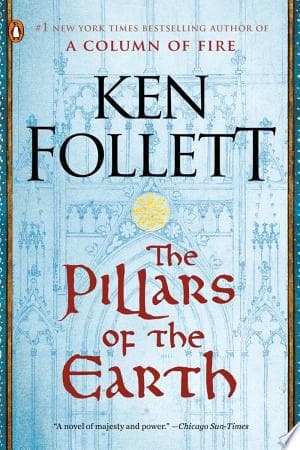
- The Pillars of the Earth
Ken Follett
4.3 (649k) average on GoodreadsFantasyA lengthy historical novel that deeply explores the building of a grand structure and the lives intertwined with it across generations.
- Aztec
Gary Jennings
4.2 (17k) average on GoodreadsThrillerAn immersive and detailed historical fiction focusing on pre-Columbian Mexico and the Spanish conquest, though with a darker tone.
- Like Water for Chocolate
Laura Esquivel
4.0 (324k) average on GoodreadsFantasyEsquivel's novel offers an intimate, magical-realist perspective on a specific period (the Mexican Revolution) through domestic life and food, focusing on personal experiences and sensory details. Michener, in contrast, provides an epic, panoramic view of centuries of history, prioritizing broad historical strokes over individual, nuanced experiences.
- Eat, Pray, Love
Elizabeth Gilbert
3.6 (1.5M) average on GoodreadsLifestyleA heartbroken writer leaves her conventional life for a year-long global search for pleasure in Italy, spiritual devotion in India, and unexpected love and balance in Bali.
- Wild: From Lost to Found on the Pacific Crest Trail
Cheryl Strayed
4.0 (615k) average on GoodreadsLifestyleAfter losing her mother and her marriage, a young woman impulsively hikes over a thousand miles of the Pacific Crest Trail alone, finding strength and healing in the unforgiving wilderness.
- Into Thin Air: A Personal Account of the Mount Everest Disaster
Jon Krakauer
4.2 (395k) average on GoodreadsLifestyleOn May 10, 1996, ambition and a sudden, violent storm turned Mount Everest into a deadly trap, leaving Jon Krakauer to tell the harrowing story of a disaster that took lives and shattered climbers' dreams.




Enjoyed the summary?
A summary gives you the shape of the book. The book itself has the detail, the examples and the voice.
Find Mexico on AmazonAs an Amazon Associate, BookBrief earns from qualifying purchases. How we're funded