

Core Idea
- Difficulty
- Medium
- Read it if
- You enjoy immersive, character-driven narratives that blend true crime with rich cultural observation, or are fascinated by Southern Gothic charm and the intricacies of small-town society.
- Skip it if
- You prefer fast-paced, plot-driven mysteries with clear resolutions, or dislike books that focus heavily on atmosphere and character development over a straightforward narrative arc.
Key Takeaways from Midnight in the Garden of Good and Evil
The Allure of the Eccentric
Savannah cultivates and celebrates its unique, often flamboyant, personalities.
Berendt shows how Savannah, a city with a lot of history and tradition, accepts its quirky, often outrageous, residents. These people are not oddities; they are part of the city's identity, providing entertainment and a distinct flavor that makes Savannah unique. From the flamboyant Jim Williams to the outspoken Lady Chablis and the secretive Minerva, each person adds to a story that is more interesting than that of a uniform society. This acceptance of the unusual is key to the city's appeal and a main idea of the book, showing how a community can thrive because of its peculiarities.
“Savannah is an agreeable, even a charming city. But it is not a city of 'nice' people. It is a city of characters.”
In the book: The extensive focus on characters like Jim Williams, the wealthy antiques dealer with a penchant for younger men and lavish parties; Minerva, the voodoo priestess; and Lady Chablis, the audacious drag queen, who are central to the book's narrative and Savannah's social scene.
Try this: Embrace the unique quirks in your own community or social circles. Seek out and appreciate individuals who defy convention, recognizing that their distinctiveness often enriches the collective experience. Challenge the urge to homogenize or dismiss those who don't fit a conventional mold.
Related ideas: southern-gothic, character-study, social-fabric
The Thin Veil of Propriety
Beneath Savannah's genteel surface lies a simmering world of scandal and dark secrets.
Berendt reveals Savannah's polished, Old South exterior to show a scandalous side. The book shows how a city that values decorum and tradition also has a complex web of gossip, illicit affairs, voodoo rituals, and murder. This duality is not a contradiction; it is part of Savannah's identity. The tension between outward respectability and hidden wrongs creates an environment where secrets are both guarded and whispered, showing how social behavior can hide deep complexities and dark realities.
“Savannah is a city of secrets. Its citizens live in a state of suspended animation, waiting for the next scandal to erupt.”
In the book: The central murder trial of Jim Williams, which exposes his secret life and relationships. The existence of the Married Woman's Card Club, which serves as a hub for gossip, and the clandestine activities of Minerva and other voodoo practitioners.
Try this: Recognize that appearances can be deceiving, both in individuals and communities. Cultivate a critical eye for understanding the deeper dynamics at play beneath the surface of social interactions. Be wary of judging solely on outward presentation.
Related ideas: southern-gothic, social-hypocrisy, hidden-truths
The Power of Gossip and Reputation
In a tight-knit community, reputation is currency, and gossip is its exchange rate.
In Savannah, a city where everyone seems to know everyone else, reputation is a shared asset, constantly shaped by gossip. Berendt shows how whispered stories, often exaggerated and passed down, have great power, able to improve or destroy a person's standing. The book suggests that in such closed environments, informal social information can be more powerful than formal legal or social structures, deciding who belongs, who is excluded, and who is seen as innocent or guilty, regardless of facts.
“Gossip in Savannah is a finely honed art form, a subtle weapon, and a primary source of entertainment.”
In the book: The pervasive nature of the Married Woman's Card Club as a source of information and judgment. The way Jim Williams's reputation, both as an astute businessman and a 'bachelor' with a scandalous private life, precedes and follows him throughout the trial and social narrative.
Try this: Be mindful of the impact of your words and the information you share in any close-knit group. Understand that in certain social contexts, perception can significantly outweigh objective truth. Consider the ethics of participating in or perpetuating gossip.
Related ideas: social-dynamics, reputation-economy, community-influence
Voodoo as a Social Force
Ancient spiritual practices maintain a tangible, if often hidden, influence on modern life.
Berendt introduces Minerva, the voodoo priestess, not as a strange outsider, but as someone whose practices are taken seriously by some in Savannah, including the sophisticated Jim Williams. The book challenges the idea that such 'supernatural' beliefs are only from the uneducated past, showing how they influence modern decisions, even legal outcomes. Minerva's rituals, especially those in graveyards, are shown to have real psychological and, in some cases, perceived practical effects, demonstrating the lasting power of belief systems outside the mainstream.
“Minerva was convinced that the dead still walked among us, and that they had a say in the affairs of the living.”
In the book: Jim Williams's reliance on Minerva's voodoo spells and rituals to influence the outcome of his murder trials. Minerva's midnight visits to the cemetery to 'work' on the jury and the prosecuting attorney.
Try this: Approach diverse belief systems with an open mind, recognizing their potential influence on individuals and communities, even if they fall outside your own understanding. Consider how different worldviews shape actions and perceptions in unexpected ways.
Related ideas: cultural-syncretism, supernatural-belief, folk-religion
The Enduring Charm of Southern Gothic
Savannah embodies the genre's blend of decay, beauty, and quirky darkness.
Berendt's story is an example of Southern Gothic, capturing the style's essence through Savannah's decaying mansions, moss-draped squares, and its residents' eccentricities and dark secrets. The city itself becomes a character, a place where the past always affects the present, and where beauty and decay exist together. The book shows that this blend of the grotesque and the beautiful, the genteel and the macabre, is not just a background but an active force shaping the lives and stories within it, making Savannah an almost perfect setting for such tales.
“Savannah has a peculiar beauty, a languid charm that masks a deeper, more unsettling truth.”
In the book: The descriptions of crumbling, yet magnificent, historic homes; the pervasive presence of death and graveyards; and the often disturbing or eccentric behaviors of characters like the man who keeps a vial of poison, or the drag queen who steals the show.
Try this: Appreciate how setting and atmosphere can profoundly influence narrative and character. Look for the 'gothic' elements in your own surroundings—the hidden histories, the charming decay, the subtle strangeness—and how they contribute to a place's unique identity.
Related ideas: southern-gothic, atmospheric-setting, decay-and-beauty
Justice as a Spectacle
The legal system, especially in a small town, can become a stage for public drama.
The multiple trials of Jim Williams are presented less as a simple pursuit of justice and more as a theatrical event, influenced by public opinion, the lawyers' charm, and the witnesses' quirks. Berendt shows how the legal process in Savannah is tied to local gossip, personal grudges, and the city's social dynamics. This suggests that the line between legal proceeding and public entertainment blurs, where the 'truth' can be shaped by story and performance rather than just by evidence. The book questions the idea of objective justice by showing its messy, human reality.
“The trial was less about the truth and more about the performance, a grand Southern spectacle.”
In the book: The four separate trials of Jim Williams for the murder of Danny Hansford. The colorful personalities of the lawyers and witnesses, such as Lady Chablis's testimony, which often overshadowed factual evidence.
Try this: Approach news and media coverage of legal cases with a critical eye, recognizing the potential for sensationalism and narrative shaping. Understand that 'justice' can be influenced by factors beyond pure legal evidence, especially in high-profile or community-centric cases.
Related ideas: legal-drama, public-perception, trial-by-narrative
The Allure of the 'Bad Boy'
There's a magnetic attraction to dangerous or unconventional figures.
Danny Hansford, the victim in the central murder case, shows the lasting appeal of the 'bad boy' type. Despite his volatile nature, criminal record, and destructive tendencies, Hansford captivated many, including Jim Williams. Berendt explores this, showing how youthful beauty, rebelliousness, and a hint of danger can create a powerful attraction. The book questions the nature of love and obsession, showing how people can be drawn to problematic partners, and highlighting the complexities of human desire and the often-irrational choices people make.
“Danny Hansford was trouble, but he was trouble with a certain undeniable charm.”
In the book: Jim Williams's long-standing, tumultuous relationship with Danny Hansford, despite Hansford's erratic behavior, drug use, and criminal activities. The general fascination of other characters with Hansford's wild nature.
Try this: Reflect on your own attractions and be honest about what draws you to certain individuals. Recognize the potential pitfalls of romanticizing dangerous or unstable partners. Prioritize stability and mutual respect over fleeting excitement or a desire to 'fix' someone.
Related ideas: toxic-relationships, forbidden-love, human-attraction
The Outsider's Perspective
An external observer can reveal truths hidden from those within a culture.
Berendt's role as a New Yorker provides a view through which Savannah is seen. His outsider status lets him ask 'naïve' questions, notice things locals might miss, and access different social circles without being fully limited by their hierarchies or expectations. This view is important for uncovering the city's hidden complexities and eccentricities. The book shows the value of fresh eyes in understanding a culture, demonstrating how a detached yet involved observer can reveal truths often invisible to those deeply within a system.
“As an outsider, I was allowed to see things that a native might have taken for granted, or even ignored.”
In the book: Berendt's initial arrival in Savannah and his ongoing role as a curious observer, which allows him to move between high society, the Black community, and the more bohemian elements of the city, gathering diverse perspectives.
Try this: When trying to understand a new situation or culture, adopt an 'outsider's mind.' Challenge your assumptions, ask fundamental questions, and seek out perspectives from individuals who are not fully integrated into the system. This can lead to deeper insights.
Related ideas: cultural-observation, ethnography, objective-perspective
The Performance of Identity
Many characters craft elaborate personas that define their social existence.
Many of Savannah's memorable residents, from Jim Williams to Lady Chablis, are good at presenting themselves, creating elaborate public identities often different from their private realities. Berendt shows how these personas are not just acts but are important for their survival and influence within the city's social system. This suggests that identity, especially in a community with strong social rules and expectations, is often a performance. Characters use their crafted images to navigate social hierarchies, use power, and protect their inner lives, blurring the lines between who they are and who they present themselves to be.
“In Savannah, everyone has a part to play, and they play it with gusto.”
In the book: Lady Chablis's flamboyant drag queen persona and her witty, often outrageous, performances. Jim Williams's carefully cultivated image as a refined antique dealer and Southern gentleman, which contrasts with his secretive personal life.
Try this: Reflect on the personas you present in different social contexts. Understand that others are also performing aspects of their identity. Recognize the distinction between an individual's public image and their private self, fostering empathy and critical observation.
Related ideas: identity-construction, social-performance, self-presentation
The Past is Never Past
History and tradition exert a profound, living influence on a place and its people.
Savannah is shown as a city deeply connected to its past. The book shows how historical events, architectural legacies, and inherited social customs continue to shape the current lives and attitudes of its residents. The lasting presence of slavery's legacy, the preservation of old homes, and the persistence of 'Old South' traditions are not just historical notes but active forces. Berendt shows how this deep connection to history can create charm and a strong sense of identity, but also contribute to isolation and a reluctance to change, revealing the complex relationship between heritage and progress.
“Savannah is a city that lives in its past, and its past lives very much in it.”
In the book: The descriptions of the historic squares and mansions, many preserved from the antebellum era. The emphasis on old Southern families and their social standing. The lingering presence of racial divides and historical narratives within the community.
Try this: Acknowledge the powerful influence of history and tradition on your own community and personal worldview. Understand how past events continue to shape present realities and consider how to honor heritage while embracing necessary change and progress.
Related ideas: historical-legacy, cultural-heritage, tradition-vs-modernity
Midnight in the Garden of Good and Evil Quotes
“Savannah is a beautiful lady with a dirty mind. She is also a lady who likes to be entertained.”
“You can’t just go around shooting people. There are laws, you know.”
“If you go to Savannah, you'll see a lot of people like me. We're all characters here.”
“The past is never dead. It's not even past.”
“Why is it that the most interesting people are always the ones who are in trouble?”
“My dearest, you must never be afraid to be yourself. It is the only way to truly live.”
“When you are dead, you are dead. But when you are dead in Savannah, you are still very much alive.”
“I never carry a gun. I just carry a big stick.”
“Everybody loves a good mystery, especially when it's true.”
“The secret to life is to enjoy the ride.”
“Savannah has a way of sucking you in, like quicksand, but in a good way.”
“You just have to know how to work the system, honey. That's all there is to it.”
“There are two kinds of people in the world: those who entertain and those who are entertained.”
Quiz
10 questions on the main ideas. Each answer comes with a short explanation.
Question 1
What was the central event that sets the main narrative in motion in 'Midnight in the Garden of Good and Evil'?
- The annual debutante ball at the Married Woman's Card Club.
- A shooting in Jim Williams's mansion.
- The discovery of a hidden treasure in Forsyth Park.
- A voodoo ritual gone wrong in Bonaventure Cemetery.
Show answer
B. A shooting in Jim Williams's mansion. The book's central narrative revolves around the shooting incident in Jim Williams's mansion, specifically the death of Danny Hans, and the subsequent murder trials.
Question 2
Which character is described as a 'turbulent young redneck gigolo' and is central to the murder trial?
- Joe Odom
- Jim Williams
- Danny Hans
- Luther Driggers
Show answer
C. Danny Hans Danny Hans is the young man shot by Jim Williams, and his character and relationship with Williams are pivotal to the entire murder case and the book's intrigue.
Question 3
What role does Minerva, the voodoo priestess, play in the narrative, particularly concerning Jim Williams?
- She provides an alibi for Jim Williams during the shooting.
- She helps the prosecution build their case against Williams.
- She performs spells and rituals to influence the outcome of Williams's trials.
- She is a key witness to the events leading up to Danny Hans's death.
Show answer
C. She performs spells and rituals to influence the outcome of Williams's trials. Minerva is introduced as a powerful voodoo priestess who Jim Williams consults to cast spells to help him win his trials, particularly in Bonaventure Cemetery.
Question 4
The book is set in which specific Southern city, known for its moss-hung oaks and shaded squares?
- Charleston, South Carolina
- New Orleans, Louisiana
- Savannah, Georgia
- Richmond, Virginia
Show answer
C. Savannah, Georgia The entire book is a portrait of Savannah, Georgia, with its unique atmosphere, history, and eccentric inhabitants forming the backdrop for the events.
Question 5
Which of the following best describes the book's genre and narrative style?
- A purely fictional gothic mystery novel.
- A straightforward journalistic account of a true crime.
- A non-fiction work blending first-person memoir, true crime, and cultural observation.
- A historical biography of a prominent Savannah family.
Show answer
C. A non-fiction work blending first-person memoir, true crime, and cultural observation. The book is a work of non-fiction that skillfully combines Berendt's personal experiences in Savannah, the unfolding of a real murder case, and rich descriptions of the city's unique culture and characters.
Question 6
What is unique about the character of Luther Driggers, the man who owns a powerful poison?
- He is a retired police chief who investigates the murder.
- He claims to have a fly trapped on a string that he walks.
- He is a prominent lawyer who defends Jim Williams.
- He is the caretaker of Bonaventure Cemetery.
Show answer
B. He claims to have a fly trapped on a string that he walks. Luther Driggers is one of Savannah's most eccentric characters, known for claiming to walk an invisible fly on a string, among other peculiar habits, and possessing a powerful poison.
Question 7
How does the book portray the social dynamics and class structure of Savannah?
- As a perfectly egalitarian society where class distinctions are irrelevant.
- As a city with strict, yet often subtly enforced, social hierarchies and old money traditions.
- As a place where new money has completely overthrown traditional social structures.
- As a society where race is the only determinant of social standing.
Show answer
B. As a city with strict, yet often subtly enforced, social hierarchies and old money traditions. Berendt meticulously details the intricate social fabric of Savannah, highlighting the importance of old families, tradition, reputation, and the subtle but powerful influence of class distinctions, even among its eccentric residents.
Question 8
What recurring theme or concept is explored through characters like Minerva and the practices in Bonaventure Cemetery?
- The decline of Southern hospitality.
- The strict adherence to Christian fundamentalism.
- The presence and influence of voodoo and spiritualism.
- The importance of historical preservation societies.
Show answer
C. The presence and influence of voodoo and spiritualism. The book prominently features the practice of voodoo and other forms of spiritualism, particularly through Minerva and the rituals performed in Bonaventure Cemetery, showcasing a unique aspect of Savannah's culture.
Question 9
Jim Williams, the central figure in the murder trials, is primarily known for what profession?
- A prominent lawyer specializing in criminal defense.
- An antiques dealer and restorer of historic homes.
- A renowned chef and restaurant owner.
- A local politician and mayor of Savannah.
Show answer
B. An antiques dealer and restorer of historic homes. Jim Williams was a wealthy and influential antiques dealer known for buying and restoring historic homes in Savannah, including the Mercer House where the shooting occurred.
Question 10
How does Berendt's narrative structure contribute to the 'mystery' aspect of the book, despite it being non-fiction?
- He presents only one side of the story, leaving readers to guess the other.
- He withholds the identity of the shooter until the very end of the book.
- He interweaves the unfolding murder trials with character studies and local anecdotes, creating suspense about the verdict and the true nature of events.
- He uses fictionalized dialogue and events to heighten dramatic effect.
Show answer
C. He interweaves the unfolding murder trials with character studies and local anecdotes, creating suspense about the verdict and the true nature of events. Berendt masterfully builds suspense by presenting the complex characters and the ambiguous circumstances surrounding Danny Hans's death, allowing the readers to continuously question whether it was murder or self-defense as the trials unfold, much like a novel.
Midnight in the Garden of Good and Evil FAQ
What is 'Midnight in the Garden of Good and Evil' about?
'Midnight in the Garden of Good and Evil' is a non-fiction book by John Berendt that chronicles the true story of a murder in Savannah, Georgia, and the subsequent trials, interwoven with a vivid portrayal of the city's eccentric inhabitants and unique Southern culture. It reads like a novel but is a meticulously researched work of reportage.
Does 'Midnight in the Garden of Good and Evil' accurately depict Savannah?
Yes, John Berendt's book is highly regarded for its accurate and immersive portrayal of Savannah, Georgia, in the 1980s. While some characters' names were changed, the events and the atmosphere of the city are presented with remarkable fidelity, capturing its charm and its darker undercurrents.
Is 'Midnight in the Garden of Good and Evil' a true story?
Yes, 'Midnight in the Garden of Good and Evil' is a work of non-fiction, based on real events and real people. The central plot revolves around the murder trial of antiques dealer Jim Williams, and the book's other characters and their anecdotes are drawn from Berendt's observations and interviews in Savannah.
What is the role of voodoo in 'Midnight in the Garden of Good and Evil'?
Voodoo plays a significant and intriguing role in the book, particularly through the character of Minerva, a voodoo priestess. She is consulted by Jim Williams' lawyer and performs rituals in the graveyard, adding a layer of supernatural mystery and Southern folklore to the narrative and the murder case.
How does 'Midnight in the Garden of Good and Evil' differ from a typical true-crime novel?
While it centers on a murder, 'Midnight in the Garden of Good and Evil' distinguishes itself by deeply immersing the reader in the culture, history, and eccentricities of Savannah, Georgia. It's less about the procedural aspects of the crime and more about the vivid characters and the unique social fabric surrounding the event, making it a blend of memoir, history, and mystery.
Who are some of the memorable characters in the book?
The book features a gallery of unforgettable characters, including the accused antiques dealer Jim Williams, the flamboyant drag queen Lady Chablis, the voodoo priestess Minerva, and the profane Southern belle Mandy Nichols. Each contributes to the book's rich tapestry of Savannah life.
Does 'Midnight in the Garden of Good and Evil' have a movie adaptation?
Yes, 'Midnight in the Garden of Good and Evil' was adapted into a film in 1997, directed by Clint Eastwood. The movie starred John Cusack as John Berendt and Kevin Spacey as Jim Williams, bringing the book's iconic characters and Savannah setting to the screen.
Why is the book considered a modern classic?
The book is considered a modern classic due to its masterful blend of compelling narrative, vivid character development, and immersive sense of place. Its unique style, combining investigative journalism with literary storytelling, resonated with readers and critics, offering both an engrossing mystery and a deep dive into Southern culture.
What is the significance of the title 'Midnight in the Garden of Good and Evil'?
The title refers to the specific time and location where voodoo rituals are performed by Minerva in the book, particularly in the Bonaventure Cemetery. It metaphorically represents the duality of Savannah itself—its charming beauty alongside its hidden, darker secrets and the moral ambiguities explored throughout the narrative.
About the author

John Berendt is an American author known for his non-fiction work, particularly "Midnight in the Garden of Good and Evil," which explores the unique culture of Savannah, Georgia. His writing often blends elements of journalism and storytelling, providing a vivid portrayal of the people and events he depicts. Berendt's work has garnered significant attention and has contributed to the genre of narrative non-fiction.
Similar books
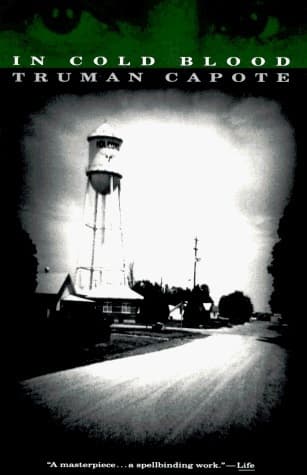
- In Cold Blood
Truman Capote
4.1 (529k) average on GoodreadsThrillerA groundbreaking work of true crime that immerses the reader in a specific community and its dark underbelly.
- The Secret History
Donna Tartt
3.9 (2k) average on GoodreadsPoliticsExplores a tight-knit, eccentric group of individuals, a murder, and the power dynamics within a specific, insular culture.
- Eat, Pray, Love
Elizabeth Gilbert
3.6 (1.5M) average on GoodreadsLifestyleA heartbroken writer leaves her conventional life for a year-long global search for pleasure in Italy, spiritual devotion in India, and unexpected love and balance in Bali.
- Wild: From Lost to Found on the Pacific Crest Trail
Cheryl Strayed
4.0 (615k) average on GoodreadsLifestyleAfter losing her mother and her marriage, a young woman impulsively hikes over a thousand miles of the Pacific Crest Trail alone, finding strength and healing in the unforgiving wilderness.
- Into Thin Air: A Personal Account of the Mount Everest Disaster
Jon Krakauer
4.2 (395k) average on GoodreadsLifestyleOn May 10, 1996, ambition and a sudden, violent storm turned Mount Everest into a deadly trap, leaving Jon Krakauer to tell the harrowing story of a disaster that took lives and shattered climbers' dreams.
- On The Road
Jack Kerouac
3.6 (349k) average on GoodreadsLifestyleDean Moriarty and Sal Paradise go on a wild, cross-country trip with jazz, drugs, and a desperate search for meaning on America's post-war roads.





Enjoyed the summary?
A summary gives you the shape of the book. The book itself has the detail, the examples and the voice.
Find Midnight in the Garden of Good and Evil on AmazonAs an Amazon Associate, BookBrief earns from qualifying purchases. How we're funded