

Synopsis
Covers the whole plot, including the ending.
- Difficulty
- Medium
- Pacing
- Variable
- Mood
- Irreverent, Polemical, Thought-provoking, Romantic, Revolutionary
- Read it if
- You enjoy unconventional love stories, sharp social commentary, and a strong feminist voice, or are looking for a book that challenges traditional narratives.
- Skip it if
- You prefer straightforward plots, traditional romance, or are averse to polemical and irreverent tones.
Mimi Plot Summary
Covers the whole plot, including the ending.
Christmas Eve Encounter
On a snowy Christmas Eve in Manhattan, Dr. Harrison, a successful plastic surgeon, slips on ice and sprains his ankle. While struggling, a peculiar woman, Mimi, appears and helps him up. She then finds him a taxi, a difficult task on such a night. Harrison is struck by her unusual appearance and direct manner, which differs greatly from the refined women he usually meets. This chance meeting makes a lasting impression, stirring a curiosity he rarely feels, as he is taken to his luxurious apartment to recover.
Convalescence and Introspection
Confined to his apartment with a sprained ankle, Dr. Harrison recovers surrounded by the comforts of his carefully arranged life. He listens to Franz Schubert, watches Bette Davis films, and finds unexpected company in a stray cat he names 'Kitty'. This forced inactivity gives him a chance to think about his life, his job, and the superficiality of his social group. The memory of Mimi keeps coming to mind, her image an interesting contrast to his orderly existence.
Return to Routine and Disillusionment
Once recovered, Dr. Harrison returns to his busy practice, performing rhinoplasties and liposuction on his wealthy, image-focused clients. He quickly re-enters a world of superficiality and vanity, finding himself increasingly unhappy with his work and the small arguments of his unpleasant colleagues. The difference between his brief, meaningful meeting with Mimi and the artificiality of his daily life becomes clearer, leading to a growing sense of emptiness and doubt. He questions the value of his job and the meaning of his own life.
A Second Collision
Weeks later, Dr. Harrison unexpectedly meets Mimi again at a public event. He is immediately drawn to her unconventional presence among the polished crowd. Their second meeting is less accidental, and Mimi, with her usual directness, invites him to her apartment. This invitation is a turning point, as Harrison, despite his doubts and the clear difference in their worlds, feels he must accept. He is intrigued by her mysterious quality and the promise of something genuinely different from his predictable life.
Mimi's World
Harrison visits Mimi's apartment, which contrasts sharply with his own minimalist, luxurious home. Her place is full of books, art, and an eclectic collection of objects, showing a life lived outside conventional norms. Mimi introduces him to her world of radical ideas, feminist principles, and a deep distrust of consumerism and traditional power structures. She challenges his worldview, making him confront the superficiality of his own life and the social systems he has unknowingly supported. This visit begins to break down his ideas about life, beauty, and success.
The Education of Harrison
Mimi begins a passionate education of Dr. Harrison. She introduces him to feminist literature, radical art, and a strong critique of traditional society, consumer culture, and the medical establishment, especially plastic surgery. Harrison, at first resistant and confused, slowly starts to understand her ideas. He finds himself drawn into her intellectual world, which challenges every part of his comfortable, unexamined life. His view of beauty, gender, and social roles changes significantly under her influence.
Professional and Personal Turmoil
As Harrison's perspective shifts, he finds himself less able to tolerate the superficiality and ethical compromises of his plastic surgery practice. His interactions with colleagues and patients become strained, as he sees them through Mimi's critical viewpoint. His social life, once a comfort, now feels hollow. He begins to question the basis of his success and identity, experiencing significant inner conflict between his old life and the new possibilities Mimi has shown him. His professional and personal worlds are on a collision course.
A Revolutionary Partnership
Harrison and Mimi's relationship deepens, growing beyond intellectual debates into a strong emotional and physical connection. They spend more time together, sharing ideas, criticisms, and intimate moments. Harrison finds himself falling deeply in love with Mimi, drawn to her intelligence, uncompromising spirit, and authentic self. Together, they begin to imagine a future that challenges social norms, a future where they can actively dismantle the oppressive structures Mimi opposes. Their bond becomes a transformative partnership.
Confronting the Patriarchy
Inspired by Mimi's commitment to social justice, Harrison begins to take part in her radical efforts. They challenge traditional norms, expose social hypocrisies, and advocate for feminist ideals, often using unconventional and direct methods. This involves public criticisms, artistic actions, and a deliberate rejection of consumerist values. Harrison, once a part of the establishment, now finds himself on the outside, actively working to disrupt the systems he once benefited from, much to the confusion of his former peers.
The Unraveling of the Old Life
Dr. Harrison's transformation ends with his decision to leave his lucrative plastic surgery career. He gives up the symbols of his former life, embracing a more authentic existence aligned with Mimi's values. This significant change involves personal and financial sacrifice, but Harrison finds a new sense of purpose and fulfillment. He fully commits to Mimi and their shared vision, leaving behind the superficiality and emptiness that once defined him, and stepping into an uncertain yet deeply meaningful future.
A New Beginning
Harrison and Mimi create a new life together, one built outside the usual boundaries of society. They continue to challenge norms, advocate for feminist principles, and live in a way that reflects their anti-consumerist and anti-traditional beliefs. Their love story shows the power of radical ideas and real connection. Their future, while perhaps unusual by societal standards, is rich with purpose, intellectual stimulation, and a deep, lasting love, showing that true change can begin with two people.
Mimi Characters
Dr. Harrison
Protagonist
A successful, initially superficial plastic surgeon transformed by love and radical ideas.
Dr. Harrison is an eminent plastic surgeon in Manhattan, living a life of luxury and professional success. Initially, he is somewhat complacent, disconnected from deeper meaning, and enmeshed in a superficial world of aesthetic perfection. He is intelligent and cultured, enjoying classical music and classic films, but lacks profound personal engagement. His encounter with Mimi acts as a catalyst, forcing him to confront the emptiness of his existence and the ethical compromises of his profession. He is a man of habit who undergoes a profound ideological and emotional awakening.
Relationships: Mimi (Love interest and intellectual/spiritual guide); Kitty (Adopted stray cat, a source of comfort and companionship during recovery)
Mimi
Love Interest / Catalyst / Ideological Guide
A fiercely intelligent, anti-consumerist, and radical feminist woman.
Mimi is a unique and enigmatic woman who challenges societal norms with her appearance, directness, and radical ideas. She is a passionate feminist, deeply critical of patriarchy, consumerism, and the superficiality of modern life. Her intellect is sharp, her convictions unwavering, and her presence is both unsettling and magnetic. She lives authentically, rejecting conventional beauty standards and material wealth. Mimi acts as Harrison's intellectual and emotional guide, opening his eyes to a world beyond his privileged bubble and inspiring his transformation.
Relationships: Dr. Harrison (Love interest and intellectual partner)
Kitty
Supporting
A stray cat adopted by Harrison during his recovery.
Kitty is a stray cat that Dr. Harrison finds and adopts during his convalescence. While a minor character, Kitty symbolizes comfort, companionship, and a touch of unadorned life that contrasts with Harrison's otherwise sterile existence. The act of adopting Kitty shows a nascent capacity for care and connection in Harrison, foreshadowing his deeper emotional awakening. Kitty provides Harrison with a quiet, unconditional presence during a period of introspection.
Relationships: Dr. Harrison (Owner and companion)
Harrison's Colleagues
Mentioned / Antagonistic (as a group)
The obnoxious and superficial plastic surgeons Harrison works with.
Harrison's colleagues represent the entrenched world of superficiality, vanity, and professional backbiting that he increasingly comes to despise. They are portrayed as petty, self-absorbed, and obsessed with appearances and status. Their discussions and values highlight the emptiness and ethical compromises inherent in Harrison's former profession. They serve as a foil to Mimi's radical authenticity and underscore Harrison's growing disillusionment with his old life.
Relationships: Dr. Harrison (Professional associates, later ideological opponents)
Harrison's Patients
Mentioned / Supporting (as a group)
The wealthy, image-obsessed individuals seeking plastic surgery.
Harrison's patients embody the consumerist and superficial aspects of society that Mimi critiques. They are typically wealthy individuals seeking to alter their appearance, driven by vanity, insecurity, or societal pressures. Their desires and expectations highlight the artificiality and often tragic pursuit of an unattainable ideal. Through Mimi's influence, Harrison begins to see them not as clients to be satisfied, but as victims of a system he once perpetuated.
Relationships: Dr. Harrison (Clients)
Mimi Themes
The Superficiality of Modern Society vs. Authentic Living
The novel contrasts the superficiality of modern consumer society, seen in Dr. Harrison's plastic surgery practice and social circle, with Mimi's commitment to authentic, anti-materialistic living. Harrison's initial life is full of luxury and perfect looks, yet he feels an underlying emptiness. Mimi's world, though unconventional, is rich with intellectual depth and real purpose. The contrast highlights the novel's criticism of social values that prioritize appearance and wealth over substance and integrity, prompting Harrison to leave his 'perfect' life for a more meaningful one.
“He had spent his life carving beauty into other people, only to realize he had been carving it out of himself.”
Feminism and the Critique of Patriarchy
Mimi is a strong example of radical feminist thought, and the novel is a passionate criticism of traditional power structures. Through Mimi's teachings, Harrison learns to see how social norms, especially those dictating female beauty and roles, are oppressive. The plastic surgery industry itself becomes a symbol of control over women's bodies and self-worth. The novel promotes dismantling these structures, supporting female independence, intellect, and a rejection of male-dominated systems. Mimi's influence turns Harrison into an ally in this feminist struggle.
“The patriarchy was not just a system, it was a disease, and he had been one of its most skilled surgeons.”
Love as a Catalyst for Transformation
At its core, 'Mimi' is a love story, but one where love is not just romantic affection; it is a strong force for deep personal and ideological change. Harrison's love for Mimi makes him question his entire existence, challenging his values, career, and social standing. Mimi's love, in turn, is a steady commitment to her principles, which she shares and instills in Harrison. Their relationship is a partnership built on shared ideals and a mutual desire for a more fair and authentic world, showing how love can inspire revolutionary change.
“He didn't just love her; he loved the world she showed him, a world he'd been too blind to see.”
The Nature of Beauty
The novel directly challenges traditional ideas of beauty, especially regarding plastic surgery. Dr. Harrison's job is to change physical appearances to fit social ideals, which Mimi strongly rejects as superficial and oppressive. Mimi herself is presented as beautiful not because of conventional looks, but because of her authenticity, intelligence, and strong spirit. The book suggests that true beauty is in individuality, integrity, and radical self-acceptance, rather than in artificial perfection or following social standards. Harrison's journey is one of learning to appreciate this deeper form of beauty.
“Beauty was not something to be sculpted; it was something to be embodied, flaws and all.”
Plot Devices & Literary Techniques
The Unlikely Encounter
A chance meeting between two vastly different individuals that sparks a profound change.
The initial slip on the ice and Mimi's subsequent assistance serve as the classic 'meet-cute' but with revolutionary implications. This seemingly random event brings together two characters from entirely different worlds – a privileged, superficial surgeon and a radical, authentic woman. It is the catalyst for Harrison's entire transformation, setting in motion a chain of events that dismantles his old life. This device highlights the unpredictable nature of fate and the power of unexpected connections to alter one's destiny.
The Mentor-Protégé Relationship
Mimi acts as Harrison's ideological and emotional guide.
Mimi takes on the role of a mentor to Harrison, systematically educating him on feminist theory, societal critique, and authentic living. She challenges his preconceived notions, forces him to confront his own complicity in oppressive systems, and provides him with an alternative worldview. This dynamic is crucial for Harrison's character arc, as he is initially resistant but gradually internalizes her teachings. The mentor-protégé structure allows for explicit exposition of the novel's themes and provides a framework for Harrison's intellectual and emotional growth.
Symbolic Setting Contrast
The stark differences between Harrison's and Mimi's living spaces.
The novel uses the contrast between Harrison's minimalist, luxurious, and somewhat sterile apartment and Mimi's eclectic, lived-in, and intellectually vibrant home to symbolize their differing values and worldviews. Harrison's home represents the polished, superficial world he inhabits, while Mimi's space reflects her anti-consumerist, intellectual, and authentic lifestyle. This contrast visually reinforces the thematic clash between materialism and genuine substance, and Harrison's eventual shift from one world to the other.
The Epiphany of Disillusionment
Harrison's growing realization of the emptiness of his former life.
This device refers to the gradual process by which Harrison becomes increasingly disillusioned with his plastic surgery career, his social circle, and the values he once held. Initiated by his encounter with Mimi, this disillusionment is not a sudden event but a slow burn, fueled by Mimi's critiques and his own introspection. It creates the necessary internal conflict that propels his transformation, making his eventual radical choices feel earned and inevitable. It highlights the often painful process of self-awakening.
Mimi Quotes
“Mimi was just a name, a sound to conjure with, a whisper, a sigh.”
“He tried to picture her, but she was always just out of reach, a shimmering mirage.”
“Love, he thought, was a kind of blindness, a willed ignorance of flaws.”
“The past was a foreign country; they did things differently there. But the past was also a prison, and he was still rattling its bars.”
“Every object in her room seemed to hum with her absence, a silent, pervasive ache.”
“He had loved her, yes, but perhaps he had loved the idea of her more than the woman herself.”
“The silence between them had become a language all its own, full of unspoken accusations and regrets.”
“She was a constellation of contradictions, a puzzle he could never quite solve.”
“Memory was a trickster, a conjurer of half-truths and embellished fictions.”
“He searched for her in every face, every crowd, a futile, desperate quest.”
“To forget her would be to erase a part of himself, a painful but necessary amputation.”
“Her laughter, a bright, fleeting melody, still echoed in the hollows of his mind.”
“He was a cartographer of regret, mapping every wrong turn, every missed opportunity.”
“Mimi was not a person, but a landscape, vast and unknowable, always receding.”
Quiz
10 questions on the plot and the characters. Each answer comes with a short explanation.
Question 1
What kind of medical professional is Harrison, the protagonist, at the beginning of the story?
- An orthopedic surgeon
- A general practitioner
- A plastic surgeon
- A psychiatrist
Show answer
C. A plastic surgeon The book description explicitly states Harrison is an 'eminent plastic surgeon' who performs 'rhinoplasties, liposuction.'
Question 2
What holiday is it in Manhattan when Harrison first slips on the ice?
- New Year's Eve
- Thanksgiving Day
- Christmas Eve
- Valentine's Day
Show answer
C. Christmas Eve The story opens with the line, 'It's Christmas Eve in Manhattan.'
Question 3
What is the initial injury Harrison sustains that leads to his encounter with Mimi?
- A broken leg
- A sprained ankle
- A concussion
- A fractured wrist
Show answer
B. A sprained ankle The description states he 'slips on the ice, lands on his butt, and sprains his ankle.'
Question 4
During his recuperation, which classical composer's music does Harrison listen to?
- Ludwig van Beethoven
- Wolfgang Amadeus Mozart
- Franz Schubert
- Johann Sebastian Bach
Show answer
C. Franz Schubert The synopsis mentions Harrison recuperates with 'Franz Schubert, Bette Davis, and a foundling cat.'
Question 5
What type of animal does Harrison find and care for during his recovery?
- A dog
- A bird
- A cat
- A hamster
Show answer
C. A cat The text states he recuperates with 'Franz Schubert, Bette Davis, and a foundling cat.'
Question 6
What is Mimi's role in Harrison's initial accident?
- She caused him to slip on the ice.
- She drove the taxi that hit him.
- She helped him up and got him a taxi.
- She witnessed the accident but did not intervene.
Show answer
C. She helped him up and got him a taxi. The synopsis describes her as a woman who 'yanks him to his feet and conjures the miracle of a taxi.'
Question 7
The book is described as a 'love story' and what else, indicating its broader social commentary?
- A tragic comedy
- A call to arms
- A medical drama
- A historical fiction
Show answer
B. A call to arms The description states, 'Mimi is a love story, a call to arms, and Lucy Ellmann's most tender and dazzling book.'
Question 8
What aspect of Harrison's professional life does the book suggest is problematic, leading to a 'revolutionary turn' after meeting Mimi?
- His surgical techniques are outdated.
- He faces ethical dilemmas from demanding patients.
- His work involves 'rhinoplasties, liposuction, and the peccadilloes of his obnoxious colleagues,' hinting at superficiality and professional dissatisfaction.
- He is struggling financially due to poor management.
Show answer
C. His work involves 'rhinoplasties, liposuction, and the peccadilloes of his obnoxious colleagues,' hinting at superficiality and professional dissatisfaction. The text mentions his return to 'rhinoplasties, liposuction, and the peccadilloes of his obnoxious colleagues,' implying a mundane and perhaps superficial existence before Mimi's influence brings a 'wild and revolutionary turn.'
Question 9
The book is described as the 'feminist novel of the century (So far).' What does this imply about its thematic content?
- It features a strong female protagonist in a historical setting.
- It explores themes of gender equality, societal expectations for women, and potentially critiques patriarchal structures.
- It is written exclusively for a female audience.
- It focuses on women's fashion and lifestyle trends.
Show answer
B. It explores themes of gender equality, societal expectations for women, and potentially critiques patriarchal structures. Calling it the 'feminist novel of the century' strongly suggests that themes of feminism, gender roles, and critiques of societal norms, particularly those affecting women, are central to the narrative.
Question 10
How does Harrison's initial encounter with Mimi differ from his subsequent meeting, and what is the significance of this distinction?
- The first was accidental and brief; the second is a deliberate reunion that initiates a profound change in his life.
- The first meeting was a professional consultation; the second was a chance encounter.
- Both encounters were accidental, but only the second involved dialogue.
- The first was hostile, while the second was friendly.
Show answer
A. The first was accidental and brief; the second is a deliberate reunion that initiates a profound change in his life. The text states he 'collides again with that strangely helpful woman that things take a wild and revolutionary turn,' implying the first was a simple aid and the second is the catalyst for significant life changes, moving beyond a mere helpful act.
Mimi FAQ
What is the initial inciting incident that brings Harrison and Mimi together?
On Christmas Eve in Manhattan, Harrison, an eminent plastic surgeon, slips on the ice and sprains his ankle. Mimi, a woman he's never encountered before, helps him to his feet and miraculously hails a taxi for him, initiating their unusual connection.
How does Harrison spend his immediate recovery period after the ankle injury?
During his recuperation, Harrison immerses himself in classical music, specifically Franz Schubert, watches films starring Bette Davis, and cares for a foundling cat. This period of quiet reflection contrasts sharply with his professional life.
What is Harrison's professional life like before his deeper involvement with Mimi?
Harrison's professional life revolves around performing rhinoplasties and liposuction, dealing with the often superficial desires of his patients. He also navigates the daily annoyances and 'peccadilloes' of his 'obnoxious colleagues' in the medical field.
What causes Harrison's life to take a 'wild and revolutionary turn'?
Harrison's life takes a significant turn when he unexpectedly encounters Mimi again after their initial meeting. This second collision with the 'strangely helpful woman' propels him into a series of events and perspectives that radically alter his existence.
How is 'Mimi' characterized in the publisher's description, beyond being a love story?
'Mimi' is described as sparkling, polemical, irreverent, slippery, and sexy. It is presented not only as a love story but also as a 'call to arms' and 'the feminist novel of the century,' suggesting its broader social and political ambitions.
What is the significance of Harrison's choice of Franz Schubert and Bette Davis during his recovery?
Schubert's melancholic beauty and Bette Davis's strong, often defiant female characters might subtly foreshadow Harrison's emotional journey and the powerful, perhaps unsettling, influence Mimi will have. It suggests a subconscious yearning for depth beyond his superficial professional world.
How does the 'foundling cat' serve as a symbolic element in the narrative?
The foundling cat represents an unexpected, vulnerable entity that Harrison takes responsibility for, mirroring how Mimi might see him as someone needing guidance or 'found.' It also highlights his capacity for tenderness outside his clinical profession, preparing him for Mimi's influence.
What does the description of Mimi as 'strangely helpful' imply about her character or Harrison's perception?
The phrase 'strangely helpful' suggests that Mimi's assistance goes beyond typical politeness; it might be unconventional, disruptive, or carry an underlying agenda that Harrison doesn't immediately grasp. It hints at her unique and possibly unsettling nature.
How might Harrison's profession as a plastic surgeon influence his initial reaction to Mimi, who likely challenges conventional beauty standards?
As a plastic surgeon, Harrison is accustomed to altering appearances to fit societal ideals. Mimi's radical perspective likely challenges his ingrained professional biases, forcing him to confront the superficiality of his work and perhaps the limitations of his own worldview regarding beauty and authenticity.
What psychological shift does Harrison undergo as his relationship with Mimi develops?
Harrison likely undergoes a profound psychological transformation, moving from a detached, aesthetically-focused professional to someone more engaged with social justice and deeper truths. His encounter with Mimi pushes him to question his values, his career, and his place in a patriarchal society.
How does Mimi's 'conjuring the miracle of a taxi' reflect her personality or influence?
This 'miracle' suggests Mimi possesses an almost magical or intensely determined quality, capable of achieving the seemingly impossible in a chaotic city. It establishes her as a powerful, effective, and perhaps unconventional force, immediately captivating Harrison through her agency.
What role do Harrison's 'obnoxious colleagues' play in developing his character or the book's themes?
His colleagues likely serve as foils, embodying the shallow, self-serving aspects of the medical establishment and patriarchal society that Mimi critiques. Their 'peccadilloes' highlight the systemic issues Mimi challenges, pushing Harrison further into her revolutionary orbit by demonstrating what he needs to escape.
In what ways can 'Mimi' be considered a 'love story' given its polemical and feminist nature?
'Mimi' is a love story in that it depicts the romantic and intellectual awakening of Harrison through his connection with Mimi. However, it redefines love, intertwining it with political consciousness, mutual liberation, and a shared commitment to challenging societal norms, rather than just conventional romance.
Why is the book described as 'slippery' and 'irreverent'?
'Slippery' suggests the narrative might defy easy categorization or expectations, perhaps shifting in tone, perspective, or genre, keeping the reader off balance. 'Irreverent' indicates a willingness to mock or challenge established norms, institutions, and sacred cows, especially those related to gender and power.
How does the setting of Christmas Eve in Manhattan contribute to the novel's atmosphere or themes?
Christmas Eve, a time often associated with miracles, goodwill, and transformation, provides a poignant backdrop for Harrison's unexpected encounter and subsequent personal revolution. Manhattan, a city of contrasts and endless possibilities, further enhances the sense of a pivotal, almost magical, turning point in his life.
What is the significance of the claim that 'Mimi' is 'the feminist novel of the century'?
This bold claim suggests the novel offers a groundbreaking, comprehensive, and perhaps radical re-evaluation of feminist thought and its application to modern society. It implies the book goes beyond previous feminist works, offering a definitive and timely statement on gender, power, and social change.
How might Mimi's character embody a feminist ideal or challenge traditional female archetypes?
Mimi likely embodies a powerful, independent, and intellectually fierce woman who refuses to conform to patriarchal expectations. She challenges traditional female archetypes by being a 'call to arms,' inspiring revolution rather than being a passive object of affection, embodying agency and ideological conviction.
Similar books
- A Room of One's Own
Virginia Woolf
4.2 (118k) average on GoodreadsCreativityExplores feminist themes and societal critique with a strong, intellectual voice.
- The Bell Jar
Sylvia Plath
4.0 (591k) average on GoodreadsPsychologyFeatures a strong female protagonist and critiques societal expectations for women.
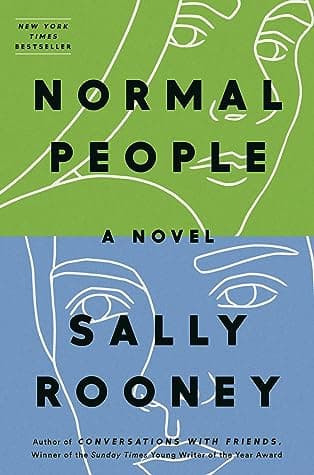
- Normal People
Sally Rooney
3.9 (405k) average on GoodreadsLiterary FictionRooney's 'Normal People' offers a more accessible and emotionally direct portrayal of modern romance and its complexities. While both explore the challenges of relationships, Rooney's narrative is less experimental and focuses more on the internal emotional lives of her characters through conventional dialogue and internal monologue, making it potentially more relatable to a broader audience. 'Mimi' is more overtly critical of societal structures.
- The Old Man and the Sea
Ernest Hemingway
3.8 (831k) average on GoodreadsLiterary FictionA Cuban fisherman's long struggle with a giant marlin becomes a story of endurance and dignity, now retold for young adults with illustrations, phonetic guides, and writing prompts in Traditional Chinese.
- One Hundred Years of Solitude
Gabriel García Márquez
4.1 (753k) average on GoodreadsLiterary FictionThrough the multi-generational story of the Buendía family, a mythical town deals with the repeating patterns of time, love, and solitude, as the extraordinary mixes with the ordinary.
- The Goldfinch
Donna Tartt
3.9 (720k) average on GoodreadsLiterary FictionHaunted by a tragic explosion and clutching a stolen Dutch masterpiece, a young orphan navigates the opulent drawing rooms of New York and the gritty underbelly of the art world, desperately seeking connection and redemption amidst a life spiraling into crime and obsession.





Enjoyed the summary?
A summary gives you the shape of the book. The book itself has the detail, the examples and the voice.
Find Mimi on AmazonAs an Amazon Associate, BookBrief earns from qualifying purchases. How we're funded